São Paulo Layover in Vila Madalena
Part of the full São Paulo Layover: Old Centre to Paulista, GRU
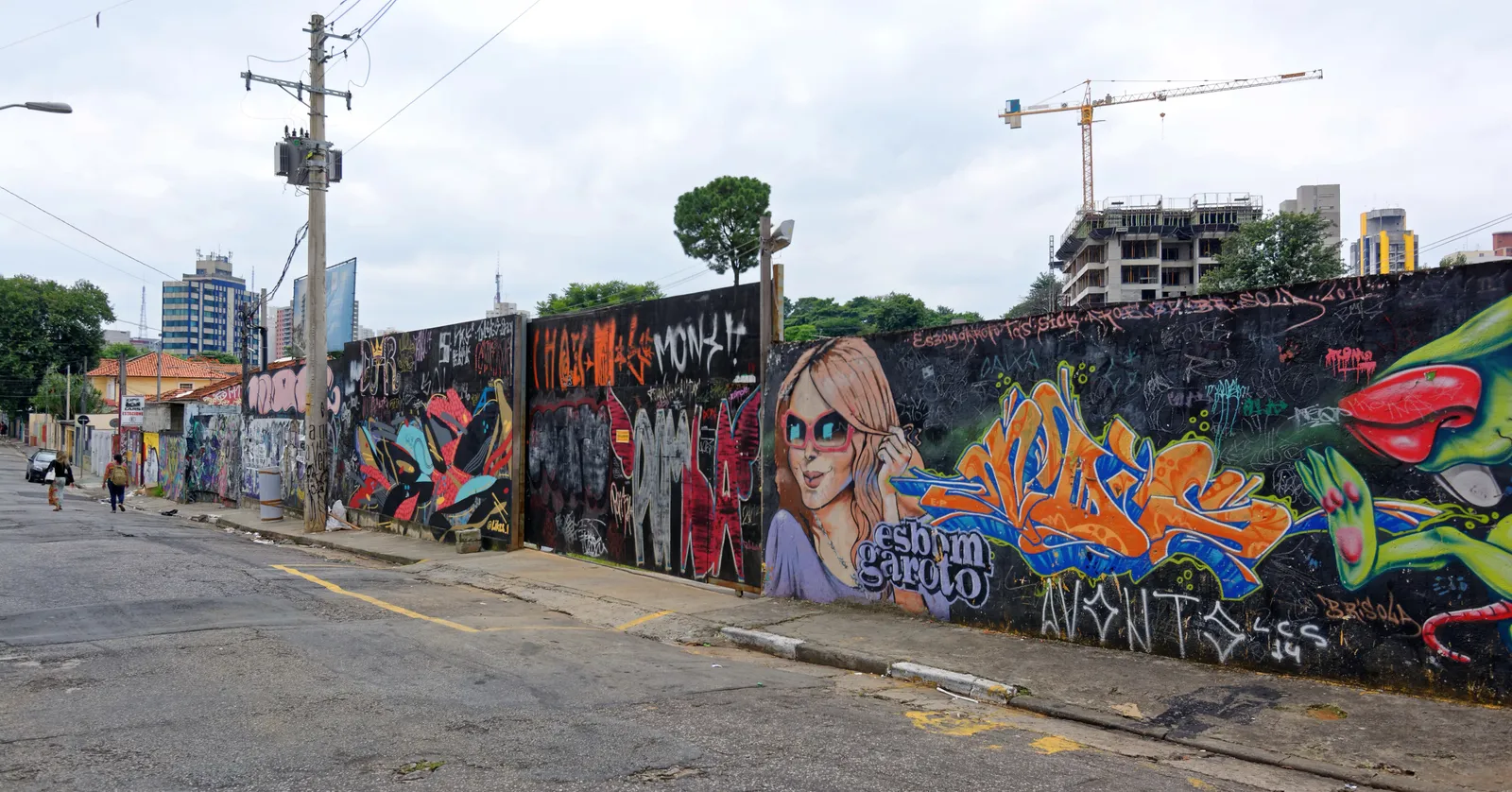
Vila Madalena sits on a hill west of central São Paulo, and what it offers in a couple of hours is a set of side streets whose walls are repainted continuously, an art institute a short walk south that charges nothing on any day, and, on Saturdays, an antiques fair on Praça Benedito Calixto.
Whole walls get repainted along the side streets off Rua Harmonia
Vila Madalena was a working-class district that filled with students and artists from the 1970s onwards, and the painting on its walls is not a heritage set piece: it turns over, sometimes within weeks, so any given wall is a snapshot rather than a fixed sight. The densest stretch runs through the alley everyone calls Beco do Batman, around Rua Gonçalo Afonso, named for a Batman figure painted there in the 1980s that has long since disappeared under other work.
All of it is public street, free, and there at any hour, though the middle of the day is when the light works and when there are enough people about for it to feel like a neighbourhood rather than an empty lane. The streets run up and down the hill, and the pavements are narrow and often broken, which is the honest argument against arriving here towing anything. If you would rather cover more ground than a walk allows, a guided bike tour of the city’s street scenes is bookable through a tours and activities platform.
The Instituto Tomie Ohtake is free every day it opens
Rua Coropés 88, a walk south into Pinheiros, is a building by the architect Ruy Ohtake, opened in 2001 and named for his mother, the painter Tomie Ohtake, who came to Brazil from Kyoto in 1936 and stayed for the rest of her life. The building itself is curved, coloured and impossible to mistake from a distance.
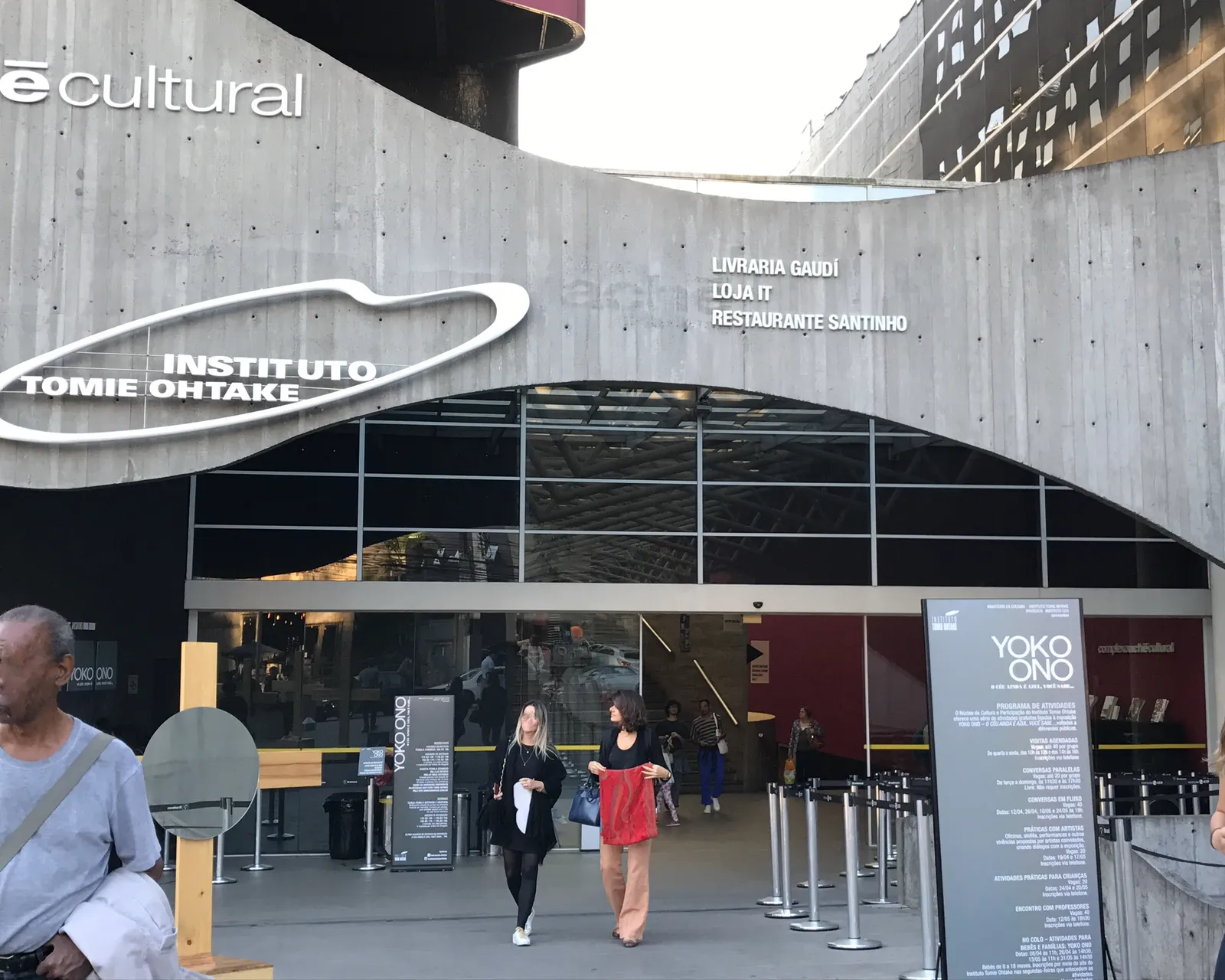
Admission has never been charged, on any day, for any exhibition: more than 660,000 people went through it in 2025 and every one of them walked in for nothing. It runs several galleries of contemporary art, architecture and design, opens Tuesday to Sunday from 11am to 7pm, and puts on free education activities on Friday afternoons that need no advance booking. This is the building to hold in reserve when the sky turns, which between December and March it does quickly.
Praça Benedito Calixto turns into an antiques market on Saturdays
The square sits about twenty minutes’ walk south of Vila Madalena’s main crossroads, and on Saturdays from 9am to 7pm it fills with several hundred stalls: restored furniture, design pieces, silverware, rare records, cameras, and the sort of household objects that only look interesting once someone has laid fifty of them out on a trestle table.
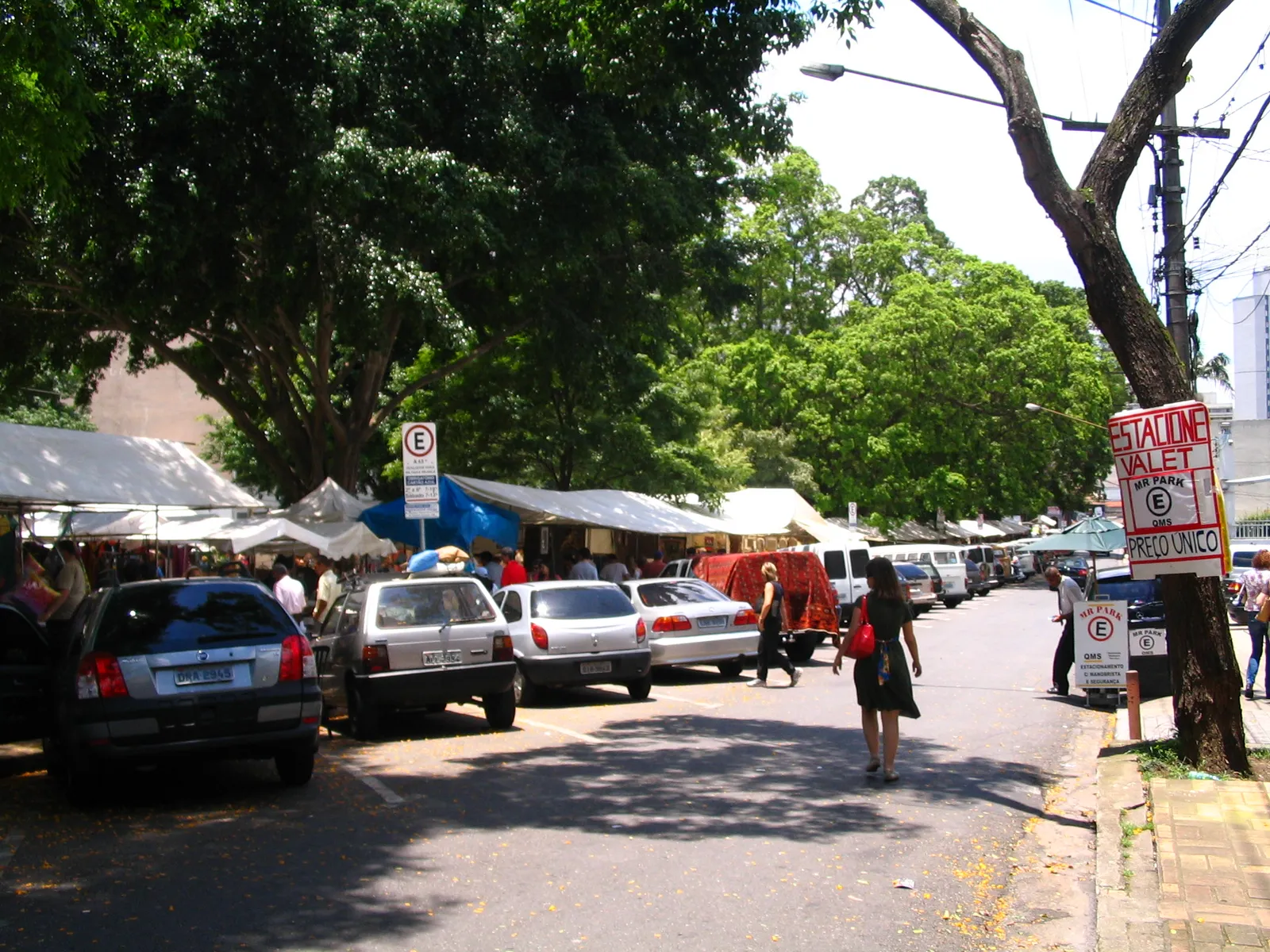
In the afternoon a chorinho group usually plays at one end, and the restaurants around the square put tables out. On any other day of the week it is simply a pleasant tree-shaded square with a playground, which is worth knowing before you build a Wednesday around it. Saturday is the whole point.
An hour and three quarters from Vila Madalena to the airport gate
This is the furthest west of the stops worth making in São Paulo before a flight, and the run out to São Paulo/Guarulhos International Airport (GRU) reflects that: a metro ride east to Luz, about twenty-five minutes with a change, then the hourly Expresso Aeroporto on Line 13-Jade, around 30 minutes to Aeroporto-Guarulhos station on the standard R$5.40 fare, then the free people mover to the terminals.
That makes Vila Madalena a stop for the early part of a day rather than the last thing before a flight. The main São Paulo guide covers the centre, which is on the way back east anyway, and leaving the bag near the airport train rather than carrying it up this hill is the difference between a walk and a haul.
Frequently asked questions
What should I do during a layover in Vila Madalena in São Paulo?
Walk the side streets, which are the attraction here rather than any single building: the walls off Rua Harmonia and Rua Girassol are repainted continuously, and the alley locals call Beco do Batman is the densest stretch of it. Then go indoors at the Instituto Tomie Ohtake, which is free every day and open Tuesday to Sunday from 11am to 7pm. On a Saturday, the antiques fair on Praça Benedito Calixto runs 9am to 7pm and is worth the twenty-minute walk south.
What is the Beco do Batman?
A pair of narrow streets in Vila Madalena, around Rua Gonçalo Afonso and Rua Medeiros de Albuquerque, where almost every wall surface is painted and repainted by different artists. The name comes from a Batman figure painted on one of the walls in the 1980s, long since covered over. Because the work turns over constantly, what you see will not match the photographs you looked at beforehand, which is the point. It is a public street, free, and open at any hour, though it is busiest and best lit in the middle of the day.
How much does the Instituto Tomie Ohtake cost?
Nothing, on any day. It sits at Rua Coropés 88 in Pinheiros, a short walk south of Vila Madalena, in a building by Ruy Ohtake that opened in 2001 as a tribute to his mother, the artist Tomie Ohtake. It opens Tuesday to Sunday from 11am to 7pm and shows contemporary art, architecture and design across several galleries. Free guided activities run on Friday afternoons with no need to sign up in advance.
Does the rain ruin a stop in Vila Madalena?
It can, more than in most parts of São Paulo, because almost everything here happens outdoors on streets that run up and down a hill. The wet season is roughly December to March, when heavy afternoon storms arrive quickly and clear almost as fast. The practical answer is to keep the Instituto Tomie Ohtake in reserve as the indoor half of the visit rather than doing it first, and to be aware that the steep pavements here are slick and awkward with a wheeled bag once they are wet.