Buenos Aires Layover Guide: Recoleta From EZE
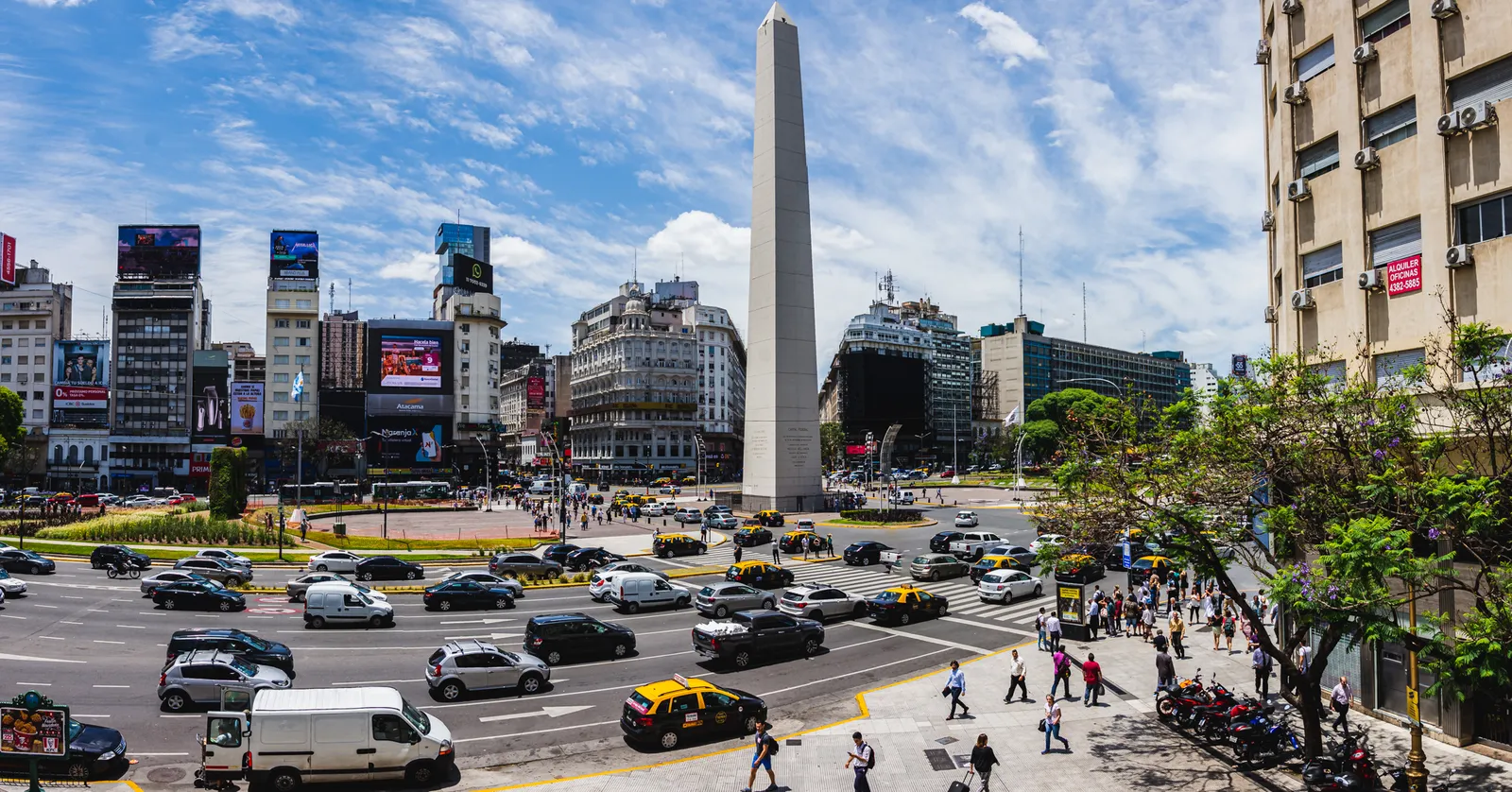
Buenos Aires lines up four of its best-known sights within a few subway stops of each other: Recoleta Cemetery’s streets of above-ground vaults, the Teatro Colón’s gilded auditorium, the pink presidential palace on Plaza de Mayo, and the cobbled market blocks of San Telmo just south of it.
Recoleta Cemetery’s 4,691 vaults, all above ground
Five and a half hectares of the Recoleta neighbourhood, entered off Junín street, are given over to marble and granite mausoleums packed shoulder to shoulder along paved lanes with street names of their own. The vaults stand at full height, many of them two or three storeys, with glass doors and steps down to the coffins behind them, and 94 have been declared national historic monuments. The one everybody looks for belongs to the Duarte family and holds Eva Perón, on a lane narrow enough that a queue forms at it on a busy morning.
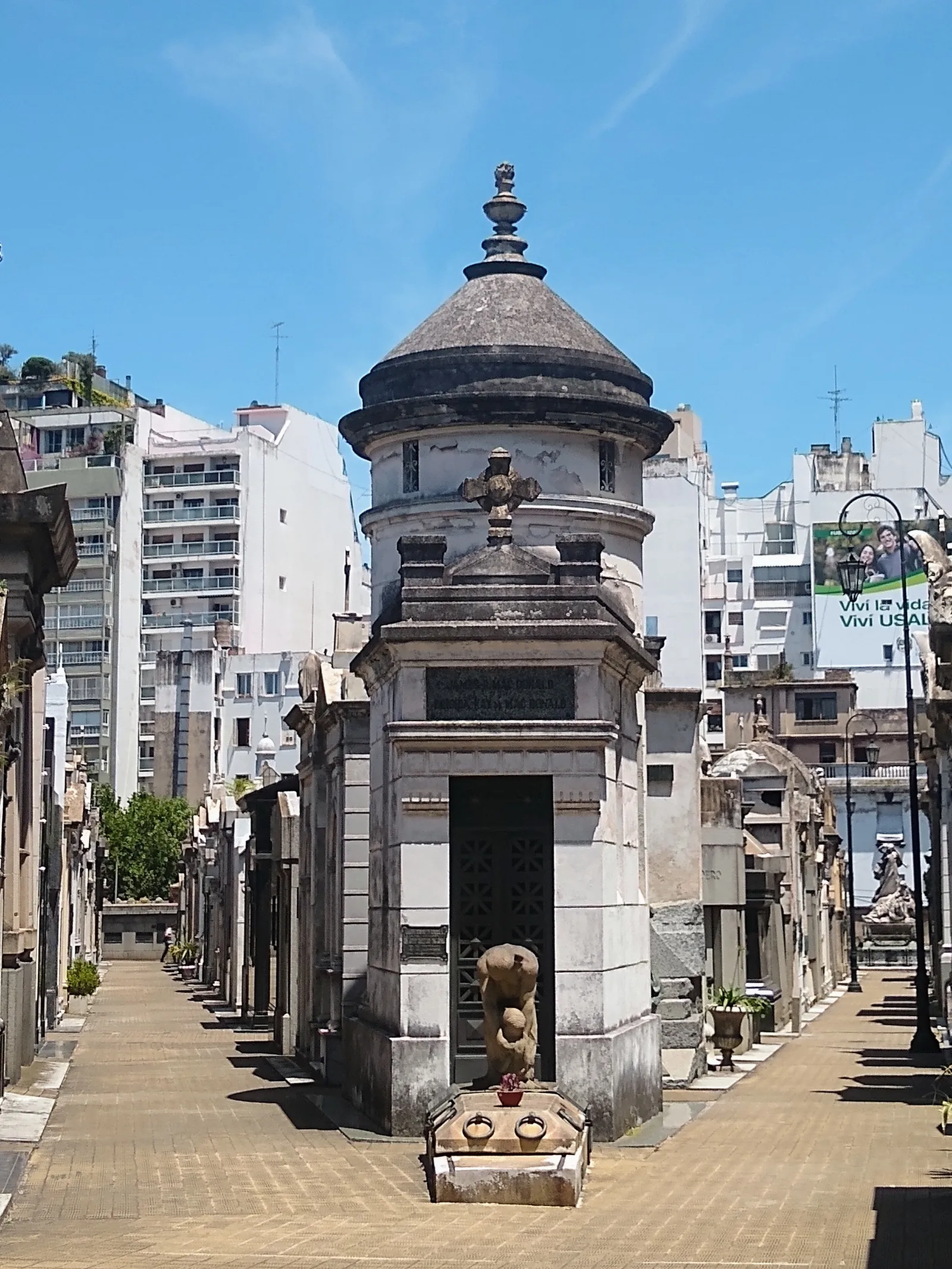
Argentine residents walk in free. Everyone else pays, either online through the city’s ticketing site or at the gate, and there is no cash window, so bring a card. Tourist hours are 9am to 5pm daily, which is the hard constraint on this whole itinerary: the cemetery is the one stop that will be shut if you leave it too late. Free guided tours in Spanish leave the main entrance on the hour through the middle of the day, and a guided walk that finishes at the gates is bookable in English if you would rather not read the tombs cold.
The Teatro Colón’s horseshoe of gilded boxes
Tiers of gilded balconies curve around the main hall at Tucumán 1171, seating 2,487 with standing room for a thousand more, under a cupola whose canvas Raúl Soldi painted in 1966. The house opened in 1908 with Verdi’s Aïda and has kept a reputation for its sound ever since: the acoustician Leo Beranek’s survey of concert halls put it first in the world for opera.
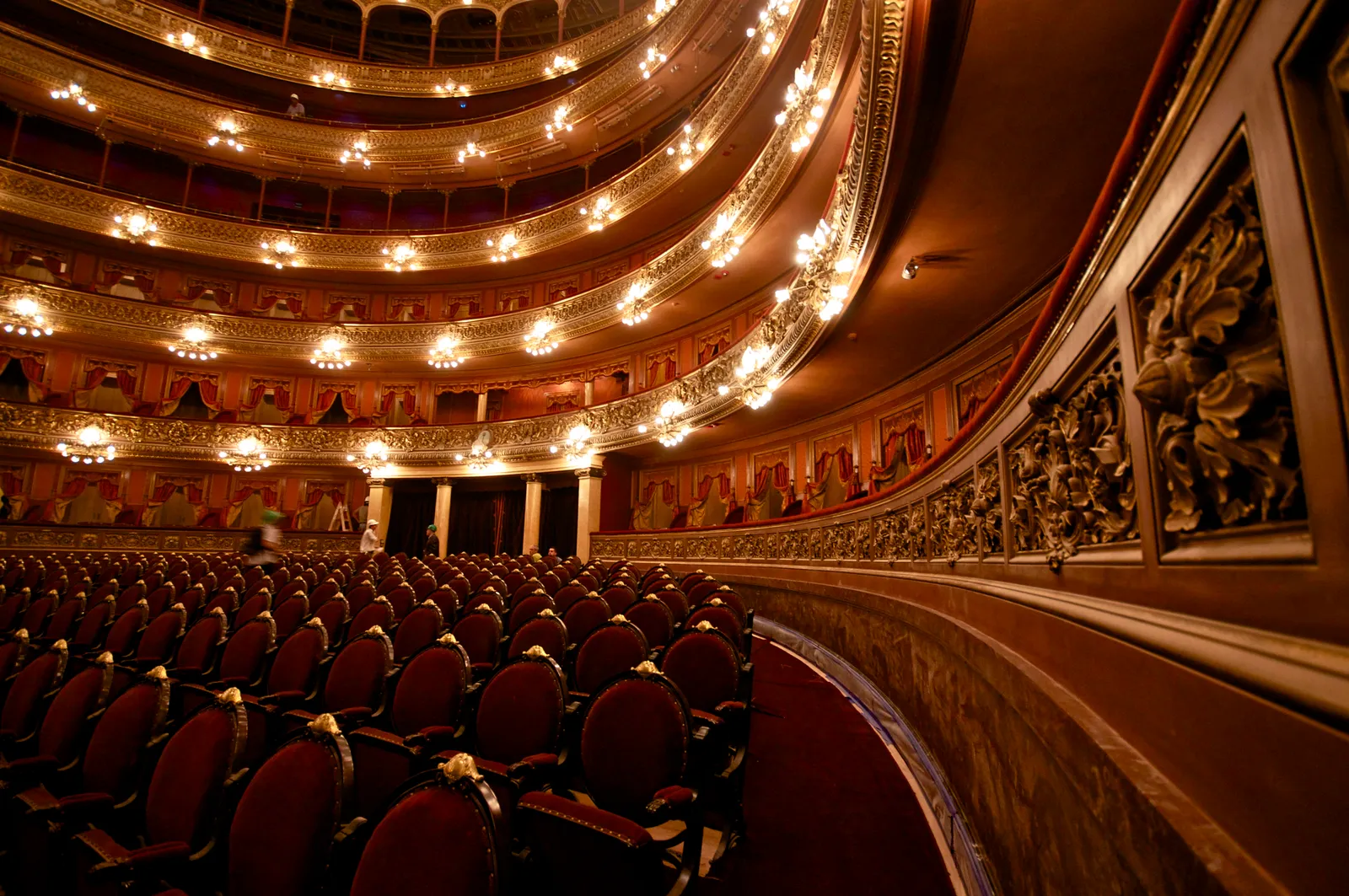
You do not have to sit through a performance to see it. Guided tours run daily from 10am, with the last one at 4.45pm, leaving every fifteen minutes in Spanish and four times a day in English, and take about fifty minutes through the foyer, the Golden Hall and the auditorium itself. Tickets are sold at the box office on Tucumán and online. The one caveat worth knowing is that rehearsals and performances can close parts of the route on the day, so the auditorium is not guaranteed.
The Casa Rosada, the pink palace on Plaza de Mayo
Argentina’s presidential offices fill the east end of Plaza de Mayo at Balcarce 50, inaugurated in 1898 and painted the colour that named them. Two accounts of that colour survive: that Domingo Sarmiento mixed the red of the federalists with the white of the unitarians to take the heat out of a political argument, or that cow’s blood went into the render to keep the humidity out. The long first-floor balcony facing the square is the one every Argentine recognises.
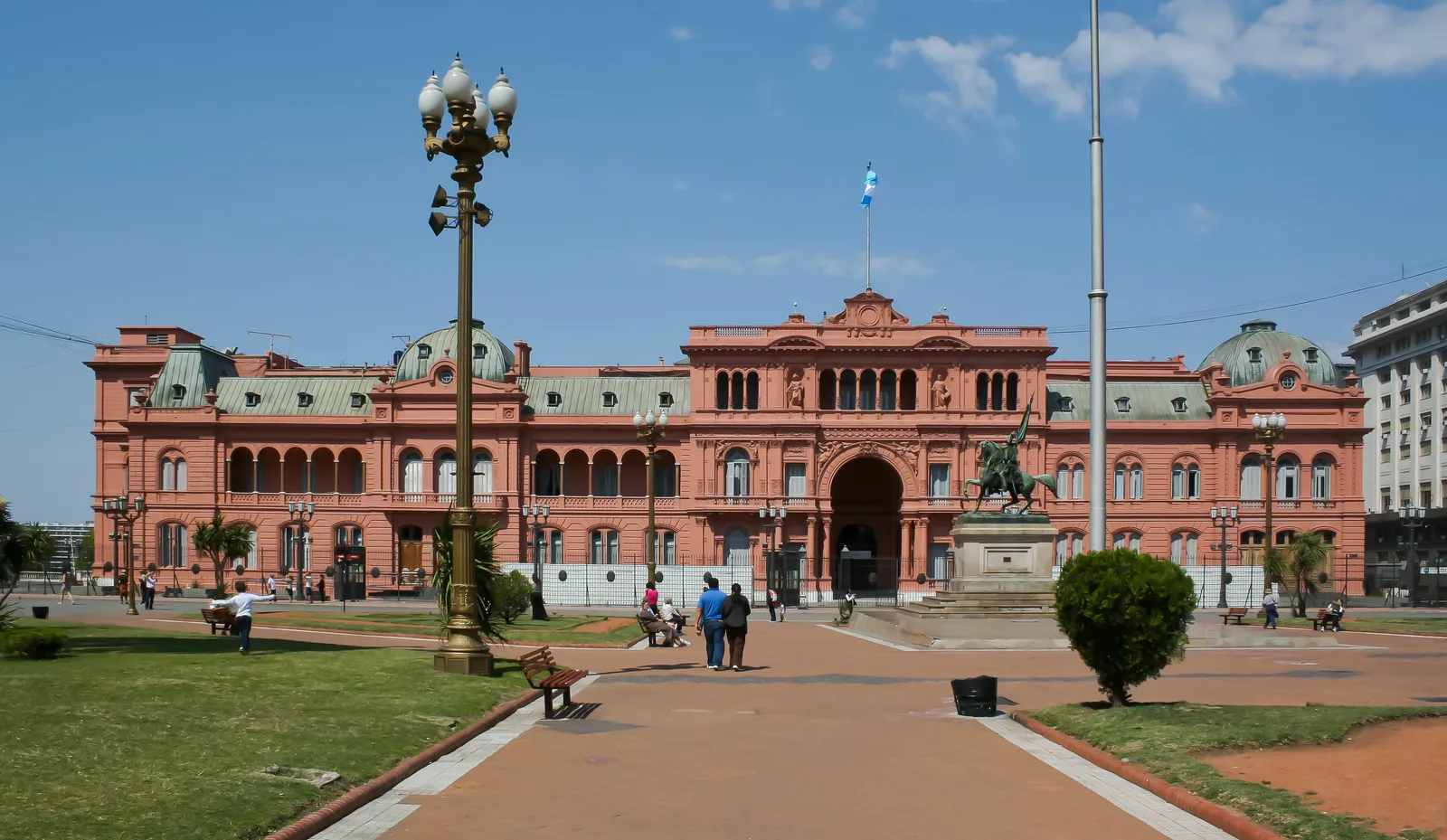
The two free buildings on the square are worth more of your time than the palace itself. The Metropolitan Cathedral, behind a facade of twelve columns that looks nothing like a church from outside, holds the marble mausoleum of José de San Martín, carved by Louis-Robert Carrier-Belleuse with three female figures for the three countries he freed. Two mounted grenadiers stand over it and are relieved every couple of hours between early morning and late afternoon. Next door at Bolívar 65, the Cabildo museum occupies the last surviving stretch of the colonial town hall and charges nothing, though it opens Wednesday to Sunday only, 10.30am to 6pm.
One block west, the subway station at Perú is worth the two minutes it costs to walk down the stairs and back up. It belongs to the first section of underground railway built anywhere in the Southern Hemisphere, opened in December 1913, and was restored in 1988 to something close to its original state: reproduction ticket booths, period lamps and tiling, and dozens of century-old advertisements reset into the wall niches where the modern posters would otherwise go. It has been a national historic monument since 1997.
Plaza Dorrego and the stalls down Defensa street
San Telmo begins where Defensa street runs south out of the historic centre, about ten minutes on foot from Plaza de Mayo, and the change underfoot is immediate: granite setts that rattle a wheeled suitcase the whole way down. At Defensa 961 the covered market has been trading since 1897, a hall of riveted iron columns and roof trusses restored in 2022, with antique dealers, greengrocers and a handful of counters selling lunch all sharing the same aisles. It is open daily, roughly 9am to 8pm, and free to wander.
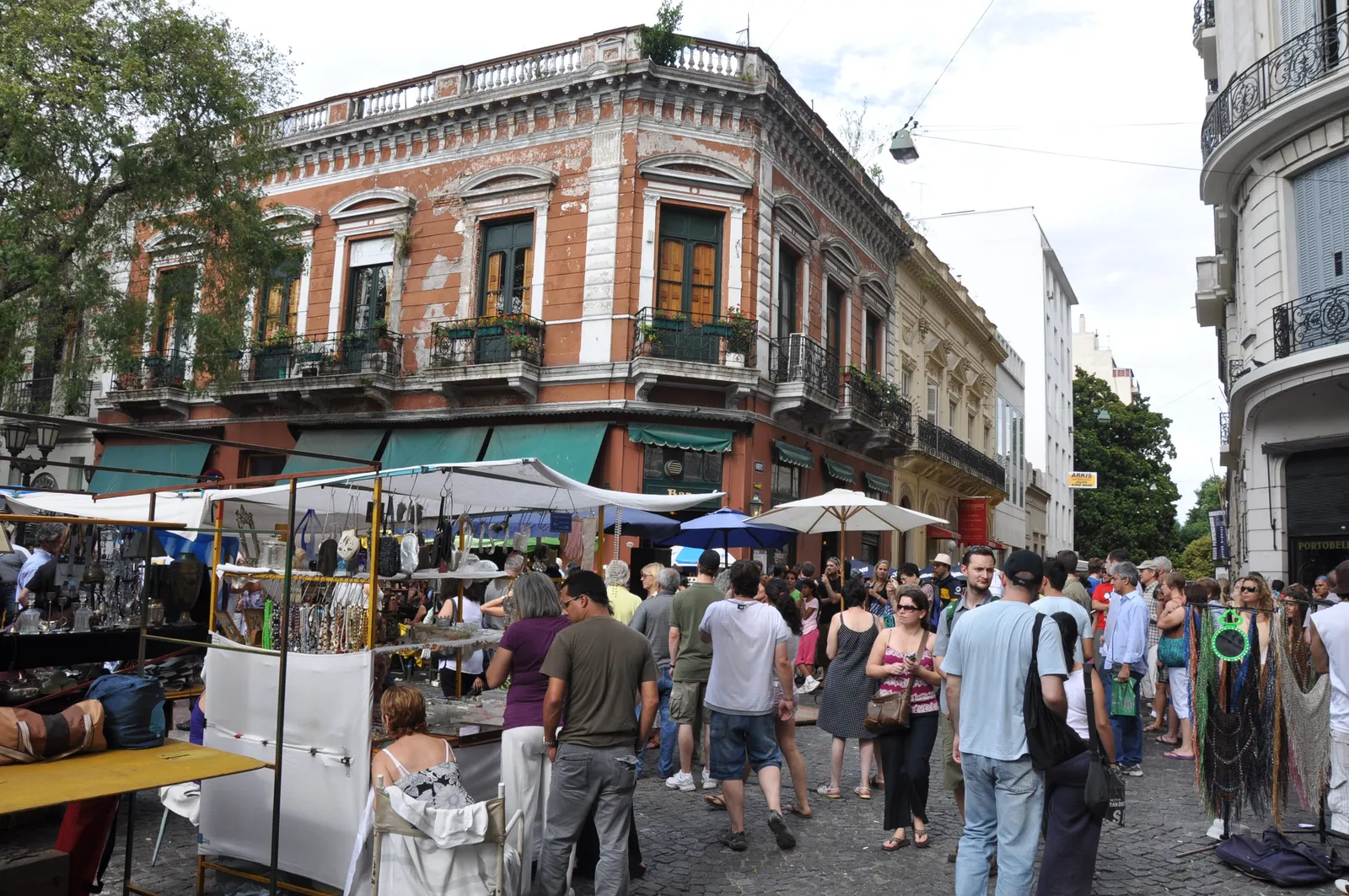
Two blocks on, Plaza Dorrego is a small square ringed by old corner buildings with iron balconies, and on Sundays the antiques fair spreads out from it and takes over Defensa from 10am to 4pm. That is the day the street is at its best and the day a suitcase costs you most, because the stalls narrow Defensa to a single file of people and you move at the pace of whoever is in front of you.
Puente de la Mujer, the footbridge that swings open
Puerto Madero occupies the four rebuilt docks between the historic centre and the river, and the white footbridge over Dock 3 is the thing people come to photograph. Santiago Calatrava designed it, it opened in December 2001, and its 102 metres hang from a single pylon leaning 39 metres out over the water. The whole central span rotates to let boats through. Calatrava’s account is that the leaning mast and the curved deck are a couple dancing tango.
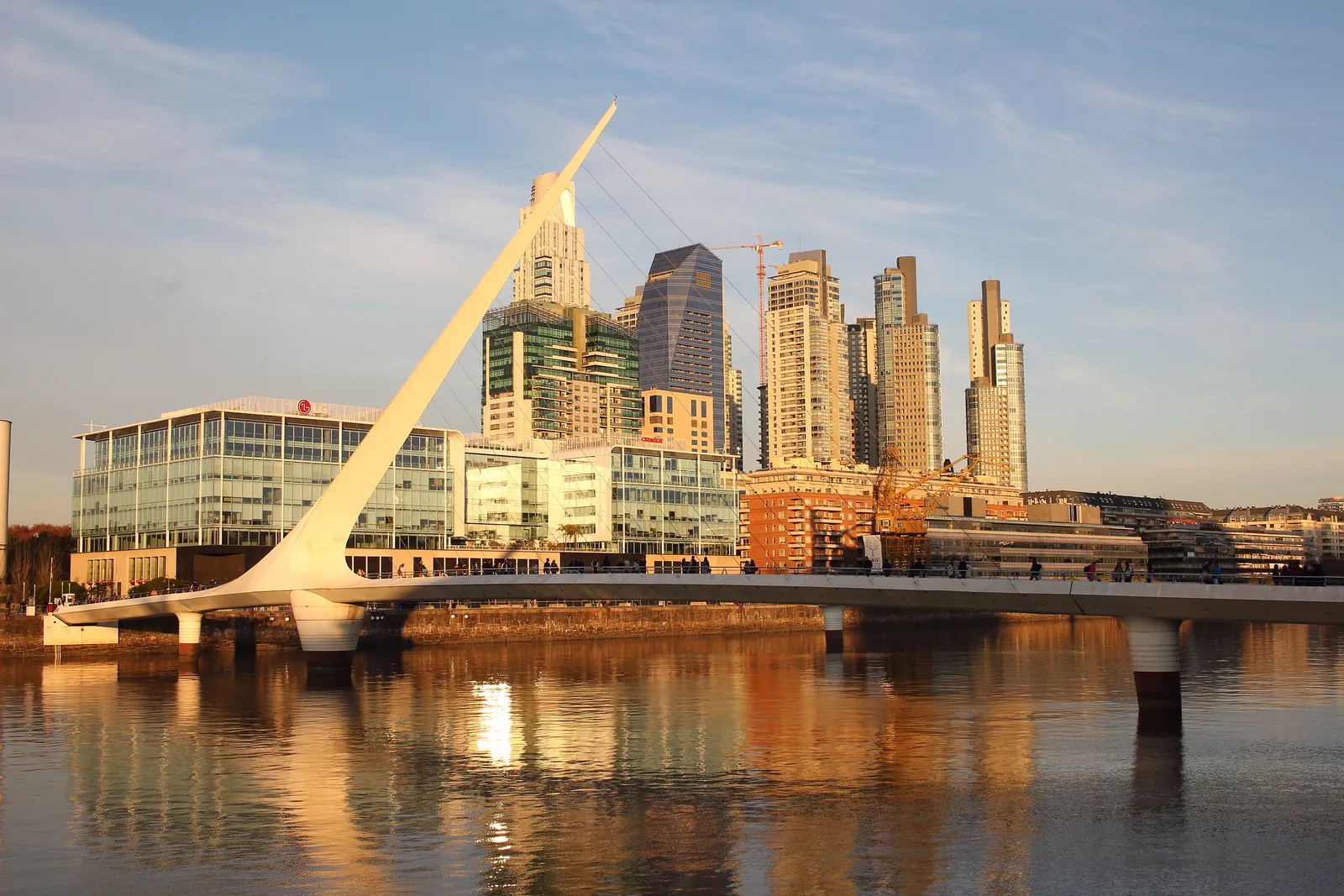
Crossing costs nothing, and the dockside on either bank is wide, level and closed to traffic: brick warehouses converted into offices and restaurants on one side, glass towers on the other, and a moored 19th-century sail-training frigate you can walk the deck of. The paving runs smooth the whole way, which matters if you are still towing a bag.
El Ateneo Grand Splendid, a bookshop inside a 1919 theatre
A theatre that opened at Avenida Santa Fe 1860 in 1919 has sold books since 2000, and nobody stripped out the fittings to do it. With six hours or more before your flight, it is the easiest thing on this page to add. The frescoed dome is the original, so are the boxes running up the walls in tiers, and the red stage curtain still hangs where it always did. Bookshelves fill the stalls where the seats used to be, and the café sits on the stage.
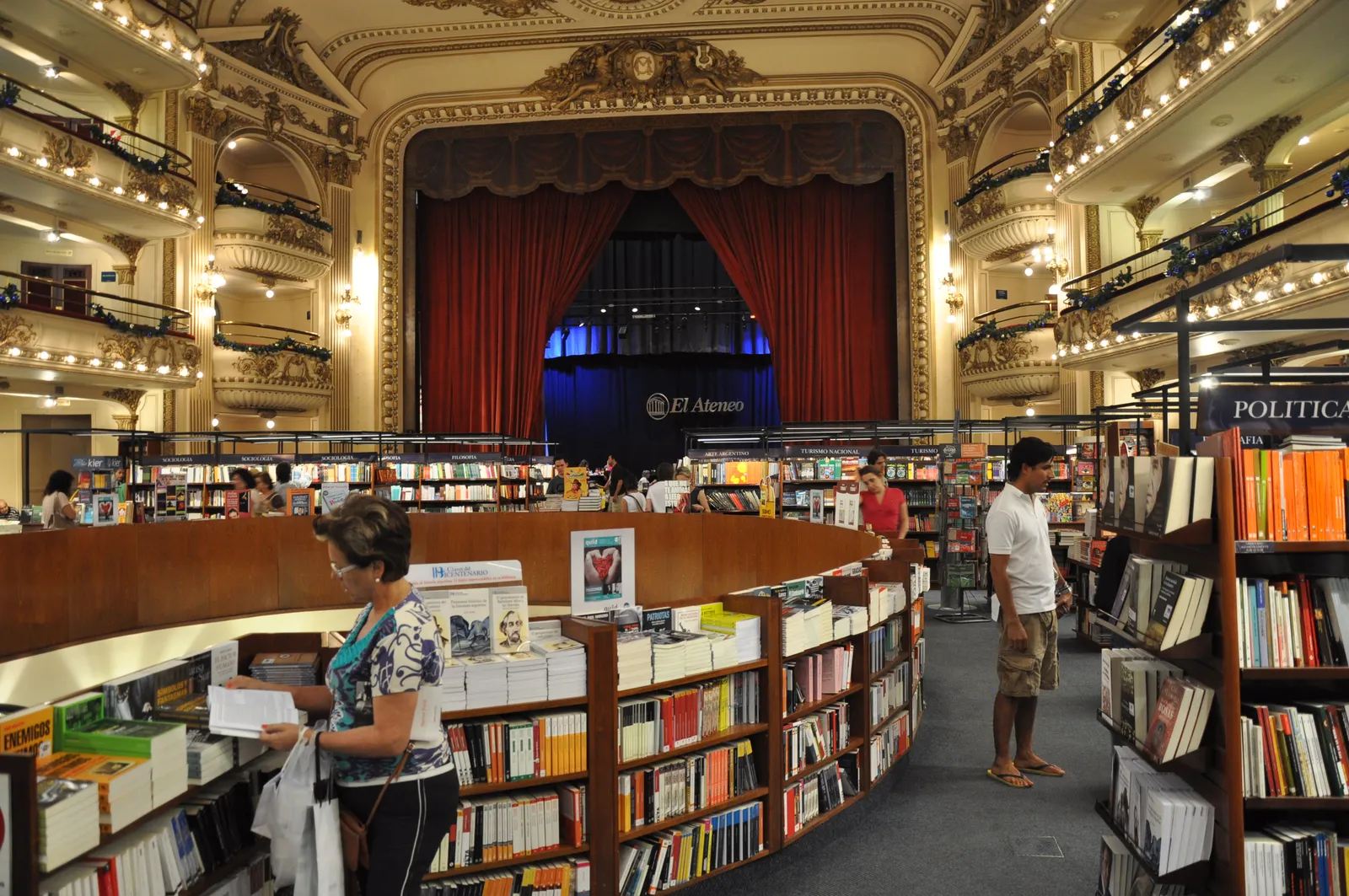
It costs nothing to walk in, nobody minds how long you stay, and the balconies look straight down onto the shelves in the old stalls and the café on the stage. Carlos Gardel performed here when it was still a theatre, along with Francisco Canaro and Ignacio Corsini, which is a fair amount of tango history to find between two racks of paperbacks.
No train reaches Ezeiza airport, only buses and taxis
Tienda León’s express minibus is the usual way out: it runs between Terminal Pellegrini at Pellegrini 971, half a block off Avenida 9 de Julio beside the Obelisco, and Ministro Pistarini International Airport (EZE) 22 kilometres to the south-west, taking about an hour and leaving roughly hourly from early morning until mid-evening. No rail line of any kind reaches it, so road time is the number to plan the end of the day around. A taxi or remis covers the same ground in 45 to 60 minutes when the roads are clear and considerably longer when they are not.
The cheap option is the 8 colectivo, a stopping city bus that runs between Plaza de Mayo and the terminals for a fraction of the shuttle fare. It takes well over an hour, it has nowhere sensible to put luggage, and it is the one route in this guide where a contactless bank card will not work: buses crossing the city boundary still want a SUBE card, and the airport kiosk that sells them is often out of stock. Whichever you pick, count on two hours between leaving your last stop and standing at the check-in desk. That is also the argument for collecting your bag on the way out rather than doubling back for it: pick a storage point somewhere between the last thing you want to see and the shuttle terminal, and the retrieval costs you nothing extra.
Frequently asked questions
What should I do during a layover in Buenos Aires?
Work the strip between Recoleta and San Telmo. Recoleta Cemetery and a guided walk through the Teatro Colón are the two stops worth paying for, and the cemetery shuts at 5pm, so it sets the shape of the day. Plaza de Mayo, the covered market on Defensa and the dock walk at Puerto Madero are all free and all within about twenty minutes of each other. With most of a day free you can fit the lot; on a tighter stop, drop Puerto Madero and keep the two paid stops, since they are the ones you cannot do at any hour you like.
Do I still need a SUBE card in Buenos Aires?
Not for the subway or for buses inside the city. Since December 2024 the turnstiles take contactless Visa and Mastercard debit and credit cards issued anywhere, plus Apple Pay and Google Pay, so a traveller passing through can skip the local card entirely. Two catches: the SUBE card still gets a cheaper fare, and buses that run beyond the city boundary have been slower to switch over. The public bus out to the airport is one of those, and it takes SUBE only, no cash and no bank card.
Do I need to buy a Recoleta Cemetery ticket in advance?
No, but you do need a card. Argentine residents get in free; everyone else buys a ticket, either online through the city's Entradas BA site or at the gate on Junín, and there is no cash window. Tourist visiting hours run 9am to 5pm every day of the year, and the free Spanish-language guided tours leave the main entrance on the hour through the middle of the day. If you would rather have the context in English, a guided city walk that finishes at the cemetery is bookable through a tours and activities platform.
How much of central Buenos Aires can I see without paying for anything?
Most of it. Plaza de Mayo, the Casa Rosada's exterior, the Metropolitan Cathedral with San Martín's guarded tomb, the Cabildo museum at Bolívar 65, the covered market on Defensa, the whole of Puerto Madero and the bookshop at Avenida Santa Fe 1860 all cost nothing to walk into. That leaves Recoleta Cemetery and the Teatro Colón tour as the only two stops on this page that charge, and the cathedral and the Cabildo between them cover the same 19th-century history the cemetery does. The Cabildo is the one to watch: it opens Wednesday to Sunday, 10.30am to 6pm, and is shut Monday and Tuesday.
Is the shuttle bus or a taxi better for getting to Ezeiza?
The shuttle, unless you are running late. Ministro Pistarini International Airport (EZE) sits 22 kilometres south-west of the centre with no rail link at all, so everything goes by road. Tienda León runs an express minibus between Terminal Pellegrini at Pellegrini 971 and the airport, taking about an hour and leaving roughly hourly from early morning to mid-evening, which is the predictable option and the one with luggage racks. A taxi or remis does the same run in 45 to 60 minutes in light traffic and considerably worse in heavy traffic, for several times the fare. The 8 colectivo from Plaza de Mayo is the cheap answer, but it is a stopping city bus, it takes well over an hour, and it will only accept a SUBE card.