Puerto Madero Docks and Reserve, Buenos Aires
Part of the full Buenos Aires Layover Guide: Recoleta From EZE
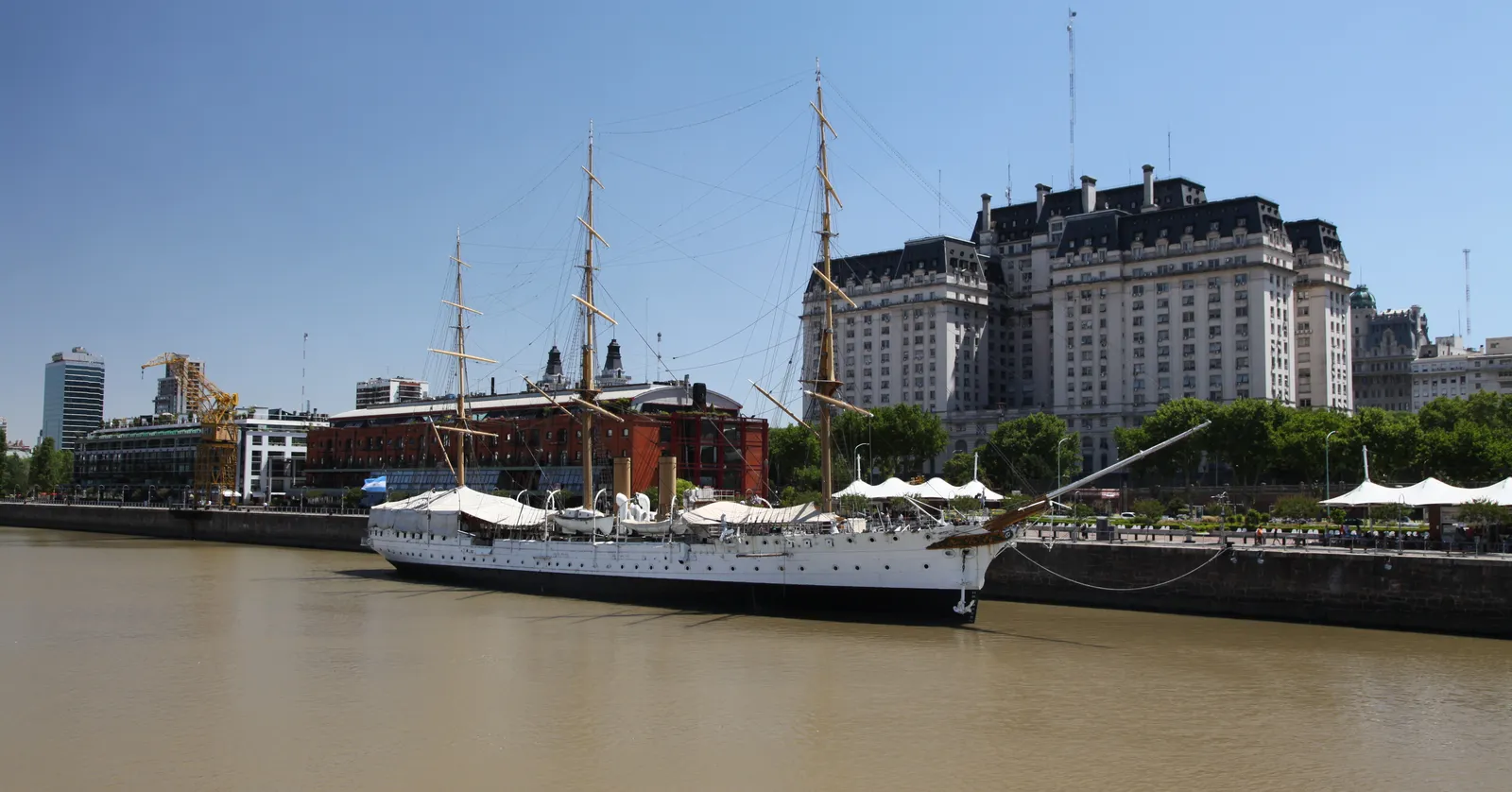
Puerto Madero, the four rebuilt docks along the eastern edge of central Buenos Aires, moors two English-built museum ships in front of its brick warehouses, and 350 hectares of wetland reserve sit on the far bank of the same water.
The two museum ships moored in the Puerto Madero docks
The frigate Presidente Sarmiento went down the slipway at the Laird Brothers yard in Birkenhead on 31 August 1897 and spent the next four decades carrying Argentine naval cadets around the world: thirty-seven annual training cruises, six of them full circumnavigations. She came off deep-sea work in 1938, finished as a stationary training ship in 1961, and has been kept ever since in her 1898 fit-out at Alicia Moreau de Justo 980 on Dique 3. Cabins, wardroom, engine room and open deck are all walkable, and the souvenirs the cadets carried home from all those ports are still laid out below. Opening starts in the early afternoon and runs into the evening, entry costs very little, and it is worth arriving with cash rather than only a card. She also shuts entirely when it rains.
Two docks along, the Uruguay came out of the same Birkenhead yard twenty-three years earlier, in 1874, and did the one thing the Sarmiento never had to. In 1903 she was sent into the Antarctic under Julián Irízar to look for Otto Nordenskjöld’s Swedish expedition, whose ship had been crushed by ice, and she brought every member of it back alive. She left the navy in 1962 and was made a national historic monument in 1967.
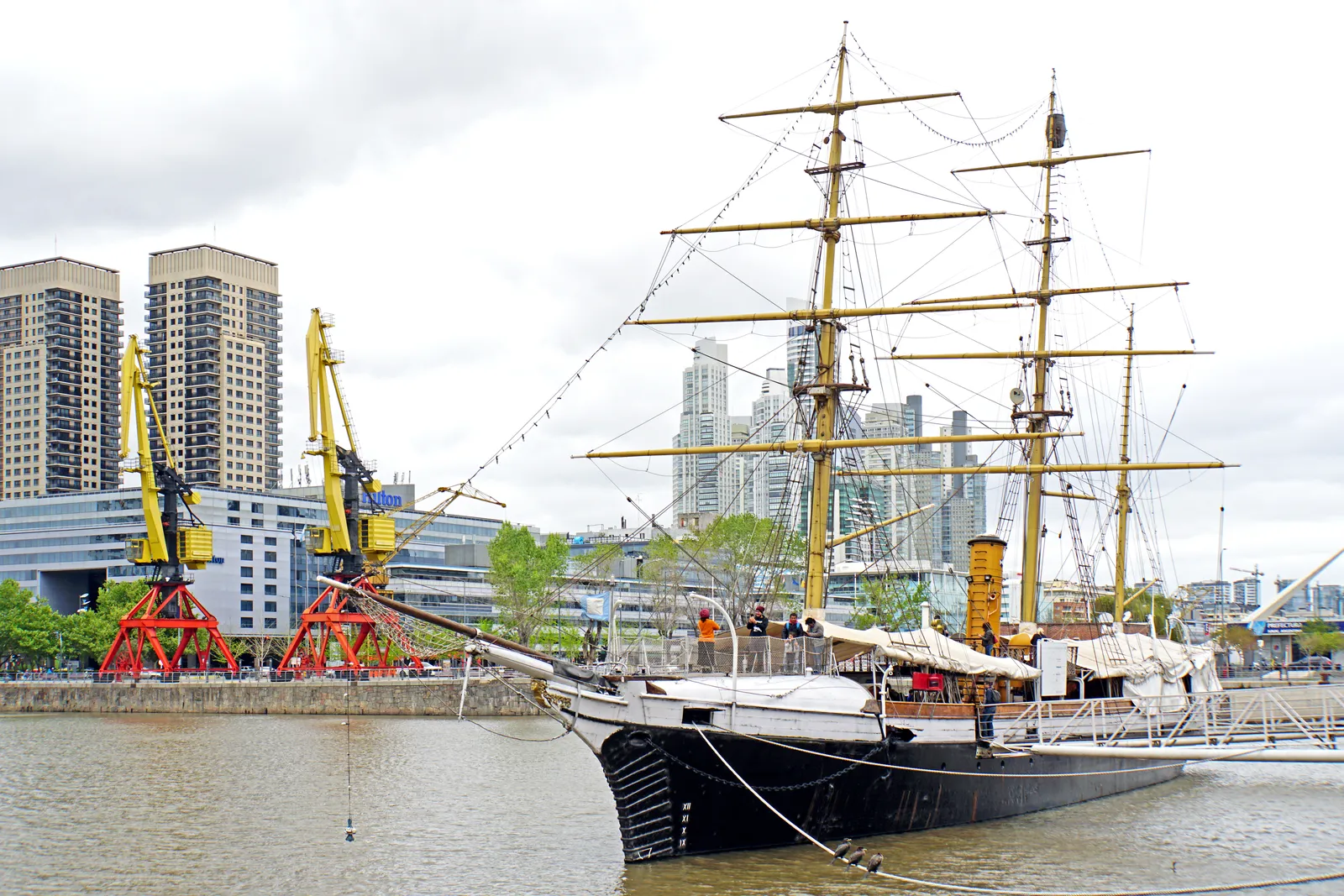
The brick warehouses the port outgrew within a generation
Eduardo Madero took the government contract for a new port in 1882, and the four docks and their sheds went up between 1887 and 1897, brick and iron, all of it built to take ships that no longer had to anchor offshore and unload into barges. Luis Huergo’s rival plan had been rejected, and then quietly vindicated: it became the basis for Puerto Nuevo, whose first section opened in 1911 and which had taken over entirely by 1926. Madero’s docks were obsolete within thirty years of the day they were finished and stood derelict for six decades, until the corporation set up to redevelop them was incorporated on 15 November 1989.
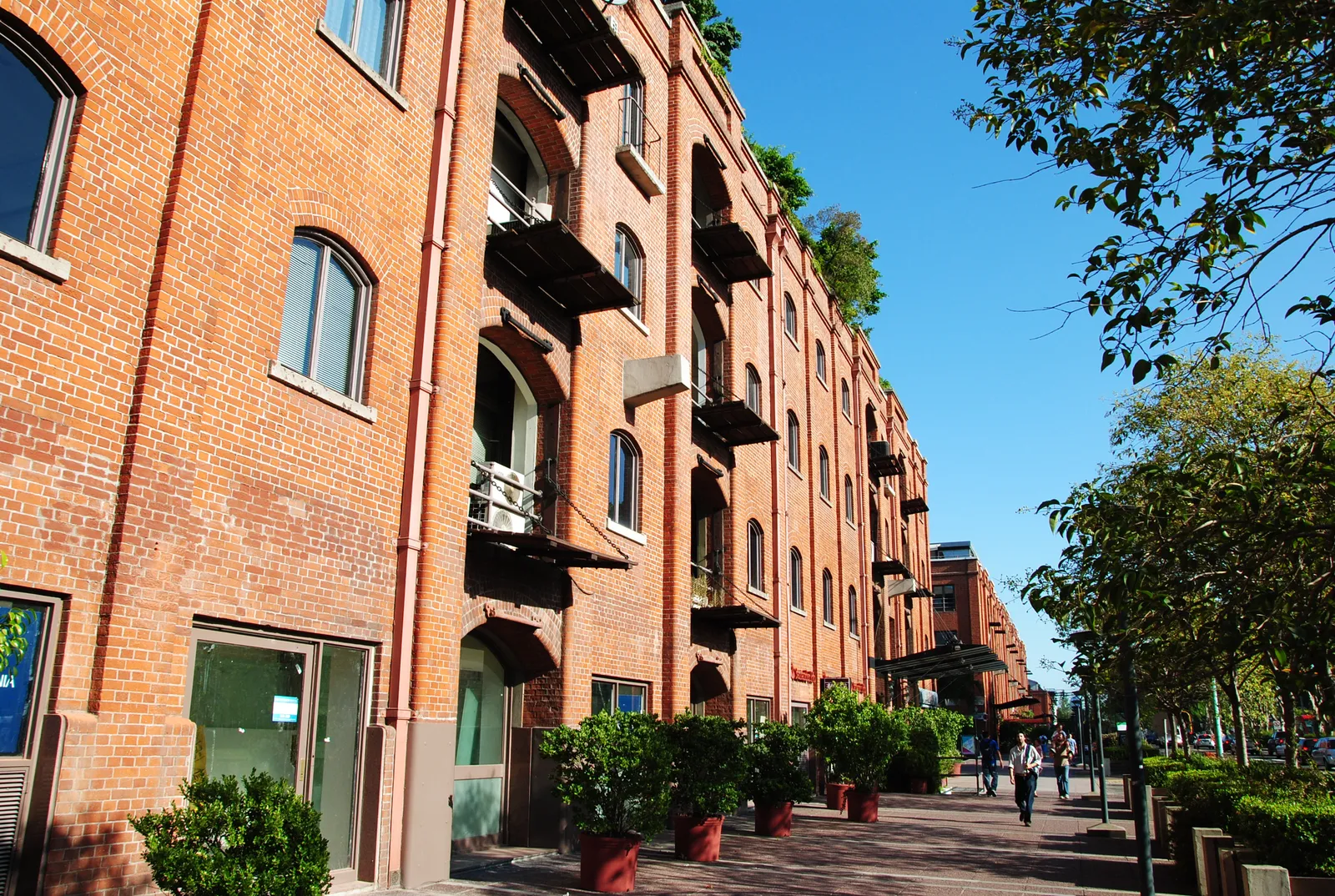
The warehouses came through it better than the port did. Offices, flats and restaurants sit behind the original brickwork with the loading bays glazed rather than removed, and the quaysides in front of them are closed to traffic the whole way. One thing to notice while you walk: every street here carries a woman’s name, set that way by a city ordinance in 1995, so the addresses run past the country’s first woman doctor, Cecilia Grierson, the writer Juana Manso and Azucena Villaflor, one of the founders of the Thursday marches in Plaza de Mayo.
The white footbridge over Dique 3 gets most of the photographs, and the main Buenos Aires guide covers it properly. What that guide has less room for is how far apart the ends of this district are: the four docks run roughly two kilometres north to south, the only ways across are the bridges, and there is no cutting the corner with a suitcase.
The Costanera Sur reserve grew on motorway rubble
From 1978 the city walled off a stretch of the Río de la Plata with polder embankments and filled them with debris from the demolitions its new urban motorways required. The dumping ran until 1984, river silt settled into the enclosures, and then nobody planted anything: the seeds already in that silt, plus whatever blew in or arrived on an animal, produced the grassland, reed beds and lagoons that are there now. The city council voted it a protected reserve unanimously on 5 June 1986, and it has been a Ramsar wetland since 2005.
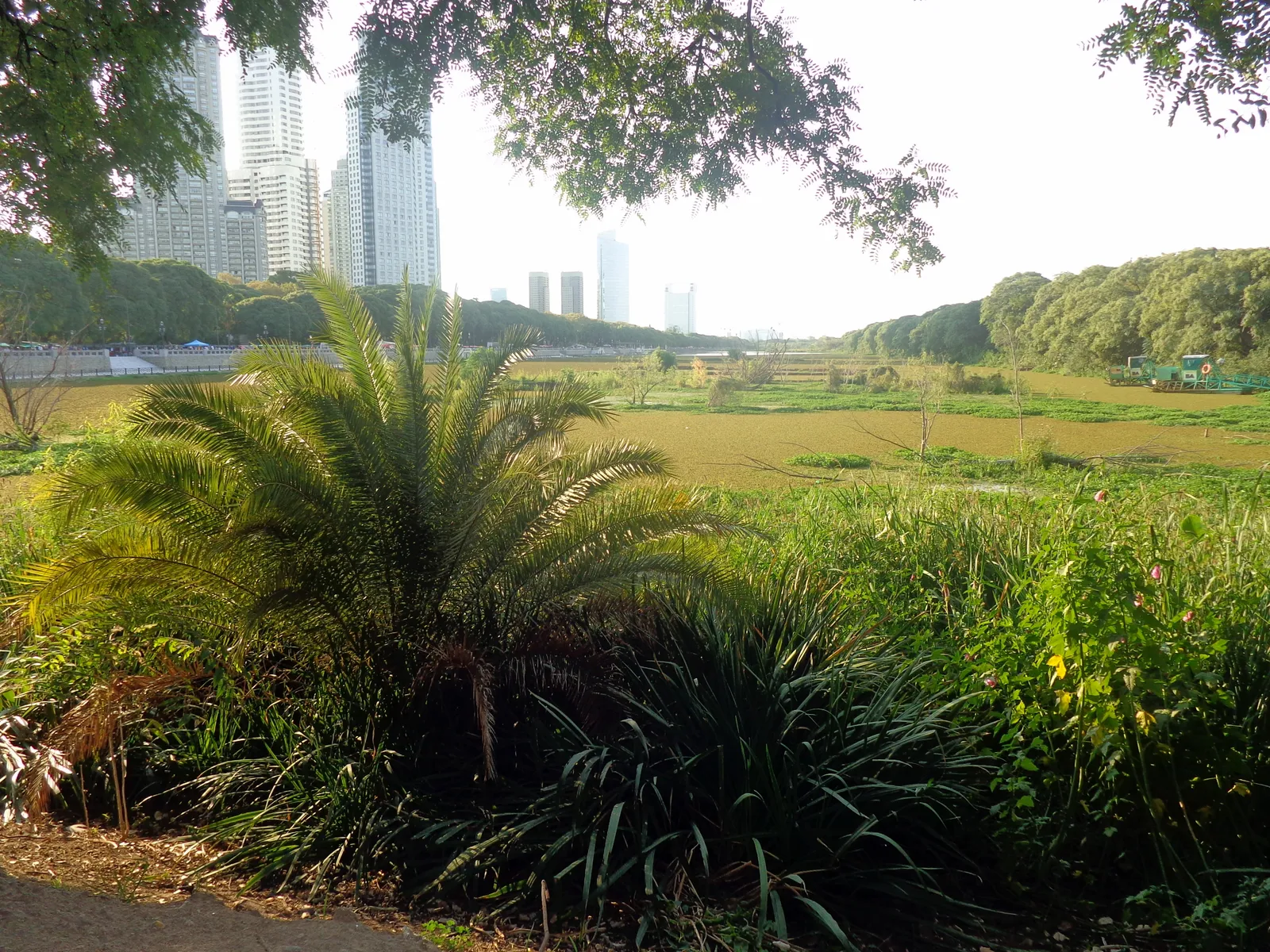
Three hundred and fifty hectares of it now sit directly across the water from the towers, with great egrets and black-necked swans on the lagoons and a horizon of pampas grass in front of the skyline. Entry is free. It opens Tuesday to Sunday, 8am to 6pm from April to October and an hour later in the summer months, with gates on Viamonte and on Brasil, and it closes outright on days of strong wind or persistent rain, which is worth checking before you commit an afternoon to it.
Puerto Madero’s tram lasted five years and stopped in 2012
The Tranvía del Este ran twelve blocks along the docks from July 2007, on French-built trams borrowed first from Mulhouse and then from Madrid, and carried so few people that it closed on 10 October 2012. Nothing replaced it, and no subway line has ever crossed into the district, so getting out of Puerto Madero is a walk west across the docks to the stations under Avenida Leandro N. Alem, or a taxi.
For a flight, Terminal Pellegrini at Pellegrini 971 is about twenty-five minutes on foot from Dique 3, or a short ride. Tienda León’s express minibus leaves there roughly hourly on the hour-long run out to Ministro Pistarini International Airport (EZE), and no rail line of any kind reaches that airport, so a shuttle or a car covers the last leg regardless. If your flight goes from Aeroparque instead, the riverfront north of here is the shorter trip and the reserve is the wrong direction entirely.
Frequently asked questions
What should I do during a layover near Puerto Madero in Buenos Aires?
Work the east bank first. The frigate Presidente Sarmiento and the corvette Uruguay are moored two docks apart, both built at the same English shipyard, and both charge very little to board. Behind them the 1890s brick warehouses run the length of the water as a flat, traffic-free walk. Then cross to the Costanera Sur reserve, 350 hectares of wetland the city grew out of motorway rubble, which is free and open Tuesday to Sunday. Four hours covers all of it at a walking pace. Both ships and the reserve close in bad weather, so a wet day rewrites the plan.
Does the Costanera Sur reserve close for rain and wind?
Yes, and this is the single thing most likely to waste your afternoon. The reserve shuts on days of strong wind or persistent rain, for safety, on top of being closed every Monday. When it is open the hours run 8am to 6pm from April to October and 8am to 7pm from November to March, entry is free, and the two gates are on Viamonte and on Brasil, at opposite ends of a very long site. The museum ships also stop admitting people when it rains, so a wet day leaves the warehouses and the dockside walk.
Is Puerto Madero an easy walk for someone with limited mobility?
The surface is, the distance is not. Everything on the dock side is flat, wide, paved and free of the granite setts that make San Telmo hard going, with no stairs and no kerbs to speak of, and there are benches the length of both quays. What catches people out is the scale: the four docks run roughly two kilometres end to end, and the only ways across the water are the bridges, so there is no shortcut back. Inside the reserve the paths turn to unsurfaced gravel and get much longer again. Pick one dock and one bridge rather than the whole length.
If I only board one of the two museum ships, which one?
The Presidente Sarmiento, because there is more of it to walk through: cabins, wardroom, engine room and open deck, plus the souvenirs cadets carried home from thirty-seven training cruises. The Uruguay is the better story and the shorter visit, an 1874 corvette that sailed into the Antarctic in 1903 and brought back a stranded Swedish expedition alive. Both are moored on the same stretch of water, both cost very little, and both are worth having cash for rather than only a card.