Buenos Aires Layover: Caminito in La Boca
Part of the full Buenos Aires Layover Guide: Recoleta From EZE
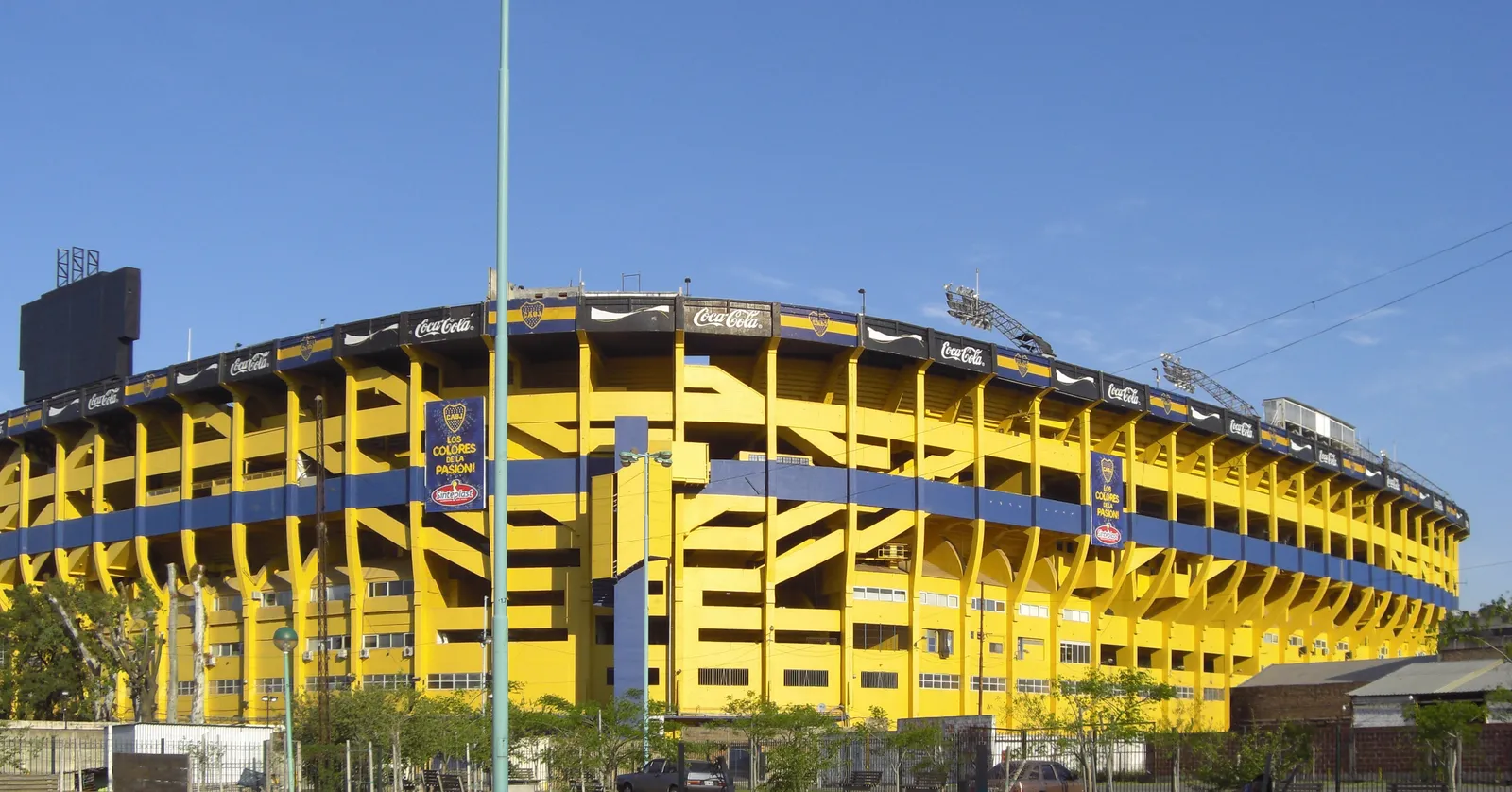
La Boca, the old port neighbourhood at the southern edge of Buenos Aires, holds three things within about five blocks of each other: Boca Juniors’ yellow and blue stadium with its museum, the painted houses along the Caminito passage, and a 1914 transporter bridge over the Riachuelo that carried nobody at all for 57 years.
La Bombonera’s three tall stands and one flat wall
Boca Juniors got a narrow plot and built to fit it, so the ground that opened on 25 May 1940 is not a bowl at all: three sides carry steep three-level stands, and the fourth is a flat vertical wall of stacked boxes. That asymmetry is where the nickname comes from, the chocolate box, and it is also why the sound inside has the reputation it does. Capacity is just over 58,000.
The Museo de la Pasión Boquense sits inside the ground and opens daily from 10am to 6pm, which makes it the one stop in La Boca that reliably fills an hour rather than twenty minutes. A guided visit that pairs this museum with River Plate’s is bookable through a tours and activities platform, but it takes most of a day, so it belongs to a long gap between flights rather than a short one. From outside, the striped concrete is free to look at and photographs better than the interior does.
Caminito’s 150 metres of painted conventillos
The passage runs off Avenida Don Pedro de Mendoza on the line of an old filled-in creek and a disused rail cutting, and it is short: 150 metres, no more. What fills it are conventillos, the shared tenement houses that took in the Genoese and Spanish dock families, clad in corrugated iron and painted in flat blocks of green, blue, orange and yellow. The usual account is that the paint was whatever the shipyards had left over, which is why no two panels match.
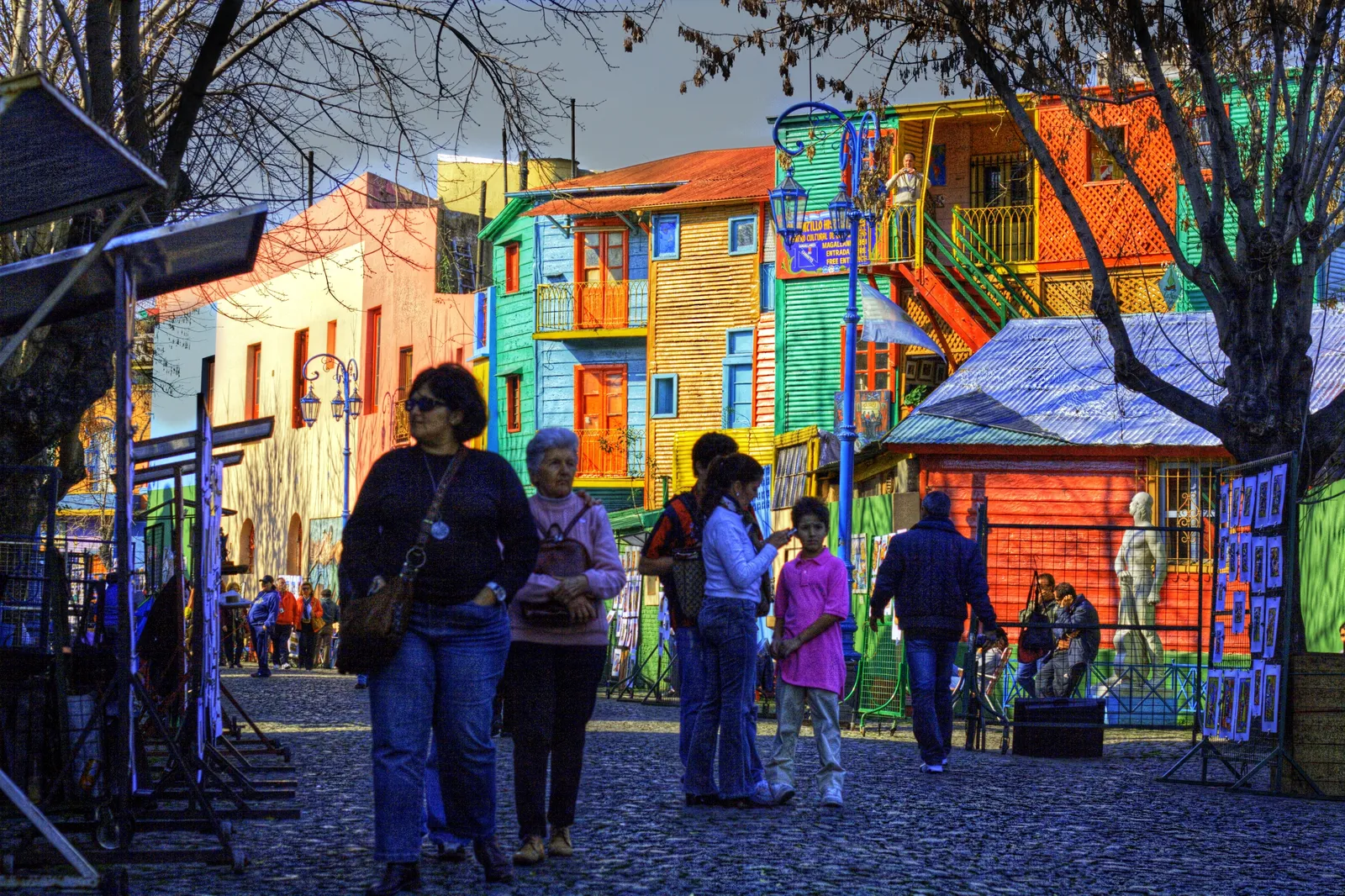
Craft stalls line most of it and tango dancers work the corner for tips, and both of those are as much a part of the place now as the paint is. Twenty minutes to half an hour covers the walk properly. The part of La Boca laid out for visitors runs to a handful of blocks around here, the stadium and the waterfront, and the standard advice is to stay inside them rather than wander further, which is easier done without a suitcase in tow on cobbles that were never meant for wheels.
The Quinquela Martín museum on the waterfront
Avenida Don Pedro de Mendoza 1835 holds the largest existing collection of Benito Quinquela Martín’s work, oils and etchings made between 1922 and 1967, almost all of them of the port half a block outside the window: cranes, coal barges, funnels, men unloading. He gave the building to the city as a cultural and educational centre for the neighbourhood, and the third floor keeps his own rooms and possessions as they were.
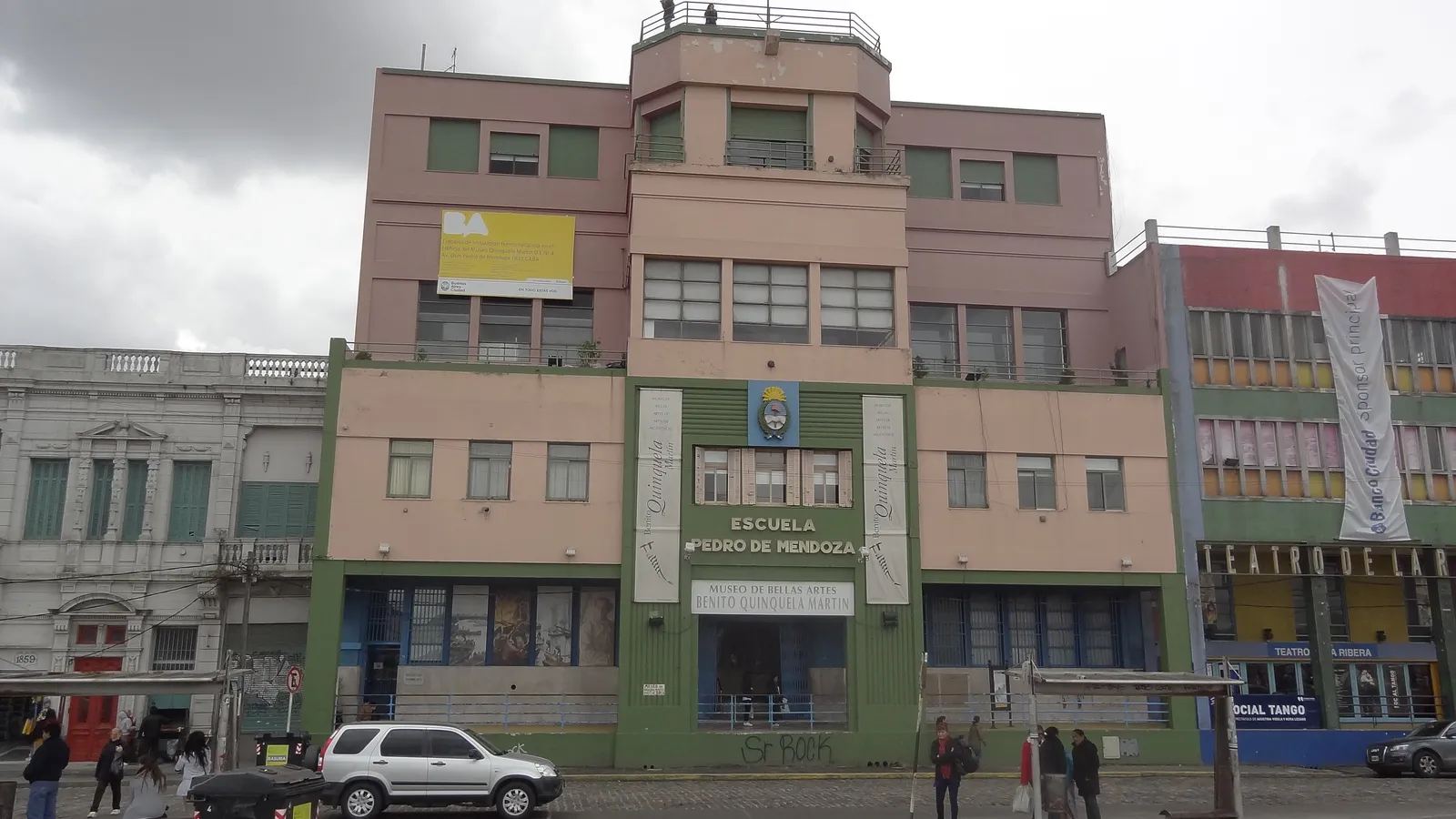
Entry runs on a suggested contribution rather than a fixed ticket. Posted opening hours differ between sources and have changed more than once, so check the day you go rather than building the afternoon around it. The terrace upstairs carries a collection of ship figureheads, which is a genuinely odd thing to find above a school and worth the stairs.
The transporter bridge that ran again after 57 years
At the eastern end of the waterfront the Riachuelo bends, a stretch called the Vuelta de Rocha, and a black steel lattice tower stands over it on both banks. The Nicolás Avellaneda transporter bridge opened on 31 May 1914, carrying pedestrians, carts, cars and trams across the water in a gondola slung under the span so that ships could still pass beneath. It stopped in 1960 and stood derelict for decades.
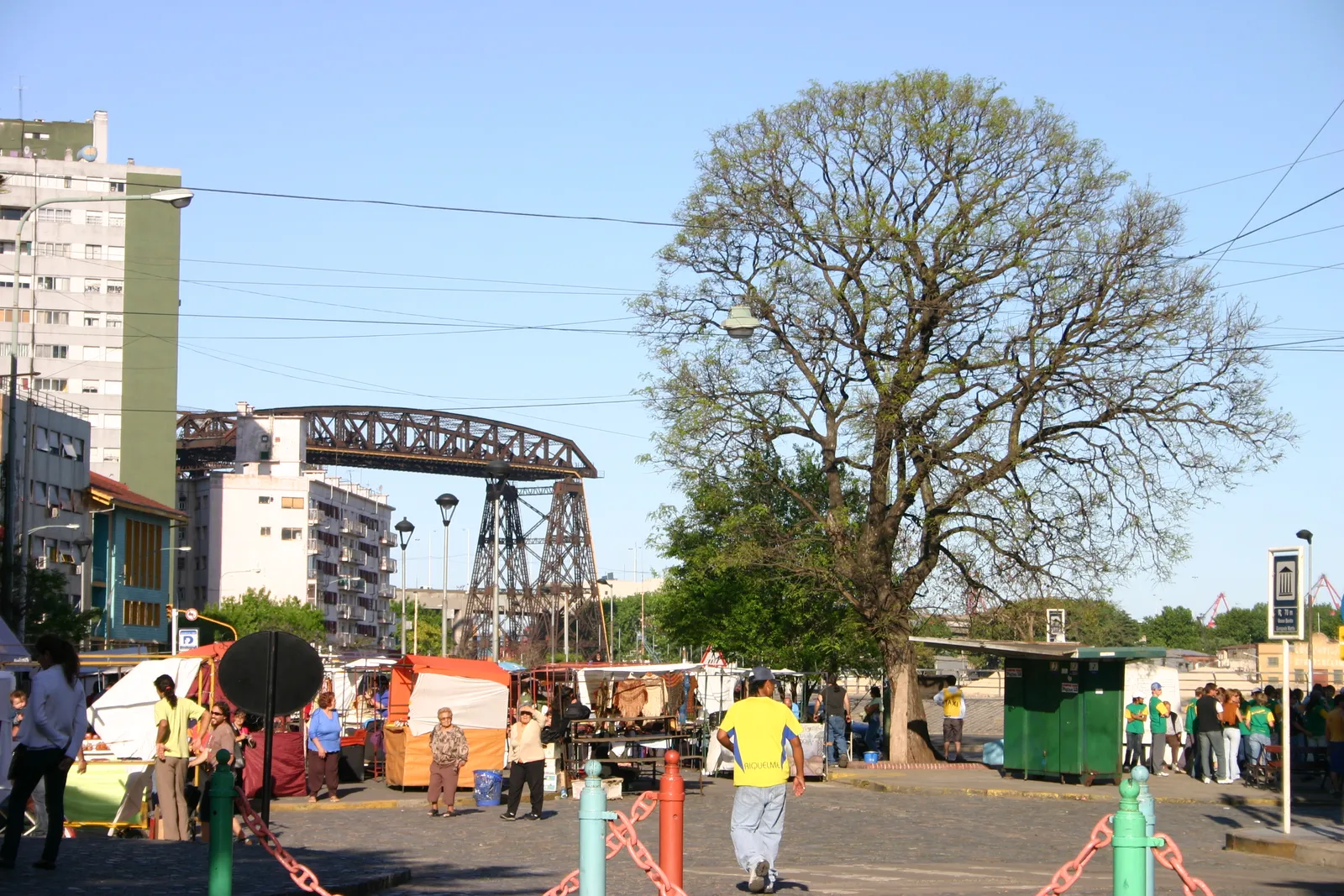
It was made a national historic monument in 1999, restored between 2011 and 2017, repainted in its original colour, and reopened to pedestrians in September 2017, the gondola running for the first time in 57 years. Around nine transporter bridges anywhere in the world are still able to run, and this is one of them. It is a five-minute walk from the museum and costs nothing to look at.
Buses and taxis are the only way in and out of La Boca
The 152 comes down from the centre and stops a couple of blocks short of Caminito, the 29 arrives from the Recoleta side, and a taxi or ride-hail from the Microcentro takes about fifteen minutes. No subway line reaches the neighbourhood at all, which is the detail that catches most visitors out. Contactless bank cards work at the reader on the buses.
Going out to Ministro Pistarini International Airport (EZE) means crossing back through the centre first. The express minibus leaves Terminal Pellegrini at Pellegrini 971, roughly hourly, about an hour to the airport; add the ride in from La Boca on top of that and budget two and a half hours from Caminito to the check-in desk. This is also the neighbourhood to do in daylight and leave before dark, so if your flight is late enough that La Boca would run into the evening, the historic centre route in the main Buenos Aires guide is the better use of the same hours.
Frequently asked questions
What should I do during a layover near Caminito in La Boca, Buenos Aires?
Three things sit within about five blocks of each other. Caminito itself is 150 metres of painted corrugated-iron houses and costs nothing to walk. La Bombonera, Boca Juniors' stadium, has a museum open daily from 10am to 6pm and is the one stop here worth paying for. Down on the waterfront, the Quinquela Martín museum holds the largest collection of the painter's harbour scenes anywhere, and the restored 1914 transporter bridge stands over the river beside it. Three hours covers all of it comfortably; do it in daylight rather than after dark.
Is La Boca somewhere to walk around freely?
Within the visitor area, in daylight, yes. That area is small: a few blocks taking in Caminito, the waterfront museums and the stadium, and the usual local advice is to stay inside it rather than explore outward on your own. Beyond those blocks the neighbourhood is residential and working port, not laid out for visitors, and the standard caution about not carrying anything you would mind losing applies. The other half of the answer is timing. This is a daylight stop, so if your free hours fall after dark, spend them somewhere else.
Is La Bombonera worth visiting if I don't follow football?
The building is worth ten minutes from the outside whether or not you care about the club, because the shape is genuinely strange: the plot was too narrow for a proper bowl, so three sides carry tall three-level stands and the fourth is a flat wall of stacked boxes, which is where the nickname comes from and why the noise inside is what it is. Capacity runs to just over 58,000. Inside, the Museo de la Pasión Boquense is open daily 10am to 6pm, and it is self-guided, so nothing needs booking unless you want a guide, in which case the guided version sold through a tours and activities platform is the one to look at.
How long does Caminito actually take?
Less time than the photographs suggest. The passage is 150 metres end to end, and unhurried, with stops for the tango dancers working the corner and the stalls along it, that is twenty minutes to half an hour. What fills a La Boca visit out to three hours is everything around it: the stadium five blocks north, the museums on the waterfront and the bridge at the far end. Treat Caminito as the opening move rather than the whole trip.