Ezeiza Airport Layover: What's Inside EZE
Part of the full Buenos Aires Layover Guide: Recoleta From EZE
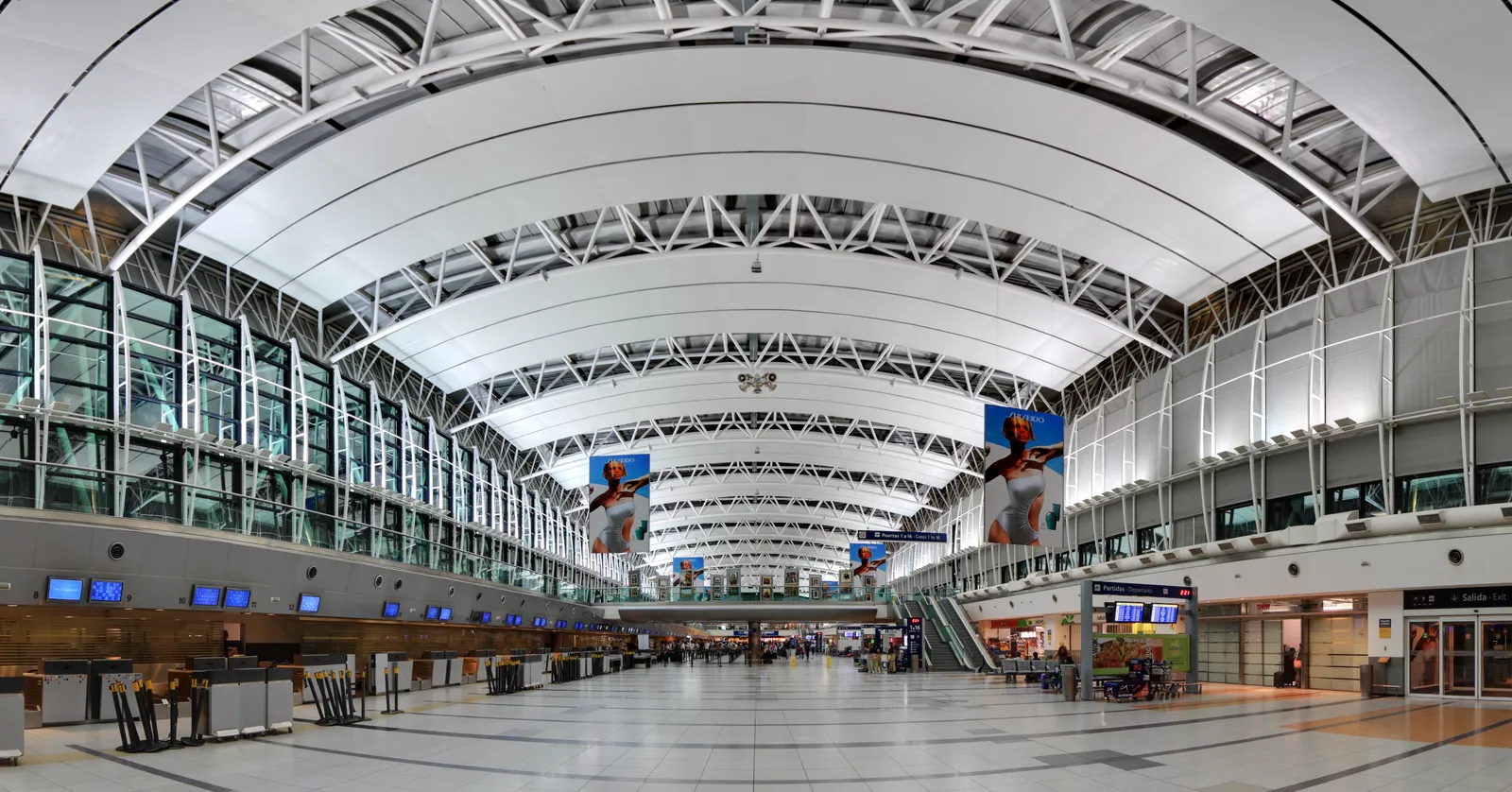
Ministro Pistarini International Airport, the Ezeiza field that handles most of Argentina’s international flying, puts every departure through one hall opened in 2023, keeps its landside lockers on a 06:00 to 22:00 clock, and sits an hour of road from central Buenos Aires in each direction, which is the number that decides whether you leave at all.
One hall at Ezeiza now handles every departure
The building that opened on 14 April 2023 runs to 50,000 square metres across four floors and was rated for 30 million passengers a year, against the 11 million the airport actually handled in 2024. That gap shows on the floor: the check-in rows are long, the queues spread out across them, and there is no scramble for a seat once you are through.
Arrivals are the part that stayed split. International flights land in what used to be Terminal A and domestic ones in the former Terminal C, both feeding the same departures floors above and beside them. Nothing here needs an inter-terminal train, a people mover, or a timed bus, which removes the single most common source of missed connections at airports this size.
A lounge past security that sells day passes to anyone
The Aeropuertos VIP Club is the one airside facility worth knowing about in advance, because it does not care which airline you are flying or what class your ticket is. Entry is sold at the door, the standard pass runs three hours, and the showers are the part that matters most on a long-haul connection where the next flight is another eleven hours.
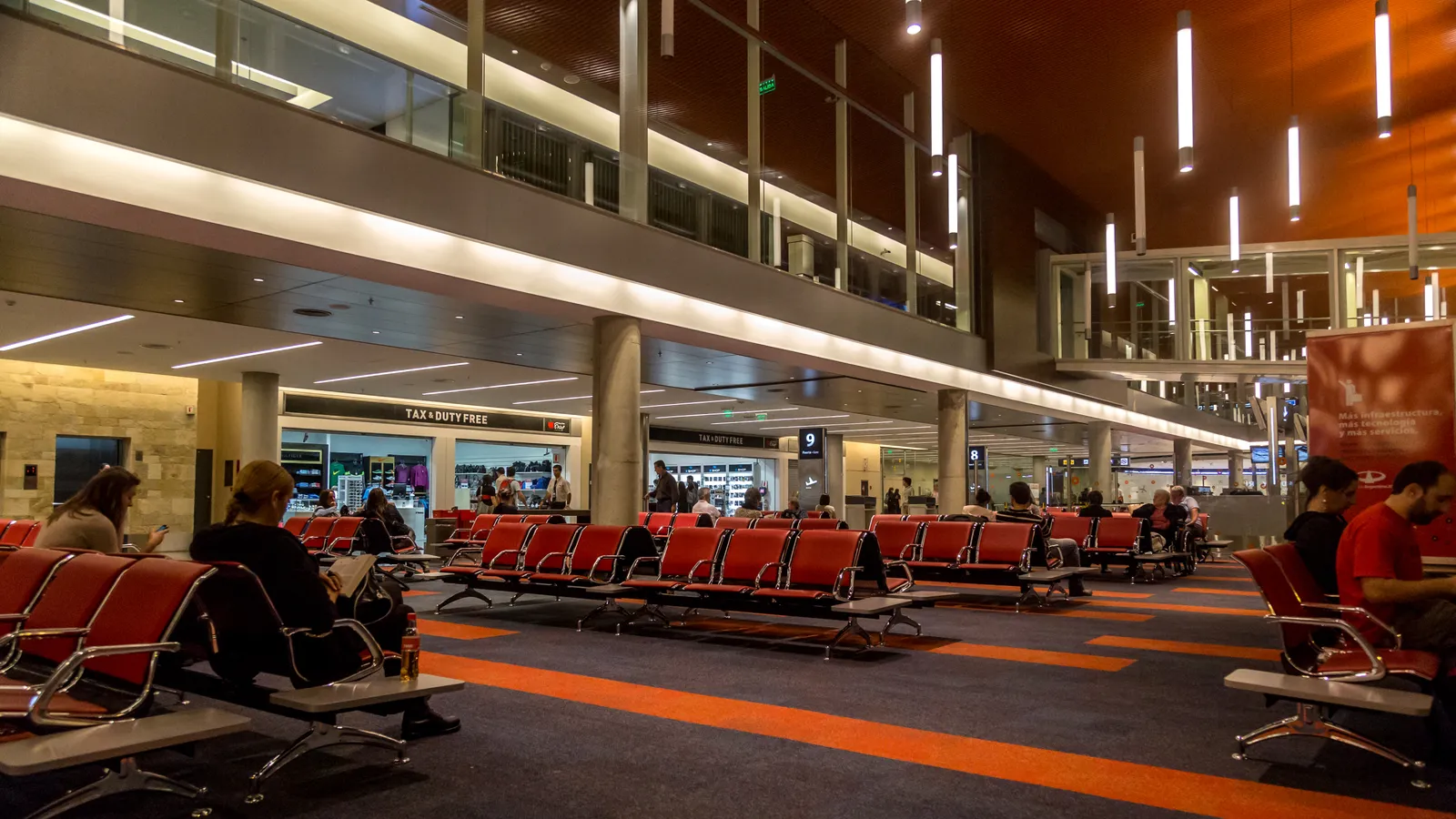
Everything else past security is what you would expect: duty free, a spread of cafés and counters, and free wifi across the whole complex that travellers report holds up better in the gate seating than out in the check-in hall. Between the shops and the seating, three or four hours passes without much effort, which is roughly the point at which the lounge fee starts to look reasonable rather than indulgent.
Ezeiza’s lockers close at 10pm and take no cash
Storage here is landside, in the international arrivals building near the check-in rows, and it works on a QR code you buy online from the airport operator’s own store rather than at a counter. Bags go up to 120 litres, about 46 by 90 by 75 centimetres. The two constraints that catch people out are the hours, 06:00 to 22:00 with nothing overnight, and the price, somewhere around fifteen US dollars for four hours.
That last figure is the practical argument for storing in town instead if you are heading in anyway: a storage point in central Buenos Aires charges a fraction of it for a whole day, and it puts your bag where the walking is rather than where the flight is.
Seven hours between flights is the floor for going into town
There is no rail link to Ezeiza and no fast option to build a plan around. The express minibus to Terminal Pellegrini in the centre takes about an hour, a taxi or remis 45 to 60 minutes with clear roads and considerably more without them, and you need both legs plus a sensible international check-in buffer at the end. That comes out around seven hours between flights before leaving the airport makes sense, and closer to eight if you want the trip to feel like anything other than a commute.
Above that line, the city is genuinely worth it, and the main Buenos Aires layover guide covers what fits: Recoleta Cemetery, the Teatro Colón, Plaza de Mayo and San Telmo, all within a short ride of each other. If you would rather not plan any of it on arrival, a small-group city tour can be booked ahead through a tours and activities platform and does the routing for you. Below that line, the honest answer is to stay put: the town of Ezeiza has nothing a traveller would cross a car park for, and the terminal is a better place to spend four hours than a taxi queue is.
Frequently asked questions
What should I do during a layover near Ministro Pistarini International Airport (EZE) in Buenos Aires?
Under about seven hours between flights, stay in the building: clear security early, use the free wifi, and spend the wait in the gate areas or in the pay-per-entry lounge, which sells showers as well as seats. Over seven hours, the road into central Buenos Aires opens up, and the express minibus is the reliable way to do it. There is nothing worth seeing in the town of Ezeiza itself, so the choice is genuinely binary: the terminal, or the whole hour-each-way trip into the city.
Can I store a bag at Ezeiza airport?
Yes, but on tighter terms than most airports. The self-service lockers sit landside in the international arrivals building, near the check-in rows, and they run 06:00 to 22:00 only, so an overnight connection cannot use them. They take bags up to 120 litres, roughly 46 by 90 by 75 centimetres, and payment is online through the airport operator's own store, which sends a QR code that opens and closes the door. There is no cash or card window at the locker itself. Expect somewhere around fifteen US dollars for four hours, several times what a storage point in the city charges for a full day.
Do I have to change terminals to connect at Ezeiza?
Almost never on foot, and never by vehicle. Since April 2023 every departure, domestic and international, leaves from a single hall built across four floors, so a connection means walking within one connected complex rather than moving between separate buildings. Arrivals are split, with international flights landing in the former Terminal A and domestic ones in the former Terminal C, but both feed the same departures hall. There is no inter-terminal train or bus to catch and no airside shuttle to time.
Is the lounge at Ezeiza worth paying for on a long connection?
If your wait runs past three or four hours, probably. The Aeropuertos VIP Club past security sells entry to any passenger regardless of airline or class, and the showers are the part that earns the money on a long-haul connection out of Buenos Aires. It is not cheap, and the standard pass is capped at three hours, so it works as a place to reset rather than somewhere to sit out an eight-hour gap. Free wifi runs throughout the terminal either way, and it is reportedly stronger in the gate areas than out in the check-in hall.