Buenos Aires Layover Near Constitución Station
Part of the full Buenos Aires Layover Guide: Recoleta From EZE
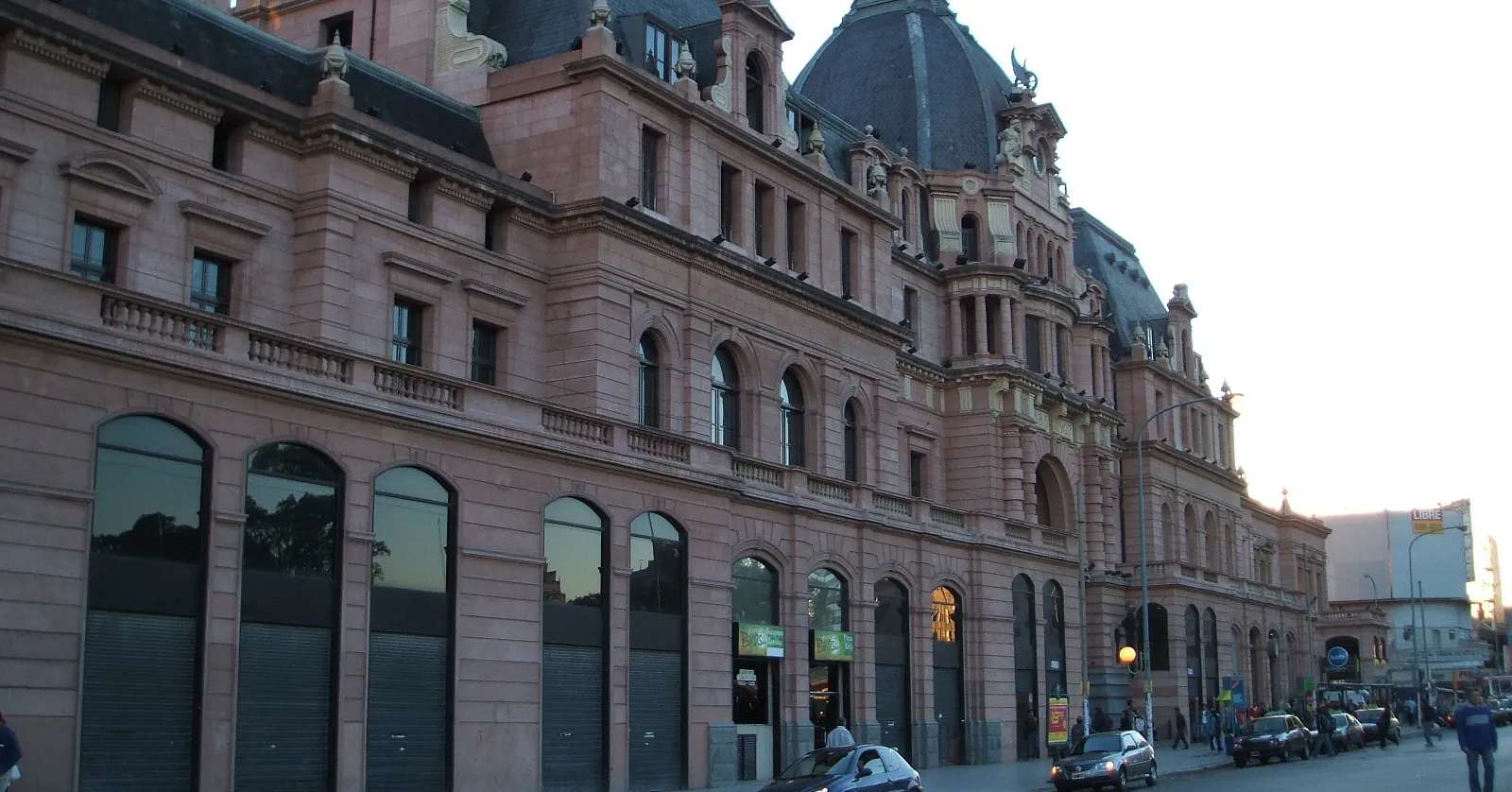
Constitución, the southern rail terminus in Buenos Aires that most travellers off a La Plata or southern-suburb train arrive through, sits thirteen minutes’ walk from Parque Lezama, the park where the city was first, unsuccessfully, founded in 1536, with a free national history museum inside it and a Russian Orthodox cathedral’s blue domes standing across the street.
Constitución’s Beaux-Arts hall, left half-finished by the 1929 crash
Ferrocarril del Sud’s architects, Paul Bell Chambers and Louis Newbery Thomas, drew up the current building in 1922 in a Beaux-Arts style modelled on the Palacio de Maisons-Laffitte outside Paris, and the Prince of Wales, later the Duke of Windsor, laid its foundation stone on 19 September 1925 during his state visit. The plan called for demolishing the older station entirely, but the 1929 financial crash stopped that short: the new wings, the great vestibule and the dome went up, while a stretch of the original 1880s street frontage survived because there was no longer money to replace it. The building was declared a National Historic Monument in 2021.
Inside, the concourse that resulted was one of the largest railway halls anywhere when it opened, and it still carries fourteen platforms under one roof. This is the southern terminus of the Roca Line, so every train from La Plata and the southern suburbs ends here, roughly every 20 to 45 minutes depending on the hour, a 75-minute ride from La Plata itself. A separate Subte Line C terminus sits directly underneath.
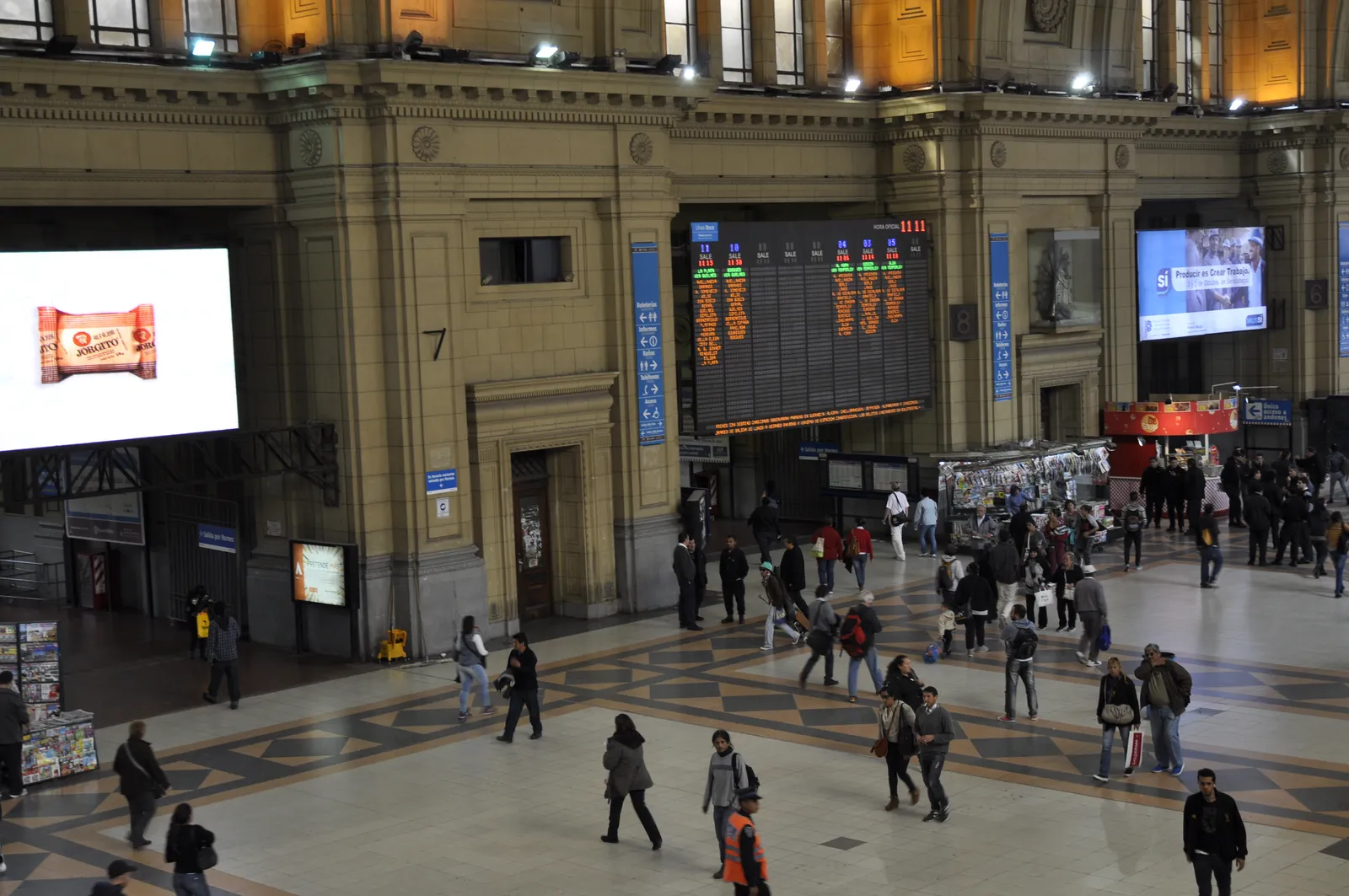
Constitución’s own forecourt and platforms carry a genuine reputation for petty theft, bag-slashing on crowded platforms is the specific warning most local guides give, so the standard advice is to keep a bag zipped and in front of you and move straight through rather than linger near the entrances. If you’d rather not navigate that stretch alone, a guided walking tour that covers this end of San Telmo is bookable through a tours and activities platform.
Most people stepping off a train here are commuters carrying a day pack or a duffel, not a flyer wheeling a suitcase off a flight, but a bag is still a bag on a platform that gets tight at rush hour.
Parque Lezama, on the site of the city’s failed 1536 founding
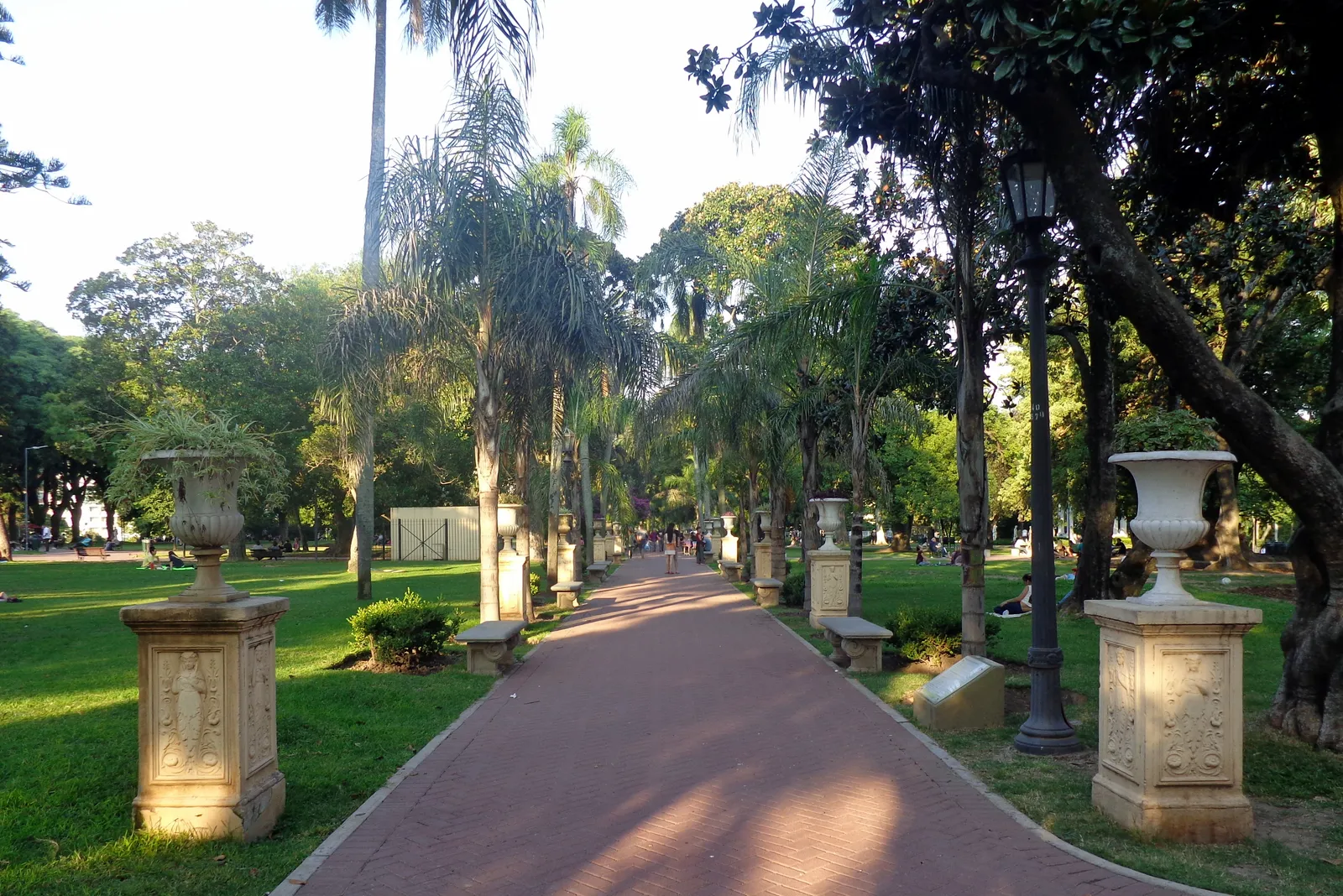
Historians place Pedro de Mendoza’s first attempt at founding Buenos Aires on the eastern edge of what’s now Parque Lezama, an attempt the indigenous population drove off within a few years. Three centuries later José Gregorio Lezama bought the land as a private estate and brought in the Belgian landscape architect Charles Veerecke to lay out the eight hectares of palm-lined paths, stone urns and a rose garden that still shape the park today. After Lezama’s death his widow sold it to the city on condition it stay public land, and it’s open around the clock, free.
The Lezama family’s own mansion, at the park’s Defensa street edge, became the National Historical Museum in 1897 and still is: a collection running from colonial-era paintings to the uniform Bartolomé Mitre wore commanding Argentine forces in the Paraguayan War. Admission is free, a donation is suggested, and it opens Wednesday to Sunday, 11am to 7pm, shut Monday and Tuesday.
The Russian Orthodox Cathedral’s blue domes across the road
Directly opposite Parque Lezama, a cluster of bright blue onion domes tops the Cathedral of the Most Holy Trinity, the first Orthodox Christian church built anywhere in Latin America. Argentina’s 19th-century wave of Russian, Greek, Baltic and Syrian immigrants needed a place to worship, and Tsar Alexander II granted the decree to build one; construction ran from 1898 to 1901, with the stained glass, icons and Venetian mosaics inside shipped from St Petersburg as a gift from Tsar Nicholas II and Tsarina Alexandra.
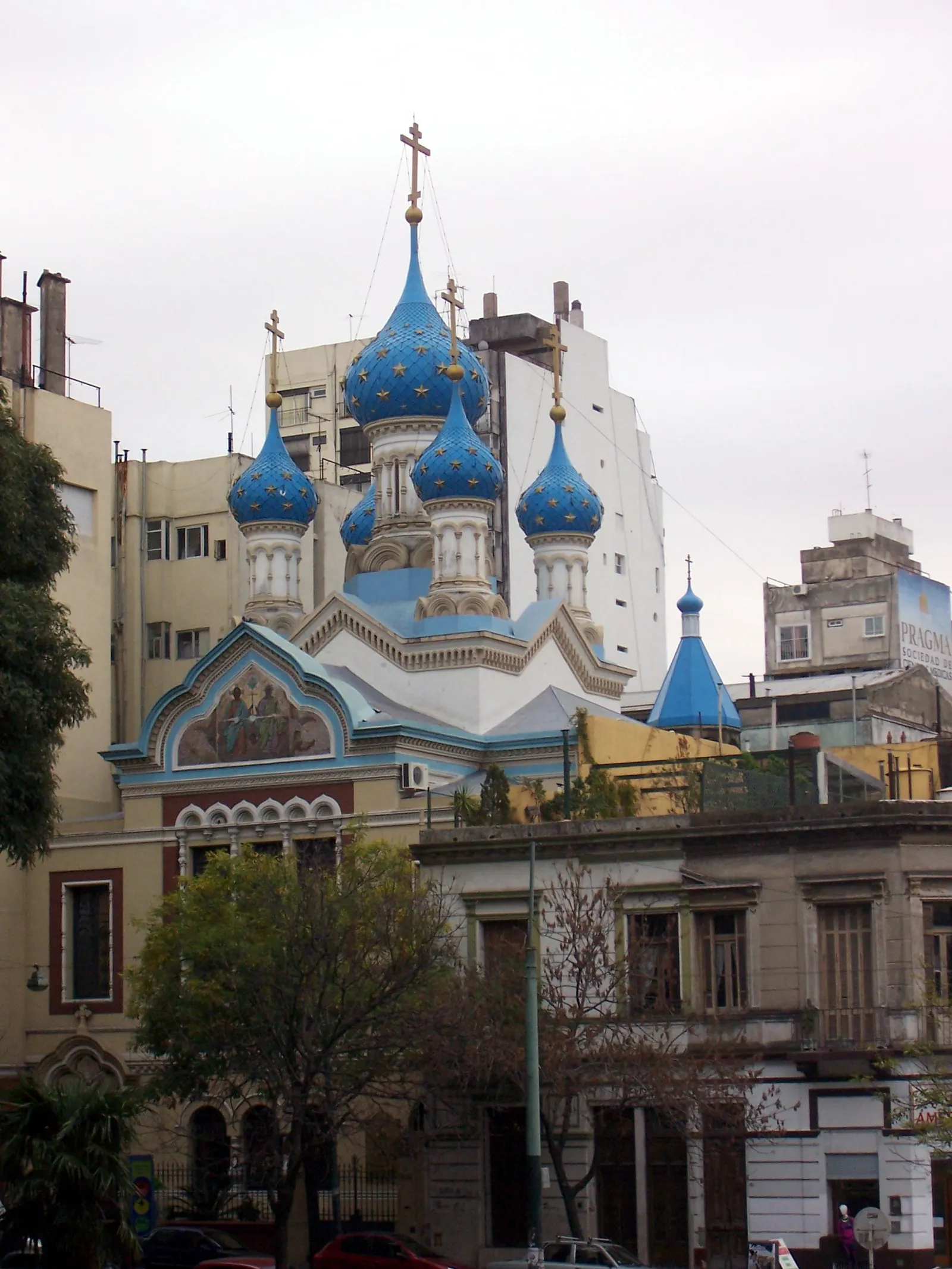
The exterior, domes and all, is the reason to come; entry to the church itself follows the parish’s own hours rather than a fixed visitor schedule, so treat a look inside as a bonus rather than something to plan around.
Bar Británico, on the same corner since 1928
A block from Parque Lezama’s gates, at the corner of Avenida Brasil and Defensa, Bar Británico has occupied the same address since 1928, when it converted from a plain corner store into a café for the British railway workers and First World War veterans who drank there. A trio of Galician owners ran it from 1960 until 2006, when the building’s new owner tried to evict them for a higher-paying tenant; a neighbourhood campaign of petitions and protests kept the fight public until the bar reopened under new management the following year.
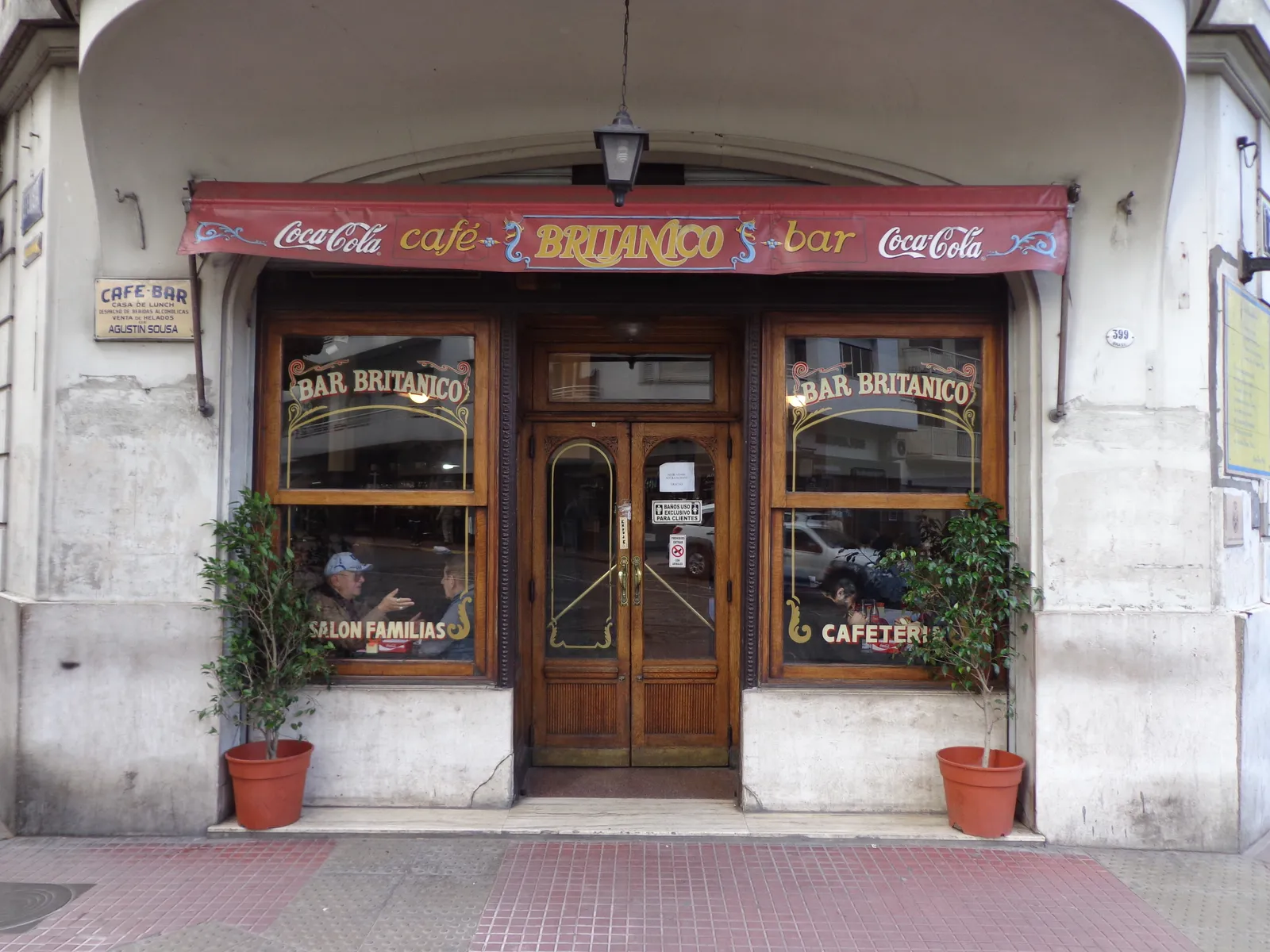
It’s still a working café today, tables spilling toward both street-facing windows under the same awning, and it’s the obvious place to sit down between the museum and the cathedral rather than carry on standing.
Line C reaches the airport shuttle stop in under fifteen minutes
Subte Line C terminates directly under Constitución and runs the length of downtown to Retiro, its other end, in about twelve minutes total. Six stops up, Lavalle station puts you two minutes’ walk from Terminal Pellegrini at Pellegrini 971, so the whole trip from Constitución to the shuttle desk runs under fifteen minutes door to door, faster and considerably cheaper than a taxi across the same stretch of the centre. From Terminal Pellegrini, Tienda León’s express minibus leaves roughly hourly for the hour-long run out to Ministro Pistarini International Airport (EZE); no rail line reaches the airport itself, so a shuttle or a car covers that last leg regardless of how you crossed town to get here.
Longer than four hours, it’s worth carrying on past Lezama into the historic centre covered in the main Buenos Aires guide, Recoleta Cemetery and the Teatro Colón are both a short ride further north on the same line of travel. Under that, Lezama, the museum and the cathedral are enough on their own, and doubling back to Constitución afterward costs less time than pushing further into the city would.
Frequently asked questions
What should I do during a layover near Constitución Station in Buenos Aires?
Walk the thirteen minutes from the station up Avenida Brasil to Parque Lezama, where the free National Historical Museum sits inside a mid-19th-century mansion and the Russian Orthodox Cathedral's blue domes stand across the road. Bar Británico, a corner café dating to 1928, is a block from the park gates if you want to sit down. Everything here is free except a coffee, and three hours covers the walk and both buildings comfortably. Keep it to daylight: this stop is built around walking, and Constitución's own forecourt is better moved through than lingered in after dark.
Is it safe to walk from Constitución station to Parque Lezama?
In daylight, yes, and it's a route plenty of San Telmo residents walk daily. Constitución's own forecourt and platforms are the part with the reputation, petty theft and bag-slashing on crowded platforms are common enough warnings in local guides, so the standard advice is to keep a bag zipped and in front of you and move directly out rather than linger near the entrances. Once you're a block or two up Avenida Brasil, the street is ordinary San Telmo, residential and quiet rather than risky. After dark, take a taxi or ride-hail door to door instead.
Is the National Historical Museum in Parque Lezama worth the stop?
If Argentine history interests you at all, yes, and it costs nothing beyond a suggested donation. The museum has occupied José Gregorio Lezama's former mansion since 1897, and its collection runs from colonial-era paintings to the uniform Bartolomé Mitre wore during the Paraguayan War. It opens Wednesday to Sunday, 11am to 7pm, and is shut Monday and Tuesday, which is the one thing worth checking before you make the walk out from the station.
How do I get from Constitución back to a flight out of Ezeiza?
Subte Line C runs direct from Constitución to Lavalle, six stops and roughly ten minutes north, and Lavalle sits two minutes' walk from Terminal Pellegrini at Pellegrini 971. From there, Tienda León's express minibus leaves roughly hourly for the hour-long run out to Ministro Pistarini International Airport (EZE). No rail line reaches the airport itself, so the shuttle or a taxi covers that last leg regardless of how you get across town, but the subte connection makes crossing town itself faster and cheaper than a taxi the whole way.