Recoleta Cemetery and Plaza, Buenos Aires
Part of the full Buenos Aires Layover Guide: Recoleta From EZE
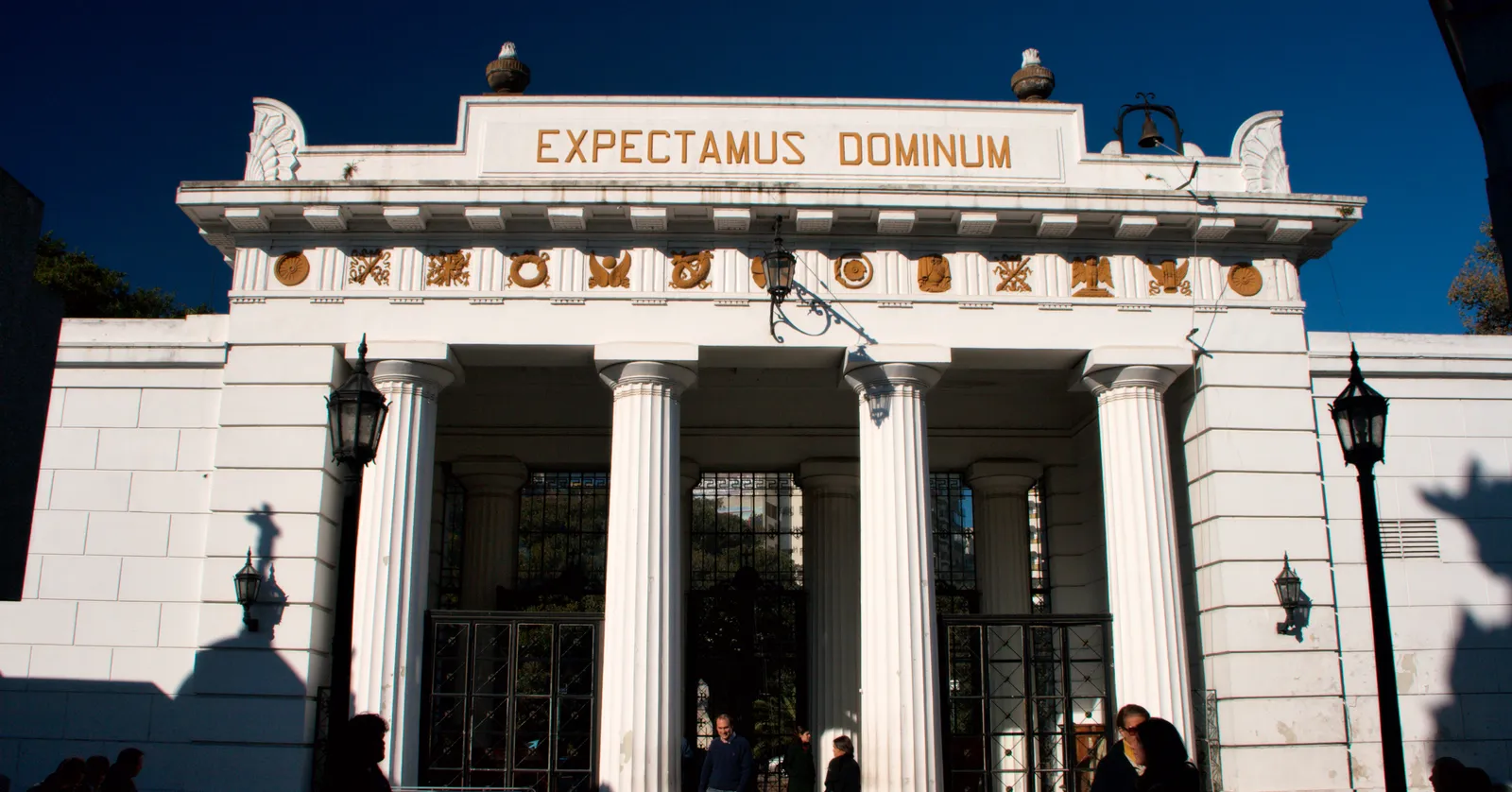
Recoleta Cemetery, the whitewashed 1732 church next to it and the cultural centre in the friars’ old convent behind it take up a single block of Buenos Aires, and a crafts fair spreads across the sloping plaza in front of all three at weekends.
Recoleta Cemetery was laid out on the friars’ vegetable garden
The Franciscan Recollects were given the ground on Junín street in 1716 and had their convent and church finished by 1732, with an orchard and a kitchen garden behind them. Bernardino Rivadavia’s government disbanded the order in 1822 and turned that garden into the first public cemetery Buenos Aires ever had, opened on 17 November of that year to a plan by the French engineer Próspero Catelin, who had also drawn the facade of the city’s Metropolitan Cathedral. The entrance you actually walk through is sixty years younger: Juan Antonio Buschiazzo rebuilt it in 1881, a double row of Doric columns with no bases carrying three iron doors three metres high, EXPECTAMUS DOMINUM cut into the frieze, and the brick perimeter wall in English bond that still runs round all five and a half hectares.
Tourist hours are 9am to 5pm, every day of the year. Argentine residents walk in on their documents; everyone else buys a ticket, either online through the city’s ticketing site or at the gate, and there is no cash window, so bring a card. Free tours in Spanish leave the main entrance on the hour, 10am to 4pm on weekdays and from 9am at weekends and on public holidays. Take a map from the gate whether or not you join one: the lanes are numbered by section rather than signposted by name, and the vaults worth stopping at are not the ones nearest the door.
Nuestra Señora del Pilar has stood on Junín since 1732
The Italian Jesuit architect Andrés Blanqui began the church, Juan Bautista Prímoli finished it, and it opened on 12 October 1732 and was consecrated eighteen months after that. From Junín 1898 it presents a whitewashed colonial front with one domed bell tower and nothing else. It has been a national historic monument since 1942. The plain exterior is misleading. The baroque main altarpiece inside was worked in silver in Upper Peru, in what is now Bolivia, and carried down the royal road by cart, and the Inca ornament in it is the giveaway that it was not made anywhere near here.
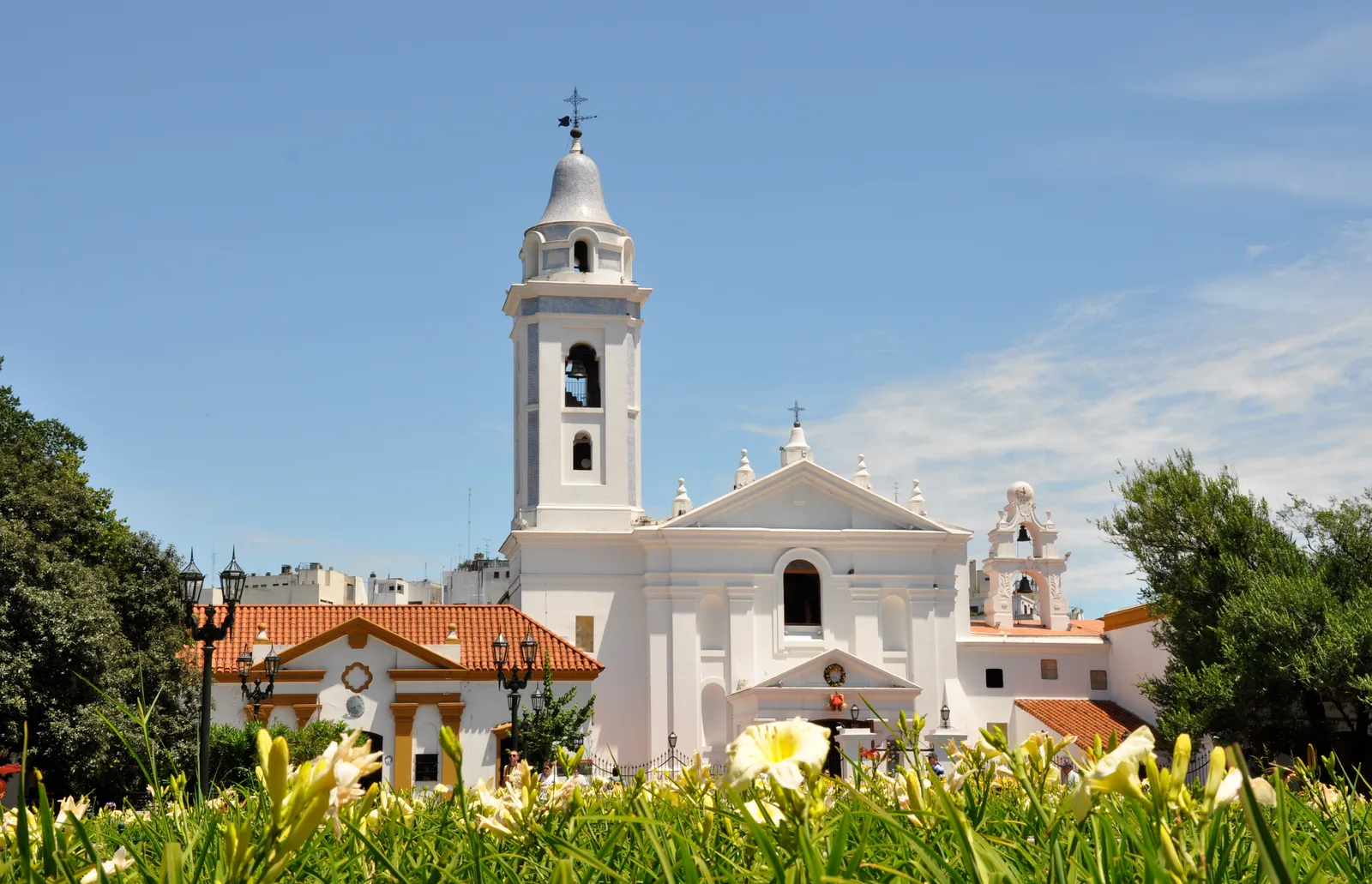
The part most people miss is upstairs and round the side. Three storeys of galleries around the old courtyard hold a museum of colonial paintings, sculpture, manuscripts and liturgical silver, open free on Tuesday, Wednesday and Thursday afternoons until 4pm, with a guided tour at 4pm on those days and again on the first Sunday of each month between 3pm and 6pm. The church itself opens daily and the adoration chapel runs 8am to 10pm, which makes this the one door on the block that is reliably open when everything else has shut.
The weekend crafts fair on Plaza Intendente Alvear
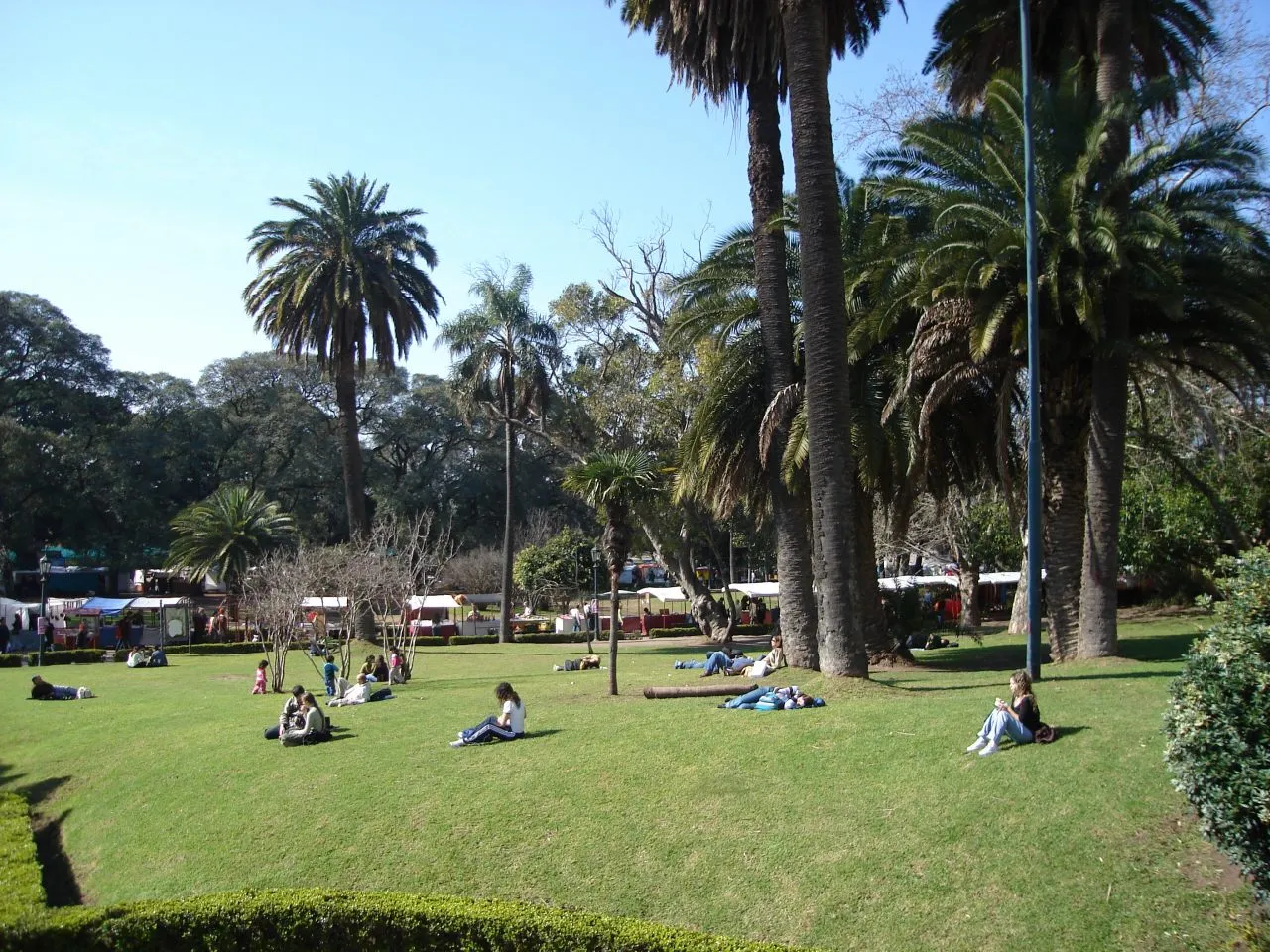
The plaza that slopes down in front of the cemetery gates is not Plaza Francia, despite what half the signage and every taxi driver will tell you: Plaza Francia is the smaller one alongside it, and this is Plaza Intendente Alvear. The fair that has run here since the 1960s inherited the wrong name along with the ground. It trades on Saturdays, Sundays and public holidays, 11am to 8pm, and the city vets the stallholders through a trade body to keep resellers out, so what is on the tables is ceramics, leather, wood, metal and wool made by the people standing behind them.
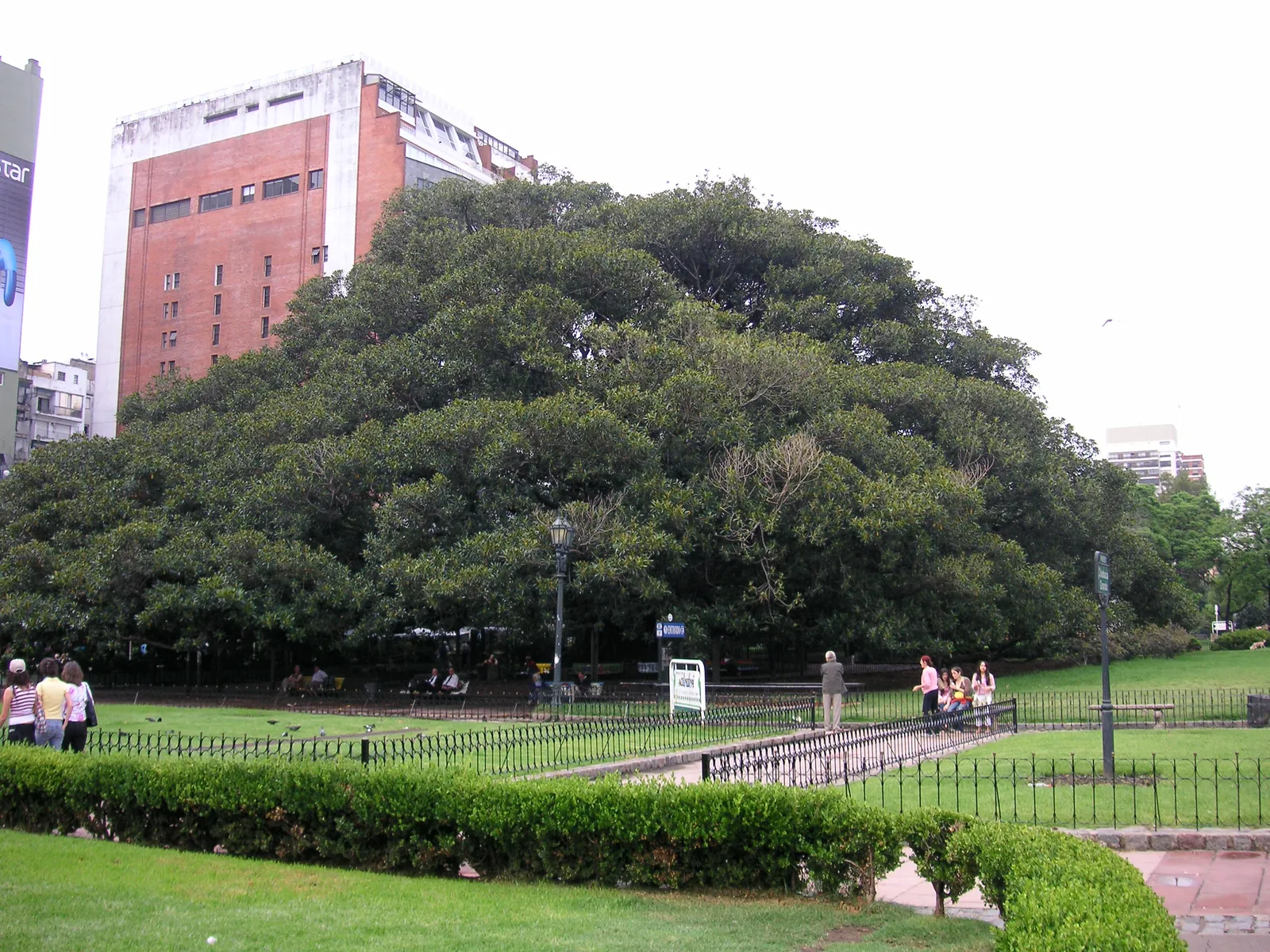
At the top corner of the plaza, on Avenida Quintana outside the café La Biela, stands a rubber tree planted around 1791, either by a local landowner or by the friars themselves depending on which account you read. Its canopy now spreads about fifty metres, its longest branch runs to twenty-eight, and several of them are so heavy they rest on metal props sunk into the ground, one of which has been dressed up as a stone Atlas holding the tree on his shoulders. The café tables underneath it are the shadiest seats in Recoleta and priced accordingly, but nobody charges you to stand and look at the tree.
The aisles between the fair’s stalls and the lanes between the cemetery’s vaults run about the same width, two people abreast, and the lane to the Duarte tomb is a dead end, so a suitcase has to come back out the way it went in.
The friars’ convent is now a cultural centre with sixteen halls
Two institutions came between the Recollects and the galleries. Governor Valentín Alsina opened a beggars’ asylum in the building in 1858, and by 1944 it was an old people’s home with around 800 residents. Clorindo Testa, Jacques Bedel and Luis Benedit finished converting it in December 1980 without erasing either of those layers. Colonial arcades, 19th-century institutional corridors and hard modern concrete sit against each other throughout, which is the real reason to walk in even if the current shows do nothing for you.
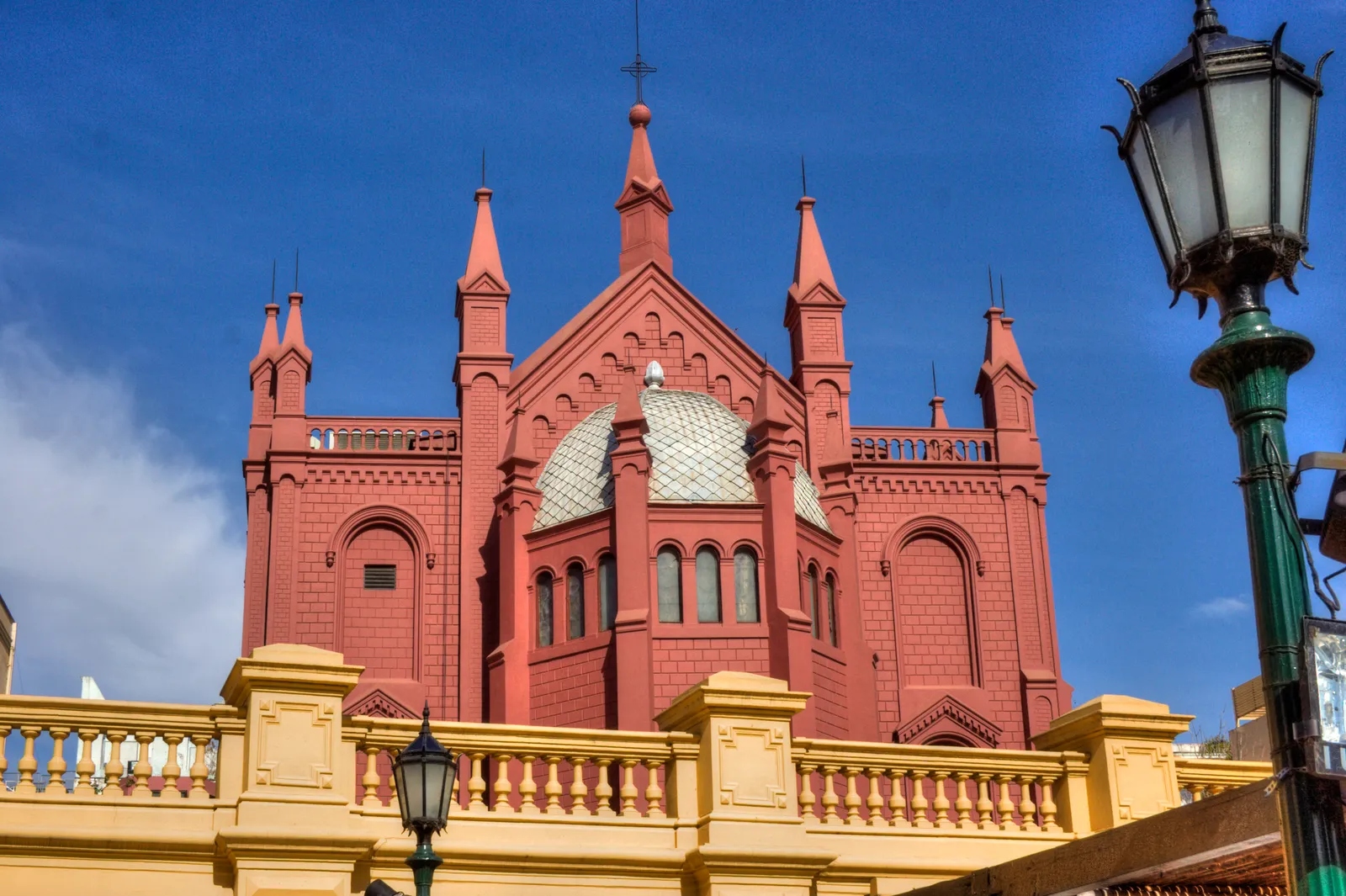
Twenty-five thousand square metres hold sixteen exhibition halls, four courtyards, a cinema and a concert hall that is still the convent’s chapel. It opens Tuesday to Friday from half past one in the afternoon, weekends and holidays from late morning, and runs until 10pm in every case, which is five hours after the cemetery gates have shut. Entry is free for residents; visitors from abroad have been charged at the door on and off in recent years, so have a card ready and treat it as a small ticket rather than a certainty either way.
The subway station for the airport shuttle is Callao, not Las Heras
Las Heras is the closer of the two, four or five blocks from the cemetery gates, but its line runs south across the city rather than east into the centre. Callao station, at Callao and Santa Fe, is about ten minutes’ walk from the gates and sits on Line D: two stops from there to 9 de Julio at the Obelisco puts you a couple of minutes from Terminal Pellegrini at Pellegrini 971. Tienda León’s express minibus leaves there roughly hourly for the hour-long run out to Ministro Pistarini International Airport (EZE), and no rail line of any kind reaches that airport, so a shuttle or a car covers the last leg whatever you do.
Recoleta is also close enough to walk out of. Plaza San Martín and the clock tower above Retiro station are twenty minutes east on foot, and with more than four hours the sensible move is to carry on into the historic centre covered in the main Buenos Aires guide rather than double back. Under three hours, the cemetery and the church alone are the honest answer, and the fair if the day happens to suit.
Frequently asked questions
What should I do during a layover near Recoleta Cemetery in Buenos Aires?
Stay on the one block. The cemetery's tourist hours are 9am to 5pm and it is the stop with a real ticket on the gate, so it decides the order of everything else. The church of Nuestra Señora del Pilar next to it has been standing since 1732 and costs nothing, the cultural centre behind them both runs sixteen exhibition halls in the friars' old convent, and the sloping plaza in front holds a crafts fair on Saturdays, Sundays and public holidays. Three hours covers all four without hurrying. On a weekday the fair is the one piece that will not be there.
Is anything around Recoleta Cemetery open on a public holiday?
More than on a Monday, as it happens. The cemetery keeps its 9am to 5pm tourist hours every day of the year, holidays included, and its free Spanish-language tours start an hour earlier on holidays and weekends than they do midweek. The crafts fair on Plaza Intendente Alvear treats public holidays as weekend days and trades 11am to 8pm. The cultural centre runs holiday hours rather than weekday ones, opening late morning instead of half past one, and it is Monday, not a holiday, that shuts it. The church opens daily either way.
When is the cloister museum at Nuestra Señora del Pilar open?
Tuesday, Wednesday and Thursday afternoons until 4pm, with a guided tour at 4pm on those same days, plus the first Sunday of each month between 3pm and 6pm. It is the least visited thing on this block: three storeys of galleries around the church's courtyard, holding colonial paintings, sculpture, manuscripts and liturgical silver, and the free visits need no booking. Outside those windows the church itself is still open, and its adoration chapel runs 8am to 10pm daily.
What is there to do around Recoleta Cemetery after it shuts at 5pm?
The gates close at 5pm and nothing gets you back in, but the rest of the block runs late. The Centro Cultural Recoleta stays open until 10pm every day it opens at all, which is Tuesday through Sunday, and the exhibition halls are genuinely worth the last hour of the day. The weekend fair on the plaza trades until 8pm. The church's adoration chapel is open until 10pm daily. If you would rather spend the evening somewhere else entirely, the main Buenos Aires guide covers the Teatro Colón and the historic centre, both a short ride south.