Aeroparque Layover: The Buenos Aires Riverfront
Part of the full Buenos Aires Layover Guide: Recoleta From EZE
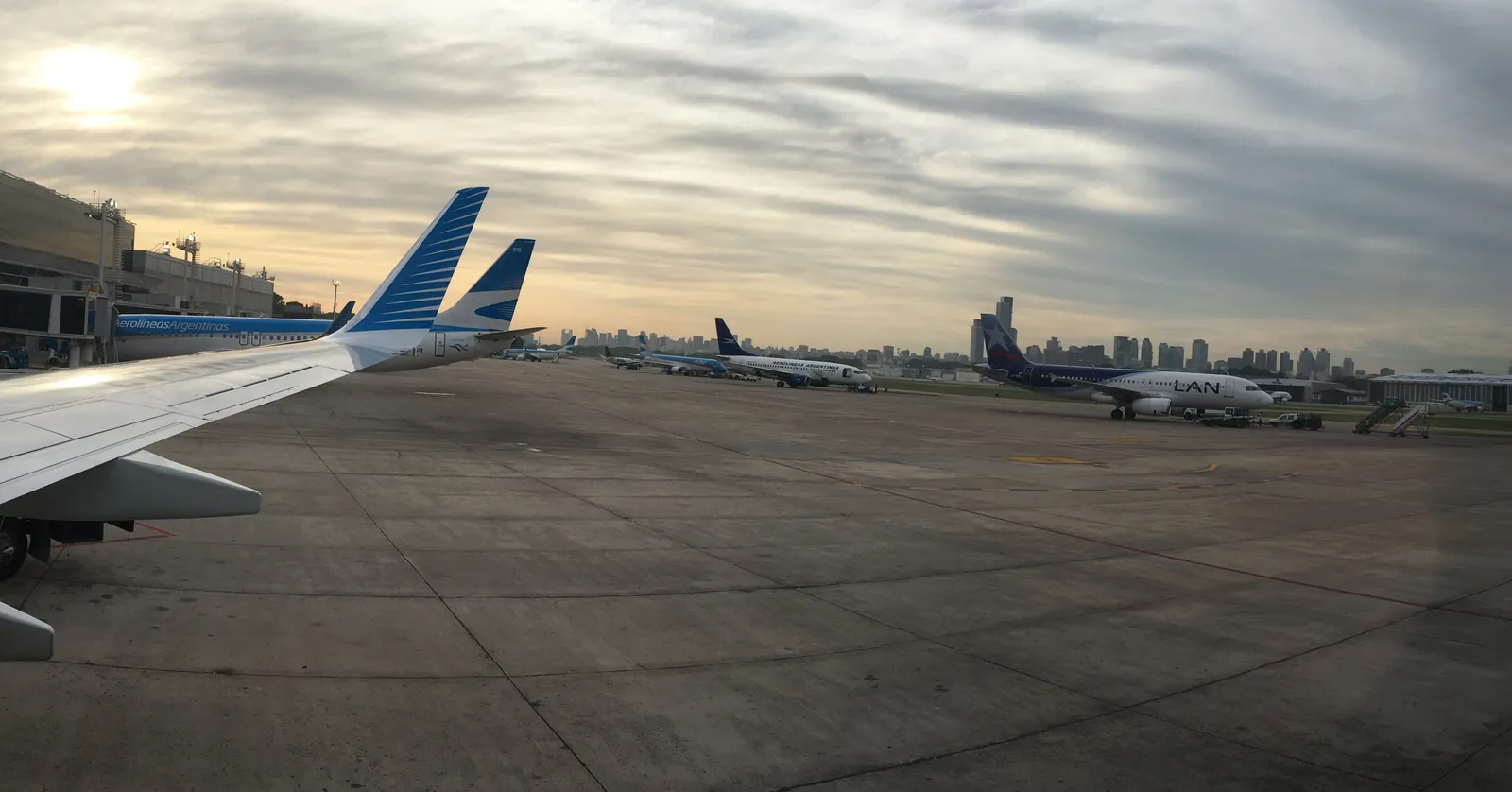
Aeroparque Jorge Newbery, the Buenos Aires city airport sitting right on the Río de la Plata, has a free memorial park of thirty thousand stone blocks and a half-hour riverside promenade on its doorstep, and downtown only two kilometres beyond that.
Thirty thousand stone blocks at the Parque de la Memoria
Fourteen acres of riverbank at Avenida Costanera Norte Rafael Obligado 6745 are laid out as four long concrete stelae stepping down toward the water, faced with thirty thousand blocks of Patagonian porphyry. About nine thousand of them are cut with a surname, a first name and an age, ordered alphabetically within the year each person was taken, between 1969 and 1983; the rest are deliberately left blank, which is the part of the design that lands hardest. The walls face the Río de la Plata, the water the dictatorship dropped prisoners into on its death flights.
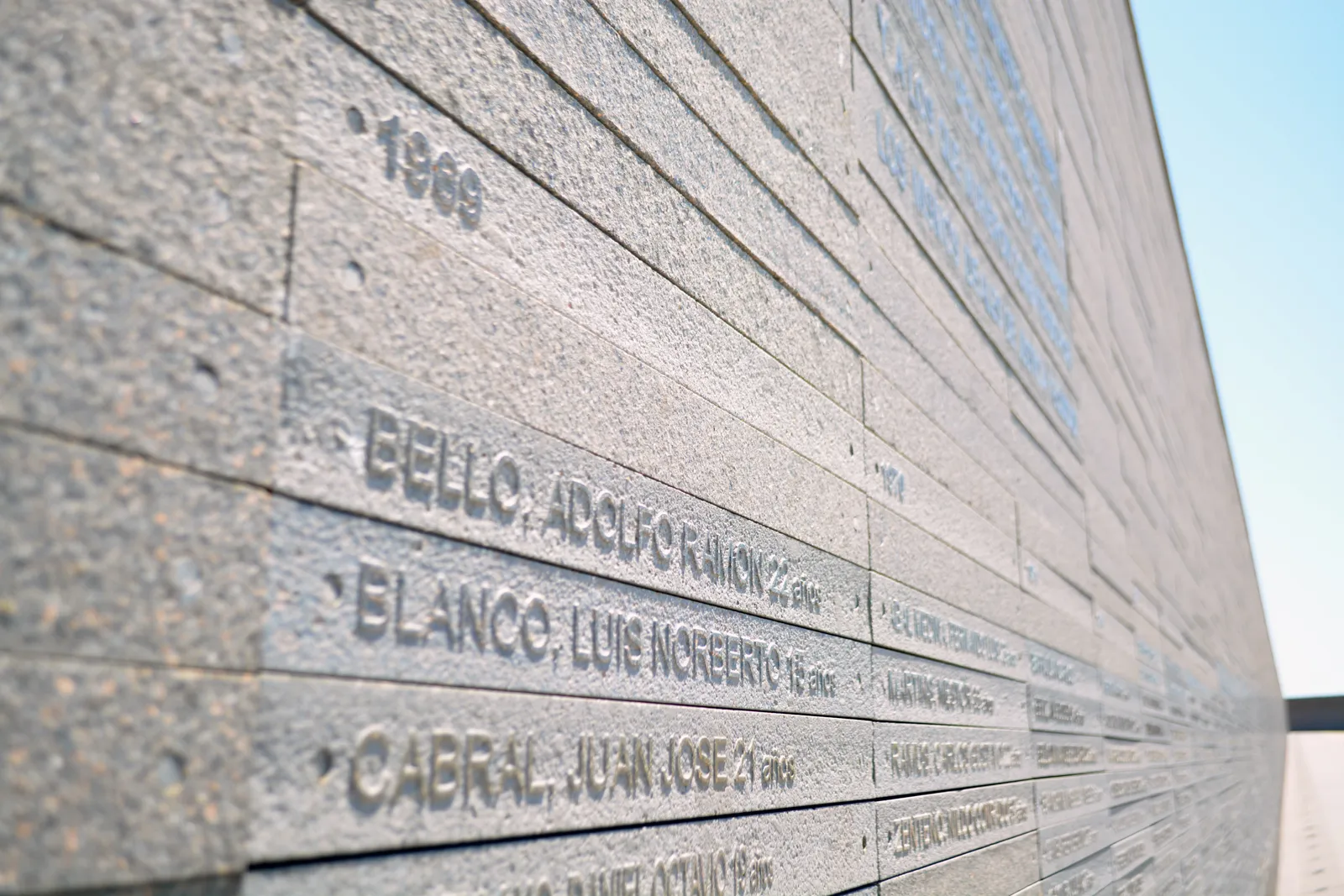
It costs nothing and opens 10am to 6pm daily. Reading the walls properly takes half an hour, and there is contemporary sculpture spread across the lawn behind them, but the honest reason to come is that nothing in the city centre does this, and it happens to sit closer to the terminal than the centre does.
The Costanera Norte promenade, and the arrivals overhead
Avenida Rafael Obligado runs the length of the waterfront past the airport, and the pavement beside it is a straight, flat, entirely free walk with a decorated stone balustrade on the river side. Regulars set up folding chairs and rods against it all day. The other draw is unavoidable and free: this is the approach path, so aircraft come in low over the water and land a few hundred metres away.
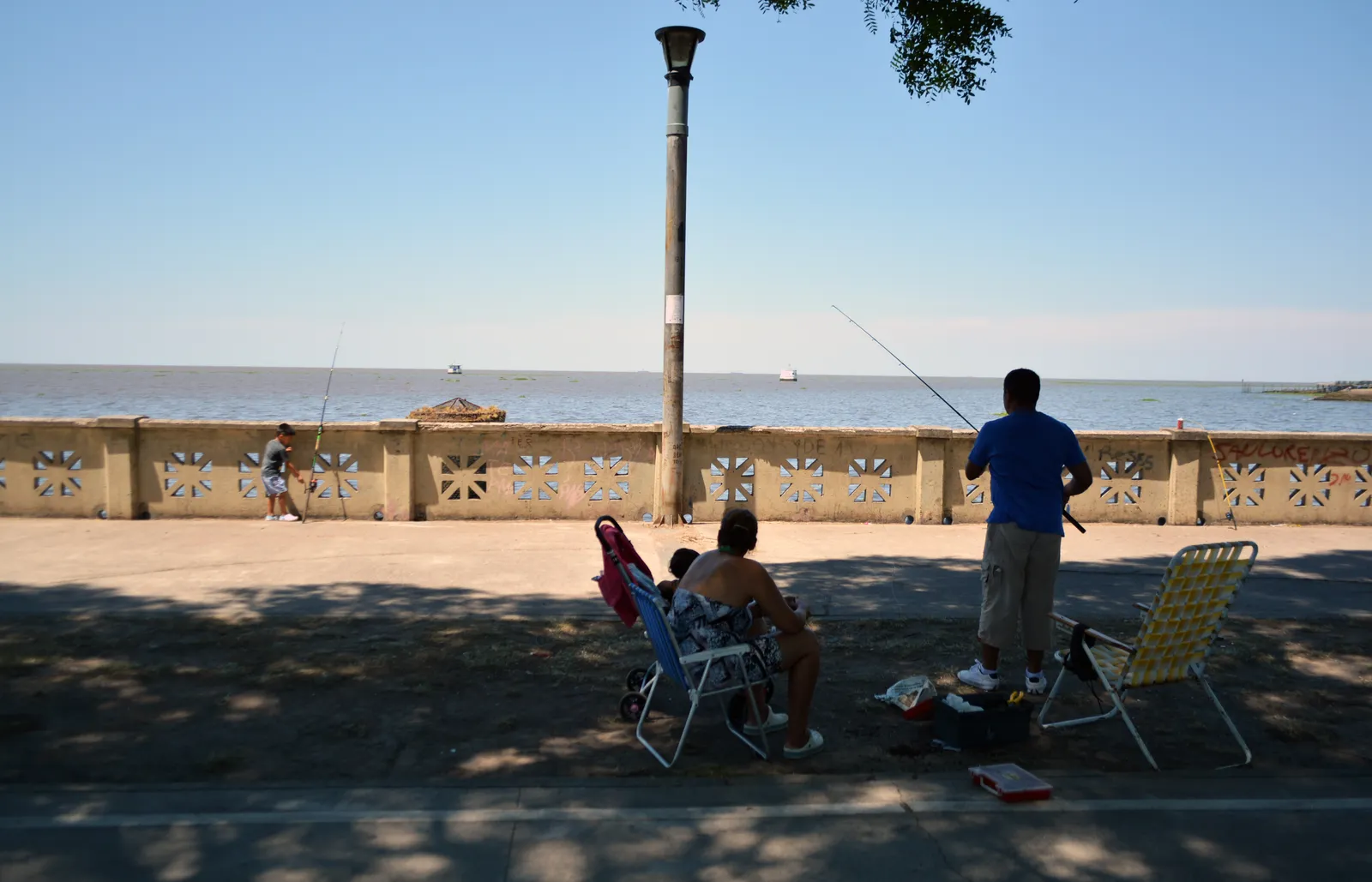
Allow thirty to forty-five minutes to walk the useful stretch of it. Food along here is food trucks and sausage counters rather than restaurants, which suits a gap between flights better than a sit-down meal would.
Downtown is two kilometres from Aeroparque’s runway
A taxi or remis from the terminal exit reaches the Microcentro in about fifteen minutes, which changes the arithmetic of a layover completely. The 33 and the 45 city buses, boarded on Avenida Rafael Obligado in front of sectors A and B, take roughly forty minutes for a fraction of the fare, and a contactless Visa or Mastercard works at the reader without any local transit card.
The catch is the check-in clock rather than the road: two hours for a domestic flight and three for an international one, and Aeroparque’s Uruguay, Brazil and Chile routes count as international. With the ride so short, the largest single block of time in a trip into town is handling your bag at each end, which is the argument for parking it at a storage point in the centre rather than dragging it around and back.
Four hours between flights is enough to make the centre worth it, and the main Buenos Aires guide covers what fits into that: Recoleta Cemetery, the Teatro Colón, Plaza de Mayo and the market blocks of San Telmo. Under four, stay on this side of town, where the riverfront and the memorial park are close enough that a delayed flight does not strand you.
Frequently asked questions
What should I do during a layover near Aeroparque Jorge Newbery (AEP) in Buenos Aires?
Go north along the river rather than into the centre. The Parque de la Memoria, a free memorial park on the Río de la Plata built from thirty thousand stone blocks with about nine thousand of them cut with the names of people disappeared or killed by the state between 1969 and 1983, is the one stop here that is unlike anything in the city centre, and it opens 10am to 6pm. The Costanera Norte promenade between it and the airport is a flat riverside walk of half an hour or so. With four hours or more, downtown is a fifteen-minute taxi away and the whole central itinerary opens up instead.
How do I get from Aeroparque to central Buenos Aires?
Aeroparque is two kilometres north-west of downtown. A taxi or remis from the terminal exit takes about fifteen minutes to the Microcentro in normal traffic. City buses run from Avenida Rafael Obligado in front of sectors A and B, and the 33 and the 45 both reach the centre in roughly forty minutes for a fraction of the fare. Contactless Visa and Mastercard work at the bus reader, so no local transit card is needed.
How early do I need to be back at Aeroparque?
Two hours for a domestic flight and three for an international one is the standard advice, and Aeroparque's regional routes to Uruguay, Brazil and Chile count as international. That guidance is what actually caps a layover here: with a three-hour check-in buffer and a fifteen-minute taxi in each direction, a five-hour gap between flights leaves under two hours of real free time. Work backwards from the check-in deadline rather than the departure time.
Is the Costanera Norte walk any good in bad weather?
Not really, and this is worth knowing before committing to it. The promenade is open riverfront with no shelter along most of its length, the Río de la Plata pushes wind straight onto it, and the Parque de la Memoria is an open lawn with the same problem. In rain or a strong sudestada wind off the river, the sensible move is to skip both and take the fifteen-minute ride into the centre, where the museums, the market halls and the arcades give you somewhere to be indoors.