Rio de Janeiro Layover: Sugarloaf From GIG
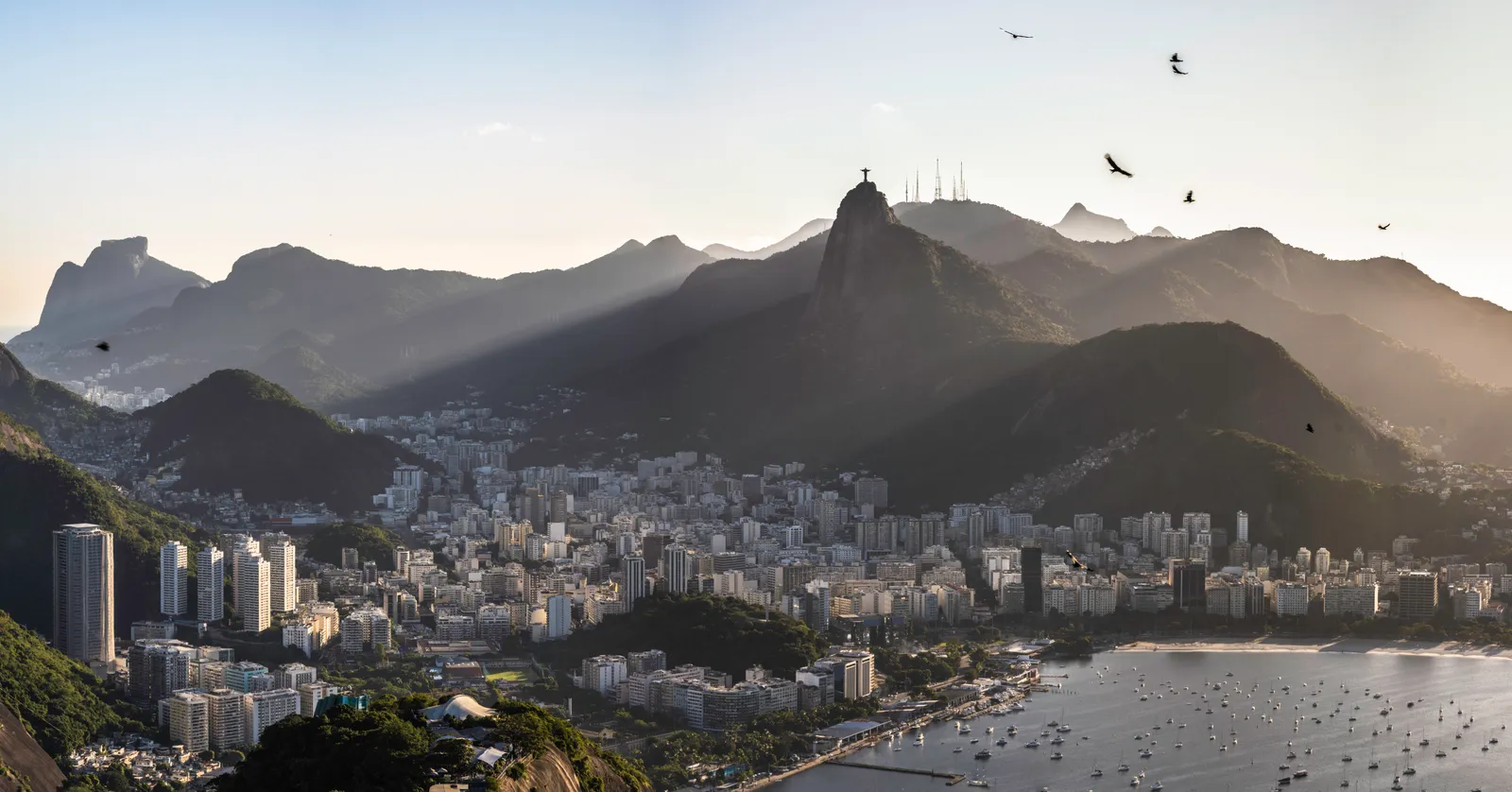
Rio de Janeiro’s cable car climbs to a granite peak at the mouth of Guanabara Bay in two stages, and the old centre holds a three-storey Portuguese reading room, a monastery lined in gold leaf and a UNESCO-listed stone wharf, none of which charge admission.
The two-stage cable car up Sugarloaf Mountain
Sugarloaf Mountain rises 396 metres straight out of the water where Guanabara Bay meets the Atlantic, and the way up is two separate rides rather than one. The first cabin covers 600 metres from the base station at Praia Vermelha, in the Urca district, to the lower dome of Morro da Urca at 220 metres. The second runs 850 metres across the gap to the summit. Both cabins are glass on every side and hold around 65 people, and the line has been working since 27 October 1912, which makes the ride itself part of what you are paying for.
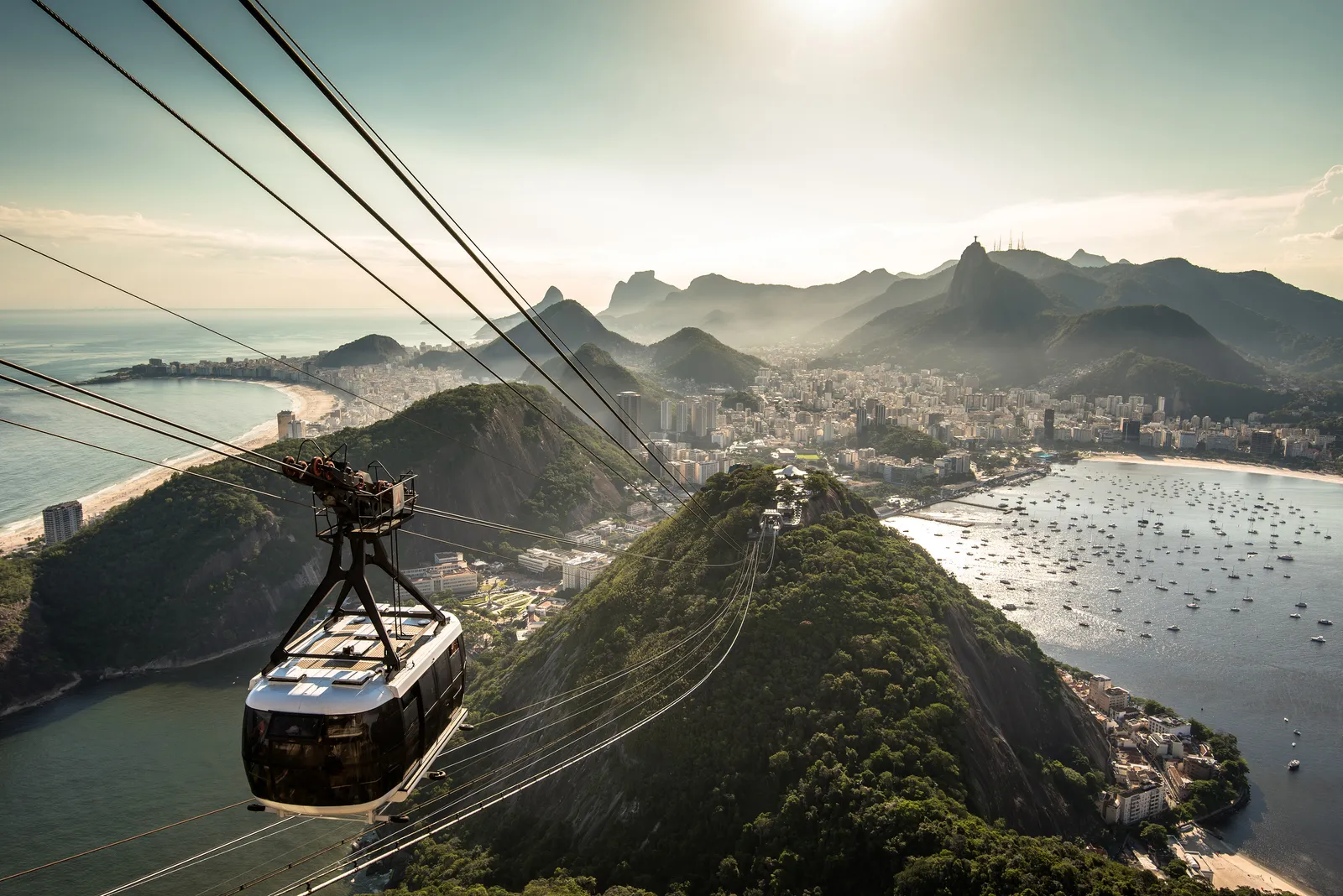
A full return ticket covering both stages runs a little over R$200. The park opens at 8.30am and closes at 9pm, with the last visitors sent up at 7.30pm, though those times shift through the year, so check the day you fly. Morro da Urca, the halfway stop, has the restaurants and the shade; the summit has the view back over the beaches and up to the statue on Corcovado. You can buy a cable car ticket covering both stages in advance through a tours and activities platform, which is worth doing on a flight day: the queue at the base station is the one part of this that has no fixed length.
Nothing reaches the centre from the airport without a change, so the trip in is a bus, a platform swap and a train, with a suitcase to handle at each of the three.
The Museum of Tomorrow leans out over the water at Praça Mauá
Praça Mauá sits at the head of Rio’s old port, and the white building on the pier running out from it is the Museu do Amanhã, the Museum of Tomorrow. Santiago Calatrava drew it, it opened on 17 December 2015, and its roof reaches far out over a reflecting pool fed with water pumped up from the bay. The rows of angled fins along the top track the sun. Inside, the collection is about climate, population and what the next fifty years do to both, which is a more argumentative brief than most museums take on.
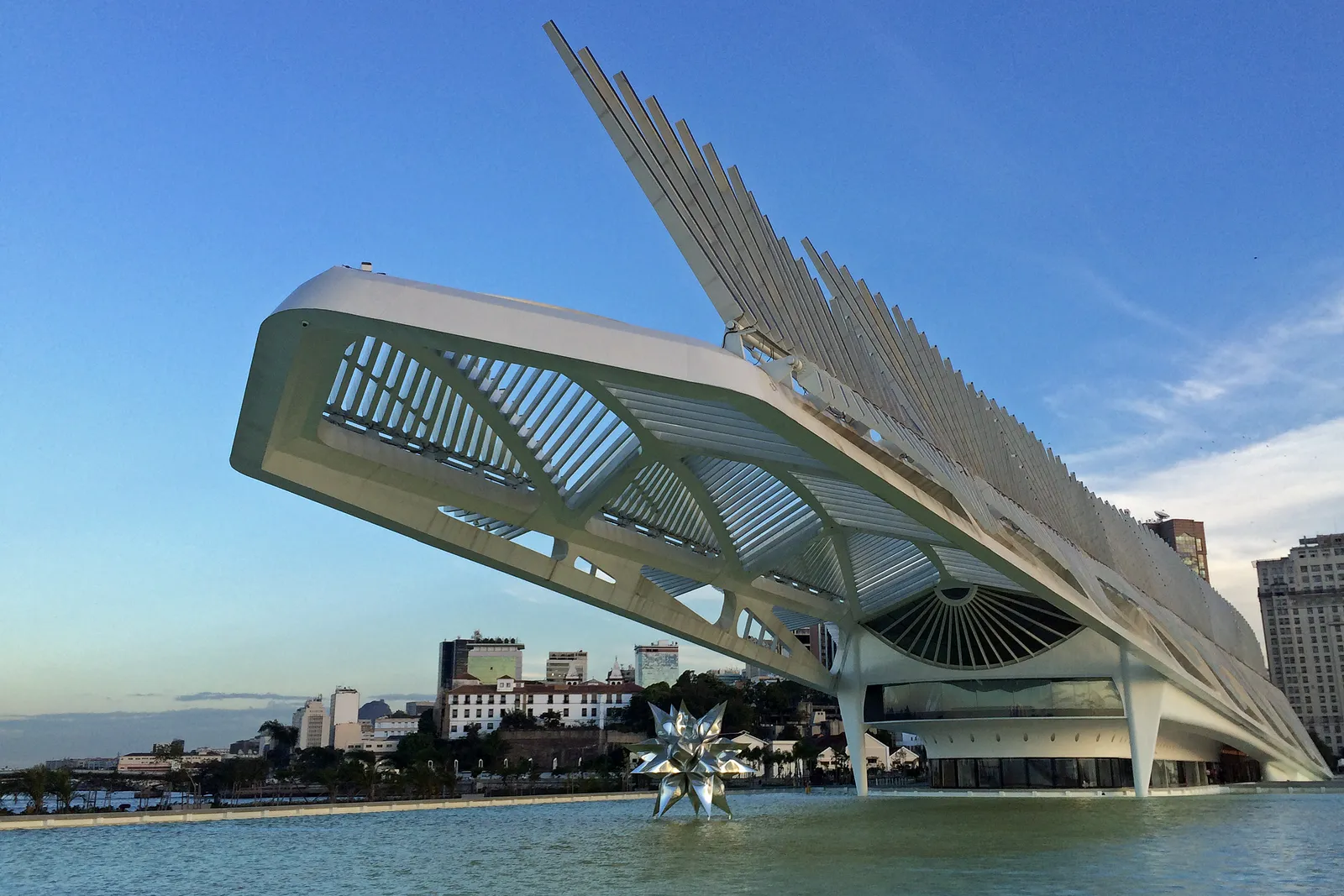
Entry is R$40, half price R$20, and the museum opens Thursday to Tuesday from 10am to 6pm with the last tickets sold at 5pm. It shuts on Wednesdays, which is the single most useful thing to know before planning a day around it. The waterfront outside costs nothing: the Boulevard Olímpico runs south-west along the old quay, and partway along it Eduardo Kobra’s Etnias mural covers a warehouse wall with five faces, one from each continent, fifteen metres high and well over 150 metres long. It was measured for the Guinness record as the world’s largest graffiti mural in August 2016.
A few minutes inland from the boulevard, at Jornal do Comércio square, a rectangle of old stone paving sits below street level behind railings. This is the Cais do Valongo, the wharf where enslaved Africans were landed from 1811 onwards, around 900,000 people in total, and the main arrival point of the transatlantic slave trade in the Americas. It was built over by later quays and stayed buried until the port redevelopment turned it up again in 2011; UNESCO listed it on 9 July 2017. There is no ticket, no gate and no queue.
Three storeys of books at the Royal Portuguese Cabinet of Reading
Rua Luís de Camões is a short street behind the Largo de São Francisco, and the building at number 30 with the pale carved facade is the Real Gabinete Português de Leitura, the Royal Portuguese Cabinet of Reading. Portuguese immigrants founded the institution in 1837; Emperor Pedro II laid the cornerstone of this building in 1880 and Princess Isabel opened it in 1887. The style is neo-Manueline, which is Portugal’s late-Gothic maritime decoration revived four centuries after the fact, all twisted rope and armillary spheres cut in stone.
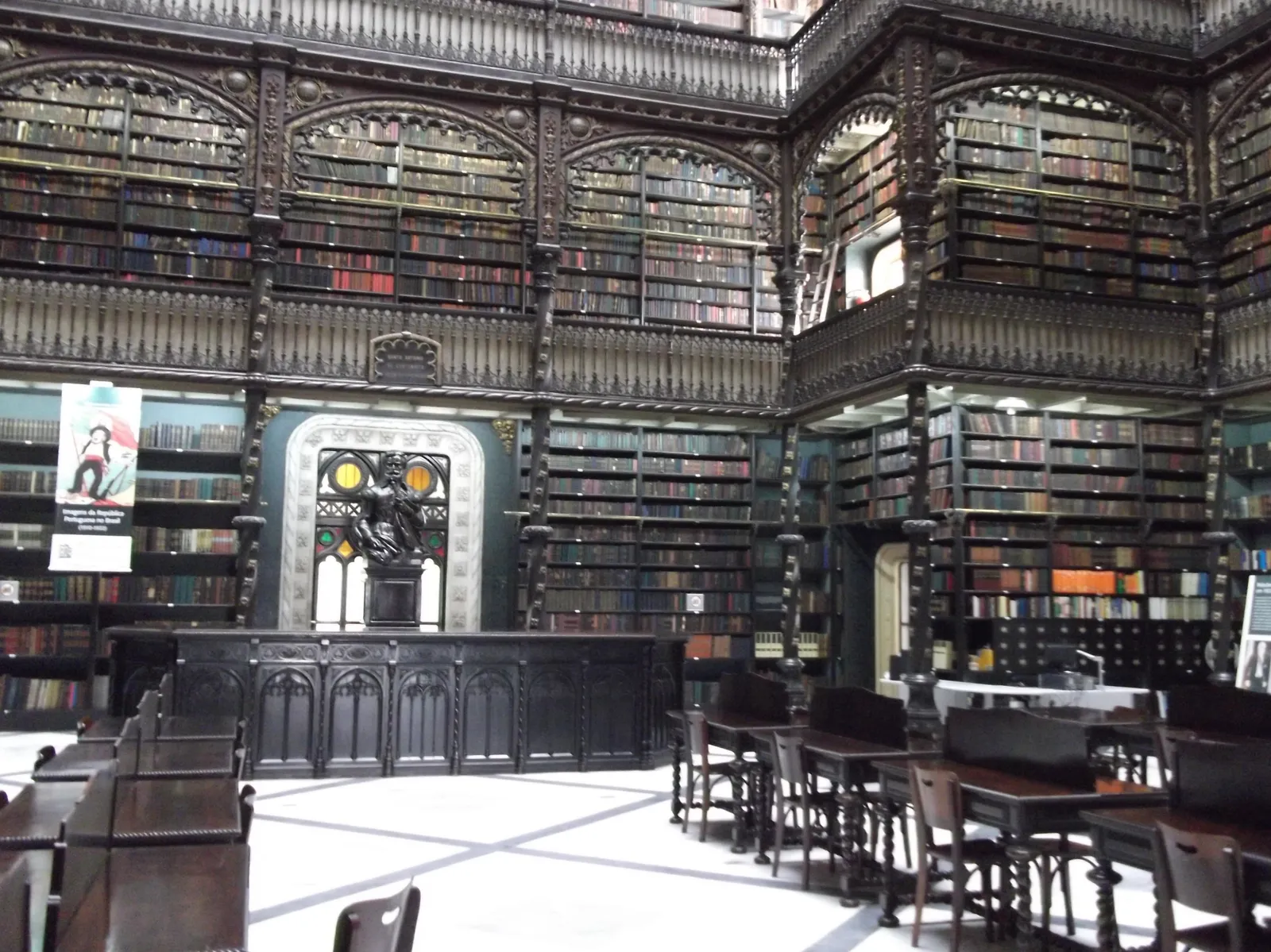
The room behind the door is what people come for: three storeys of dark carved galleries on all four walls, 350,000 volumes in them, and an iron-framed skylight overhead that was the first structure of its kind built in Brazil. It holds the largest collection of Portuguese-language works outside Portugal. Entry is free. It opens on weekdays only and shuts at weekends, which is the catch on a Saturday or Sunday layover, and worth checking against your flight day before you build a route around it.
Gold leaf on every surface inside the São Bento monastery
The Benedictines have held their own hill above the port since 1590, and the church they began building there in 1633 is plain on the outside and almost unreadable on the inside for the amount of gold on it. Domingos da Conceição, a Portuguese monk and sculptor, carved much of the statuary; Inácio Ferreira Pinto added the Chapel of the Holy Sacrament between 1795 and 1800. Every column, arch and screen is carved and then gilded, so the whole interior reads as one continuous surface rather than a set of separate objects.
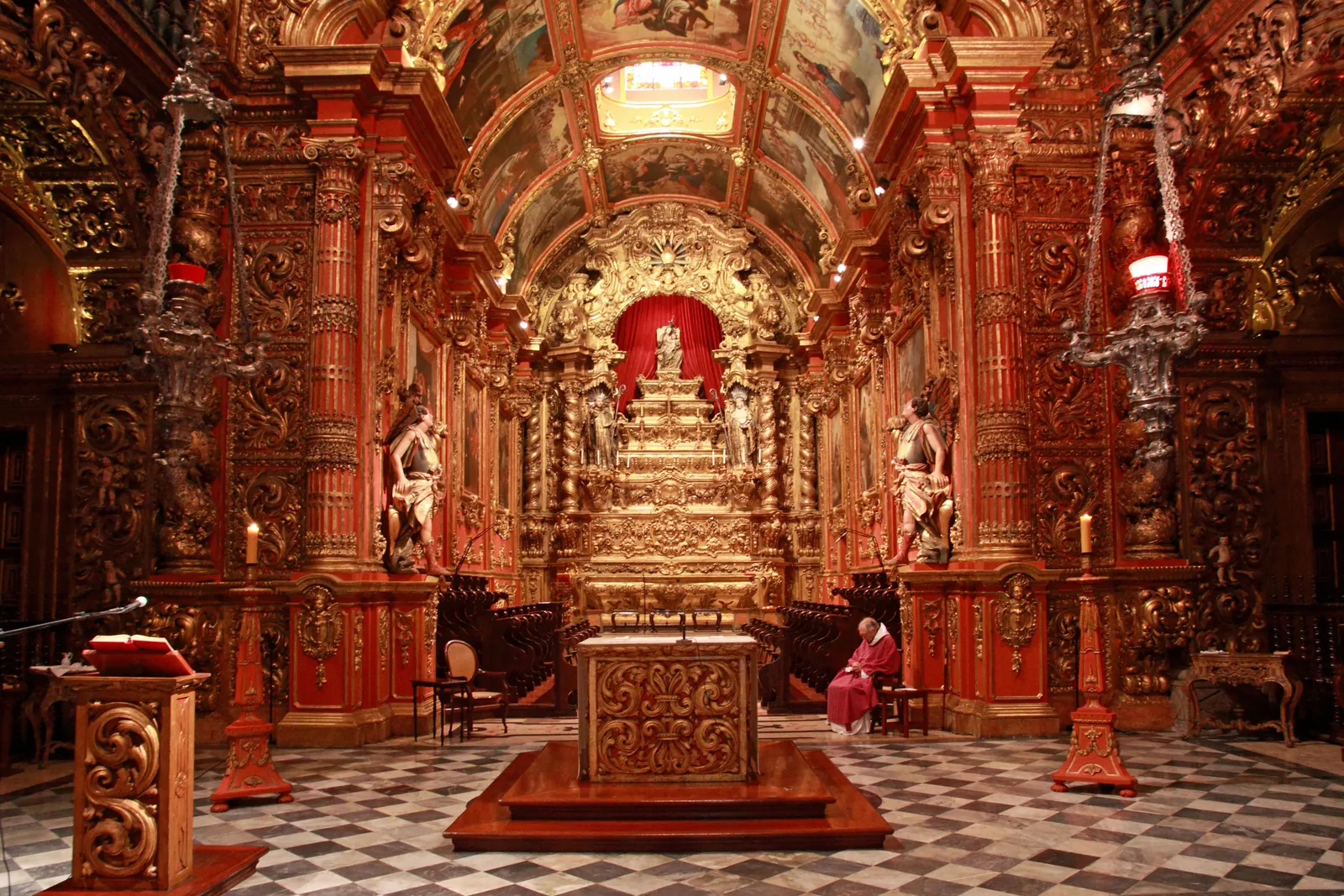
The address is Rua Dom Gerardo 68, and a lift runs up from street level so the hill isn’t a climb. Entry is free, and visitors are welcome through the day, though services take priority over sightseeing; the Sunday morning Mass at 10am is sung with Gregorian chant and organ, and is the busiest hour of the week here. Between this church, the reading room and the wharf, the entire centre half of this itinerary costs nothing, which is worth knowing given that the cable car and the train up Corcovado come to well over R$300 between them.
Christ the Redeemer on the Corcovado summit
Corcovado is a 710-metre peak inside the Tijuca National Park, and the statue on top of it is 30 metres tall on an 8-metre pedestal, with arms 28 metres across. Paul Landowski designed it, Heitor da Silva Costa and Albert Caquot engineered it, Gheorghe Leonida did the face, and it was dedicated on 12 October 1931 in reinforced concrete faced with soapstone tiles.
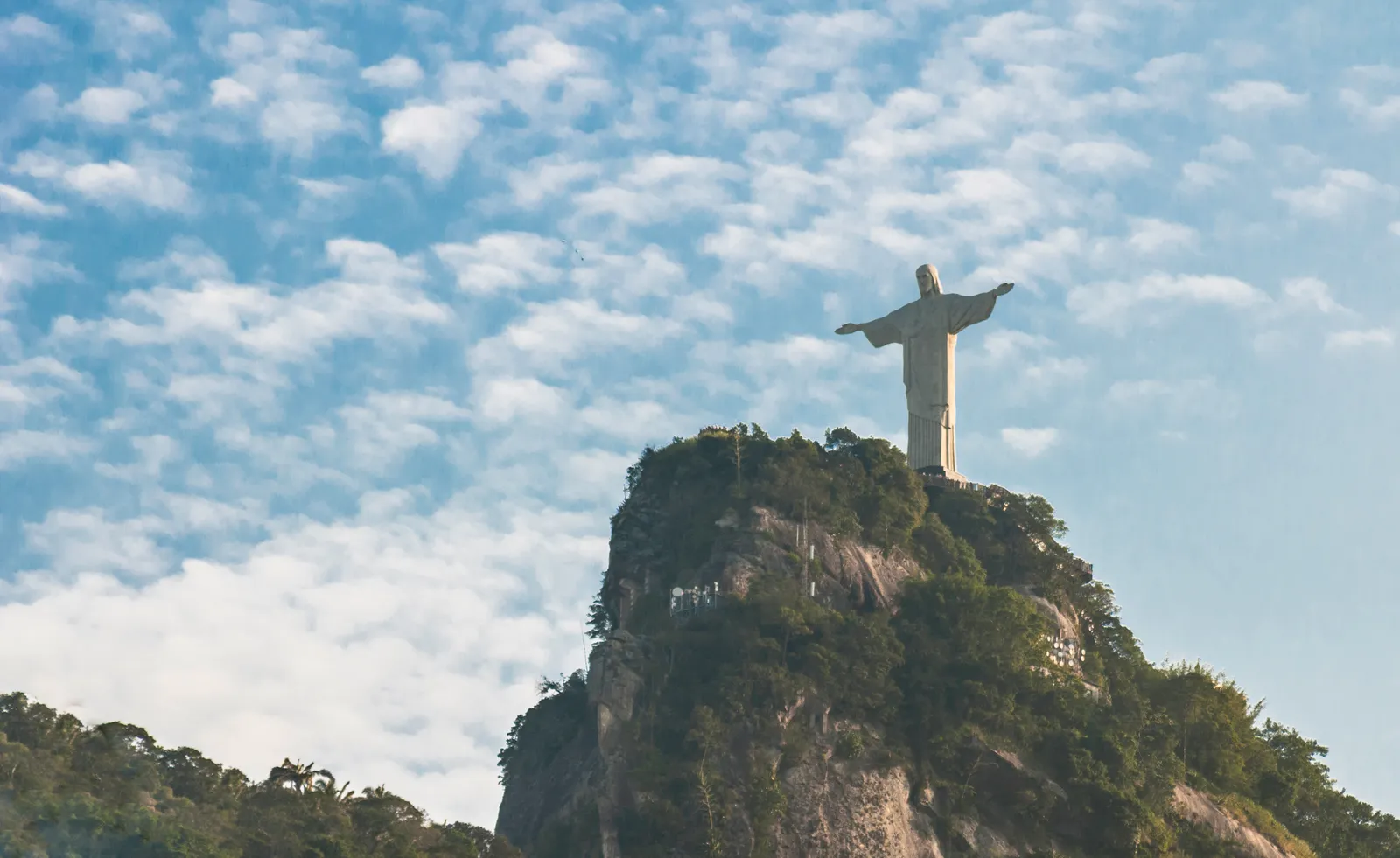
This is the addition for a stop of seven hours or more, not a shorter one. The rack railway from Cosme Velho station has been climbing 3.8 kilometres through the forest since 1884, electrified in 1910 and still running on the same three-phase overhead supply, and takes about 20 minutes each way; a ticket including admission to the statue is R$134 for an adult. Departures are sold in timed slots and sell out on clear days, so a train and admission ticket booked ahead through a tours and activities platform saves the gamble. If the cloud is down on the peak, which it often is, the money buys you a view of the inside of a cloud, and the cable car is the safer bet.
No rail link to the airport, just a bus and a metro
Rio de Janeiro/Galeão International Airport (GIG) sits on Governador Island about 20 kilometres north of the centre, and nothing reaches it on rails. The public route is the TransCarioca bus rapid transit line, which has its own station at Terminal 2 on the arrivals level, out to Vicente de Carvalho, one of only two stations in the city where the bus lanes meet the metro. That leg is about 15 minutes. Line 2 of the metro then covers Vicente de Carvalho to Cinelândia, in the centre, in about 32 minutes, with trains roughly every five minutes and service from 5am to midnight Monday to Saturday and 7am to 11pm on Sundays.
That adds up to 45 to 50 minutes of actual riding. Door to door, once you count the walk out to the platform, the wait and the change of station in the middle, it is closer to an hour and a quarter, so budget three hours between leaving your last stop and standing at the check-in desk for an international departure. Buying the fare is its own small problem: the metro takes a contactless bank card, but the bus lanes take only the city’s Jaé card, and the discounted combined fare sold at Vicente de Carvalho works on that card alone.
If you spent the afternoon at the cable car rather than in the centre, add the leg out of Urca first, since the base station at Praia Vermelha is a walk of 20 to 30 minutes, or a short bus ride, from the nearest metro stop in Botafogo. A taxi or a ride-hailing car from the centre takes 40 minutes to an hour depending on the expressway north, which is the argument for leaving earlier rather than later. A storage point in the centre puts your bag on the way out rather than behind you, whichever of the two you take. If this stop is one leg of the shuttle down the coast, the São Paulo layover guide covers the other end of it.
Frequently asked questions
What should I do during a layover in Rio de Janeiro?
Pick one high stop and one flat one. The cable car up Sugarloaf Mountain from Praia Vermelha is the stop worth paying for, and it runs from the morning until the last boarding at 7.30pm, so it survives a late flight better than anything else on this list. In the old centre, the Royal Portuguese Cabinet of Reading, the gilded church at the São Bento monastery and the excavated stone wharf at the Cais do Valongo are all free; the reading room and the church are a few minutes' walk apart, and the wharf is up at the old port. Book the cable car ahead if you can, and treat Christ the Redeemer as the thing you drop first, since it needs a separate trip out to Cosme Velho and its own ticket.
How do I pay for the metro and the buses in Rio?
They work differently, which is the part that catches visitors out. Rio's metro takes a contactless bank card, phone or watch at the gate in all 41 of its stations, charging the ordinary R$7.90 fare with nothing added on top. The city's buses and its bus rapid transit lanes do not accept bank cards at all: they run on the municipal Jaé card, which you buy and top up at machines inside the stations, at newsstands and at ticket offices, or pay through the Jaé app by QR code. The discounted combined bus-and-metro fare also works only on that card, so if any part of your day involves a bus, get one before you need it.
Can I fit Christ the Redeemer into a layover in Rio?
Only if you have most of a day and you go straight there. The statue stands on the summit of Corcovado, 710 metres up inside the Tijuca National Park, and the usual way up is the rack railway from Cosme Velho station, which takes about 20 minutes and costs R$134 for an adult, admission included. Add the ride out to Cosme Velho, the wait for a departure slot and the queue at the top, and a visit is realistically half your free time. On anything under six hours, the cable car and the old centre are the better trade.
What is the Cais do Valongo?
A rectangle of old stone paving in central Rio, set below street level behind railings at Jornal do Comércio square, and the most historically significant site in the old port district. It is the wharf where enslaved Africans were landed from 1811 onwards, an estimated 900,000 people in total, making it the main arrival point of the transatlantic slave trade anywhere in the Americas. Later quays were built over it and it stayed buried until the port redevelopment uncovered it again in 2011. UNESCO added it to the World Heritage list on 9 July 2017. There is no ticket, no gate and no opening time.
Is the metro or a taxi better for getting back to Galeão?
The metro and bus combination is cheaper and more predictable; a car is faster when the road is clear and much slower when it isn't. Rio de Janeiro/Galeão International Airport (GIG) has no rail link, so the public route is the TransCarioca bus rapid transit line from its station at Terminal 2 out to Vicente de Carvalho, then Line 2 of the metro into the centre, which is about 45 minutes of actual riding and closer to an hour and a quarter door to door once you count the walk, the wait and the change. A taxi or ride-hailing car from the centre is 40 minutes to an hour depending on traffic on the expressway north. Either way, leave three hours before an international departure.