Rio Layover in Ipanema: Market and Arpoador
Part of the full Rio de Janeiro Layover: Sugarloaf From GIG
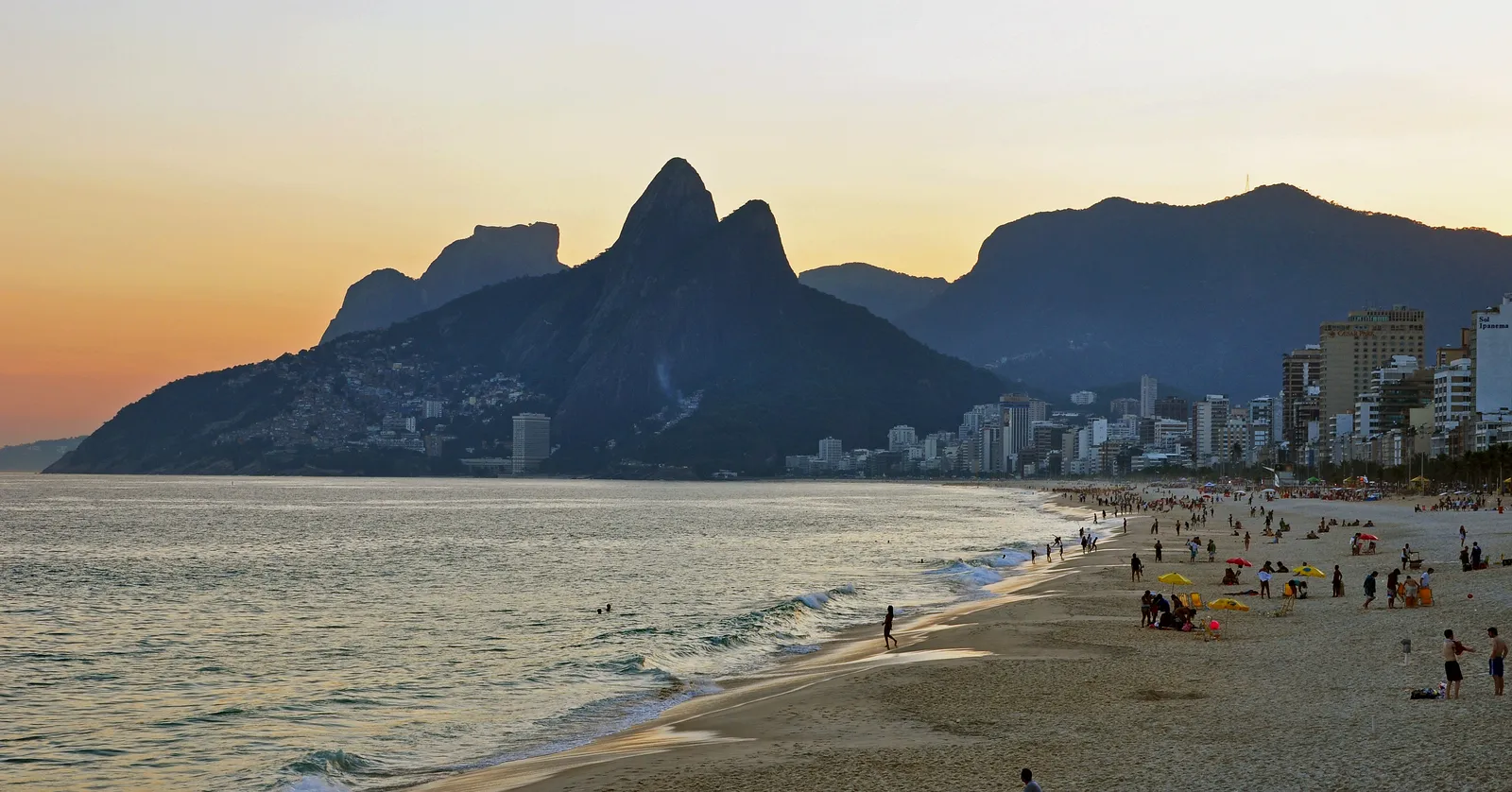
Ipanema’s General Osório metro station puts you a block from a square that fills with craft stalls every Sunday and about ten minutes from the rock at Arpoador, the outcrop at the eastern end of the beach in Rio de Janeiro where the sun goes down behind two peaks and the crowd applauds.
Sunset applause from the rock at Arpoador
Ipanema beach ends at its eastern edge against a low granite outcrop, and that rock is where cariocas go at the end of the day. The sun drops into the notch behind Dois Irmãos, the twin peaks at the far western end of the same stretch of sand, and the people on the rocks clap. The habit is traced to the journalist Carlos Leonam in the 1960s and it has not stopped since.

It costs nothing and it is open at every hour, but it fills: half an hour before the sun goes is about right if you want to stand on the rock rather than behind it. Behind the outcrop, Parque Garota de Ipanema is a fenced scrap of surviving Atlantic forest with fig trees and marmosets in them, which is where to go when the rock is shoulder to shoulder.
The Sunday craft market on Praça General Osório
Praça General Osório is an ordinary square with an old fountain in it for six days a week, and on the seventh it disappears under stalls. The market began in 1968 with a painter selling canvases on the square during the dictatorship, and grew into several hundred pitches covering a whole block: leather, jewellery, hammocks, prints, paintings still sold on easels, food counters at the edges. Rio has since listed it as intangible cultural heritage.
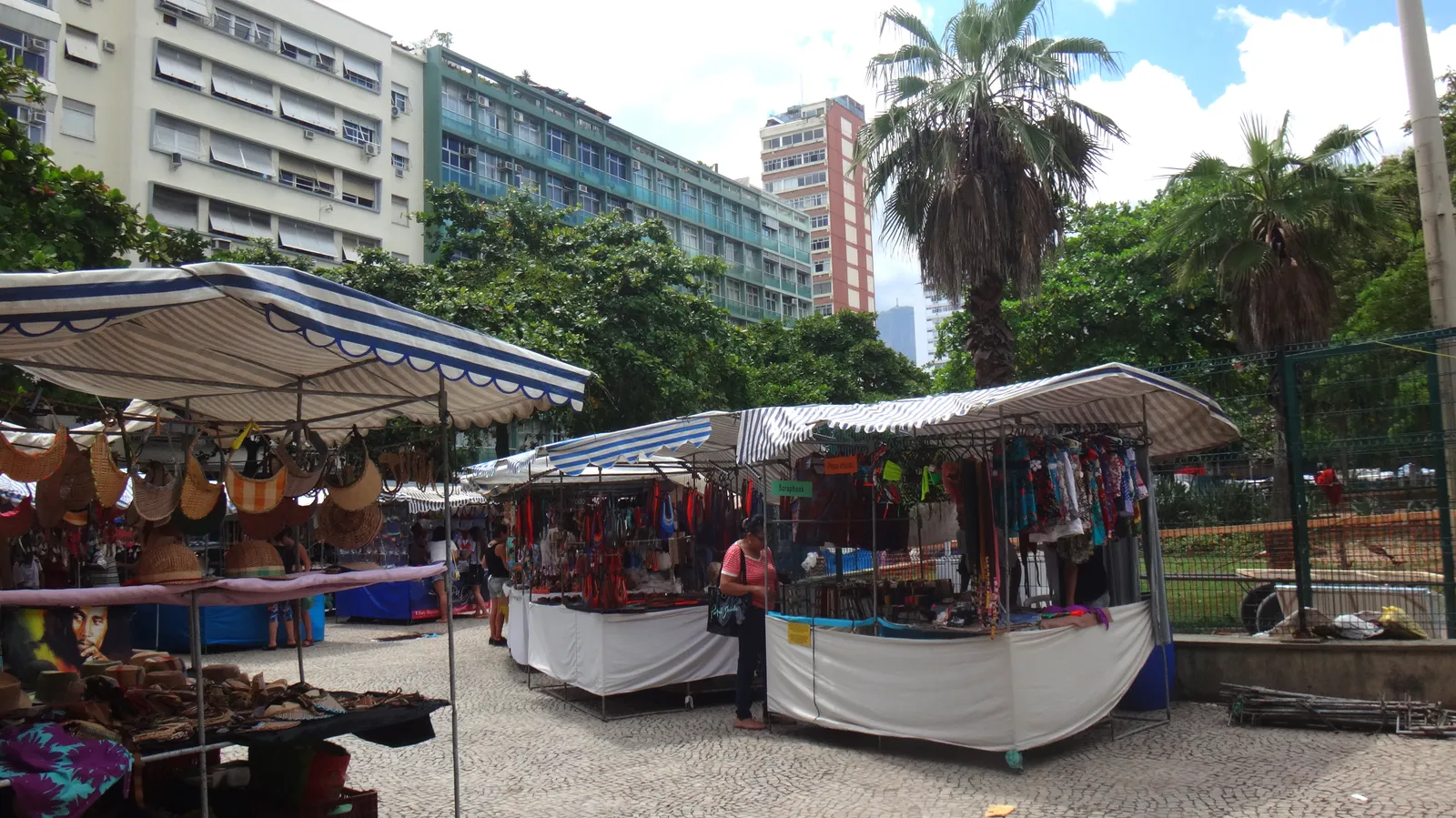
It runs 8am to 8pm, Sundays only, which makes the day of the week the single biggest variable in an Ipanema stop. The lanes between the pitches are about one person wide once the afternoon fills them up, and the arcades off Visconde de Pirajá, the shopping street a block back from the sand, are not much wider, so a wheeled suitcase is a poor companion for either.
The metro from Ipanema stops well short of the airport
The route out is the metro north with a change onto Line 2 for Vicente de Carvalho, then the TransCarioca bus rapid transit line east to the Terminal 2 station at Rio de Janeiro/Galeão International Airport (GIG), which has no rail connection of its own. Allow close to two hours door to door, and three hours in total before an international departure. The metro gates take a contactless bank card; the bus lanes take only the municipal Jaé card, which is worth buying before you are standing at the barrier with a flight to make.
A taxi or ride-hailing car is an hour or so when the expressway is behaving. If you would rather spend the same hours on the old centre and the cable car instead of the beach, the main Rio de Janeiro guide sets out that version of the day, and the next neighbourhood east along the same metro line has its own, longer seafront in the Copacabana walk.
Frequently asked questions
What should I do during a layover near General Osório Station in Ipanema, Rio de Janeiro?
Time it around sunset and everything else falls into place. The rock at Arpoador, at the eastern end of Ipanema beach, is where the city gathers to watch the sun go down behind the Dois Irmãos peaks and applaud it, and it costs nothing at any hour. If you land on a Sunday, the craft market that has filled Praça General Osório since 1968 runs from 8am to 8pm a block from the metro exit. Three hours covers both without hurrying, and nothing here needs booking.
When is the Ipanema hippie market on, and what does it sell?
Sundays only, 8am to 8pm, filling Praça General Osório and the streets around it. It started in 1968 as a handful of artists selling paintings on the square and now runs to several hundred stalls across a full block: paintings, leather, jewellery, hammocks, prints, food counters at the edges. Rio has listed it as intangible cultural heritage. If your layover is any other day of the week, the square is just a square with a fountain in it.
Why do people clap at sunset on Arpoador?
Because the sun goes down behind the Dois Irmãos peaks and the whole rock applauds it, a habit traced back to the journalist Carlos Leonam in the 1960s that has been going ever since. Arrive about half an hour early if you want a place on the rock itself, because it fills. Behind it, Parque Garota de Ipanema is a fenced remnant of Atlantic forest with marmosets in the trees, which is the quiet alternative if the rock is packed.
Is Ipanema or Copacabana the better stop from the metro?
Ipanema if you want the sunset and the Sunday market, Copacabana if you want a long flat promenade and a fort to walk out to. Both sit on the same metro line a few minutes apart, so the choice is about what you want rather than distance. Ipanema's beach is shorter, the crowd skews local at the Arpoador end, and the shopping is concentrated on one street, Visconde de Pirajá, rather than spread along a seafront avenue.