Rio Layover in Copacabana: Beach and Fort
Part of the full Rio de Janeiro Layover: Sugarloaf From GIG
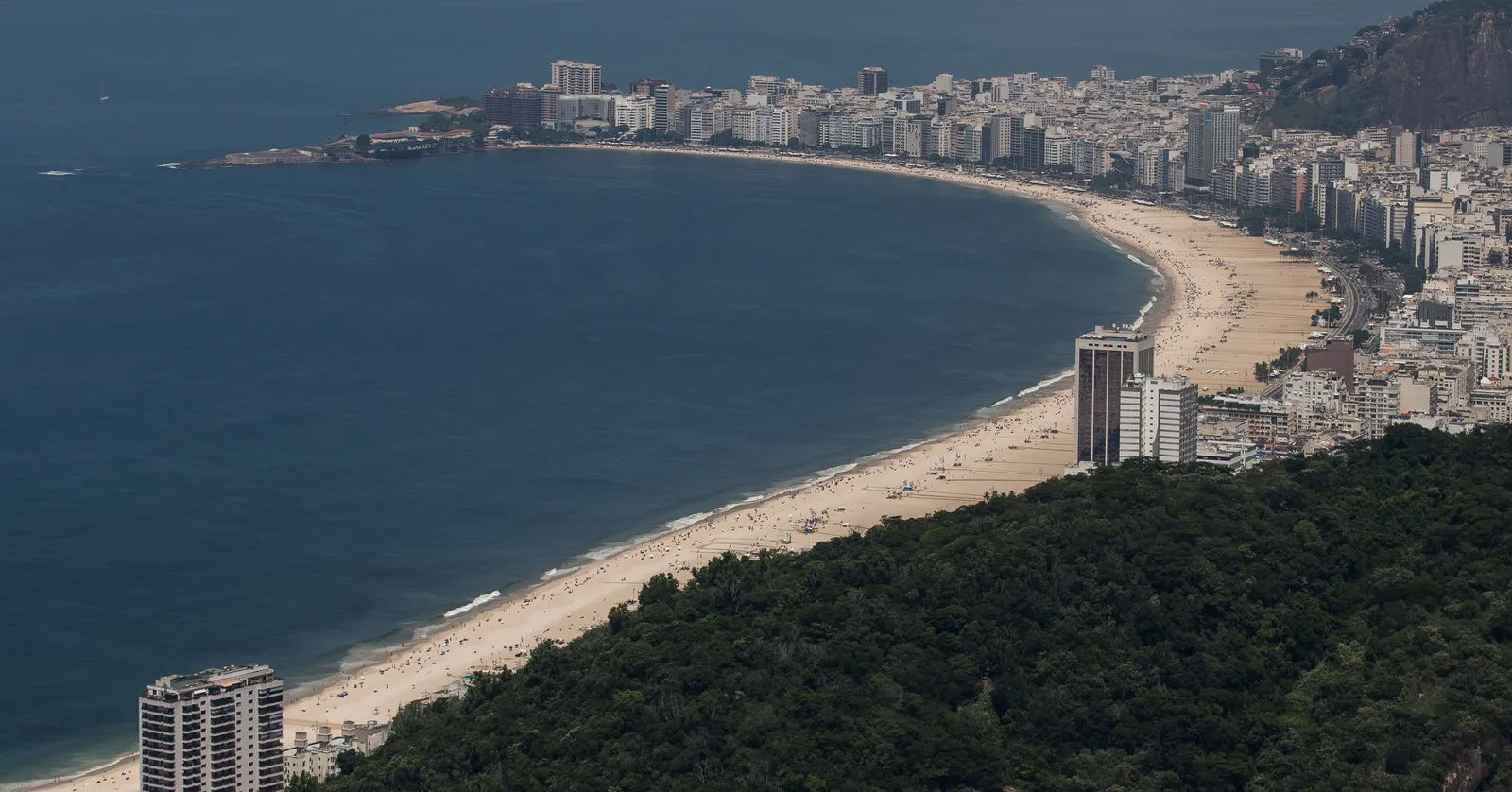
Cardeal Arcoverde is the northern of Copacabana’s metro stations in Rio de Janeiro, three streets back from a seafront where the promenade runs just over four kilometres in black-and-white wave paving to a fort on the point at the far end.
The black-and-white wave paving along Avenida Atlântica
Portuguese stone laid in patterns is standard across Rio, but the seafront strip here is the one everybody photographs: alternating bands of black and white basalt curling the whole length of Avenida Atlântica, aligned with the shoreline so the pattern reads as breaking surf. Roberto Burle Marx redesigned it in 1970, widening the curves of an earlier scheme and stretching the paving across the full 4.1 kilometres from the fort at one end to Leme at the other.
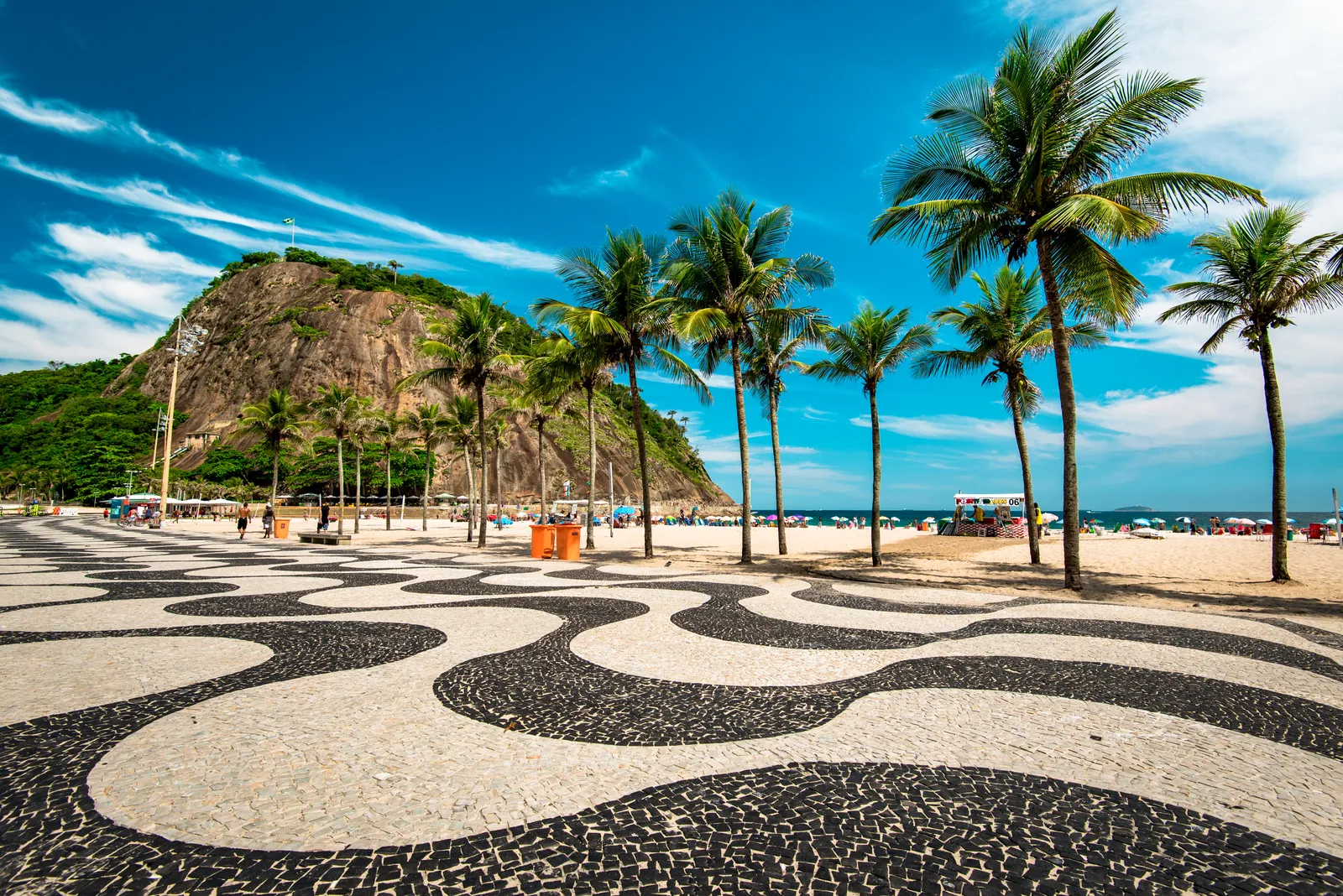
Walking it costs nothing and you can join it at any point. On Sundays and public holidays one carriageway of the avenue closes to traffic, and the strip fills with cyclists, runners and stalls, which is either the best or the worst day to come depending on what you want from it. The northern tip at Leme, where the beach narrows under a forested rock, is consistently the quieter half.
The fort on the point at the southern end
Copacabana’s beach stops against a rock headland at its southern end, and the Brazilian army built a coastal battery on it between 1908 and 1914: two armoured cupolas, a pair of 305 mm Krupp guns in one and a pair of 190 mm in the other, plus retractable casements on the flanks. On 5 July 1922 eighteen officers inside turned those guns on Rio in the first revolt of the tenentista movement; the battleship São Paulo answered with five salvos the next morning and the rising was over in half an hour.
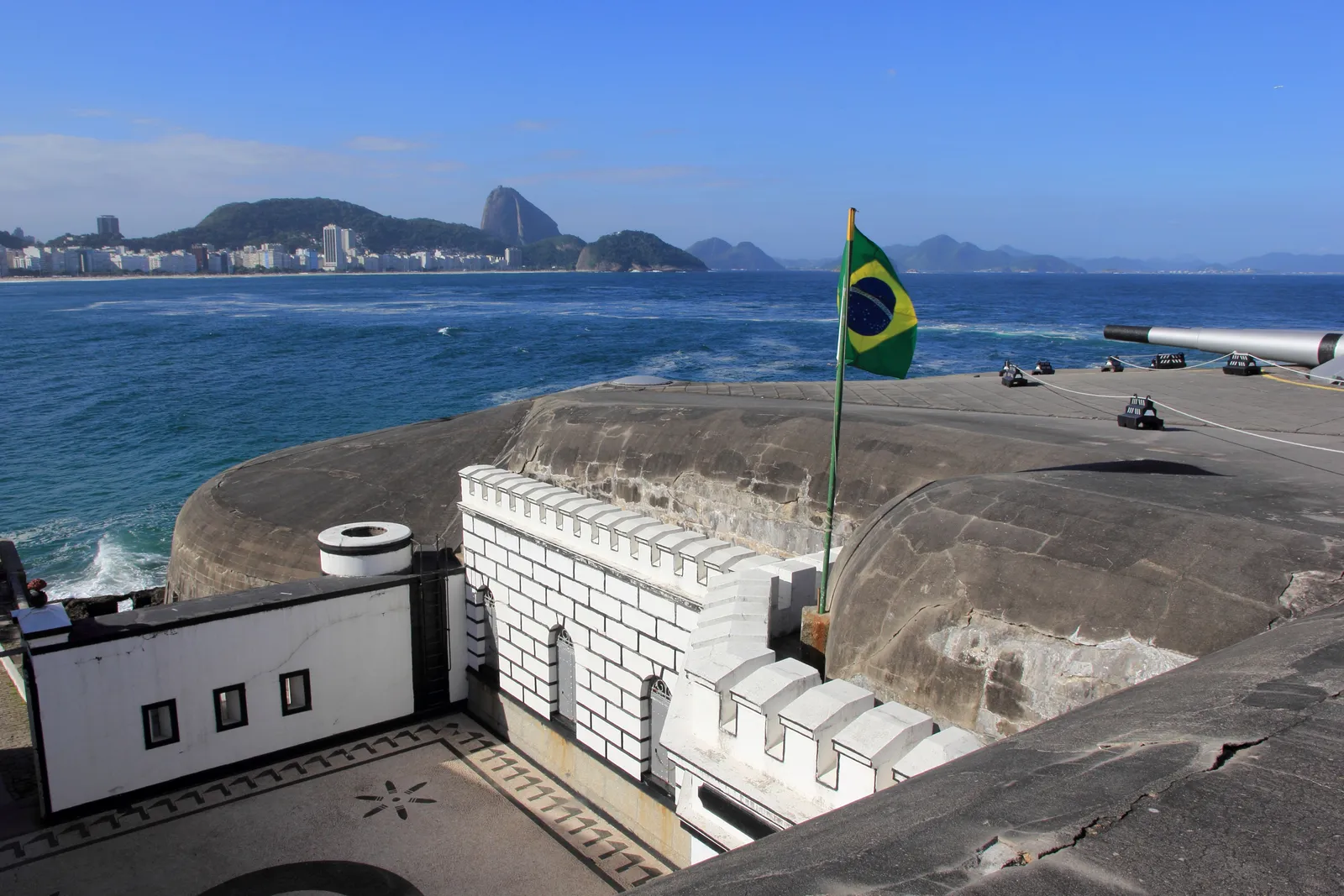
It is still an army property, and it holds the Army Historical Museum along with an artillery park of older guns out in the open. Entry is a few reais, half that for students and over-60s, and free on Tuesdays; the gate opens Tuesday to Sunday from 10am to 7pm with the museum closing at 6pm, and the whole site shuts on Mondays. A branch of the Confeitaria Colombo, Rio’s 1894 café, sits on the terrace looking back along the entire beach, which is the real draw for most people who walk out here. Getting to it means either the promenade or the sand, and sand is the one surface in this city a wheeled suitcase cannot cross at all.
A car beats the metro and bus out of Copacabana
Rio de Janeiro/Galeão International Airport (GIG) has no rail link, and from Copacabana the public route is the metro north out of Copacabana with a change onto Line 2 for Vicente de Carvalho, then the TransCarioca bus rapid transit line east to the Terminal 2 station. That runs to roughly an hour and three quarters door to door once the two changes and their waits are counted, so allow three hours before an international departure and rather more if you are cutting it fine.
A taxi or ride-hailing car covers the same ground in 50 minutes to an hour and a quarter depending on the expressway north, which is why most people leaving this neighbourhood on a flight day simply take one. If your connection is domestic rather than international, the small airport in the middle of the city is the better one to aim for and the walk into the old centre from Santos Dumont covers what is nearby. For the cable car, the reading room and the rest of a full day across the city, the main Rio de Janeiro guide is the wider version of this trip.
Frequently asked questions
What should I do during a layover near Cardeal Arcoverde Station in Copacabana, Rio de Janeiro?
Get to the seafront and pick a direction. The promenade along Avenida Atlântica runs just over four kilometres in a black-and-white wave pattern laid by Roberto Burle Marx in 1970, and walking any part of it is free. At the southern end the Copacabana fort, built between 1908 and 1914, opens Tuesday to Sunday from 10am to 7pm and charges a few reais, with free entry on Tuesdays and a view straight back down the beach from its terrace. Three hours covers the walk and the fort; on Sundays one carriageway of the avenue closes to cars, which changes the feel of the whole strip.
How much does the Copacabana fort cost, and when is it closed?
A few reais for a standard adult ticket, half price for students and over-60s, and nothing at all on Tuesdays. It opens Tuesday to Sunday, 10am to 7pm, with the Army Historical Museum inside shutting an hour before the gate does, and the whole site closes on Mondays for maintenance. There is a branch of the old Confeitaria Colombo café on the terrace, which is the reason a lot of people walk out to the point in the first place.
Which end of Copacabana beach is quieter?
The Leme end, at the northern tip, where the beach narrows under a rock headland and the crowd thins noticeably compared with the middle stretch. The southern end by the fort is the busy one, because that is where the promenade, the point and the café converge. Between them the sand is four kilometres of much the same thing, so the choice is really between a rock at one end and a fort at the other.
What happened at the Copacabana fort in 1922?
Eighteen officers turned the fort's guns on the city. On 5 July 1922 the garrison rose against the government in what became the first revolt of the tenentista movement, and the navy answered the next day: the battleship São Paulo fired five salvos at the fort, scored hits, and the rebellion was over within half an hour. The Krupp guns that were aimed that day are still in their armoured cupolas.