Rio Layover Near Santos Dumont Airport
Part of the full Rio de Janeiro Layover: Sugarloaf From GIG

Rio de Janeiro’s Santos Dumont airport sits on landfill in the middle of the city, fifteen to twenty minutes on foot from the Paço Imperial on Praça XV, the free cultural centre on Rua Primeiro de Março and the ferry across to Niterói.
The Paço Imperial on Praça XV
Praça XV de Novembro is the square Rio was governed from for most of its history, and the long white building with the red tiled roof along one side of it is the Paço Imperial. It went up in 1743 as the colonial governors’ residence, became the royal palace when the Portuguese court fled Lisbon for Rio in 1808, and then served the Brazilian empire; the decree abolishing slavery was signed here in 1888. It is two storeys, plain, and considerably smaller than what the word palace suggests, which is most of its charm.
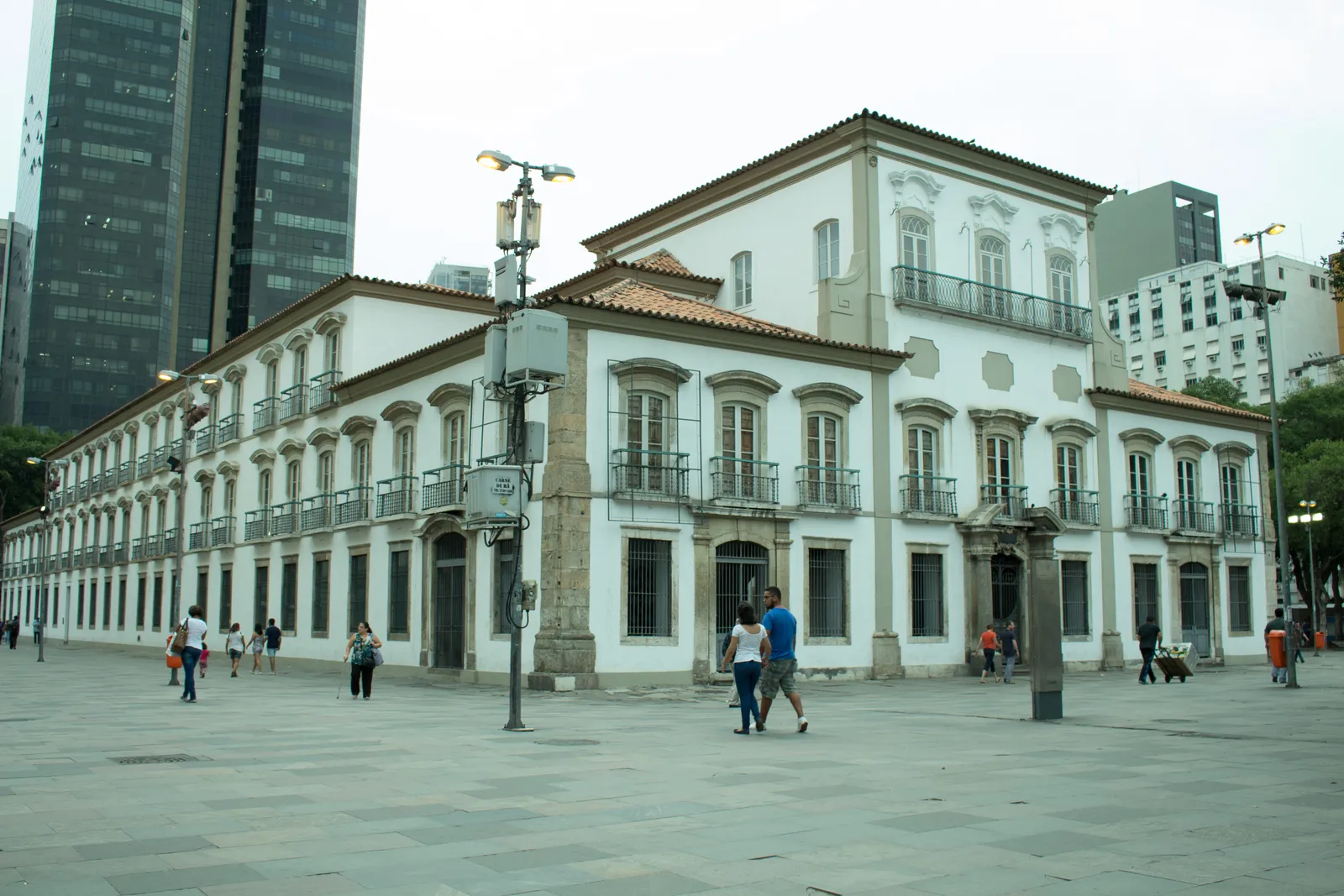
Walking in costs nothing; the rooms hold changing exhibitions rather than a permanent collection, so what is on varies. The square itself is the better half anyway: the eighteenth-century arch of the Arco do Teles on the far side opens into a lane of bars that fills up after work, and the whole thing is paved in the black and white stone Rio uses everywhere. If you would rather have the buildings explained than guess at them, a guided walk through the centre can be booked through a tours and activities platform.
The rotunda inside the Banco do Brasil cultural centre
Rua Primeiro de Março 66 opened in 1906 as the headquarters of Rio’s Commercial Association and has been a free public cultural centre since 1989. The core of it is a circular hall ringed with marble columns, galleried on three levels, with a glazed dome over the top and a café at ground level, so the most ornate room in the building is the one anybody can sit down in without buying a ticket.
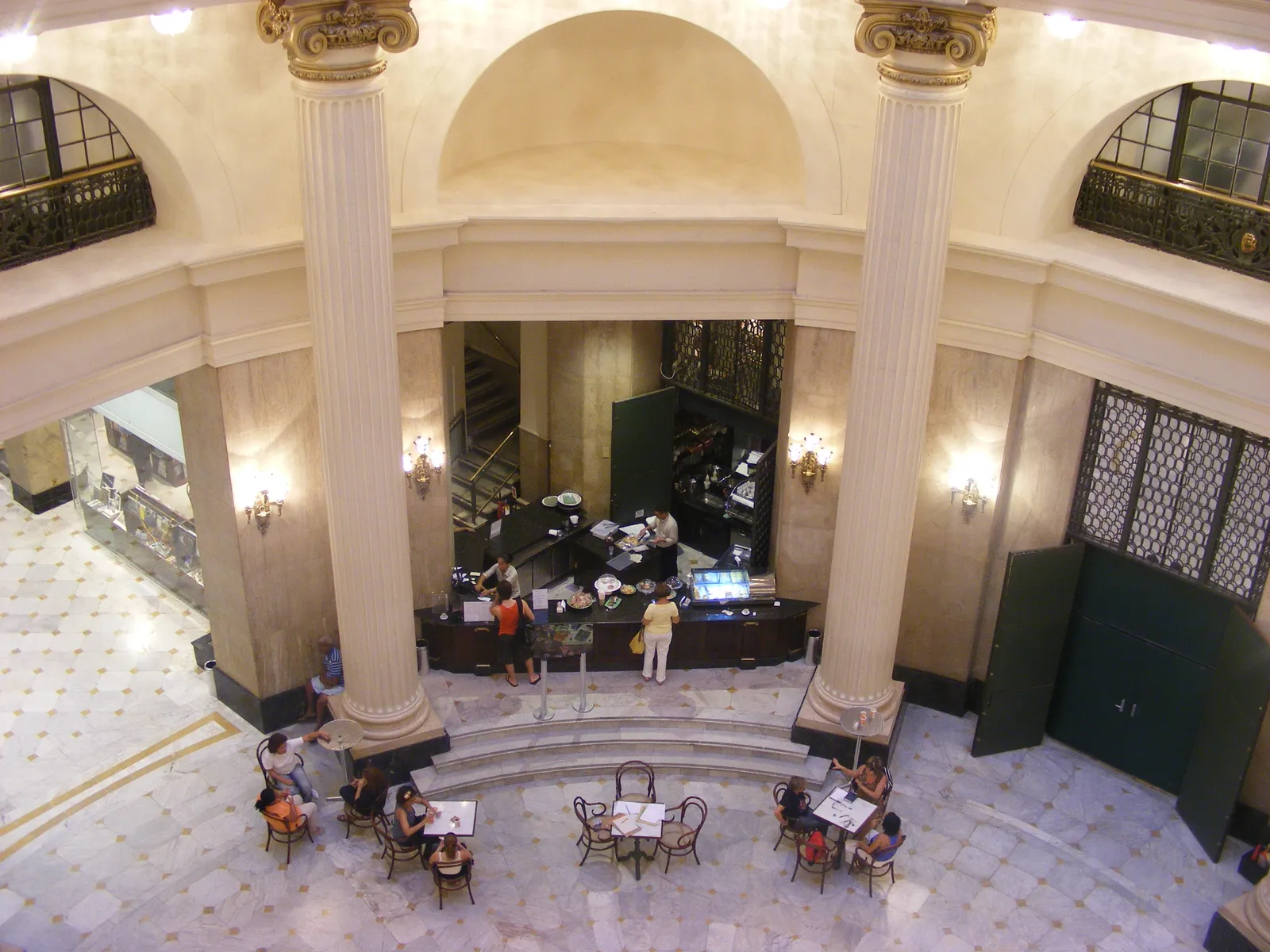
Around the rotunda sit exhibition floors, three theatres, a cinema and a library, and the whole place is open Wednesday to Monday from 9am to 8pm, closed Tuesdays. It is also the dry option: a Rio afternoon in the December-to-March rainy season can turn in ten minutes, and this is the nearest building to the airport where several hours can be spent indoors for nothing.
The Niterói ferry from the Praça XV terminal
The domed ferry hall on the bay side of Praça XV is where the Niterói boats leave from, and the crossing to Praça Araribóia in Niterói takes about twenty minutes for R$5.00 one way. It is ordinary commuter transport rather than a tour, which is the point: the same view of Sugarloaf, the bridge and the whole run of the city against the mountains costs several times as much on a sightseeing boat.
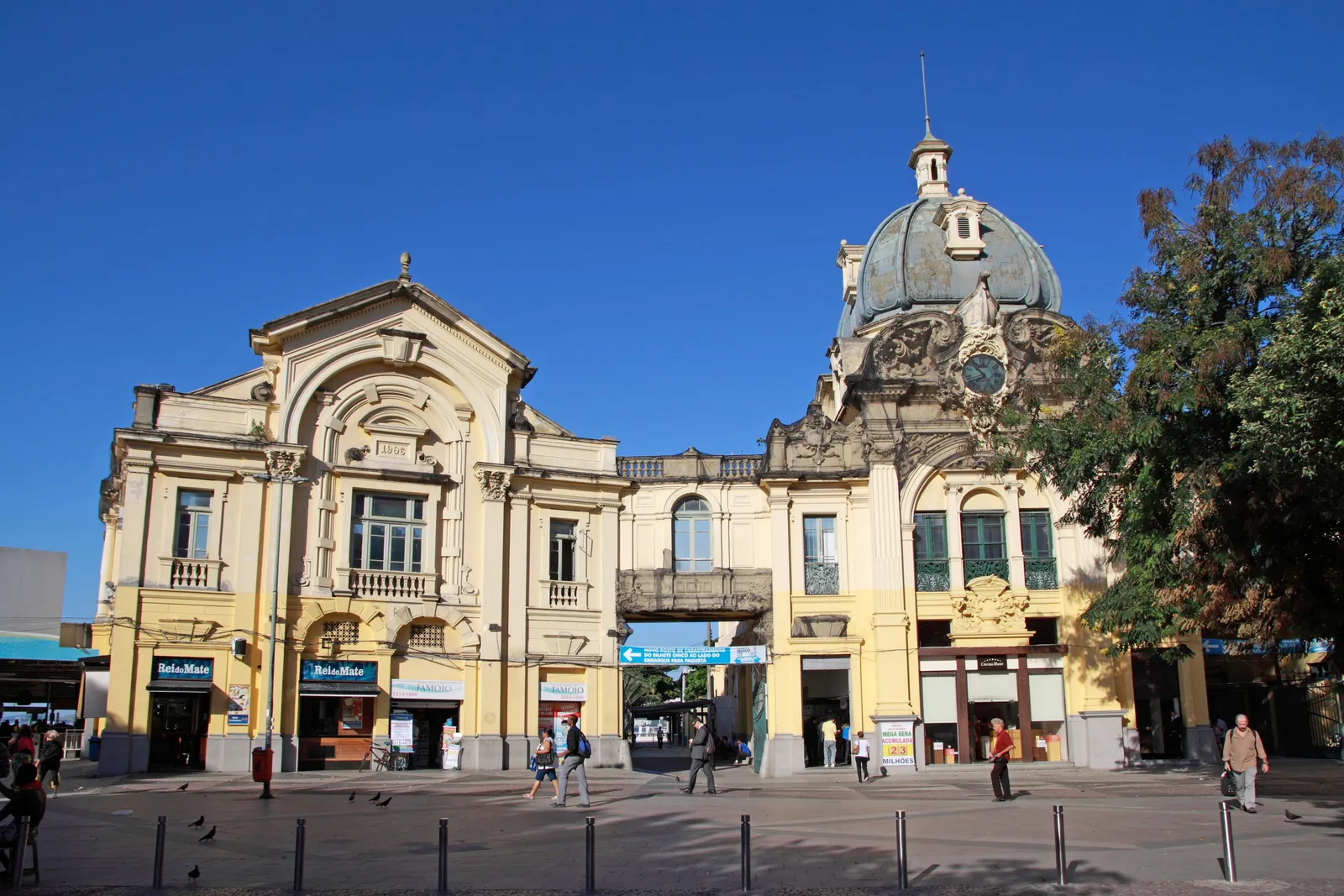
Round trip with the wait, allow an hour and a half, which makes this the stop that needs three hours or more before it is sensible. Check the return departures before you board: the boats run frequently through the commuter peaks and thin out between them. For the cable car, the gilded churches and the rest of a full day in the city, the main Rio de Janeiro guide covers the version of this trip that starts from the international airport instead, with a much longer run in from the north.
The 1936 terminal block at Santos Dumont
Marcelo and Milton Roberto won the competition for the airport with a modernist design that was among the first of its kind built in Brazil, and the terminal opened on 30 November 1936 on ground reclaimed from the bay. Burle Marx laid out the garden on Praça Salgado Filho in front of it. The current passenger terminal dates from 2007 and is attached to a mall, but the original block is still standing on the same apron, and the runway still ends in open water at both ends.
This is also the Rio end of the air shuttle to São Paulo, running since 5 July 1959 and the first scheduled service of its kind anywhere. Getting back is short enough not to need much planning: the VLT tram runs 5am to 11pm with a stop at the terminal, a taxi from Praça XV is a few minutes, and the walk from Cinelândia takes about twenty. Fares on the tram are paid with the municipal Jaé card, not a bank card, so buy one at a station machine before you rely on it. Everything above is done on foot, about three kilometres of pavement there and back, and that is three kilometres of carrying whatever you did not put down first.
Frequently asked questions
What should I do during a layover near Santos Dumont Airport in Rio de Janeiro?
Walk into the old centre; it is close enough that nothing else is worth the fare. The Paço Imperial on Praça XV, the colonial palace the Portuguese court governed Brazil from, is about fifteen minutes on foot and free to walk into, and the Banco do Brasil cultural centre on Rua Primeiro de Março is another five minutes past it, also free, with a domed marble rotunda and a café under it. With three hours or more, the ferry across Guanabara Bay to Niterói from the terminal on Praça XV is a twenty-minute crossing for five reais. The cultural centre shuts on Tuesdays, so on that day the square and the ferry are the plan.
How far is central Rio from Santos Dumont Airport on foot?
About 1.5 kilometres to Cinelândia and the Theatro Municipal, which is fifteen to twenty minutes of flat walking along the bay, and less than that to Praça XV. The tram network, the VLT, also has a stop at the terminal: Line 1 runs from Santos Dumont up to the Gentileza intermodal terminal in the port zone, Line 3 runs to Central do Brasil, and the fare is R$4.30. It is the rare airport where walking out is genuinely the faster option for the nearest sights.
How late do the trams run at Santos Dumont?
The VLT runs from 5am to 11pm every day, so an evening departure is still covered, and the tram fare is paid with the municipal Jaé card rather than a bank card. What closes earlier is everything worth walking to: the Banco do Brasil cultural centre shuts at 8pm and on Tuesdays entirely, and the ferries thin out after the evening commuter peak. After about 8pm, Praça XV, the lit facades along Rua Primeiro de Março and the terminal's own attached mall are what is left.
Is the crossing to Niterói worth it on a short stop?
Only with three hours or more in hand, and then yes. The boat leaves from the terminal on Praça XV, takes about twenty minutes each way to Praça Araribóia on the Niterói side, and costs R$5.00, which buys the view back at the city and the mountains behind it that people otherwise pay for on a bay tour. Allow an hour and a half round trip including the wait for a departure, and check the return times before you board rather than after.