Rio Layover Near Cosme Velho Station
Part of the full Rio de Janeiro Layover: Sugarloaf From GIG
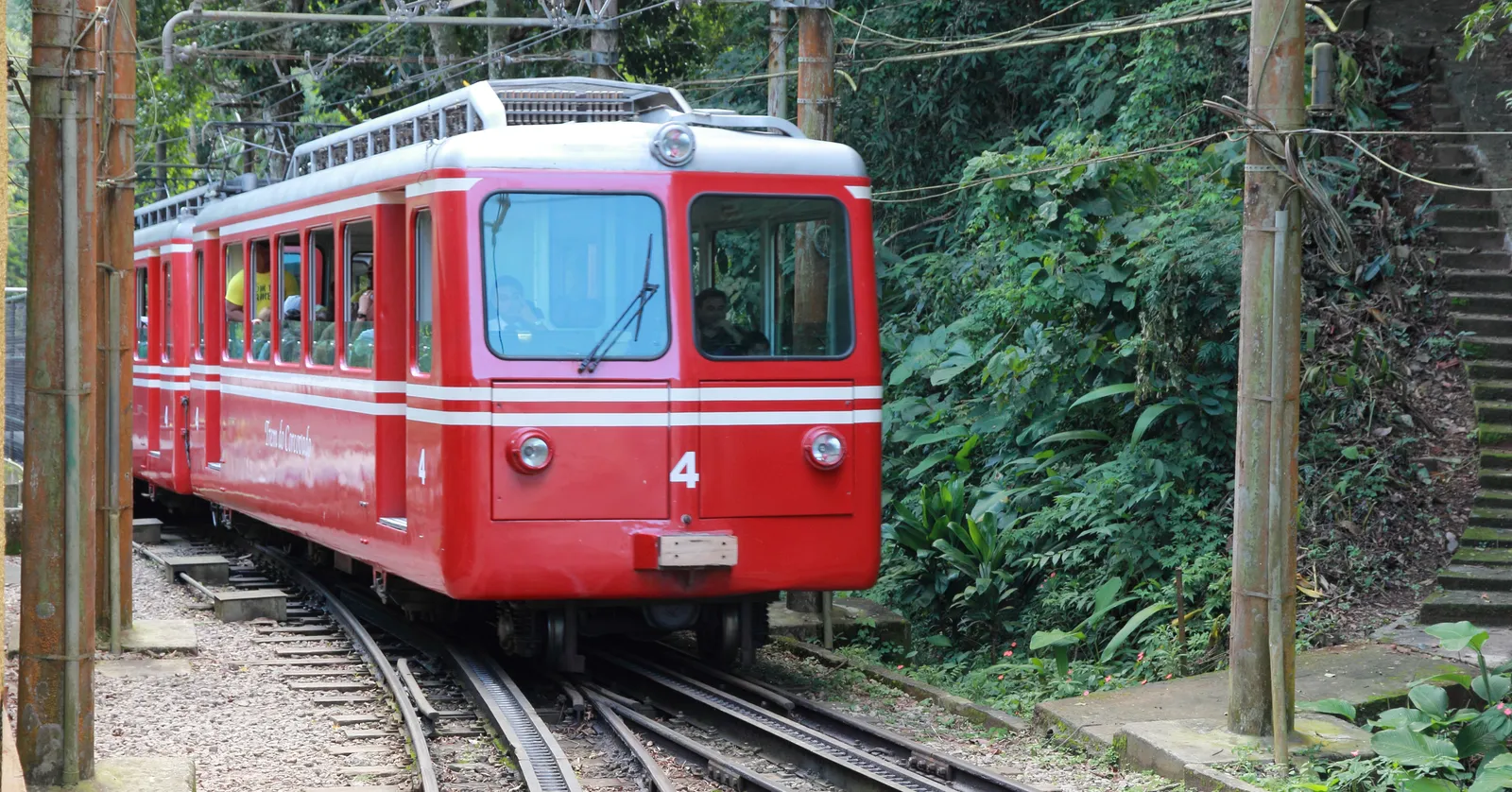
Rio de Janeiro’s Cosme Velho station is the foot of the Corcovado rack railway, an 1884 line that climbs 3.8 kilometres through the Tijuca forest to a summit 710 metres above the city, and the faded neocolonial square of Largo do Boticário sits a few minutes further up the same street.
The rack railway station at Rua Cosme Velho 513
Emperor Pedro II opened this line on 9 October 1884, and it was electrified in 1910, the first railway in Brazil to be. It still runs on the three-phase overhead supply it was given then, and the rack between the rails is what stops the carriages sliding back down a gradient no adhesion railway would attempt. Departures leave every twenty minutes from 8am to 6pm, every day, and the climb takes about twenty minutes over 3.8 kilometres.
A ticket including admission to the monument at the top is R$134 for an adult, and it is sold for a named departure slot rather than as an open single, which is the part that catches people out on a flight day. Booking the train and admission together in advance through a tours and activities platform fixes the slot before you arrive; turning up at the counter on a clear Saturday can mean a two-hour wait for the next space.
The view over Botafogo from the summit platform
Corcovado’s peak is 710 metres up inside the Tijuca National Park, and what the platform actually looks down on is the whole southern half of the city at once: the packed blocks of Botafogo, a bay full of moored boats, the granite dome of Sugarloaf at the harbour mouth and the ocean beyond it.
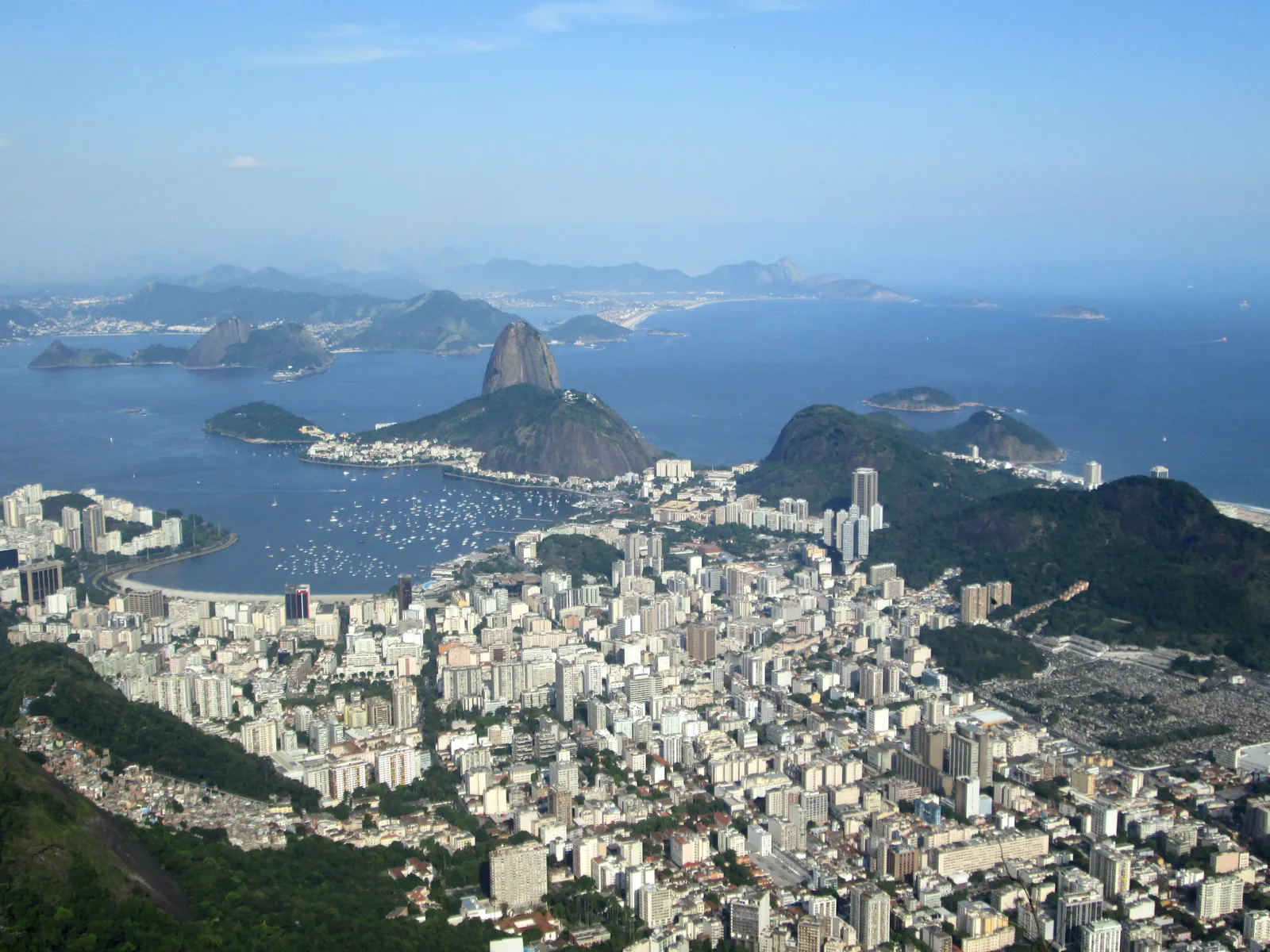
Cloud sits on this peak often enough that the view is a gamble, and mornings are generally clearer than afternoons in the December-to-March wet season. Getting from the upper station to the platform means lifts, escalators and stone stairways; the escalators are being replaced with inclined lifts from August 2026, and while that work runs the last stretch up to the terrace is stairways only. Those stairways are the permanent alternative in any case.
The neocolonial houses at Largo do Boticário
Rua Cosme Velho narrows a few hundred metres above the station, and a cobbled turning off it opens into a small square ringed by seven houses in green, blue, yellow and pink. They look colonial and are not: they went up, or were rebuilt, between the 1920s and the 1940s, with Lúcio Costa and Gregori Warchavchik among the architects who worked on them, using doors, window frames, tiles and ironwork salvaged from genuine colonial buildings being demolished elsewhere in the city. The square takes its name from an apothecary who treated the imperial family and moved here around 1831.
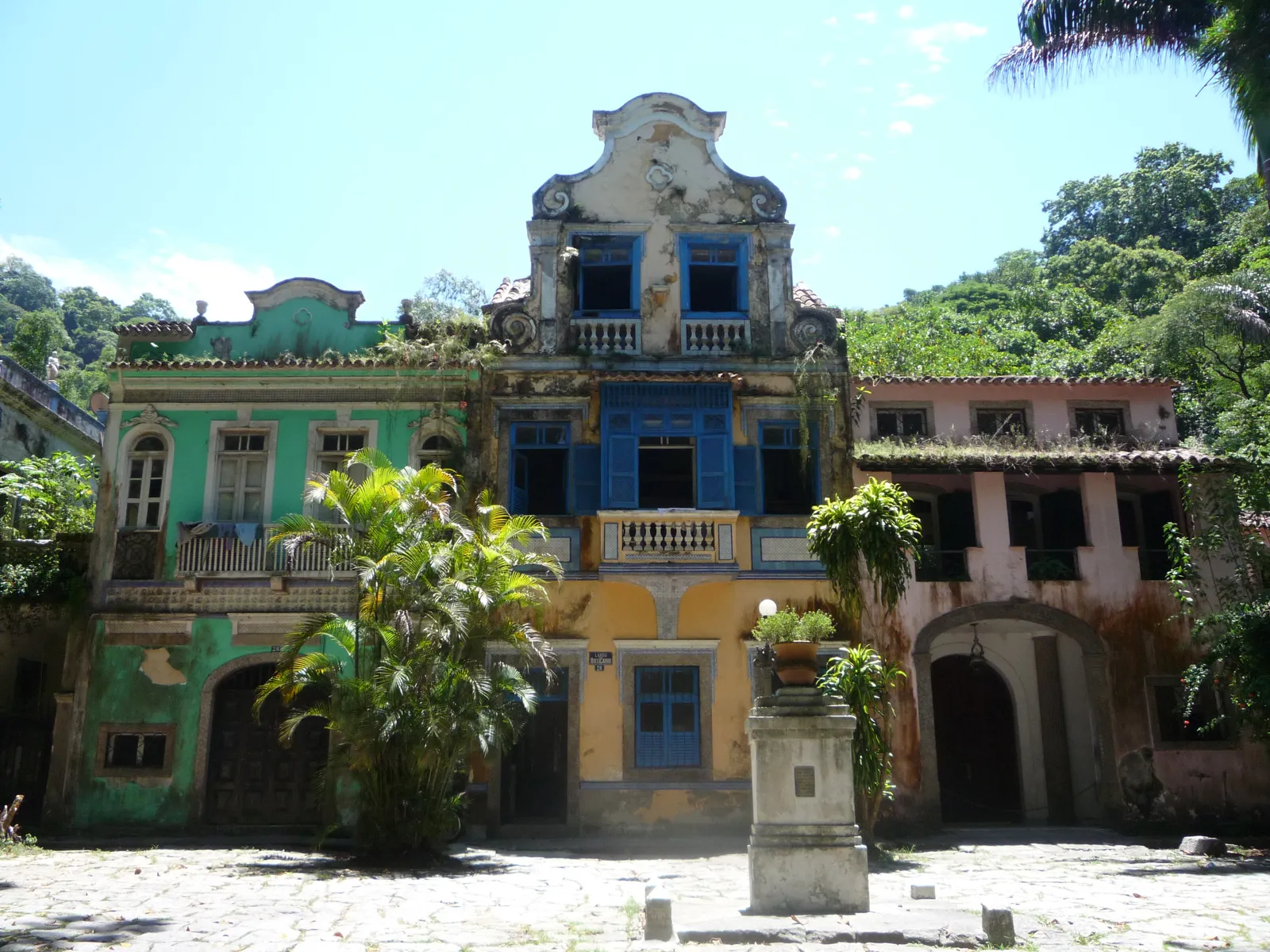
The houses are private and in poor repair, with plants growing out of the balconies, so this is a look from the cobbles rather than a visit. Downhill in Laranjeiras there is more of the same period in better condition: Parque Guinle, a public park of about 24,750 square metres reached from Rua Gago Coutinho, was the private garden of a 1920s mansion, and Lúcio Costa’s modernist apartment blocks stand around its edge. For the cable car, the old centre and the rest of a day in the city, the main Rio de Janeiro guide covers ground this street does not. Between the stone stairways at the summit and the cobbled slope up to the square, almost everything reachable from this station is approached on steps.
No metro station in Cosme Velho
Rio de Janeiro/Galeão International Airport (GIG) is a long way from this valley and the public route is a three-part one. Cosme Velho has no metro of its own, so it starts with a bus or a taxi down to Largo do Machado, about ten minutes, then Line 2 of the metro north to Vicente de Carvalho, then the TransCarioca bus rapid transit line east to the Terminal 2 station. Close to two hours door to door once the changes and waits are counted.
A taxi or ride-hailing car does the same trip in 45 minutes to an hour and a quarter depending on the expressway, and given the arithmetic above it is the sensible choice from here on a flight day. Either way, leave three hours before an international departure. For the short version of this trip, the domestic airport in the middle of the city and the walk from it into the old centre, see the Santos Dumont route.
Frequently asked questions
What should I do during a layover near Cosme Velho Station in Rio de Janeiro?
Take the train and then walk the street it leaves from. The rack railway at Rua Cosme Velho 513 runs every twenty minutes from 8am to 6pm and climbs 3.8 kilometres through the Tijuca forest to the 710-metre summit of Corcovado, about twenty minutes each way, with the view down over Botafogo and Sugarloaf as the payoff. Book the departure slot ahead, because clear days sell out. Back at the bottom, the Largo do Boticário, a small square of faded neocolonial houses a few minutes up the same street, costs nothing and takes ten minutes.
How often does the Corcovado train run, and how long does it take?
Every twenty minutes, from 8am to 6pm, every day of the week. The climb itself is about twenty minutes over 3.8 kilometres of metre-gauge rack track, and the same coming down. Tickets are sold for a specific departure slot rather than as open singles, so the useful planning number is not the ride time but the gap between the slot you can get and the one you wanted: on a clear weekend that gap can be a couple of hours.
How many steps are there at the top of Corcovado?
More than there used to be, at least while the access works are running. The summit is reached by lifts and escalators from the upper station, and the escalators are being replaced with inclined lifts from August 2026; during that work the lifts and stone stairways still reach the second floor of the upper level, and the final stretch to the viewing platform is stone stairways only. The stairways have always been there as the alternative, so anyone who cannot manage steps should check the current arrangement on the day.
Is the Largo do Boticário open to visit?
It is a public street rather than an attraction, and the houses around it are private and in poor repair. Seven neocolonial houses were built or rebuilt around the square between the 1920s and the 1940s, some of them reworked by the architects Lúcio Costa and Gregori Warchavchik using doors, tiles and ironwork salvaged from colonial buildings demolished elsewhere in Rio. What you get now is the facades, the cobbles and the forest behind them, which is worth the ten-minute detour but is not a museum.