Rio Layover Near Central do Brasil Station
Part of the full Rio de Janeiro Layover: Sugarloaf From GIG
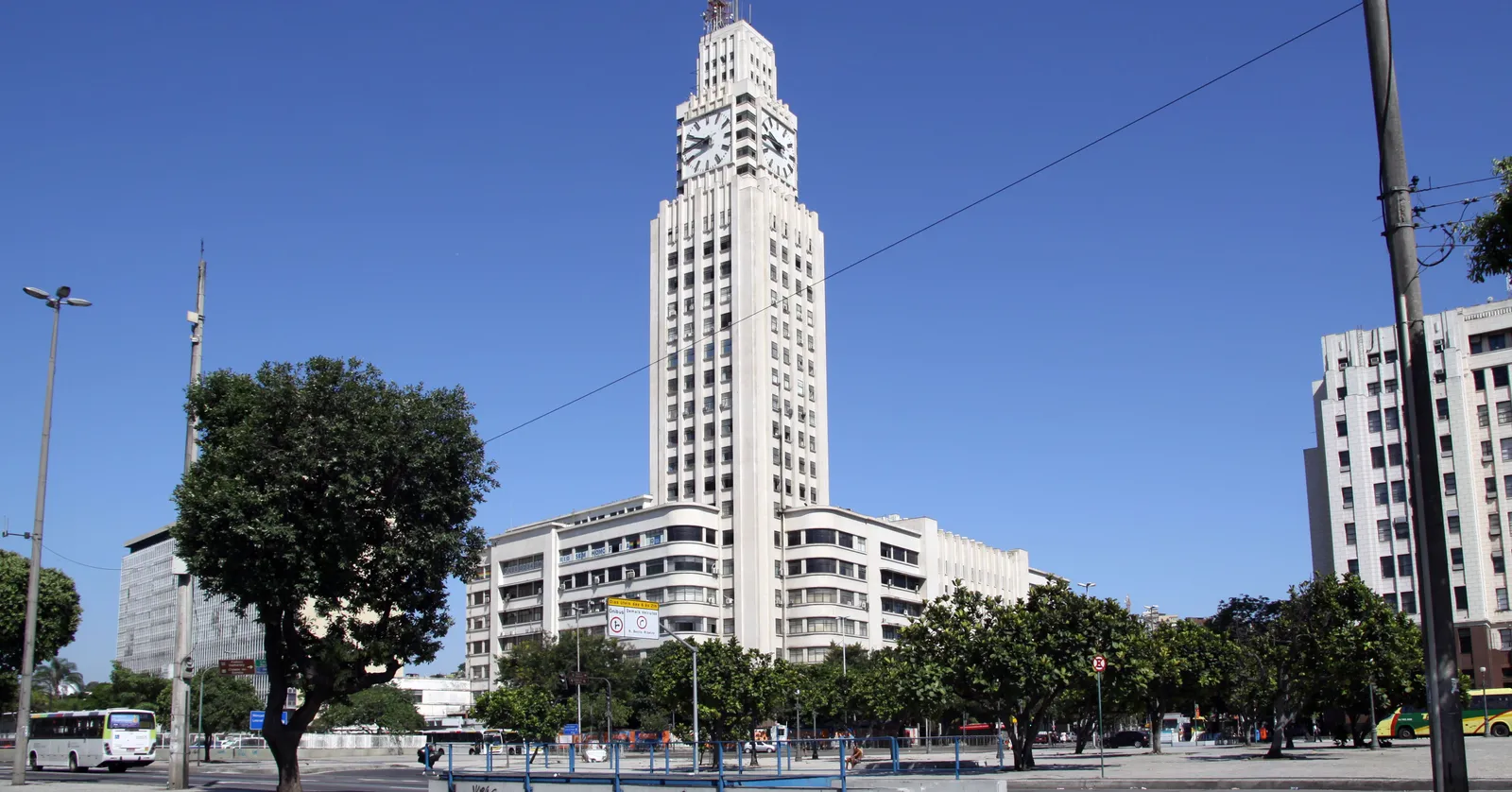
Rio de Janeiro’s Central do Brasil is the terminus of the city’s suburban rail network, and the clock tower over it, the Campo de Santana park across the road and the concrete cone of the Metropolitan Cathedral all sit within about a kilometre of the concourse.
The four clock faces on the Central do Brasil tower
A stepped white tower 135 metres high stands over the platforms here, finished in 1943, and the clock near the top of it has a face on all four sides, each ten metres across. The dial on Big Ben’s tower in London is about seven metres, for a sense of the scale. Railways have run from this site since 1858, when it was the terminus of the Dom Pedro II line, and Walter Salles’s 1998 film Central Station took its name from this building.
The concourse underneath belongs to commuters rather than travellers: this is where Rio’s suburban network ends, and it moves that traffic rather than catering to anyone lingering. There is nothing to see inside beyond the crowd and the destination boards; everything worth stopping for is out on the street.
Campo de Santana, the park with agoutis in it
Praça da República, directly opposite the station, holds a park of old trees, ponds and an artificial rock grotto, and the animals in it are the reason to walk through. Agoutis, brown long-legged rodents roughly the size of a small cat, live loose on the grounds and cross the paths in daylight without much concern for people; ducks and peacocks share the space with them.
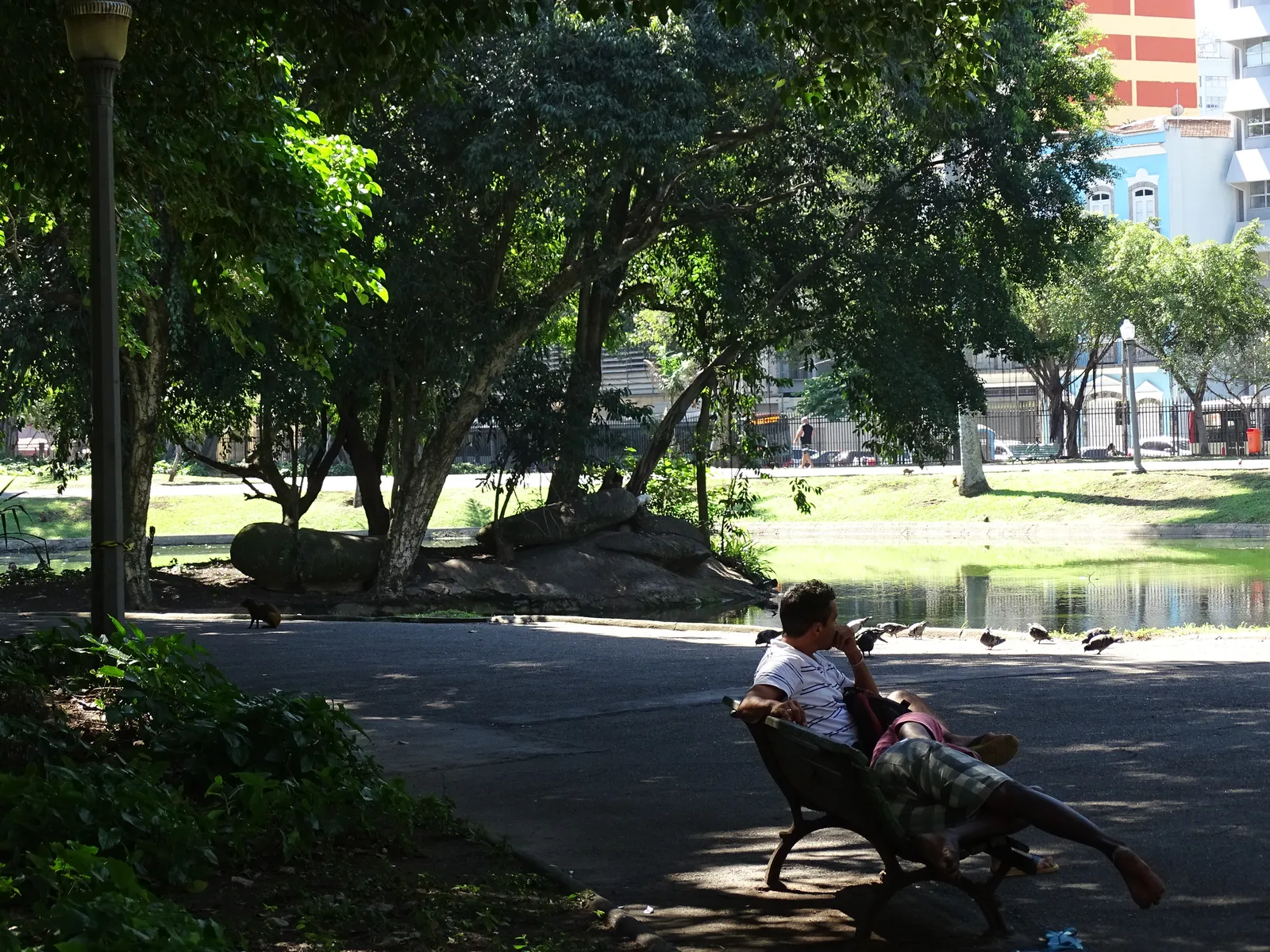
Auguste Glaziou, the French landscape designer Pedro II put in charge of the imperial gardens, laid the park out between 1873 and 1880, and the water courses, bridges and grotto are his. The ground itself carried Pedro I’s acclamation as emperor in 1822 and the proclamation of the republic in 1889, which is a lot of national history for a square you can cross in twenty minutes. The station’s stairs and concourse fill solidly through the late-afternoon commuter peak, which is the worst stretch of the day to be crossing them with a suitcase.
The stained glass inside the Metropolitan Cathedral
Avenida Chile, ten minutes south on foot, is where Rio put its cathedral in 1979 after fifteen years of building, and the result is a 75-metre truncated cone of ribbed concrete, 106 metres across at the base, that looks more like a cooling tower than a church from outside. Edgar de Oliveira da Fonseca designed it; the floor holds around 5,000 seated and 20,000 standing.
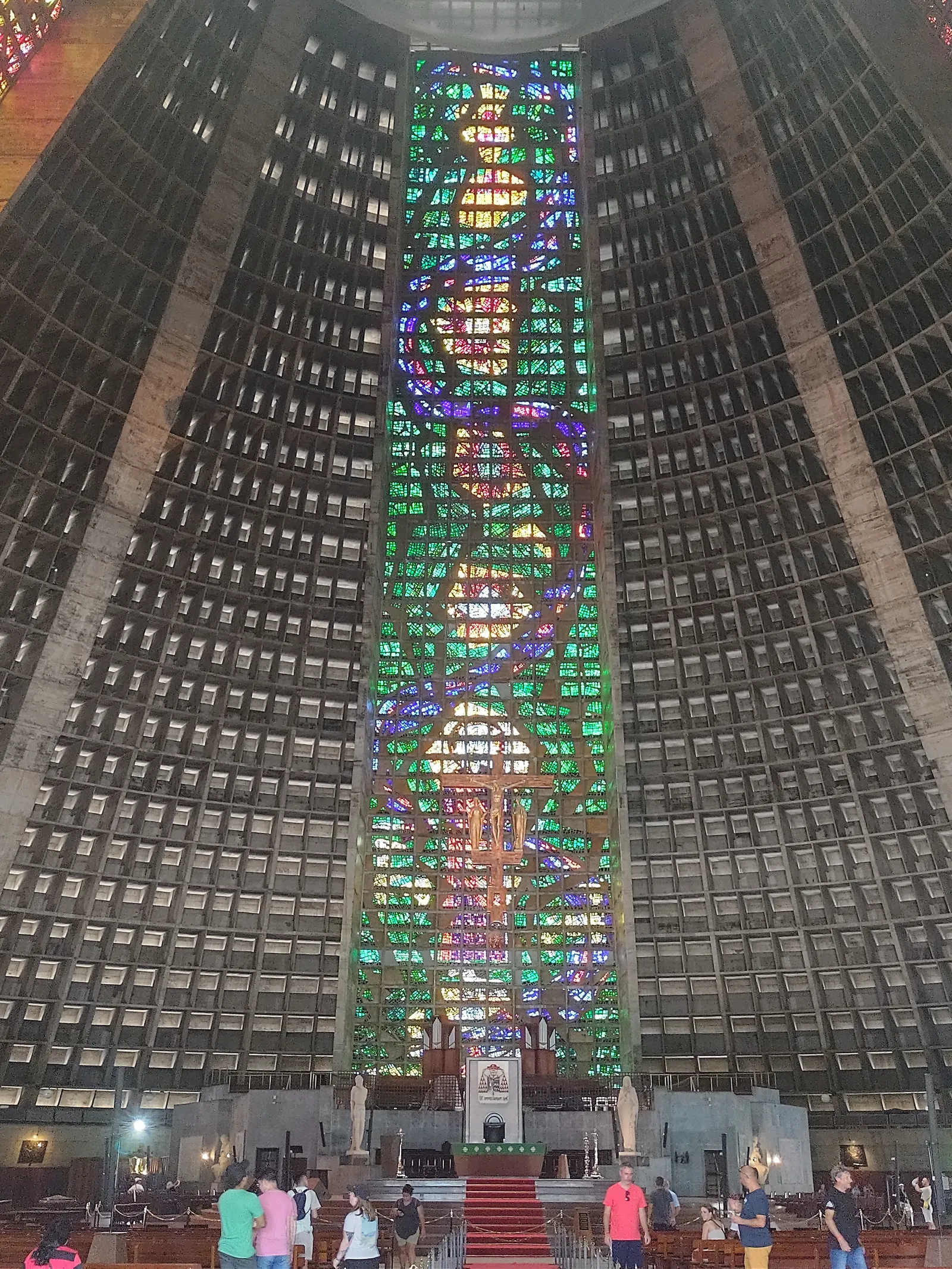
What the outside does not prepare anyone for is the inside: four stained-glass windows, each 64 metres from floor to ceiling, run the full height of the cone in four colours, and a cross of clear panels is set into the roof above the altar. Walking in costs nothing, and the doors are open through the day. Down the slope behind it, the double tier of whitewashed arches carrying the old colonial aqueduct across the valley is the Arcos da Lapa, the other thing here worth the two minutes it takes to reach.
Nothing reaches the airport from here without one change
Rio de Janeiro/Galeão International Airport (GIG) has no rail connection, so leaving from this part of the centre means Line 2 of the metro north to Vicente de Carvalho, about 25 minutes from Central, then the TransCarioca bus rapid transit line east to the Terminal 2 station, about 15 minutes. Door to door, with the change and the waits, allow an hour and a quarter and leave three hours before an international departure. The metro gate takes a contactless bank card; the bus lanes do not, and need the municipal Jaé card instead.
For the version of this day that starts at the waterfront instead, with the cable car and the gilded churches in it, the main Rio de Janeiro guide covers a wider radius than a walk from this station does. If your connection is a domestic one, the walk into the centre from Santos Dumont is the shorter version again.
Frequently asked questions
What should I do during a layover near Central do Brasil Station in Rio de Janeiro?
Everything worth doing here is free and within about a kilometre. Campo de Santana, the landscaped park directly across from the station, has ponds, an artificial grotto and agoutis wandering the lawns, and it takes twenty minutes to cross properly. The Metropolitan Cathedral, a 75-metre concrete cone with four stained-glass strips running the full height of its walls, is a ten-minute walk south and costs nothing to enter. Three hours covers both comfortably; do it in daylight rather than after the evening commuter peak.
How big is the clock on Central do Brasil station?
Ten metres across on each of its four faces, set near the top of a 135-metre tower finished in 1943. For comparison, the dial on Big Ben's tower in London is about seven metres. The clock is the thing you navigate by in this part of central Rio: it is visible from most of the surrounding streets, and it is lit at night.
Which animals live in Campo de Santana?
Agoutis, which are long-legged brown rodents about the size of a small cat, live loose in the park and are used enough to people that they cross the paths in daylight. Ducks and peacocks are also on the grounds, along with a resident cat population. The park was laid out between 1873 and 1880 by the French landscape designer Auguste Glaziou, who built the ponds, bridges and the rock grotto the animals live around.
Is the area around Central do Brasil busy?
Very, and predictably so. The station is the terminus of Rio's suburban rail network, and the concourse, the stairs and the streets outside fill solidly through the late-afternoon peak on weekdays. Mid-morning to mid-afternoon is calmer, and it is also when the park and the cathedral are at their best; after the peak the working centre empties out fast, so this is a daytime stop rather than an evening one.