Rio Layover Near Novo Rio Bus Terminal
Part of the full Rio de Janeiro Layover: Sugarloaf From GIG
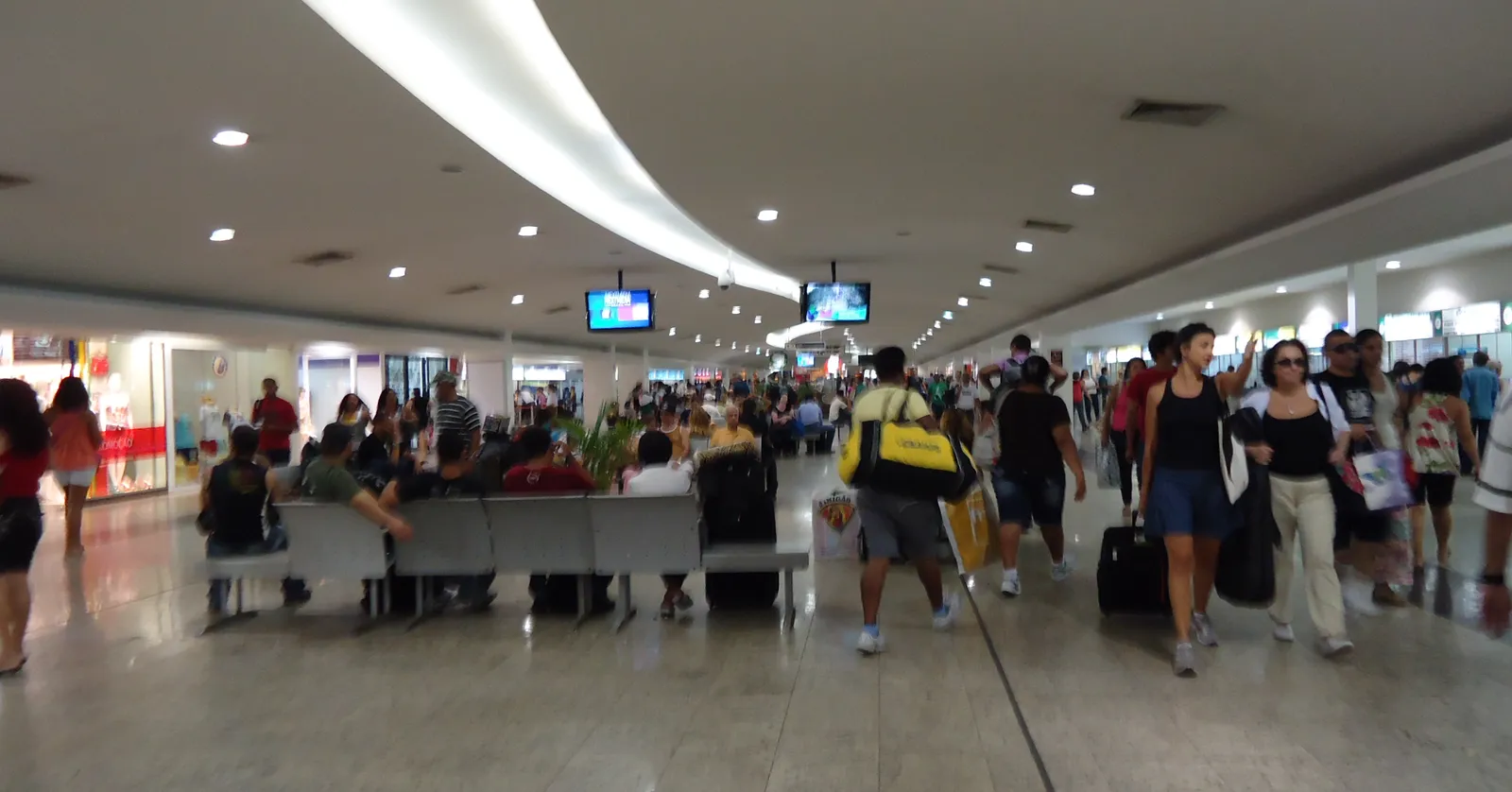
Rio de Janeiro’s Novo Rio coach terminal stands at the edge of the old port district, within walking distance of the carnival warehouses at Cidade do Samba, the granite stairway of Pedra do Sal and a terraced hanging garden on the side of Morro da Conceição.
Twelve carnival warehouses at Cidade do Samba
Gamboa, the dock neighbourhood south of the terminal, holds a purpose-built complex of twelve warehouses, one for each of the samba schools in Rio’s top division, and this is where the floats that fill the parade avenue every February are actually made. Welders, sculptors and seamstresses work on them for most of the year, and part of the site stays open to visitors while they do: Tuesday to Saturday, 10am to 5pm, with the entrance on Rua Arlindo Rodrigues.
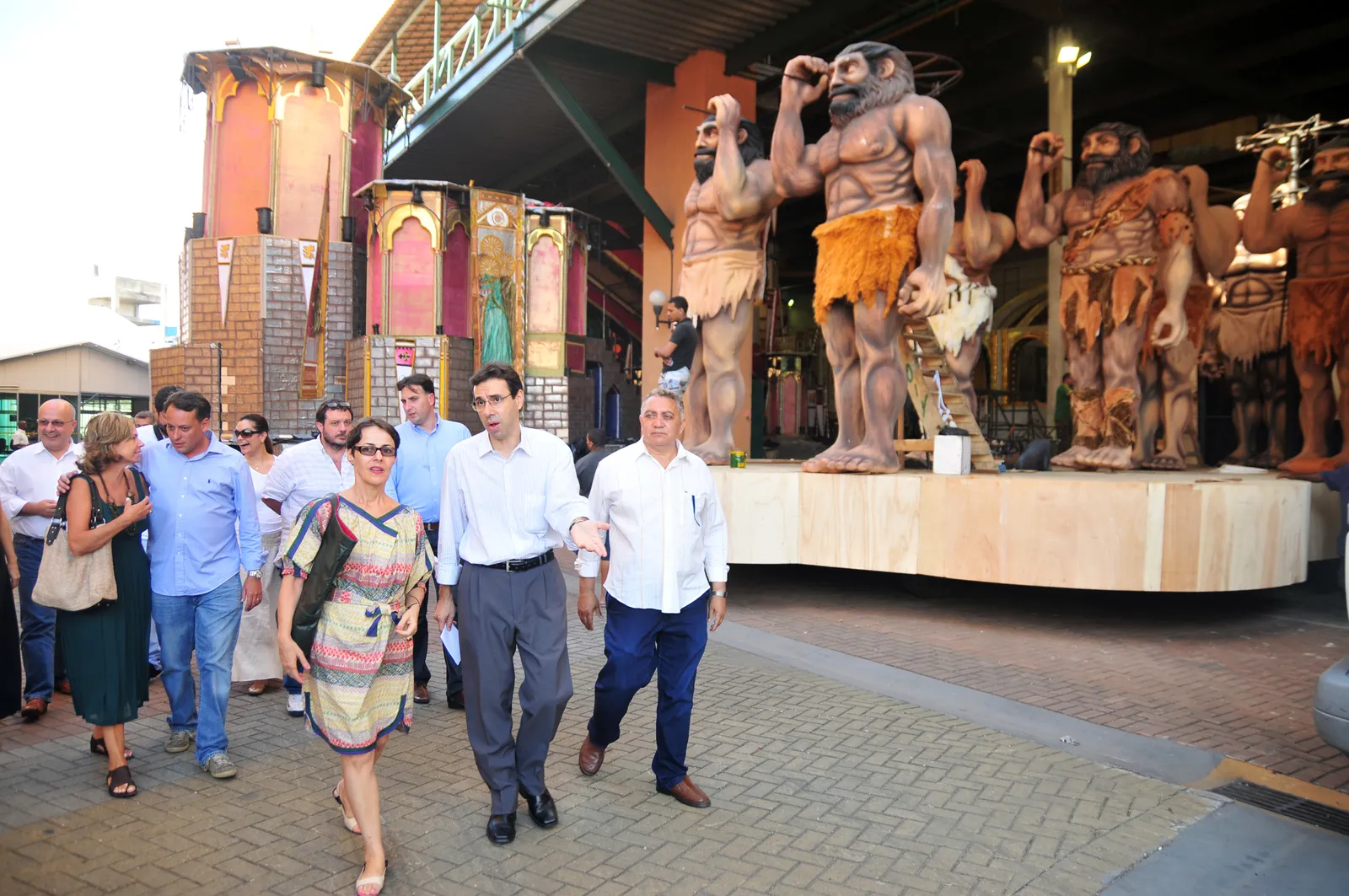
Seeing a five-metre sculpted figure half-finished, with its frame still showing, is a different thing from seeing it on television in motion. On Thursdays the complex also runs an evening show with seventy sambistas drawn from those schools, which ends with the audience walking the track around the twelve warehouses. A guided backstage visit is bookable through a tours and activities platform if you would rather have someone explain what is being built and why.
Pedra do Sal, a stairway cut into bare granite
Rua Argemiro Bulcão runs up to a slab of exposed granite with worn steps cut straight into it, hemmed in by low houses, and that rock is the Pedra do Sal. Salt shipped in from Portugal was unloaded and hauled up here, and the dock workers who did that hauling, most of them Black and many of them formerly enslaved, are the people whose music became samba. The site carries a formal title as an urban quilombo territory, granted in 2005.
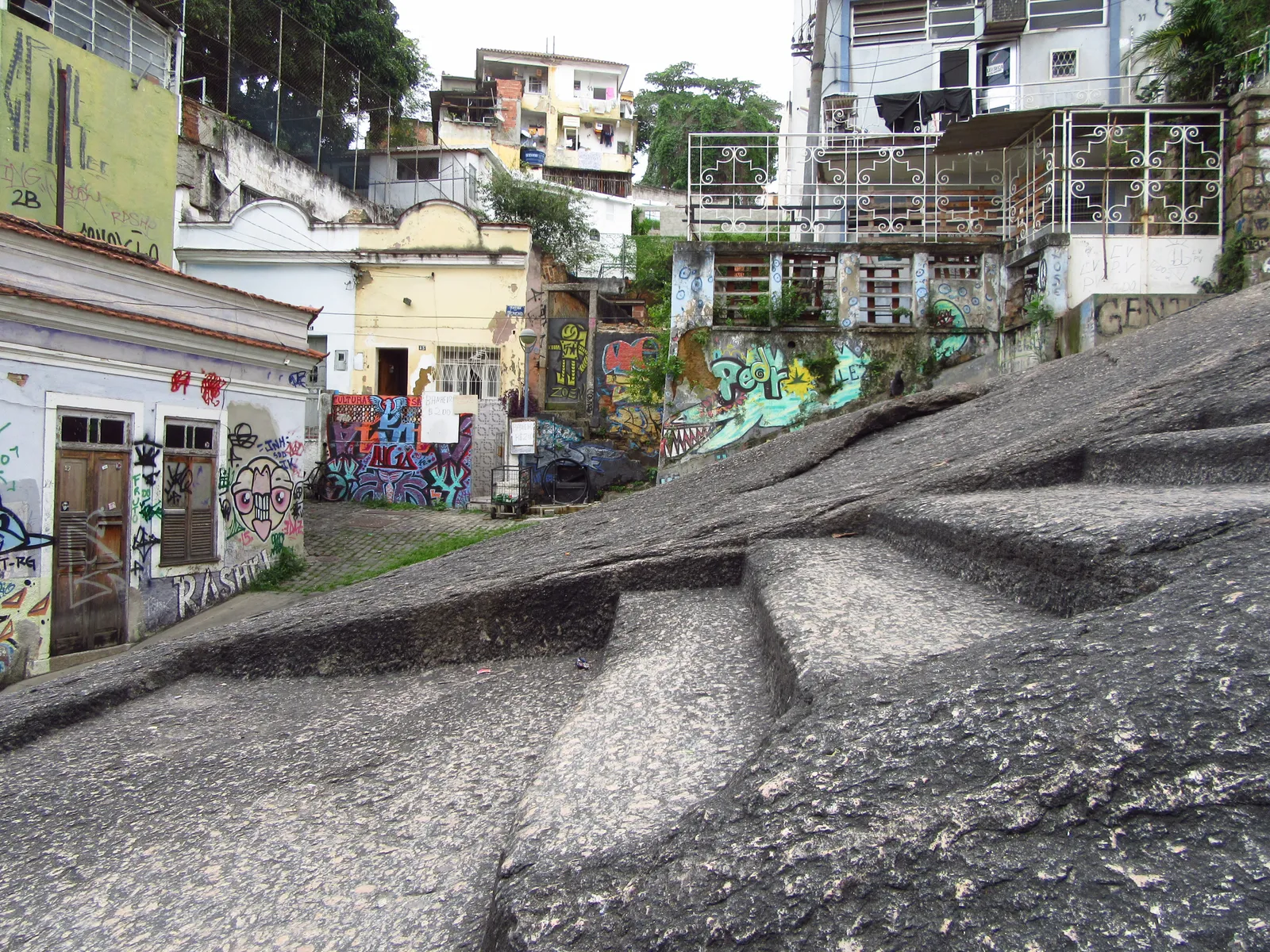
Monday and Friday evenings from around six there is a samba circle on the rock, free to stand and listen to, with drinks sold from the bars around it; weekend nights usually have something on too. In daylight it is quiet and you get the rock, the graffiti and the hill to yourself. Novo Rio’s own left-luggage counters price by what you hand over rather than by locker size, around R$5 for a suitcase and a quoted rate for anything oversized, so the big bag is the one that costs.
The hanging garden above Rua Camerino
Morro da Conceição rises straight out of the port district, and cut into its flank above Rua Camerino is a terraced garden of artificial rockwork, flowering beds, palms and stone steps, laid out over the old Valongo slope and restored along with the rest of the port. It is small, it takes fifteen minutes, and it is the only green thing in this part of the city.
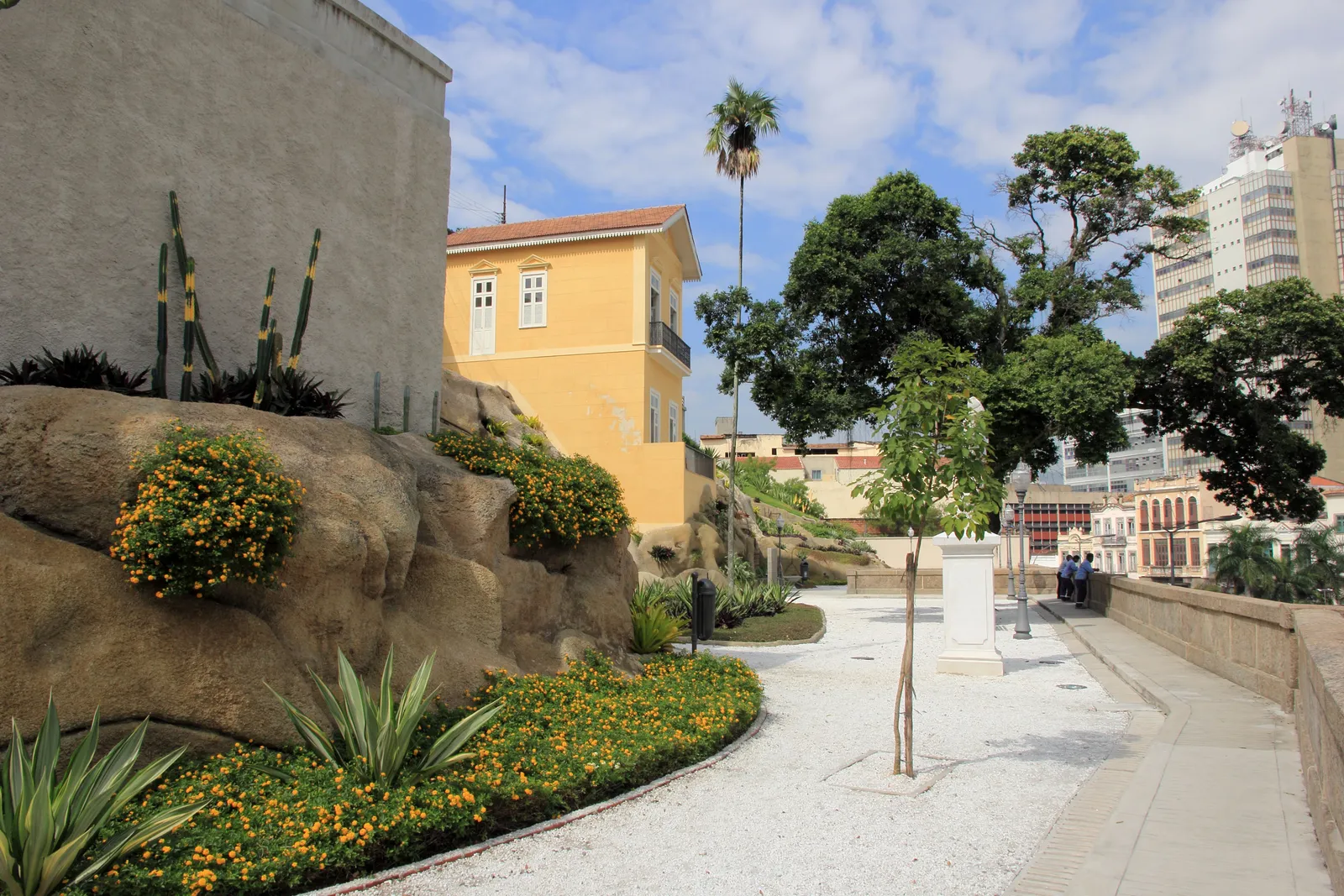
The hill above it keeps a stretch of colonial streets that the rest of the centre lost, with a fort at the top and houses from the eighteenth and nineteenth centuries on the way up. The climb is steep and partly stepped. For the museums, the waterfront and the cable car that fill a longer stop, the main Rio de Janeiro guide covers a much wider radius than a walk from this terminal does.
Two changes between here and the airport
Rio de Janeiro/Galeão International Airport (GIG) is about 15 kilometres north of the terminal and there is no direct public service. The route is the tram outside the terminal, the VLT, a few stops to Central do Brasil, then Line 2 of the metro north to Vicente de Carvalho, then the TransCarioca bus rapid transit line east to the Terminal 2 station. That is three vehicles and around an hour and twenty minutes door to door, which is the argument for a taxi or a ride-hailing car: 30 to 45 minutes on the expressway for a fare that a group splits easily. Either way, leave three hours before an international departure.
If your onward leg is a domestic flight, the airport in the middle of the city is the better one to aim for, and the walk into the centre from Santos Dumont covers what is reachable from there on foot.
Frequently asked questions
What should I do during a layover near Novo Rio Bus Terminal in Rio de Janeiro?
Walk south into the old port district; nothing worth seeing here is more than about two kilometres away. Cidade do Samba, the complex of twelve warehouses where Rio's top samba schools build their carnival floats, opens to visitors Tuesday to Saturday from 10am to 5pm and is the one stop that needs a ticket and daytime hours. Pedra do Sal, a stairway cut into bare granite at the foot of Morro da Conceição, costs nothing and holds a free samba circle on Monday and Friday evenings. The terraced hanging garden above Rua Camerino fills the half hour between them.
Does Novo Rio have left luggage, and what does it cost?
Two counters, one on the departures side and one on arrivals, both on the ground floor and both open around the clock. Pricing is by what you are leaving rather than by locker size: a suitcase or a bag is about R$5, boxes and fragile or commercial items about R$6, and anything oversized is quoted at the counter rather than listed, which is the part worth knowing before you turn up with a trunk.
When is the samba circle at Pedra do Sal?
Monday and Friday evenings are the two long-running ones, starting around 6pm, and there is usually something on Saturday and Sunday too. It costs nothing to stand and listen; people buy drinks from the bars and stalls around the rock instead. The site is recognised as an urban quilombo territory, a title granted in 2005, and the samba tradition here goes back to the dock workers who unloaded salt at this rock.
Is the port district near Novo Rio walkable?
Mostly, and flat until the hill. The stretch from the terminal south through Santo Cristo and Gamboa to Pedra do Sal is level pavement the whole way, about twenty-five minutes on foot. Morro da Conceição behind it is not: the streets up it are steep and partly stepped, and the hanging garden is reached by a ramp and stairs off Rua Camerino. Daytime is the time for all of it; the working port empties out in the evening apart from the samba nights.