Tokyo Narita Layover: Naritasan and the Runway
Part of the full Tokyo in One Day: Ueno and Asakusa
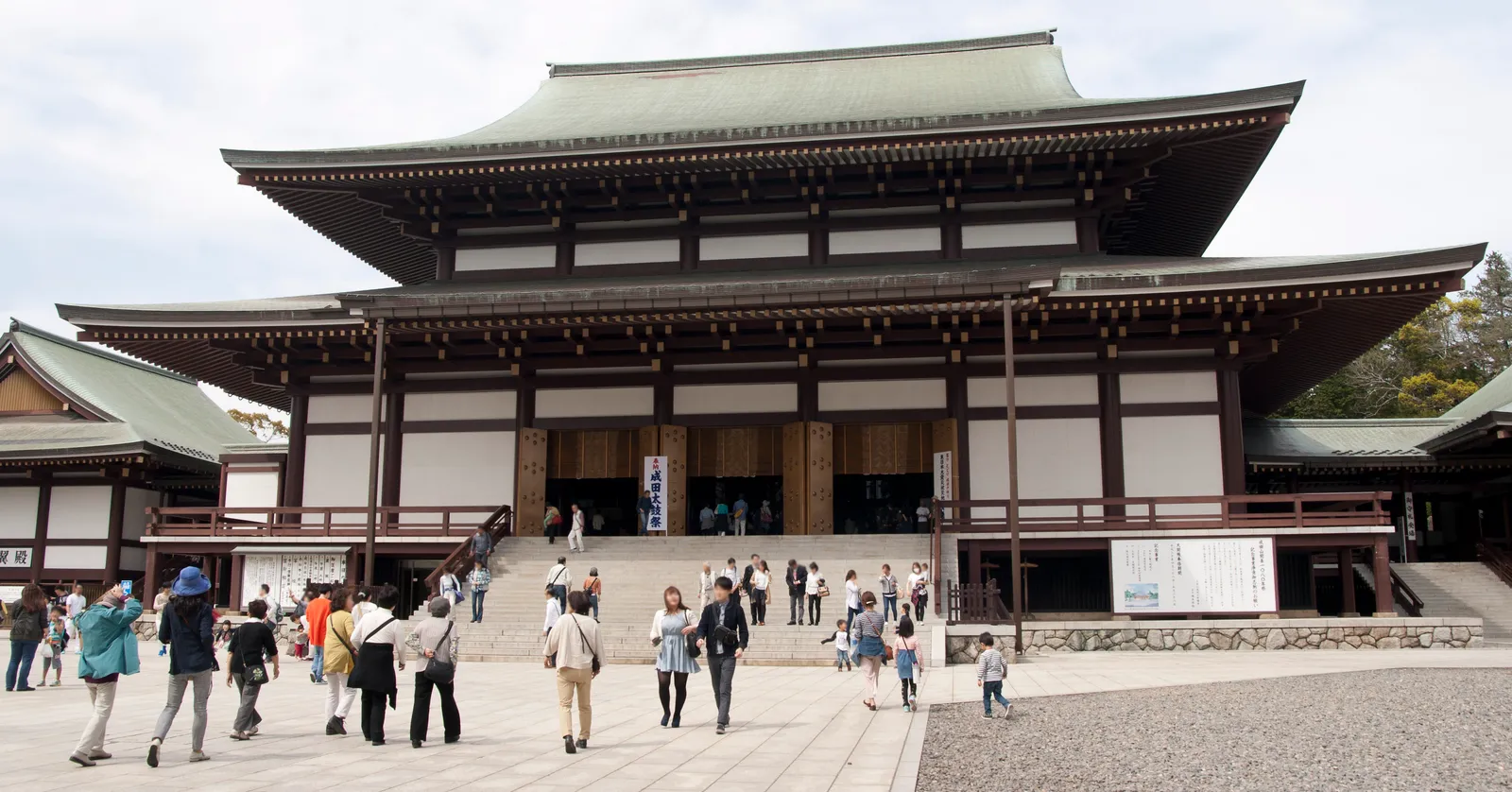
Narita International Airport is about 60 kilometres east of central Tokyo, too far for a short connection, but Naritasan Shinshoji, a temple complex founded in 940, is under ten minutes from the terminals on a local train, at the top of a street of eel restaurants in Narita town.
Naritasan Shinshoji, the temple Narita town grew up around
Both rail lines out of the airport, the Keisei and the JR, stop at Narita town before they head for Tokyo, and from either station the temple is a 10 to 15 minute walk downhill. Naritasan was founded in 940 and is one of the most visited temples in eastern Japan, which is why a town grew up at its gate long before the airport arrived. The buildings span three centuries: the Great Main Hall at the top of the stone steps dates from 1968, the gate below it from 1830, and the three-storey pagoda beside the hall, 25 metres tall, painted vermilion and picked out in gold leaf, from 1712. Behind them, a 16.5-hectare park of ponds and woodland runs downhill from the 58-metre Great Peace Pagoda.
None of it charges admission. Several times a day, the first at 6am, the monks perform the goma fire ritual in the main hall, about half an hour of drums, chanting and a fire built up on the altar, and anyone can walk in and sit at the back. A private guided layover tour sold through a tours and activities platform covers the temple and the street below it in about three hours, starting from the terminal, which takes the train timetable off your hands.
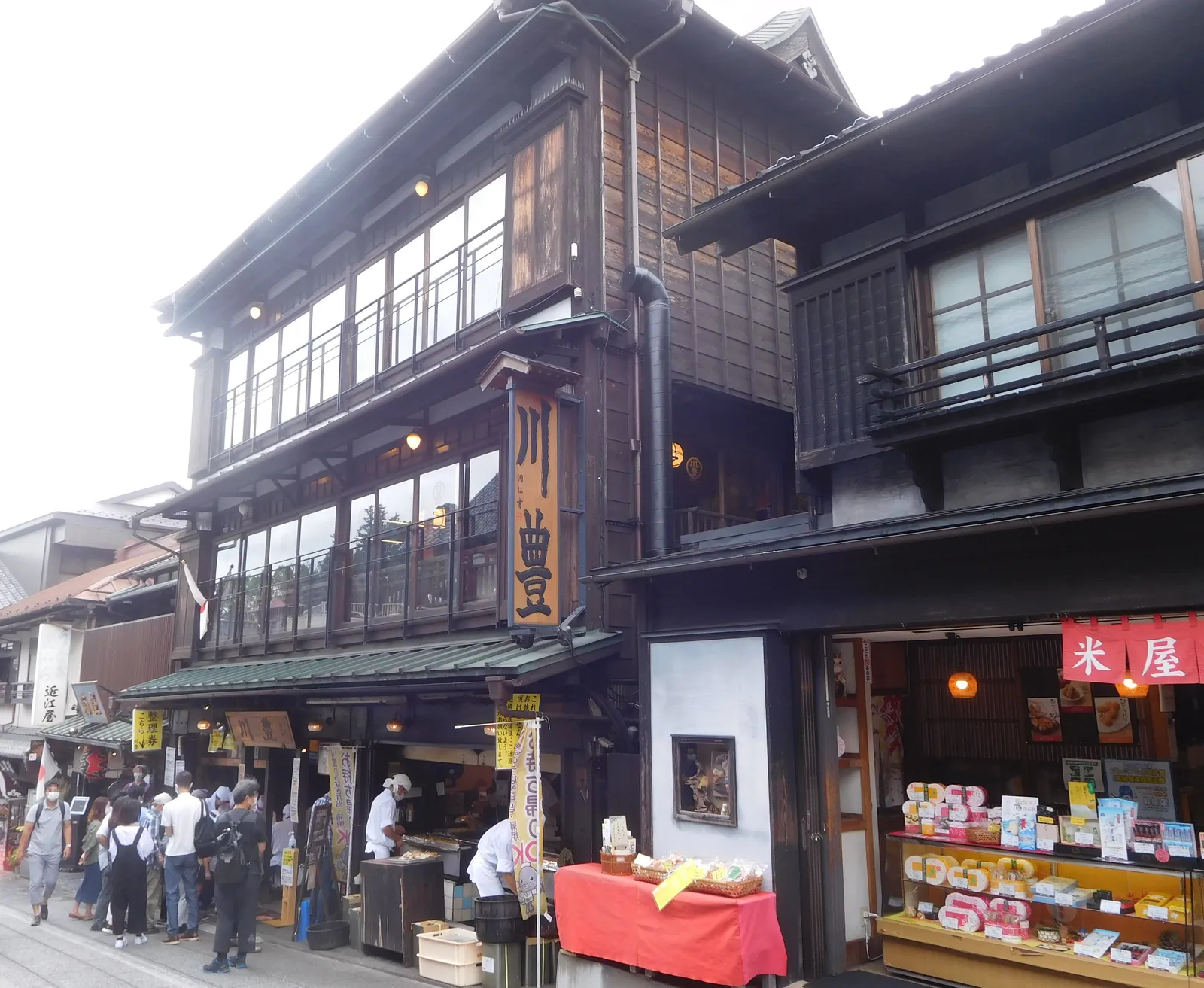
Omotesando, the approach from the station, runs about 800 metres down to the temple gate with some 150 shops on it, a good number of them in old two- and three-storey timber buildings. Eel is what the street is known for. At Kawatoyo Honten, open since 1910, cooks sit at the front of the building filleting live eel, skewering it and grilling it over charcoal, in full view of the queue on the pavement.
This is a different trip from the Ueno and Asakusa route in the city itself, which needs an hour each way on the train and a gap of seven hours or more to be worth it.
The Museum of Aeronautical Sciences beside Narita’s main runway
The Museum of Aeronautical Sciences opened in 1989 in Shibayama, on the airport’s southern edge, a short local bus ride from the Airport Terminal 2 station. Inside are pieces of a Boeing 747 taken apart to be read: a section of wing, a JT9D engine, a cut through the fuselage, cargo containers, and a full-size cabin mock-up. Outside, around twenty real aircraft stand on the grass, from light Cessnas and helicopters to a YS-11, the post-war Japanese airliner. The upper floors are built like a control tower, and the fifth is an open deck where aircraft land and take off on Narita’s main runway in front of you.
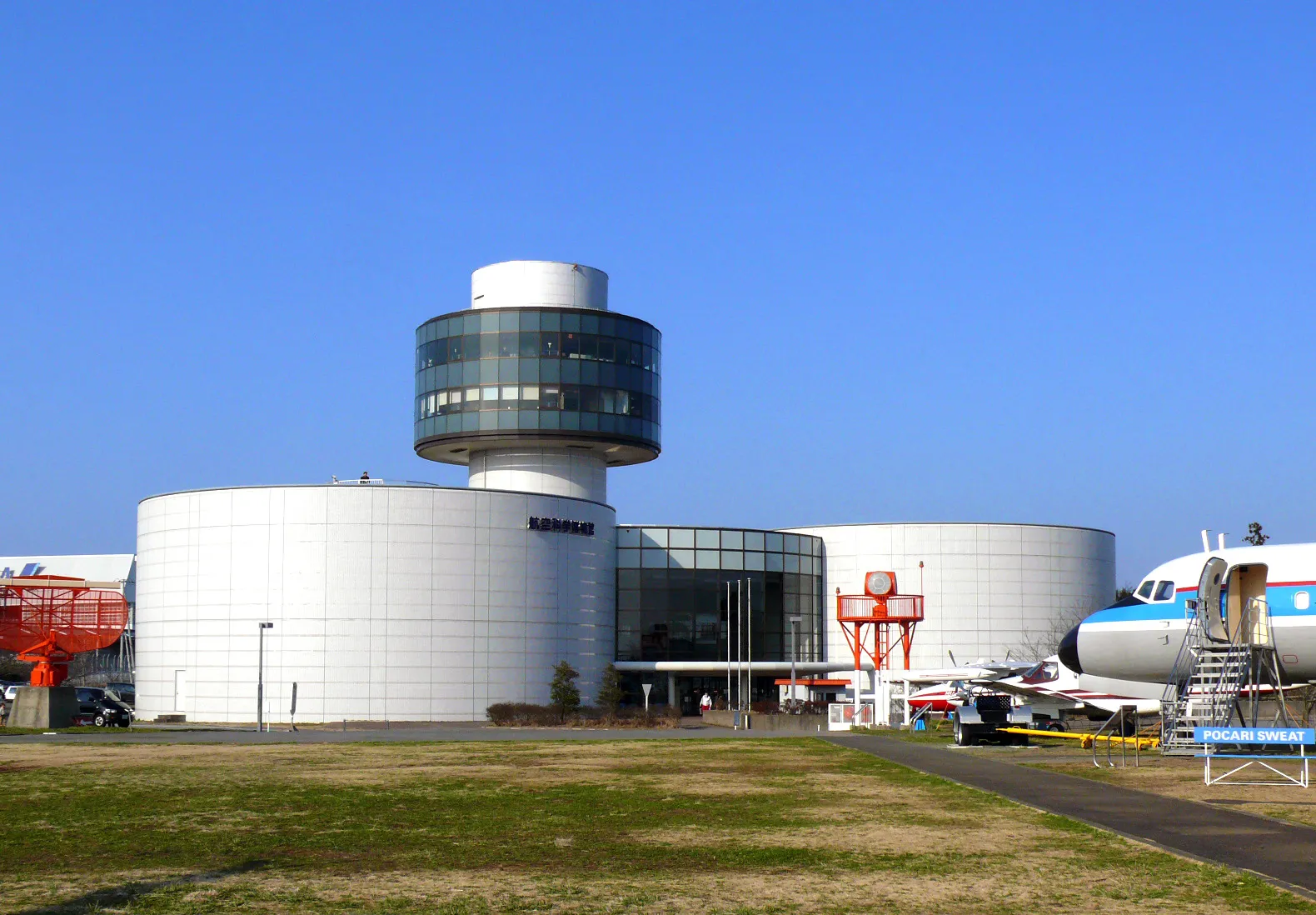
Adult admission is ¥900, with doors 10am to 5pm and last entry at 4.30pm. It closes on Mondays, or the Tuesday when the Monday is a holiday, opens every day in August, and shuts entirely from 12 to 29 December. Admission tickets can be bought ahead through a tours and activities platform.
Terminal 3 has no railway station
Narita’s three terminals are separate buildings. Terminals 1 and 2 each have a station underneath, and the free shuttle bus between them takes about ten minutes. Terminal 3, where the low-cost carriers fly from, has neither: it sits a little over 500 metres from Terminal 2, joined by an access corridor that takes 10 to 15 minutes to walk, or by a shuttle bus that takes about six minutes and runs every few minutes. Anyone coming back from Narita town for a budget flight covers that last half kilometre on foot or by bus with everything they are carrying, after the train.
Rooftop decks on Narita’s Terminals 1 and 2
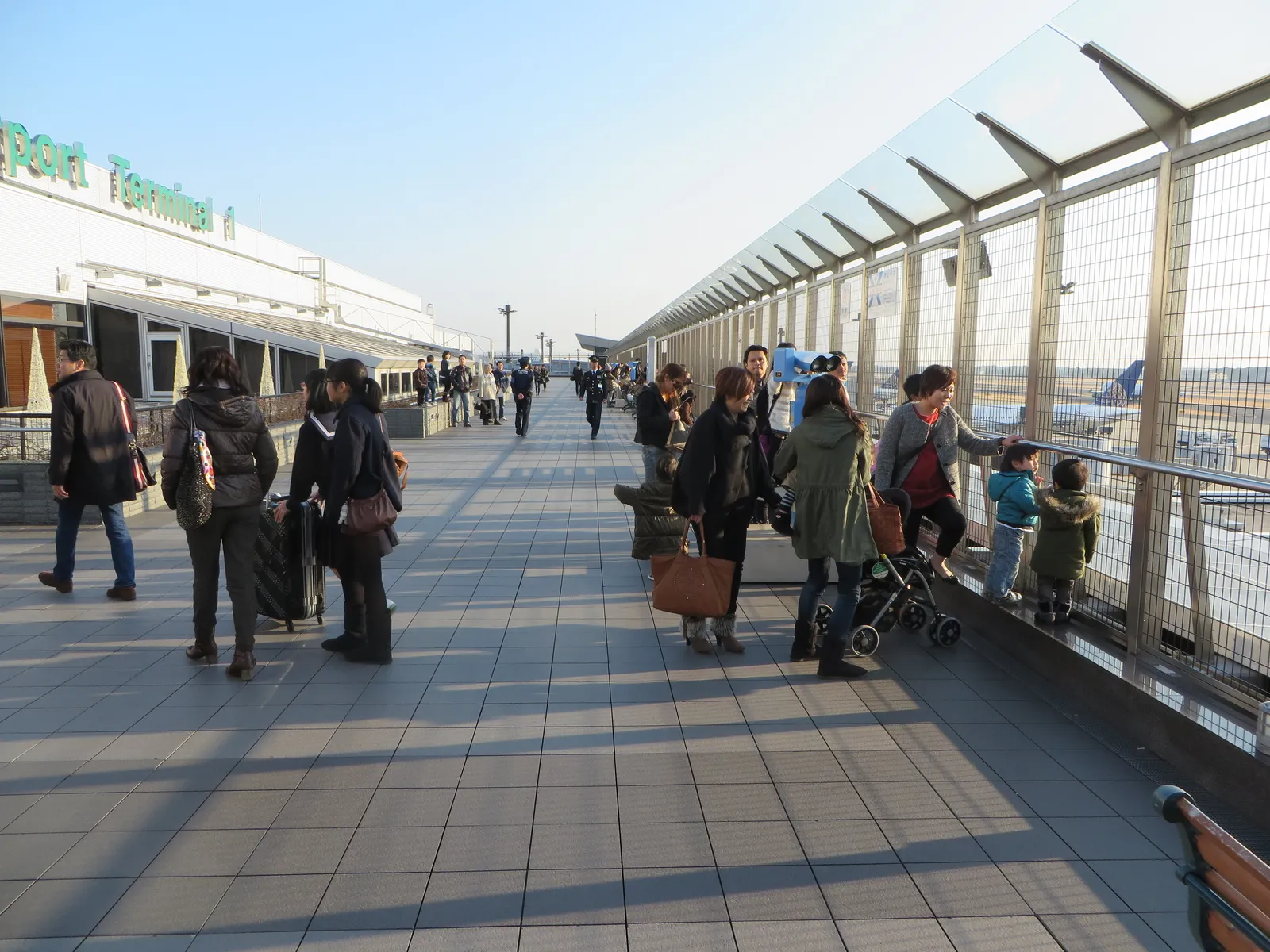
The roof of Terminal 1 opens onto an observation deck on the fifth floor that looks along the full 4,000 metres of the main runway, and Terminal 2 has two decks on its fourth floor laid out for watching parked aircraft at close range. Neither charges anything. Both open 7am to 9pm from October to March and from 6.30am between April and September, and close when the weather turns bad.
The plane spotters themselves mostly go somewhere else: Sakura no Yama, a small hilltop park off the northern tip of the same runway, a short taxi ride from Terminal 1, where jets pass low overhead on their final approach. It is free, planted with cherry trees, and busiest in early April when they flower.
Free volunteer guides at Narita’s arrivals halls
The airport runs its own scheme for transit passengers, the Transit & Stay Program, which matches visitors with English-speaking local volunteers for guided outings of three to six hours around Narita town, the old canal town of Sawara and the countryside beyond. The guiding is free; you pay your own train fares, entry tickets and food. Tours are booked through the program’s website, and its counters sit in the arrivals halls of Terminals 1 and 2. It is meant for connections of five hours or more.
Leaving the airport at all means clearing immigration into Japan, then coming back through security for the onward flight. Allow about 45 minutes for the first and an hour and a half for the second, which is why two hours at Naritasan needs a connection of four to six.
Frequently asked questions
What should I do during a layover near Narita International Airport in Tokyo?
Go to Narita town rather than Tokyo. Naritasan Shinshoji, a temple founded in 940 with a vermilion pagoda from 1712, is under ten minutes from the airport on a local train plus a walk down Omotesando, the eel-restaurant street that leads up to it, and the grounds charge nothing. The Museum of Aeronautical Sciences at the end of the main runway is the other option, ¥900 and closed on Mondays. On a shorter connection, the free observation decks on Terminals 1 and 2 cost nothing but the lift ride.
How do I get between Terminal 2 and Terminal 3 at Narita?
On foot or by shuttle bus, since Terminal 3 has no railway station of its own. The two buildings are a little over 500 metres apart, joined by an access corridor that takes 10 to 15 minutes to walk. The terminal shuttle bus covers the same gap in about six minutes from Terminal 2 to Terminal 3 and three minutes back, running every few minutes, though road traffic can stretch it. Terminal 3 handles the low-cost carriers, so anyone coming back from Narita town by train for a budget flight has to make this transfer at the end.
Can I leave Narita Airport with a guide during a connection?
Yes, two ways. The airport's own Transit & Stay Program pairs transit passengers with English-speaking volunteer guides on tours of three to six hours around Narita and the surrounding countryside, booked through the program's website or at its counters in the Terminal 1 and Terminal 2 arrivals halls; there is no guide fee, but you pay your own fares and entry tickets, and it is sized for connections of five hours or more. If the volunteer slots are full or the timing does not fit, a private layover tour sold through a tours and activities platform runs about three hours around Naritasan and Omotesando and can collect you from the terminal.
Is there time to reach central Tokyo from Narita on a connection?
Only on a long one. The fastest train, the Keisei Skyliner, takes a little over 40 minutes to Ueno, closer to an hour door to door, so a return trip with immigration and security added eats three hours before you have seen anything. Seven hours or more makes it worthwhile, and then the Ueno and Asakusa route is the corridor to aim for. Below that, Naritasan in Narita town is the better use of the time.