Tokyo Shinagawa Layover: Aquarium and Ronin
Part of the full Tokyo in One Day: Ueno and Asakusa
Shinagawa station, where the shinkansen stops on Tokyo’s south side, is two minutes from Maxell Aqua Park, an indoor aquarium open until 8pm, and a short walk from Sengaku-ji, the temple where the 47 ronin, the masterless samurai of the Chushingura revenge story, are buried.
Maxell Aqua Park, the aquarium inside the Shinagawa Prince Hotel
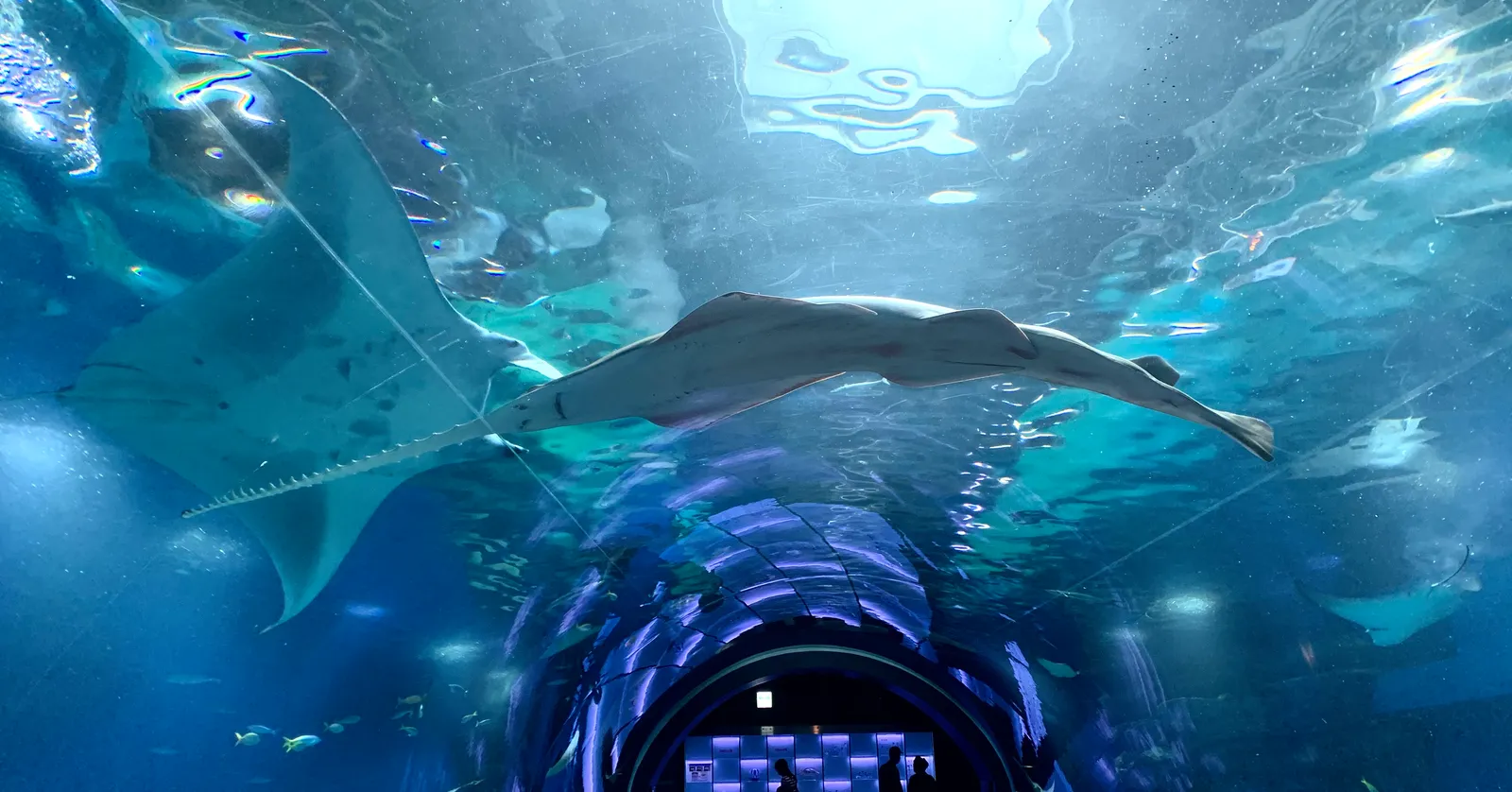
Maxell Aqua Park Shinagawa occupies part of the Shinagawa Prince Hotel complex, two minutes on foot from the station’s Takanawa exit, and holds about 350 species and 20,000 animals across a run of darkened galleries. The centre of it is the Wonder Tube, a glass tunnel through the main tank where manta rays, sawfish and a guitarfish pass directly overhead. The jellyfish gallery is lit in shifting colours, and the dolphin pool upstairs is a circular arena with seats all the way round, so the show plays to every row.
Adult admission is ¥2,800, and the doors open 10am to 8pm with last entry half an hour before close, late enough to fill the evening before a night flight. Dolphin shows run several times a day; the posted times are by the entrance. Admission tickets are sold ahead through a tours and activities platform.
Most people passing through Shinagawa are coming off a shinkansen from Kyoto or Osaka with full-size luggage rather than a cabin bag, and the aquarium’s galleries are narrow, dark and crowded at weekends.
Sengaku-ji, where the 47 ronin are buried
Sengaku-ji stands in Takanawa about fifteen minutes’ walk north of Shinagawa station, or a four-minute walk from Sengakuji subway station, one stop up the line. It was founded in 1612 under Tokugawa Ieyasu and rebuilt here on a larger scale after a fire in 1641, but it is known for one event. In 1701 Lord Asano Naganori drew his sword on the official Kira Yoshinaka inside Edo Castle and was ordered to take his own life the same day. In the winter of 1702 his retainers, now masterless samurai, ronin, broke into Kira’s house at night, killed him, and carried his head across the city to lay it on Asano’s tomb at this temple. They were sentenced to death in their turn and buried beside him.
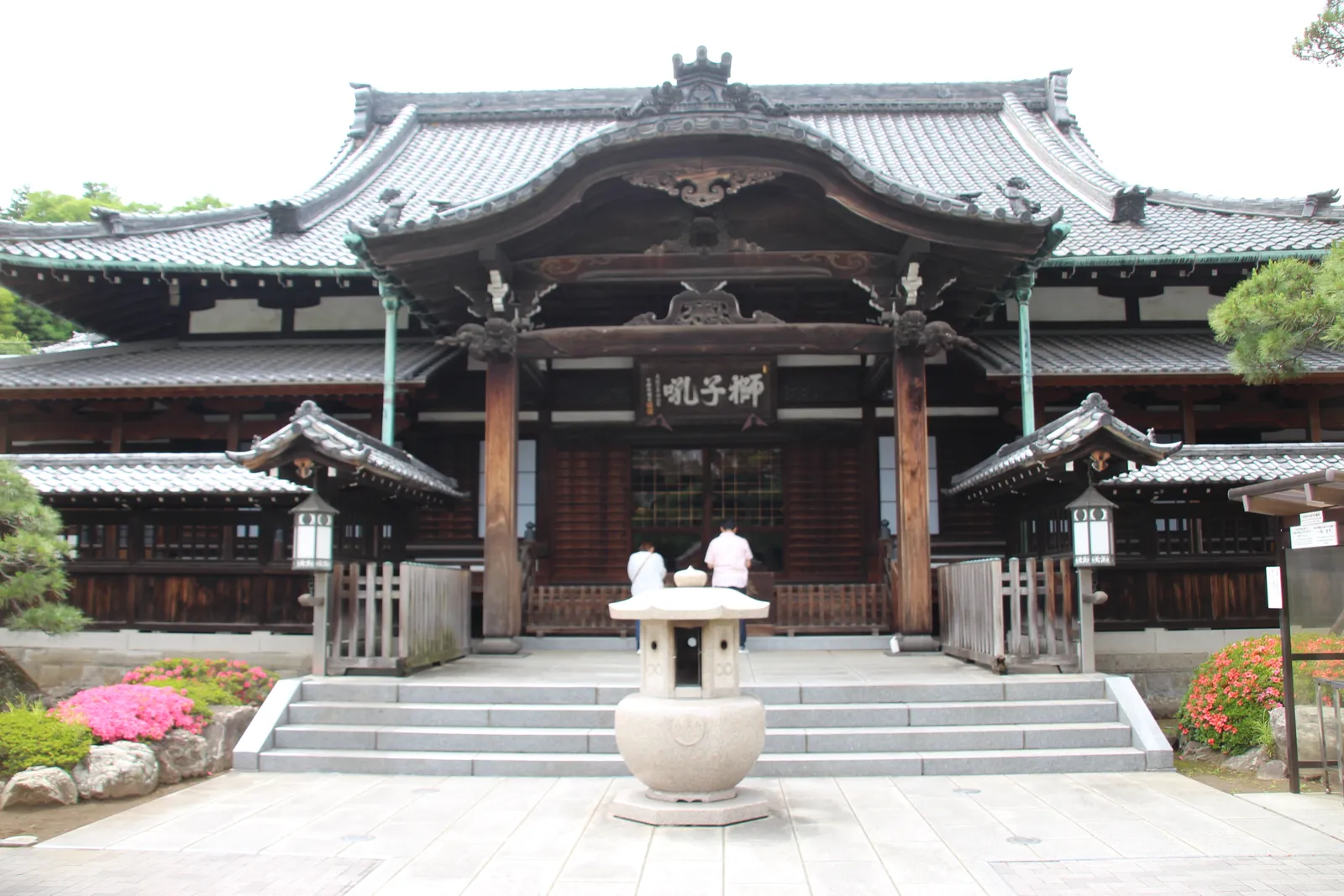
The temple grounds are free and open from 7am, closing at 6pm in summer and 5pm from October to March. The story became the kabuki and puppet play Chushingura and has been retold on stage and screen ever since, which is why the temple sees a steady stream of visitors on an ordinary weekday.
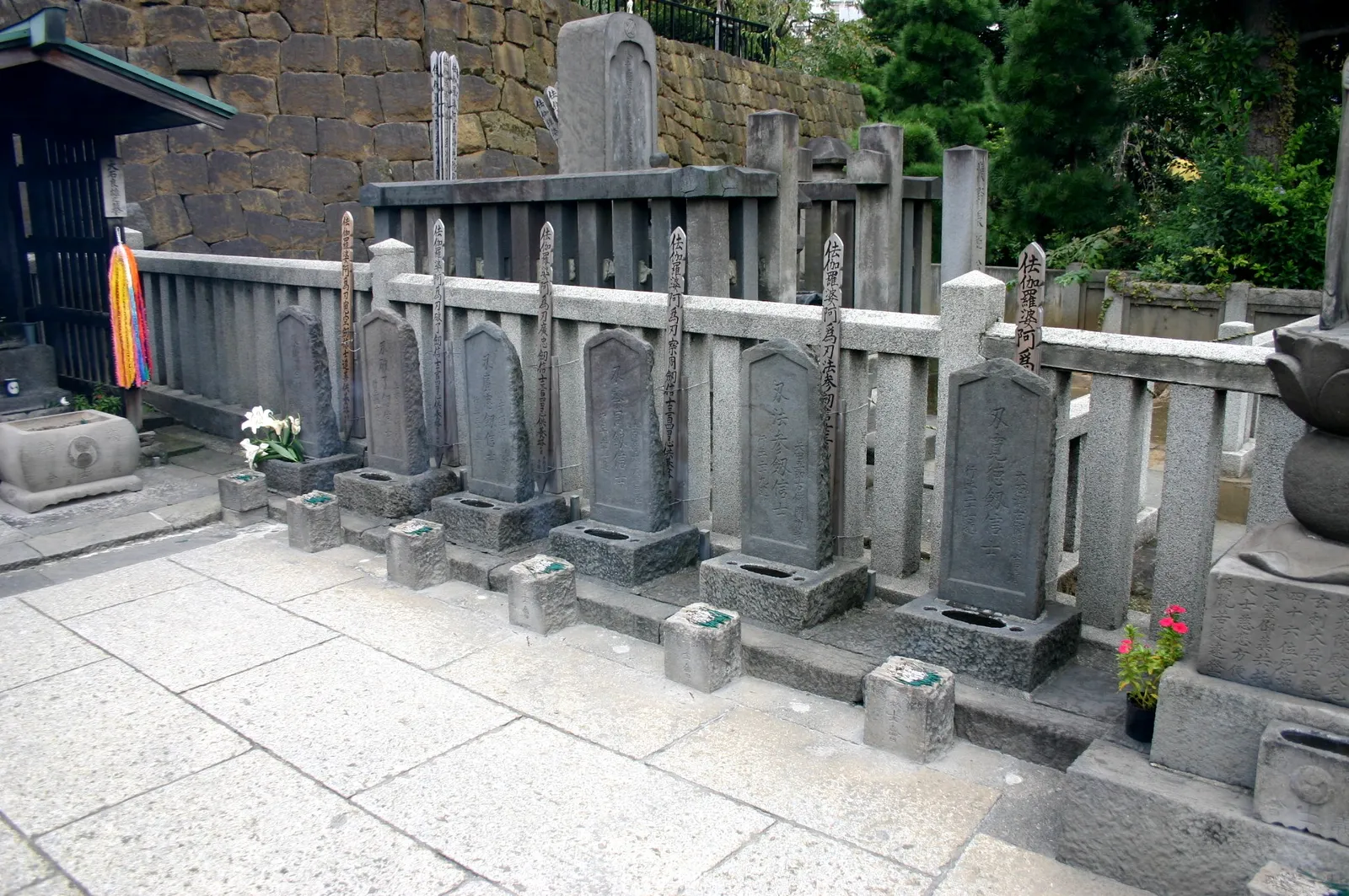
The graves sit up a short flight of steps beyond the main hall, in rows of narrow stone markers inside low fences, Asano’s own tomb at the head of them. Incense is sold at the entrance to the burial ground and smoke drifts over the stones most of the day. Beside the path is the well where the ronin are said to have washed Kira’s head before presenting it at the grave. A small museum near the gate, ¥500, displays belongings and documents of the ronin and carved wooden figures of all 47.
For a longer stop with no train to catch, the Ueno and Asakusa route further north takes in the national museum and the city’s oldest temple.
Shinagawa has two direct trains to Narita
The Narita Express calls at Shinagawa on its way to Narita International Airport (NRT), about an hour to 70 minutes for around ¥3,300 with every seat reserved, running roughly every half hour. The cheaper alternative is on the Keikyu side of the station: some of its airport express trains run straight through onto the Asakusa and Keisei lines to Narita without a change, about 80 minutes for around ¥1,500 on ordinary seats. The same Keikyu platforms reach Haneda in about 15 minutes.
Frequently asked questions
What should I do during a layover near Shinagawa Station in Tokyo?
Two things, in opposite moods. Maxell Aqua Park Shinagawa is an indoor aquarium in the Shinagawa Prince Hotel, two minutes from the station's Takanawa exit, open until 8pm for ¥2,800 with a dolphin show several times a day. Sengaku-ji, the temple where the 47 ronin are buried, is a fifteen-minute walk north or one stop on the subway, and the graves are free to visit. The aquarium takes about two hours; the temple can be done in thirty minutes, or an hour with its small museum.
Is the Keikyu or the Narita Express better from Shinagawa to Narita?
The Narita Express is faster, the Keikyu is half the price. The Narita Express calls at Shinagawa and reaches Narita International Airport (NRT) in about an hour to 70 minutes for around ¥3,300, every seat reserved, roughly every half hour. From the Keikyu platforms, some airport express trains run straight through to Narita without a change in about 80 minutes for around ¥1,500, on ordinary seats. The same Keikyu platforms also run to Haneda in about 15 minutes; see the Haneda airport guide for what is near that end.
When is the 47 ronin festival at Sengaku-ji?
Every 14 December, the anniversary of the night raid in the old calendar. The temple holds the Gishi-sai festival that day, with long queues at the graves to light incense. Outside those dates the graveyard is quiet, with a steady trickle of visitors, and incense is sold at the entrance to the burial ground for anyone who wants to leave a stick.
Is Maxell Aqua Park worth it with kids?
Yes, and the timing works in its favour: it stays open until 8pm, after most of Tokyo's family attractions have closed, and it is entirely indoors, so the weather does not matter. Children aged 4 to 11 pay ¥800, under-4s go free, and the dolphin pool is circular with seats all the way round, so small children can see from any row. Buying a family's tickets in advance through a tours and activities platform saves standing in the hotel lobby queue with them.