Tokyo Station Layover: Palace Gardens, Ginza
Part of the full Tokyo in One Day: Ueno and Asakusa
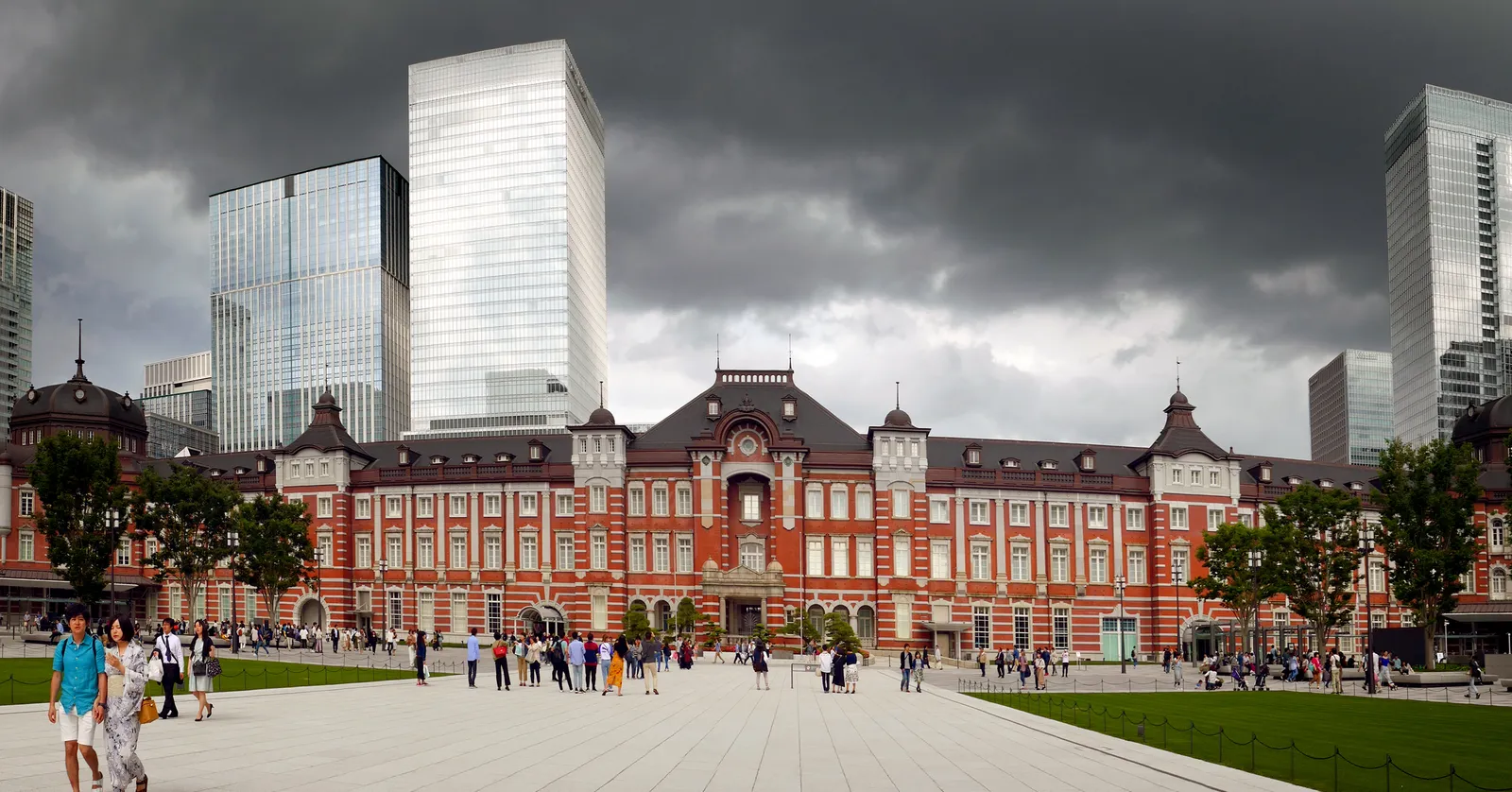
Tokyo Station’s red-brick Marunouchi front faces west towards the free Imperial Palace East Gardens, where the stone base of Edo Castle’s keep still stands, and Ginza’s department stores and clock tower are about fifteen minutes’ walk south, all on flat ground.
Tokyo Station’s 1914 red-brick front
The Marunouchi building, the station’s western face, was designed by Tatsuno Kingo and opened in 1914: more than 300 metres of red brick banded in white stone, three storeys high, with a domed pavilion at each end. The air raids of May 1945 burned off the domes and the top floor, and for sixty-odd years the station ran under a flattened wartime roof until a five-year restoration put both back to the original design in October 2012. The paved plaza in front, with the old imperial approach running from it straight to the palace moat, is the place to see the whole length at once.
A one-hour guided walk of Tokyo Station and the Imperial Palace, sold through a tours and activities platform, covers the building’s history and the palace approach and leaves several times a day, which suits a gap too short to work it out alone.
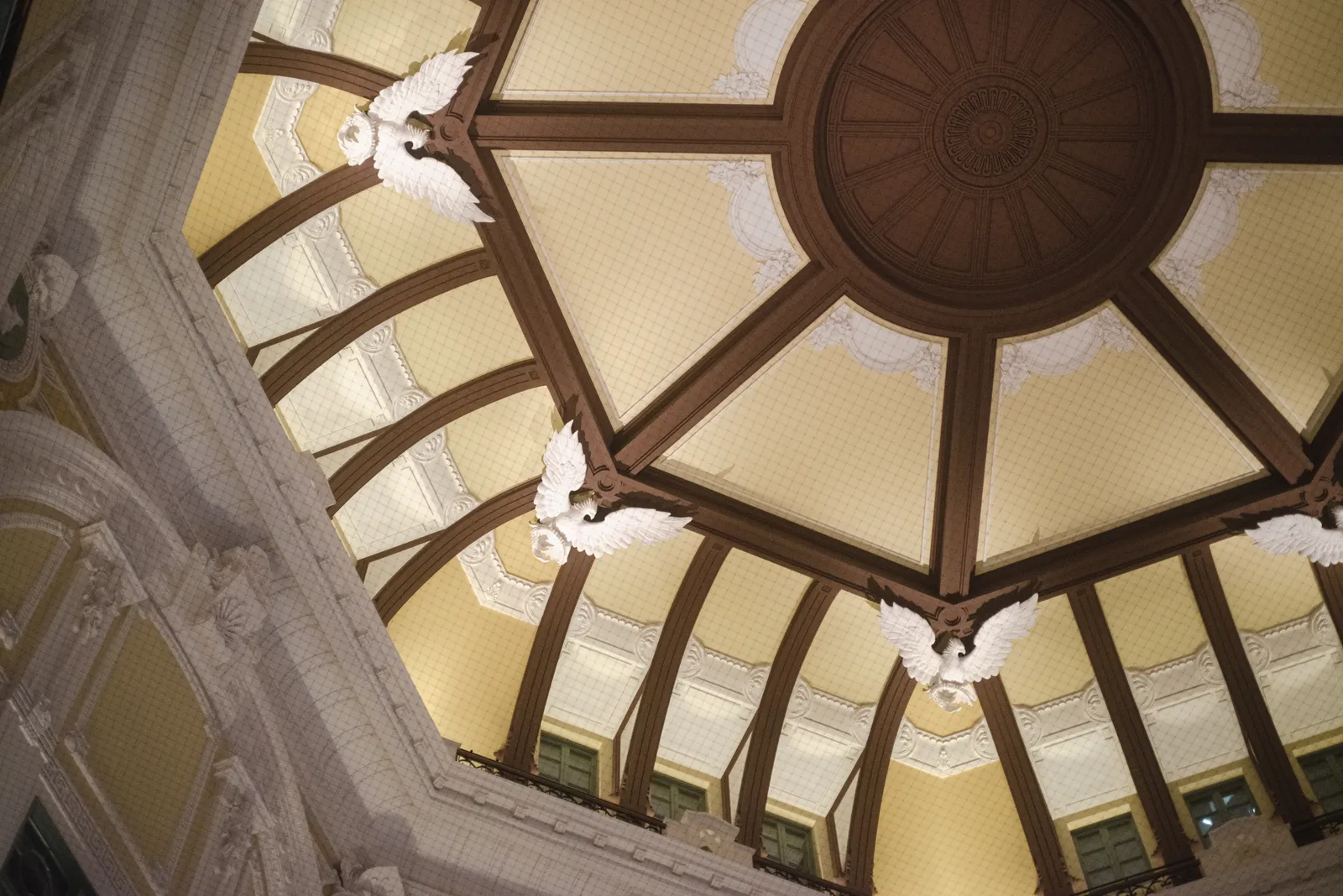
The domes are worth walking into, not just looking at. Each one roofs a ticket hall on the Marunouchi side, and inside, the ceilings carry plaster reliefs rebuilt in 2012 from old photographs and documents: eight eagles with spread wings around the rim, and between them eight of the twelve animals of the Chinese zodiac, the ones that mark the compass directions. Standing under them costs nothing and takes two minutes.
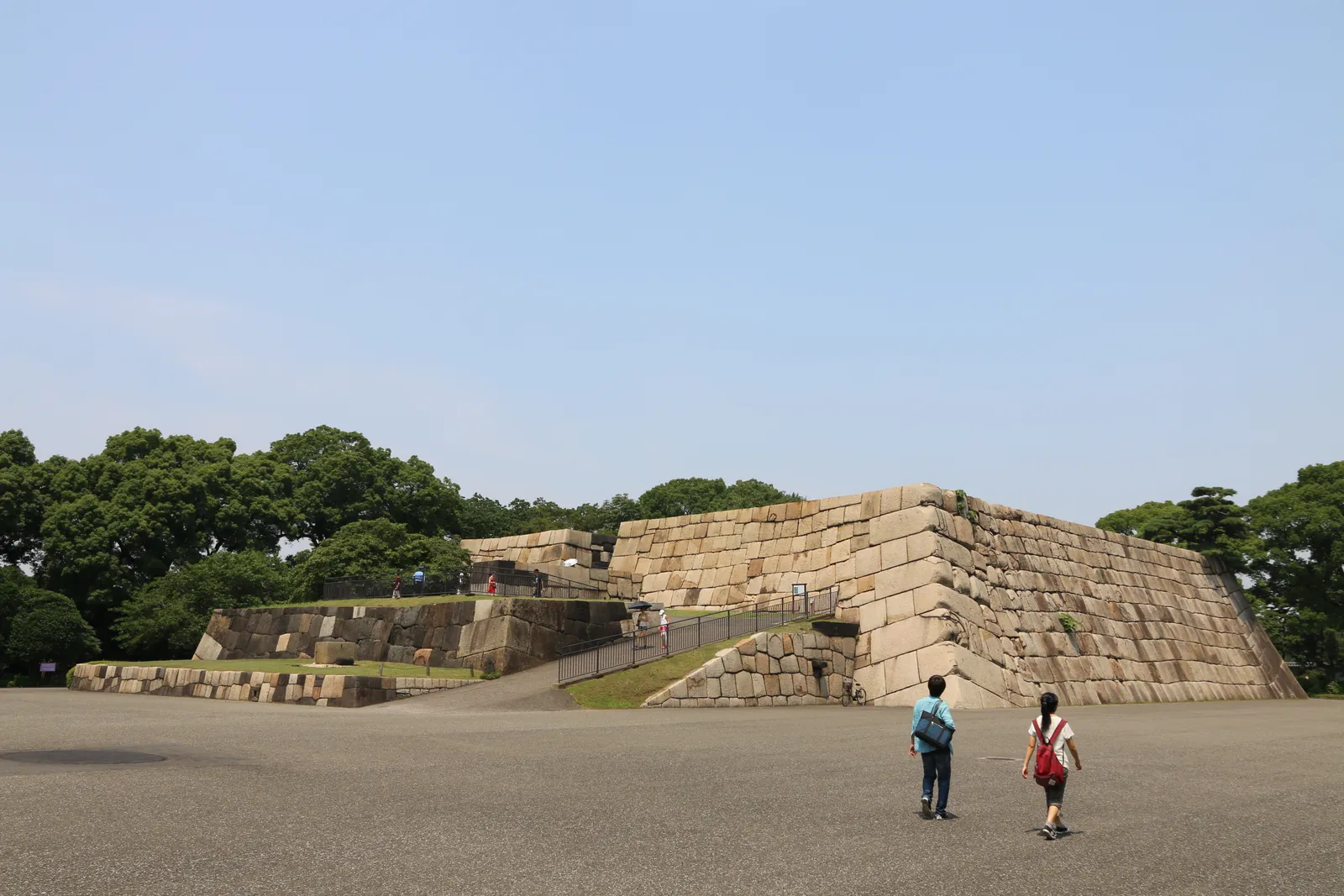
The stone base of Edo Castle’s keep in the East Gardens
The Imperial Palace East Gardens occupy the inner citadel of Edo Castle, the shoguns’ seat for more than 250 years, and are entered through Ote-mon, the old main gate, about ten minutes’ walk west of the Marunouchi plaza. Inside, the climb up from the gate passes the Hyakunin-bansho, a long wooden guardhouse where a hundred samurai stood watch in shifts, and comes out onto the Honmaru, a wide lawn where the shogun’s palace stood. At its northern end is the base of the castle keep, a platform of fitted granite blocks about eleven metres high. The keep it carried burned in 1657 and was never rebuilt, and you can climb onto the platform for a view back over the lawn.
The gardens are free and need no booking, but they close every Monday and Friday, open at 9am, and shut between 4pm and 6pm depending on the season. Bags are inspected at the gate. Below the Honmaru on the east side, the Ninomaru garden is the landscaped part, a pond and a winding stream laid out in the Edo style.
Tokyo Station’s lines are stacked rather than spread out: the shinkansen and the main JR lines sit up on the viaduct, the Narita Express and the Sobu line run on platforms several floors underground, and the subway is a separate level again, so every change between them is a lift or a long escalator rather than a walk across a floor.
Luggage storage at Tokyo Station
Tokyo Station has thousands of coin lockers on both the Marunouchi side, the red-brick front, and the Yaesu side to the east, from about ¥300 for the smallest to about ¥1,000 for a large one, but the big ones fill early on busy days. For a suitcase that won’t fit, the staffed luggage counter near the Yaesu South Gate keeps bags for up to 30 days, from about ¥500 an item a day.
The Narita Express leaves from five floors under Tokyo Station
The Narita Express runs from Tokyo Station to Narita International Airport (NRT) in about 50 to 60 minutes for a little over ¥3,000, every seat reserved, from platforms deep under the Marunouchi side; allow ten minutes from street level to the train. The cheaper option is the Airport Bus TYO-NRT from the Yaesu side, a flat ¥1,500 in the daytime and 65 to 85 minutes depending on traffic, which loads at street level. For a flight from Haneda instead, it is three stops south on a JR line to Hamamatsucho and then 13 minutes on the monorail, covered in the Haneda airport guide.
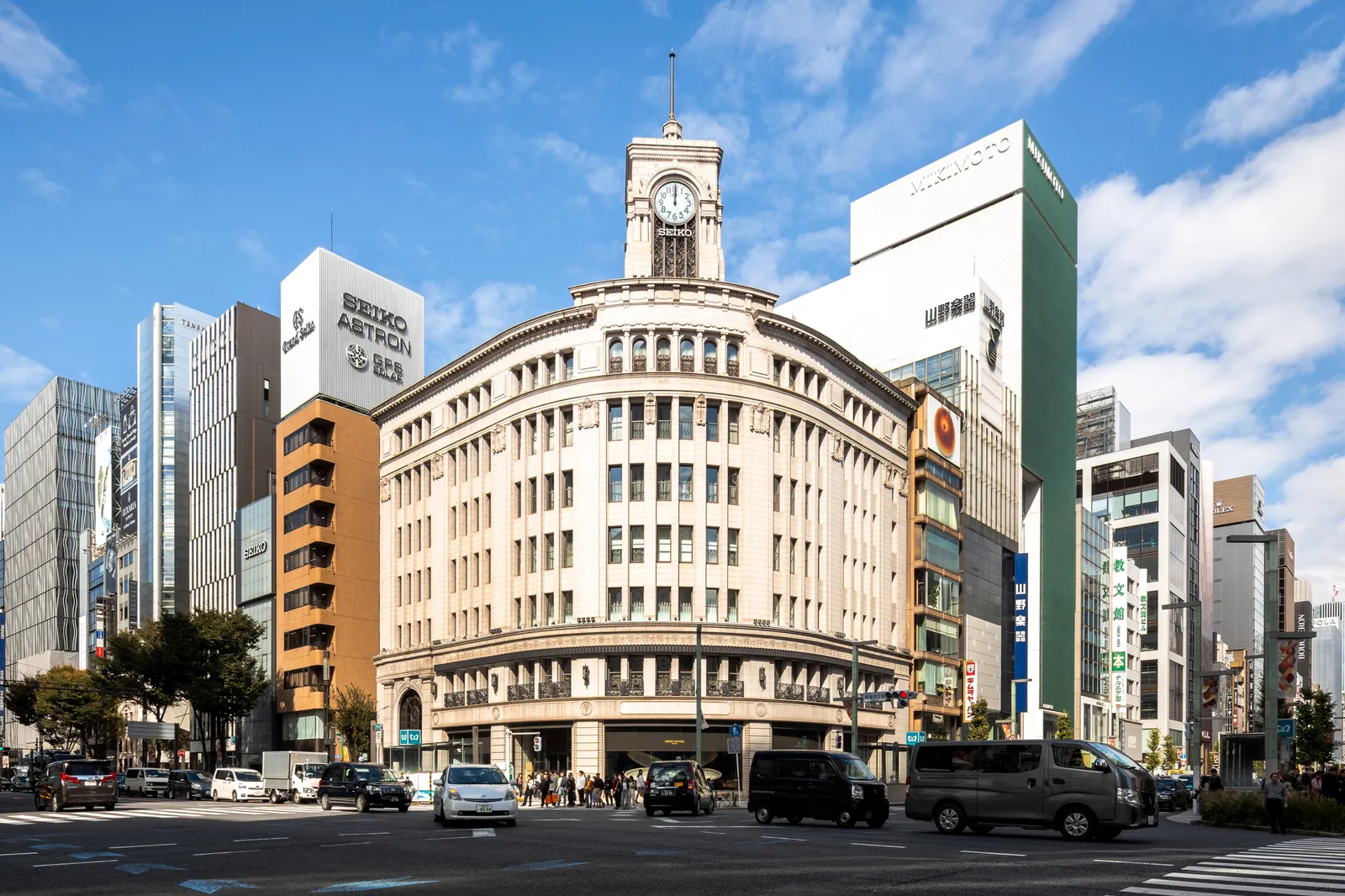
The Wako clock tower over Ginza’s main crossing
Ginza is about fifteen minutes on foot south of the station’s Yaesu side, and its centre is the 4-chome crossing, where Chuo-dori meets Harumi-dori. On the corner stands Wako, built in 1932 as the headquarters of the watchmaker that became Seiko, its curved stone front rising to a clock tower that chimes the hours over the crossing. The department stores line Chuo-dori either side of it, Mitsukoshi on the opposite corner among them, with their food halls in the basements.
On Saturdays, Sundays and public holidays, about a kilometre of Chuo-dori closes to traffic in the afternoon, usually from noon to 6pm between April and September and noon to 5pm the rest of the year, and the whole width of the road becomes a walking street. For somewhere to sit, the roof garden on top of the Ginza Six complex on Chuo-dori is open to anyone from 7am to 11pm at no charge.
The Ueno and Asakusa route covers the city’s main museum district and its oldest temple instead, for anyone with seven hours or more and no shinkansen to catch.
Frequently asked questions
What should I do during a layover near Tokyo Station in Tokyo?
Stay on the flat ground west and south of the station. The 1914 red-brick Marunouchi building is worth looking at from the plaza and from under its two domes, the Imperial Palace East Gardens are a short walk west through Ote-mon gate and free, and Ginza's department stores and clock tower are about 15 minutes' walk south. The gardens are the part to plan around, since they close on Mondays and Fridays; Ginza works on any day and late into the evening, so it absorbs whatever time is left.
When are the Imperial Palace East Gardens closed?
Every Monday and Friday, and from 28 December to 3 January. When a Monday is a national holiday the gardens open that day and close the Tuesday instead. On open days they start at 9am and close between 4pm and 6pm depending on the month: 4pm from November to February, 4.30pm in October, 5pm in March, early April and September, and 6pm from mid-April through August, with the gates shutting to new visitors 30 minutes before that. Entry is free and needs no booking, but bags are inspected at the gate.
Is the Narita Express or the bus better from Tokyo Station?
The Narita Express if time matters, the bus if money does. The Narita Express runs from the underground JR platforms at Tokyo Station to Narita International Airport (NRT) in about 50 to 60 minutes for a little over ¥3,000, every seat reserved. The Airport Bus TYO-NRT leaves from the Yaesu side of the station for a flat ¥1,500 in the daytime and takes 65 to 85 minutes depending on traffic. The bus is the easier option with heavy luggage, since it loads at street level and avoids the deep platforms entirely.
Can I see the Imperial Palace itself from Tokyo Station?
Only from the outside, unless you book. The palace where the imperial family lives sits inside the moats west of the East Gardens, and the plaza in front of it, with the double-arched Nijubashi bridge, is open to anyone at any hour. Inside the inner grounds is by the Imperial Household Agency's own free guided tour, which needs a reservation or a same-day ticket. For a guide on the public parts, a private Edo Castle and East Gardens tour sold through a tours and activities platform starts at Tokyo Station and runs about three hours.
Is there luggage storage at Tokyo Station?
Yes. Coin lockers on both the Marunouchi and Yaesu sides, the west and east sides of the station, cost from about ¥300 to ¥1,000 by size, and the staffed counter near the Yaesu South Gate takes suitcases that won't fit, from about ¥500 an item a day.