Tokyo Akihabara Layover: Electronics, Manga
Part of the full Tokyo in One Day: Ueno and Asakusa
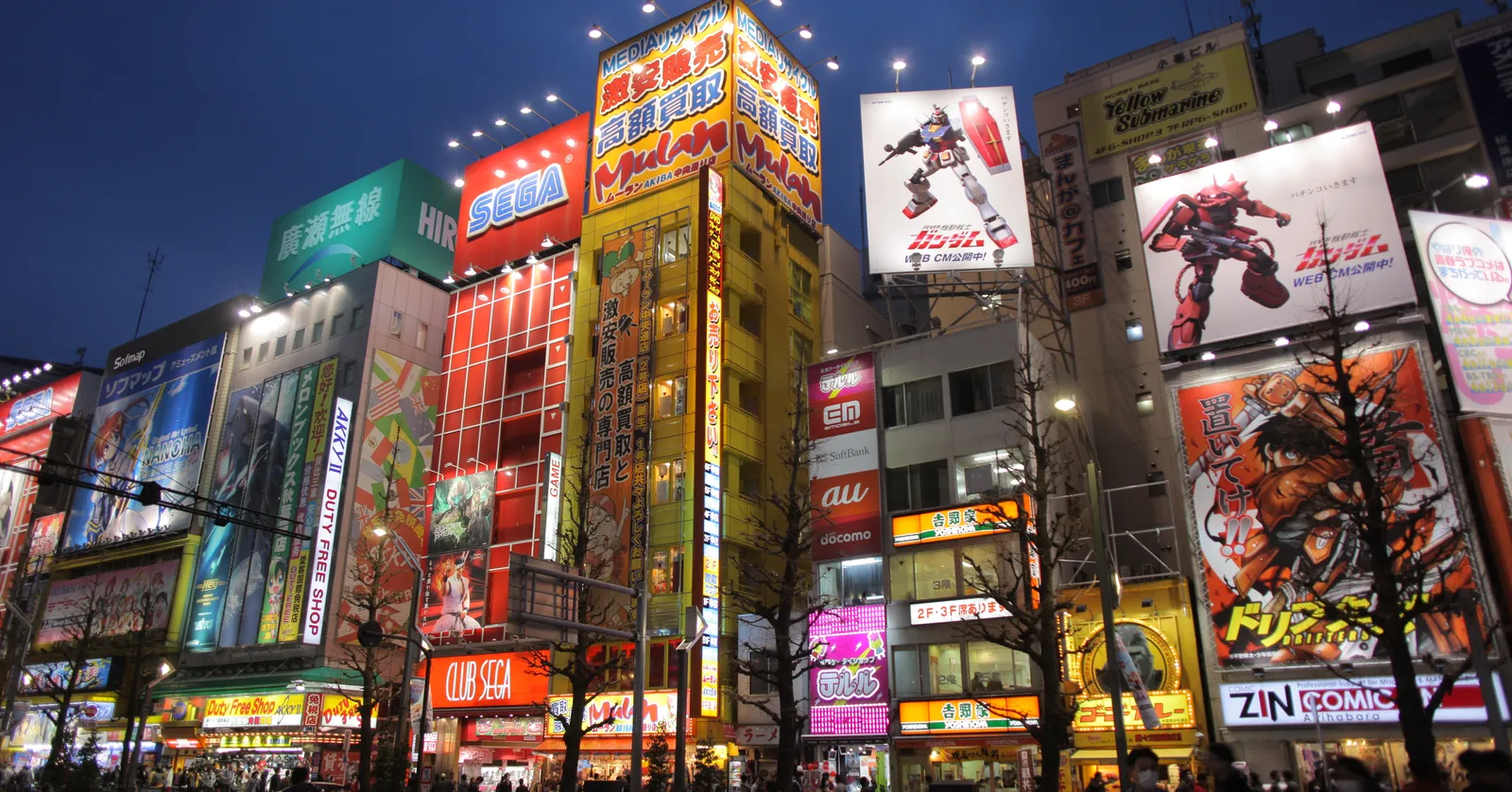
Akihabara station in Tokyo opens straight into the electronics district: Yodobashi Akiba’s nine floors on one side, Chuo-dori’s game, anime and second-hand stores on the other, and Akihabara Radio Center’s post-war parts stalls under the tracks between them.
Chuo-dori, Akihabara’s Electric Town main street
Chuo-dori runs north from the Kanda River past the west side of Akihabara station, and the blocks on either side of it are the Electric Town: narrow buildings six to nine storeys high with a different shop on every floor, game centres with floors of claw cranes, and billboards for whatever anime is new that season. A few minutes off the main road, Mandarake Complex fills eight floors of one black building with second-hand manga, figures, games and collectibles, sorted by floor and open from noon to 8pm. Retro game shops stock cartridges and consoles going back to the 1980s.
On the station’s east side, Yodobashi Akiba is the other end of the scale: one store over nine floors selling cameras, computers, phones, model kits and appliances, with a restaurant floor on top, open 9.30am to 10pm every day.
Akihabara is easy to wander but hard to read, with much of what is interesting up a narrow staircase behind an unmarked door. A half-day anime and gaming walk, sold through a tours and activities platform, takes you into those places with someone who knows which floor holds what.
Akihabara is where a layover ends up carrying boxes: a camera, a stack of manga, a boxed figure, and every hand already on a suitcase handle is one fewer for a shopping bag.
Akihabara Radio Center, the parts market under the railway
Akihabara Radio Center is where the district began. After the war, demobilised soldiers and anyone else with something to sell set up open-air stalls near the station trading in salvaged radio valves and parts; in 1949 an order cleared the street stalls, and the traders moved under the railway viaduct, where the Radio Center still stands. It is two storeys of stalls a few metres wide each, along passages barely wider than a person, selling switches, cables, connectors, test meters, LEDs and antennae by the piece.
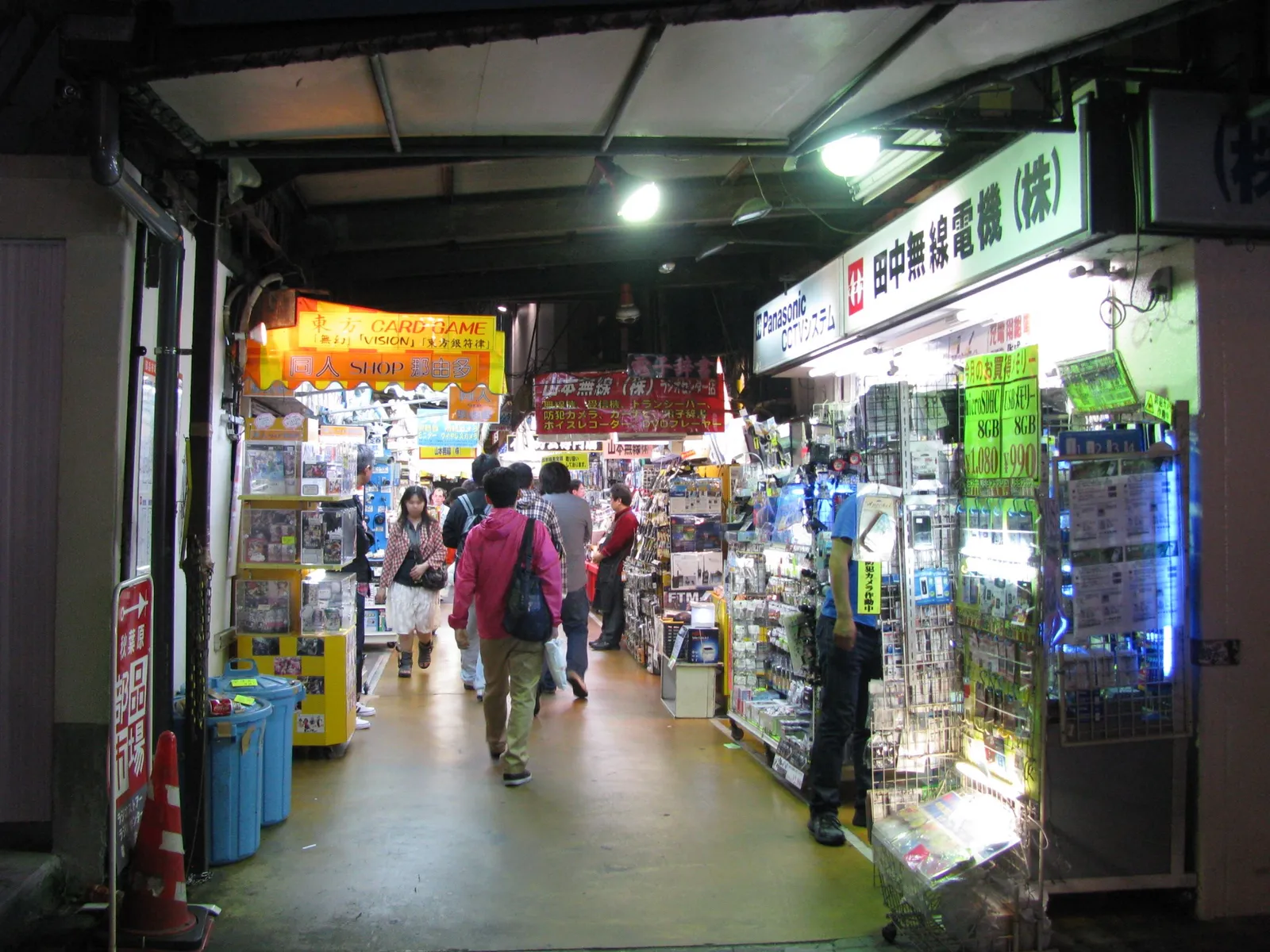
Hours vary stall to stall, roughly late morning to early evening.
The Skyliner to Narita leaves from Ueno or Nippori
There is no direct airport train from Akihabara. The quickest route to Narita International Airport (NRT) is a JR train two stops north to Ueno, then a short walk to Keisei Ueno, or a few stops further to Nippori, and the Keisei Skyliner from either: about 40 minutes for ¥2,580, every seat reserved. The last Skyliner leaves Keisei Ueno at 18:20, and after that the slower Keisei services still run to the airport into the late evening. Allow an hour door to door from Akihabara.
mAAch ecute in the 1912 Manseibashi station viaduct
South of Akihabara station, on the bank of the Kanda River, the red-brick arches of Manseibashi station carry the trains of the JR Chuo line. The station opened in 1912 as a terminus, lost that role within a few years as the line was extended, and closed in 1943, and in 2013 its arches were fitted out as mAAch ecute: a row of shops, cafés and a riverside deck along the water. Two original staircases survive, one from 1912 and one from 1935, and at the top of them the old platform is now a glass-walled deck between the running tracks, where Chuo line trains pass within a few metres on either side.
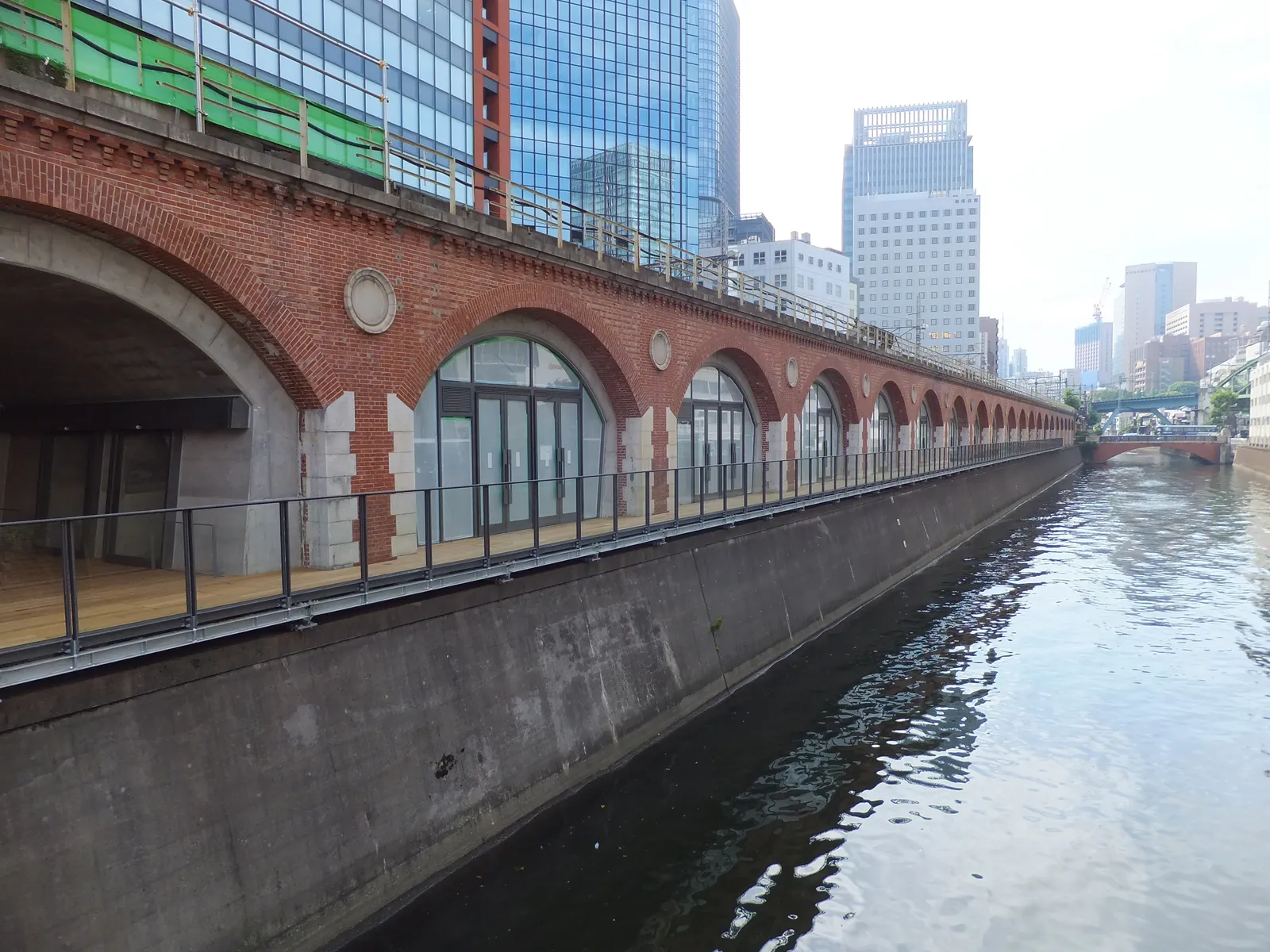
The staircases and the deck open from 11am to 10pm, closing at 8.30pm on Sundays and holidays, and cost nothing. Under the next stretch of tracks north of the station, 2k540 Aki-Oka Artisan is a quieter run of craft workshops and makers’ shops, leather, ceramics and woodwork, named for its distance of 2.54 kilometres from Tokyo station, open 11am to 7pm and closed on Wednesdays.
For a gap long enough to cross the city, the Ueno and Asakusa route, a few minutes north, takes in the national museum and Senso-ji.
Frequently asked questions
What should I do during a layover near Akihabara Station in Tokyo?
Shop, since that is what the district is for. Yodobashi Akiba's nine floors of electronics sit against the station's east side and open 9.30am to 10pm; across the tracks, Chuo-dori is lined with game, anime and hobby stores, Mandarake's eight floors of second-hand manga and toys among them, opening at noon. Akihabara Radio Center under the railway is the post-war parts market the district grew from. A guided anime and gaming walk is the one thing worth booking; the rest runs on shop hours and needs no plan.
Can I shop tax-free in Akihabara on a layover?
Yes, with your passport, at any shop showing the tax-free sign, for purchases of ¥5,000 or more before tax at one shop on one day. Until 31 October 2026 the shop takes the tax off at the till. From 1 November 2026 the system changes: you pay the full price including tax, then claim the refund from customs at the airport when you leave Japan, showing the goods, within 90 days of buying them. Under the new rules, keep anything bought tax-free where you can reach it at the airport rather than packed deep in a checked suitcase.
Is a maid café worth it in Akihabara?
As a one-off, if you know what it is: a themed café where staff in maid costumes serve drinks and food with rehearsed rituals, a cover charge and usually a time limit of about an hour. Prices are well above an ordinary café, and photographs of the staff are normally extra or forbidden. The touts on Chuo-dori hand out flyers all day. A guided Akihabara tour with a maid café stop, sold through a tours and activities platform, guarantees the seat and explains the rules in English.
What time do Akihabara's shops open and close?
Later than the district looks. Yodobashi Akiba opens at 9.30am and runs until 10pm every day, which makes it the anchor for an early or late visit. Most of the smaller game, anime and hobby shops on Chuo-dori open around 10am or 11am, and Mandarake Complex not until noon, closing at 8pm. The stalls in Akihabara Radio Center keep their own hours, roughly late morning to early evening. The mAAch ecute deck in the old Manseibashi station stays open until 10pm, 8.30pm on Sundays and holidays, so an evening layover still has somewhere to end up after the specialist shops shut.