Tokyo Nippori Layover: Yanaka's Old Lanes
Part of the full Tokyo in One Day: Ueno and Asakusa
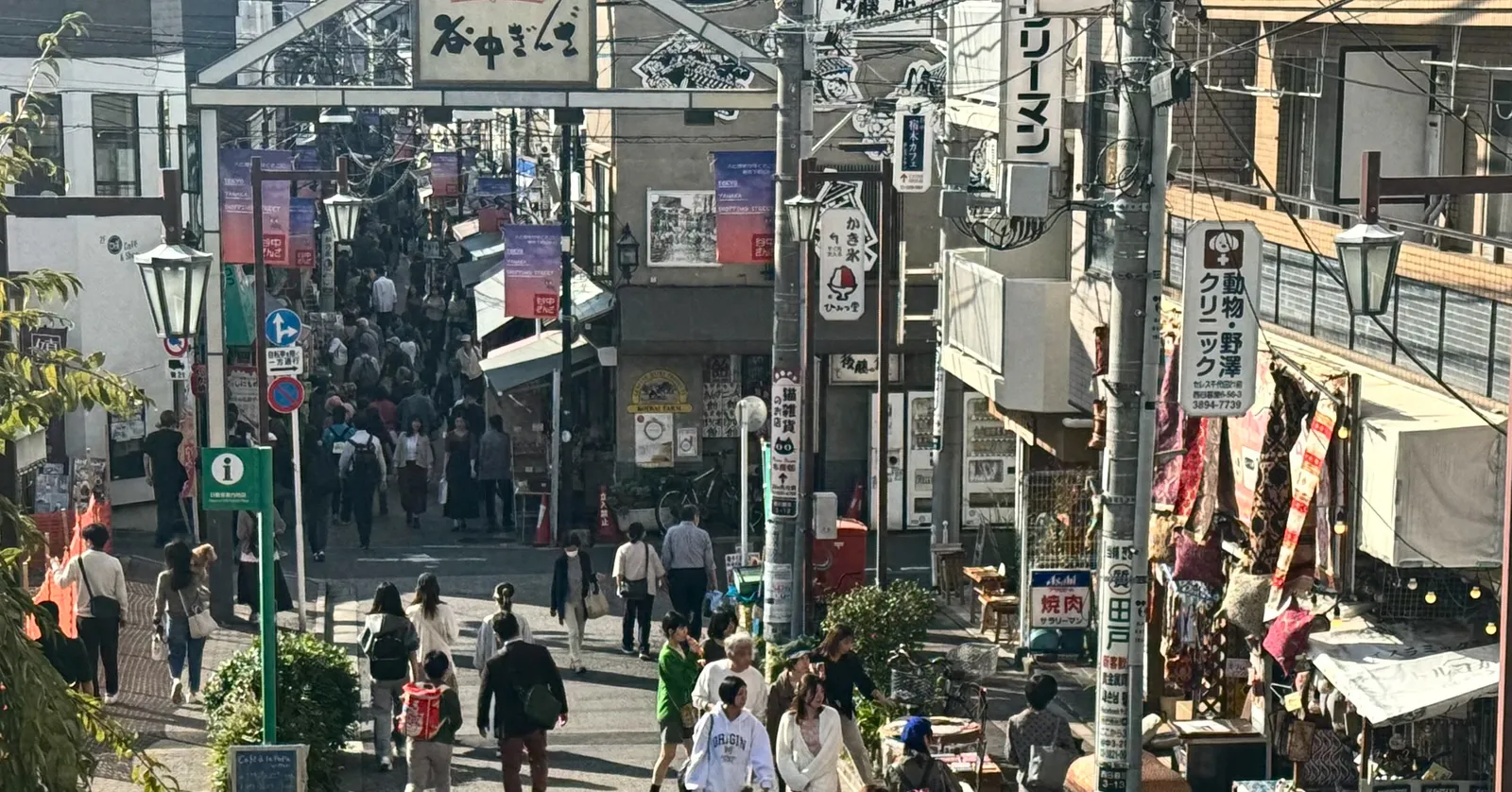
Nippori station, on the Skyliner line between central Tokyo and Narita, opens onto Yanaka, a district of temples, a large cemetery and small wooden shops that largely escaped both the 1923 earthquake fires and the 1945 air raids, with Yanaka Ginza’s shopping lane five minutes away down a flight of steps.
Yanaka Ginza, the shopping lane below the sunset steps
Yanaka Ginza begins about five minutes’ walk from Nippori station’s west exit, at the bottom of the Yuyake Dandan, 36 broad stone steps whose name means the sunset steps, given in 1990 for the view down the lane at dusk. The lane itself runs a couple of hundred metres downhill with about sixty small shops along it: croquette and fried-cutlet counters, rice crackers, pickles, tea, baskets and cheap household goods, many of them run from the ground floor of the owners’ homes. Stray cats are part of the local branding, and they turn up in carved wood above the shopfronts as well as on the steps.
Yanaka sits on a ridge above the low ground of Ueno, which is the usual explanation for why the fires after the 1923 earthquake stopped short of it, and the 1945 raids hit it lightly. The result is a district where pre-war timber houses, temples and alleys still stand side by side. The stories behind those streets are hard to see from outside, and an old-quarter walking tour, sold through a tours and activities platform, covers them with snack stops along the way.
Yanaka runs up and down the side of the ridge on narrow, uneven pavements with flights of steps between levels and very few dropped kerbs, which is where a wheeled suitcase gets dragged rather than rolled.
The Skyliner reaches Narita from Nippori in about 36 minutes
The Keisei Skyliner calls at Nippori a few minutes after leaving Keisei Ueno and reaches Narita International Airport (NRT) Terminal 2·3 in about 36 minutes on the fastest trains, Terminal 1 a few minutes later, for ¥2,580 with every seat reserved. The JR and Keisei platforms at Nippori are linked inside the station, so the transfer from the Yamanote line is a short walk. The last Skyliner of the evening leaves shortly after 18:20; after that, slower Keisei trains still run to both terminals until late evening without a reserved seat.
Yanaka Cemetery, where the last shogun is buried
Yanaka Cemetery spreads across the ridge directly beside Nippori station’s west exit, about ten hectares of graves among temple grounds and old trees, open to walk through at any time and free. Tokugawa Yoshinobu, the fifteenth and last shogun, who handed power back to the emperor in 1867 and lived until 1913, lies here in a plain Shinto-style mound behind a gate, a long way from the ornate family mausoleums of his predecessors. Near the middle stood the five-storey pagoda of Tenno-ji, built in 1644, rebuilt in 1791, and burned down in 1957; its foundation stones are still there.
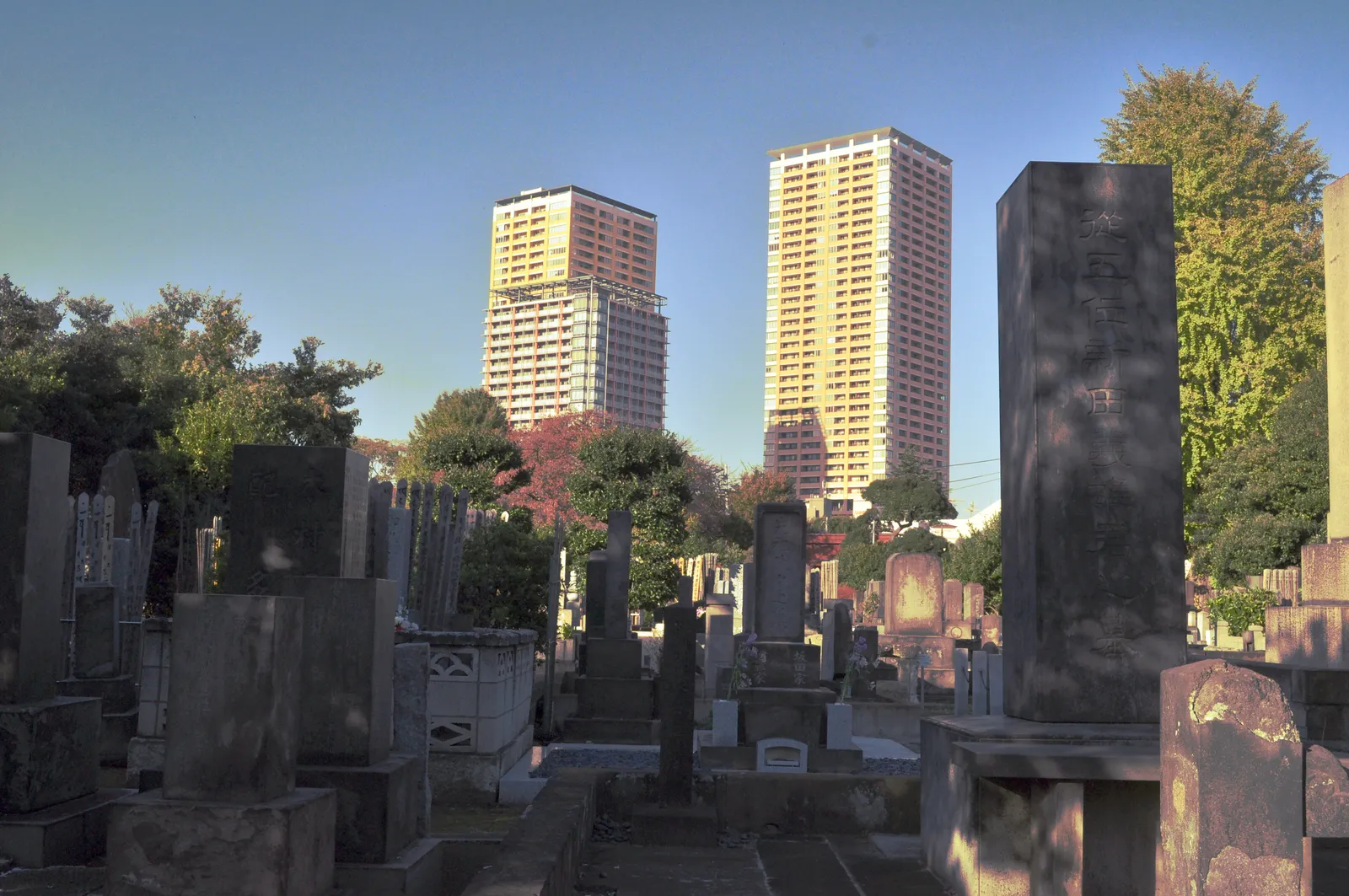
The main avenue through the cemetery is planted with cherry trees and turns into a tunnel of blossom in late March. A few streets south, the Asakura Museum of Sculpture is the 1935 house and studio of the sculptor Asakura Fumio, ¥500, with a courtyard water garden and a roof garden where he taught his students to grow vegetables; it closes on Mondays and Thursdays.
Nippori Fabric Town on the east side of the station
East of Nippori station, the other way from Yanaka and on flat ground, Nippori Chuo-dori is lined for about a kilometre with around 90 shops selling cloth by the metre, leather, buttons, ribbon, thread and patterns. It grew from the textile wholesalers who settled here in the early twentieth century and still sells to dressmakers, costume makers and cosplayers as much as to visitors. Tomato, with several buildings along the street, is the best known, with remnants and printed cottons stacked in bins on the pavement.
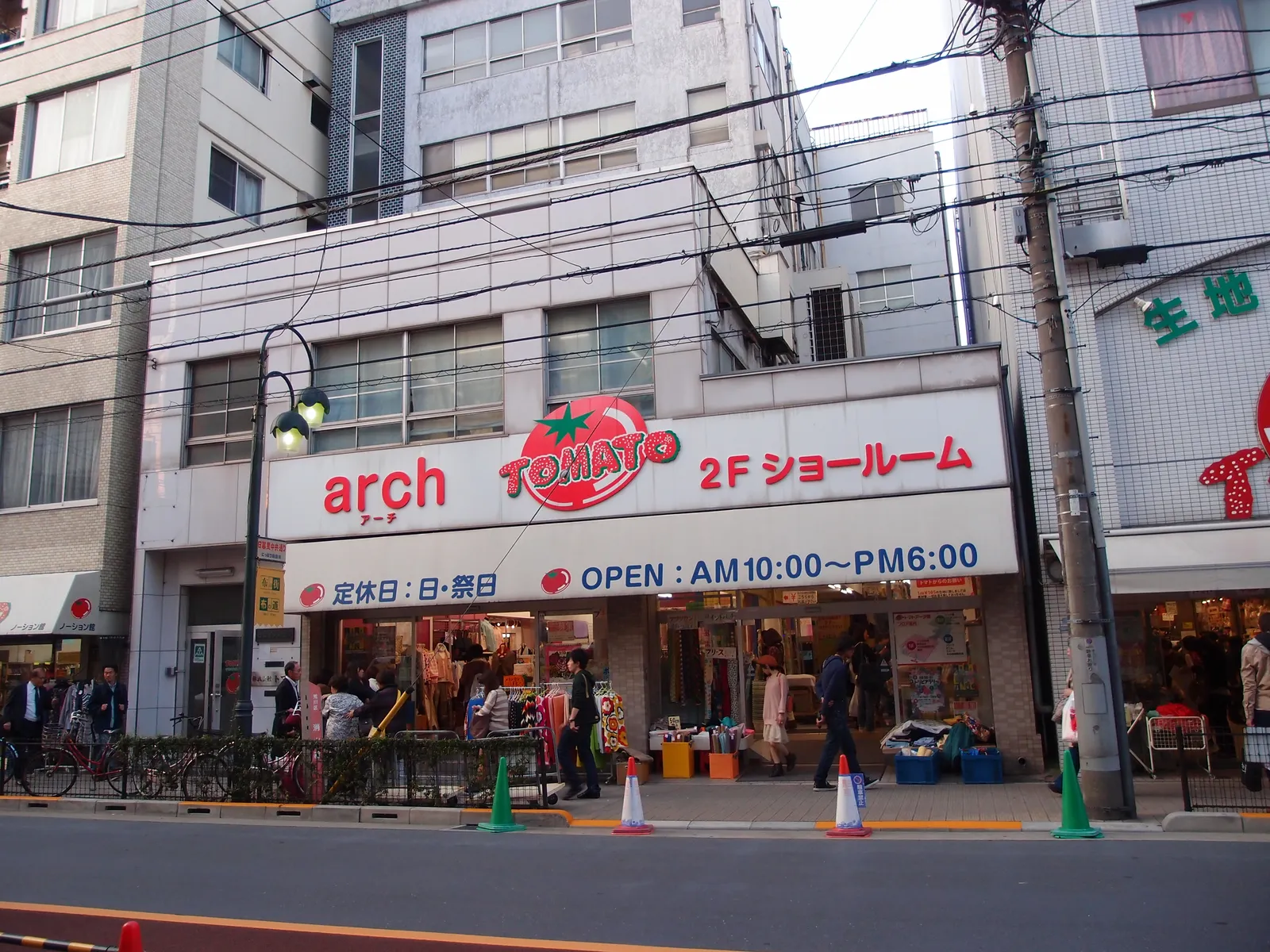
Most shops open around 10am to 6pm and close on Sundays and public holidays, so a weekend layover gets Yanaka but not the fabric street. For a gap of seven hours or more, the Ueno and Asakusa route a few minutes south takes in the national museum and Senso-ji.
Frequently asked questions
What should I do during a layover near Nippori Station in Tokyo?
Walk into Yanaka, the old district on the ridge beside the station. Yanaka Cemetery, where the last shogun is buried, starts at the station's west side and is free; Yanaka Ginza, a lane of about sixty small shops below the Yuyake Dandan steps, is five minutes beyond it. On the other side of the tracks, Nippori Fabric Town is a kilometre of cloth and sewing shops, mostly shut on Sundays. None of it needs a ticket, so it fits around the airport train, which leaves from the same station.
Is Yanaka walkable with a suitcase?
Not comfortably. Yanaka sits on a ridge, and getting from Nippori station to Yanaka Ginza means going down the 36 Yuyake Dandan steps, with flights of stone steps between the levels of the cemetery and the temple lanes and narrow pavements with few dropped kerbs. Nippori Fabric Town, on the flat east side of the station, is the easier half with luggage.
Is the Asakura Museum of Sculpture worth visiting?
Yes, as much for the building as for the sculpture. It is the house and studio the sculptor Asakura Fumio built for himself in Yanaka, finished in 1935, with a water garden in its courtyard and a roof garden where he taught his students to grow vegetables, the oldest surviving roof garden in Tokyo. Admission is ¥500, it opens 9.30am to 4.30pm, it closes on Mondays and Thursdays, and you take your shoes off at the door, so wear socks. For a guide to the house and the lanes around it, an old-quarter walking tour of Yanaka sold through a tours and activities platform runs about three hours.
How fast is the Skyliner from Nippori to Narita Airport?
About 36 minutes to Narita International Airport (NRT) Terminal 2·3 on the fastest trains, a few minutes more to Terminal 1, at ¥2,580 with every seat reserved. Nippori is the Skyliner's second stop after Keisei Ueno, so the timetable is the same a few minutes later, including the last departure of the evening shortly after 18:20. After that, the slower Keisei trains still run to the airport until late evening, for less money and without a reserved seat.