Tokyo Teleport Layover: Odaiba and the Bay
Part of the full Tokyo in One Day: Ueno and Asakusa
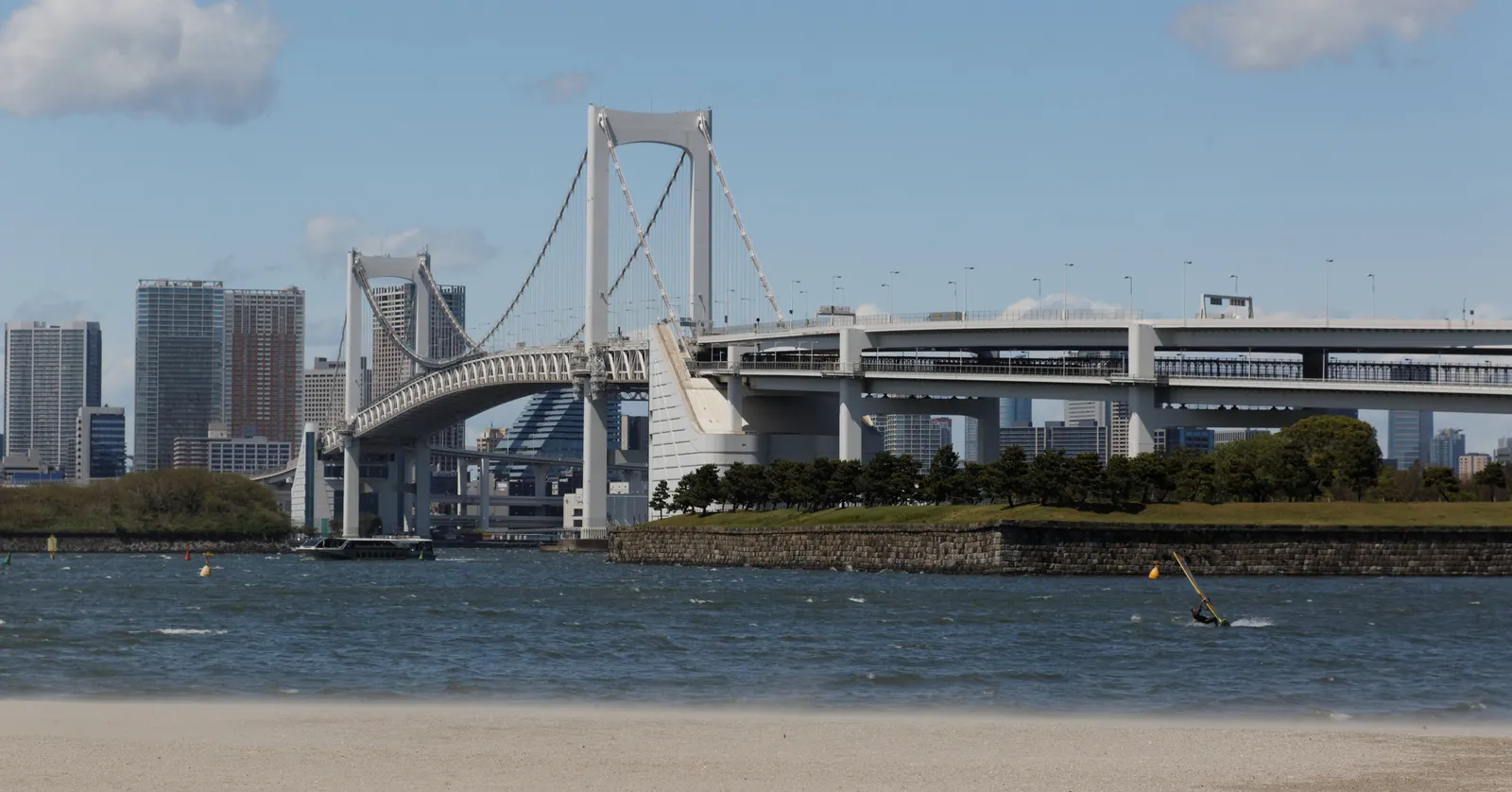
Tokyo Teleport station sits on Odaiba, a reclaimed island across Tokyo Bay from the city centre, ten minutes’ walk from Odaiba Seaside Park’s sand beach and the start of the Rainbow Bridge’s free walkway back over the water.
Tokyo Joypolis, the indoor theme park on Odaiba’s waterfront
Tokyo Joypolis fills several floors of the DECKS Tokyo Beach mall, a few minutes’ walk north of Tokyo Teleport station: Sega’s indoor theme park, with motion simulators, VR rides and floors of arcade machines, all under one roof. It is the place to go when the rest of Odaiba, which is mostly open waterfront, is being rained or blown on.
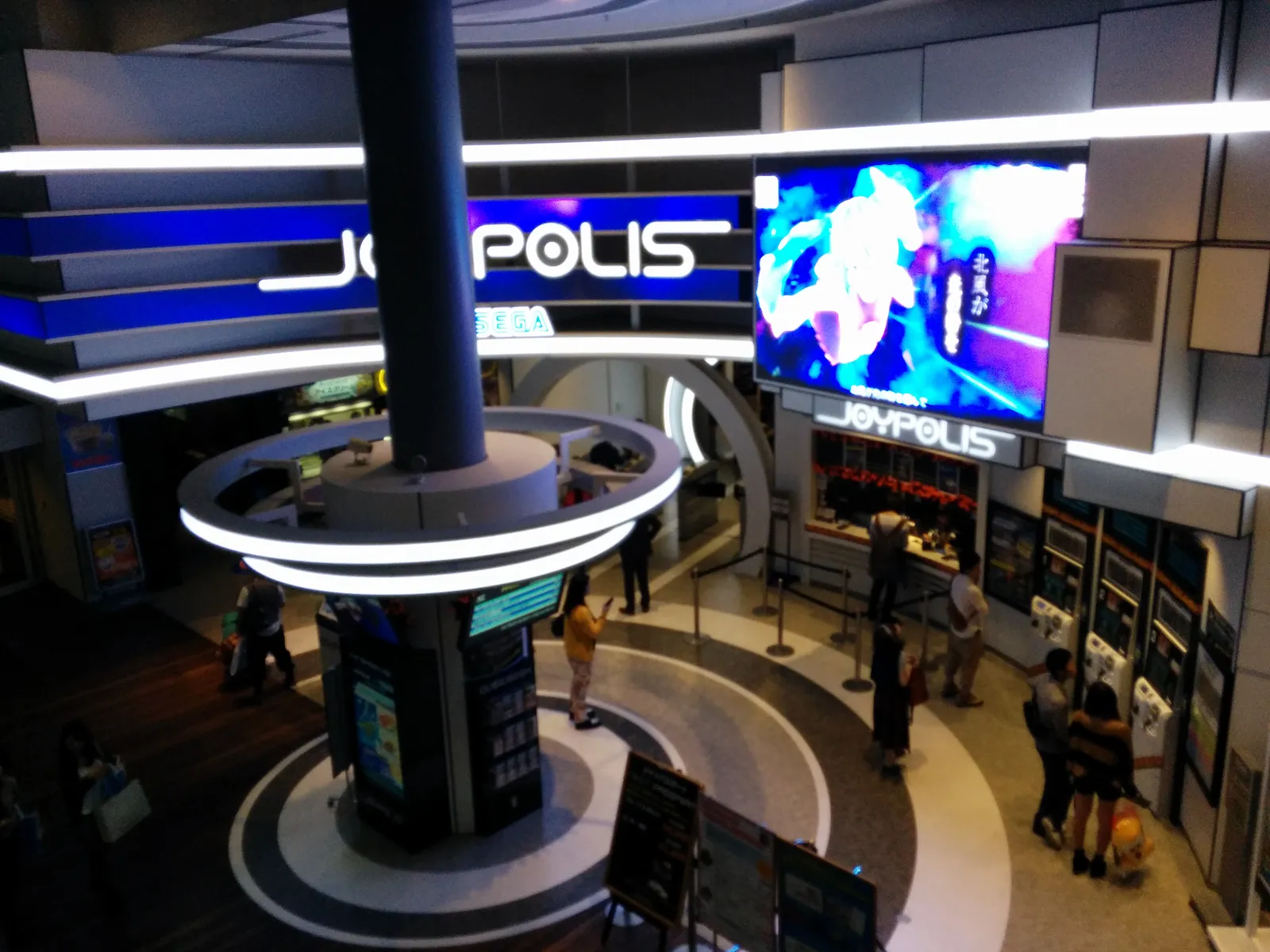
Entry alone is ¥1,500 for an adult, with rides charged separately, or ¥5,800 for an all-day Passport that covers them; cheaper evening tickets start at 3pm and 5pm. It opens 11am to 7pm on weekdays and 10am to 8pm at weekends, last entry 45 minutes before close. Joypolis tickets are sold ahead through a tours and activities platform.
Outside DiverCity Tokyo Plaza, the mall on the other side of the station, a full-size robot statue from the Gundam anime stands about 20 metres tall on the plaza, free to look at.
Odaiba Seaside Park and the 1853 cannon battery
Odaiba Seaside Park curves around a sheltered inlet on the north side of the island, about ten minutes’ walk from Tokyo Teleport station: an 800-metre artificial sand beach with a boardwalk behind it, looking straight across the water at the Rainbow Bridge and the towers of Shibaura and Shinagawa. Swimming is not allowed, but windsurfers and paddleboarders use the inlet, and the beach fills at sunset when the bridge lights come on. At the western end stands a 12-metre replica of the Statue of Liberty, put up after the copy from Paris that was lent for a year in 1998 went home.
At the eastern end, the path runs out onto Daiba Park, which is where the island’s name comes from. In 1853, after Commodore Perry’s warships arrived in the bay, the shogunate began building a line of island cannon batteries, daiba, to defend Edo from the sea. Six were finished; this one, the Third Battery, survives as a square of grass inside its original stone walls and earth banks, with the gun positions and the foundations of the powder magazine still laid out on the ground. It is free and usually quiet.
The beach, the promenade and the bridge walkway are open ground over the water with nothing to shelter under, and when the weather turns there is nowhere close by to wait it out with a suitcase except the malls.
Narita is 90 minutes from Odaiba, Haneda about 30
For Narita International Airport (NRT), Airport Limousine buses leave from the large Odaiba hotels a handful of times a day and take about 70 to 75 minutes for ¥2,700, with luggage in the hold; by train, the Rinkai line and a JR change reach Tokyo Station, where the Narita Express takes about another hour, so allow an hour and a half. Haneda is much closer: three minutes on the Rinkai line to Tennozu Isle, then about 15 on the monorail, as the Haneda airport guide describes.
The Rainbow Bridge walkway, 1.7 kilometres over the bay
The Rainbow Bridge was finished in 1993, a 798-metre suspension bridge from Odaiba to Shibaura carrying an expressway on its upper deck and, on the lower, the automated Yurikamome line, a road and a footpath on each side. The walkways run about 1.7 kilometres with the approach ramps, 20 to 30 minutes on foot, and cost nothing. The north side looks up the harbour to Tokyo Tower and the city; the south side faces the open bay and, on a clear day, Mount Fuji. The Odaiba end is about ten minutes’ walk from Odaiba-kaihinkoen station.
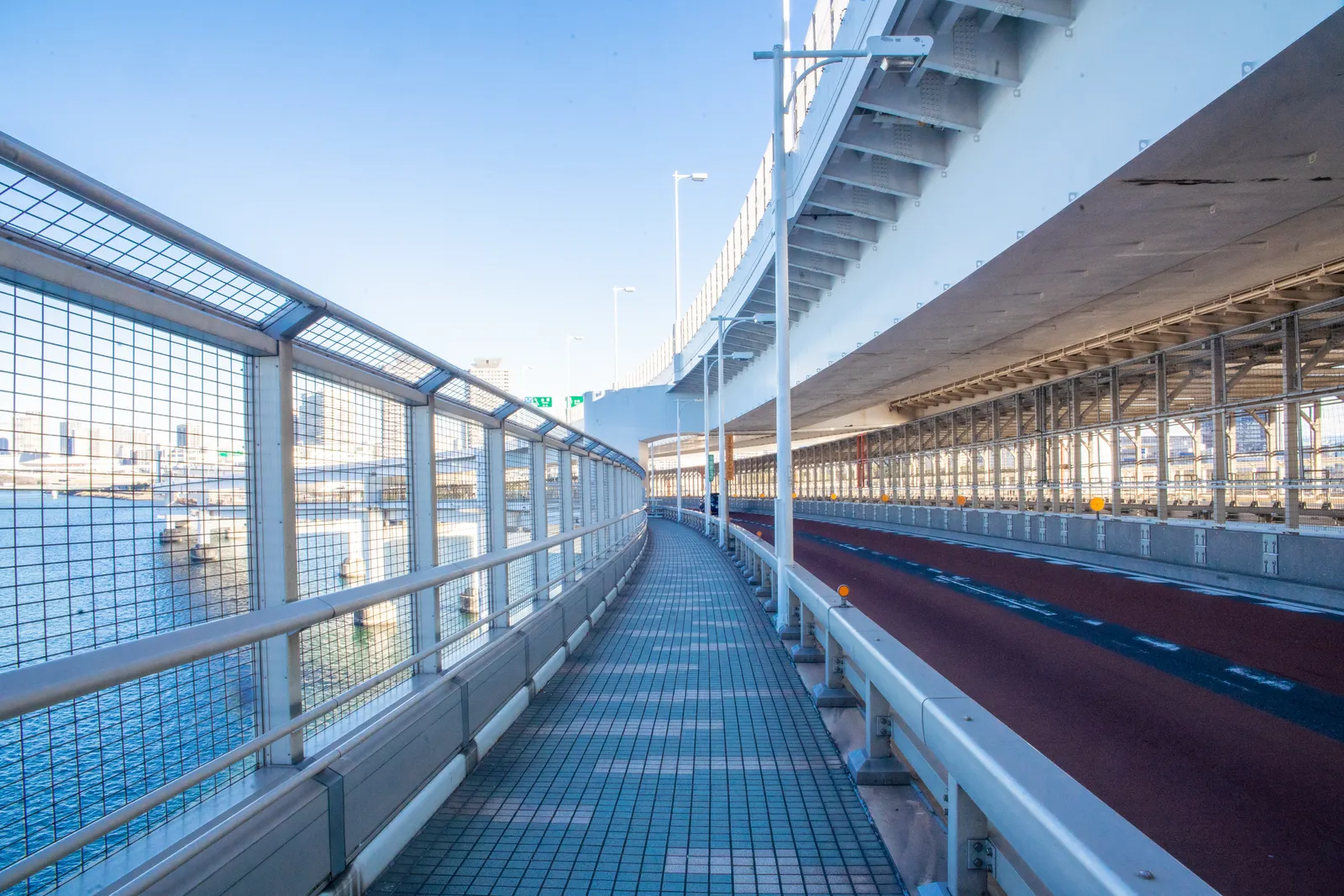
The walkways open 9am to 9pm from April to October and 10am to 6pm from November to March, with last entry 30 minutes before close, and close on the third Monday of every month and in strong wind. Walking across and riding the Yurikamome back over the same bridge makes a loop. For a longer stop, the Ueno and Asakusa route covers the national museum and Senso-ji on the other side of the city.
Frequently asked questions
What should I do during a layover near Tokyo Teleport Station in Tokyo?
Spend it on the water's edge of Odaiba. Odaiba Seaside Park's 800-metre sand beach and promenade are ten minutes' walk from the station and free, with the Rainbow Bridge across the water and an 1853 cannon battery island at the end of the path. The bridge's walkways are free too, 1.7 kilometres back towards the city, but shut in strong wind and on the third Monday of each month. Tokyo Joypolis, an indoor theme park nearby, is the bad-weather fallback and the one thing worth booking.
Can you walk across the Rainbow Bridge?
Yes, for free, on walkways on both sides of the lower deck, about 1.7 kilometres from the Odaiba end to the Shibaura end and 20 to 30 minutes on foot. The north walkway looks towards Tokyo Tower and the inner harbour, the south one out over the bay and, on clear days, to Mount Fuji. They open 9am to 9pm from April to October and 10am to 6pm from November to March, last entry half an hour before close, and close on the third Monday of each month and whenever the wind is strong. Bicycles must be pushed.
Is Tokyo Joypolis worth it for a short visit?
Only on the right ticket. Entry alone is ¥1,500 for an adult, and each ride then costs around ¥700 to ¥1,000, so a full-day Passport at ¥5,800 is the better deal for anyone planning several rides. With less time, an evening passport from 3pm is ¥4,800, and a ticket from 5pm covers entry and two rides for ¥2,900. A Joypolis ticket bought ahead through a tours and activities platform skips the counter on arrival.
Is Odaiba worth visiting in the rain?
Only the indoor half of it. The beach, the promenade and the Rainbow Bridge walkways are open ground over the water, and the walkways close altogether in strong wind. Tokyo Joypolis, the DECKS Tokyo Beach and DiverCity malls and the other shopping buildings around Tokyo Teleport station are all under cover, and the automated Yurikamome line, which crosses the Rainbow Bridge on its lower deck, gives the bridge view from a dry seat.