Tokyo Shibuya Layover: Crossing and Rooftop
Part of the full Tokyo in One Day: Ueno and Asakusa
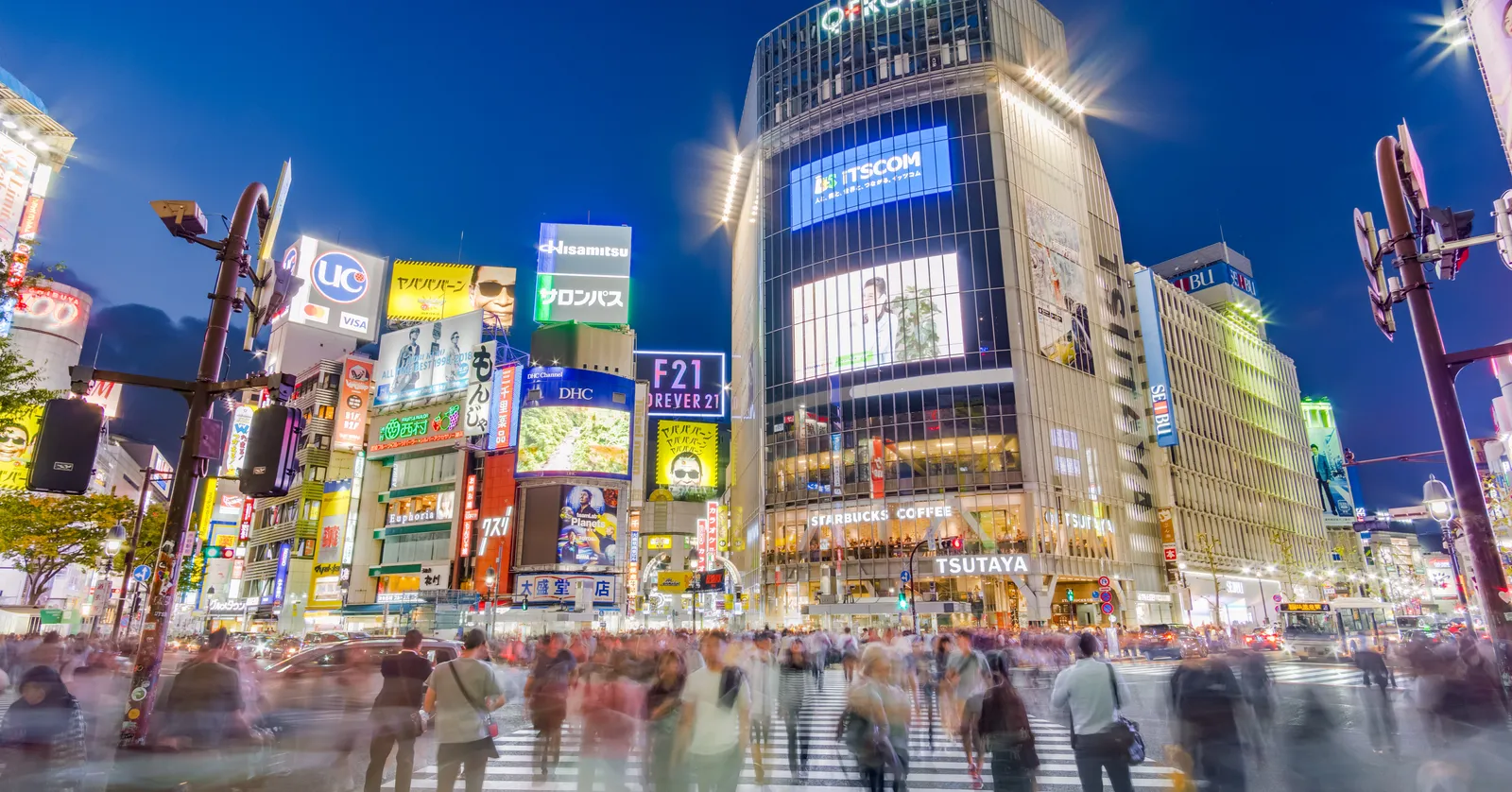
Shibuya station in Tokyo sits underneath an open-air rooftop deck 229 metres up, Shibuya Sky, and opens straight onto the scramble crossing, where up to 3,000 people cross in every direction on one green light, so both fit inside a couple of hours with no walking to speak of.
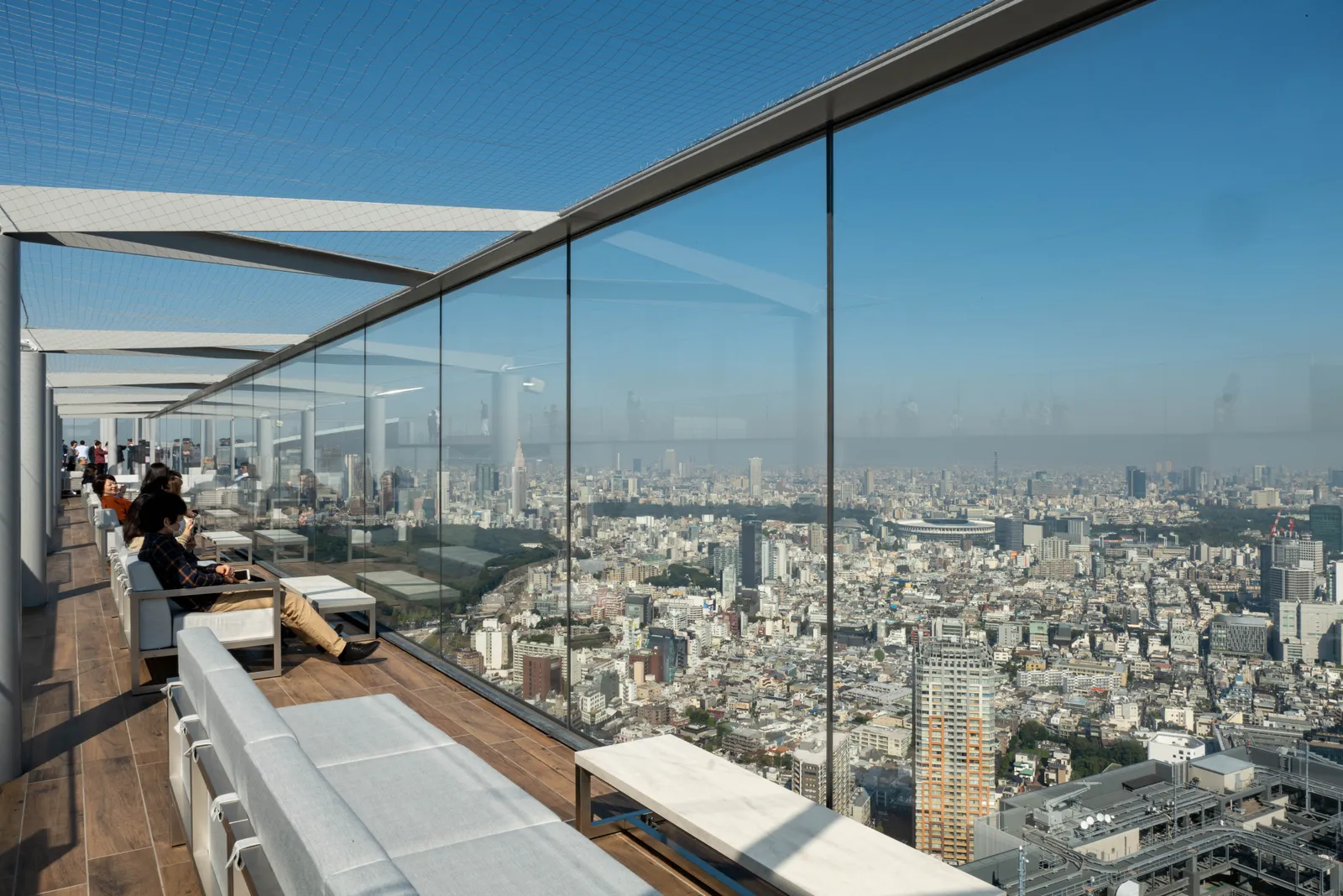
Shibuya Sky, the open roof 229 metres over Shibuya station
Shibuya Scramble Square is the 2019 tower built directly over the station, and its top is Shibuya Sky: an indoor gallery on the 46th floor, an escalator through the ceiling, and then the open roof itself, a timber deck behind a chest-high glass parapet with nothing above it but sky. From the corners the view runs to Shinjuku’s towers, Tokyo Tower and Skytree, the bay, and on a clear winter day Mount Fuji.
Admission runs in timed slots from 10am, with last entry at 9.20pm and the deck open until 10.30pm. An adult ticket costs roughly ¥2,700 to ¥3,700, cheaper online than at the counter and more expensive after 3pm, and the slots around sunset sell out first. A Shibuya Sky ticket sold through a tours and activities platform books the slot ahead.
The roof has its own rule about belongings: nothing loose is allowed outside, not bags, hats, tripods or drinks, so everything goes into the coin lockers on the 46th floor before you are let up, and those are lockers for a daypack, not luggage storage.
The Shibuya scramble crossing outside the Hachiko exit
The crossing is the junction outside the station’s Hachiko exit, where five roads meet and every traffic light turns red at once so pedestrians can cross in all directions, diagonals included. Up to 3,000 people go over on a single green phase at the busiest times, and the light cycle is short enough that it is worth standing on the corner to watch one change before walking into the next. Nothing about it costs anything, and it runs at every hour the trains do.
On the station side of the crossing stands the bronze of Hachiko, the Akita dog who waited at the station every day for nearly ten years after his owner died in 1925; the statue there now dates from 1948, its 1934 original having been melted down in the war. The upper floors of the station and the glazed walkway towards the Mark City building look straight down onto the crossing for free, and a few minutes north up the railway, Miyashita Park is a public park laid out on the roof of a low shopping building, open 8am to 11pm at no charge.
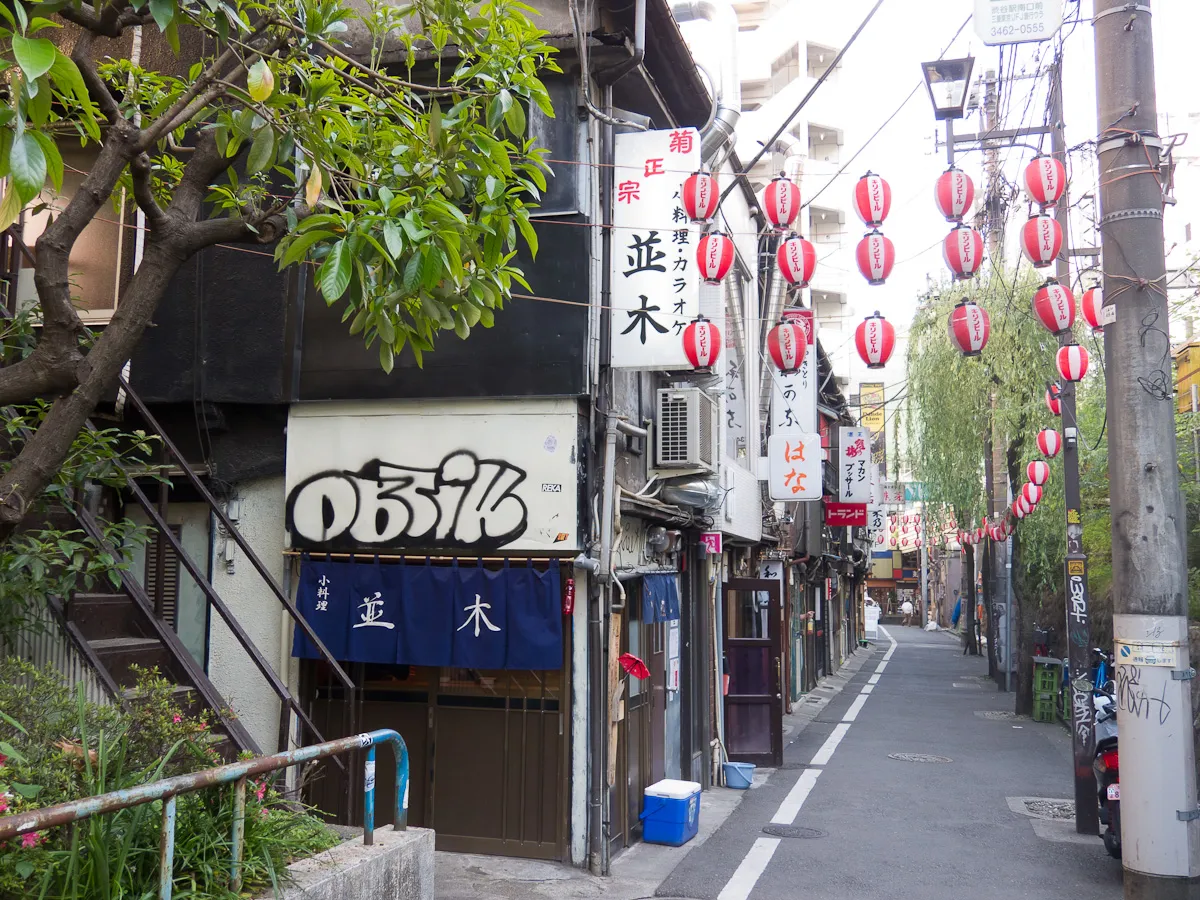
Nonbei Yokocho, the drinkers’ alley by the Yamanote tracks
Nonbei Yokocho, literally “drunkards’ alley,” runs in two narrow lanes along the elevated railway a few minutes north of the crossing. Its stalls moved here in the early 1950s from the post-war street stands around the station, and about forty bars still occupy them, most of them a single counter holding five or six people, some with a second tiny room upstairs. Some charge a cover, and many are still run by the families that opened them.
The bars mostly open around 6pm, which suits an evening flight. For anyone with more than a few hours, the Ueno and Asakusa route on the other side of Tokyo covers the national museum and the city’s oldest temple, and the Shinjuku station guide covers the garden and the free deck a few minutes north by train.
Narita Express trains stop at Shibuya, but not all of them
Some Narita Express departures start at or call at Shibuya and run to Narita International Airport (NRT) in a little over 70 minutes at best, about ¥3,300 with every seat reserved; check that your train is one of them before planning the afternoon around it. The Airport Limousine Bus leaves from Shibuya Mark City, takes about 90 minutes to Narita for ¥3,600, and loads luggage in the hold, and a low-cost bus on the same route charges ¥2,500 for a ride closer to two hours.
Frequently asked questions
What should I do during a layover near Shibuya Station in Tokyo?
Go up, then across. Shibuya Sky, on the roof of the Shibuya Scramble Square tower directly over the station, is an open-air deck 229 metres up, with tickets at roughly ¥2,700 to ¥3,700 depending on the time slot; the scramble crossing below it is free and works at any hour. In the evening, the forty-odd tiny bars of Nonbei Yokocho beside the tracks are a few minutes' walk away. Book Shibuya Sky ahead if you want sunset; everything else can be fitted around it.
Is Shibuya Sky worth booking ahead?
Yes, for any slot near sunset. Tickets go on sale two weeks ahead at midnight Japan time, and the late-afternoon slots on clear days go first; when a slot sells out online it is also gone at the counter. Online tickets are a few hundred yen cheaper than the counter price, and entry after 3pm costs more than before. A timed Shibuya Sky ticket through a tours and activities platform locks the slot in, which matters more than usual with a flight to make.
Where is the best free view of the Shibuya crossing?
From street level, standing at the corner by the station and crossing it at least once, which is the point. For a view from above without paying, the windows of the station's own upper concourse and the walkway from the station to the Mark City building look straight down onto the junction. The rooftop above the Magnet by Shibuya109 building on the crossing's north corner is the closest overhead view, but the deck there charges an entry fee with a drink included.
Who was Hachiko?
An Akita dog who met his owner, a university professor, at Shibuya station every evening, and kept coming to the station for nearly ten years after the professor died suddenly in 1925, until his own death in 1935. Newspaper coverage made him famous in his lifetime, and a bronze statue went up beside the station in 1934, while he was still alive. That statue was melted down for metal during the war; the one standing outside the Hachiko exit now was put up in 1948, and it is the city's best-known meeting point.