Venice Layover: The Grand Canal From VCE
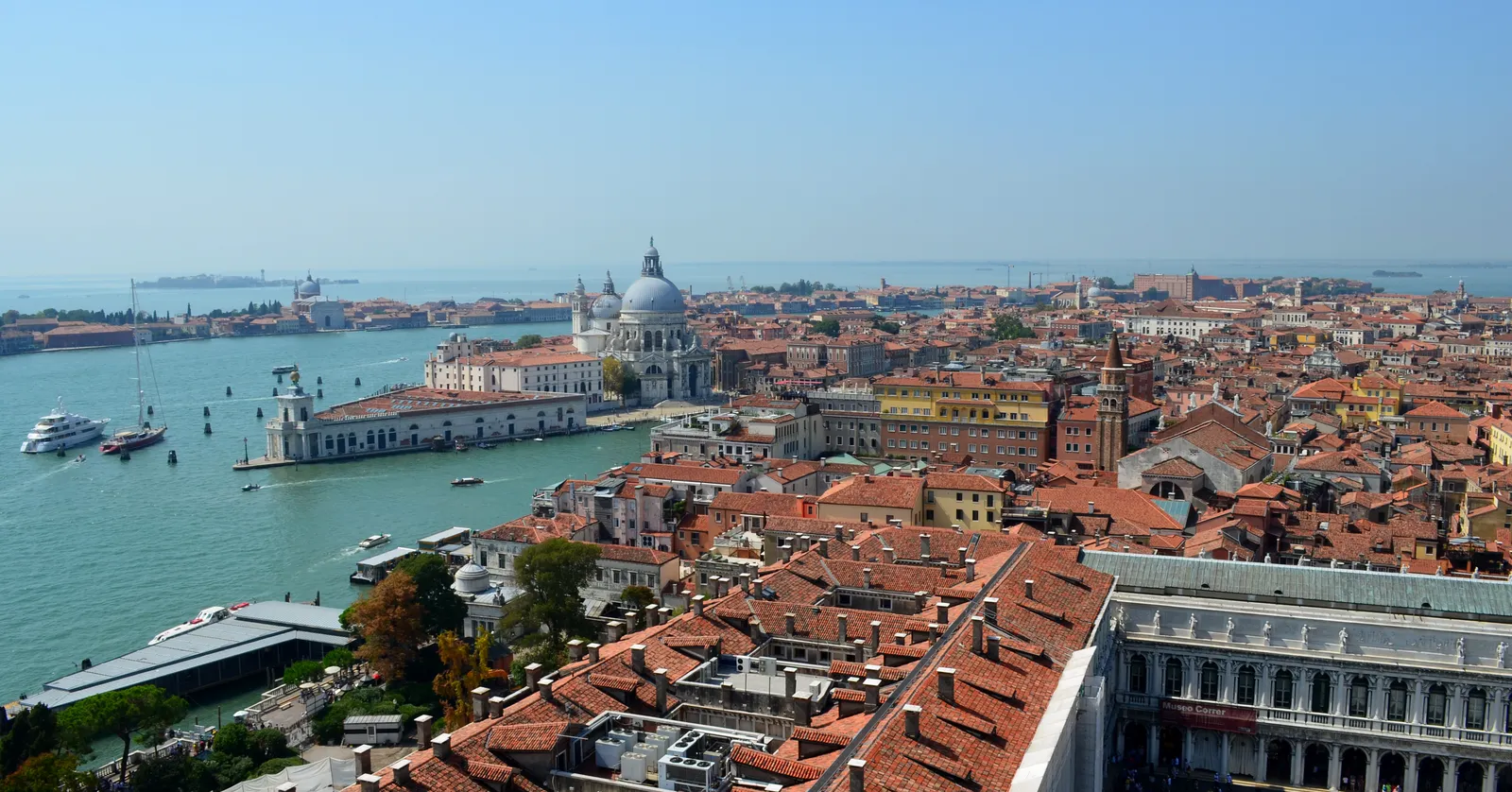
The Grand Canal runs past the Rialto Bridge to St Mark’s Square for 9.50 euros on a public water bus, and everything past that stop is on foot.
The Grand Canal from the deck of a public water bus
The canal is not a sight you go and look at; it is the main road, and the cheapest way to see all of it is to ride the bus down it. It starts at Venezia Santa Lucia, the rail terminus for trains from Milan and Florence, and a single ACTV ticket is 9.50 euros, covering 75 minutes on the whole water network, changes included, which is enough for the full length and back if you are quick about it.
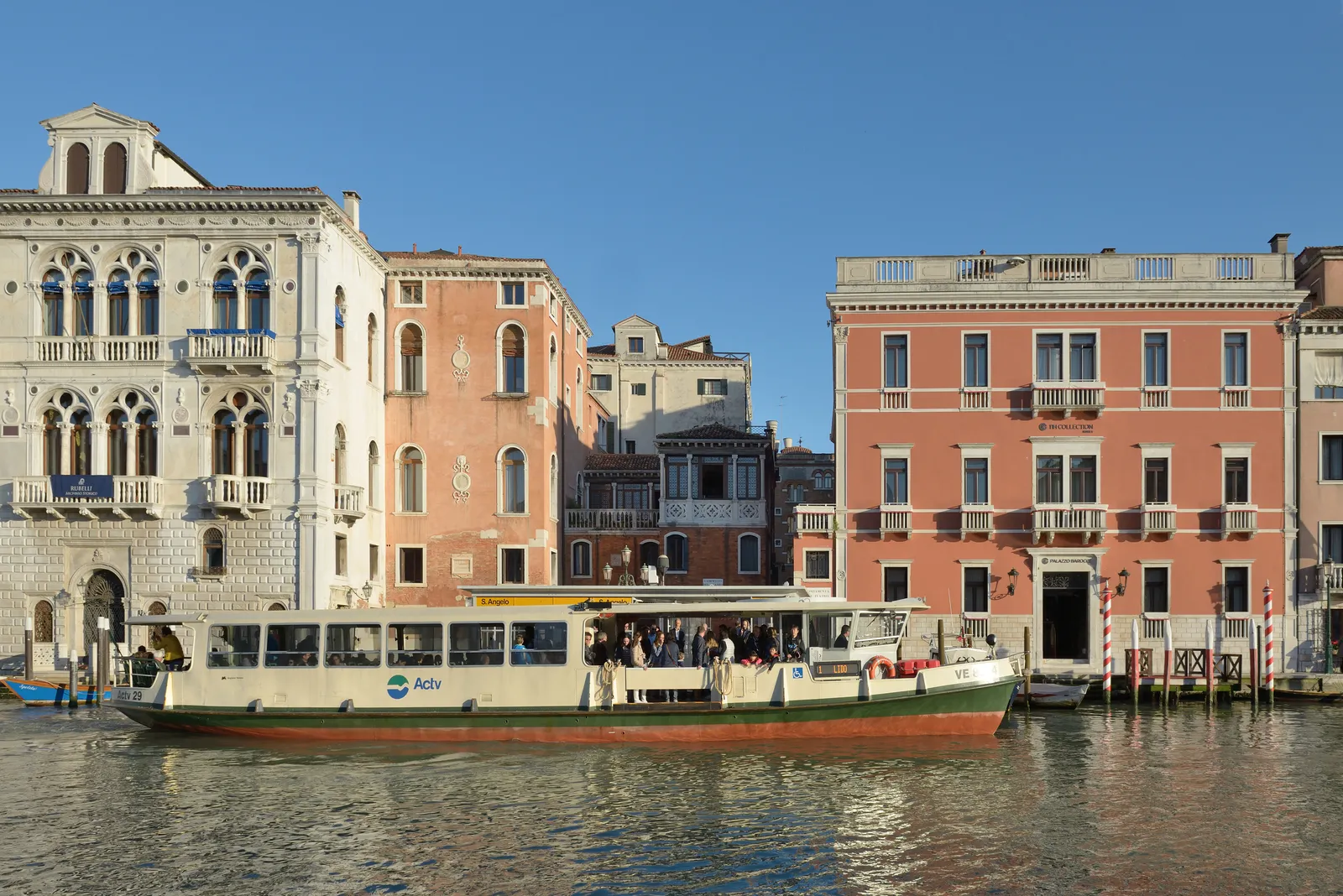
Two lines run it. Line 1 is the slow one, calling at every pontoon from Piazzale Roma to St Mark’s and taking about 45 minutes to do it. Line 2 skips most of them and covers the same water in around 25. For a first look, line 1 is the one: it is the same fare, and the stopping is what lets you actually see the palace fronts rather than watch them slide past.
What you are looking at is roughly four kilometres of building fronts facing the water because that is the side that mattered, Gothic and Renaissance and Baroque leaning into each other with no street between them and the canal. Stand at the open stern rather than sitting inside. Boarding is at the pontoons, you validate the ticket at the machine on the gangway, and the crews move people on and off fast.
The Rialto Bridge and the fish market behind it
Antonio da Ponte finished the stone bridge in 1591, after a run of timber ones had burned, collapsed under a crowd, or both. Two rows of shops sit along its deck with a wide ramp of steps between them, and for the next 263 years it was the only way to cross the Grand Canal on foot: the Accademia bridge did not open until 1854.
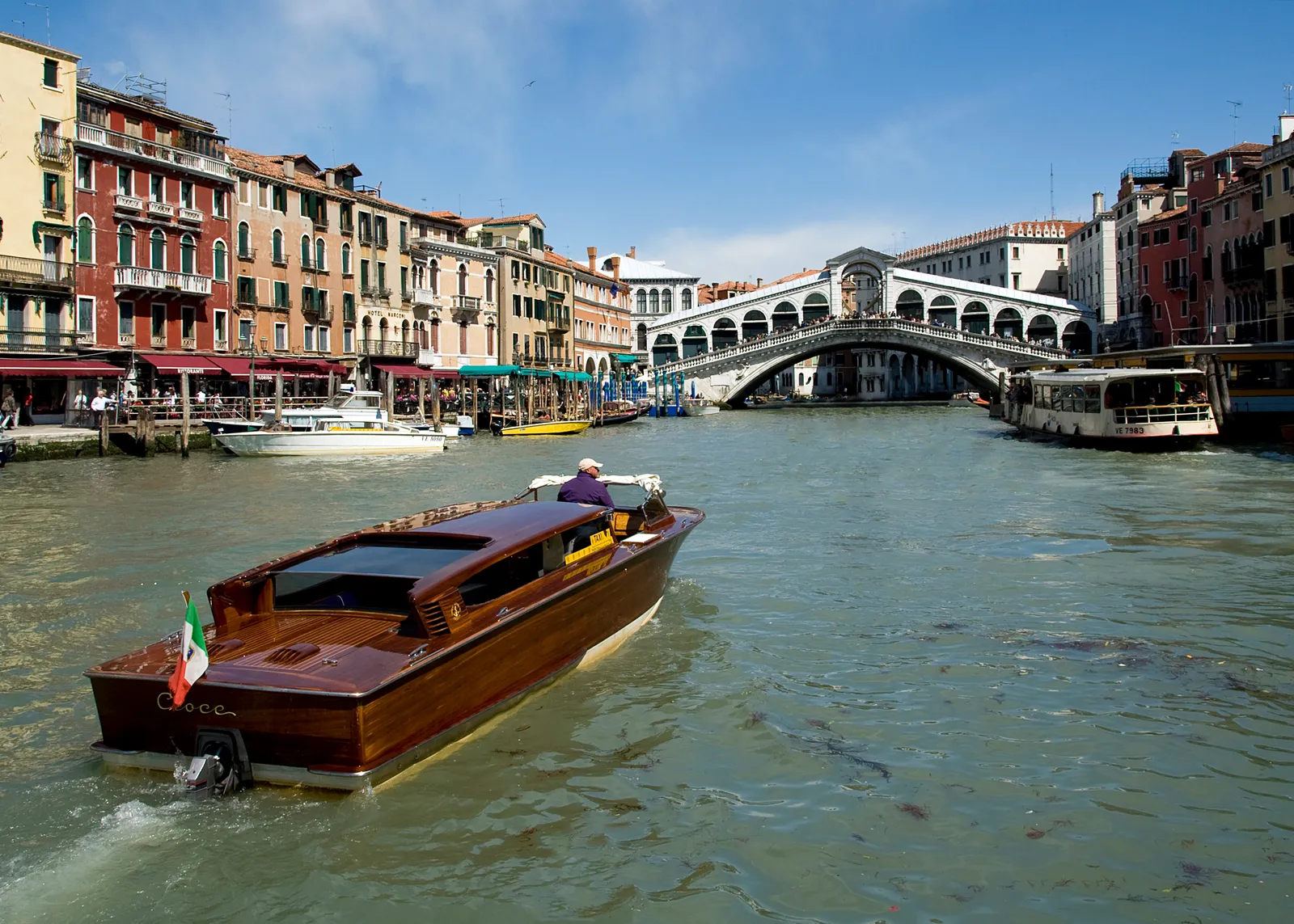
The bridge is the photograph, but the reason to come here in the morning is behind it. The Pescheria, the fish market, trades under a neo-Gothic loggia on the San Polo bank from about seven until early afternoon, Tuesday to Saturday, closed Sunday and Monday. The produce stalls next to it, the Erberia, run Monday to Saturday. It is a working market rather than a display, and by two in the afternoon it is hosed down and empty.
A few metres north of the fish market is one of the last traghetti, the gondolas that ferry people straight across the canal where there is no bridge. Two euros buys a crossing of three or four minutes standing up in a working gondola, which is the same boat and roughly a fiftieth of the price of the ride tourists queue for. The catch is that the surviving crossings keep short and unreliable hours and some do not run at weekends, so it is worth taking if it is running rather than planning a route around it.
For the seated, thirty-minute version rather than the two-minute crossing, gondolas moor at the foot of the bridge on the San Marco side at a fixed rate; a Grand Canal gondola ride can be booked ahead through a tours and activities platform instead of haggled for dockside.
St Mark’s Square and the basilica’s gold mosaics
The lanes from Rialto reach it in about fifteen minutes on foot, or it’s two more stops on the water bus from Piazzale Roma: either way, the alleys open all at once into the biggest paved space in the city. The campanile on the corner of it is 98.6 metres and is a replica: the original collapsed into the square on 14 July 1902, and the city rebuilt it to the same design by 1912 under the instruction com’era, dov’era, as it was, where it was.
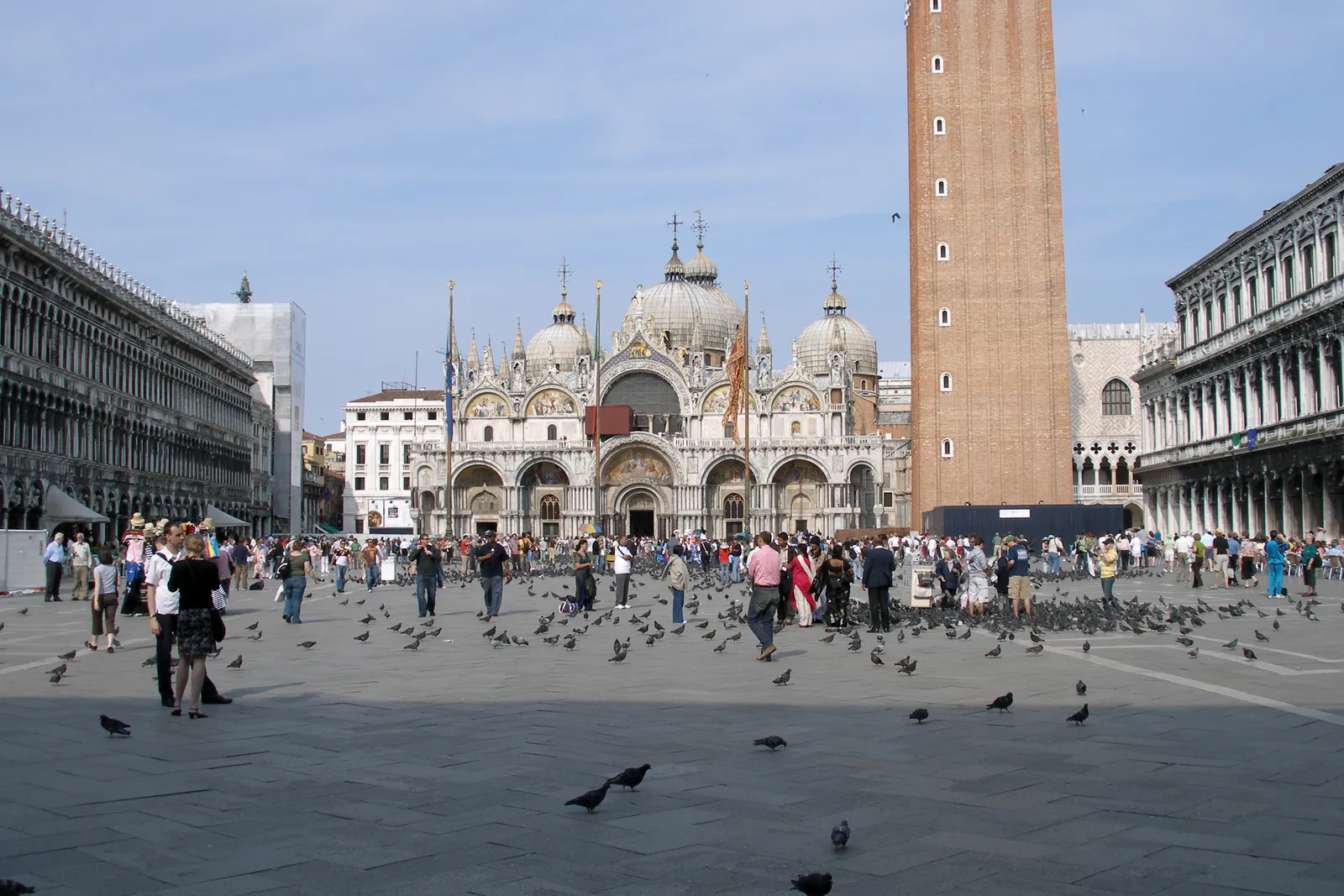
The basilica closing the far end has five domes and a front loaded with marble and sculpture carried home from the eastern Mediterranean over several centuries. Inside, the vaults and the undersides of the domes are sheathed in mosaic laid on a gold ground, thousands of square metres of it, and the effect depends entirely on the light: on a bright afternoon the whole ceiling reads as one continuous gold surface. Entry to the church is 10 euros, and since July 2025 it is sold online only, on a timed slot, with no ticket desk at the door. If you would rather have it settled before you land, timed entry can be booked ahead through a tours and activities platform. There is a lift up the campanile too, on a separate ticket, and that one can be booked ahead as well.
One thing to sort out before you get to the basilica door: suitcases, backpacks and bulky bags are not allowed inside, and the free deposit round the back at the Ateneo San Basso only holds them for the length of your visit.
The Doge’s Palace and the Bridge of Sighs
The Doge’s Palace shares a wall with St Mark’s Basilica, and is the building the republic was actually run from. It puts its two tiers of white stone arcade at ground level and the solid wall above them, patterned in pink and white Verona marble, which is the reverse of how a building this size normally sits and is why it looks lighter than it is.
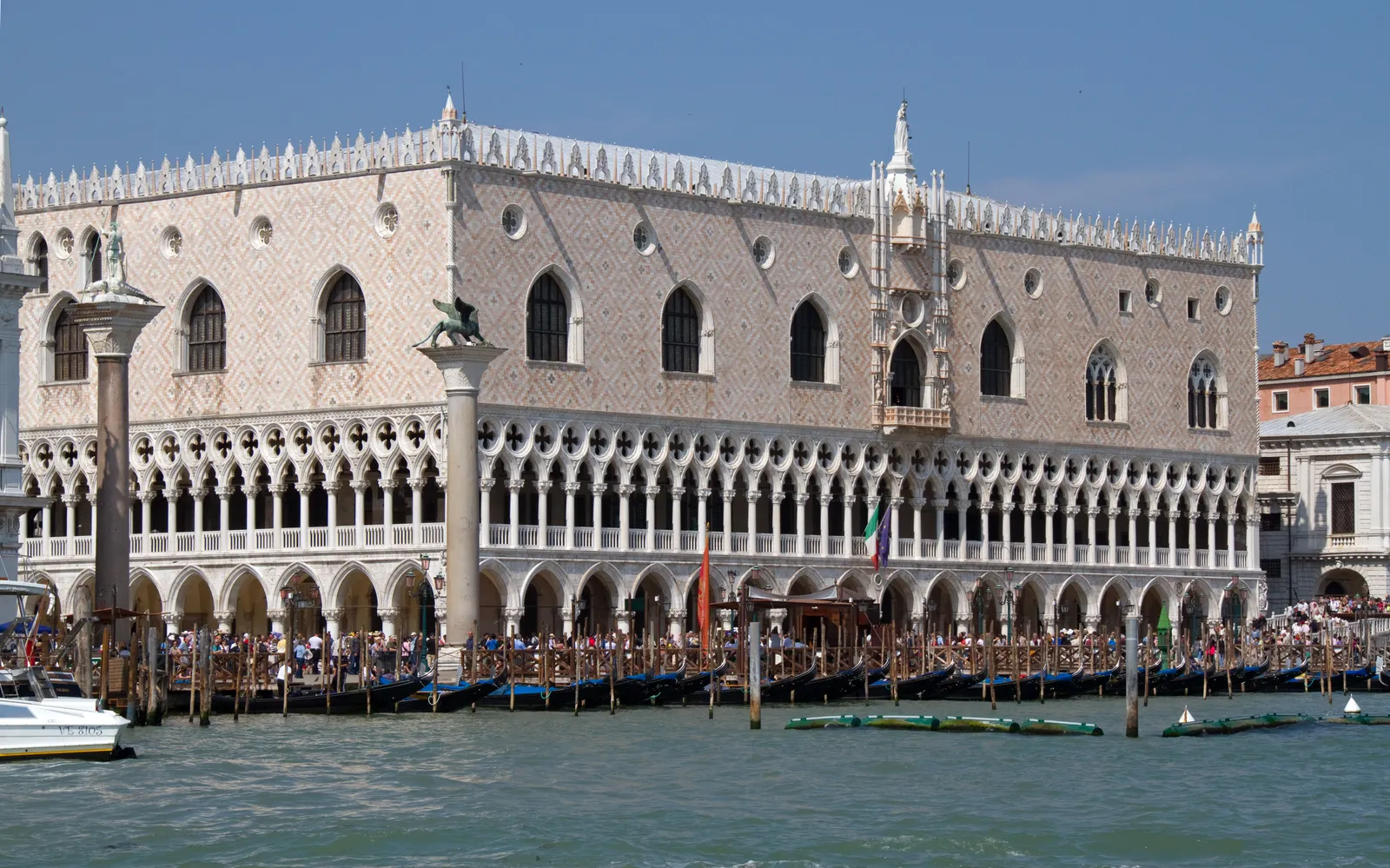
Inside is a route through the council chambers, Tintoretto’s enormous Paradiso on the end wall of the Great Council hall, the armoury, and then the Bridge of Sighs: an enclosed limestone crossing over a side canal from the interrogation rooms to the newer prisons, with two small stone-latticed windows that are the only thing prisoners saw of the outside on the way through. Byron gave it the name in the 1810s, long after it stopped being used that way. The bridge is on the standard route, so no separate ticket.
The price is the honest problem here. Admission is 35 euros in 2026, dropping to 30 if you buy online at least a month ahead, and it also covers the Correr Museum, the archaeological museum and the Marciana Library’s monumental rooms on the other side of the square. That is fair value if you use all four and steep for an hour before a flight, so it is worth deciding in advance rather than at the door; entry can be booked ahead through a tours and activities platform. From outside, the Bridge of Sighs is visible for nothing from the Ponte della Paglia, the small bridge on the waterfront twenty metres away.
Santa Maria della Salute at the mouth of the Grand Canal
The Accademia bridge was meant to be temporary when it went up in 1933 and is still there, a timber arch over the Grand Canal. From its crown the canal runs dead straight to a grey dome sitting on the point where the water opens into the lagoon.
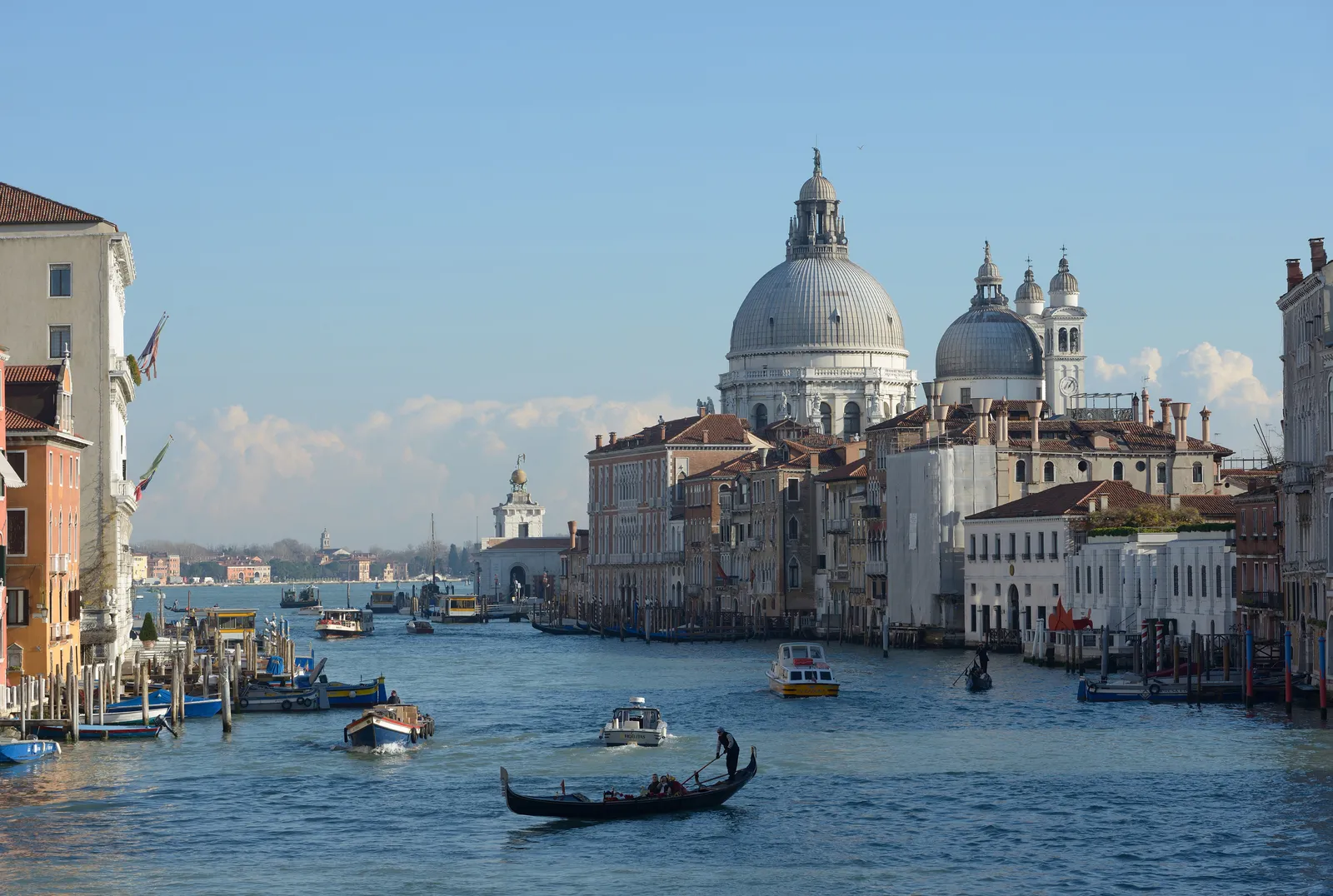
That is Santa Maria della Salute, and the reason it exists is grim. Plague reached Venice in 1630 and killed close to a third of the city inside two years; the Senate promised a church to the Virgin if it lifted, it lifted, and they built one. Baldassare Longhena won the competition at 26 and spent the rest of his life on it: begun 1631, finished 1681, five years after he died. It is octagonal, ringed with enormous stone volutes propping the dome, and the whole thing stands on a platform of about a million timber piles driven into the mud.
The church is free to walk into and usually quiet, which is not true of much else on this route. The sacristy at the side, with Titian ceiling panels and a Tintoretto, costs a few euros extra. Every 21 November the city still keeps the promise: a pontoon bridge is floated across the Grand Canal from Santa Maria del Giglio and Venetians walk over it to light candles inside.
A glass lift up San Giorgio Maggiore’s bell tower
With more than five hours, the best view of everything above is from a different island. Water bus line 2 crosses from San Zaccaria to San Giorgio Maggiore in about three minutes, one stop, and almost nobody making a short trip bothers.
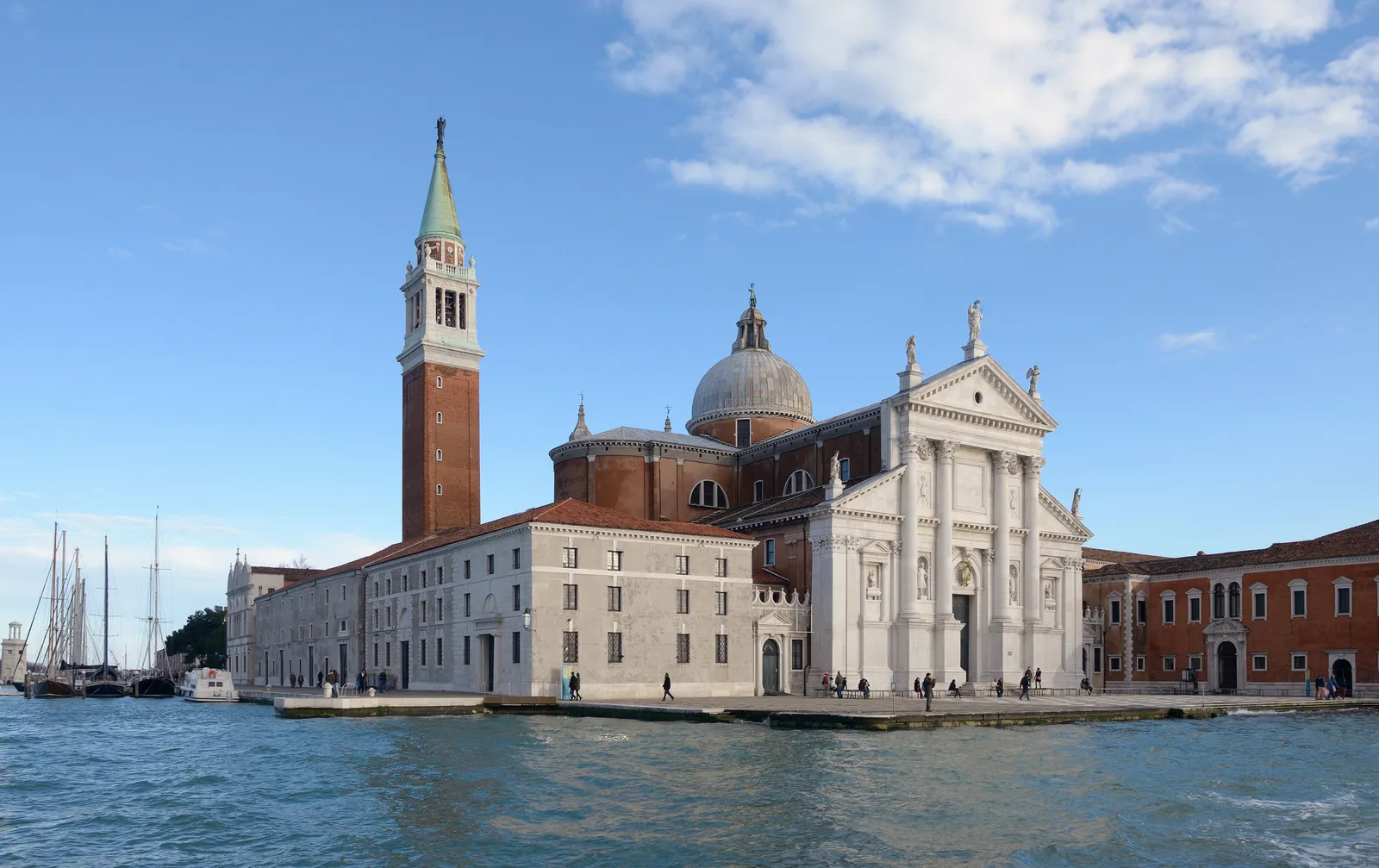
Palladio designed the church, which took from 1566 to 1610 to finish and puts a Roman temple front in white Istrian stone on the end of a basilica. It is free to go in, open from 09:30 until six in the evening, seven in summer, and from two in the afternoon on Sundays. The reason to come, though, is the campanile beside it, which has a lift. Eight euros takes you to the top, and what you get is the whole of Venice laid out across the water: St Mark’s, the Doge’s Palace, the campanile you did not queue for, the Salute’s dome, the Lido and the open lagoon behind it all. The queue is usually a few people rather than a few hundred.
If you have longer still, the northern lagoon is the other direction to go: Murano’s glass furnaces are around ten minutes from Fondamente Nove on lines 4.1 and 4.2, though getting across to that shore and back is what actually eats the time.
The airport bus runs until about one in the morning
Marco Polo has no rail link, just two bus services that cover the causeway either direction, from around four in the morning to about one at night. The express coach is 12 euros and about 20 minutes non-stop; the ordinary city bus, line 5, is 10 euros, closer to 25, and picks up along the way. Both leave every fifteen to twenty minutes, and the ride itself understates the trip: with the walk from the terminal and the wait for the next departure added in, it runs closer to 40 minutes between the baggage hall and Piazzale Roma, the square where the roads stop and the water and pavement take over. Alilaguna’s water buses are the slower alternative, running from the airport’s own jetty, a covered ten-minute walk beyond the terminal, for 18 euros to Rialto or St Mark’s; the crossing takes an hour and a quarter or more, but it lands you at the far end of the walk rather than the near end.
Allow about two hours from St Mark’s back to the gate: twenty-five minutes on foot to Piazzale Roma or fifteen to twenty on the water, a wait, then twenty to twenty-five on the bus, then check-in and security at the far end. If it is a Saturday evening in summer, add to that rather than trimming it.
Which is the practical case for leaving the suitcase somewhere near Piazzale Roma or the Rialto and walking the rest without it. Between the bus stop and the Salute this route crosses well over a dozen stepped bridges, none of which have a ramp, and the one door on it that will refuse a bag outright is the basilica’s.
Frequently asked questions
What should I do during a layover in Venice?
With five to seven hours, ride a public water bus down the Grand Canal from Piazzale Roma, cross the Rialto Bridge and its fish market, and spend the middle of the day on St Mark's Square, where standing on the square itself is free even though the basilica (10 euros, booked online) and the Doge's Palace (35 euros) charge. Finish at Santa Maria della Salute, free to walk into, with the view back up the canal from the Accademia bridge the shot most people leave with. St Mark's Basilica has stopped selling tickets at the door entirely, so that one stop needs booking ahead if you want to go inside rather than just see the square.
Does a few hours in Venice mean paying the city's access fee?
Only on certain days, and only in the middle of them, when it applies at all. Venice charges day visitors who are not staying overnight a contributo di accesso to enter the historic centre: in 2026 it ran on 60 days between 3 April and 26 July, from 08:30 to 16:00, at 5 euros booked at least four days ahead or 10 euros booked later, free for under-14s. That window has already closed for the year. The scheme has run every year since 2024 with a fresh calendar announced each spring, so check the current dates before you travel rather than assuming this year's carry over. Lido, Murano and Burano are outside the charged area regardless.
What happens if there is acqua alta while you are in the city?
You walk on planks for a couple of hours. Acqua alta runs from about October to March and peaks in November, when a high tide pushed by a southerly wind floods the lowest ground in the city, St Mark's Square among the first of it. It usually lasts two to four hours either side of high tide, the city puts out raised wooden walkways along the main routes, and the MOSE barriers at the lagoon mouths are raised when a tide above 110cm is forecast. Boots sell everywhere for a few euros. The practical risk to a flight is not the water itself but the crowd squeezed onto the walkways, so allow longer than usual to get back to Piazzale Roma.
Can you still buy a St Mark's Basilica ticket at the door?
No. The basilica closed its on-site ticket offices on 1 July 2025 and now sells only timed-entry tickets online, so turning up without one means not getting in. Entry to the basilica alone is 10 euros; adding the Pala d'Oro or the museum and the horses on the loggia takes it to 20, and all four together are 30. It opens 09:30 to 17:15 Monday to Saturday with last entry at 16:45, and only from 14:00 on Sundays, when the morning belongs to Mass.
Is there a step-free way across Venice from Piazzale Roma?
On the water, yes. Water bus lines 1 and 2 run the length of the Grand Canal between Piazzale Roma and St Mark's, and their pontoons at Piazzale Roma, Ferrovia and San Zaccaria board over ramps, which is why they are the usual accessible route across the city. The walk is a different matter: the lanes between Piazzale Roma and St Mark's cross a long series of stepped bridges, and only a handful of the city's crossings have a ramp or a stair lift fitted. The Zattere promenade in Dorsoduro is the one long stretch that is genuinely flat.
Is Murano reachable and back in a few hours?
Yes, if you treat it as the whole trip rather than an addition to one. Water bus lines 4.1 and 4.2 reach Murano from Fondamente Nove on the northern shore in around ten minutes, but getting to Fondamente Nove from St Mark's and back again is what fills the time, and the round trip runs to roughly ninety minutes before you have looked at anything. Burano is a further forty minutes beyond Murano and does not fit a short stop. The same 9.50-euro ticket covers the crossing for 75 minutes from validation.