Venice Layover Near Santa Lucia Station
Part of the full Venice Layover: The Grand Canal From VCE
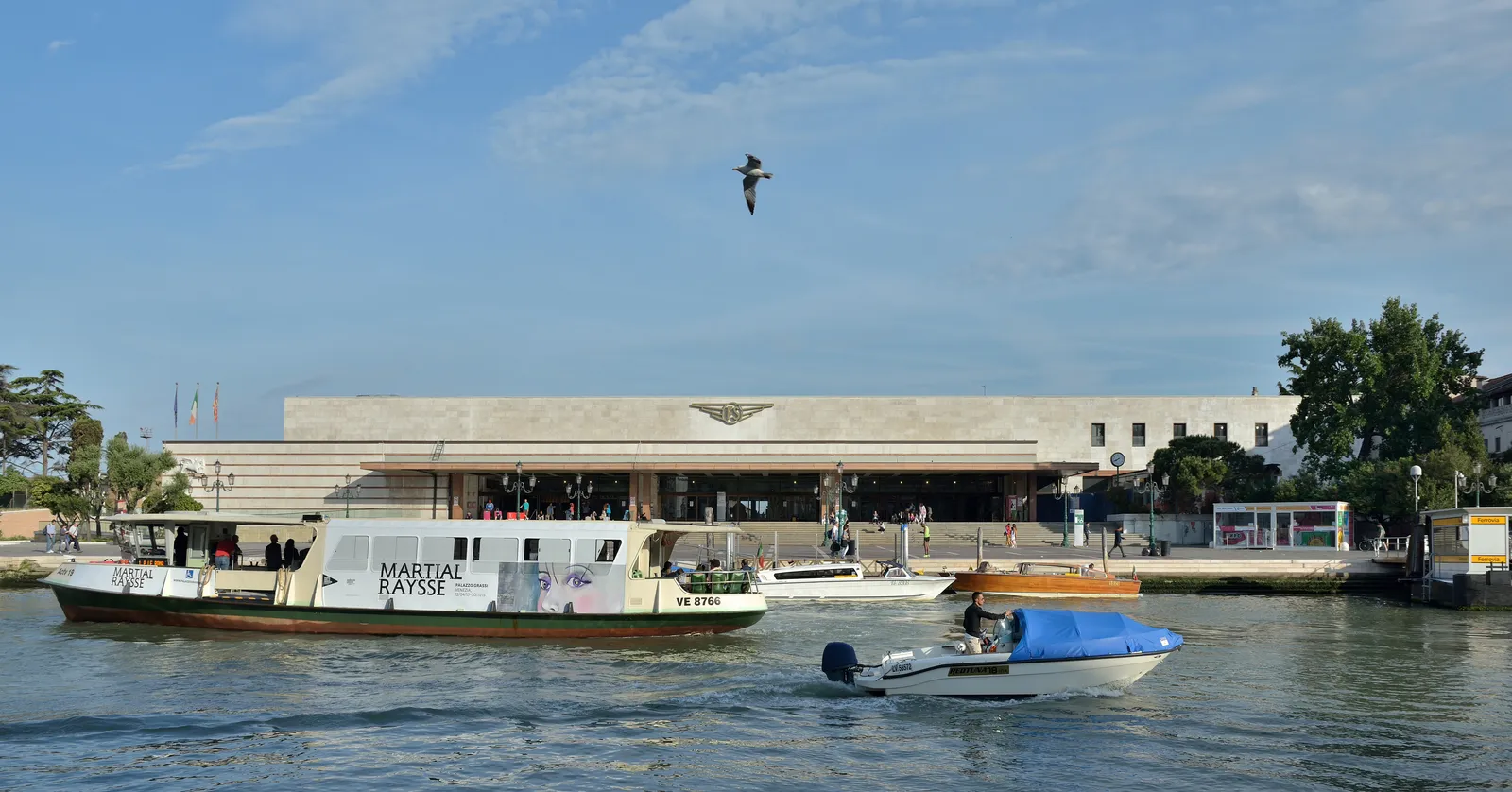
Cannaregio’s Strada Nova runs east from Venice’s Santa Lucia railway station to the Rialto Bridge in about twenty minutes on foot, past the free Baroque church of the Scalzi at the station door, the world’s first Jewish ghetto a few turnings north of it, and the Ca’ d’Oro’s Gothic front on the Grand Canal.
The Tiepolo ceiling the Scalzi church lost in 1915
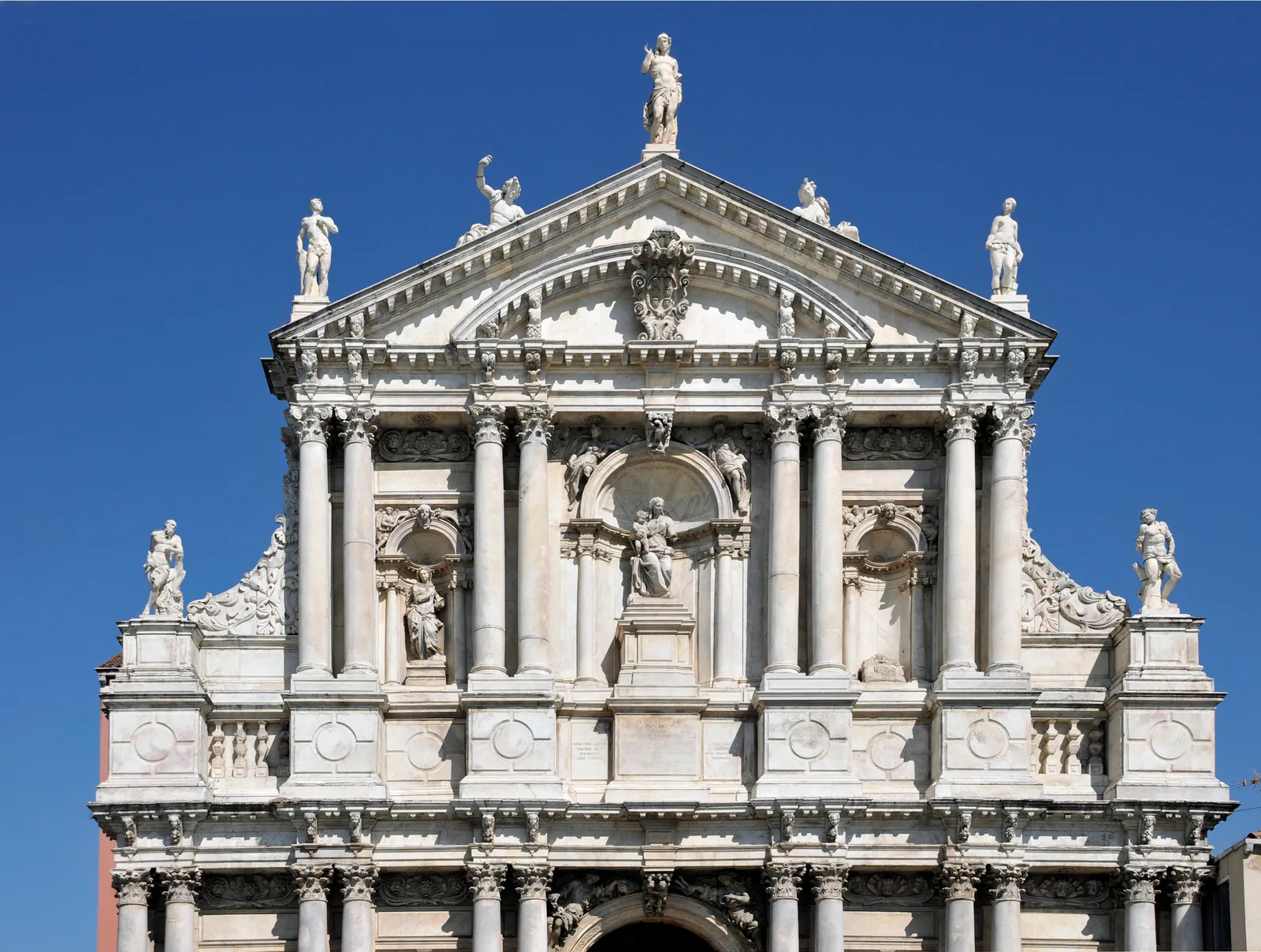
Thirty seconds from the station’s own doors is a wall of white marble columns, niches and statues wedged between the platforms and the water. Santa Maria di Nazareth was built from 1649 for the Discalced Carmelites, the barefoot friars the Venetians called scalzi, which is the name that stuck.
Inside, the nave ceiling is a Fascist-era painting by Ettore Tito. It should be a Giambattista Tiepolo fresco, and it was until 17 October 1915, when an Austrian bomb aimed at the railway station came through the roof instead. What survived was picked out of the rubble in fragments and is now at the Gallerie dell’Accademia across the city; Tito painted the replacement in 1934. Entry costs nothing and the church runs from seven in the morning to quarter to seven at night with a break from one until half past two, which covers almost any train you arrive on.
Strada Nova, the street Venice cut through Cannaregio in 1871
Ten minutes east of the station the route lifts over the Ponte delle Guglie, a stone arch across the Cannaregio canal with four small obelisks standing on its parapets, added when the bridge was rebuilt in 1823. Past it the lanes suddenly widen out into something that does not look Venetian at all: a straight, flat, shop-lined street four or five times the width of anything around it.
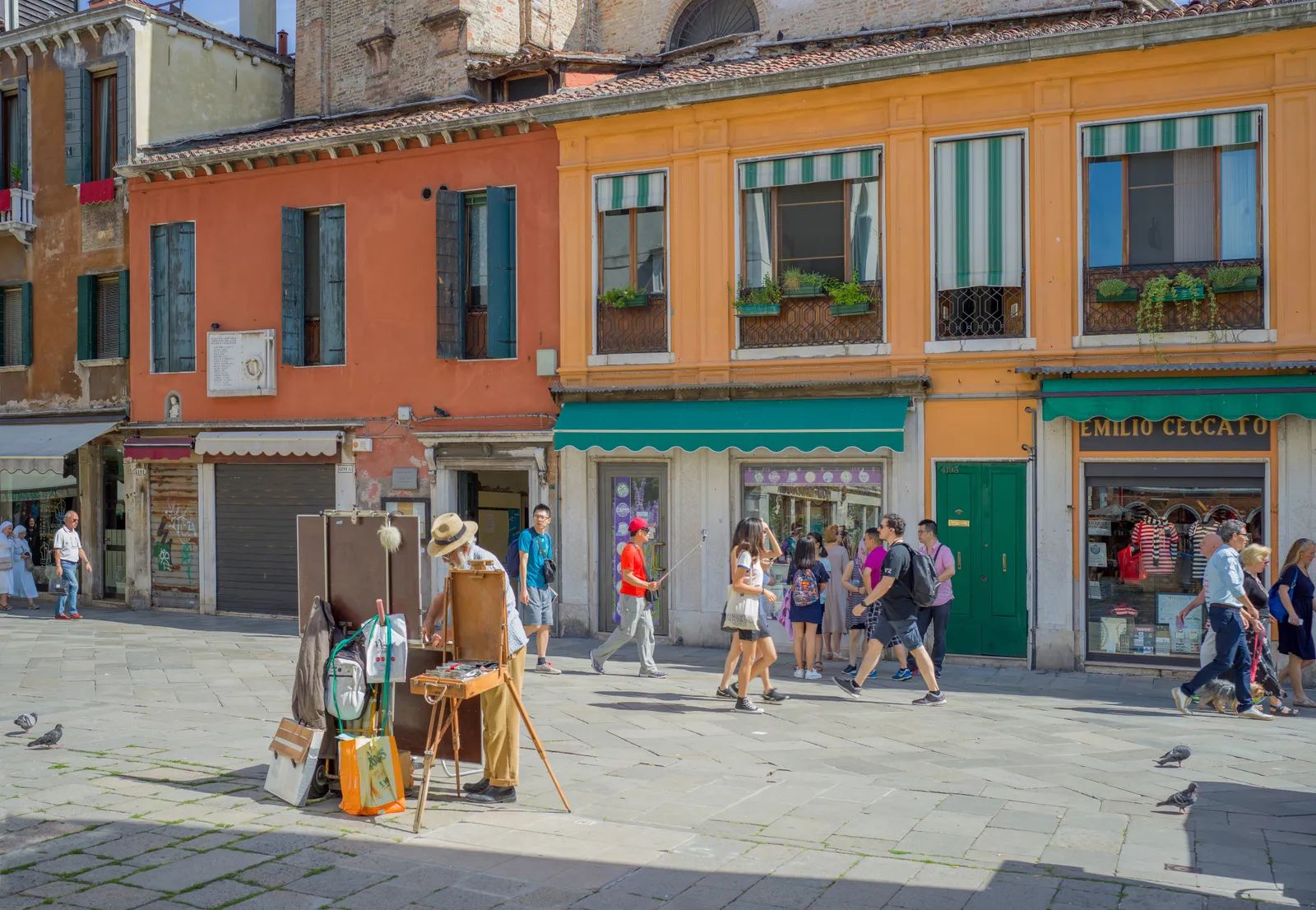
That is the Strada Nova, and it was cut, not built. Once the railway arrived there was no direct way on foot from the station to the commercial centre at Rialto, so in the 1860s the city filled in canals and knocked a line straight through the houses, opening it in 1871 and naming it after the king. Venetians never used that name. It is now the longest uninterrupted walk in the old city, roughly twenty minutes end to end, and the one stretch where you can cover ground without checking a map at every corner.
Between the station and the Rialto this route crosses seven or eight stepped bridges, starting with the Guglie, and not one of them has a ramp.
The world’s first Jewish ghetto, at Campo di Ghetto Nuovo
North off the Strada Nova, five minutes through a low sotoportego, the lanes open into a square that is bigger and emptier than anything else in Cannaregio and closed in on all four sides by buildings that are conspicuously too tall.
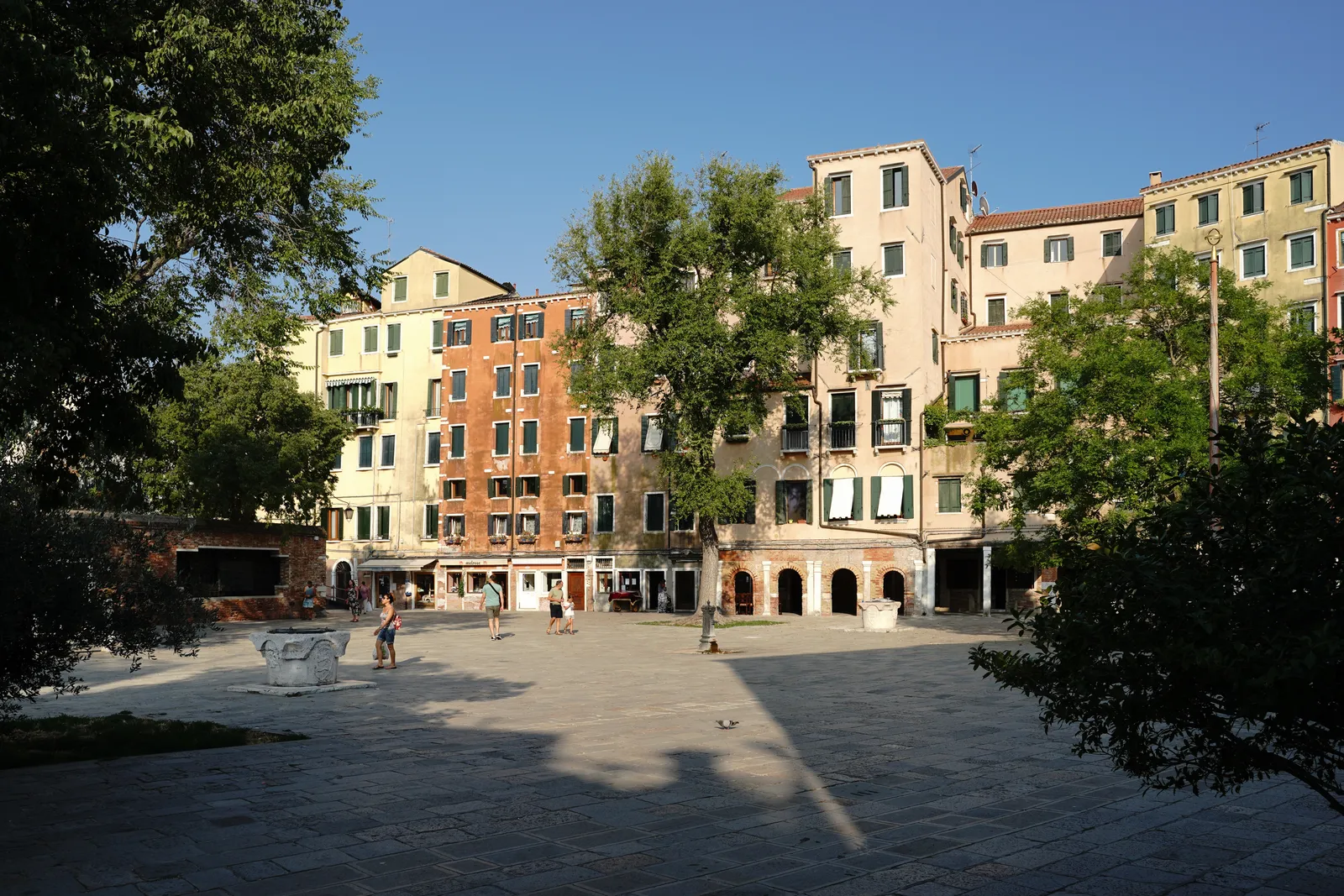
On 29 March 1516 the Venetian Senate ordered the city’s Jews to live on this island and nowhere else, with gates locked at night. The site had been a state foundry, and the Venetian word for casting metal, geto, is where the English word ghetto comes from. The community could not expand outward past the canals, so when refugees arrived from Spain and Portugal later that century it built upward instead: the houses here run to six and seven storeys with unusually low ceilings, which is why the square feels enclosed in a way no other Venetian campo does.
Five synagogues are built into the upper floors of those buildings, invisible from the square apart from a few small domes and window bands on the rooflines. Two can be visited, on a guided tour that can be booked in advance through a tours and activities platform; the campo itself is open ground and costs nothing. The Jewish Museum on the square is shut for restoration, and until it reopens the community runs a free multilingual app that walks you round the campo instead.
Back on the Strada Nova, a narrow calle halfway along drops down to the Ca’ d’Oro, the most elaborate Gothic palace front on the Grand Canal, finished in the 1430s and named for the gold leaf that once covered the carving.
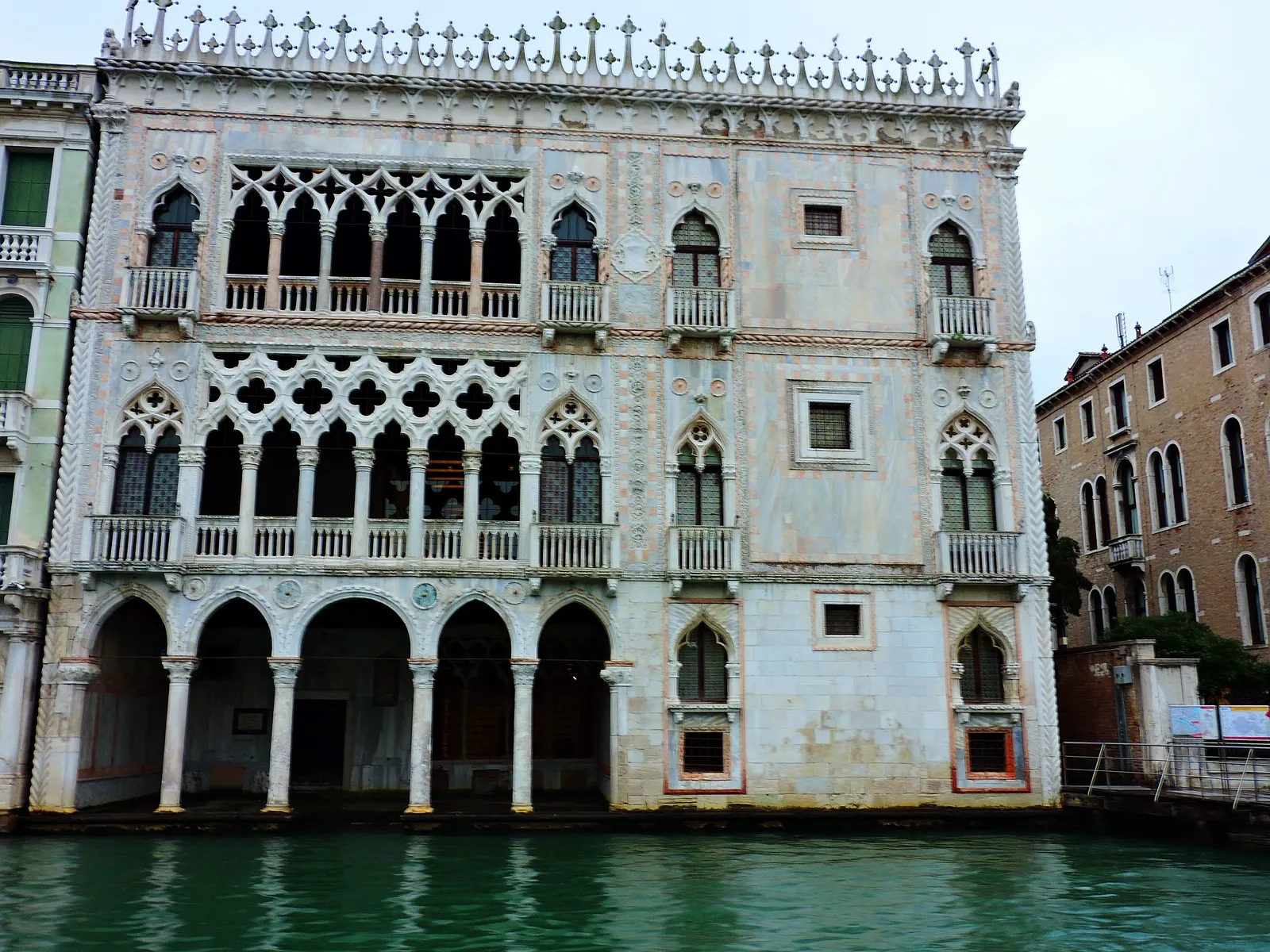
The gold is long gone. The building holds the Galleria Giorgio Franchetti now, and the sharper look at it is free anyway: ride one stop on the water and see the front from the middle of the canal, which is the side it was designed to be seen from.
Santa Maria dei Miracoli, clad in marble inside and out
With four hours or more, there is one more thing worth the detour before Rialto. Ten minutes south-east of the Strada Nova, on a canal corner in a part of Cannaregio with no through traffic, sits a small church that looks like it was upholstered rather than built.
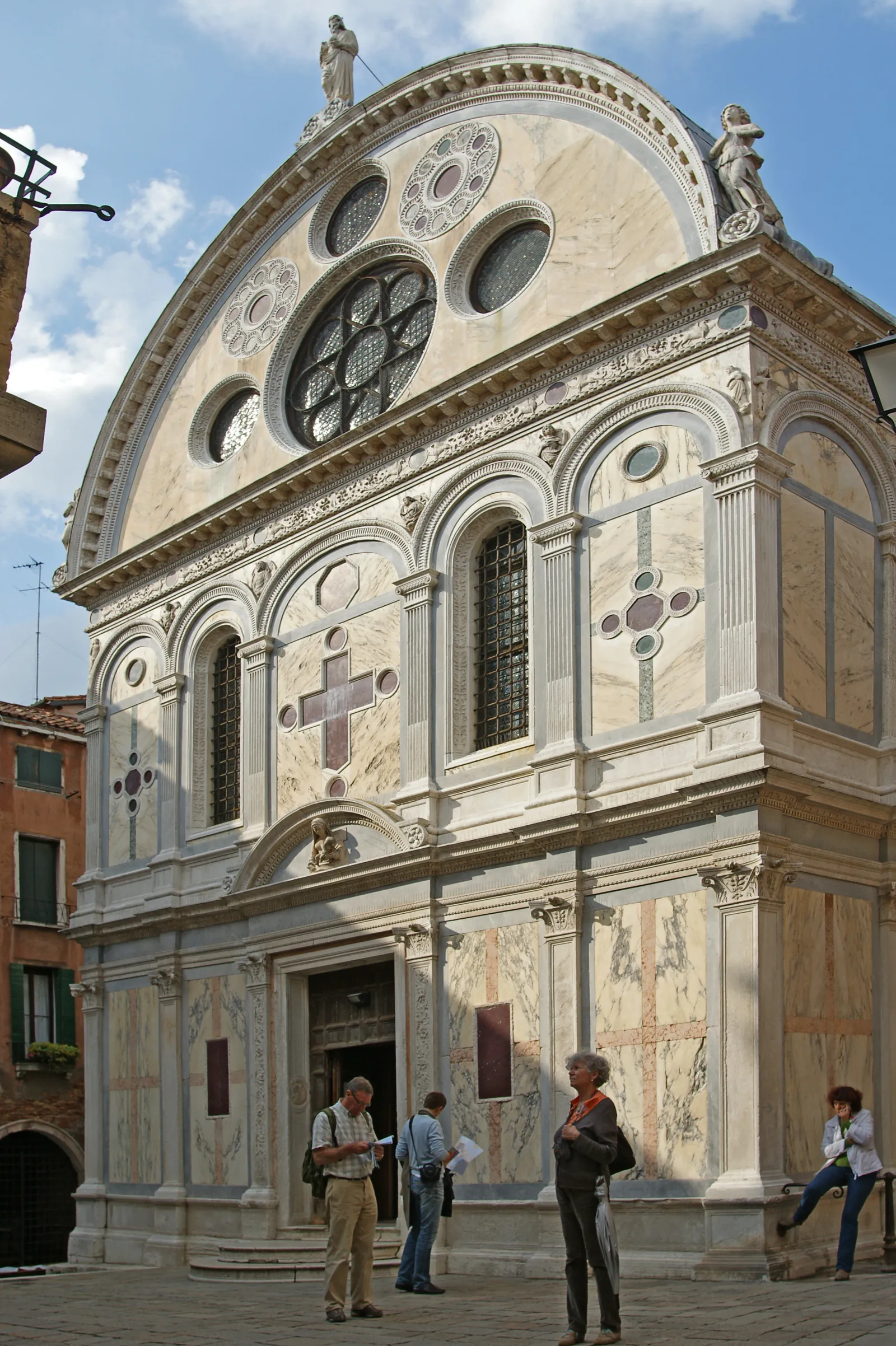
Pietro Lombardo built Santa Maria dei Miracoli between 1481 and 1489 to house an icon of the Virgin that locals credited with miracles, and faced the whole thing, outside and in, in thin panels of coloured marble framed by carved cornices. The barrel ceiling above the nave carries fifty coffers, each with a painted bust of a prophet or patriarch. It is 3.50 euros to go in, Monday to Saturday, half past ten until half past four, with last admission ten minutes before the end.
From here the Rialto is another five minutes, at which point you have joined the route the main Venice guide takes across to St Mark’s, having come at it the long way round through the north of the city rather than down the Grand Canal.
The airport bus goes from Piazzale Roma, not from the station
Nothing bound for Marco Polo calls at Santa Lucia. Piazzale Roma is the road terminus, a separate square across the Grand Canal from the station, about five minutes on foot over the white steel arch of the Ponte della Costituzione or one stop on water bus lines 1 and 2. Both airport services, the 12-euro express coach and the 10-euro city bus, leave from bays there.
From Cannaregio, allow around ninety minutes to the gate: the walk back down the Strada Nova, the crossing to Piazzale Roma, a wait, twenty to twenty-five minutes on the bus, then check-in and security. That is also the argument for leaving the suitcase near the station rather than towing it: this walk goes out and comes back the same way, and every bridge on it is paid for twice.
Frequently asked questions
How long does it take to walk from Santa Lucia station to St Mark's Square?
Around half an hour if you keep moving. The Rialto Bridge is about 1.6km and twenty-odd minutes away along the Strada Nova, and St Mark's is another ten past it, so budget 30 to 35 minutes and more if you stop. The faster version is water bus line 2 from the Ferrovia pontoon directly outside the station, which reaches Rialto in about twelve minutes and St Mark's in around twenty-five for 9.50 euros. On foot the route is well signposted with yellow wall signs the whole way, which is not true of most of Venice.
Do all trains to Venice actually reach Santa Lucia?
Most do, but not all, and the difference matters. Santa Lucia is the terminus on the island, at the head of the Grand Canal, reached across a four-kilometre causeway. Venezia Mestre is the mainland station about ten minutes before it, where the causeway starts, and some regional and cheaper services terminate there instead of crossing. If your ticket says Mestre, you are still on the mainland and need a separate hop across, so check which of the two names is printed on it before you plan an hour of walking around Cannaregio.
Can you go inside the Ghetto's synagogues on your own?
No. The campo, the wells and the buildings around it are open ground and free to walk through at any hour, but the synagogues themselves are only reachable on a guided tour run by the Jewish community, currently hourly in English from mid-morning, Sunday to Thursday, with an earlier finish on Fridays and nothing on Saturdays. The Jewish Museum on the square has been closed for restoration, and while it is, a free multilingual app covers the campo as a self-guided walk.
How much of a walk through Cannaregio costs nothing?
Nearly all of it. The Scalzi church at the station door, the Strada Nova, the Ponte delle Guglie, the Campo di Ghetto Nuovo and the Ca' d'Oro's facade from the water are all free. The two things on this route that are not are the Franchetti gallery inside the Ca' d'Oro and Santa Maria dei Miracoli, which costs 3.50 euros. If you are filling time between a train and a flight rather than sightseeing on a budget, that is a route where a coffee is the only thing you have to pay for.