Venice Layover Near Riva degli Schiavoni
Part of the full Venice Layover: The Grand Canal From VCE
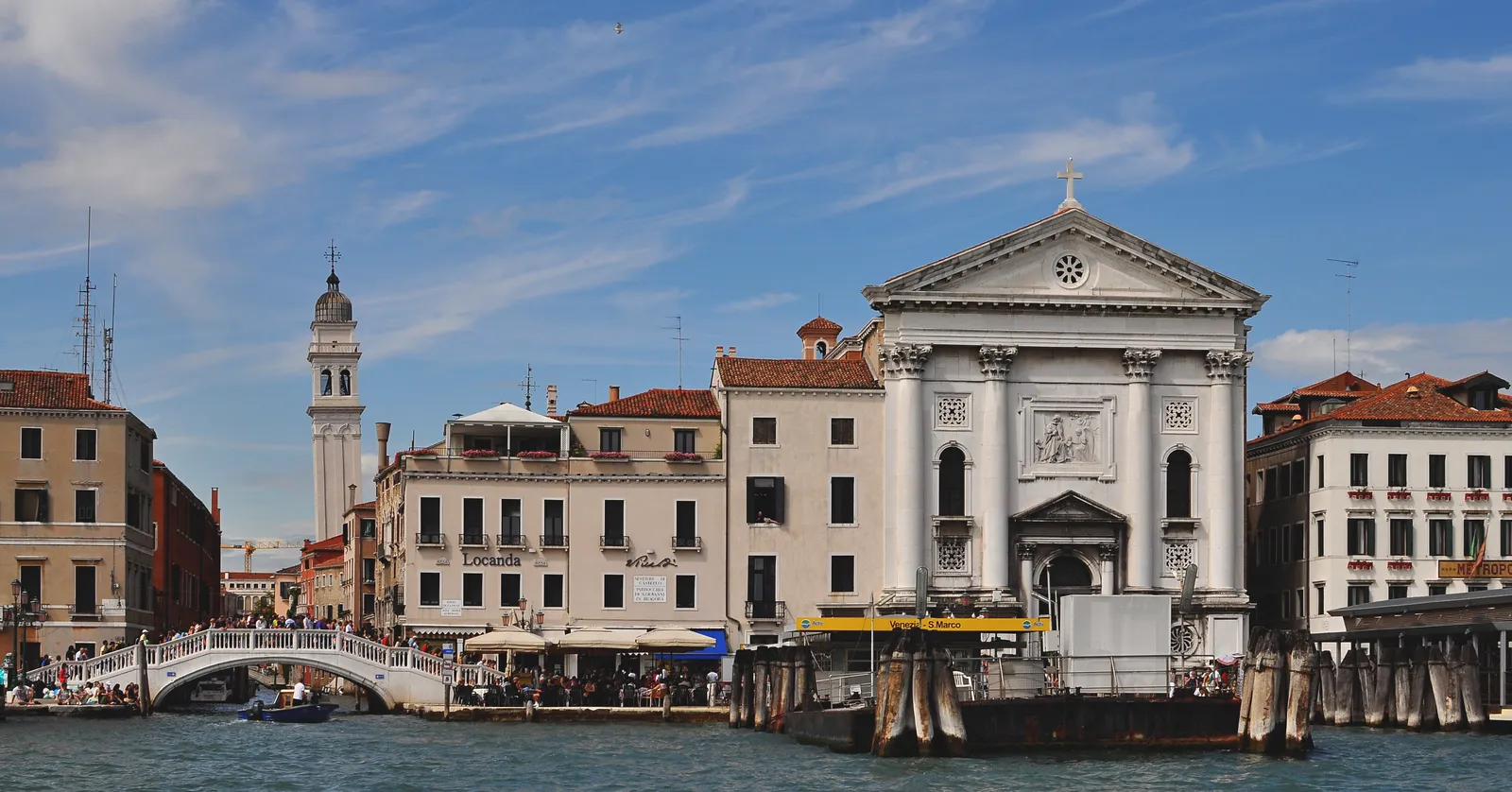
Venice’s Riva degli Schiavoni is the broad stone quay running east from the Doge’s Palace, past Vivaldi’s orphanage church and the permanently flooded crypt under San Zaccaria to the Arsenale gate, where a marble lion looted from Athens carries eleventh-century Viking runes cut into its shoulder.
Vivaldi’s orphanage church on the Riva degli Schiavoni
The quay is named for the Schiavoni, the Dalmatian merchants from across the Adriatic who tied up along here and sold their cargo off the stones. It is the widest waterfront in the city, and it is where the boats have always come in.
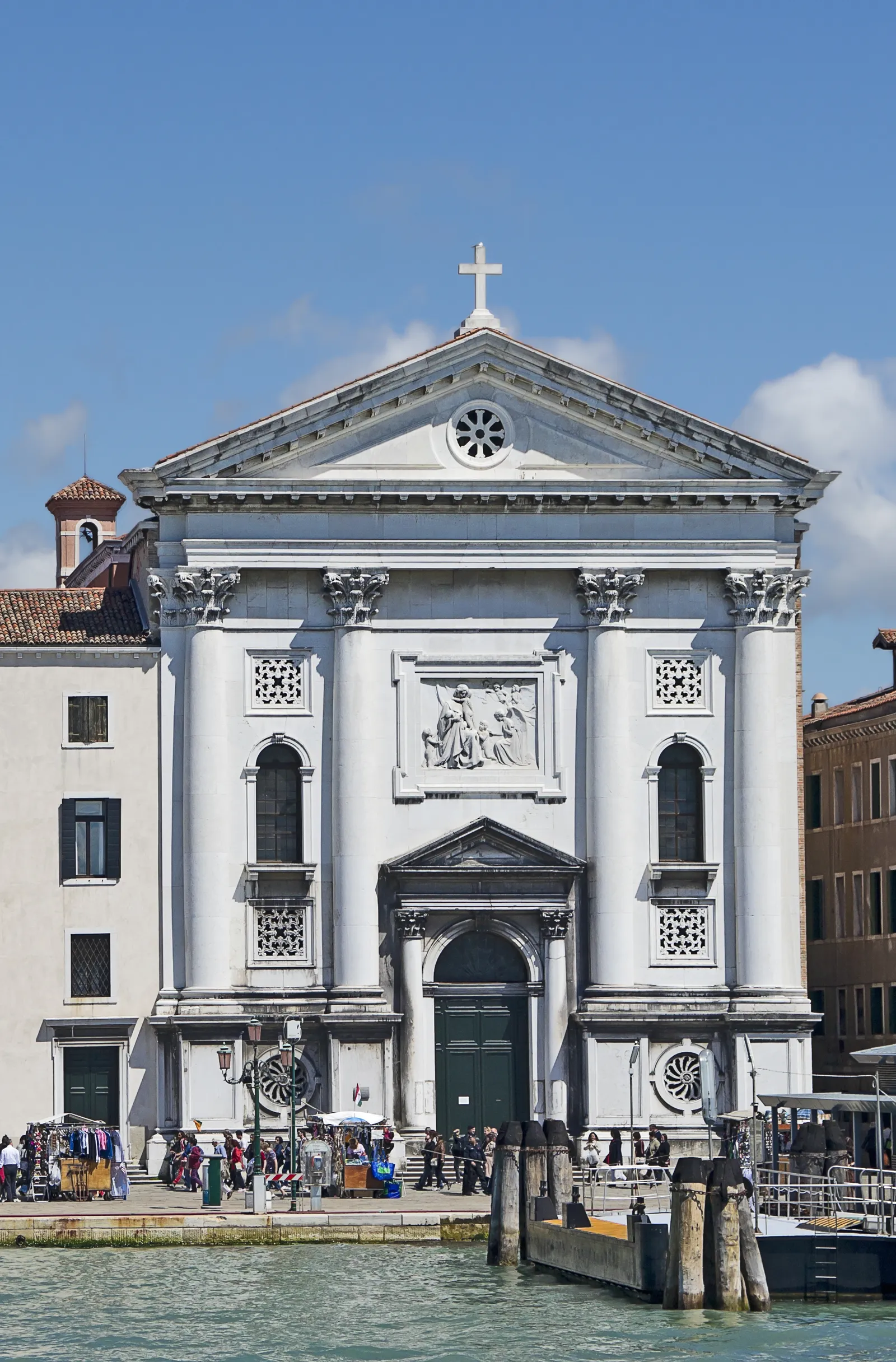
Five minutes east of the Doge’s Palace, a white columned front stands out of the row: Santa Maria della Pietà, built by Giorgio Massari between 1745 and 1760 for the orphanage next door. The Ospedale della Pietà took in abandoned and illegitimate girls and trained the musical ones, and its all-female orchestra and choir became a draw for visitors from across Europe. Antonio Vivaldi was appointed violin master here in 1703 and wrote much of his output for those players, who performed screened from the congregation. Massari designed the interior as a concert hall as much as a church, oval, with a Tiepolo ceiling, and it is still used for concerts.
Six separate boat pontoons all called San Zaccaria
This is where you arrive if you came by water, and it catches people out. San Zaccaria is not a stop but a rank of six floating pontoons lettered A to F, spaced along a few hundred metres of the Riva from the Pietà church down to the Hotel Danieli, and each line uses one of them and only one.
Lines 1, 2, 4.1, 4.2 and 5.1 all call somewhere along that rank, as do the lagoon services out to the Lido and Murano. So does the airport water bus, which lands at the Jolanda pontoon in the middle of the row and takes about an hour and a quarter across the open lagoon for 18 euros, longer than a road transfer but without a causeway involved; that crossing can be booked ahead through a tours and activities platform if you would rather not buy it at a kiosk on the day. Read the electronic board on each pontoon rather than the name on the roof.
The boarding is the reason to be carrying as little as possible along this stretch. Every pontoon here is a floating deck reached over a hinged gangway that moves with the water, and the crew works to a short fixed stop, so a suitcase has to be lifted on and stowed before the boat casts off again.
The flooded crypt under the church of San Zaccaria
Two minutes inland from the San Zaccaria pontoons, through a covered passage, is a campo with a tall marble front on one side that changes style halfway up because it took fifty years and two architects to build.
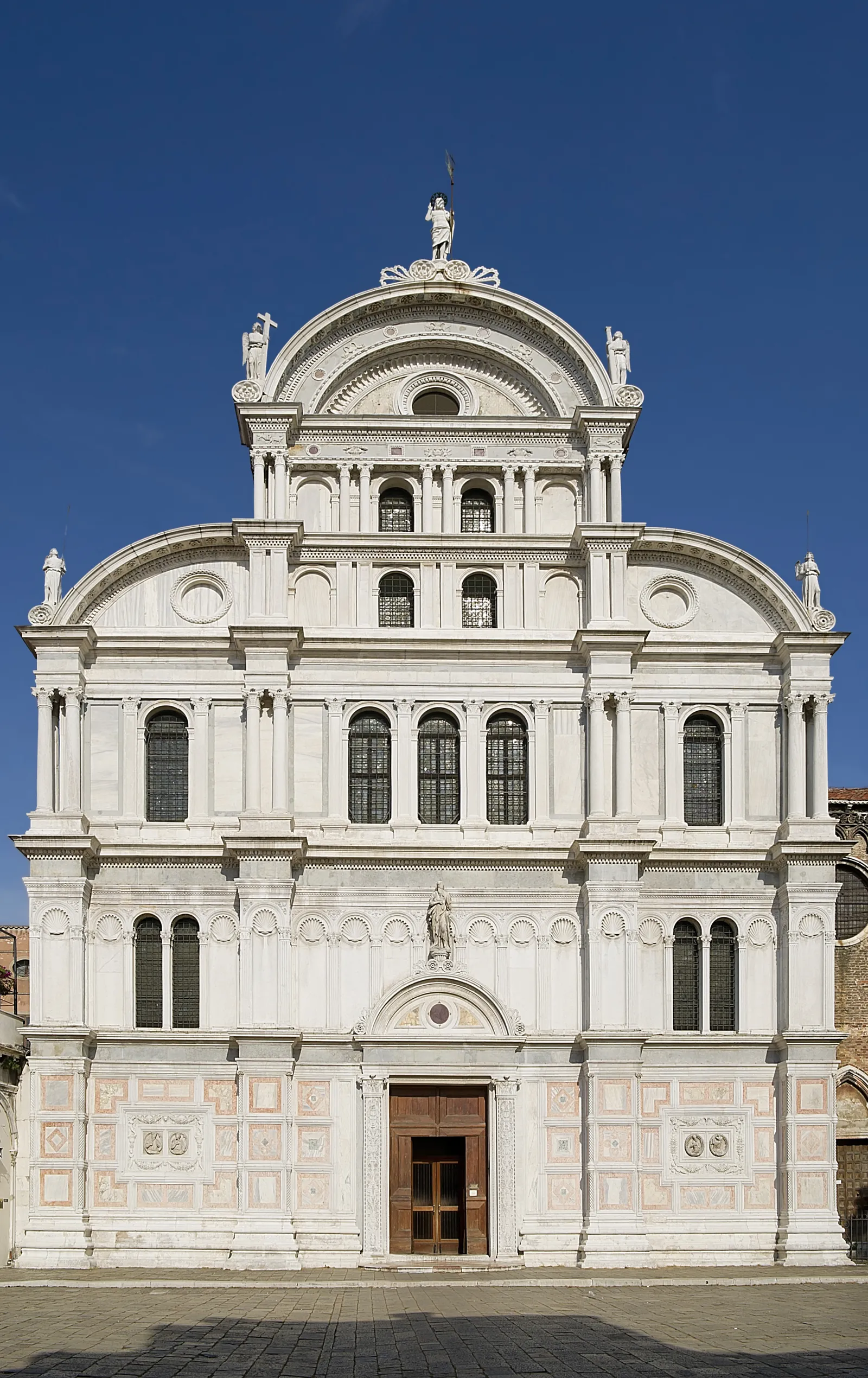
Inside, on the second altar of the left aisle, is Giovanni Bellini’s Madonna and Child with Saints, signed and dated 1505, painted when he was in his seventies and still the picture most people come for. Napoleon’s army took it to Paris in 1797 and it came back in 1817, minus its original frame.
The other reason to go in is downstairs. The crypt is the surviving part of a tenth-century church and it now stands permanently under water: a low forest of squat columns and rounded arches, their bases gone, reflected in still green water that has swallowed the tombs of eight doges. You look at it from the last few steps of the stairs, because there is nowhere else to stand. The church is free; the crypt and the two side chapels are a euro or two on one ticket.
Viking runes on the marble lion at the Arsenale gate
Ten minutes further east along the Riva, the lanes open onto a canal with a wooden bridge over it and a red brick wall running away in both directions. This is the Arsenale, the state shipyard that at its height could fit out a galley in a day.
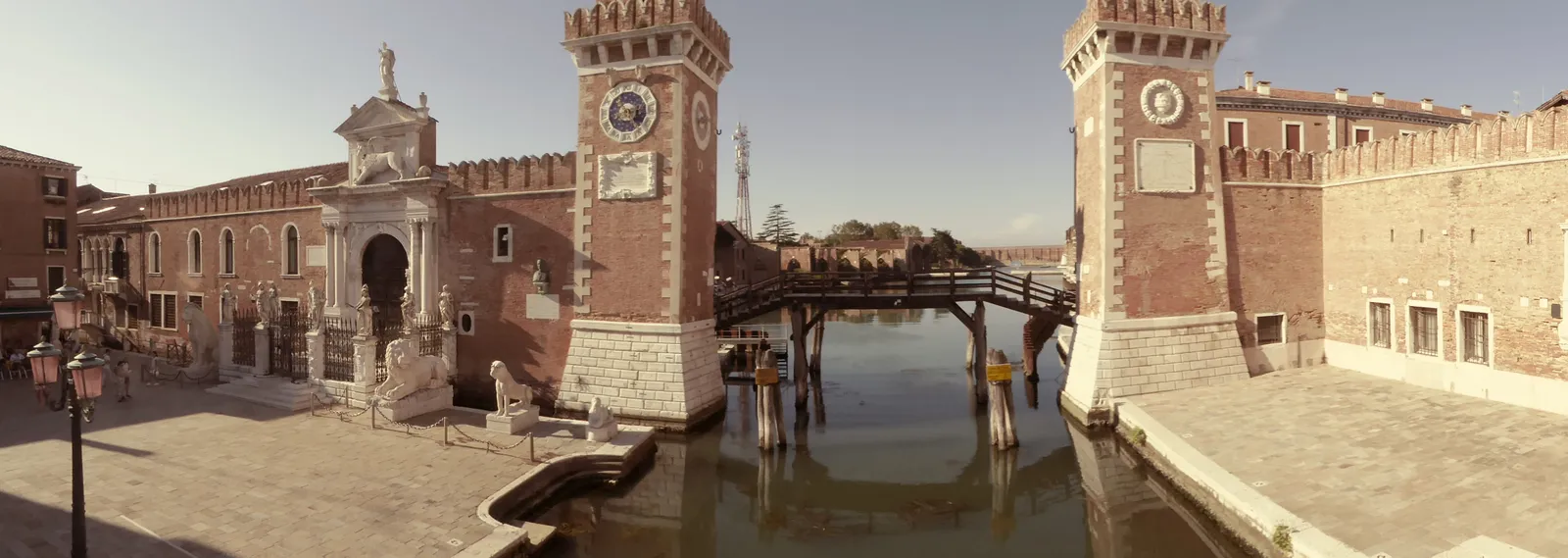
The Porta Magna of about 1460 is the first classical revival building in Venice, a white marble triumphal arch pushed into a brick wall. What is actually worth the walk is the row of stone lions on the terrace in front of it. Francesco Morosini shipped them home from Greece in 1687 after the Venetians took Athens, and the biggest of them, a fourth-century BC beast that had sat at the port of Piraeus for two thousand years, has a long band of carving looping across its shoulder and flank.
For centuries nobody could read it. It was identified in the nineteenth century as Old Norse runes, cut by Scandinavian mercenaries in Byzantine service some time in the eleventh century, most likely men of the Varangian Guard passing through on a campaign and doing what soldiers have always done to a large blank surface. The weathering has taken most of it, but the loops are unmistakable once you are standing next to them, and it costs nothing to look.
Via Garibaldi, the widest street in Venice
Past the Arsenale the city changes character. Turn inland and you are on a street that is simply too wide to be Venetian, with room for trees, market stalls and two ranks of cafe tables and still nobody having to walk single file.
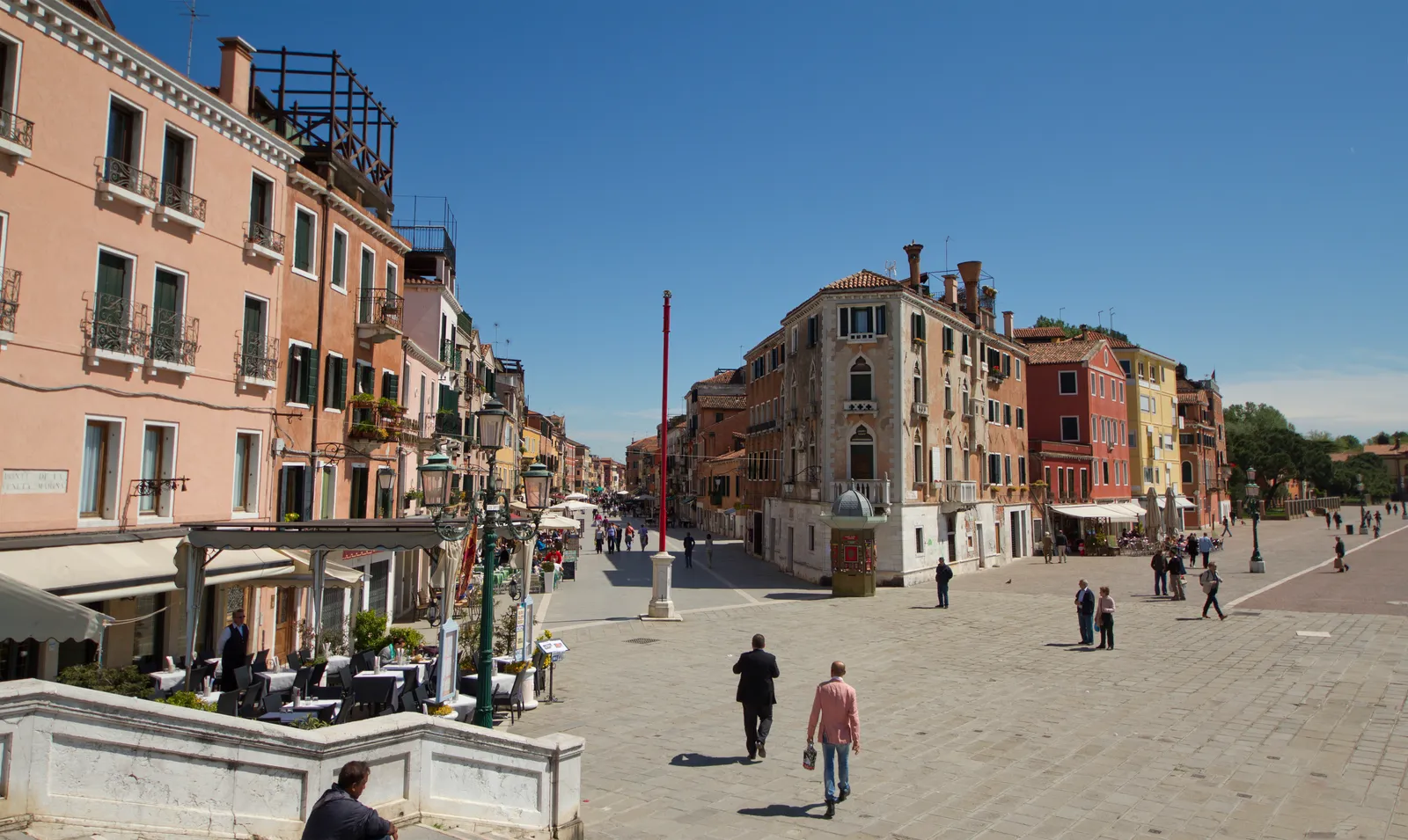
Via Garibaldi was a canal until Napoleon’s administration had it filled in around 1808, on the grounds that the city ought to have one proper boulevard. It worked, in the sense that this is now where a whole quarter of the city does its shopping and stands around with a glass of wine in the early evening. The bars along it serve cicheti, the small plates Venetians eat standing at the counter, at prices that bear no relation to what the same thing costs near St Mark’s. There is a plaque partway along marking the house where John Cabot is said to have lived before he sailed west from Bristol.
It is the only stretch of this walk that feels like an ordinary Italian neighbourhood rather than a monument, which after a morning of the Grand Canal and St Mark’s is most of its appeal.
Venice kept its cathedral out at San Pietro di Castello until 1807
With four hours or more, the far eastern edge is worth reaching: over a bridge onto a separate island of grass and washing lines is a large church with a dome and a white bell tower that visibly leans.
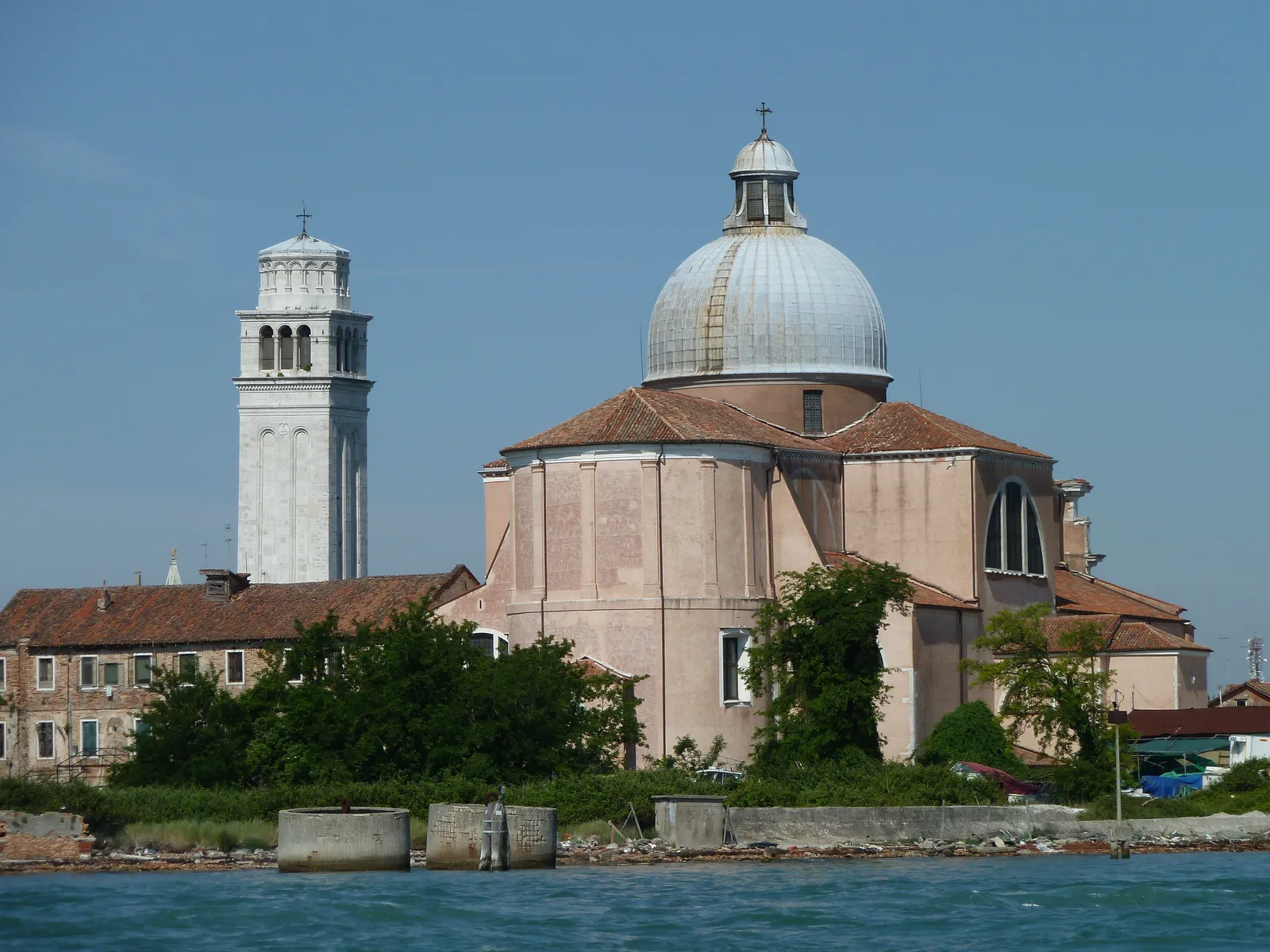
San Pietro di Castello was the cathedral of Venice, and the seat of its patriarch, until 1807: St Mark’s was the doge’s private chapel and only took over the title when Napoleon’s reorganisation moved it. The republic kept its bishop out here at the edge, well away from the seat of government, which tells you most of what you need to know about how Venice handled the church. Mauro Codussi built the campanile in Istrian stone between 1482 and 1490 and it has been leaning ever since.
Inside, in the right aisle, is the cattedra di San Pietro, a marble seat assembled in the thirteenth century around an Arabic funerary stone with verses from the Quran still legible across the back of it, and traditionally shown to visitors as the chair Saint Peter used at Antioch. It is one of the Chorus circuit churches, so entry is a few euros or covered by that association’s multi-church pass. The campo outside is grass, with children playing on it, which happens nowhere else in Venice.
The airport bus starts from Piazzale Roma, twenty minutes away
Getting back is the short part of the day. The Giardini pontoon is a few minutes south of here on lines 1, 4.1 and 5.1, and from anywhere along the Riva the airport bus means crossing to Piazzale Roma first, about twenty minutes on line 2 or thirty-five on foot. Allow two hours from Castello to the gate, and rather more if you are relying on the water bus to the airport rather than the road.
Frequently asked questions
Which San Zaccaria pontoon do you need?
Check the electronic board before you queue. San Zaccaria is not one stop but six separate floating pontoons lettered A to F, strung out along the Riva degli Schiavoni between the Pietà church at one end and the Hotel Danieli at the other, and each line uses only one of them. The airport water bus and most of the lagoon services berth at the Jolanda pontoon in the middle of the row. Getting this wrong costs you a departure rather than a whole afternoon, but it is the most common way to miss a boat in Venice.
Is the crypt under San Zaccaria really flooded?
Permanently, these days. The tenth-century crypt sits below the water table and the rising lagoon has finished the job, so what you look at from the bottom few steps is a forest of squat columns standing in still green water with their bases and eight doges' tombs somewhere under it. The church itself is free to walk into; the crypt, the Chapel of San Tarasio and the gilded chapel behind it are a euro or two on a single ticket. Opening is mornings and late afternoons on weekdays, afternoons only on Sundays.
Can you get inside the Arsenale?
Not most of the year. It is still partly a working naval site, and the ordinary way in is during the Biennale, when the rope factory and the covered building sheds are used as exhibition halls. The parts that are always open and always free are the ones worth coming for anyway: the Porta Magna, the four ancient Greek lions on the terrace in front of it, and the campo and bridge looking down the entrance channel.
Is this walk worth doing after dark?
The Riva stays lit and busy well into the evening, San Giorgio Maggiore is floodlit across the water, and the day-trippers have gone by around six, which takes the crush off the bridges. Via Garibaldi is where Castello eats, so the tables outside fill up rather than empty out. Just note that the churches all shut in the early evening, so a night version of this is a walk rather than a set of interiors.