Venice Layover on the Lido
Part of the full Venice Layover: The Grand Canal From VCE
The Lido is Venice’s outer sandbar, 20 to 30 minutes by public water bus from San Zaccaria beside St Mark’s, and it has cars, buses and pavements: the Gran Viale runs 700 metres from the boat to a free stretch of Adriatic beach, with the Palazzo del Cinema down the seafront and the village of Malamocco at the far end of the island.
Gran Viale, the Lido’s high street with cars on it
Step off the pontoon at Santa Maria Elisabetta and the first thing that registers is traffic. There are cars here, and buses, and hundreds of scooters parked nose-in along the kerbs, because the Lido is where Venice keeps its road network.
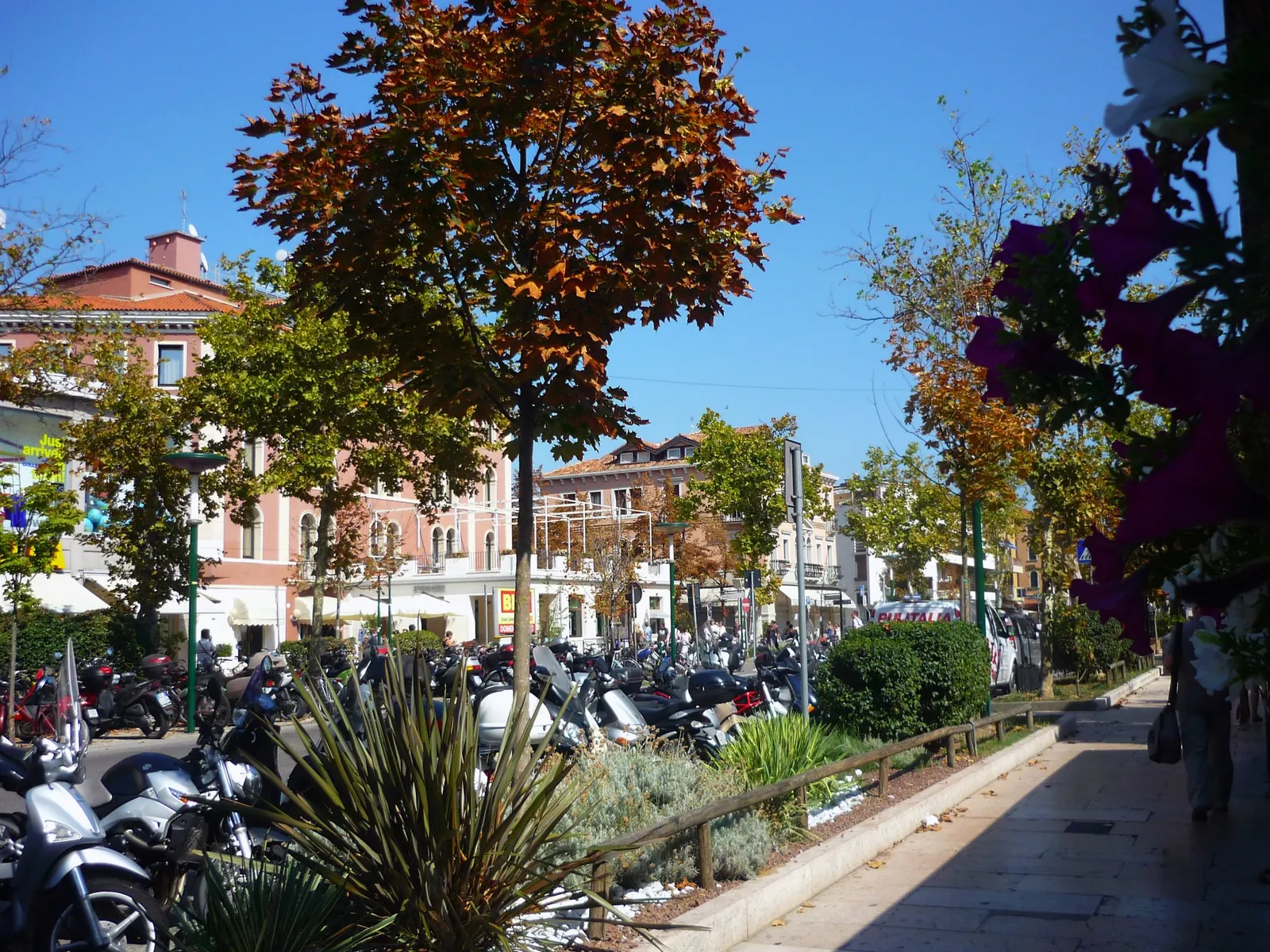
The Gran Viale Santa Maria Elisabetta runs straight across the island from the lagoon side to the sea side, about 700 metres and ten flat minutes, lined with shops, gelaterie, banks and a few surviving Liberty-style villas with wrought-iron balconies from when this was a resort the wealthy came to for the season. It is an ordinary Italian seaside high street, which after a morning in the historic centre is a genuinely strange thing to walk down.
The whole island is flat, paved and kerbed, with not a stepped bridge on it, so a wheeled bag is no trouble here at all. Getting it here is the problem: the crossing is a boat both ways, and boarding an ACTV pontoon means a hinged gangway, a short dwell and a crew moving people on fast.
A free stretch of Adriatic sand at the end of Gran Viale
Where the street runs out, the sea starts. This is the only real beach anywhere near Venice, ten or twelve kilometres of it running the length of the island, and the section straight ahead of the Gran Viale is public.
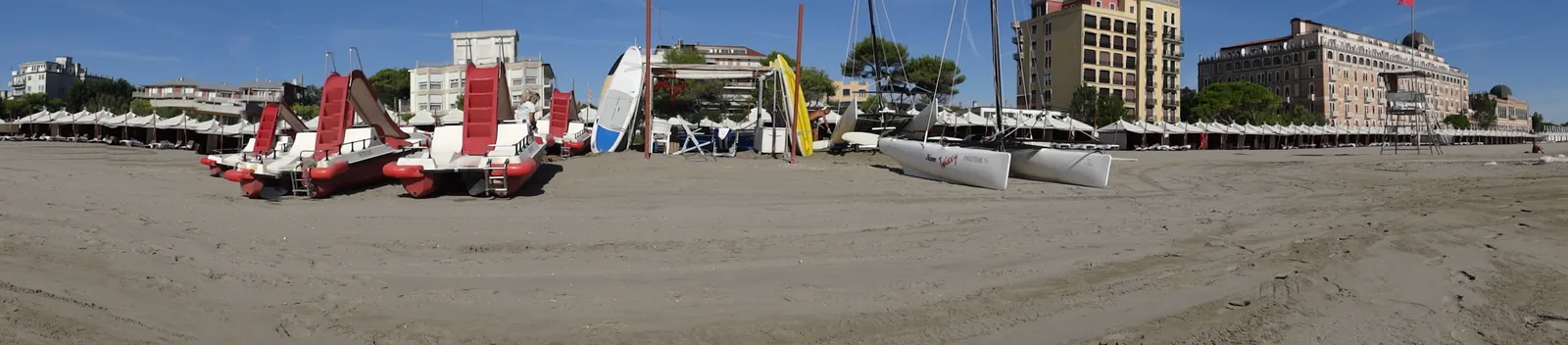
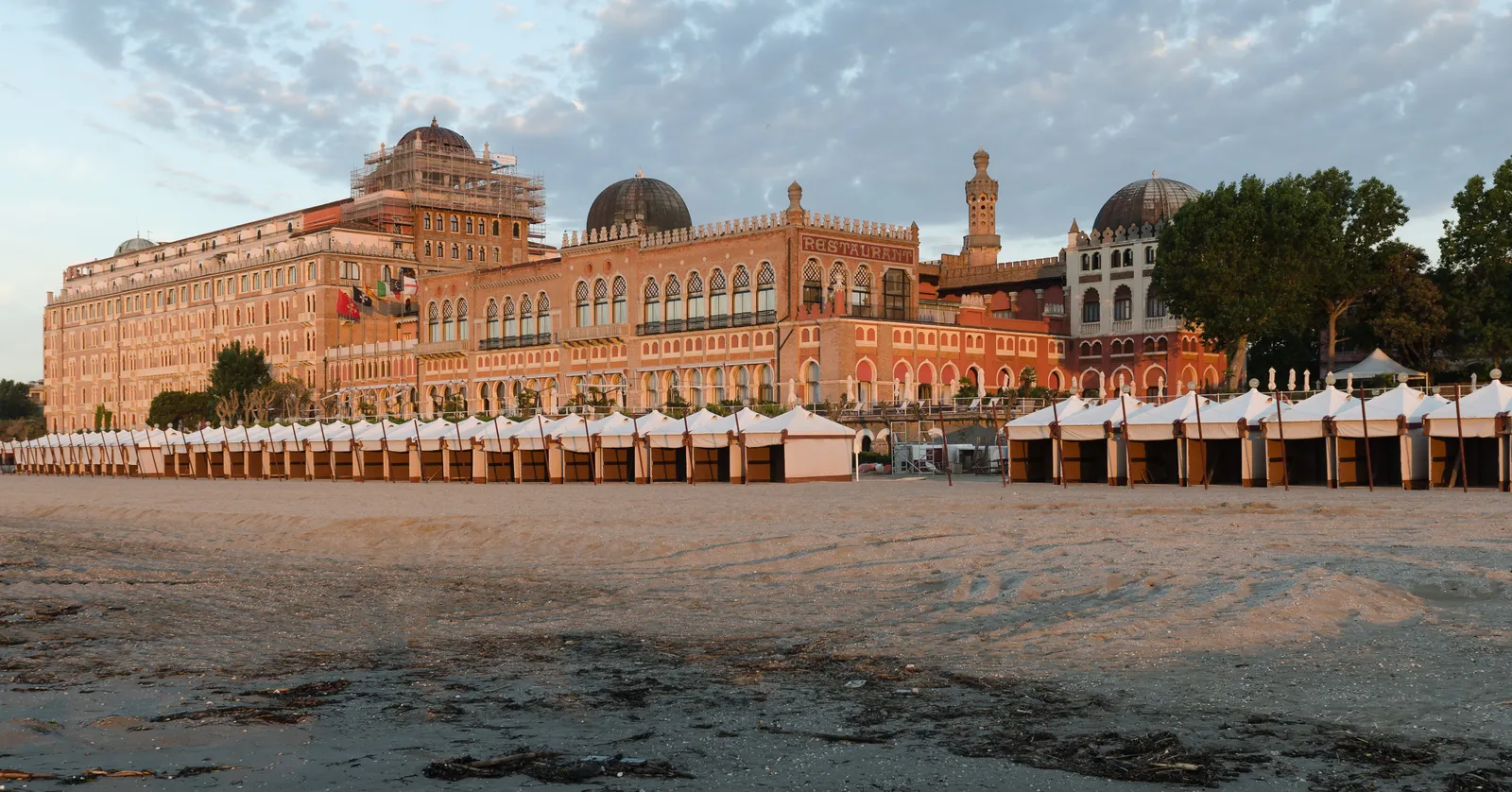
The sand is soft and pale and the shelf is shallow a long way out, which is why the Venetians brought their children here for a century. What you also see, in both directions, are the ranks of white wooden cabins: little changing huts lined up in rows, hired by the day or the season, belonging to the hotels and the private bathing clubs behind them. The grandest of those is the Hotel Excelsior, a Moorish-revival pile of domes and arcades put up in 1908 that looks like it was shipped in from somewhere considerably further east.
None of that stops you walking. The wet sand below the tide line is public everywhere in Italy, so the whole shoreline is open even where the dry sand behind it is not.
The Palazzo del Cinema, where the film festival has run since 1932
Ten minutes south along the seafront, past the Excelsior, a long white building with a rank of flagpoles along its roof stands behind an empty paved forecourt.
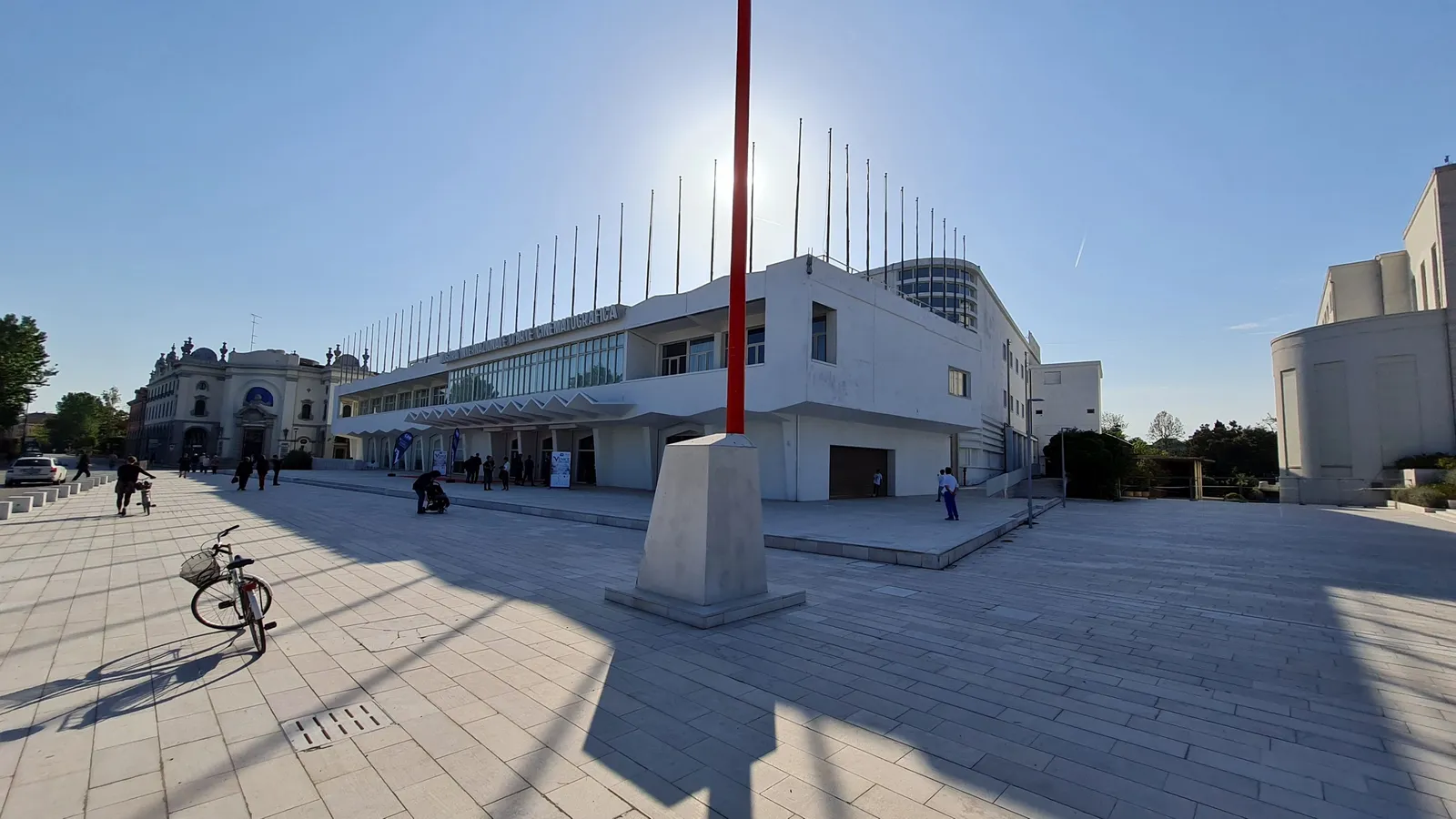
The first Venice film festival was held on 6 August 1932 on the terrace of the Hotel Excelsior, with the audience in deckchairs. It worked well enough that the city built a permanent venue for it, and Luigi Quagliata’s Palazzo del Cinema opened in 1937, all clean lines and flat planes in the modernist manner of the moment. The festival still runs here every late summer and the red carpet is laid on this forecourt.
For roughly fifty weeks of the year, though, there is nothing to see but the building, which is either a disappointment or exactly what you want depending on how you feel about crowds. If your stop happens to land during the festival, the Lido is the busiest it gets all year and the boats back are packed.
Malamocco, which was the capital before Venice was
With five hours or more, Malamocco is twenty minutes south by island bus: a walled village of canals, low houses and a leaning bell tower that most people who visit Venice never hear of.
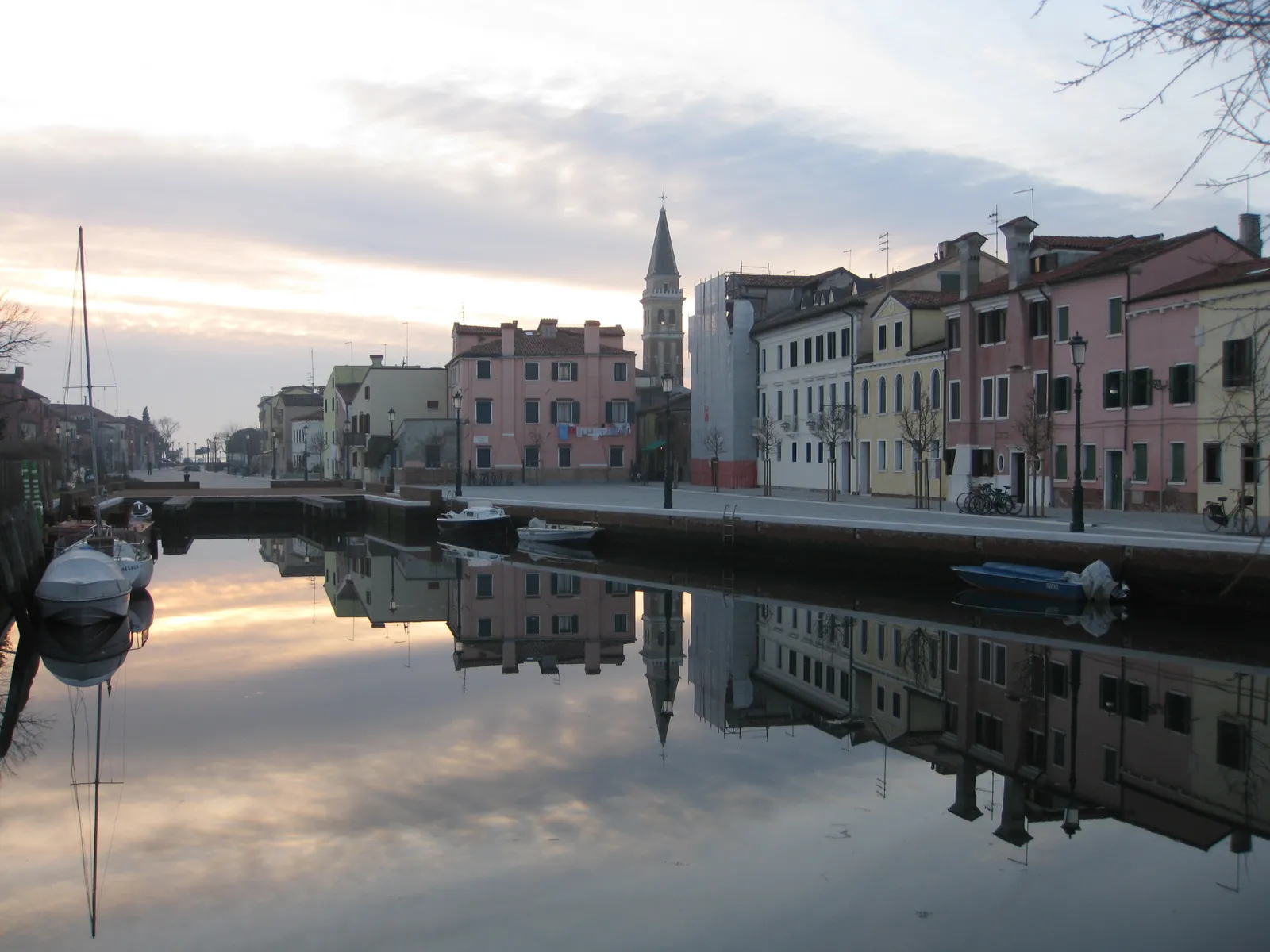
Malamocco was the seat of the Venetian dukes from the eighth century, before the lagoon’s government picked up and moved to the Rialto in 810 and then to San Marco a decade after that. The original settlement was destroyed and the village standing here now is medieval, rebuilt inland from the sea: a small square with a fifteenth-century Palazzo del Podestà, a couple of canals with bridges over them, and boats tied up along the quay. It is quiet in the way the rest of the lagoon has not been for a very long time.
The ACTV bus that gets you there is covered by the same ticket as the water bus over, and if you are going to be on boats and island buses all day a timed transport pass can be bought in advance through a tours and activities platform rather than queued for at a pontoon.
Every leg of the day back to the airport is a boat then a bus
There is no direct link from the Lido to Marco Polo on public transport. Getting back means a water bus across to San Zaccaria or Piazzale Roma, then the airport bus, which is why this trip wants a longer stop than the walk across the historic centre does. Allow around two hours from the Lido’s pontoon to the gate, and more on a Saturday in August.
That is also the argument for leaving the suitcase on the main island before you come over, near Piazzale Roma or the station rather than carrying it out here: the Lido itself is the easiest ground in Venice to wheel a bag across, and every part of the journey to it is the hardest.
Frequently asked questions
How long does the Lido take out of a layover?
About an hour of it is travel. Water bus lines 1, 5.1, 5.2 and 6 all run to the Lido's Santa Maria Elisabetta pontoon, and from San Zaccaria beside St Mark's the crossing takes 20 to 30 minutes depending on the line. Add the same coming back and you have spent an hour on the water before counting anything you did there. Four hours in the city is the sensible floor for making the trip; under that, staying in the historic centre gets you more.
Do you have to pay the city access fee to visit the Lido?
No. Venice's contributo di accesso applies to the historic centre only, and the Lido, along with Murano, Burano and the other lagoon islands, is explicitly outside the charged area. It is worth knowing on a spring or early-summer weekend, when the charge is running in the centre between 08:30 and 16:00 and a day visitor without a booking would otherwise owe 10 euros to walk around St Mark's.
Is the beach free?
Part of it is. The stretch straight out at the end of the Gran Viale is public and costs nothing to walk onto, with showers and changing huts you pay for separately. The long ranks of white wooden cabins further along belong to the hotels and the private bathing clubs, and those are hired by the day or the season. You can walk the waterline the whole way regardless: the sand below the tide line is public everywhere in Italy.
Can you get around the Lido without a boat?
Yes, and that is the point of it. The Lido is the one part of Venice with tarmac: there are cars, taxis, scooters and an ACTV bus network running the length of the island, lines A, B and C, covered by the same tickets as the water buses. Malamocco is about 20 minutes south by bus, and the island runs roughly 12 kilometres end to end, so the bus is doing real work rather than saving you a short walk.