Venice Layover on Murano, the Glass Island
Part of the full Venice Layover: The Grand Canal From VCE
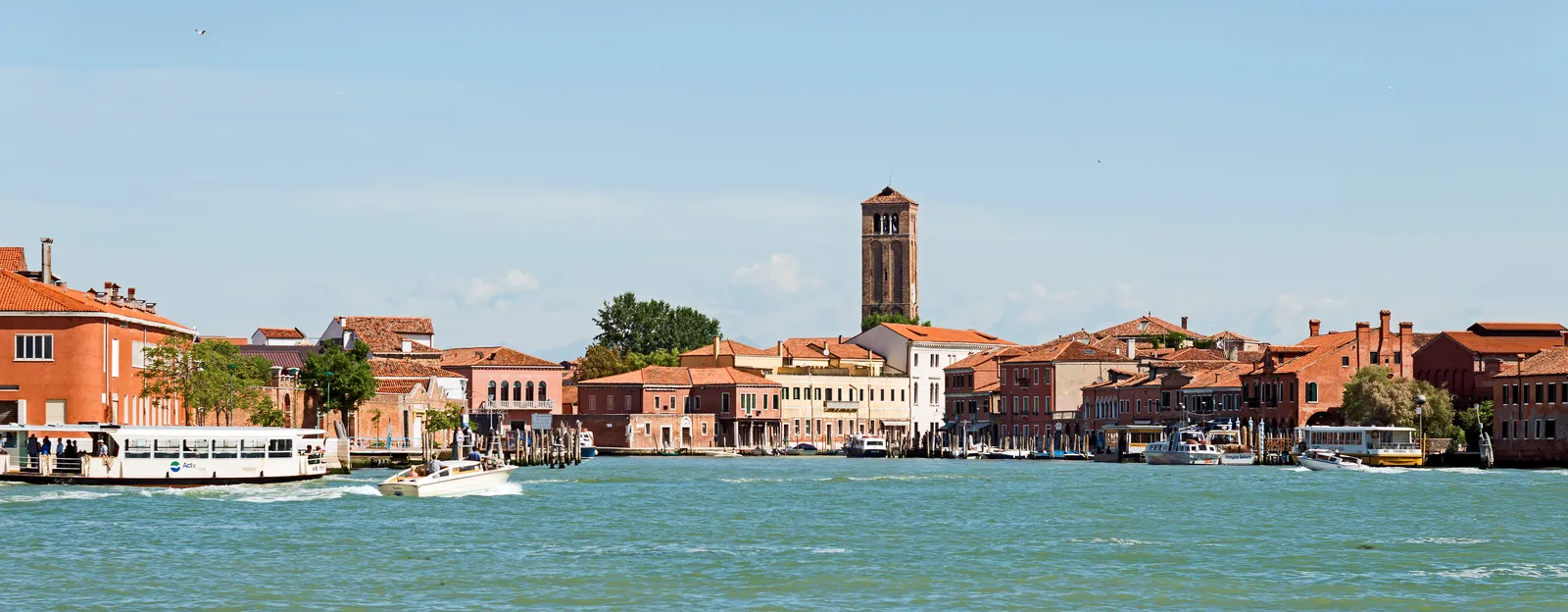
Murano, the glass island in Venice’s northern lagoon, is about ten minutes by public water bus from the Fondamente Nove quay and a single direct line from Piazzale Roma, with working furnaces along its canals, a 15-euro glass museum in a Gothic palace, and a church rebuilt by 1141 that keeps a set of huge bones hanging behind its altar.
Fondamente Nove, Venice’s northern quay facing the lagoon
The lagoon boats do not leave from the Grand Canal. They leave from the Fondamente Nove, a long straight quay on the northern edge of the city built out over reclaimed marsh in the 1580s, where the buildings stop and the open water starts.
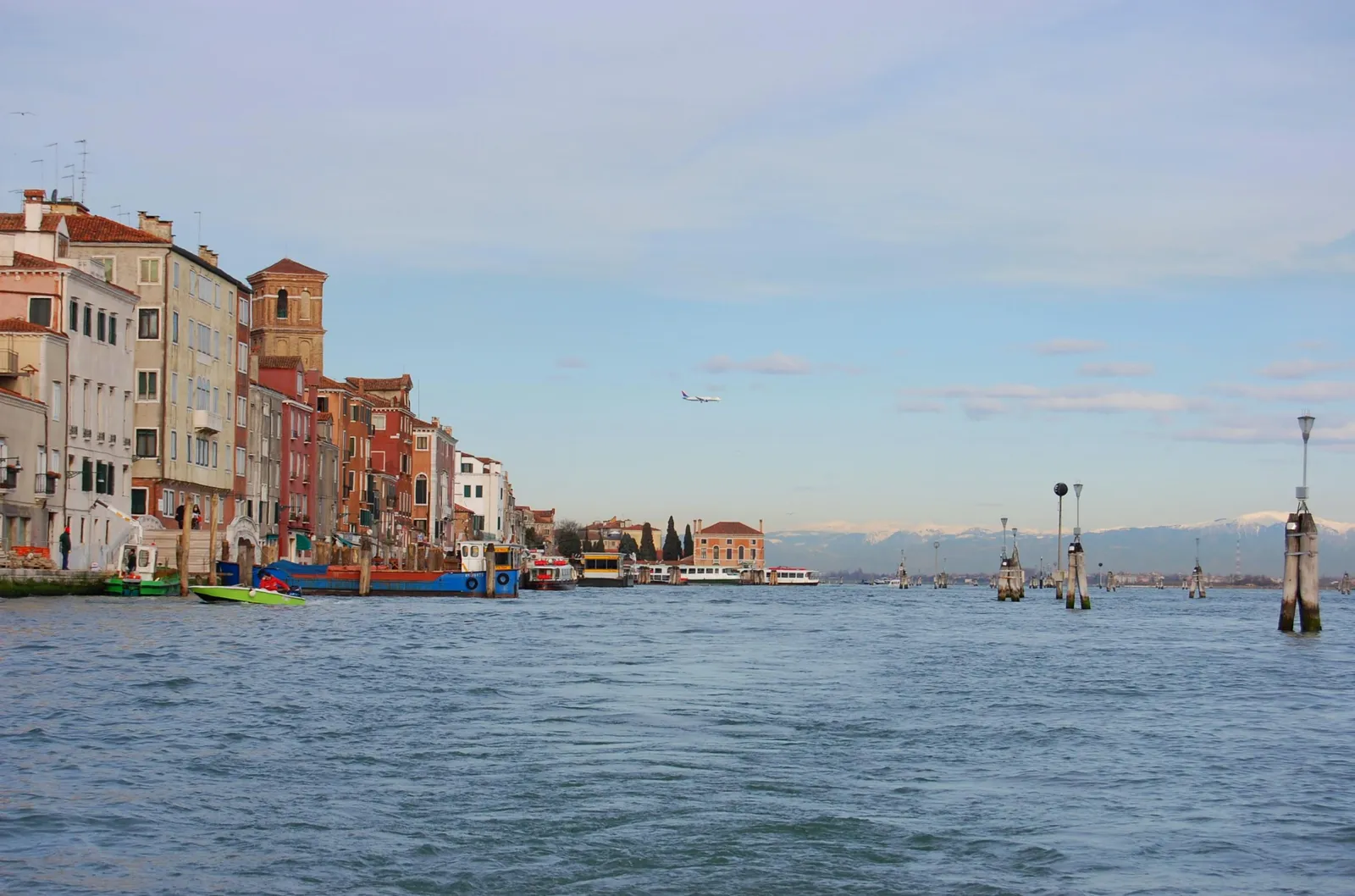
Lines 4.1, 4.2, 12 and 13 all go from here, and Murano’s first stop, Colonna, is about ten minutes across on the standard 9.50-euro ticket. It is a quiet stretch by Venetian standards, mostly locals waiting for boats, and on a clear cold day you can see the Dolomites lined up along the horizon behind Murano, which is where the timber that built this city came from.
Getting to this quay is the part that costs time. It is a twenty-five minute walk north from St Mark’s through Castello, or a slow ride round on line 4.1. The alternative is to skip the city entirely: line 3 runs direct from Piazzale Roma via the station to Murano every half hour, which is worth knowing if you have come straight off the airport bus.
Stravinsky and Diaghilev are buried on the island of San Michele
Lines 4.1 and 4.2 call at a walled island halfway across, and almost nobody gets off. It is worth doing on the way out rather than the way back, when you will be watching the clock.
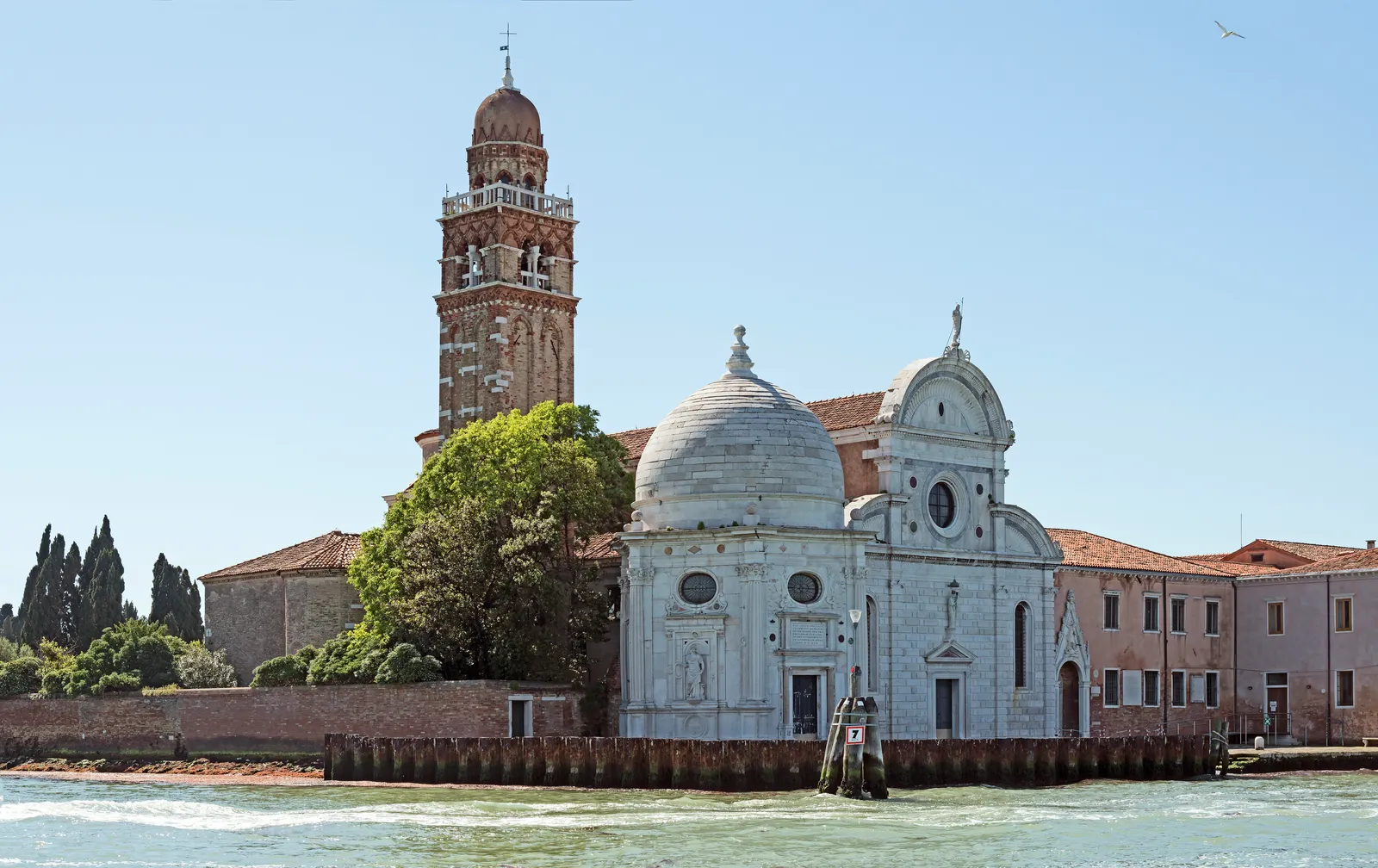
San Michele has been the city’s cemetery since Napoleon’s administration banned burial in the parish churchyards, and the whole island is now walled gardens of graves under cypresses, laid out in numbered sections. The white church at the landing stage is Mauro Codussi’s San Michele in Isola, finished in 1477 and the first Renaissance building in Venice. Igor Stravinsky and Sergei Diaghilev are buried in the Orthodox section, Ezra Pound in the Protestant one, and the gates are open from half past seven until six in summer, four in winter. There is nothing to pay.
The furnaces Venice ordered onto Murano in 1291
Venice was a city of wooden buildings with a glass industry running furnaces at more than a thousand degrees inside it, and in 1291 the Republic did the obvious thing and moved the entire trade onto an island a kilometre offshore.
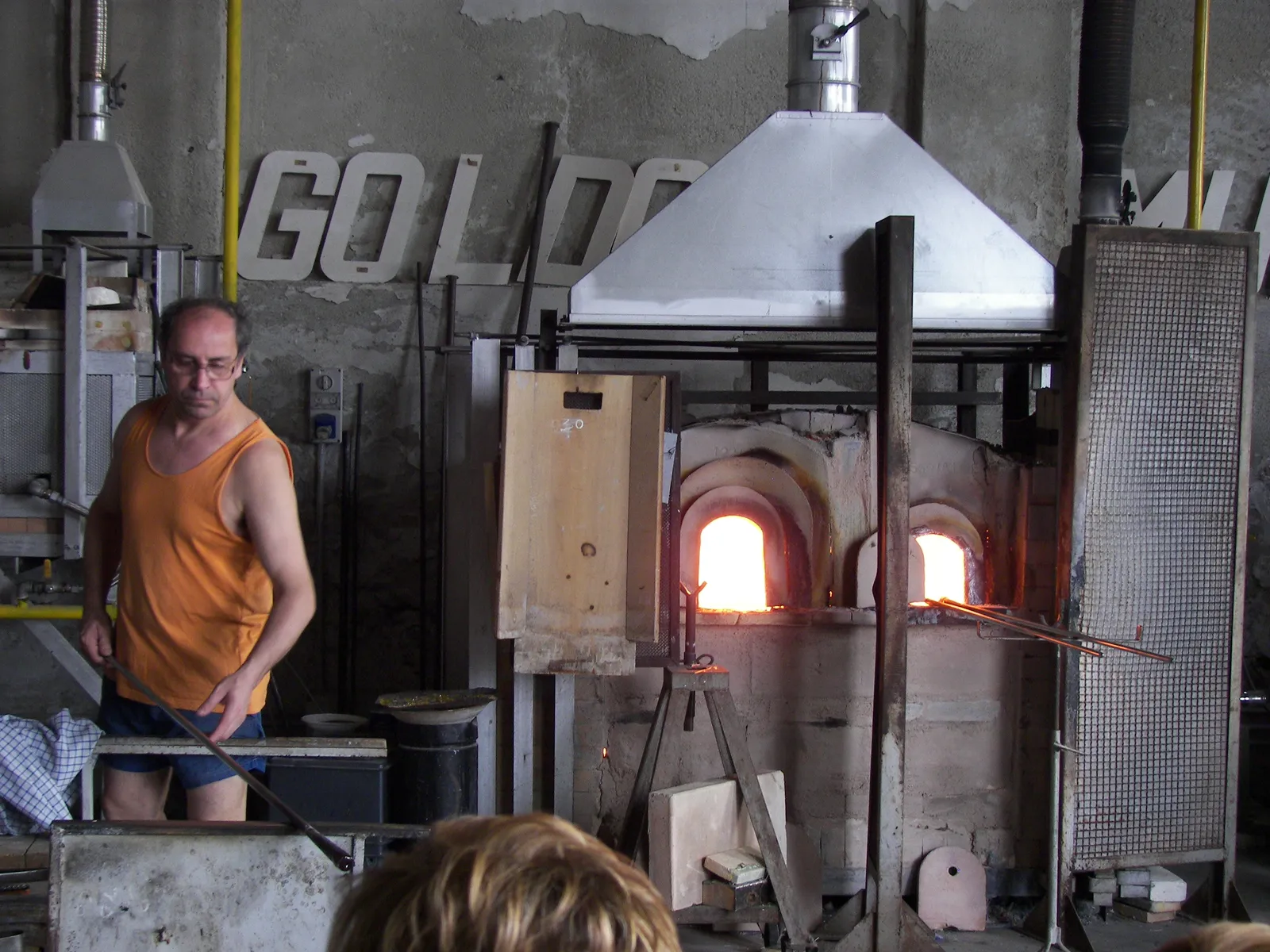
The glassmakers were compensated with unusual privileges, and by most accounts strongly discouraged from taking the technique abroad, which is how a fire-safety measure turned into seven centuries of one island holding a near-monopoly on mirrors, chandeliers and cristallo, the clear colourless glass Murano worked out how to make in the fifteenth century. The furnaces are still here, and several of the working glassworks along the canals run demonstrations through the day: a lump of orange glass on the end of a blowpipe, forty seconds of turning and pulling, and a horse. Most are attached to a shop and free to walk into, though you should expect the shop at the end. If you would rather have the boat, the furnace and a guide arranged as one thing, a half-day glassworks tour can be booked ahead through a tours and activities platform, which also solves the crossing.
A word on the shops, since they are most of what you will walk past: a lot of the glass sold on Murano was not made on Murano. The genuine workshops mark their pieces, and the Vetro Artistico Murano trademark sticker is the thing to look for if you are buying rather than browsing.
The glass museum inside Murano’s Palazzo Giustinian
Halfway along the island’s own Grand Canal, a long pale Gothic palace with a carved coat of arms over the balcony was the bishop’s residence until the diocese was suppressed in 1805.
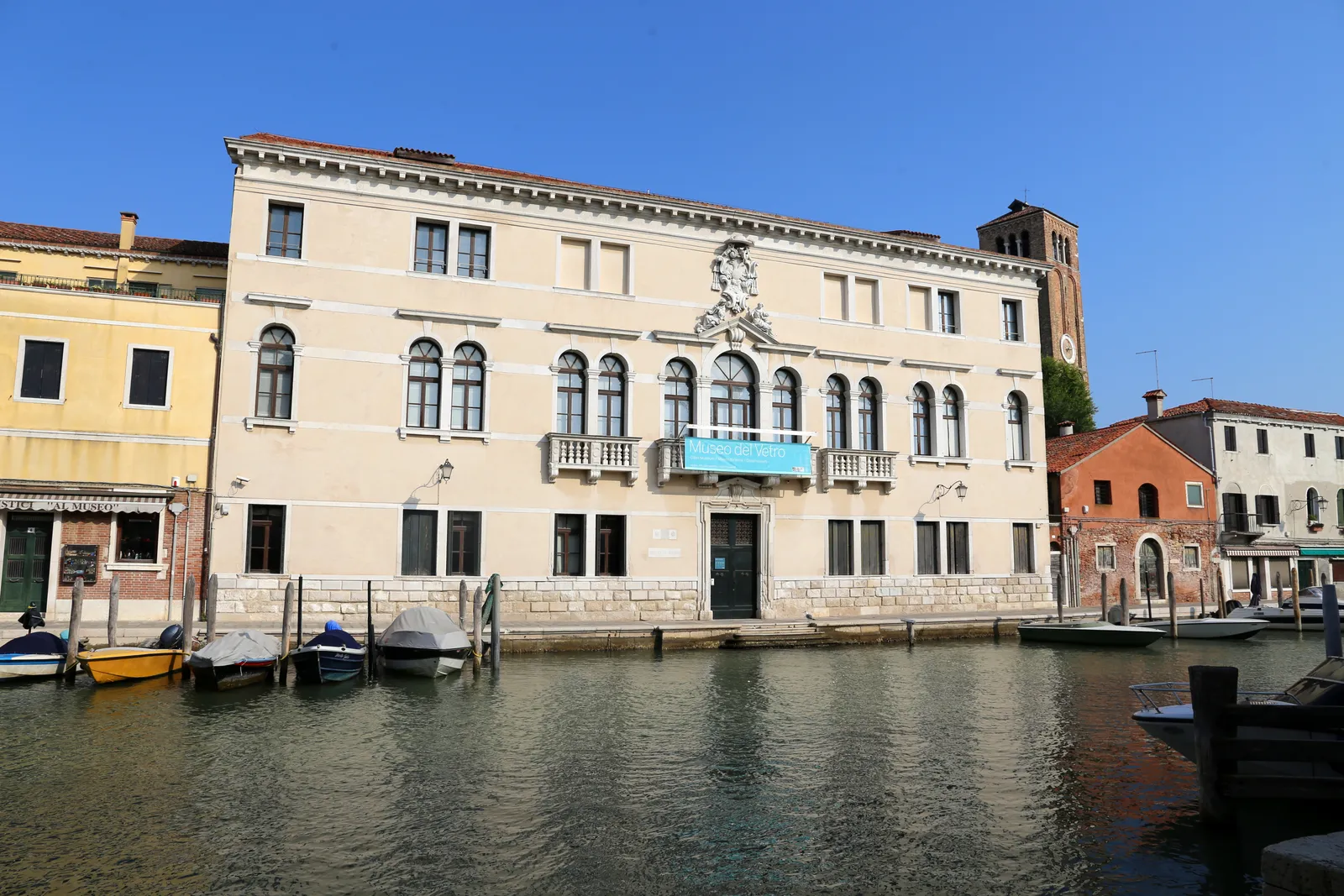
It has held the Museo del Vetro, the glass museum, since 1861, and what is inside is the whole run of the craft in one building: Roman glass dug out of the lagoon, Renaissance goblets thin enough to look like they would not survive being picked up, eighteenth-century chandeliers, and the twentieth-century Venini and Barovier pieces that dragged the island out of imitating its own past. The one everybody stops at is the Coppa Barovier, a dark blue wedding cup enamelled and gilded around 1470 with the bride and groom’s portraits in medallions and a procession riding to a fountain.
Entry is 15 euros and it opens every day: ten until six from April to the end of October, ten until five the rest of the year, with last admission an hour before the doors shut. Allow an hour, which on this island is about the right proportion of a stop.
The bones hanging behind the altar at Santi Maria e Donato
At the eastern end of the island is the oldest thing standing on Murano and the reason to keep walking rather than turn back for the boat.
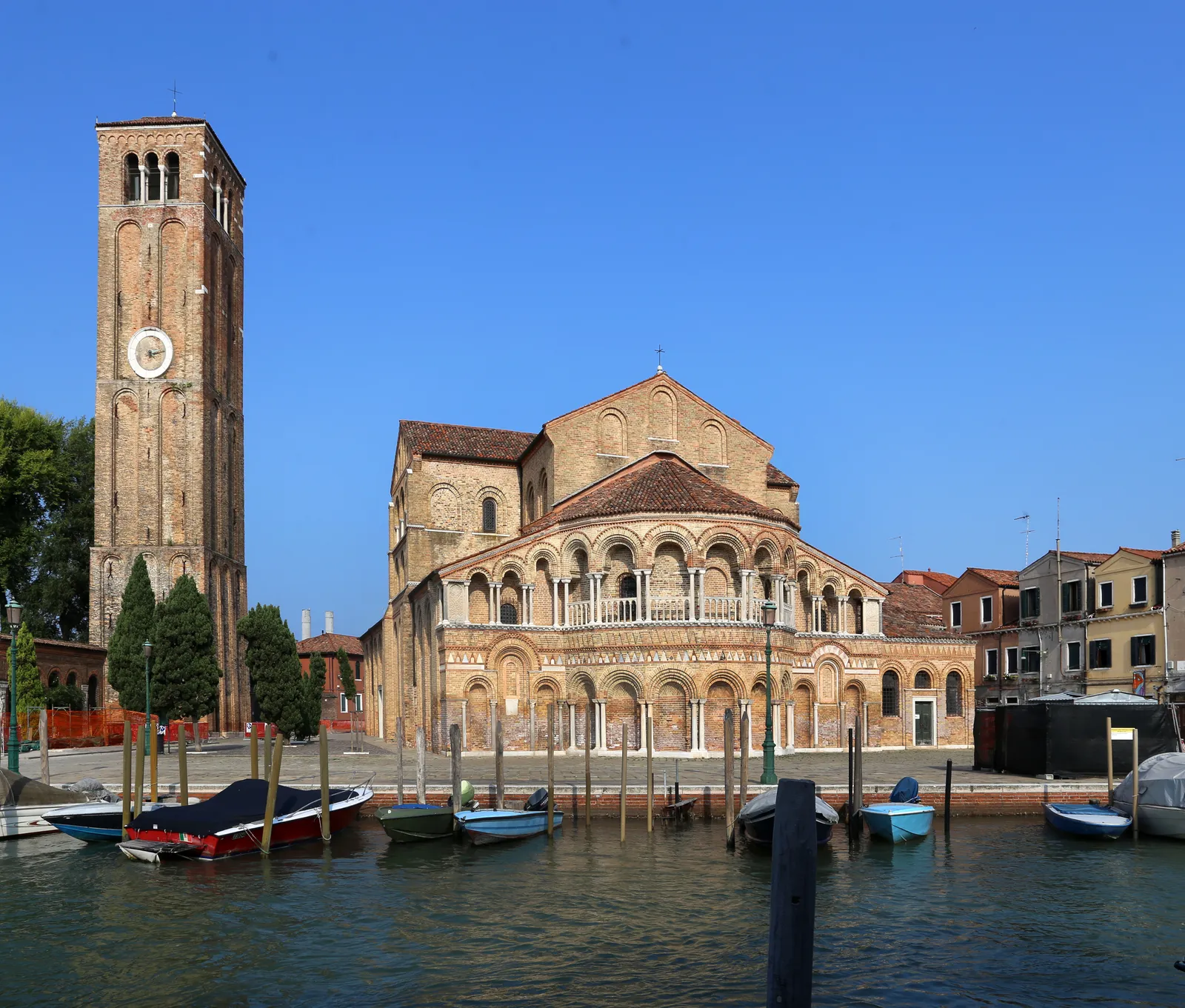
Santi Maria e Donato was rebuilt into its present shape by 1141, and the side you arrive at is the apse: two tiers of brick arcading on slender marble columns, wrapped round the back of the church like a Byzantine screen, which is a far better piece of building than the plain front. Inside, the floor is a mosaic of marble and coloured glass laid in 1141 and never taken up, peacocks drinking from a fountain, two cockerels carrying a fox slung from a pole, griffins, knotwork. The apse above it holds a gold-ground mosaic of the Virgin standing alone.
Then there are the bones. Hanging on the wall behind the high altar is a set of enormous curved bones, brought back with the relics of Saint Donatus of Euroea in 1125 and displayed ever since as the remains of the dragon he was said to have killed. They are more likely a prehistoric mammal, and nobody here is in a hurry to settle it. The church is free, open through the day with a break, and afternoons only on Sundays.
Two things worth knowing before you start back: the water bus decks fill on the return crossing in the late afternoon, and Murano’s boats bunch rather than run evenly, so a suitcase on this trip is deck space somebody else is standing in for the better part of two hours.
Line 3 saves an hour on the way back to the gate
Coming back, the honest arithmetic is that this island costs about ninety minutes of travel out of whatever you have. Allow two and a half hours from Murano to the gate at Marco Polo if you go back the way you came through Fondamente Nove, or closer to two if you take line 3 straight to Piazzale Roma and pick up the airport bus where it terminates.
Frequently asked questions
Can you reach Murano without crossing Venice first?
Yes, and it is the fastest way to do this on a tight schedule. Water bus line 3 runs direct from Piazzale Roma, calling only at Ferrovia beside the railway station before it reaches Murano, and then works down all five of the island's stops. It goes every half hour, with the last departure from Piazzale Roma in the early evening, and it takes around twenty minutes. That matters because Piazzale Roma is where the airport buses arrive, so you can be on Murano without ever walking through the historic centre.
Is Murano worth doing with only three hours in Venice?
No. Getting to Fondamente Nove from St Mark's and back is what eats the time rather than the crossing itself, and the round trip runs to about ninety minutes before you have looked at anything. Under four or five hours, the Grand Canal and St Mark's route gives you more for the same time. The exception is a stop that starts and ends at Piazzale Roma, where line 3 removes the whole city-crossing problem.
Can you add Burano to the same trip?
Not on a layover. Burano is another forty minutes beyond Murano on line 12 from Fondamente Nove, so the two islands together are a three-hour round trip of boats before any looking around, and line 12 runs less often than the Murano boats do. If the coloured houses are the thing you actually want, Burano needs its own day rather than a slot between flights.
Does Murano work with children?
Better than the historic centre does, for two reasons. The furnace demonstrations are genuinely watchable, a lump of orange glass becoming a horse in about ninety seconds, and there is no queueing or ticket barrier involved in most of them. The island is also flat and quiet: the canals have railings, the lanes carry no crowds worth speaking of outside the middle of the day, and the boat ride there counts as part of the outing rather than a chore to be endured.