Naples Layover Guide: The Old City From NAP
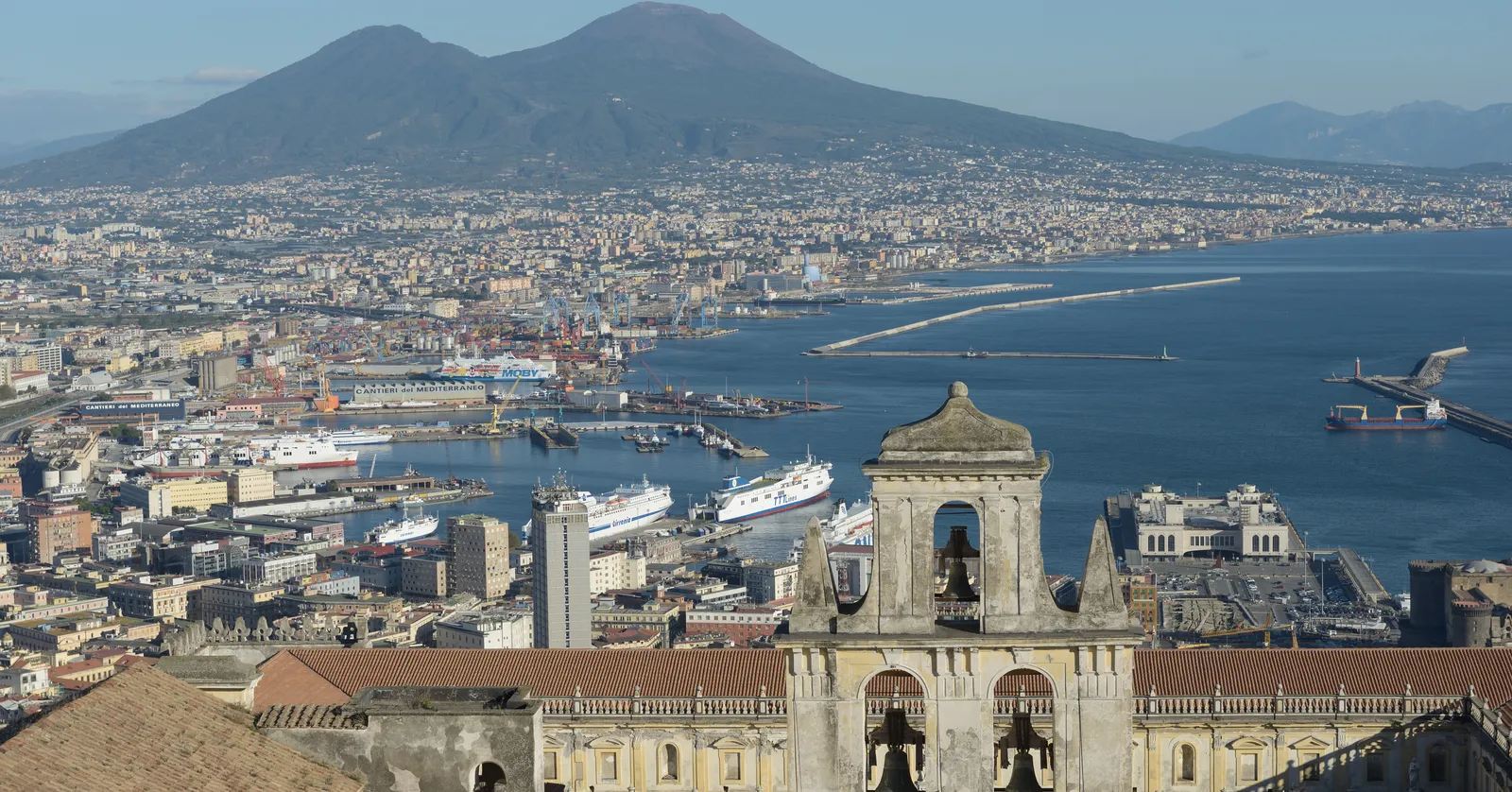
Naples’ old city is a fifteen-minute walk from end to end: a Greek aqueduct dug forty metres underground, a street of nativity-figure workshops, and a cathedral free to walk into.
The Greek aqueduct tunnels under Piazza San Gaetano
There is a second city under the first one, and it was dug rather than built. Greek settlers quarried the soft yellow tuff out from under their own streets to raise the buildings above, the Romans turned the resulting cavities into an aqueduct that supplied Naples for centuries, and in 1940 the same cisterns were fitted with steps and lights and filled with families sheltering from the bombing. Names and dates are still scratched into the walls where people waited it out.
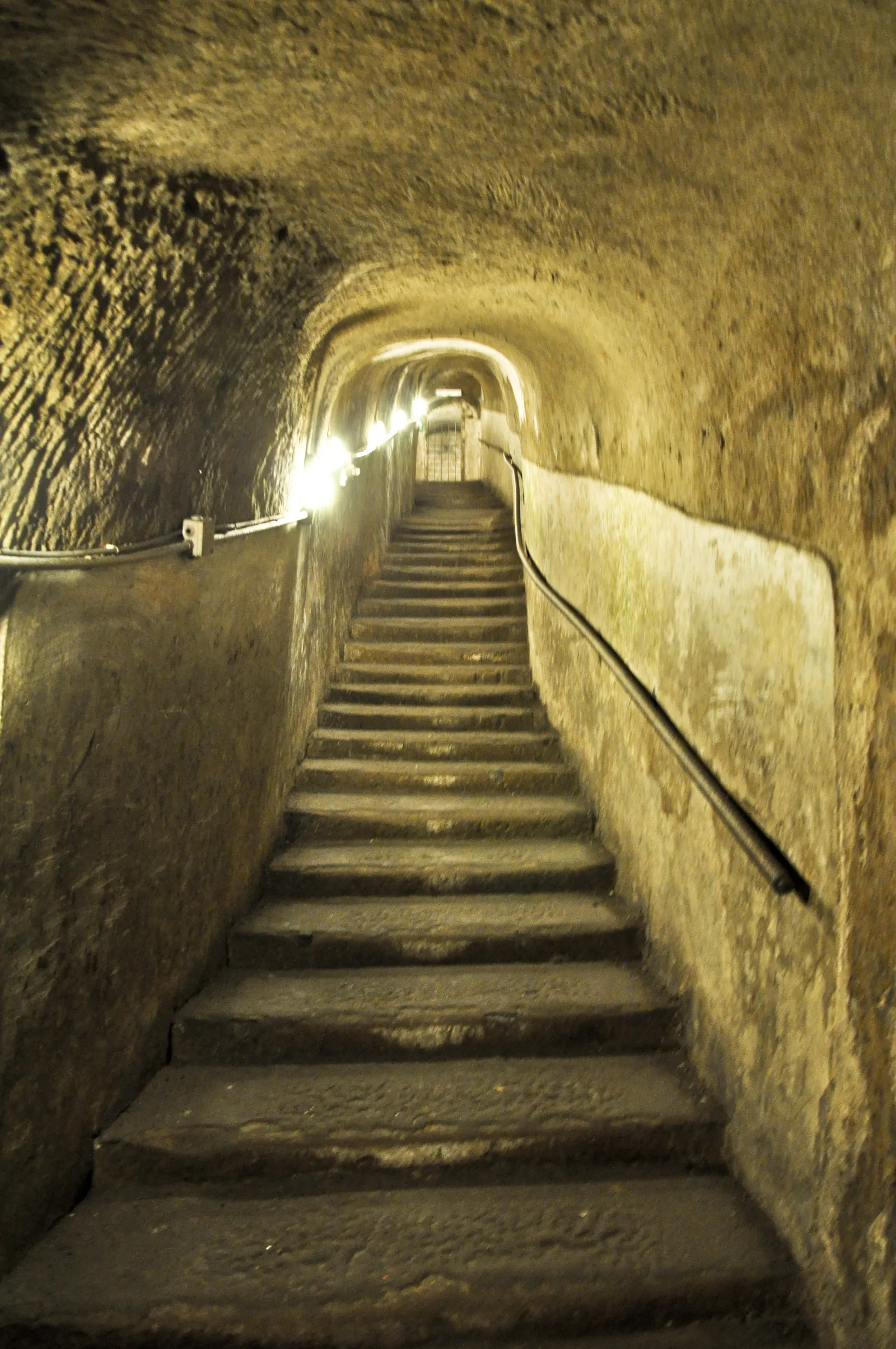
The way in is a doorway at Piazza San Gaetano 68, next to the church of San Paolo Maggiore, halfway along Via dei Tribunali. You can only go down with a guide: visits leave on the hour from 10:00 to 18:00 in Italian and English, take about an hour, and reach roughly 40 metres below the street. Part of the route is a candle-lit passage barely half a metre wide, and it is optional, with a ten-minute wait above it for anyone who would rather not. Small groups do not need to reserve, but the queue at the desk can run long on a summer afternoon, so if the schedule is tight a timed entry can be booked ahead through a tours and activities platform.
The descent is 121 steps and the climb out is the same 121, with no lift at either end, which is reason enough to have dropped the suitcase before you get here.
The nativity workshops on Via San Gregorio Armeno
Via San Gregorio Armeno is a narrow lane down to Spaccanapoli, the lower of the two straight streets the Greeks laid across this quarter, and both sides of it are workshops making figures for Christmas cribs. This is a working trade, not a seasonal market: the shops are open through the year, and the craftsmen are usually at the bench in the back of the shop rather than behind the till.
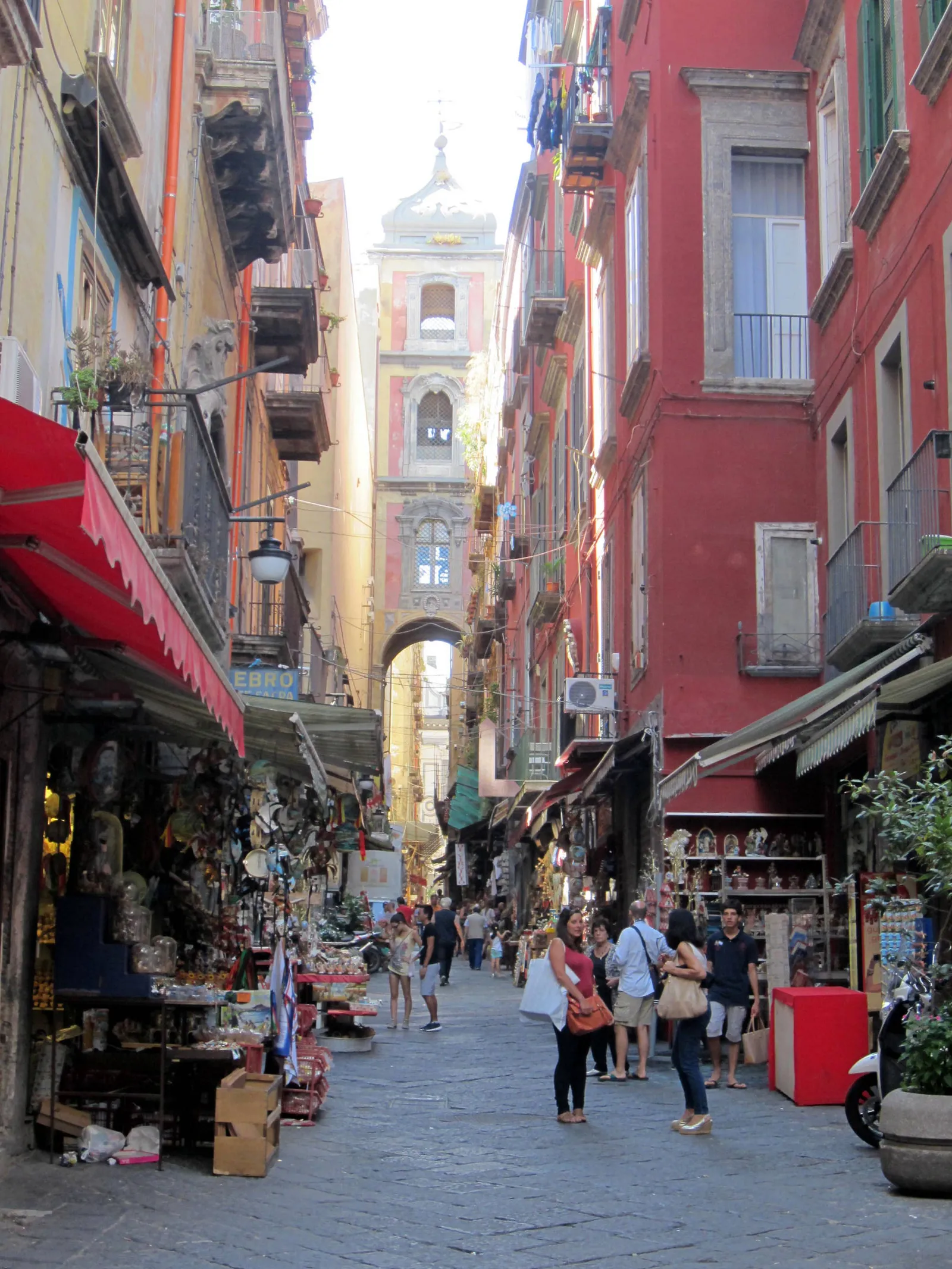
What is on the shelves goes well past shepherds and kings. Alongside the terracotta, there are miniature butchers’ counters with strings of sausages the size of a grain of rice, and, on nearly every stall, satirical figurines of whoever is in the news that year: footballers, singers, prime ministers. The bell tower of the convent of San Gregorio Armeno arches straight over the street at the top end, which is the view everybody photographs. Come in the first half of December and you will barely move; come in April and the same street is quiet enough to watch someone paint a face.
San Gennaro’s blood relic in Naples Cathedral
Via Duomo runs through the heart of the old city, and the cathedral on it is free and open from 8:00 to 19:30 every day. The nave is Angevin gothic underneath and heavily gilded on top, a flat coffered ceiling of gold and painted panels carried on columns salvaged from older buildings on the same site.
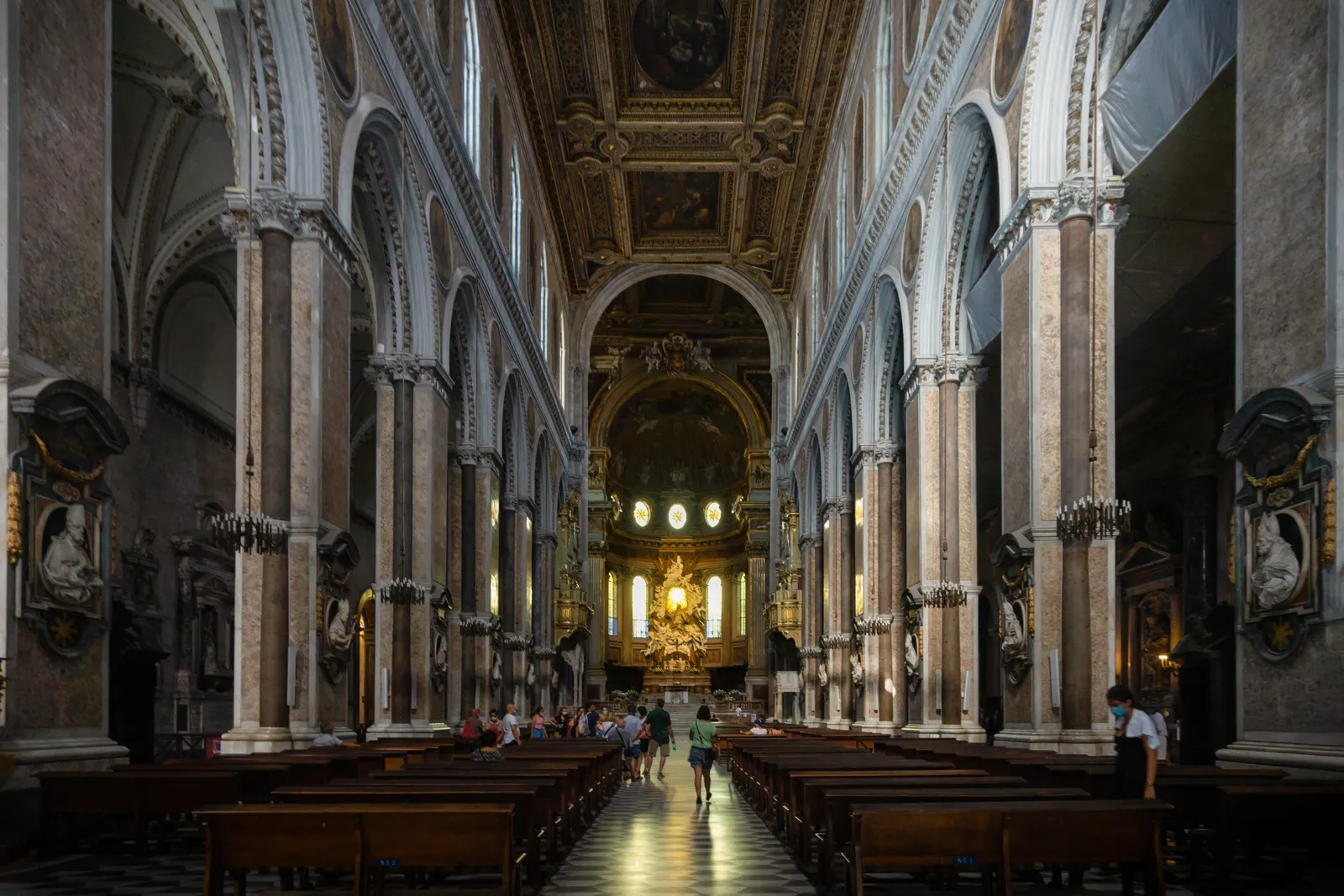
The chapel off the right aisle is the one Neapolitans come for. It holds two sealed glass ampoules of the dried blood of San Gennaro, the city’s patron, and they are brought out three times a year: on 19 September, his feast day, on 16 December, and on the Saturday before the first Sunday in May. On those days the cathedral fills with people waiting to hear whether the blood has turned liquid. On every other day of the year the relic is locked away and what you get instead is the chapel itself, frescoed floor to dome in the 1600s.
Through the adjoining basilica of Santa Restituta, a couple of euros gets you into the Baptistery of San Giovanni in Fonte, built in the late 4th century and the oldest baptistery still standing anywhere in the West. Its dome is lined with mosaic on a gold ground: a Chi-Rho ringed by stars at the top, the wedding at Cana and the woman at the well below.
Two minutes further along Via dei Tribunali, at number 253, the octagonal church of Pio Monte della Misericordia still has the painting it commissioned in 1607. Caravaggio’s Seven Works of Mercy hangs over the altar it was painted for, which is not something you can say of much of his work, and the room is small enough that you stand about five metres from it. Entry is 10 euros, and it is open 10:00 to 18:00 Monday to Saturday and 9:00 to 14:30 on Sunday. It rarely has a queue.
The Farnese marbles at the archaeological museum
With closer to five hours, the National Archaeological Museum, ten minutes uphill from the old city, holds what the Bourbons dug out of Pompeii and Herculaneum plus the Farnese collection of ancient sculpture inherited from Rome. Entry is 20 euros, it opens 9:00 to 19:30 with last admission at 18:30, and it closes on Tuesdays. Tickets are sold at the door, and entry can also be booked ahead if you would rather not find out how long the line is.
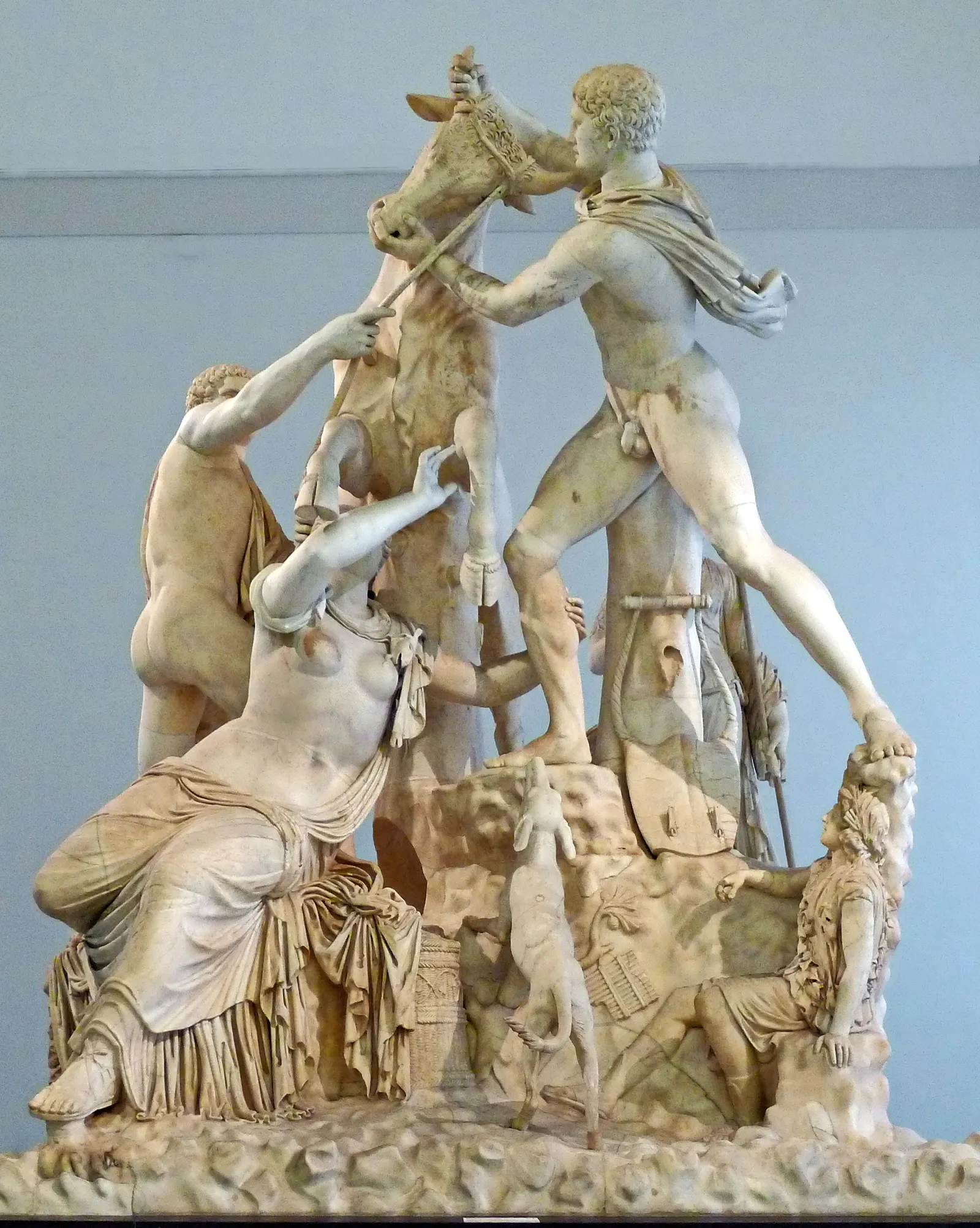
The Farnese Bull is the piece to walk in for. Four figures, a bull and a rock face in one marble group, unearthed at the Baths of Caracalla in Rome in the 1540s, it is the largest single sculpture recovered from antiquity, and standing under it does more to explain Roman scale than any label in the building. The Pompeii rooms upstairs are the other half of the case for coming: household frescoes and floor mosaics lifted out of the buried towns and mounted where you can actually see them.
If sitting down appeals more than another museum, the alternative with the same time budget is the funicular up to Vomero and the terrace at the Certosa di San Martino, which looks back over everything you have just walked through.
A pizzeria queue can eat an hour of the afternoon
The two most famous counters, Sorbillo on Via dei Tribunali and Da Michele near the station, both run on a waiting list, and at peak times an hour is normal and two is possible. Neither takes bookings. If your flight sets the clock, the same city sells pizza a portafoglio, folded into quarters and handed over in paper for a few euros, at counters along the same streets, and the dough is the same dough.
Then collect the bag and go back the way you came. The Alibus leaves Piazza Garibaldi every 15 to 30 minutes for the 20-minute ride back to Capodichino, 5 euros, and about two hours before departure covers the wait, the ride, check-in and security comfortably. Travelers who arrived on the high-speed line from Rome with less time than they hoped can stay closer in, around Napoli Centrale. Either way, the old city is one long day of stairs, crowds and cobbles, and it is a great deal better without a suitcase behind you.
Frequently asked questions
What should I do during a layover in Naples?
With four to five hours, the old city is a fifteen-minute walk in from Piazza Garibaldi: a guided descent into the tunnels 40 metres under Piazza San Gaetano, the nativity-figure workshops along Via San Gregorio Armeno, and Naples Cathedral, free to walk into and holding both the chapel of San Gennaro's blood and a 4th-century baptistery. Most of this route costs nothing beyond the underground tour. The one thing worth checking ahead is the day of the week: the National Archaeological Museum is closed Tuesdays, and Pio Monte della Misericordia closes early on Sundays.
What time does Capodichino stop operating at night?
The airport is closed between 22:30 and 04:00 under a restriction imposed by ENAC, Italy's civil aviation authority, with delayed flights the only real exception. Two things follow from that on a layover. The last scheduled departures of the day go before half past ten rather than running into the small hours, and you cannot sit out the night in the terminal if yours slips to the morning.
Is Naples airport open in November 2026?
Not for the whole month. Capodichino has a single runway and it is being resurfaced in November 2026, which means a full shutdown of somewhere around three weeks inside that month, with airlines rebooking passengers through Salerno or Rome. The exact days are fixed by the civil aviation authority rather than the airport, so check directly with your airline before planning a connection here in November 2026. No other month is affected, and nothing about the shuttle or the walk below changes.
How much of this itinerary is free?
All of the walking, and the cathedral. Naples Cathedral is free and open through the day, and Via San Gregorio Armeno and the two straight ancient streets it links cost nothing to wander. The paid parts are the underground tunnels, which can only be seen on a guided visit, the 4th-century baptistery reached through Santa Restituta inside the cathedral, which is a couple of euros, and the National Archaeological Museum at 20 euros. Caravaggio's Seven Works of Mercy at Pio Monte della Misericordia is 10.
Is the old city manageable with a stroller?
The streets are, mostly. Via dei Tribunali and Via San Gregorio Armeno are flat, paved and step-free, though they are narrow, busy, and shared with scooters, so expect to move at the crowd's pace rather than your own. The underground is the exception and a firm one: the route is 121 steps down with no lift, it is not passable with a wheelchair or a walker, and strollers have to be left at the entrance on Piazza San Gaetano rather than taken below.
Which day of the week is worst for this itinerary?
Tuesday, if the museum matters to you: the National Archaeological Museum closes all day, and it is the one stop here with no equivalent nearby. Sunday is the other one to watch, because the opening hours shorten rather than the doors staying shut. Pio Monte della Misericordia closes at 14:30 on Sundays instead of 18:00, so a Sunday afternoon arrival misses the Caravaggio. The cathedral and the underground keep the same hours all week.