Molo Beverello Ferry Port, Naples
Part of the full Naples Layover Guide: The Old City From NAP
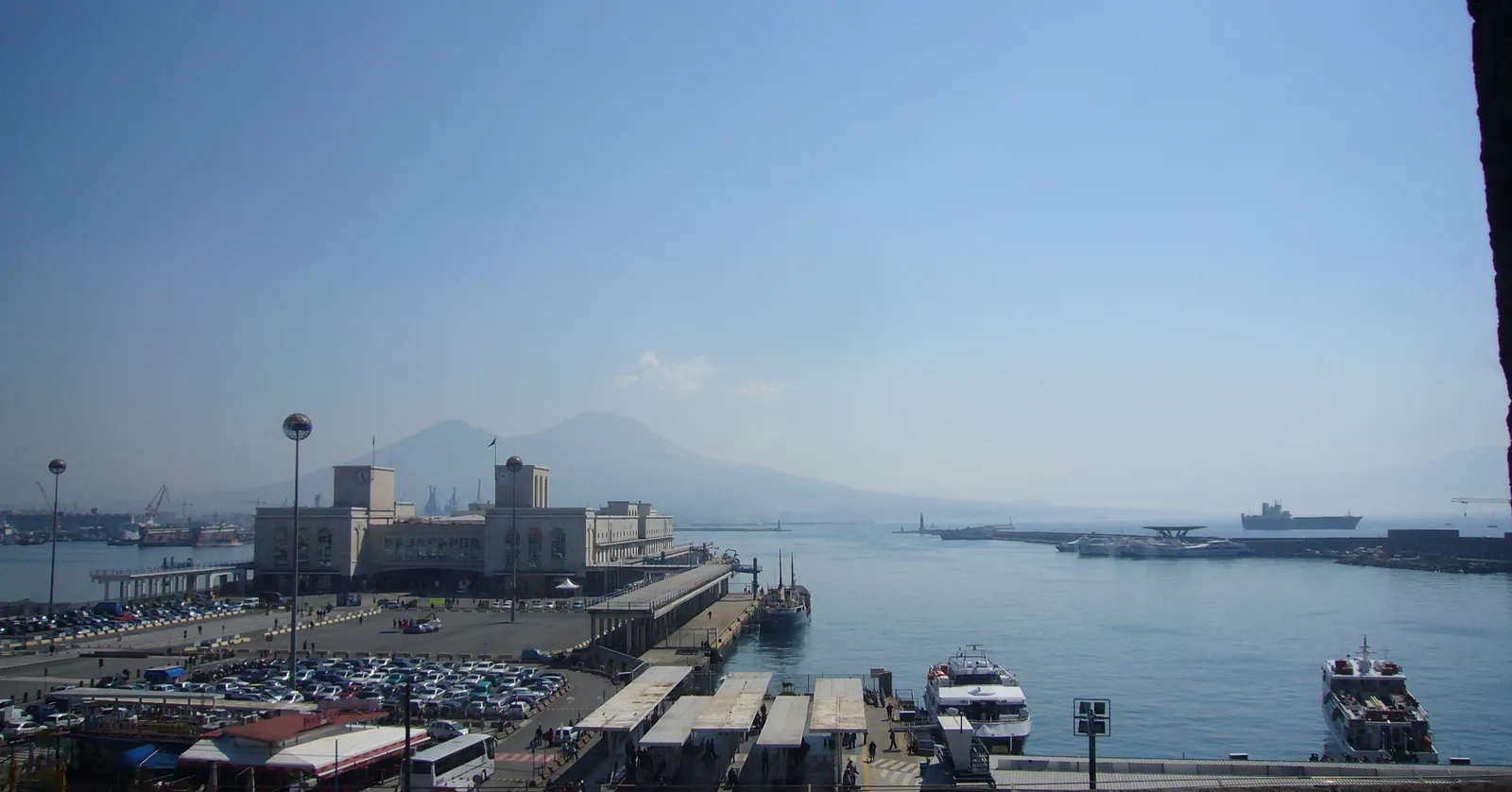
Naples’ hydrofoil and ferry pier, Molo Beverello, sits directly under Castel Nuovo, and the three things worth doing from it all stay at sea level: the white marble arch in the castle gateway, the base of a fifteenth-century tower left standing inside Municipio metro station next door, and the seafront walk west to Castel dell’Ovo, none of which involves climbing into the old city.
Alfonso of Aragon’s marble arch at Castel Nuovo
Five minutes from the quays, five round towers of grey Neapolitan tuff sit on the edge of the square, and wedged into the gateway between two of them is something entirely different: a triumphal arch in white Carrara marble, built in the 1450s to mark Alfonso of Aragon’s entry into the city he had just taken. The castle went up under Charles of Anjou in 1279; the arch is what everybody photographs.
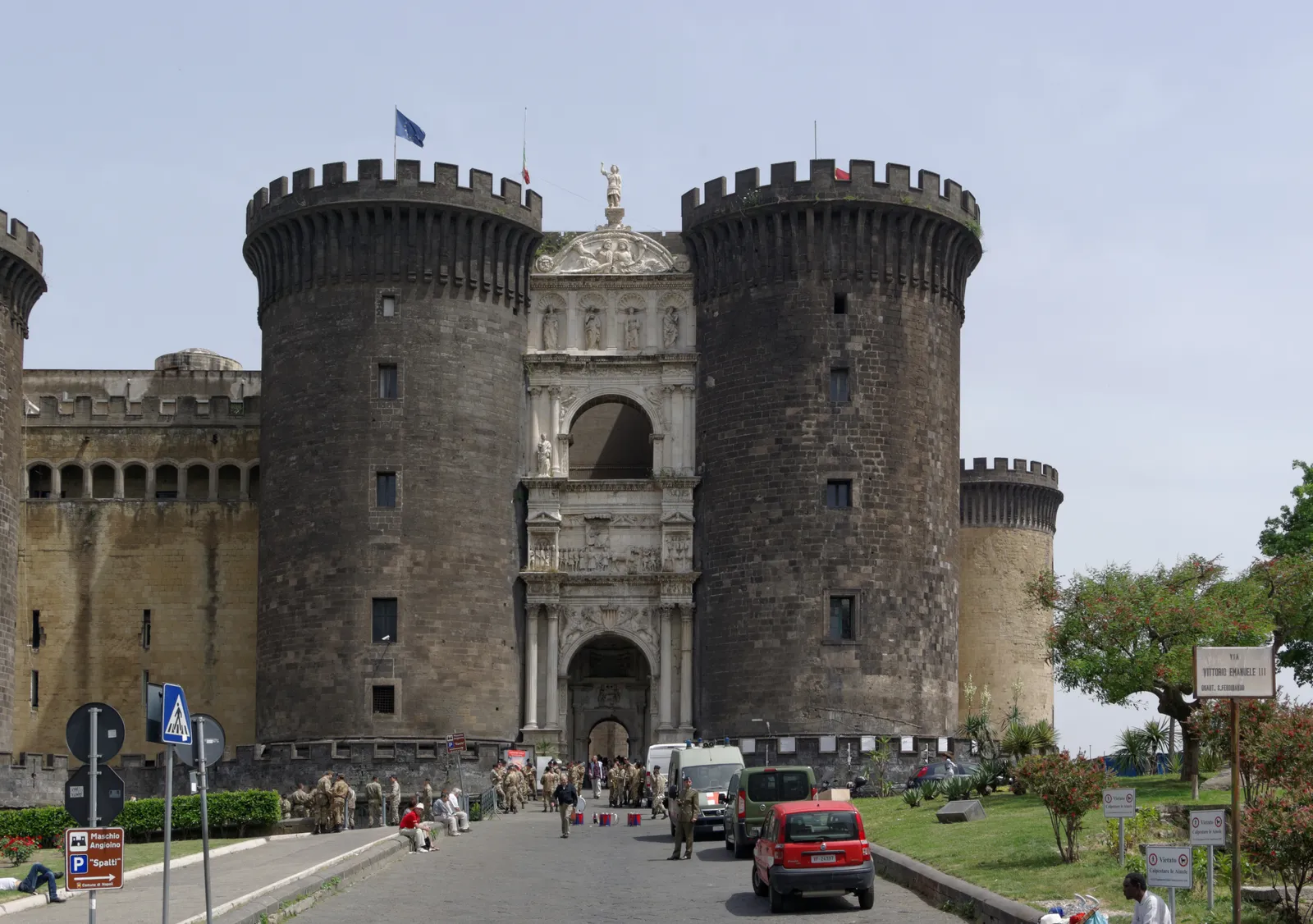
Inside, the Sala dei Baroni is the room to see: the Majorcan architect Guillem Sagrera roofed it with an octagonal vault twenty-eight metres over the floor, sixteen grey piperno ribs radiating from a round eye of light against yellow tuff, and it takes its name from the barons Ferrante I had arrested in it in 1486 after they conspired against him. Entry is 15 euros, hours are 09:00 to 18:00 Monday to Saturday with last entry at 17:30, and it is shut on Sundays and public holidays. Stand under the arch for free if the timing is wrong.
The ferry terminal has no staffed left-luggage desk of its own, and what turns up on booking sites near the pier changes from year to year.
A fifteenth-century tower base inside Municipio station
The metro station under Piazza del Municipio took twelve years to build, and the reason is sitting in the concourse. Digging it hit the harbour of ancient Neapolis: Roman quays, silted-up basins and the wrecks of Roman merchant ships preserved in the clay, and above that layer the outer defences Alfonso’s engineers threw around the castle.
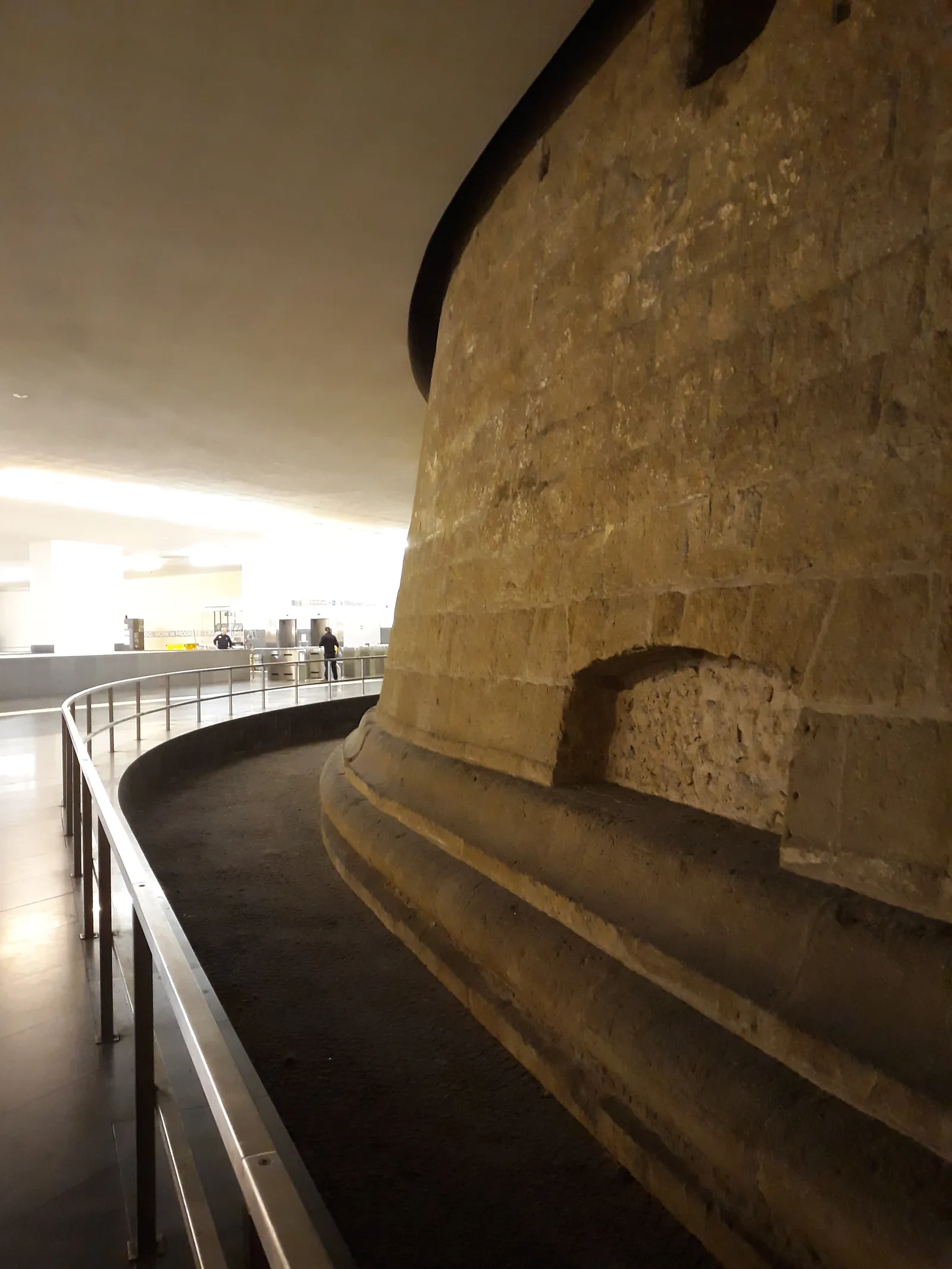
Rather than clear it, the architects Álvaro Siza and Eduardo Souto de Moura built the station around it. The base of the Torre dell’Incoronata, taken apart and put back together between 2012 and 2013, now stands inside the mezzanine with a walkway curving past it at close enough range to see the tooling on the blocks, and a video wall by the artist Michal Rovner facing it across the gap. It costs a metro fare to be down there and about ten minutes to look, which is a good return on a wet afternoon.
Castel dell’Ovo and the marina at its foot
From Molo Beverello, the last stretch is a walk rather than a stop: about twenty-five minutes west along the water, past the Santa Lucia quarter, to where a causeway runs out to a small rock island in the bay. Castel dell’Ovo is the oldest fortification in Naples, built over a Roman villa on the islet of Megaride, and its name comes from the story that the poet Virgil buried an egg in the foundations and the whole city falls when it breaks.
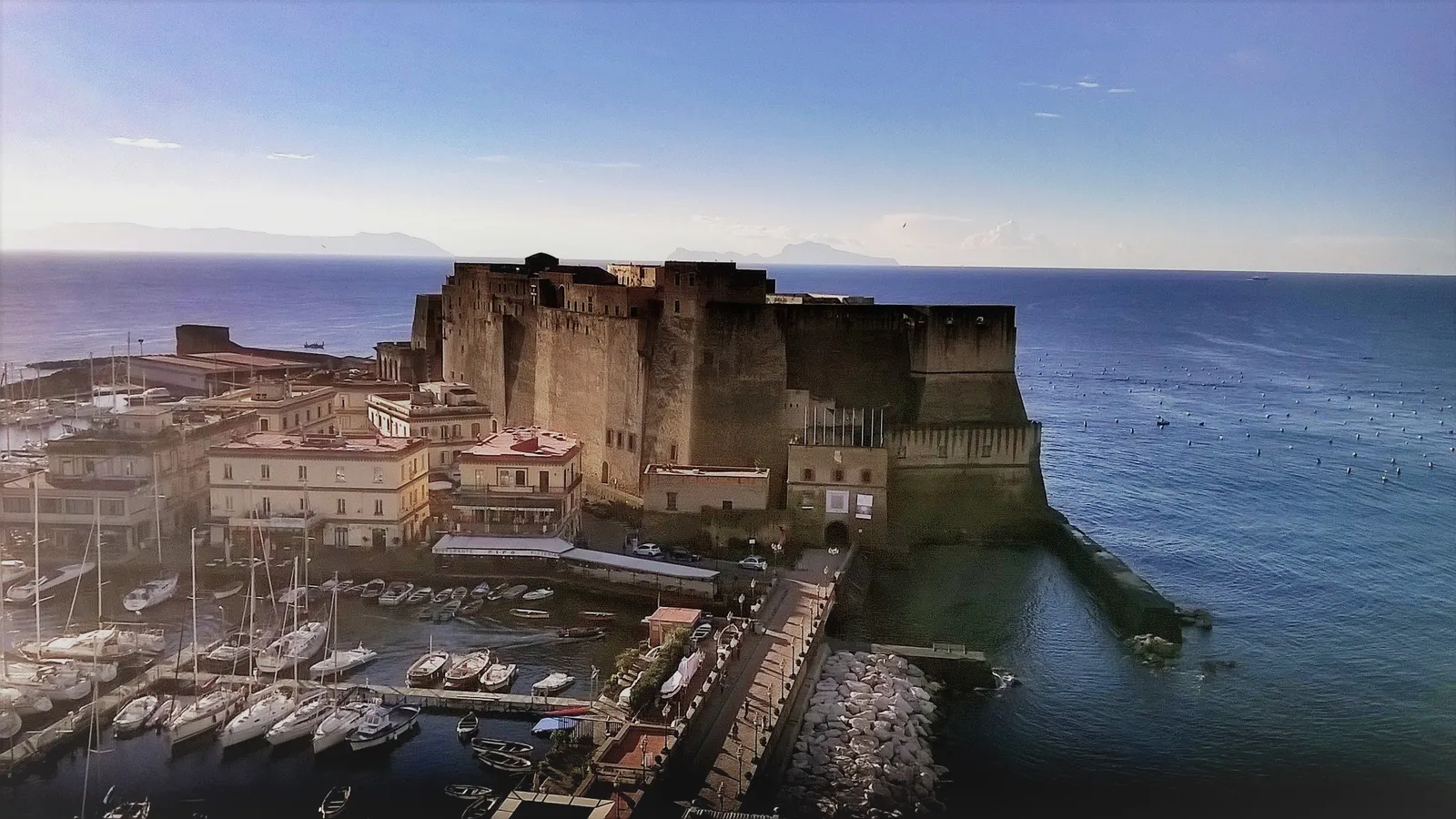
Under its walls, Borgo Marinari is a working marina and a dozen restaurants on a lane the width of a boat trailer, all of it free to walk through and open regardless of what the castle above is doing. Entry to the castle itself has traditionally been free; it has been closed for structural work since 2023, with the city reopening it in stages from 2026, so check before you count on going in rather than looking at it from the causeway.
The airport shuttle runs straight to the port
Nothing here requires the central station. The Alibus starts at the maritime station beside the ferry quays and runs to Naples International Airport for 5 euros, via Piazza Garibaldi, in about 35 minutes end to end. That is the one number to plan backwards from, along with the twenty minutes the ferry operators want you at the pier before a departure.
Pick the bag up on the way past. If your connection leaves more like five hours and you would rather spend them uphill among the churches than down at the water, the main Naples layover guide takes the old city instead, and the loop around the central station covers the other end of the Alibus route.
Frequently asked questions
Does the airport bus go to the port, or only to the station?
To the port. The Alibus runs Naples International Airport to Piazza Garibaldi to the maritime station, with stops at Molo Angioino/Beverello, Immacolatella/Porta di Massa and Varco Pisacane, so you do not need to change at the central station at all. It is 5 euros. The airport counts about 15 minutes to Piazza Garibaldi and about 35 minutes through to the port, and the buses use the port road system rather than the street traffic.
How early should I be at Molo Beverello for a ferry?
Twenty minutes before departure is the operators' own minimum, and more than that on summer weekends and public holidays, when the ticket windows back up. Crossings to Capri take 45 to 50 minutes by hydrofoil. Buying online rather than at the pier is what actually saves the time, because it moves you past the ticket queue rather than the boarding one.
Is Castel Nuovo open on a Sunday?
No. The castle museum runs Monday to Saturday, 09:00 to 18:00 with last entry at 17:30, and closes on Sundays and public holidays apart from occasional announced openings. Entry is 15 euros and under-18s go free. If your ferry lands on a Sunday, the courtyard aside, this stop is a look at the outside of the building.
Does this walk work in the evening?
Better than it does at midday, in summer. Castel Nuovo shuts at 18:00, but the rest of this is outdoors and free: the seafront from the port out to Borgo Marinari is pedestrianised and lit, the fishing harbour's restaurants run late, and the walk faces the bay with Vesuvius on the far side of it. Municipio station stays open into the small hours on the metro's own timetable.