Naples Archaeological Museum on a Layover
Part of the full Naples Layover Guide: The Old City From NAP
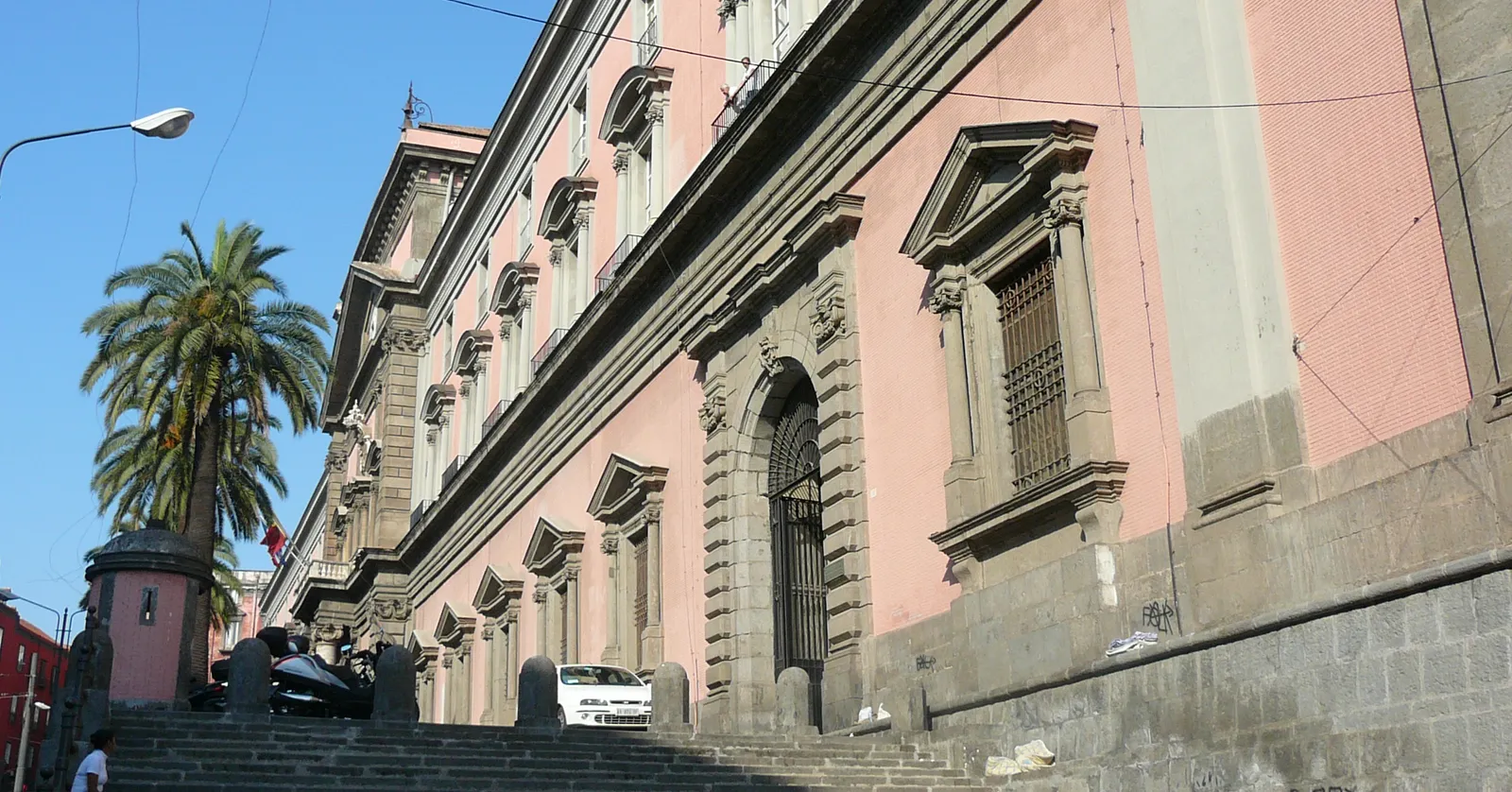
Naples’ National Archaeological Museum stands on Piazza Museo, a minute from the exit of the Museo metro station on Line 1 and one stop from the central station on metro Line 2, and 20 euros buys a working 1791 sundial, the Farnese Atlas and the room of Pompeian erotica the Bourbons kept locked, none of which needs you to go back outside.
The 1791 sundial in the old royal library hall
The Farnese marbles are on the ground floor and the ticket hall points you straight at them. Go up a floor first, to the room that held the Bourbon royal library until the books moved to the Royal Palace in 1926. It is the Salone della Meridiana, and the meridian line it is named after is set into the floor in the southwestern corner: architect Pompeo Schiantarelli built it in 1791, the astronomer Giuseppe Casella did the calculations, and it still works.
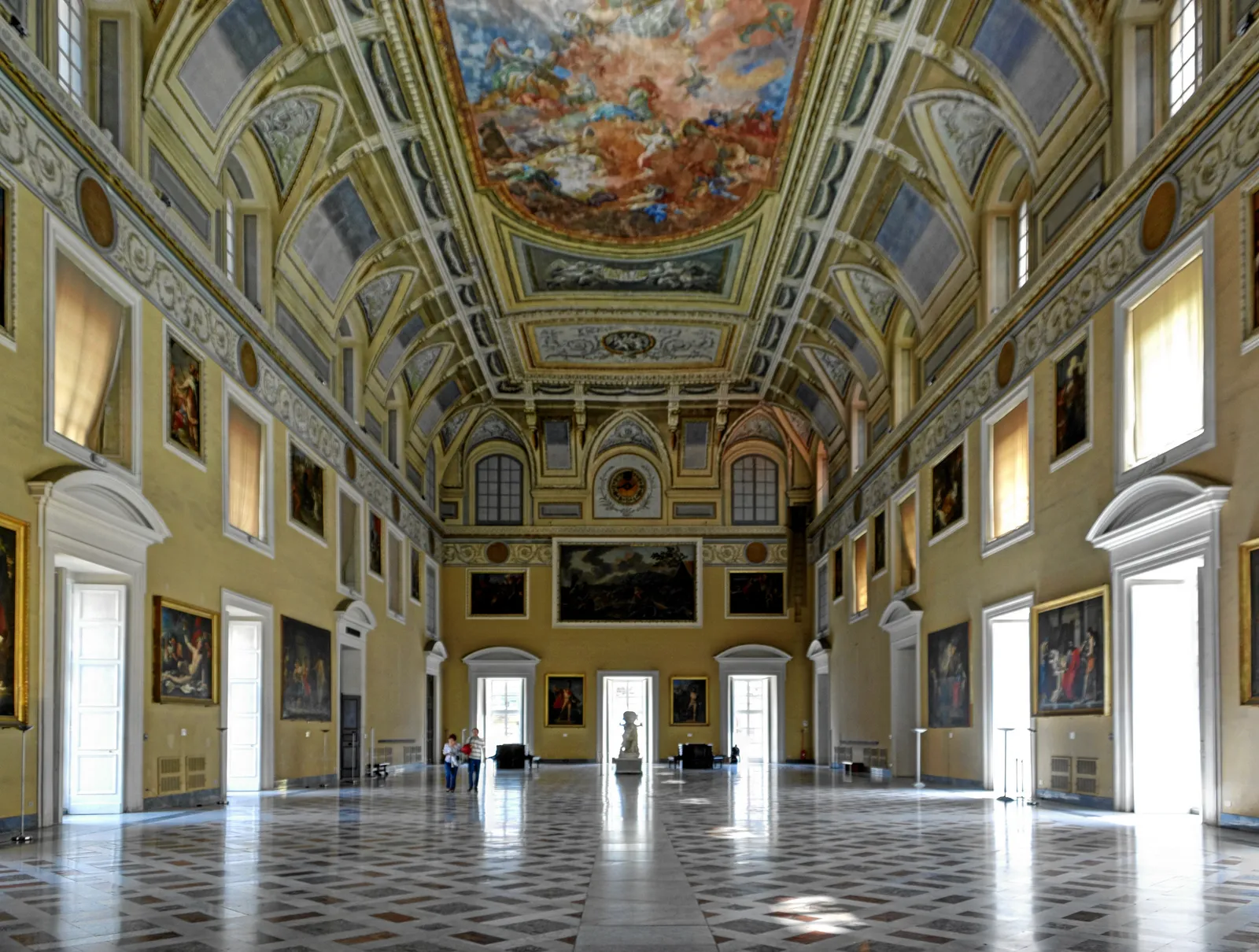
Overhead is Pietro Bardellino’s 1781 fresco of the Bourbons as patrons of the arts, with the line “Iacent nisi pateant” worked into it: they lie dead unless they are shown. Standing under that in the room the family built as a library, surrounded by what the family dug out of Pompeii, is the closest the building comes to explaining itself. The Farnese Atlas is in here too, a second-century marble of the Titan carrying a globe with the Greek constellations carved onto it, which is the oldest surviving picture of them anywhere.
Entry is 20 euros, the museum runs 9:00 to 19:30 with last admission at 18:30, and it closes all day Tuesday. Tickets are sold at the desk, and timed entry can be booked ahead on a tours and activities platform if you would rather walk past the line than stand in it.
The Secret Cabinet’s Pompeian erotica
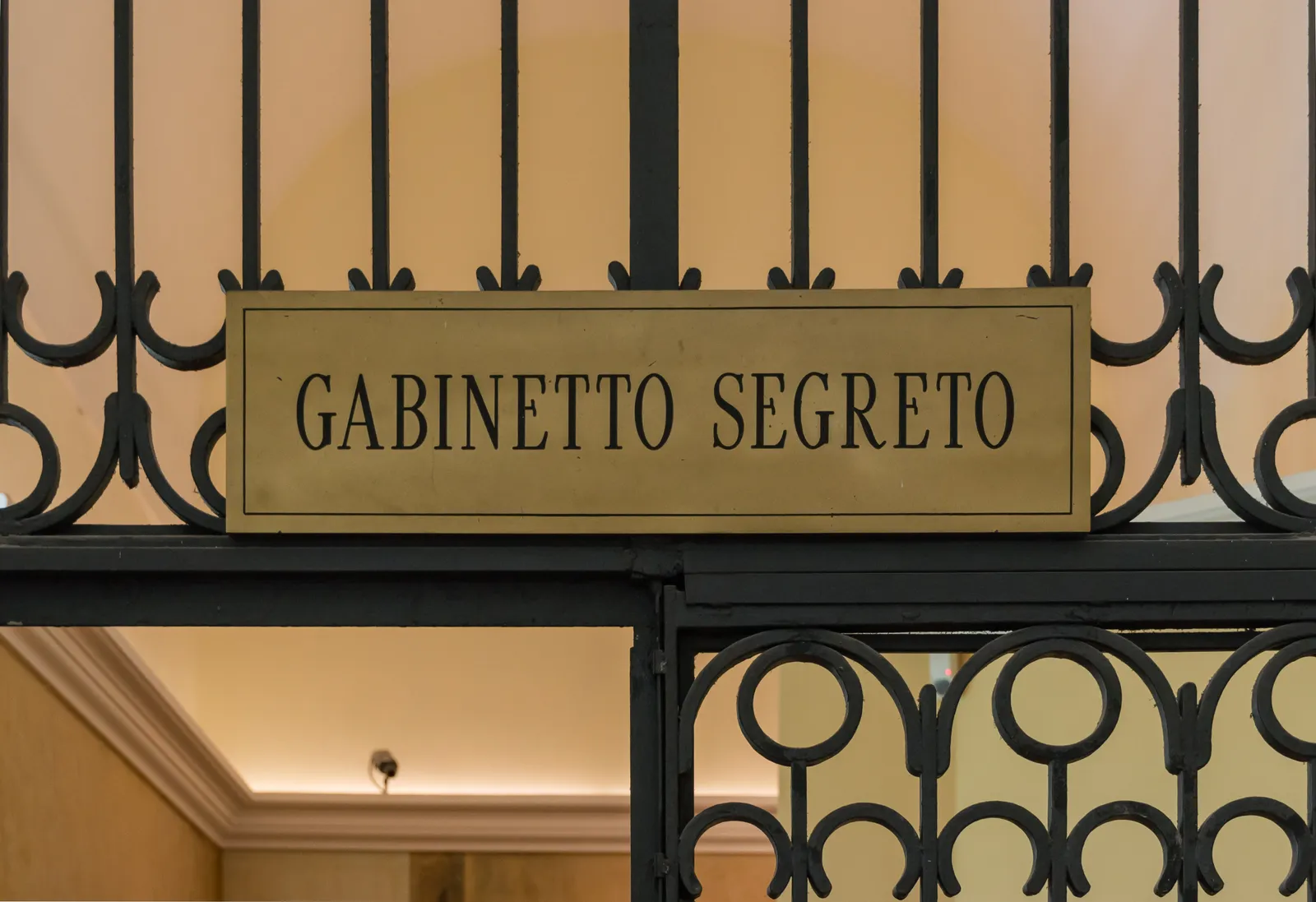
In 1819 King Francis I had every object the excavators considered obscene pulled out of the collection and shut in one room. Around 250 of them are in there: frescoes off brothel walls, garden statuary, oil lamps, bronze wind chimes shaped the way you are imagining. The room opened for about a year in 1848, again in 1860 after Garibaldi took the city, briefly in 1976, and then permanently in 2000. The iron gate on the mezzanine is still the original idea of the thing, just no longer locked.
The cloakroom inside the entrance is free and self-service, but the lockers are sized for daypacks: a wheeled suitcase cannot be left there at all, and coats have to come round the building with you.
The glass-roofed Galleria Principe di Napoli
Across the road from the museum steps, between it and the Academy of Fine Arts, an iron and glass arcade cuts through the block. Nicola Breglia and Giovanni De Novellis built it between 1873 and 1883, on the model of the covered passages Paris and London had been putting up for decades: a long barrel vault of iron ribs and glass, yellow and grey stucco, moulded medallions, and a portico on the side that faces the museum.
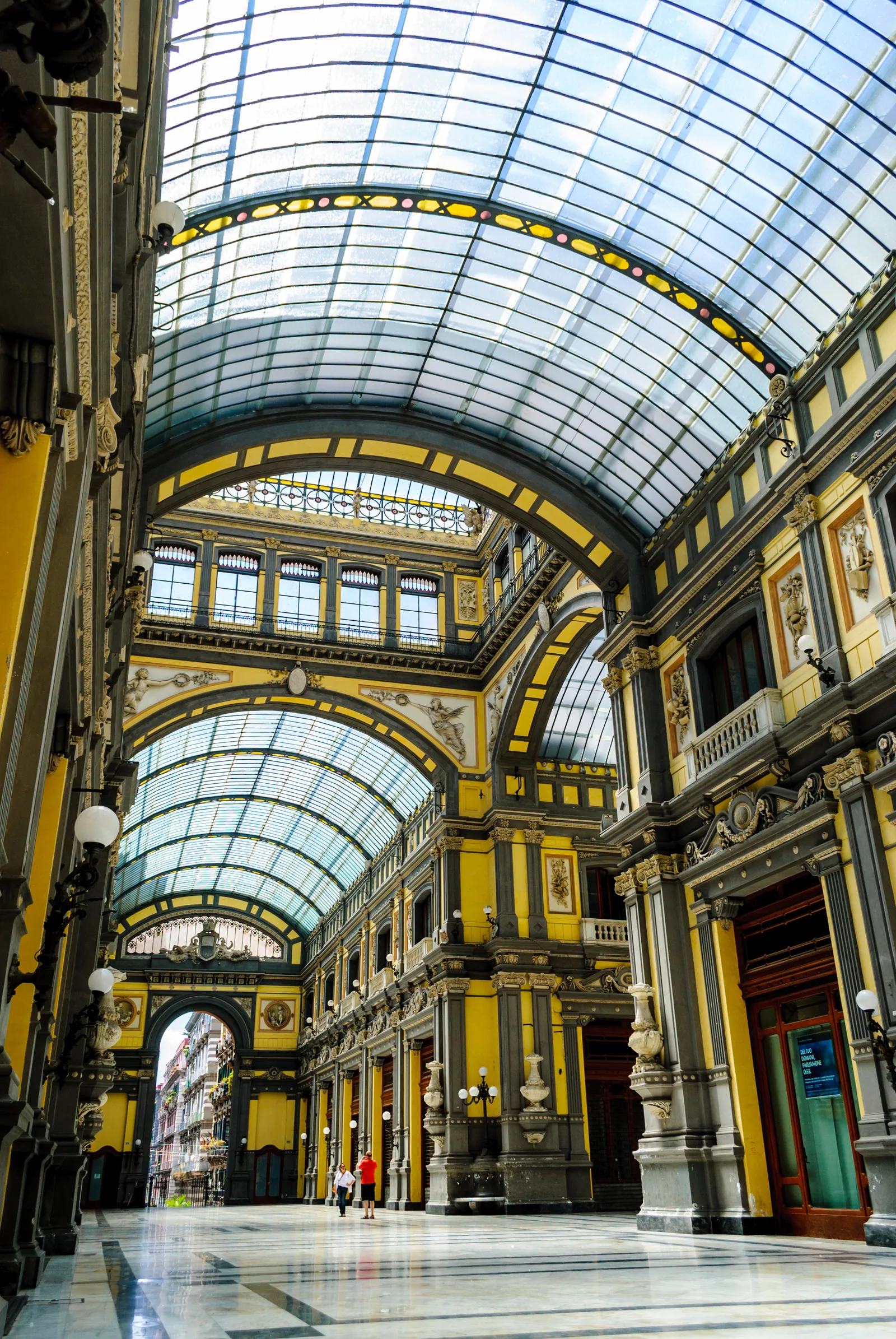
It stood empty for decades before restoration work started in 2007. Walking through costs nothing and takes five minutes, and on a wet afternoon it is the piece of this square you can still look at with a roof over your head.
The Veiled Christ at Cappella Sansevero
About ten minutes downhill, on a lane off Piazza San Domenico Maggiore, Giuseppe Sanmartino carved a marble shroud in 1753 and laid it over a marble body. The Veiled Christ is what the Sansevero Chapel is known for, and the whole chapel is the project of one man, Raimondo di Sangro, an eighteenth-century prince who filled it with allegorical sculpture and left two anatomical models of a man and a woman, veins and arteries intact, in the chamber below.
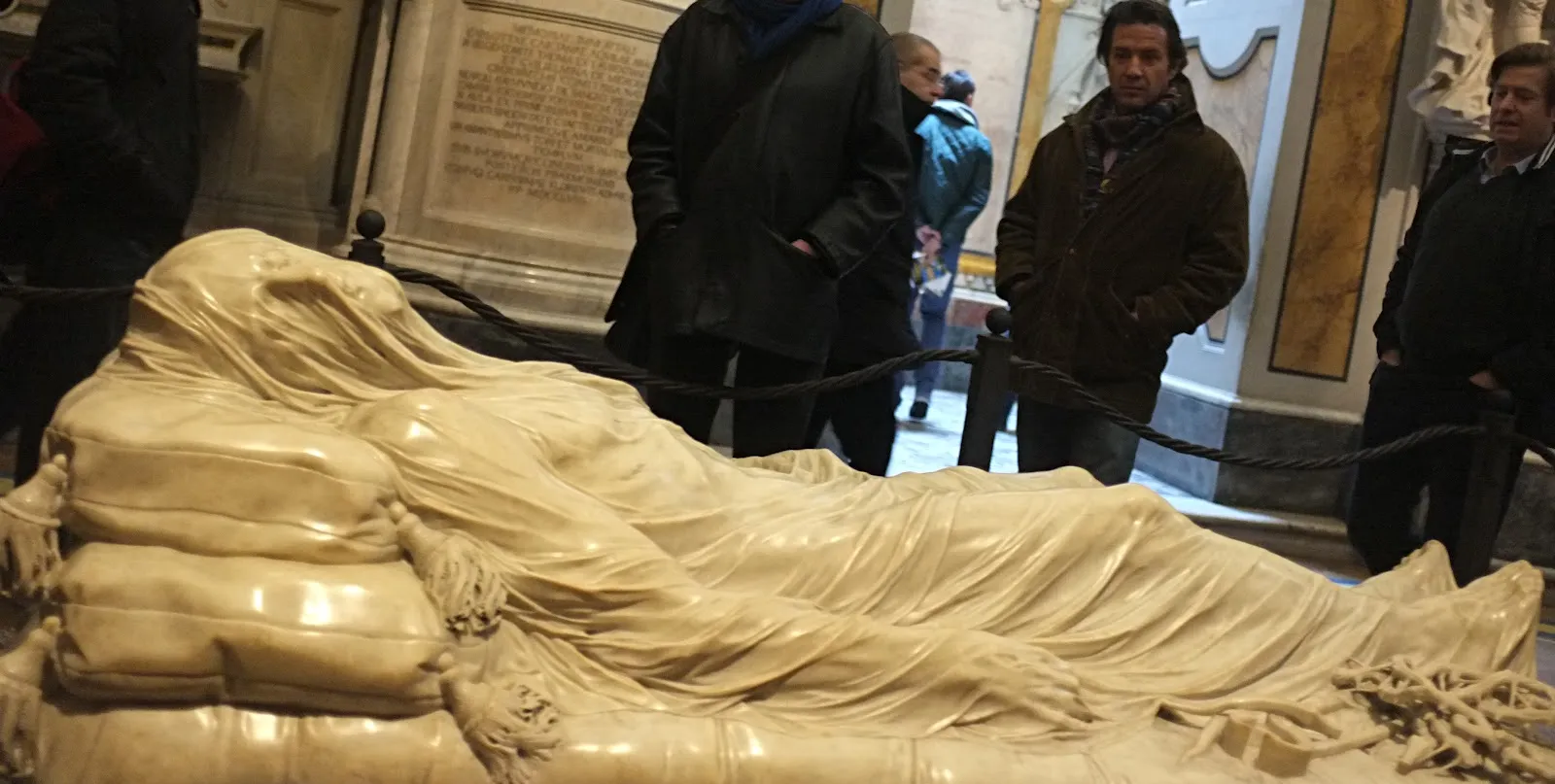
Entry is 12 euros and booking is compulsory, since daily numbers are capped: turning up at the door without a slot does not work. Hours are 9:00 to 19:00, last entry half an hour before that, and it shuts on Tuesdays, which is the same day the museum does. Photography is not allowed inside, so this is a museum you look at rather than photograph.
No airport bus from Piazza Museo
The Alibus only runs between Capodichino, Piazza Garibaldi and the port, so the way back to the airport starts by returning to the central station: one stop on Line 2 from Cavour, then the shuttle from Piazza Garibaldi, 5 euros and about 20 minutes when the traffic behaves. It runs until roughly 23:30, and two hours before departure covers the wait, the ride, check-in and security comfortably.
Collect your bag on the way through. If you would rather spend the afternoon outdoors than under a ceiling, the full Naples layover guide does the same city at street level, down the two straight ancient streets and into the aqueduct tunnels beneath them.
Frequently asked questions
Can I take a suitcase into the archaeological museum?
No. The cloakroom just inside the entrance is free and self-service, but the lockers are sized for daypacks and school backpacks, and the museum states plainly that bulky wheeled suitcases cannot be stored there. Coats and jackets are not accepted either and have to be carried around with you. Bags are checked at the entrance before the ticket desk, so a big bag has to be dealt with before you arrive, at a storage point near the central station or around Piazza Museo.
Museo or Cavour: which station should I get off at?
Whichever your line runs on. Museo is on metro Line 1 and surfaces on Piazza Museo, about a minute from the museum door. Cavour is on Line 2, which is the faster arrival from Napoli Centrale because it is a single stop away. An underground passage opened in 2001 joins the two, so getting off at the wrong one costs you a few minutes underground rather than a fresh ticket. The passage is worth the walk anyway: Mimmo Jodice's photographs line it, and inside Museo station there is a copy of the Farnese Hercules and a bronze cast of the horse's head the Medici sent to the Carafa family.
Is the Alexander Mosaic on display?
Not as of August 2026. The mosaic from the House of the Faun in Pompeii came off display for a restoration that is still running, and instead of hiding the work the museum built two observation points in the mosaics collection so visitors can watch the restorers at their bench. Everything else in the mosaics rooms has stayed on show, and the mosaic goes back into the same rooms when the work finishes.
Can I get into the museum in the evening?
Usually not: last admission is 18:30 and the doors close at 19:30. The exception in 2026 is MANNight, eight late openings between 3 September and 22 October when the museum stays open until 23:30 with last entry at 22:30 and a 10-euro ticket from 19:00 onwards. Those evenings do not pair with a flight home the same night, because Naples International Airport stops operating at 22:30.