Piazza del Plebiscito, Naples
Part of the full Naples Layover Guide: The Old City From NAP
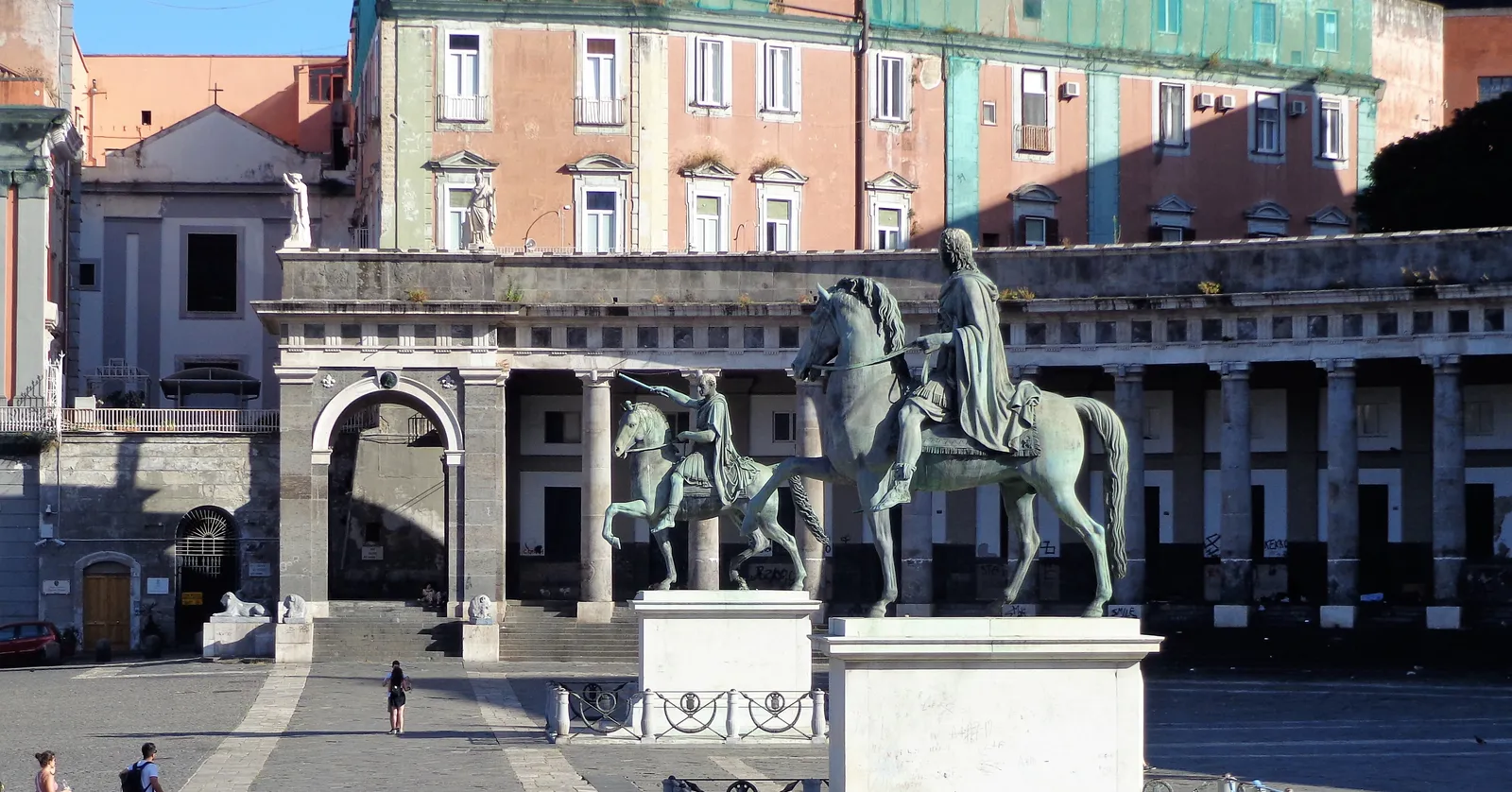
Piazza del Plebiscito is the big ceremonial square at the bottom of Naples’ main shopping street, fifteen flat minutes from the ferry terminals, and four things sit on or under it: a colonnade wrapped around a church modelled on the Pantheon, the royal palace at 10 euros, an unfinished Bourbon escape tunnel running beneath the hill behind, and Teatro San Carlo across the road.
The colonnade and the two bronze horses on Piazza del Plebiscito
The square is 25,000 square metres of open pavement with no traffic on it, which in this city is startling in itself. Ferdinand I had the west side built between 1816 and 1846 as a votive offering for getting his kingdom back: a semicircular colonnade of thirty-eight giant Doric columns sweeping out from the church of San Francesco di Paola, whose dome and portico are a direct quotation of the Pantheon in Rome. The palace closes the opposite side. The effect is deliberately theatrical and it works best in the late afternoon, when the colonnade is lit from the side.
The two bronze horsemen in the middle are Charles III and Ferdinand I, begun by Antonio Canova and finished by his pupil Antonio Calì. People walk at them blindfolded: you start with your back to the palace, cover your eyes, and try to cover the 170 metres out to the statues and through the gap between them. The pavement is very slightly domed, so almost everyone curves off. The version of the story told here is that Queen Margherita offered pardons to prisoners who could do it and never had to grant one.
The marble staircase inside the Palazzo Reale
Domenico Fontana began the palace in 1600 for a visit by a Spanish king who never came. Eight statues stand in the niches across its front, one for each dynasty that ruled Naples, from Roger the Norman to Vittorio Emanuele II, which is a compressed history lesson you can read from the square for nothing.
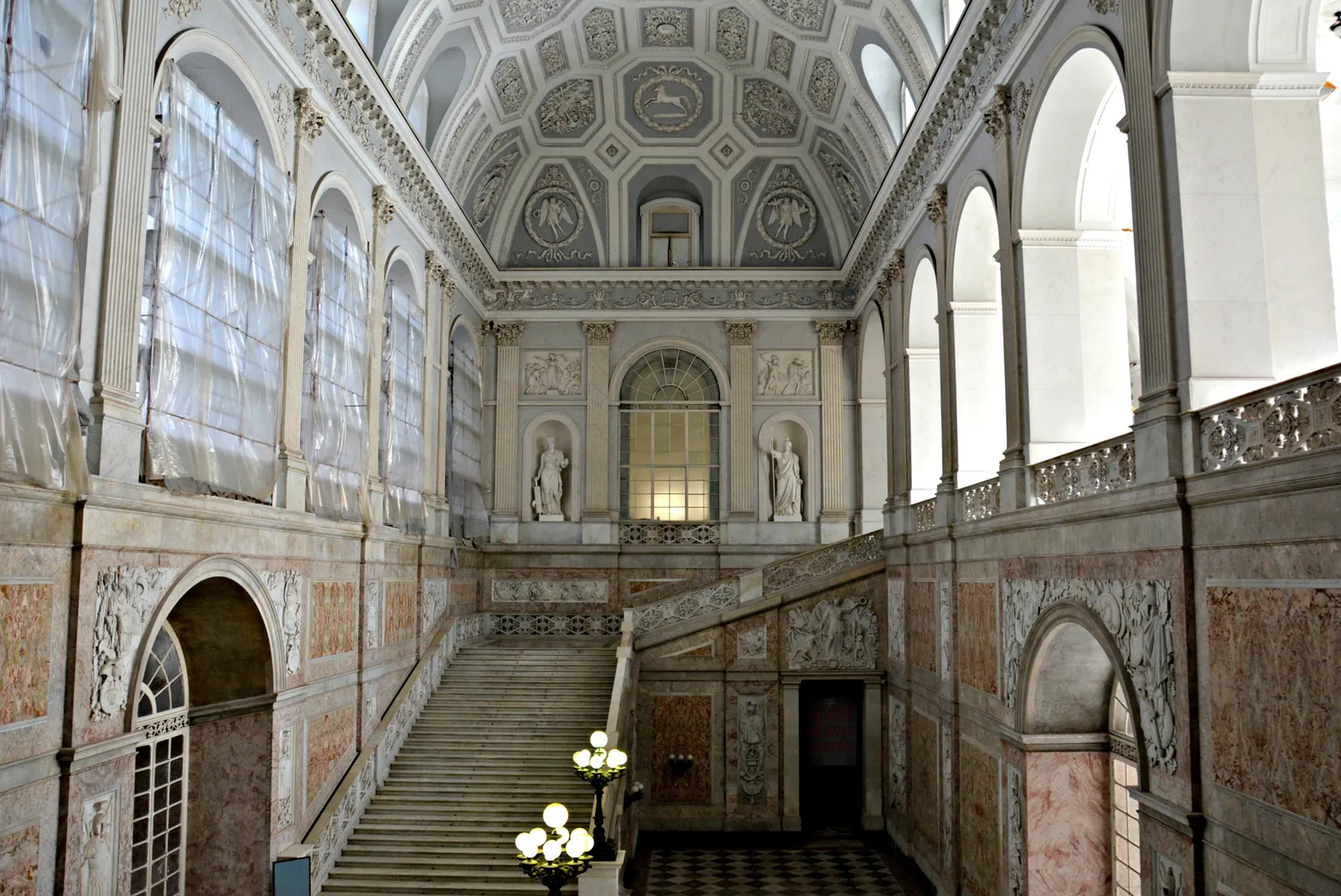
Inside, the Scalone d’Onore is the piece worth the ticket even before you reach the apartments: a double flight in white and coloured marble rising through a vaulted hall, rebuilt in the 1650s and again after the fire of 1837. The rooms above it run one into the next for about thirty of them, ending at the small court theatre. Entry is 10 euros, hours are 09:00 to 20:00 with last admission at 18:00, and it closes on Wednesdays; the ticket can be bought ahead on a tours and activities platform.
The visit is a staircase and then one long floor of linked rooms with no lift on the route, and the streets up from the port climb the whole way.
The Bourbon escape tunnel under the hill
In 1853 Ferdinand II, having watched a revolution five years earlier, commissioned a tunnel from the palace stables through the hill to the barracks on what is now Via Morelli, so the royal family could get out of the city without using the streets. It was never finished. What was dug cut through sixteenth-century cisterns and aqueduct shafts on the way, and all of it was pressed into service in the Second World War as an air-raid shelter, then used for decades afterwards as a municipal dump for impounded cars and motorcycles, which are still down there rusting where they were left.
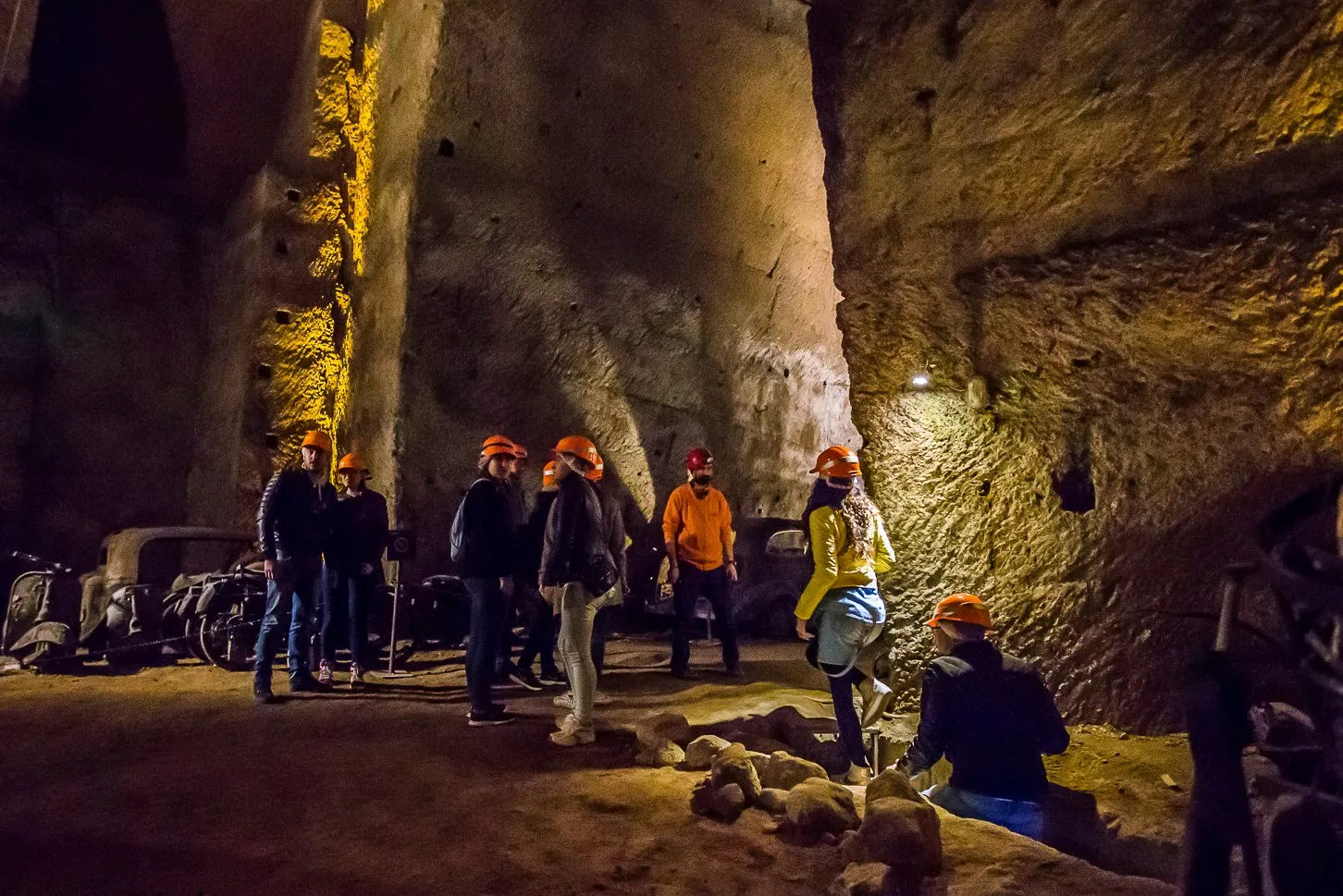
The entrance closest to the square is at Vico del Grottone 4. Visits are guided, take an hour and a quarter, cost 10 euros, and run on Friday, Saturday and Sunday at 10:00, 12:00, 15:30 and 17:30; a slot can be booked ahead rather than chanced at the gate.
Teatro San Carlo, open since 1737
Two minutes north, on Via San Carlo, the opera house Charles of Bourbon built in eight months has been staging seasons since 1737, which makes it the oldest one still working anywhere. Six tiers of boxes curve round a horseshoe in gold and deep red, with the royal box in the middle of them, and the whole interior was rebuilt in 1817 by Antonio Niccolini after a fire, which is essentially what you see now.
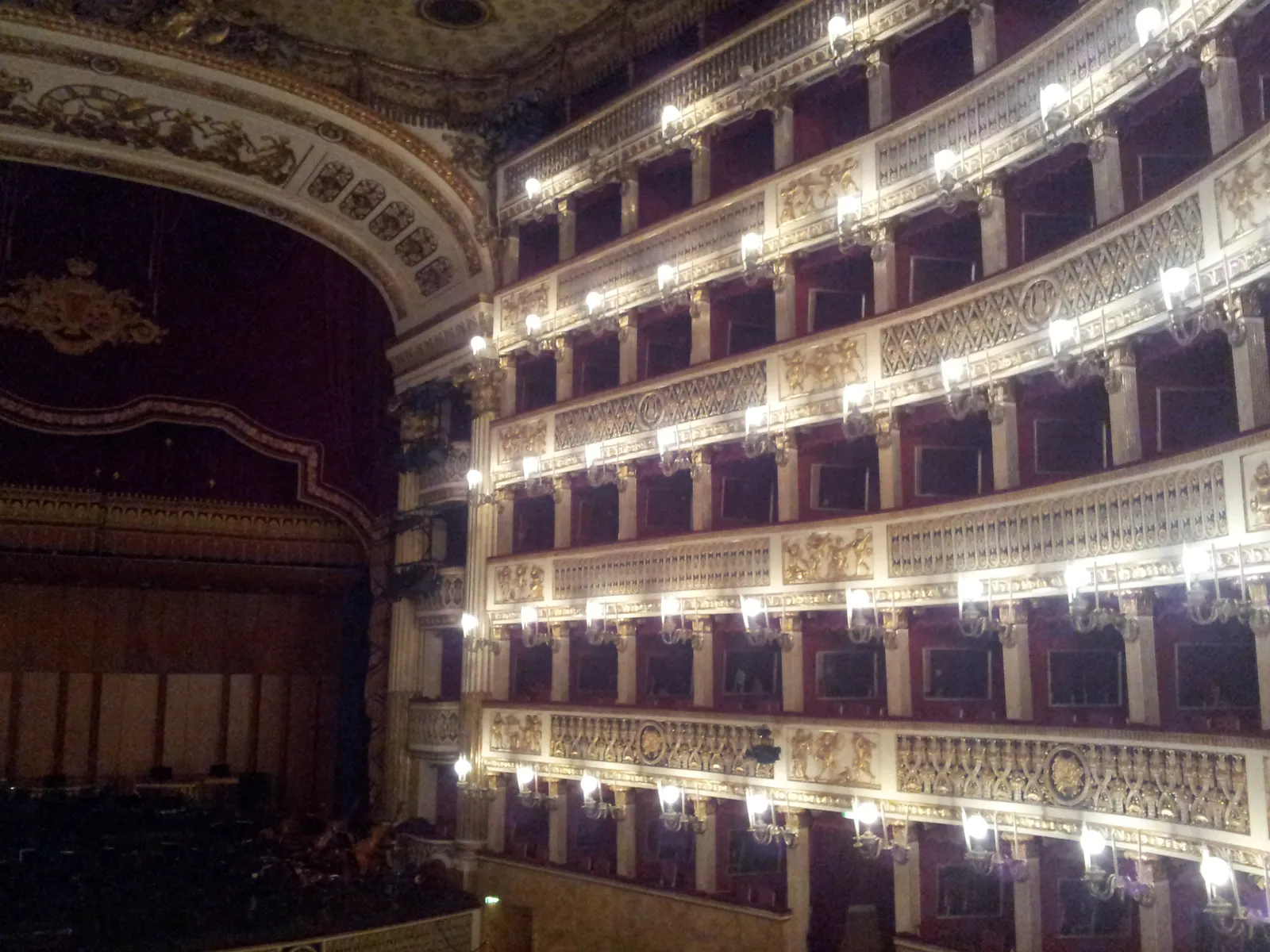
Guided visits run Monday to Saturday through the day and take about 45 minutes, and they are the only way into the auditorium without a ticket to a performance.
Directly opposite, the Galleria Umberto I cuts a cross-shaped arcade through the block, built between 1887 and 1890 as part of the slum clearance that followed the cholera epidemic of 1884.
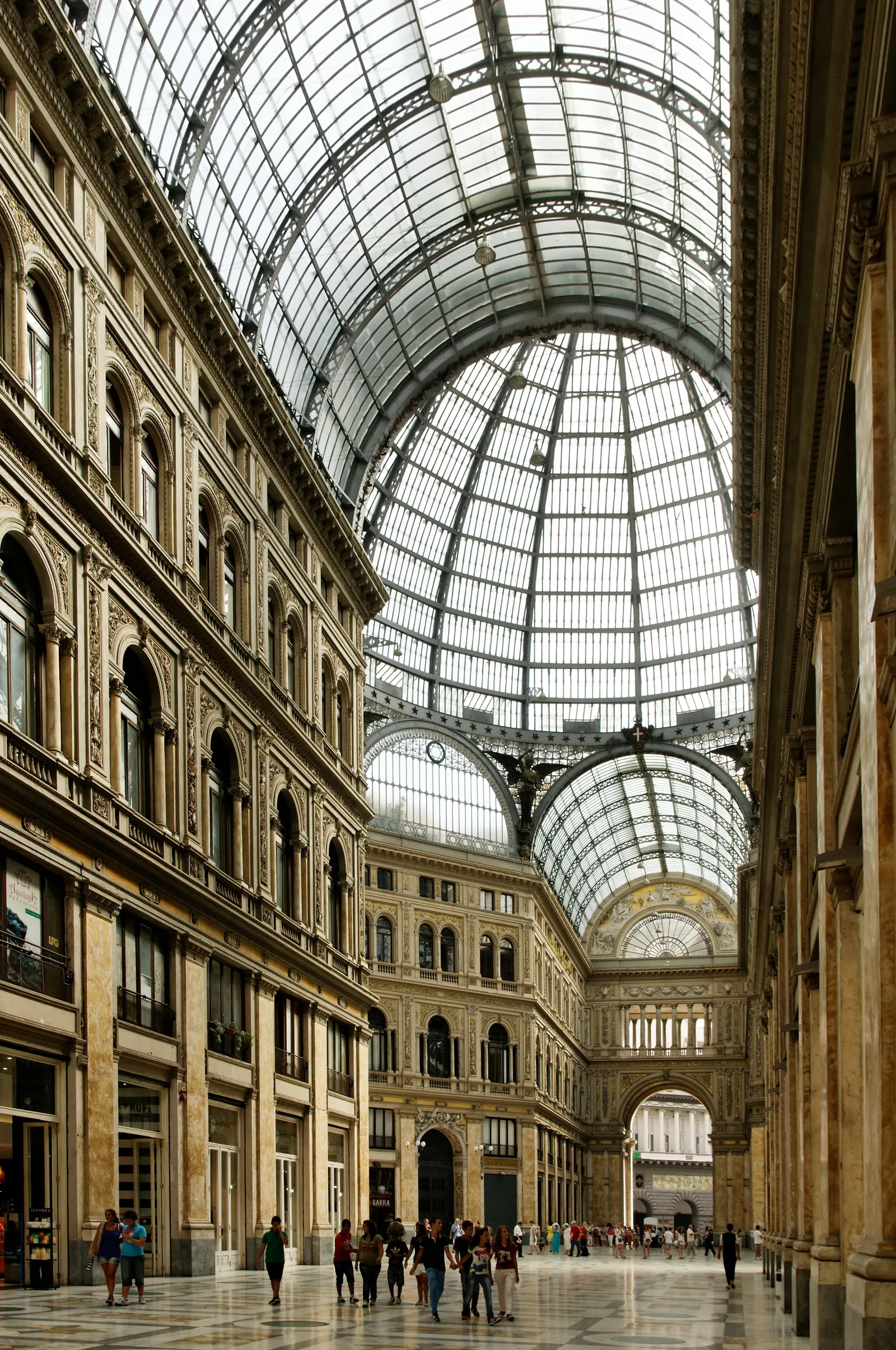
Four glazed barrel vaults meet under a glass dome at the crossing, with a zodiac laid into the marble floor beneath it. It costs nothing, it takes five minutes, and it is the one part of this itinerary with a roof over it.
No airport link from the square
Naples International Airport has no rail connection, and the Alibus shuttle does not stop here either: it runs between the airport, Piazza Garibaldi and the port. From the square that means either a ten-minute walk down to the maritime station to pick it up at the port end, or metro Line 1 from Municipio out to Garibaldi and the shuttle from there. Both work; the port is the shorter walk.
Collect the bag on the way past. If you would rather spend the time in the medieval city than the royal one, the main Naples layover guide goes north into the old street grid, and the route around the ferry port covers the same walk from the water end.
Frequently asked questions
Which day is the Palazzo Reale closed?
Wednesday. The rest of the week it runs 09:00 to 20:00, with the last entry to the historic apartment at 18:00. A full ticket is 10 euros, and there is a 3-euro booking fee if you buy online rather than at the desk. The internal courtyards are free to walk into on any open day, which is worth knowing if the timing is tight.
When can I get into the Bourbon Tunnel?
Weekends only, on the standard schedule. Guided visits run Friday, Saturday and Sunday at 10:00, 12:00, 15:30 and 17:30, take about an hour and fifteen minutes, and cost 10 euros. The entrance nearest the square is at Vico del Grottone 4. Arrive on a Tuesday and this stop is simply not available, which is the one thing on this itinerary worth checking before you plan around it.
Can I walk here from the cruise terminal?
Yes, in about fifteen minutes. The maritime station and Molo Beverello sit roughly a kilometre east, and the walk crosses Piazza Municipio and then climbs gently: the port sits at sea level and the square does not. Once you are on Piazza del Plebiscito everything in this itinerary is flat and within five minutes of it.
What is the blindfold thing people do in the square?
An old challenge: start with your back to the palace doors, cover your eyes and try to walk the 170 metres out to the two bronze horses and pass between them. Almost nobody manages it, because the square is very slightly domed and a blindfolded walker drifts. The story attached to it has Queen Margherita of Savoy offering pardons to prisoners who could do it, and no prisoner ever collecting.