Toledo Metro Station, Naples
Part of the full Naples Layover Guide: The Old City From NAP
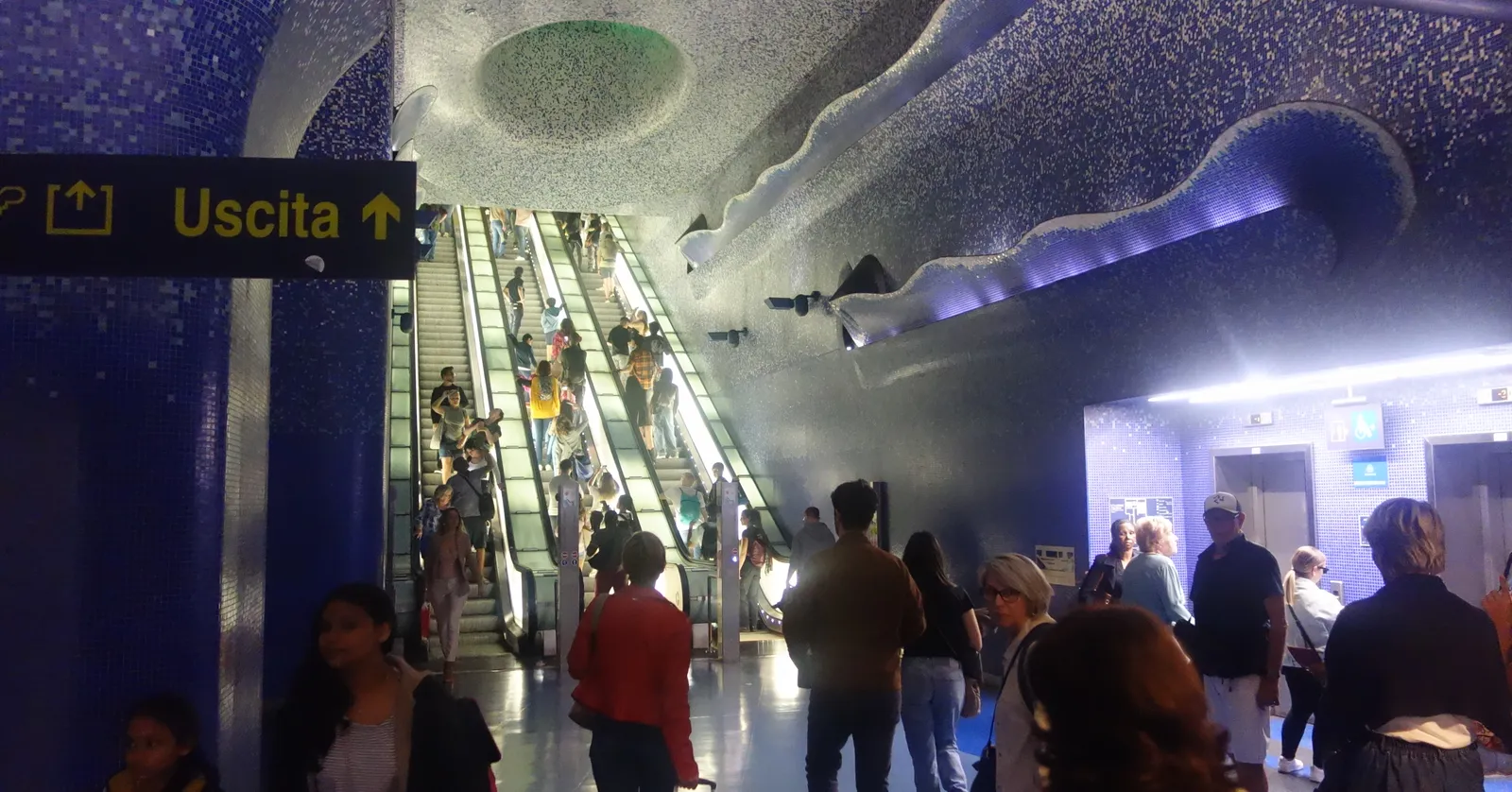
Toledo, a metro station on Line 1 in central Naples, is worth going down into for its own sake: 44 metres of shaft walled in blue and ochre mosaic with a cone of light dropping through it, and at street level above, the Quartieri Spagnoli grid, the Pignasecca market and Caravaggio’s last painting, all inside a ten-minute walk.
The blue mosaic light shaft inside Toledo station
The station opened on 17 September 2012 and the Spanish architect Óscar Tusquets Blanca treated the descent as the point rather than the inconvenience. The colour is sequenced by depth: grey at the entrance, ochre through the level cut into the tuff the city is built on, then dark blue all the way down to the platforms, which is where the sea would be if you were standing outside. Dropping through the middle of it is the Crater de Luz, a cone lined in blue mosaic that carries daylight down the full height of the station and glows at night.
The mosaics on the mezzanine and the wall facing the escalators are by William Kentridge, and Robert Wilson’s wave-motif corridor runs off the same level. Newspaper lists have been calling it Europe’s best-looking metro station since it opened, which is the sort of claim nobody can settle; what is not in dispute is that people stop on the escalator here to photograph a ceiling.
The climb back out covers those 44 metres on escalators, two of them rising 30 metres in one continuous run, which is longer than most people want to spend holding a suitcase upright on a moving step.
The Quartieri Spagnoli grid above Via Toledo
Step out and the hill to the west is cut into a grid so regular it looks drawn with a ruler, because it was. From 1532 the viceroy Pedro de Toledo laid out six long lanes parallel to his new main street, crossed by dozens of short ones, to house the Spanish garrison stationed in the city. The soldiers are long gone; the grid is still there, four and five storeys of balconies leaning over streets barely wide enough for a car.
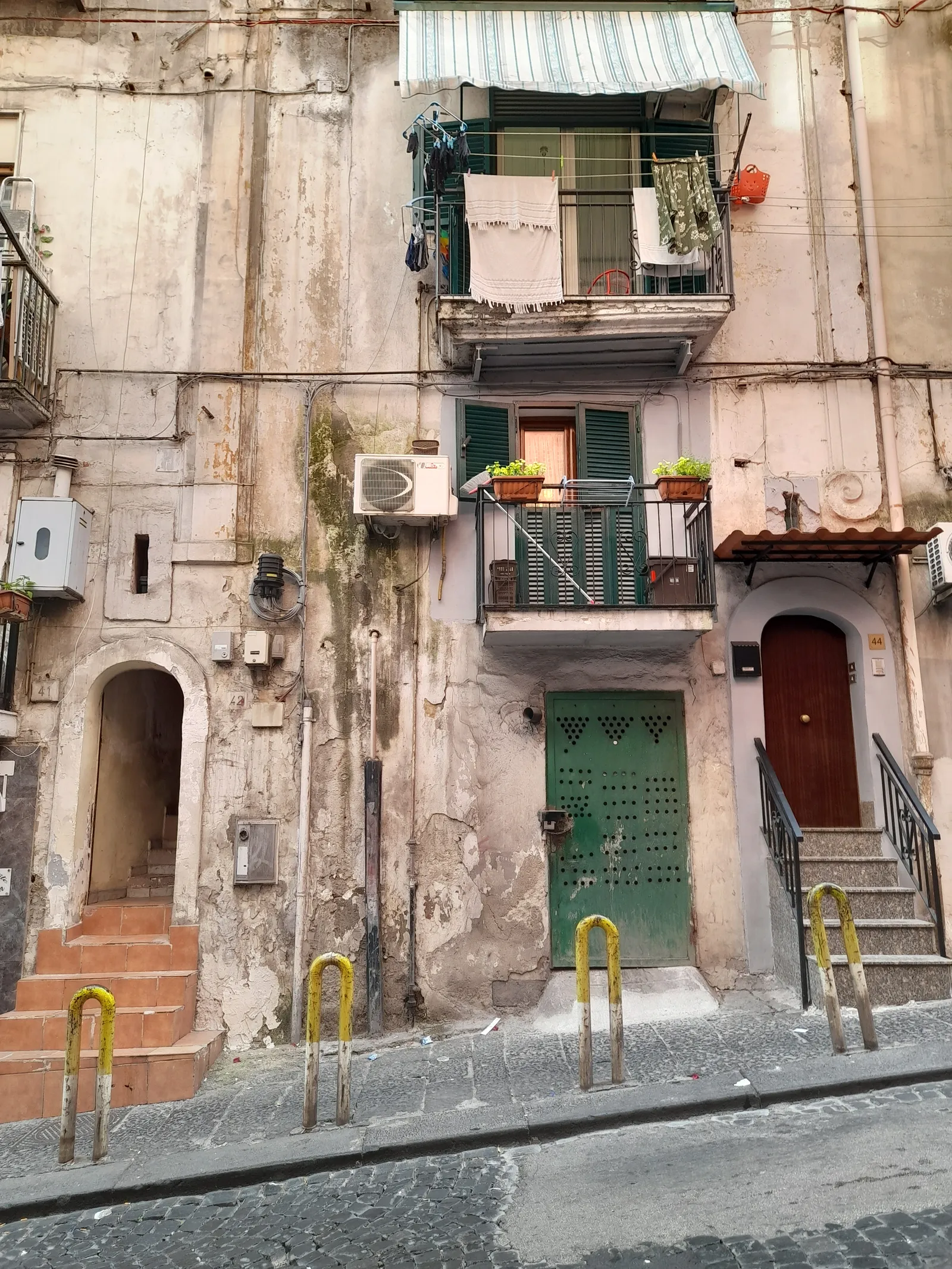
It is loud, it climbs steeply, and several of the cross-streets turn into steps. On Via Emanuele De Deo, a three-storey mural of Diego Maradona painted in 1990 for Napoli’s second league title has turned the little square below it into a shrine of scarves, photographs and candles that people still add to.
The Pignasecca street market
Five minutes north of the station, Via Pignasecca fills up with stalls: fish on ice, vegetables, cheese, fried food eaten standing, then further along the household goods and clothing that any working market carries. It is one of the oldest street markets in Naples, on ground that was vegetable plots before Via Toledo was cut through in the sixteenth century.
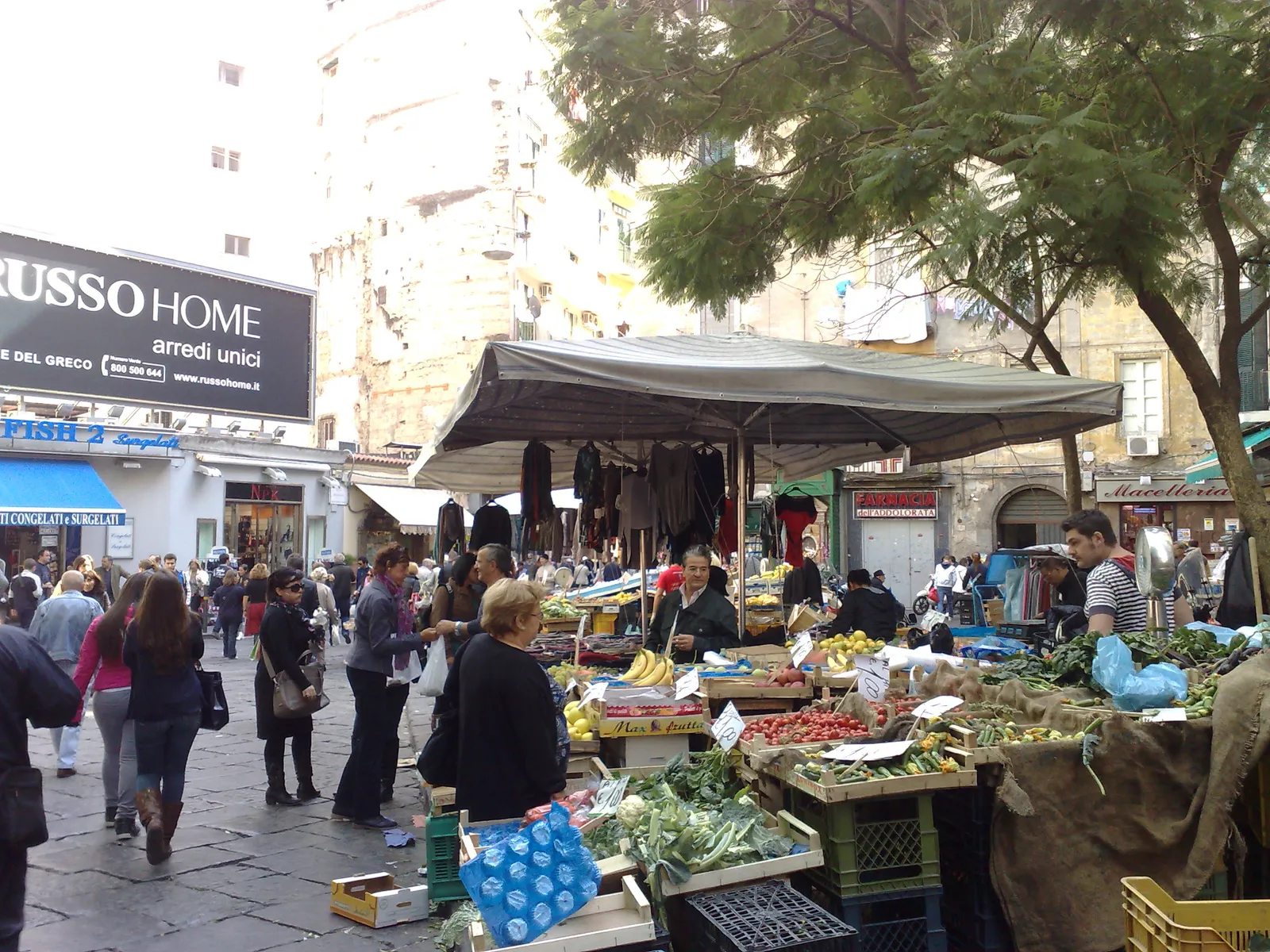
The name means dried pine, and the story attached to it involves a pine tree full of thieving magpies, an excommunication issued against the birds, and the tree withering three days later. Whether or not any of that happened, it is the version the market itself tells.
Caravaggio’s last painting at Via Toledo 177
Halfway down Via Toledo, in the former head office of the Banco di Napoli, the Gallerie d’Italia holds the Martyrdom of Saint Ursula. Caravaggio painted it in Naples in the spring of 1610 for the Genoese banker Marcantonio Doria, and was dead within weeks; it is the last picture anyone can firmly attribute to him. The agent handling the shipment put it out in the sun to harden the varnish, damaged it, and had to have it repaired before it went north, which is documented in his letter of May 1610.
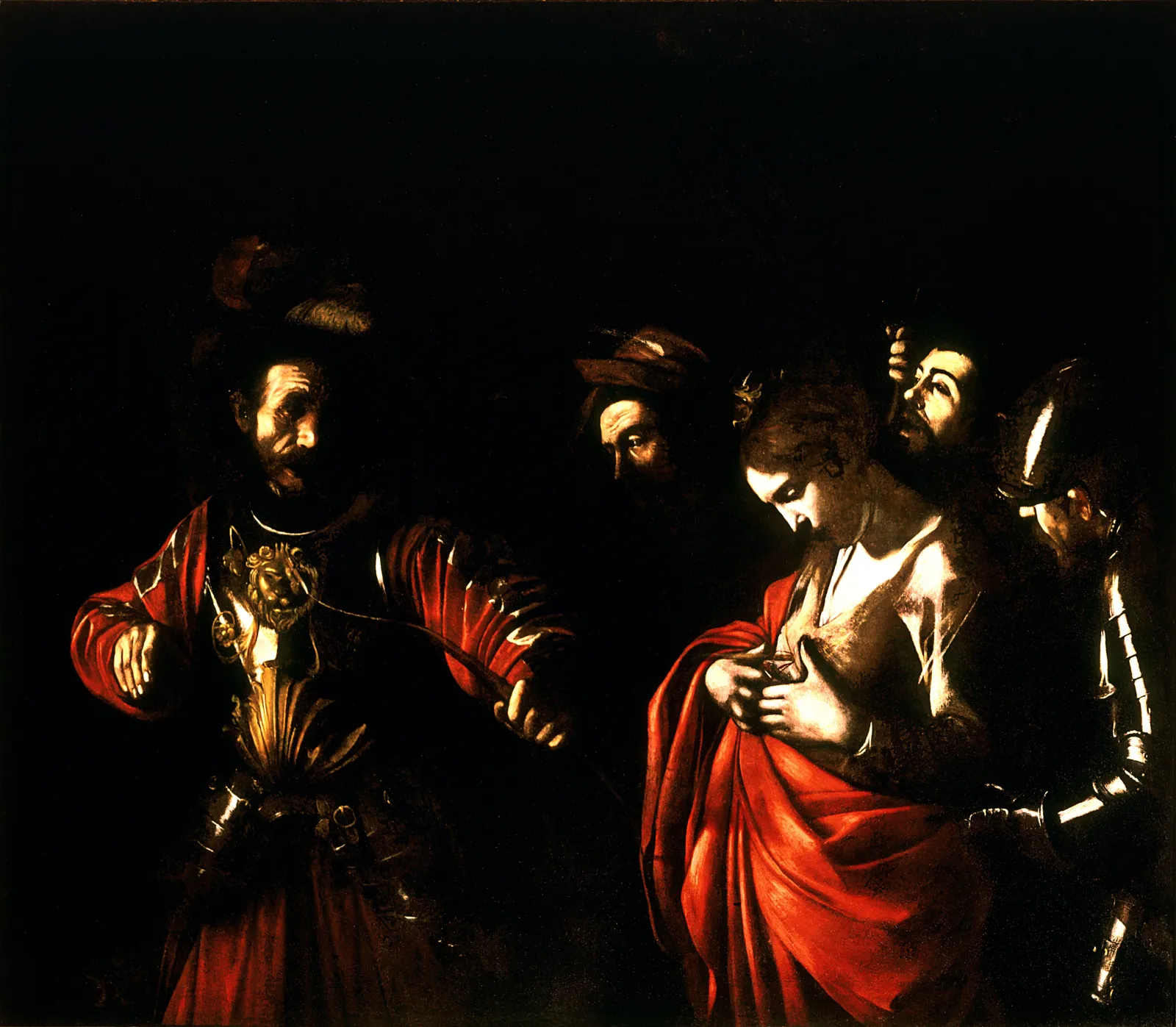
The scene is the moment the arrow goes in, at arm’s length rather than across a battlefield, with Ursula looking down at the wound and the archer still holding the bow. The face craning over her shoulder to see is generally taken to be Caravaggio’s own. Entry is 8 euros, free under 26 and over 65, and the gallery closes on Mondays.
No airport link from Via Toledo
Naples International Airport has no rail connection of any kind, so the way out from here is Line 1 east to Garibaldi, under the central station, and then the Alibus shuttle from Piazza Garibaldi for 5 euros. Reckon on about two hours before departure for the whole sequence.
Pick the bag up before you go back underground. If your stop is closer to the water than to Via Toledo, the walk around the ferry port covers Castel Nuovo and the seafront instead, one stop down the same line.
Frequently asked questions
How deep is Toledo station, and is there a lift?
The platforms sit 44 metres below street level, and yes. The station was built with four lifts, two of them running from the concourse down to both platform levels, alongside 18 escalators and four moving walkways; two of those escalators climb 30 metres in a single run. Step-free access works end to end, which is not true of every station on this line.
Which day is the Caravaggio on Via Toledo closed?
Monday. The Gallerie d'Italia at Via Toledo 177 opens Tuesday to Friday 10:00 to 19:00 and Saturday and Sunday 10:00 to 20:00, with last admission an hour before closing. A full ticket is 8 euros, but entry is free for anyone under 26 or over 65, and free for everyone on the first Sunday of the month.
Is the Pignasecca market open in the afternoon?
Partly. It is a morning market in the way most Neapolitan food markets are: the fish and produce stalls are at full strength from early until about lunchtime and thin out through the afternoon, while the clothing, household and street-food counters along Via Pignasecca keep going later. Sunday is the quiet day.
Does any of this work on a two-hour stop?
Yes, which is the reason to pick this corner of Naples over the old city. The station, a loop through the Quartieri Spagnoli and the market are all inside a ten-minute walking radius of one metro exit, and none of them needs a booking. If you have four hours or more, the full Naples layover guide heads east into the ancient street grid instead, which is a longer walk and a bigger commitment.