Certosa di San Martino on a Naples Layover
Part of the full Naples Layover Guide: The Old City From NAP
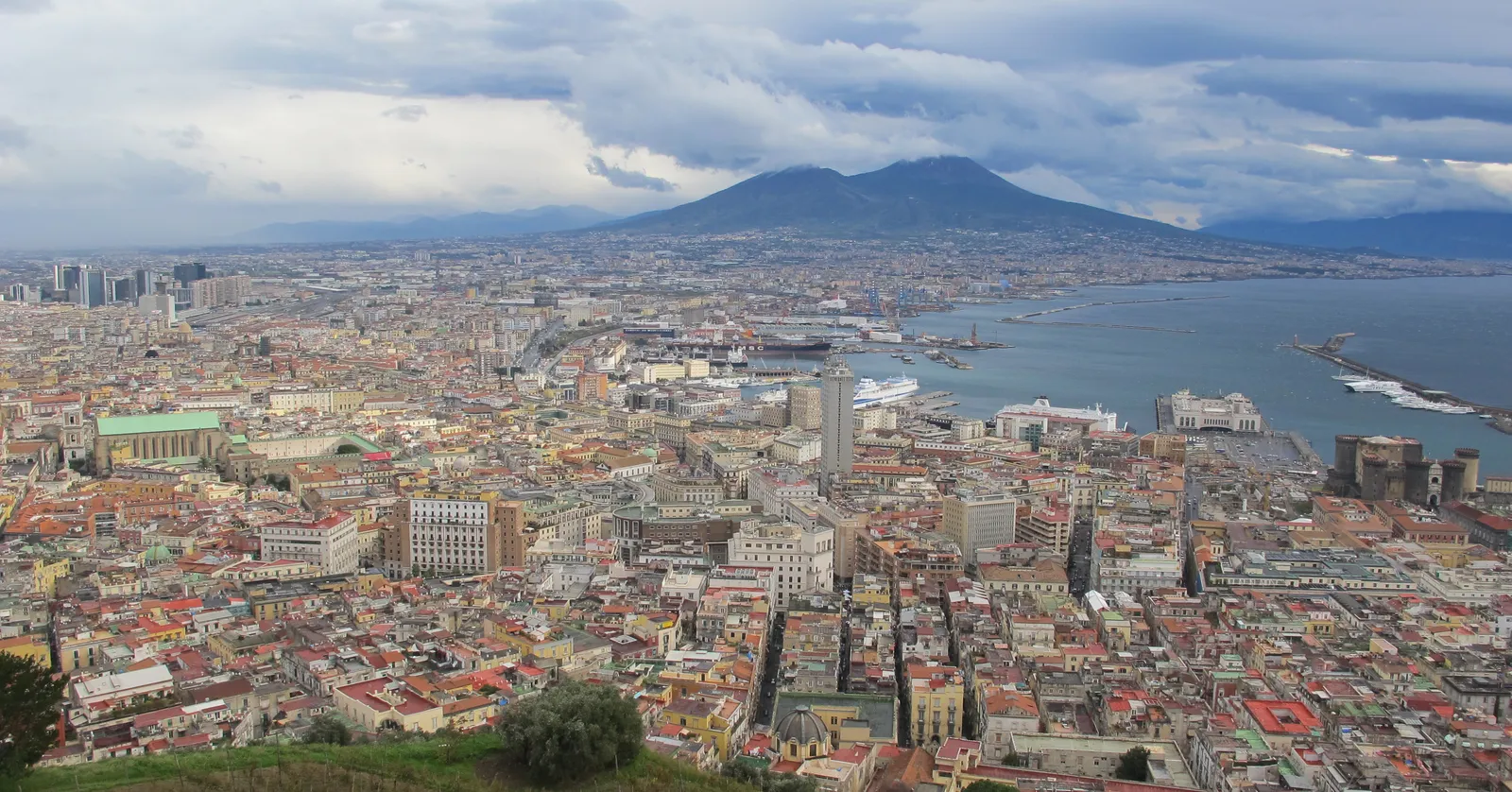
A funicular ride of six or seven minutes lifts you from central Naples to the Vomero hill, where the Certosa di San Martino, a Carthusian monastery turned museum, charges 6 euros for a loggia looking down on the whole city, a cloister with carved skulls on its balustrade and a nativity scene of some 800 figures: an afternoon that involves sitting and looking rather than walking a circuit.
The loggia view over Naples and Vesuvius
The monastery was founded in 1325 and rebuilt in the baroque over three centuries, but the reason to come is where it sits. From the belvedere and the loggia below it, the historic centre is laid out flat underneath you, the domes and the two straight ancient streets legible from above in a way they never are from inside them, with the port to the left and Vesuvius closing the bay behind. There are benches. Nobody moves you along.
Carthusians lived in silence and grew their own food, so the monastery had to be self-sufficient and enormous, and what is left of that is a lot of building for 6 euros: the church, two cloisters, the pharmacy, the picture galleries and a room of royal barges and carriages downstairs. Hours are 08:30 to 19:30, the ticket desk shuts at 18:30, and the whole place closes on Wednesdays.
Skulls on the balustrade of the Great Cloister
The Chiostro Grande is white marble and sixty-four Tuscan-Doric columns around a lawn, which reads as calm until you look at the low balustrade in one corner. Cosimo Fanzago built it in the seventeenth century to enclose the monks’ burial ground, and he finished each post with a carved marble skull wearing a laurel wreath.
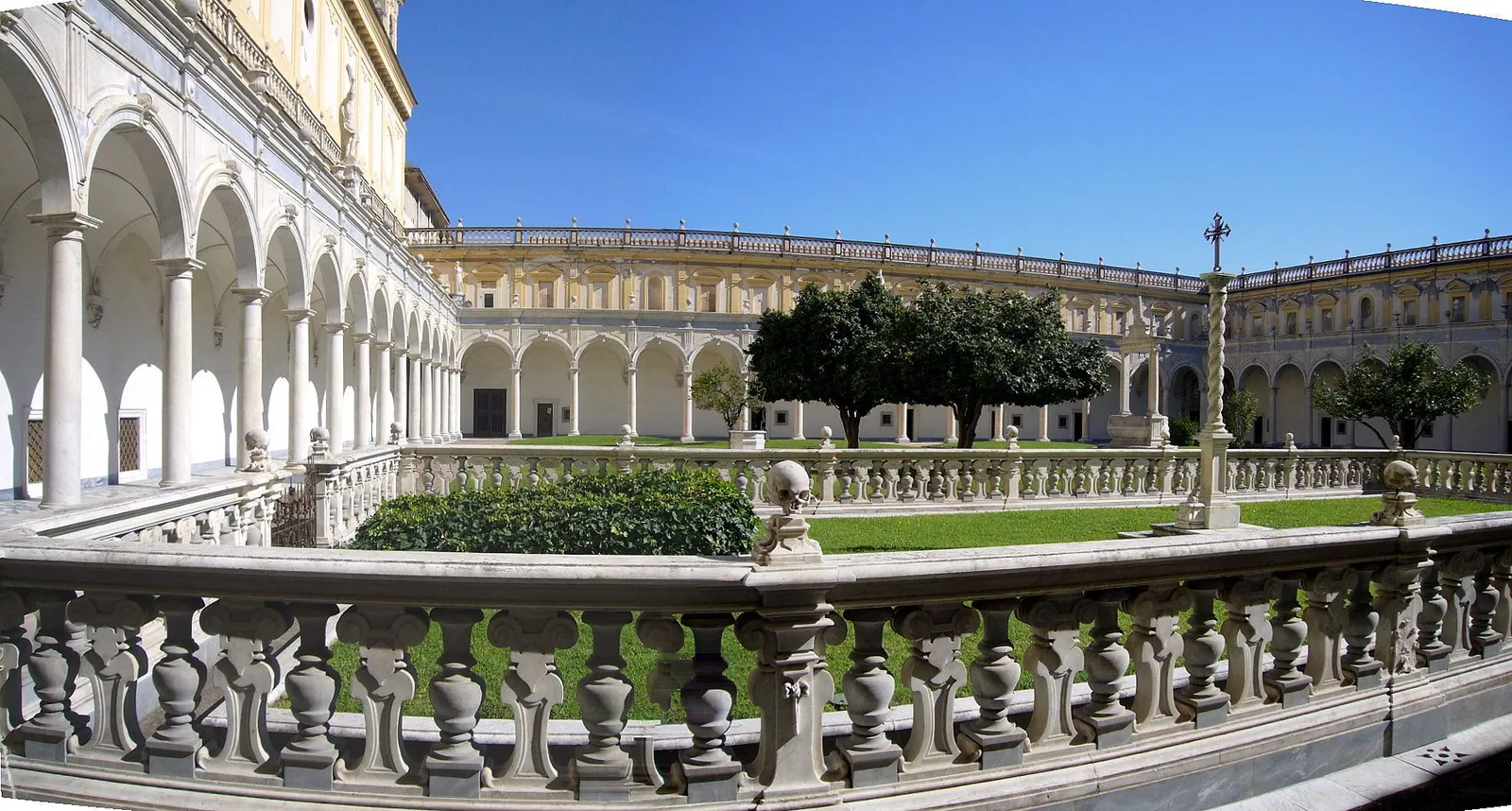
The point was a daily reminder of death to men who had already given up everything else, placed at the edge of the one open space they were allowed to walk in. It is the single strangest thing in the building and it costs nothing extra to stand in front of.
The Cuciniello nativity scene in the old monastery kitchen
Naples treats the Christmas crib as a serious art form, and the Certosa holds the one that settles the argument. The Cuciniello presepe fills what used to be the monastery kitchen: a modelled cliff face with a ruined temple in it, and roughly 800 eighteenth-century figures, animals and props arranged across it, taverns and butchers and musicians and shoppers, with the Nativity itself tucked into one corner of a scene that is mostly about everyday Neapolitan life.
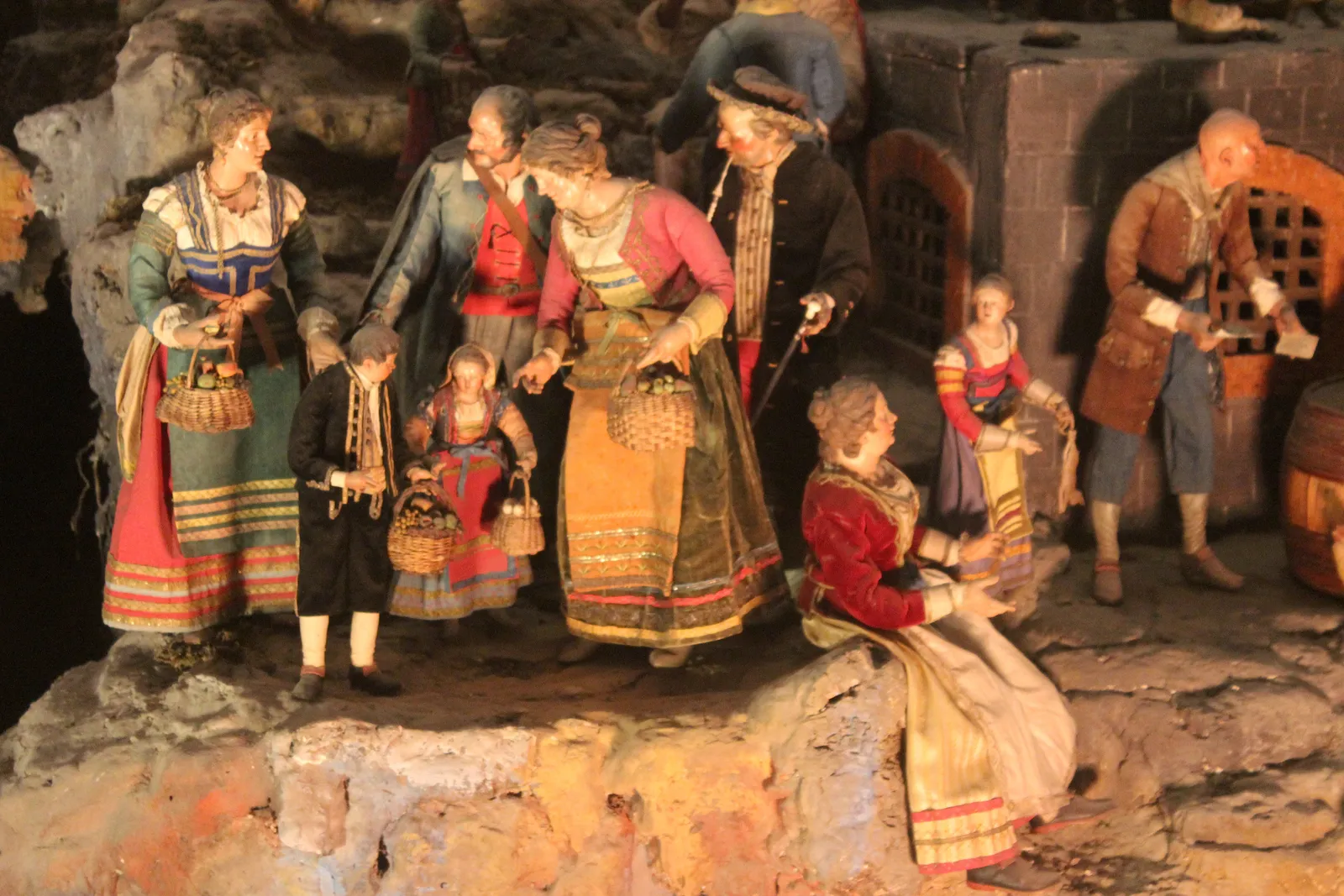
Michele Cuciniello was an architect and collector who gave the state his figures in 1877 and then supervised the staging himself; it opened in 1879 and has not moved since. Neapolitan crib figures are built the way these are: terracotta heads and limbs on an armature of wire and tow, then dressed in cloth cut and sewn at doll scale, which is why the faces are individual portraits rather than repeats of one mould.
Funicular cars fill up and board by steps, which is where a wheeled bag costs you time rather than effort.
Castel Sant’Elmo’s ramparts five minutes uphill
The star-shaped fortress above the monastery is the higher viewpoint and the plainer building. Pedro de Toledo had it rebuilt in the 1530s on a six-pointed plan cut straight out of the tuff, and for most of its life it was a prison rather than a defence, holding the leaders of the 1799 Neapolitan Republic among others.
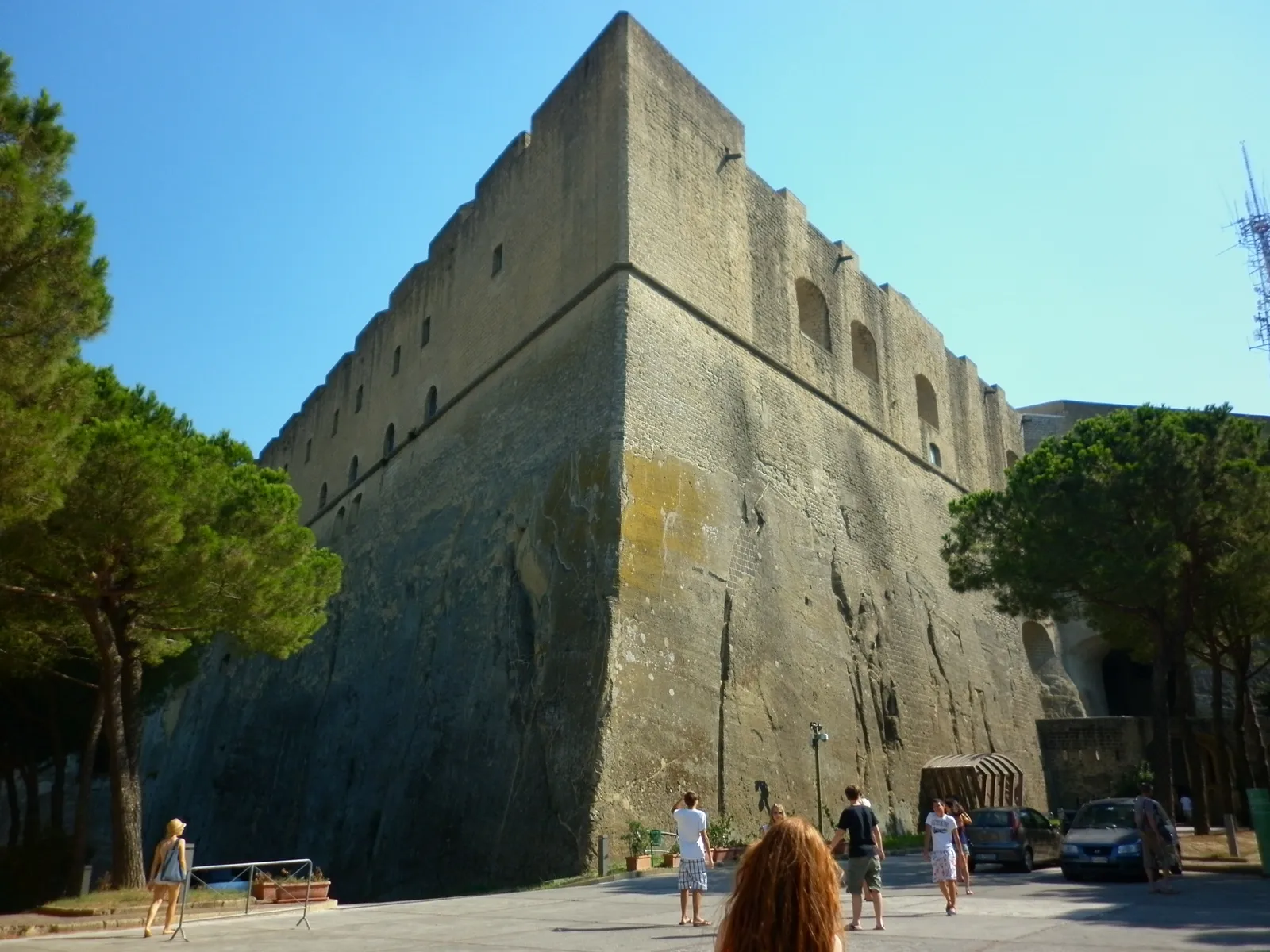
You climb a ramp to the Piazza d’Armi on the roof and can walk the full circuit of the walls, which puts the bay, the hill and the whole city in one turn. Entry is 5 euros, it opens 08:30 to 19:30 and closes on Tuesdays, and the ticket can be booked ahead through a tours and activities platform. After 16:30 it drops to 2.50.
No bus from the hill to the airport
Nothing up here connects to Naples International Airport. The return is two legs: metro Line 1 from Vanvitelli, ten stops and about twenty minutes down to Garibaldi under the central station, then the Alibus shuttle across the square for 5 euros. Allow for the walk between them.
Pick the bag up at the bottom of the hill on the way through. If you would rather spend the time in the streets you have just been looking down at, the main Naples layover guide works the old city at ground level, and the walk around the central station picks up where this one hands you back to the metro.
Frequently asked questions
Which funicular goes up to San Martino?
The Centrale line from Augusteo, at the bottom of Via Toledo, up to Piazza Fuga, or the Chiaia line from Piazza Amedeo up to Cimarosa. Both are a six or seven minute ride and about a ten-minute walk on at the top. The Montesanto funicular is the one that lands nearest the monastery, but it closed on 15 May 2026 for its twenty-year overhaul, expected to run around nine months, with a substitute bus between Piazzetta Montesanto and Vanvitelli in the meantime. A 90-minute integrated ticket covering the metro, buses and all four funiculars is 1.70 euros.
What day is the Certosa closed?
Wednesday. The monastery and museum run 08:30 to 19:30 on every other day, with the ticket desk closing at 18:30, and entry is 6 euros. Castel Sant'Elmo next door closes on Tuesday instead, so between the two of them there is always one open. On a Wednesday, Sant'Elmo's ramparts give you most of the same view for 5 euros.
Is this worth doing with kids?
The nativity section is the part that holds them. It is a hillside of about 800 modelled figures, animals and props at eye level, closer to a dolls' house the size of a room than a gallery of paintings, and there is no queue at it. Castel Sant'Elmo is open ground with ramparts to walk on rather than rooms to be quiet in, which usually works better than the picture galleries in the Certosa.
Can I get to the airport from Vomero directly?
No. There is no bus from the hill to Naples International Airport, so the way back is metro Line 1 from Vanvitelli down to Garibaldi, ten stops and about twenty minutes, then the Alibus shuttle from Piazza Garibaldi for 5 euros. Budget the two legs separately rather than as one number, because the change between them is on foot across the square.