Mergellina and the Naples Seafront
Part of the full Naples Layover Guide: The Old City From NAP
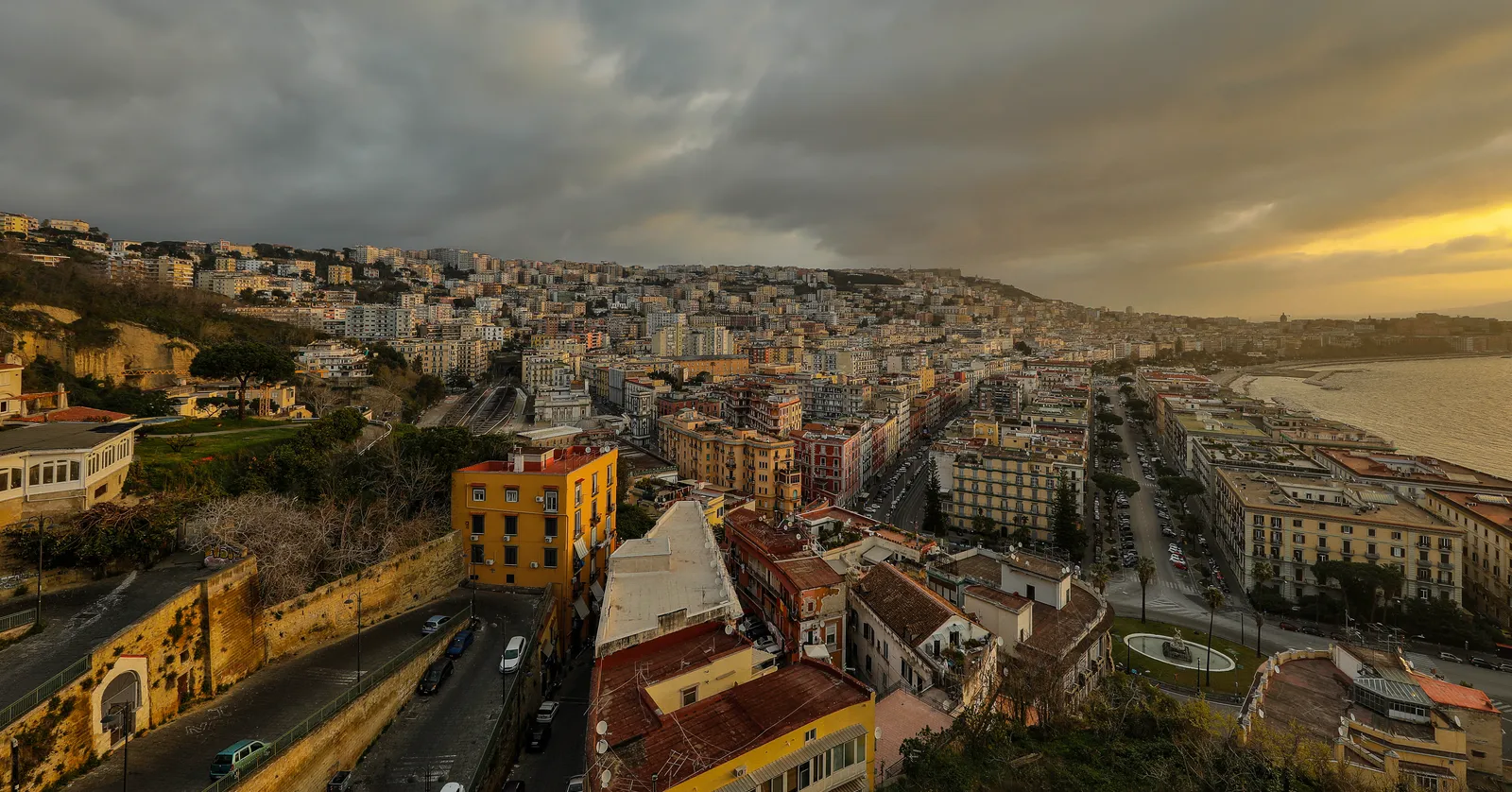
Mergellina, the western railway stop in Naples, sits five minutes above a fishing harbour and a couple of minutes below a free park holding a Roman tomb that Naples has called Virgil’s since the Middle Ages, the mouth of a Roman road tunnel through the hill, and a funicular that climbs 147 metres to the Posillipo ridge: a quieter, more open half-day than the old city inland.
The fishing harbour and the chalets at Mergellina
Downhill from the station the land runs out into a basin of fishing boats and yachts, with the Posillipo slope stacked in pastel blocks straight up behind it and the whole bay open to the east. This is where Neapolitans come to walk in the evening rather than where visitors come to tick things off, and it shows in what is sold along the front: not souvenirs but gelato, coffee and graffe, the hot sugared doughnuts that a run of kiosks here have been turning out since the 1950s. Chalet Ciro, on Via Caracciolo, is the one everybody names and it takes no bookings, because it is a walk-up counter.
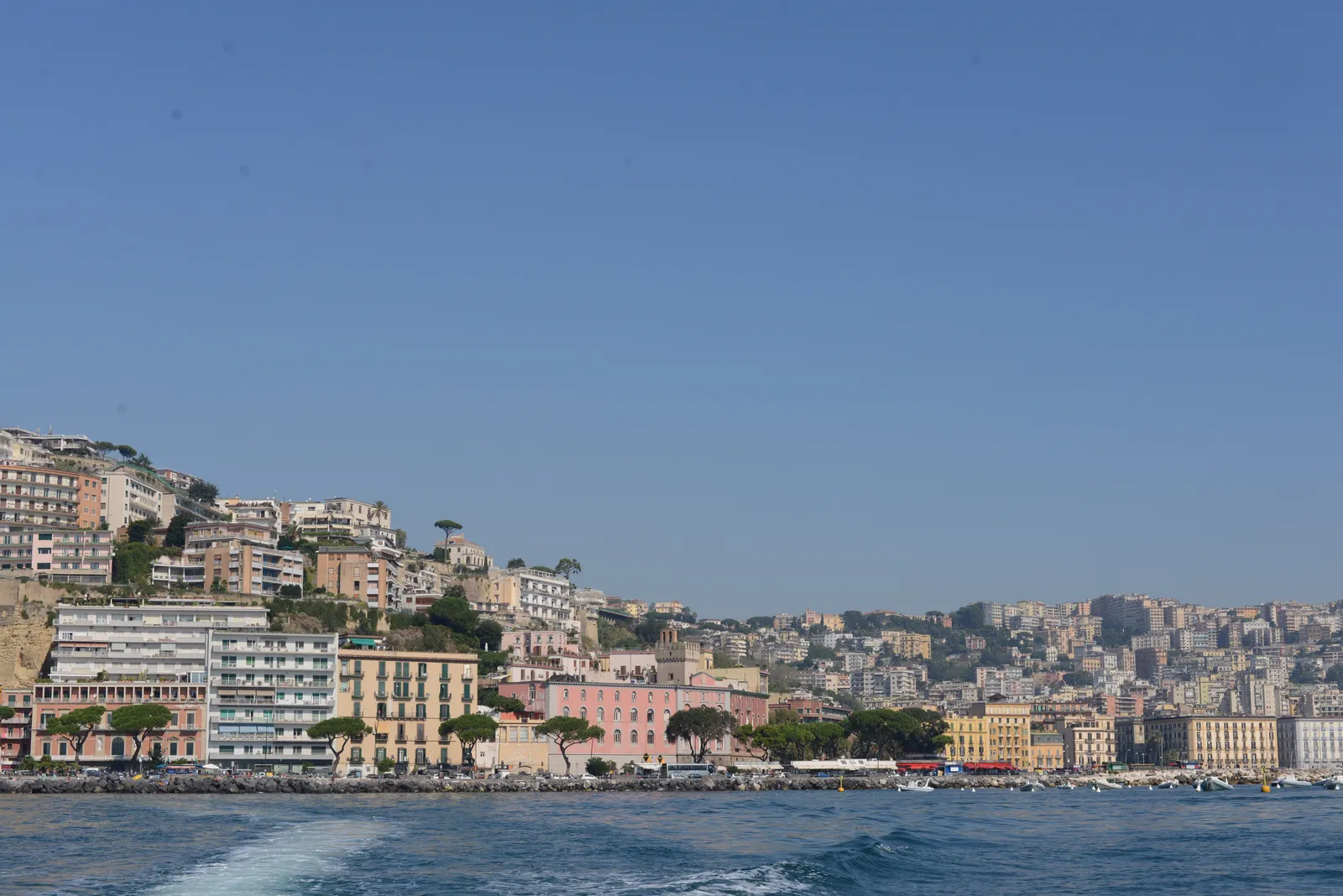
The promenade from here runs east along Via Caracciolo with no traffic on it and no shade either, which matters between June and September.
Virgil’s tomb in the park behind Mergellina station
Two minutes up Salita della Grotta from the station, a gate opens into a terraced garden climbing the side of the hill under holm oaks and bay trees. It is free, and near the top of the path is a squat Roman burial chamber cut into the rock, a columbarium of the Augustan period with niches inside for ash urns.
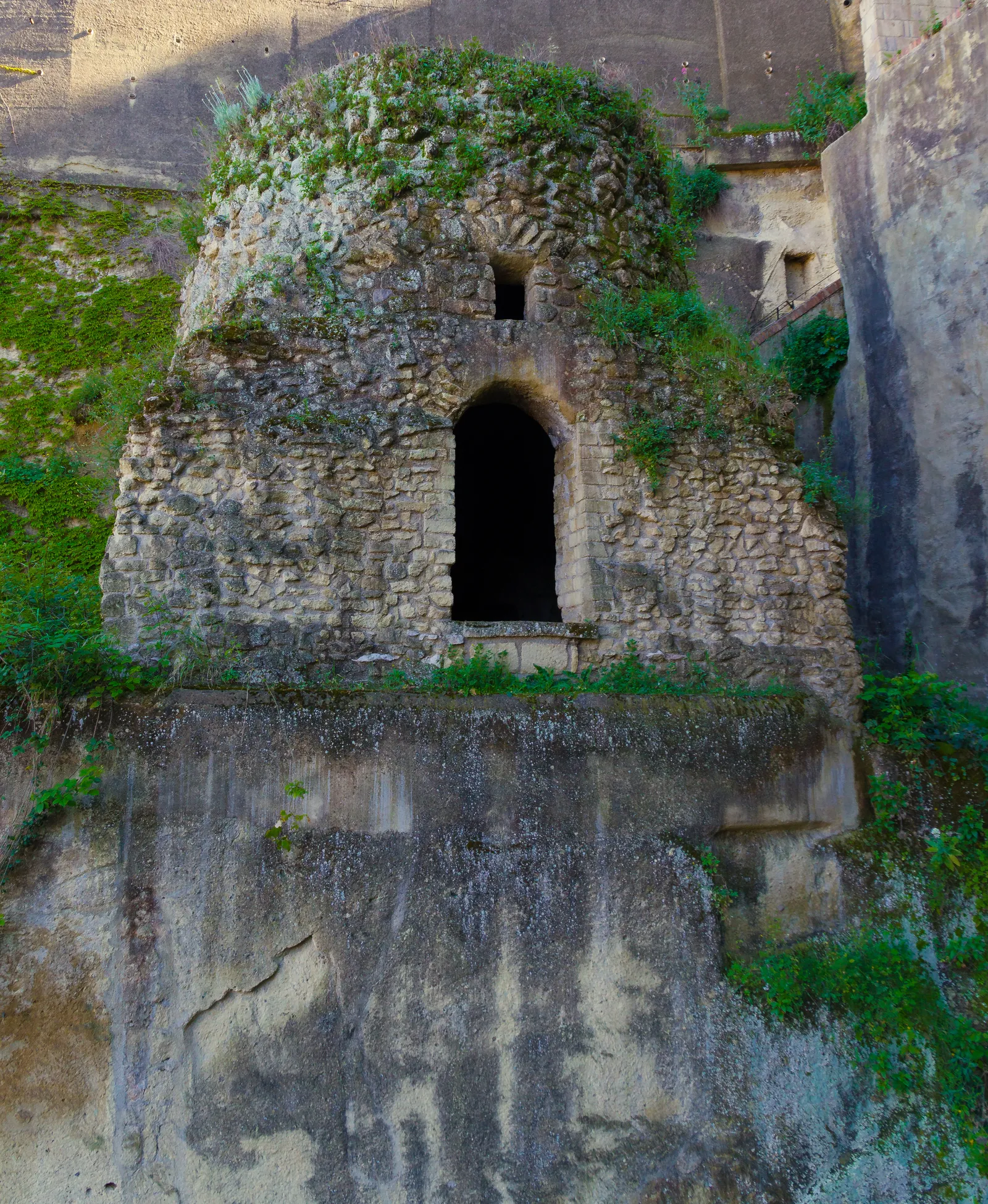
Whether Virgil is in it is another matter, and almost beside the point. Medieval Naples decided that he was, invented him as a sorcerer as well as a poet, and made this a place people travelled to; Petrarch came, Boccaccio came, and the eighteenth-century English on the Grand Tour treated it as a required stop. Lower down the same park is the mausoleum of Giacomo Leopardi, who really is buried here: he died in Naples during the cholera outbreak of 1837, and his remains were moved into the park in 1939.
The Roman road tunnel at the Crypta Neapolitana
The same Salita della Grotta gate also opens onto a hole in the hill roughly the size of a church nave. The Crypta Neapolitana is a road tunnel driven through the Posillipo ridge in the first century BC, attributed to the engineer Lucius Cocceius Auctus, running about 700 metres through to Fuorigrotta and the Campi Flegrei beyond.
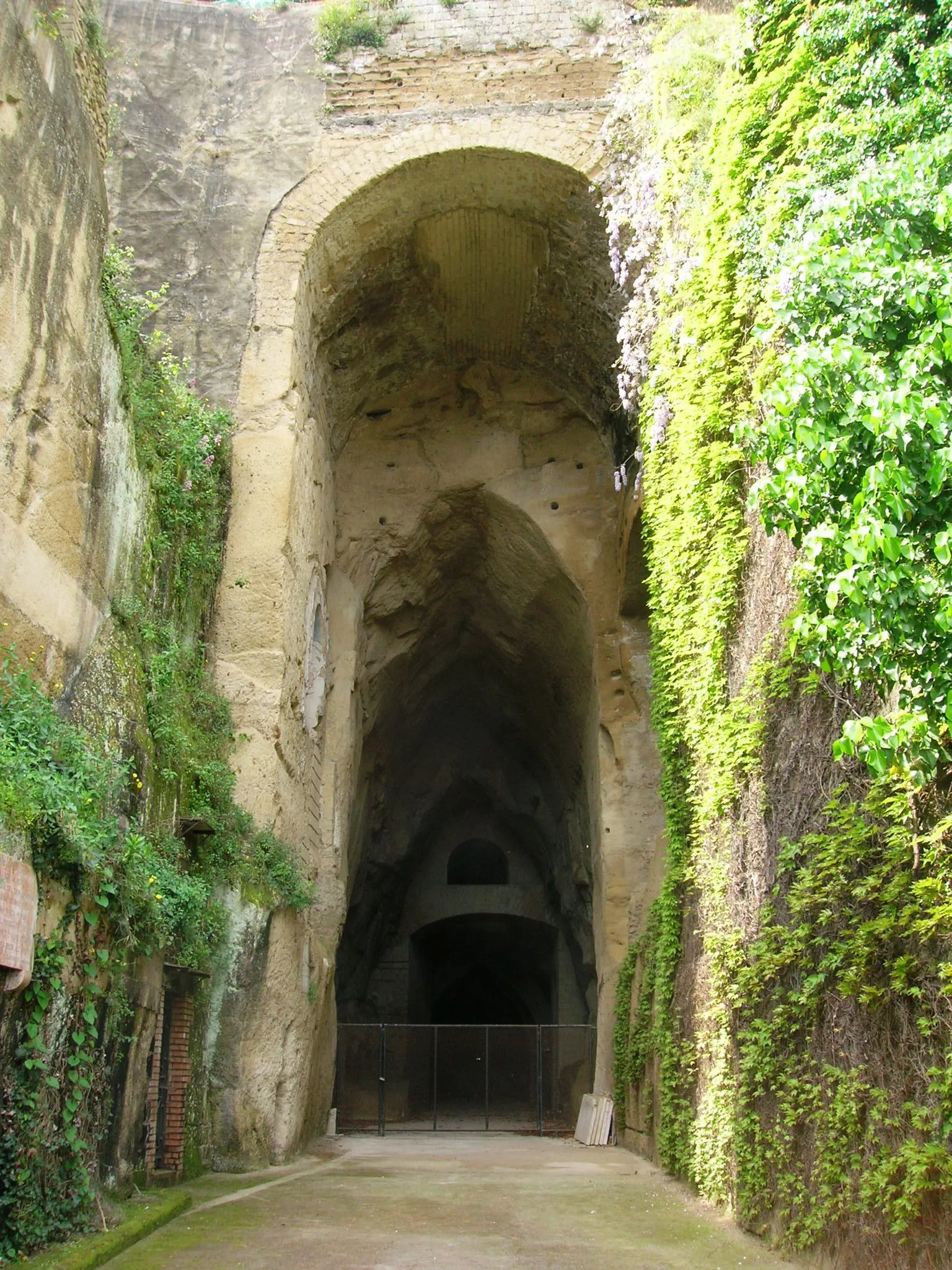
It carried carts for well over a thousand years and was still in use into the nineteenth century. It is gated now, after rockfalls, so you look into it rather than through it, but standing at the mouth of a Roman trunk road with ivy pouring down the cut walls is worth the two minutes it takes to walk over.
Via Manzoni’s terraces on the Posillipo ridge
The funicular station is a few minutes west along the front. Built in 1931, it climbs 147 metres in seven minutes over five stops and puts you out on Via Manzoni, the road that runs the length of the Posillipo ridge with the bay dropping away beneath it. There is no attraction up here and that is the point: the road has openings and low walls at intervals, and the view runs from Vesuvius round to the Campi Flegrei.
Mergellina is a stop on a cross-city line rather than a terminus, so most people passing through are mid-journey with their luggage already on them rather than starting the day fresh from a hotel.
The bandstand and the aquarium in the Villa Comunale
Twenty minutes east along the seafront, a strip of nineteenth-century public garden runs between the road and the water for about a kilometre. The Villa Comunale is free, shaded, and full of marble: statues down the central avenue, and at its middle the Cassa Armonica, a circular bandstand of cast-iron columns under a dome of yellow and blue glass, built in 1877 to a design Enrico Alvino had drawn fifteen years before and did not live to see finished.
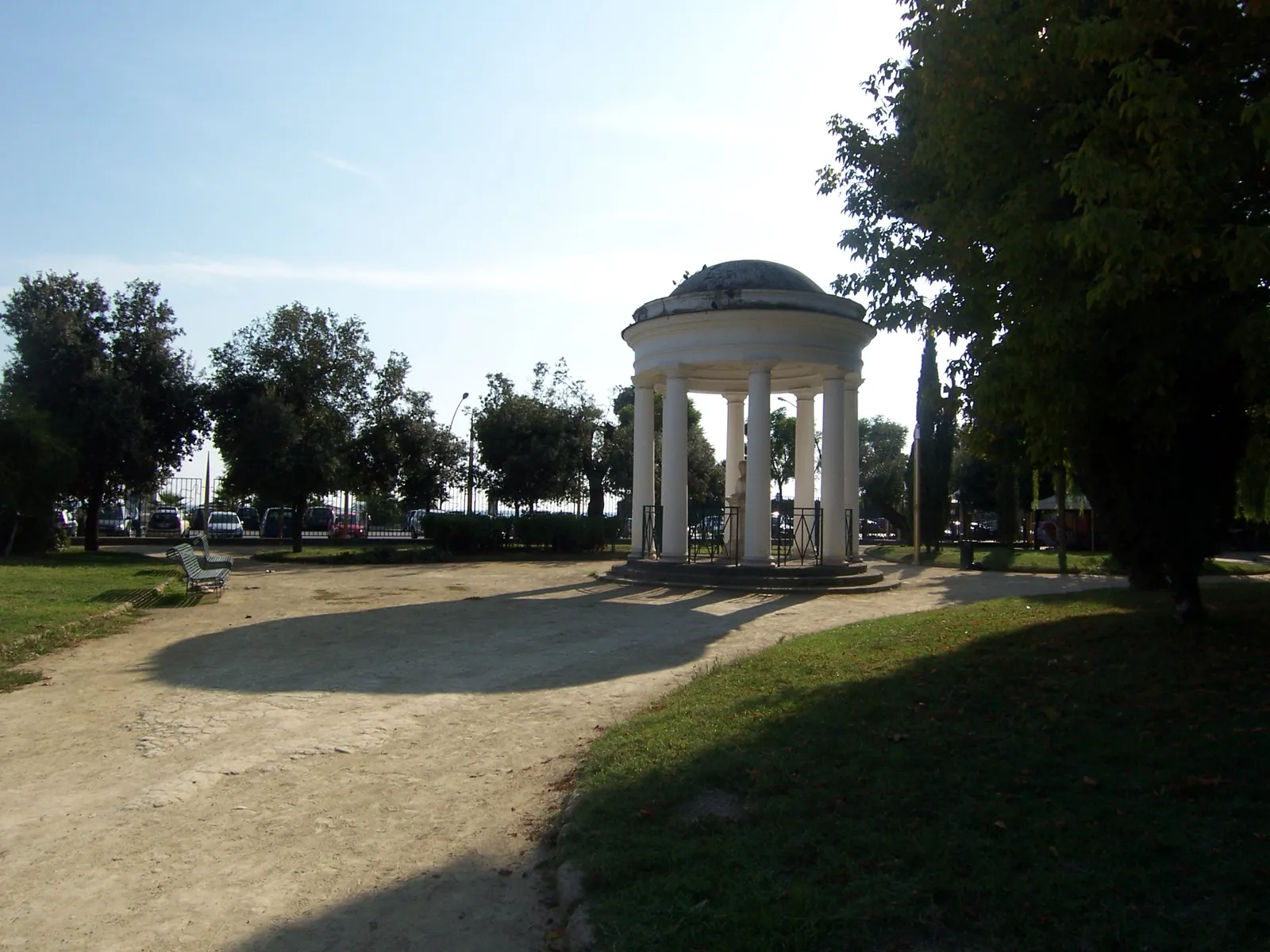
In the middle of the gardens stands the Anton Dohrn Zoological Station, founded in 1872 by a German zoologist who wanted a marine research institute and paid for it by opening an aquarium in the basement. That aquarium has been running since 1874, stocks only species from the Bay of Naples, and still occupies its original rooms, which makes it the oldest surviving aquarium of its century anywhere; entry can be booked ahead through a tours and activities platform, together with the Darwin-Dohrn museum next door.
No direct line from Mergellina to the airport
Nothing runs from this side of the city to Naples International Airport. The way out is the metro east along the shore to Piazza Garibaldi, four stops and around ten minutes, and then the Alibus shuttle from the square for 5 euros. Line 6 to Municipio and the same shuttle from the port is the other option, and the one to check first if you are travelling late, because Line 6 stops earlier in the evening than the shore line does.
Collect the bag before you go under. If you would rather be inland among the churches than out on the water, the main Naples layover guide walks the ancient street grid instead, and the waterfront loop at the ferry port picks up the same promenade at its far end.
Frequently asked questions
Is Virgil really buried in the Parco Vergiliano?
Probably not, and the park does not pretend otherwise. The structure is a genuine Roman columbarium of the Augustan period on the right road out of the city, and medieval Naples decided it was the poet's, which is why it has been a place of pilgrimage since the Middle Ages. Nothing found in it names him. The other tomb in the park is not in doubt: Giacomo Leopardi died in Naples in 1837 and his remains were moved here in 1939.
When is the Parco Vergiliano open?
From 16 April to 15 October it runs 09:00 to 19:00; from 16 October to 15 April it is 10:00 to 14:50, which is a short afternoon. It closes on Tuesdays, and entry is free. The gate is on Salita della Grotta, a couple of minutes uphill from Mergellina station.
How do I get from Mergellina to the airport?
There is no direct link. The usual route is the metro along the shore to Piazza Garibaldi, four stops and around ten minutes, then the Alibus shuttle from the square for 5 euros. That central stretch of Line 2 is suspended between Campi Flegrei and San Giovanni-Barra from 3 to 31 August 2026 for maintenance, with substitute buses running; after that it is back to normal. Line 6 from Mergellina to Municipio, then the same shuttle from the port, is the alternative either way, though Line 6 stops earlier in the evening.
Does this work in summer heat?
Better than the old city does. The Parco Vergiliano is a terraced garden of holm oaks and bay on a north-facing slope, so it is shaded almost all the way up, and the funicular climbs 147 metres in seven minutes instead of leaving you to walk it. The seafront itself is the exposed part: there is no shade at all on the promenade between Mergellina and the Villa Comunale, which is why the gardens there are worth cutting into.