Paris Layover Guide: Notre-Dame From CDG
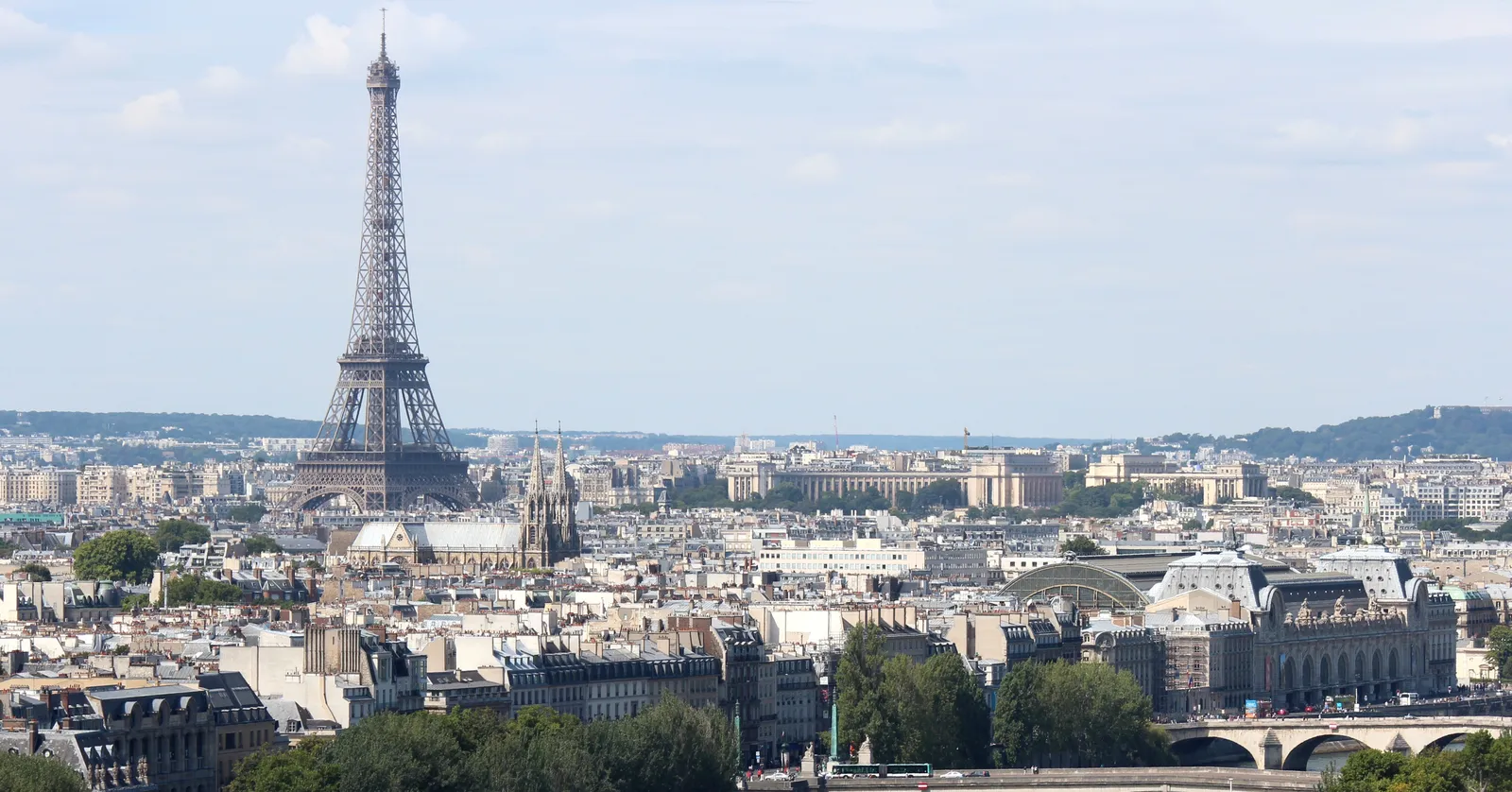
Paris’ Île de la Cité, the island in the middle of the Seine, puts Notre-Dame, the Sainte-Chapelle and the Pont Neuf within a quarter-hour walk of one another, a direct train ride from Gare du Nord.
Almost everything a first-time visitor associates with Paris sits inside a single bend of the river. Île de la Cité is the larger of the city’s two river islands, roughly a kilometre end to end, and the Louvre stands on the bank directly opposite its western tip. You can cover the whole of it on foot, at a wandering pace, and still be back on the airport train with time to spare.
Notre-Dame has never sold an entry ticket
The cathedral reopened in December 2024 after five and a half years of restoration, and it is free, as it has always been. There is no entry ticket, and none has ever existed: the only thing the cathedral sells is space in its shop. What it does offer is a free timed slot booked on its own site, which exists to keep the queue on the parvis moving, and it is worth taking. Without one you join the line outside, which runs to twenty minutes on a quiet winter afternoon and considerably longer in July.
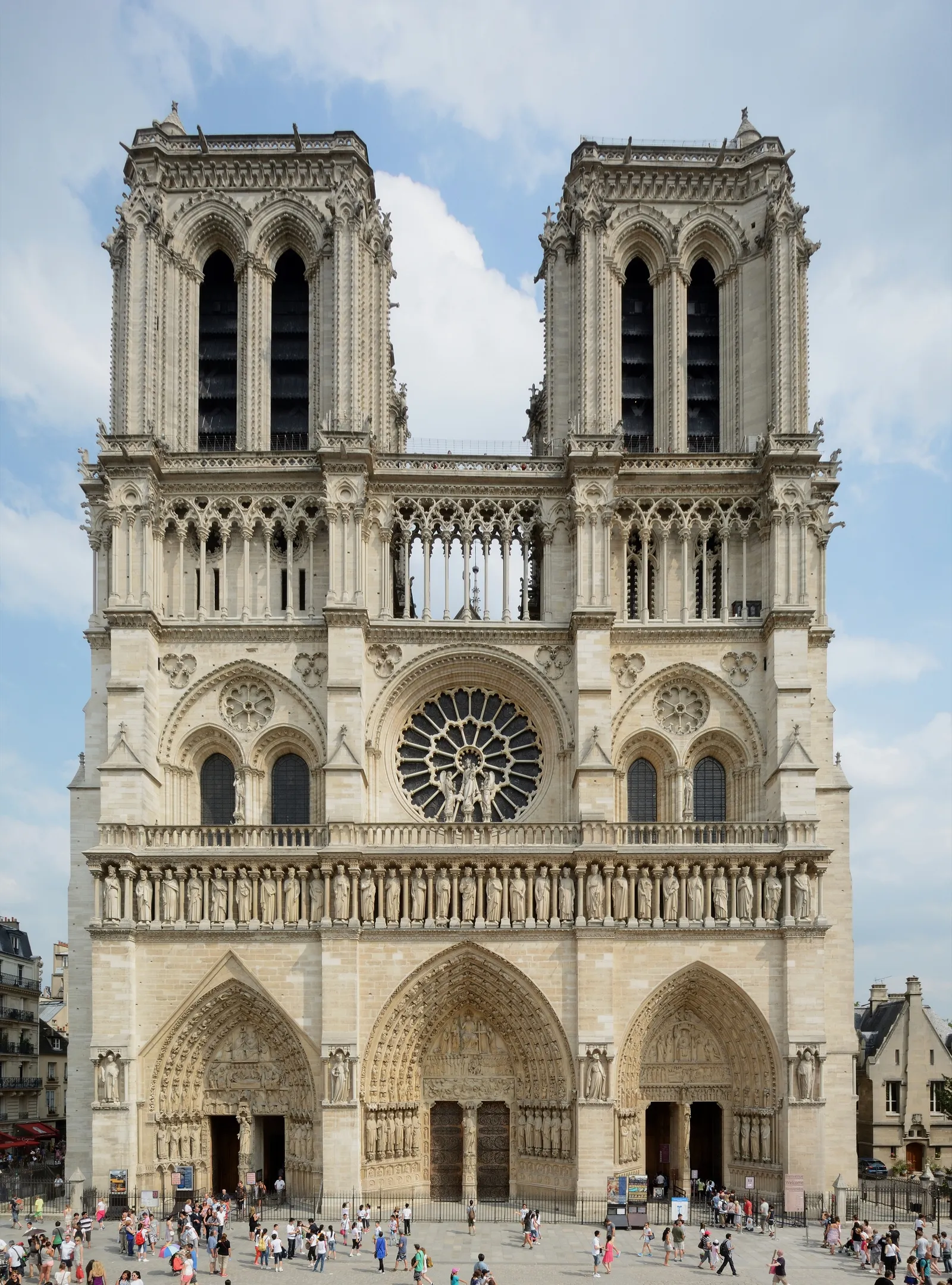
Inside, the cleaned limestone is the thing people notice first, several shades paler than any photograph taken before the fire. The cathedral is open every day, from 7:50am on weekdays and 8:15am at weekends, and stays open until 10pm on Thursdays, which is the one evening this stop works for a genuinely late departure. On Sunday afternoons at four there is a free recital on the great organ, no ticket and no booking.
Two minutes further east, past the apse and down a staircase in the pavement at the island’s tip, is the Mémorial des Martyrs de la Déportation. Georges-Henri Pingusson built it into the point of the island in 1962 and de Gaulle opened it; the design pins you between concrete walls before letting you into a corridor lined with two hundred thousand small glass crystals, one for each French deportee who died in the camps. It is free, and most people crossing the island for the cathedral walk straight past the entrance without noticing it. It closes over the middle of the day, so check the hours on the gate before you go down.
Start at Châtelet and everything above is on foot, which is the argument for arriving with your hands empty: the RER platforms there sit four levels below the street, and the climb back up to them is the one part of this trip where a suitcase costs you real minutes.
The Sainte-Chapelle’s fifteen windows of thirteenth-century glass
Five minutes west along the island, inside the courtyard of the Palais de Justice, Louis IX built a chapel to hold what he believed was Christ’s crown of thorns. The lower chapel is dim and low and gives no hint of what is above it. Up the spiral staircase, the upper chapel has almost no wall left: fifteen lancet windows run from waist height to the vault, 1,113 scenes of thirteenth-century glass, with a rose window at the back added two centuries later.
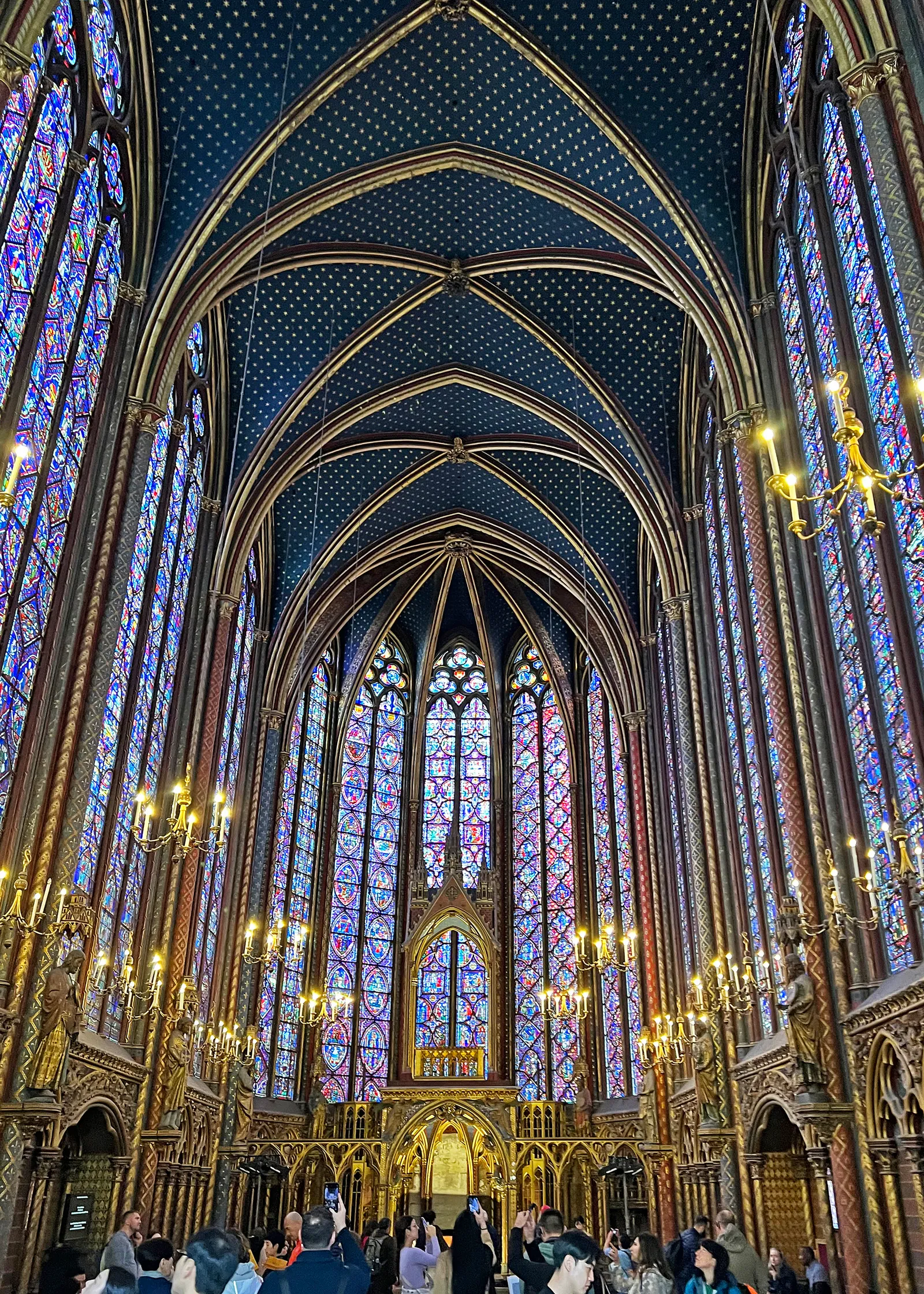
It is the one stop here that genuinely wants a bright day, and the one that genuinely wants booking. Entry runs 22 euros for non-EEA visitors and 16 for nationals and residents of the European Economic Area, free under 18, and the tickets are timed, so booking a slot ahead is the difference between walking in and standing on the Boulevard du Palais. Doors are 9am to 7pm from April to September and 9am to 5pm the rest of the year, with last admission half an hour before.
Pont Neuf is the oldest bridge across the Seine
The name means new bridge, which it was in 1607. Every bridge older than it has since been rebuilt, so the joke now runs the other way. Henri IV commissioned it wide and clear of houses, which nobody had done in Paris before, and the pavements he added so pedestrians could stop and look at the river are still the reason it is worth crossing slowly.
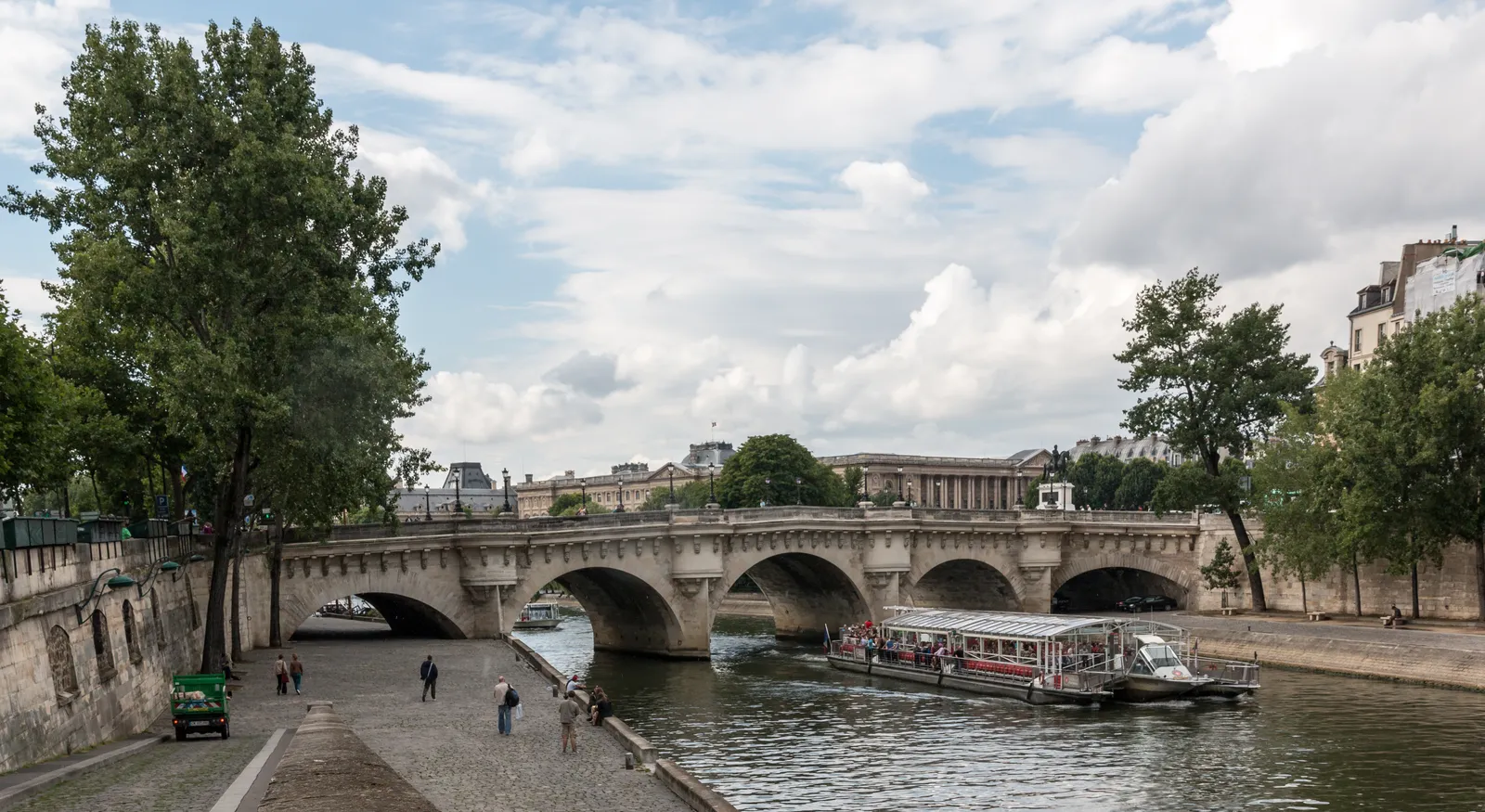
He sits on a bronze horse at the midpoint, facing west. Behind the statue a flight of steps drops to the Square du Vert-Galant, a wedge of grass and plane trees at the island’s sharp western end, level with the water and several metres below the traffic. You can sit at river height here with a working view in both directions, and it costs nothing.
The glass pyramid in the Louvre’s main courtyard
The Louvre stands eight minutes north of Île de la Cité along the quay, and the important thing for a few free hours is that the courtyard is not the museum. The Cour Napoléon, the enormous paved square with I. M. Pei’s glass pyramid standing in the middle of it, is open to anyone from 7:30am until 10pm, no ticket, no bag check, no queue. Walk in through the Passage Richelieu off the Rue de Rivoli and the three wings close around you at once.
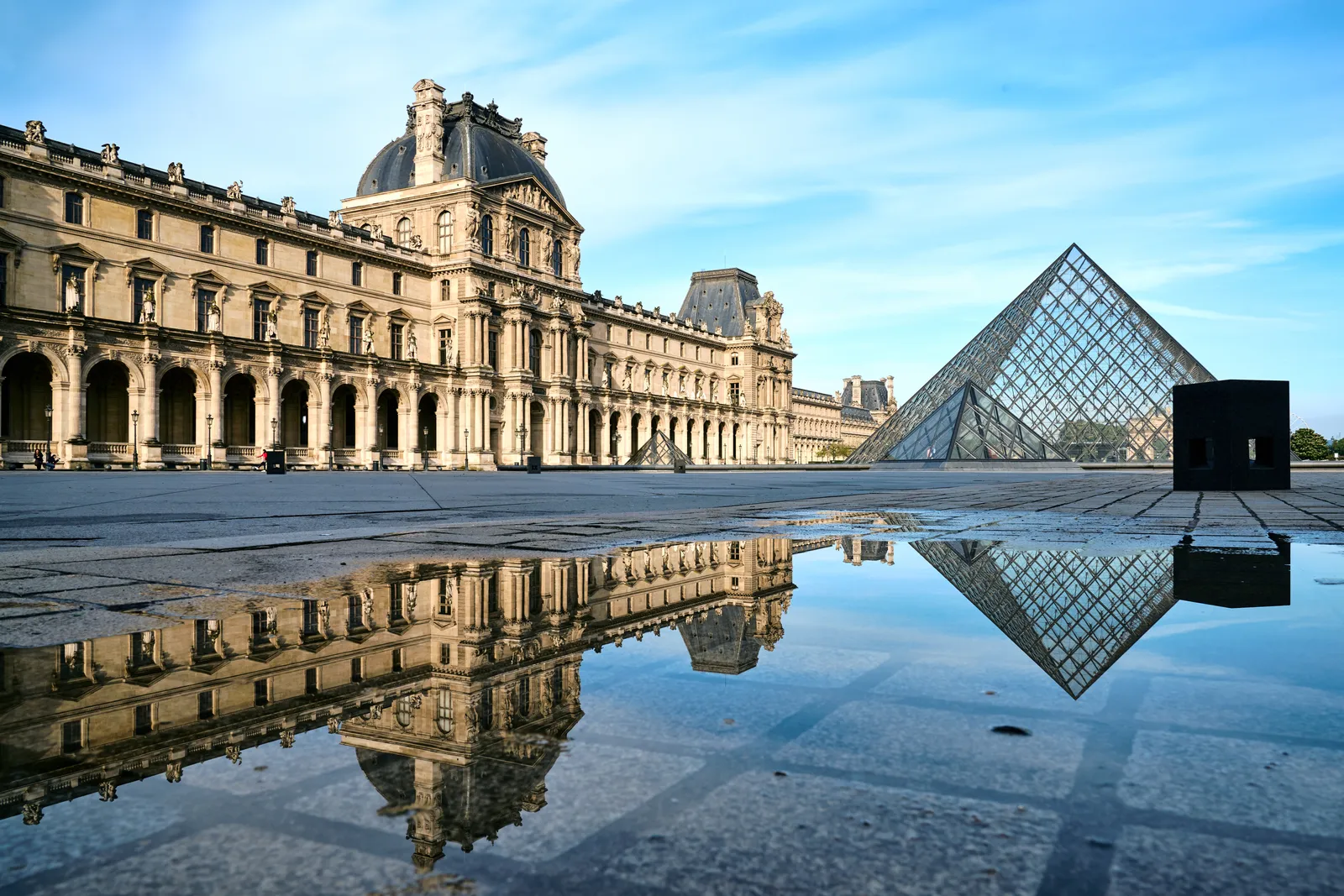
The galleries themselves are a different proposition on a flight day. Two hours is the realistic minimum to see anything and still leave unhurried, admission is 22 euros for EEA residents and 32 for everyone else, and any exit is final, so an advance timed entry is the only sensible way in if you decide to do it. The museum closes on Tuesdays. The alternative is the Tuileries, just west through the arch and free and open from 7am, with gravel paths running the length of it to Concorde.
Victor Hugo’s apartment on the Place des Vosges
With more than five hours in hand, the Marais, fifteen minutes east of the island, is a different Paris altogether. The Place des Vosges was finished in 1612, before anything else in Paris was laid out on purpose: 36 pavilions of red brick and pale stone, nine to a side, all the same height, with a continuous arcade running the full way round at ground level and a plane-tree garden in the middle. The arcade means the square works in rain, which matters on a day you cannot control.
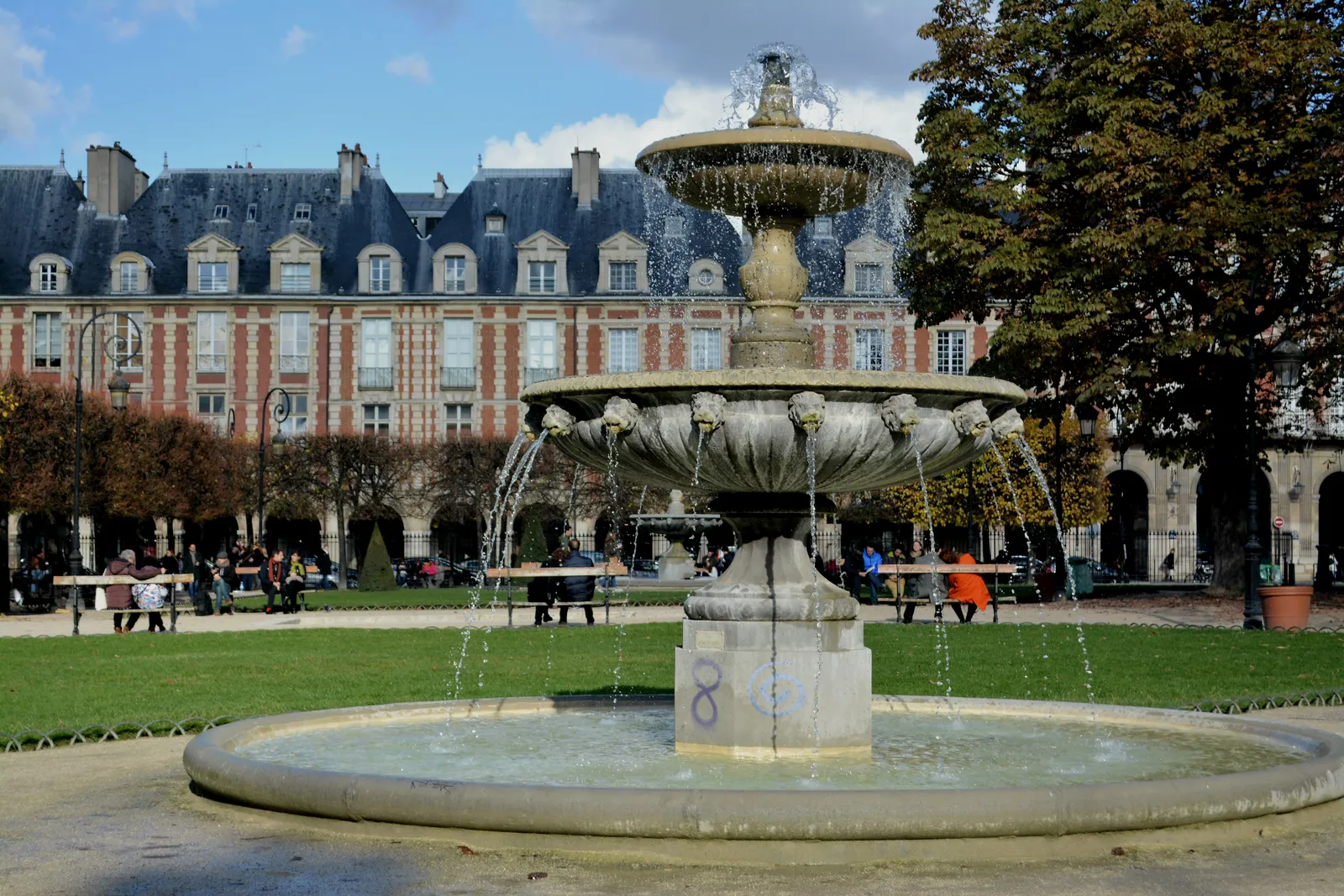
Number 6, in the southeast corner, is where Victor Hugo lived from 1832 to 1848 and wrote most of what became Les Misérables. The apartment is now a city museum, its permanent collection free, open 10am to 6pm and closed on Mondays. It takes about forty minutes, which is roughly the amount of spare time this itinerary tends to produce.
For a version of this trip anchored somewhere warmer and considerably smaller, the Nice layover guide covers the other end of the country, where the airport is fifteen minutes from the sea.
Your airport ticket has to go on a card or a phone
The RER B is the line, and the fare between Paris and Charles de Gaulle (or Orly) is a single flat 14 euros, sold as the Paris Region to Airports ticket, which does not exist as a paper single. It loads onto a Navigo Easy card or straight onto a phone, and it covers transfers across the whole region for two hours, so the walk from the RER platform to whatever metro line you want next is already paid for. Buy the return the same way before you head back out.
RER B trains run every 10 to 15 minutes from around 5am until midnight. From Terminal 2 the station sits directly beneath the building, and the ride to Gare du Nord is about 30 minutes and Châtelet-Les-Halles about five minutes more, though the direct services that skip the suburban stops are noticeably quicker than the all-stations ones. From Terminals 1 and 3, add the free CDGVAL shuttle at each end, which runs every four minutes and pushes the door-to-door figure closer to 50 minutes. Budget for that number, not the ride time, when you are working backwards from a boarding gate.
Whatever you do with the hours, do the arithmetic on the way back rather than at the barrier: buy the return ticket before you leave the centre, collect the suitcase, and give yourself the door-to-door figure rather than the train time. Châtelet’s escalators are much easier on the way down than up.
Frequently asked questions
What should I do during a layover in Paris?
With five to seven hours, an airport train reaches Châtelet in about 35 minutes, close to Notre-Dame, free to walk into with no entry ticket ever having existed for it. From there it's a five-minute walk to the Sainte-Chapelle's stained-glass upper chapel (22 euros, timed entry, worth booking ahead), then west along the river past the Pont Neuf to the Louvre's Cour Napoléon, which is free even though the museum itself isn't. With time left, the Place des Vosges and Victor Hugo's apartment above it, fifteen minutes east, are both free to visit.
Do I need a ticket to get into Notre-Dame?
No, and none exists. The cathedral is open to everyone free of charge, and the only booking it offers is a free timed slot on its own site, notredamedeparis.fr, which exists purely to cut the wait on the parvis. The cathedral posts a standing warning about counterfeit paid entry tickets sold elsewhere, so anything charging you to walk through the doors is not selling you entry. Opening hours are 7:50am to 7pm Monday to Friday, until 10pm on Thursdays, and 8:15am to 7:30pm at weekends, with last entry half an hour before closing.
Does this walk still work on a Monday?
Almost all of it. Notre-Dame opens every day of the year, the Sainte-Chapelle opens daily, and the Pont Neuf, the quays and the Louvre's courtyard have no closing day at all. The Maison de Victor Hugo on the Place des Vosges shuts on Mondays, and so does the deportation memorial behind Notre-Dame on some weeks, so those two are the ones to check. Note that the Louvre's own galleries close on Tuesdays rather than Mondays, which catches out people working from a Monday-closing assumption.
How much of this itinerary costs nothing?
Everything except the two ticketed interiors. Notre-Dame, the riverside quays, the Pont Neuf, the Square du Vert-Galant, the Louvre's Cour Napoléon, the Tuileries Garden, the garden and arcades of the Place des Vosges, the permanent collection at the Maison de Victor Hugo and the deportation memorial are all free. Only the Sainte-Chapelle and the Louvre's galleries charge, and even the Louvre is free for under-18s, for European Economic Area residents under 26, and for everyone on the first Friday of the month after 6pm outside July and August.
Is the Île de la Cité walk step-free?
The street-level half of it is. The parvis in front of Notre-Dame and the cathedral floor itself are level, the Pont Neuf's deck is flat, and the Louvre's courtyard is paved throughout. Three things are not: the Sainte-Chapelle's upper chapel is reached by a narrow medieval spiral staircase, though the monument has a ground-floor access ramp and a lift up to the chapel for wheelchair users, arranged in advance on 01 53 40 61 04. The Square du Vert-Galant and the lower quays are down flights of steps from the bridge, and the deportation memorial descends a steep, deliberately narrow staircase with no alternative route.
How late can I leave central Paris for Charles de Gaulle?
The last RER B towards the airport leaves Gare du Nord a little after midnight, and the first runs from about 5am, with trains 10 to 15 minutes apart for most of the day in between. After that last departure the only option is a taxi. Working backwards from a late flight, a departure from Châtelet around two and a half hours before take-off leaves room for the train, the shuttle between terminals if you are flying from Terminal 1 or 3, and the check-in queue.