Paris Montparnasse: The Left Bank on Foot
Part of the full Paris Layover Guide: Notre-Dame From CDG
Paris Gare Montparnasse has a 3.4-hectare public garden on the concrete roof over its platforms, and the Jardin du Luxembourg is twenty minutes east along a single street, which makes this the Left Bank end of the city rather than the river islands most Paris itineraries walk.
The station itself is a 1969 concrete box that nobody defends. What is around it, and directly on top of it, is better than the building deserves.
The garden on the roof of Gare Montparnasse
Most people who pass through here have no idea it exists. In 1994 the city built a garden on the dalle, the concrete slab laid over the tracks and platforms, seventeen metres above street level and carried on twelve pillars. It covers 3.4 hectares, holds five hundred trees planted in cubes of stone filled with earth, and is laid out around the station’s Atlantic theme, all wave shapes and ships’ rigging in the ironwork.
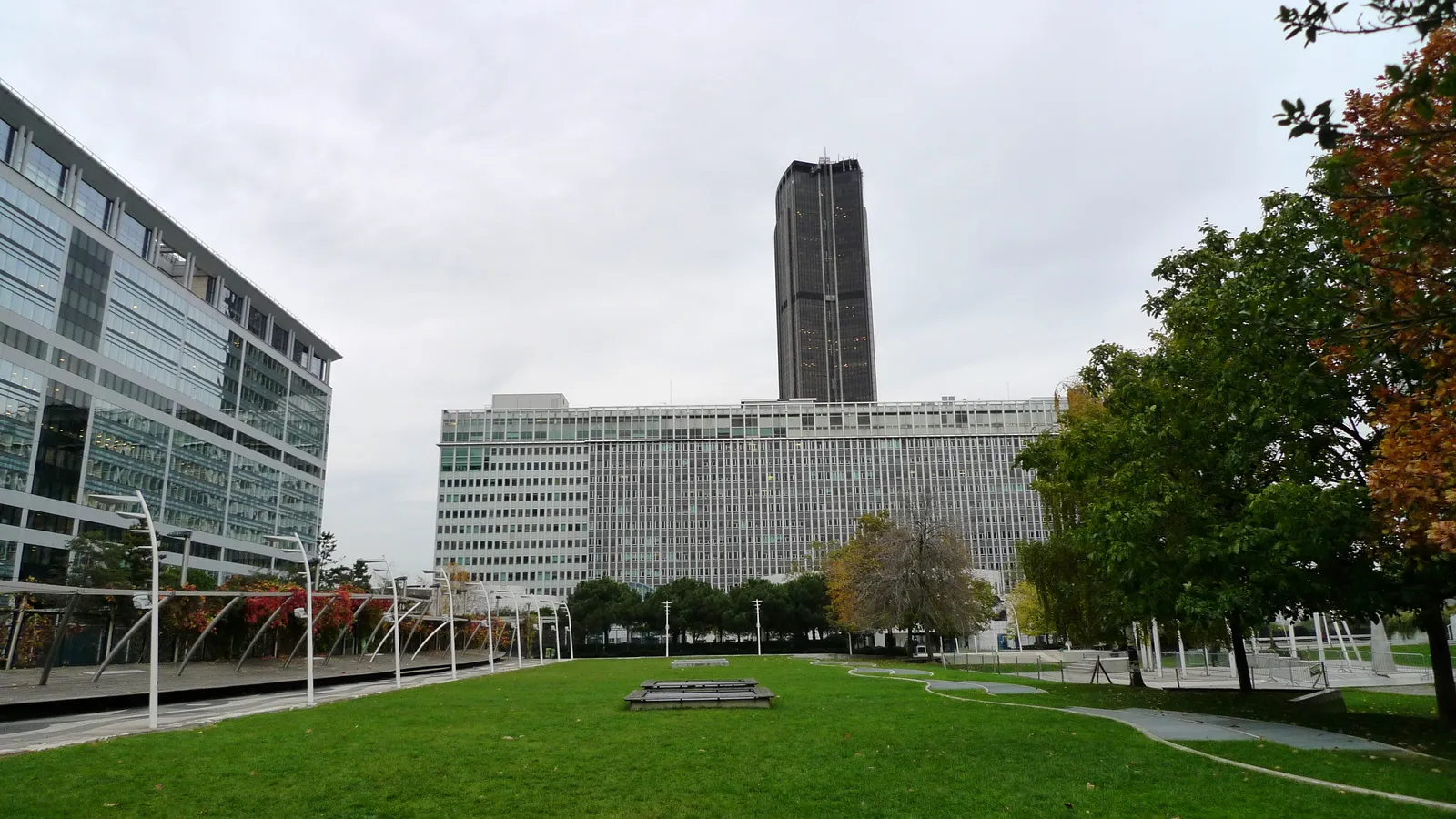
The giveaway that you are standing on a railway station is the ventilation shafts set among the lawns, and the departure announcements coming up through them. It is free, it is almost always quiet, and it is reached by lifts and stairways from inside the station, which makes it the shortest possible walk from a platform to somewhere worth sitting down.
Most people arriving at this station have come off a TGV from Brittany, Bordeaux or Nantes with a week’s worth of luggage rather than a cabin bag, which is the practical difference between this itinerary and an airport one: the thing you are carrying here is bigger, and one stop on the route will not let it through the door at all.
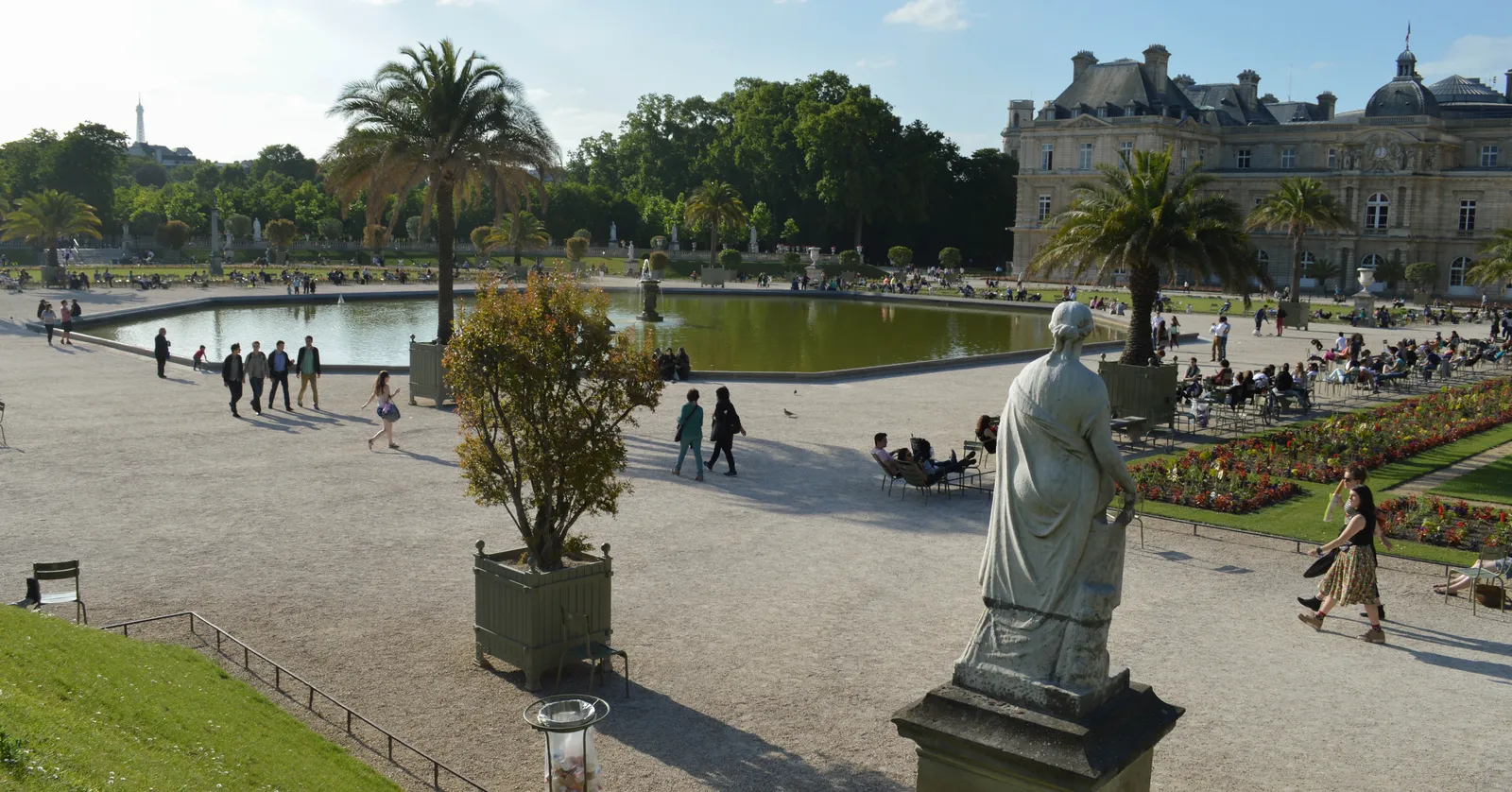
Model sailboats on the Grand Bassin in the Luxembourg gardens
The Rue de Vaugirard runs east from the station for 4.3 kilometres, the longest street inside the old city walls, and about twenty minutes along it the railings of the Jardin du Luxembourg start. Marie de’ Medici laid the gardens out from 1612 around a palace built to remind her of Florence; the palace has housed the French Senate since the Revolution, and the Senate still owns the twenty-three hectares of gravel, lawn and lime avenues in front of it.
The centre of it is an octagonal pond where children have been pushing model sailboats around with sticks since the nineteenth century, and still do, hired by the half hour from a hut beside it. Around that: 106 statues, an orchard of old apple and pear varieties, a puppet theatre running since 1933, and several hundred of the green metal chairs that nobody ever steals. The Medici Fountain, a long shaded basin under plane trees at the eastern edge, dates from 1620 and is the quietest corner of it.
Entry costs nothing and the gates open every day of the year. Only the extras charge: the boats, the ponies, the tennis courts.
Sartre, Beauvoir and Gainsbourg in Montparnasse Cemetery
Five minutes south of the station, the cemetery takes up nineteen hectares of the quarter and is laid out on a grid of tree-lined avenues rather than the tangle of paths at Père Lachaise, which makes finding anyone in it considerably easier. Jean-Paul Sartre and Simone de Beauvoir share a single flat slab a short way inside the Boulevard Edgar Quinet gate, usually covered in metro tickets and lipstick marks.
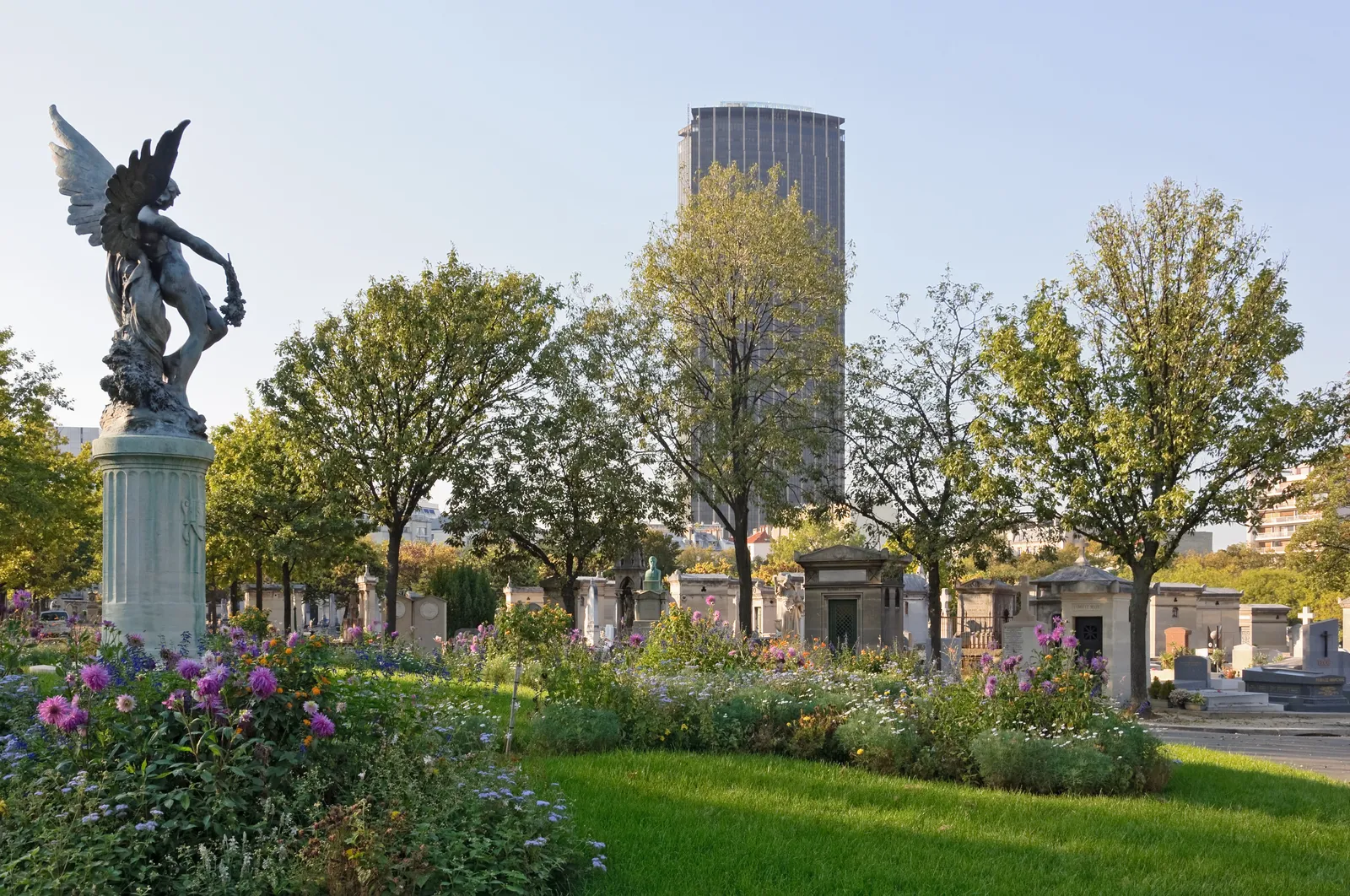
Baudelaire is here twice, in the family plot he hated and again on a cenotaph. So are Serge Gainsbourg, Samuel Beckett, Susan Sontag, Man Ray and Constantin Brancusi. It is free, it is open every day, and it is the least crowded green space within walking distance of the station.
Six million Parisians under the Place Denfert-Rochereau
Ten minutes south of the cemetery, with four hours or more in hand, is the entrance to the ossuary. Paris ran out of room in its churchyards in the eighteenth century and moved the contents of the city’s cemeteries into the disused limestone quarries underneath the Left Bank, stacking the bones into walls along the tunnel sides. The remains of somewhere around six million people are down there.
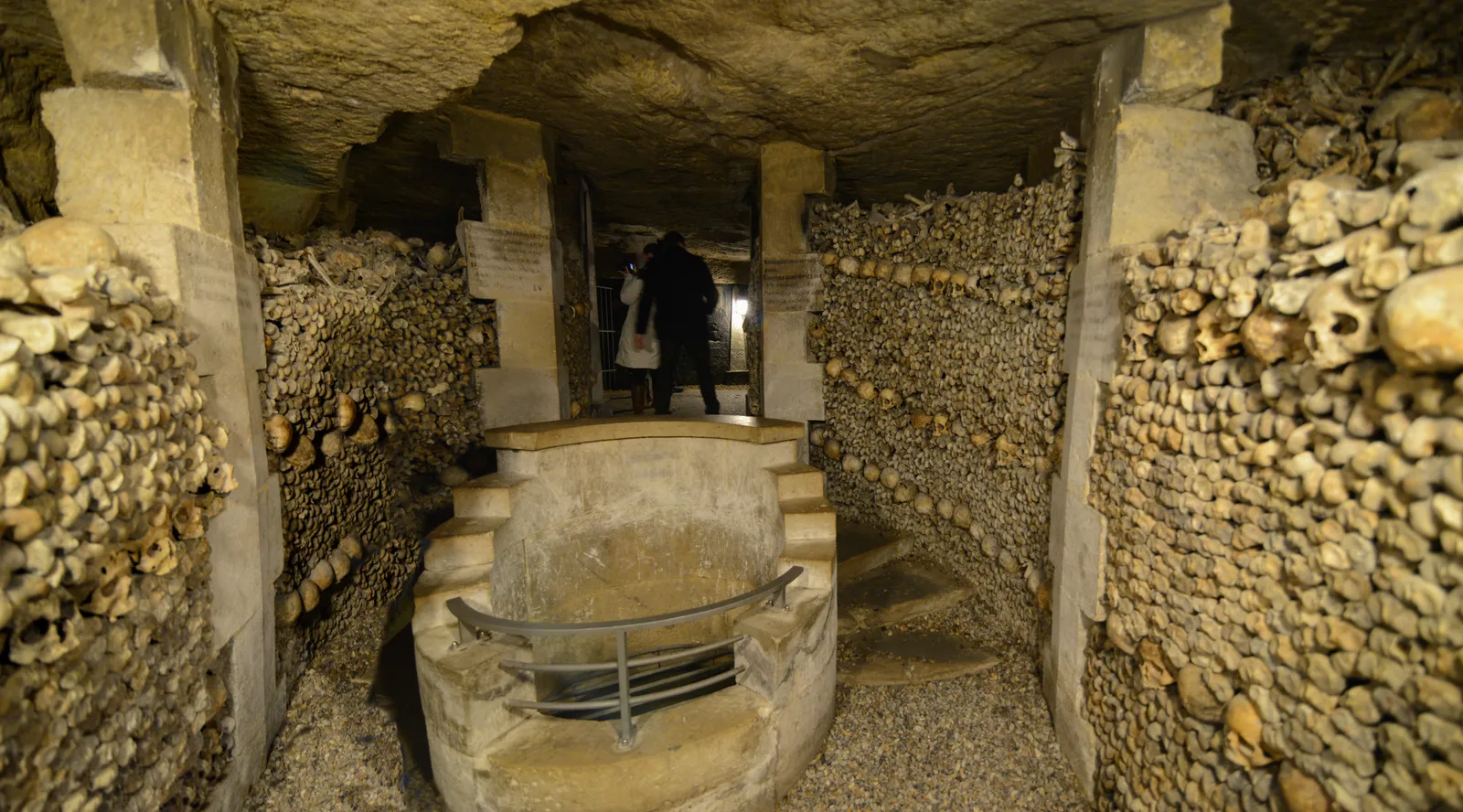
The visitable route is 1.5 kilometres, 131 steps down at the start and 112 up at the end, and it holds a steady 14 degrees whatever the season, which is a relief in August and a problem in a t-shirt in February. Tickets are timed and sold online only, with no walk-up option at the door, so a timed entry booked ahead through a tours and activities platform is the only way in on a flight day. It is the one stop here you cannot decide on impulse, and the one that will refuse your suitcase outright.
For the version of Paris on the other bank, the main Paris layover guide covers Île de la Cité and the Louvre courtyard, which is flatter, shorter and needs no booking at all.
Whatever you do with the time, remember that Montparnasse is on the wrong side of the city for the airport: line 4 north to Châtelet or Gare du Nord, then the RER B, on the same flat 14-euro ticket, for an hour and a quarter door to door rather than the half hour the airport train alone suggests. Collect the bag before you start, not on the way past.
Frequently asked questions
Can I take my luggage into the Catacombs?
No, and there is nowhere on site to leave it. Nothing larger than 40 by 30 by 20 centimetres gets through the door, and bags that do have to be carried at your front or side. There is no cloakroom either, for a structural reason rather than a policy one: the exit comes up at 21 bis Avenue René-Coty, nearly 700 metres from the entrance on the Place Denfert-Rochereau, so anything you left behind would be at the wrong end of a mile-long round trip. Store the suitcase near the station before you go.
Is the Tour Montparnasse observation deck still open?
No. The 56th-floor deck and its rooftop terrace closed on 31 March 2026, and the whole tower is shut for a renovation running to roughly 2030, when it is due to reopen with a new glass facade and a rooftop greenhouse. Until then the tower is a landmark to navigate by rather than a viewpoint. If you want height on this side of the river, the nearest substitute is the colonnade around the Panthéon's dome, 206 steps up, open April to October only and charged as a supplement on top of the entry ticket.
Do I have to book the Catacombs in advance?
Yes. Entry is timed and sold online only, with no walk-up tickets at the door, so an unplanned visit is not an option on a flight day. Timed entry tickets are worth holding before you land. Opening is Tuesday to Sunday, 9:45am to 8:30pm with last admission at 7:30pm, closed Mondays, and the circuit takes about an hour at a steady pace. It stays at 14 degrees down there whatever the weather above.
How do I get from Montparnasse to Charles de Gaulle?
Metro line 4 does most of the work. Montparnasse-Bienvenüe has lines 4, 6, 12 and 13 but no RER, so take line 4 north to Châtelet or all the way to Gare du Nord, then the RER B out to the terminals, which is about 30 minutes on its own. The flat 14-euro Paris Region to Airports ticket covers the metro leg and the change as well as the train. Line 4 is a long ride with a lot of stops, so budget an hour and a quarter from here to the terminal door rather than the half hour the RER B alone takes.