Lyon Layover: Vieux Lyon, Fourvière From LYS
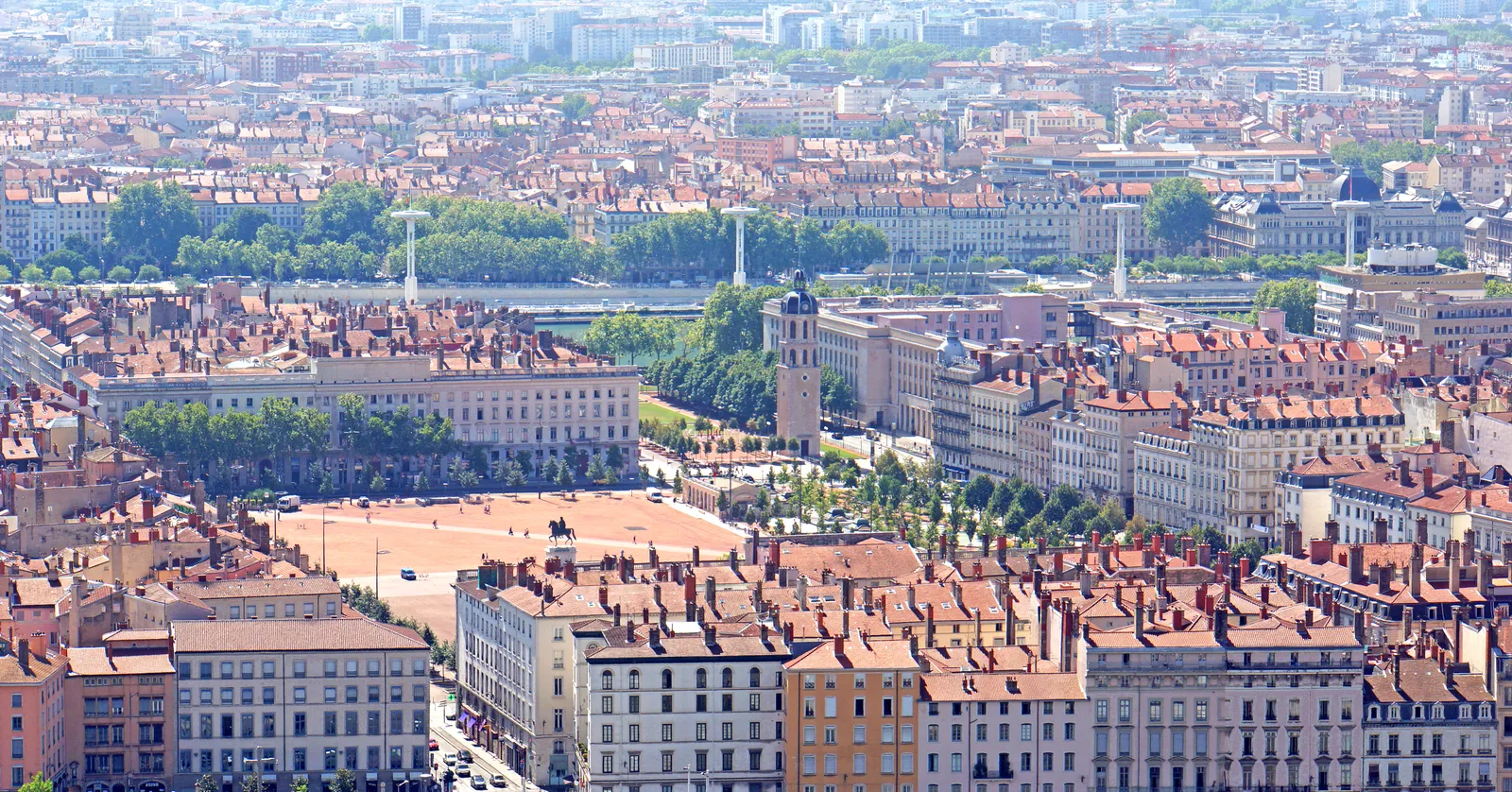
Lyon’s Renaissance quarter fills the west bank of the Saône, its courtyards linked by covered passages that open at 7am and cost nothing, and a two-minute funicular ride climbs from there to the Fourvière basilica and the Roman theatres beside it.
The covered passages cutting through Vieux Lyon’s courtyards
Vieux Lyon is the Renaissance quarter on the west bank of the Saône, a few blocks of 15th and 16th century merchant houses packed between the river and the foot of Fourvière hill. What makes it worth the trip is not the street frontage but what runs behind it: traboules, covered passages that cut from one street to the next straight through the buildings, under vaulted ceilings and across private courtyards.
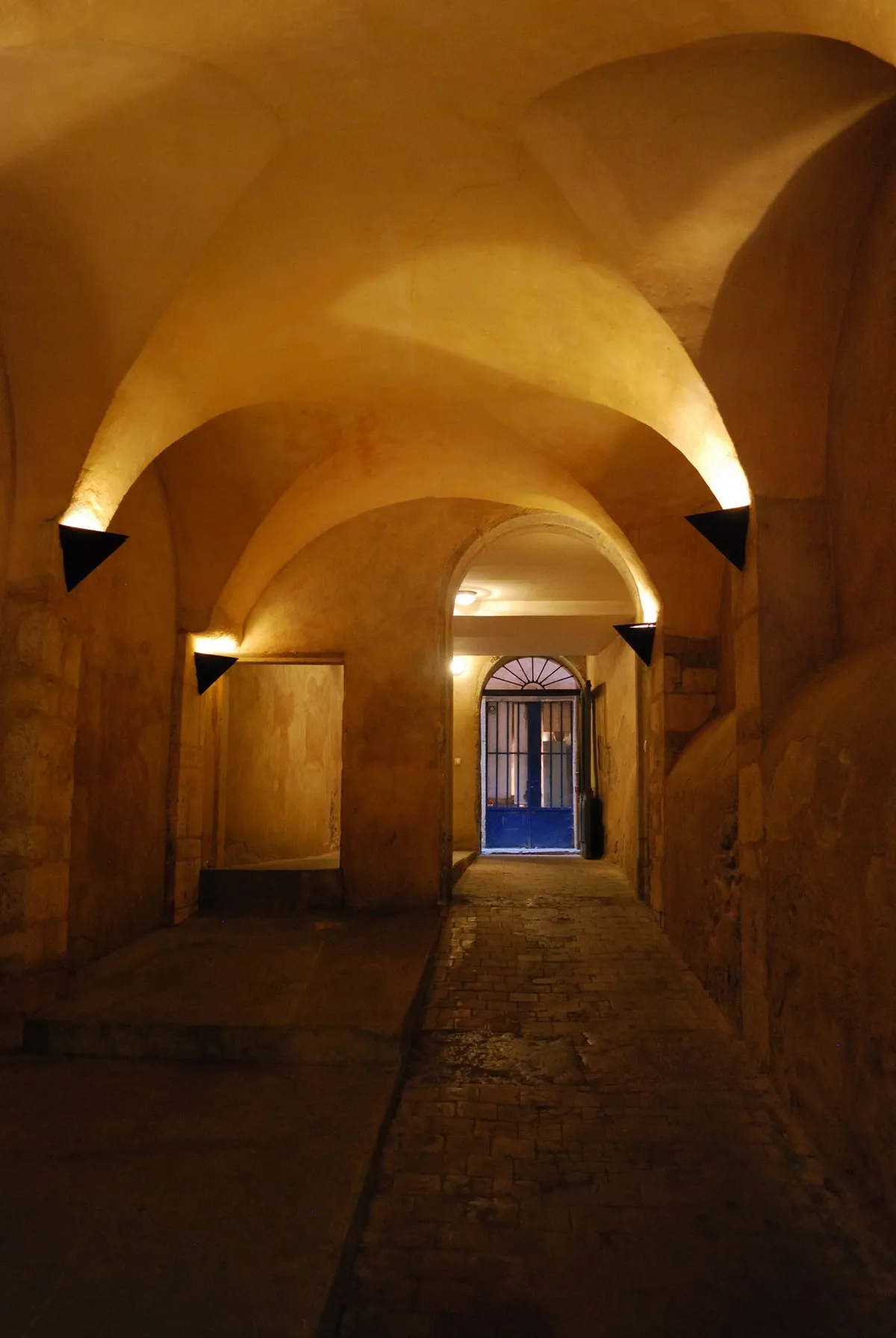
They go back to the 4th century, when Lyon’s Roman aqueducts failed and the city moved down towards the Saône for its water; the passages were the fast way to the river through a quarter with almost no cross streets. Later they were how silk got carried between workshops and merchants without meeting the weather. A small number of them are covered by an agreement between the city and the residents who live above them, which keeps those ones unlocked to the public every day from 7am to 7pm, 8pm in summer, at no charge. The longest runs from 54 rue Saint-Jean through four courtyards to 27 rue du Bœuf.
People live in these buildings, and the charter that keeps the passages open asks visitors to keep their voices down, not to stand about in the courtyards and not to photograph into windows. That is the entire price of admission.
The Saône runs along the eastern edge of the quarter, and sightseeing boats leave from 2 quai des Célestins on the opposite bank, from 15 euros for a trip of 50 minutes to an hour and a half past the Renaissance frontages, the Confluence docks and Île Barbe, with commentary in French and English. The ticket window asks you to be there 20 minutes before departure, so booking a seat ahead saves the guesswork on a fixed schedule.
The Musée des Confluences, where the Rhône and the Saône meet
At the southern tip of the peninsula that Lyon’s two rivers wrap around, the Musée des Confluences opened in December 2014 in a deconstructivist building by the Viennese firm Coop Himmelb(l)au: 150 metres of stainless steel and glass, 44 metres high, raised over the ground on concrete supports.
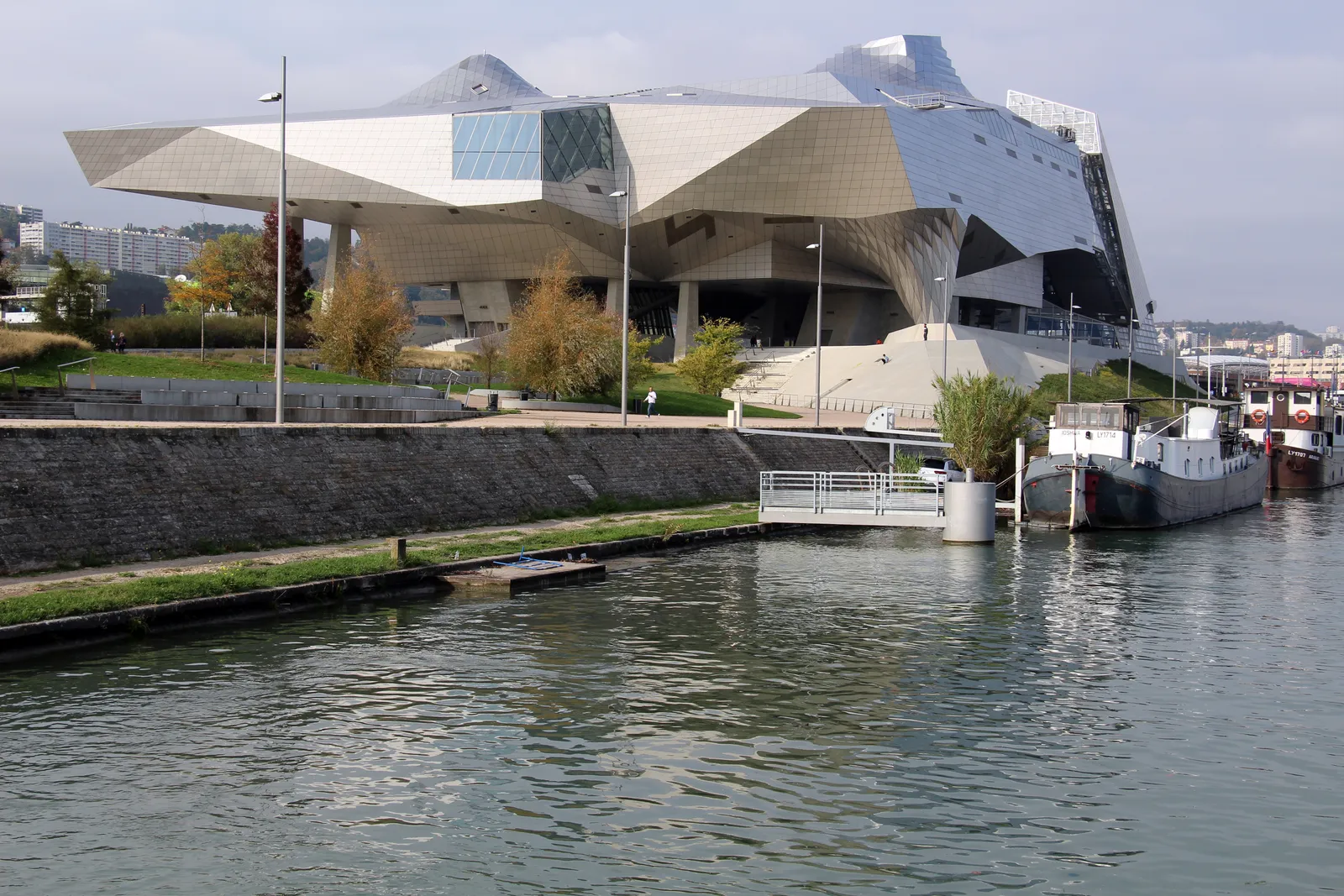
Inside is a collection of around 2.2 million objects arranged by theme rather than by discipline, with natural history, anthropology and science running together across four permanent exhibitions on origins, species, societies and death. Admission is 12 euros, 7 reduced, open 10.30am to 6.30pm Tuesday to Sunday and shut on Mondays, with the ticket office closing 45 minutes before the museum does. Booking admission ahead gets you past the desk, which counts for more on a fixed schedule than it does on an ordinary afternoon. Give it ninety minutes if you go in. The deck around the outside, with the two rivers joining below it, is free and takes ten.
Notre-Dame de Fourvière and the terrace in front of it
The basilica on the crest of Fourvière hill went up between 1872 and 1884, built on a public vow made when Prussian troops advancing on Lyon turned back in 1870, to Pierre Bossan’s design. It is free to walk into, open 7am to 8pm daily and 9pm on Sundays, with the crypt underneath open 8am to 6.30pm.
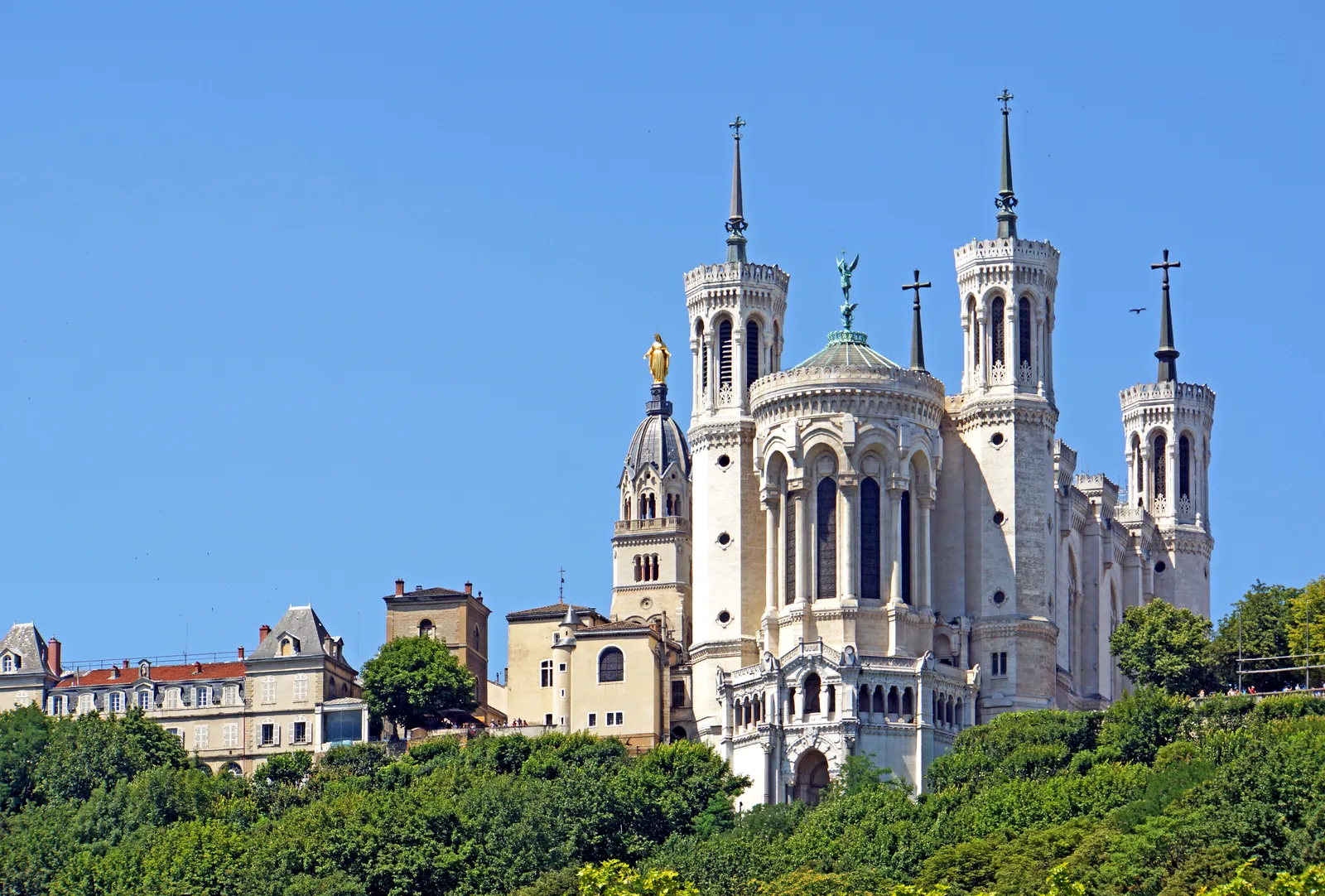
The inside is mosaic and stained glass over almost every surface, in a mix of Romanesque, Gothic and Byzantine borrowings that took until 1964 to finish. Most people come up for what is outside it: the esplanade beside the basilica looks straight down over the red roofs, both rivers and the whole east of the city, and on a clear day the Alps sit on the horizon behind it. That costs nothing and is open whenever the hill is.
Getting up there is a climb whichever way you take it. The funicular from Vieux Lyon does it in about two minutes; the walking route is the montée des Chazeaux, a cobbled stone staircase of well over two hundred steps, and the lanes at the bottom are cobbled too. It is not a stretch to be towing a suitcase up.
The Roman theatres cut into Fourvière hill
Two Roman auditoriums sit open to the sky on rue Cléberg, partway down Fourvière’s eastern slope. The larger was begun around 15 BC at 90 metres across, enlarged early in the 2nd century to 108 metres and seating for 10,000, and it is still in use: the Nuits de Fourvière festival puts concerts and theatre on its stage every summer. The smaller odeon next to it was the covered hall for music and readings.
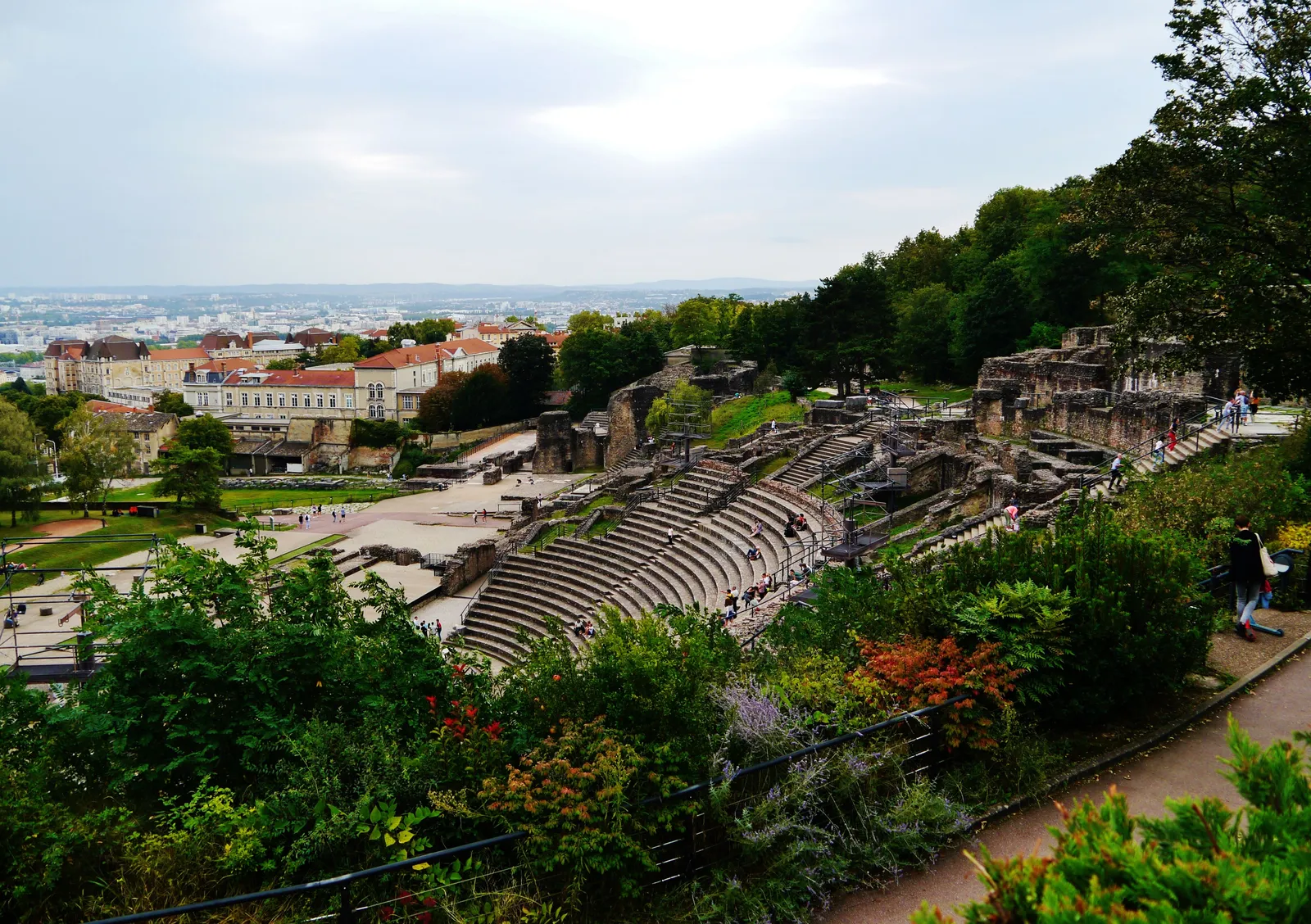
The archaeological site is free to walk into, open 7am to 9pm from 2 May to 30 September and 7am to 7pm the rest of the year, so it is still open long after the museums have shut. The Lugdunum museum dug into the hillside beside it is separate: 4 euros outside temporary exhibitions and 7 during one, 2.50 and 4.50 reduced, free on the first Sunday of the month, open 11am to 6pm Tuesday to Friday and from 10am at weekends.
Coming down, the Jardin du Rosaire is the free route back into Vieux Lyon: a public garden of switchback paths dropping from the basilica esplanade to the montée Saint-Barthélémy, about 1.4 kilometres of it, planted with old roses and hydrangeas and open daily. The paths are signposted from the esplanade and the whole descent runs downhill.
Les Halles de Lyon Paul Bocuse, the city’s indoor food market
Les Halles de Lyon Paul Bocuse sits at 102 cours Lafayette, five minutes on foot from Part-Dieu station, which is the practical reason it belongs on a flight day: it is the last thing you can do before leaving and the first thing you reach on arrival.
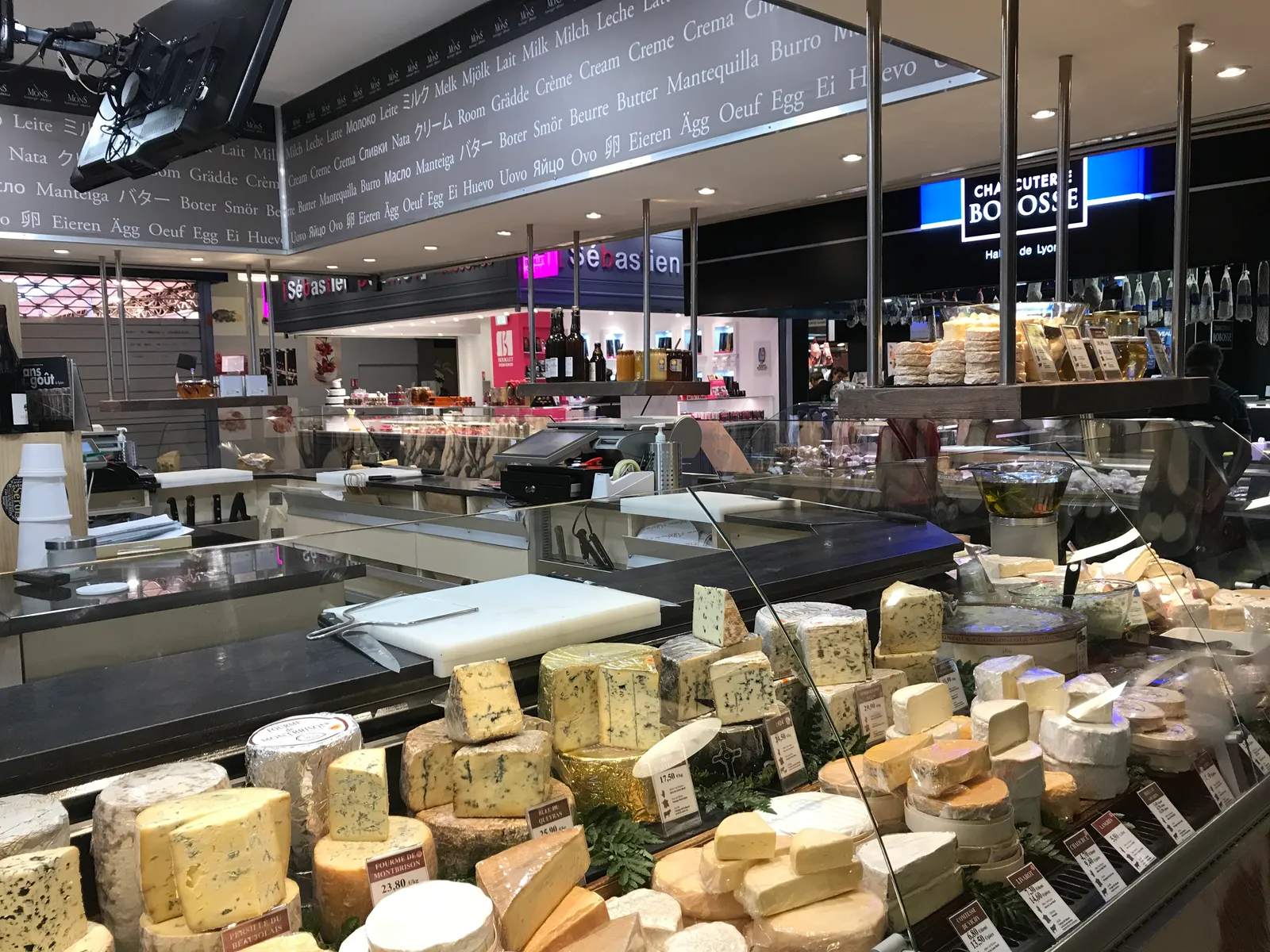
The hall opened in 1971 and trades in what Lyon actually eats: cheese counters, charcuterie, oysters and seafood, quenelles, and the bright pink praline tarts that are a Lyon speciality. Several stalls have stools at the counter, so it works as a meal rather than only as shopping. It opens 7am to 7pm Tuesday to Saturday and 7am to 1pm on Sunday. Mondays are the day to avoid: most of it is shut, with only a few seafood counters trading.
No metro out to the airport, just a dedicated tram
Rhônexpress is the dedicated airport tram between the city and Lyon-Saint Exupéry Airport, running from Part-Dieu station to the airport’s own station in about 30 minutes, calling at Vaulx-en-Velin La Soie and Meyzieu ZI on the way. It operates from 4.25am to midnight, every 15 minutes through the day and every 30 minutes before 6am and after 9pm. A single is 16 euros bought online and 17.10 from the machine; a return is 28 and 29.80. Under-12s travel free and 12 to 25 year olds pay 10.50 each way. It is a separate operator from the city network, so a city ticket will not get you on board and a Rhônexpress ticket will not get you onto the metro.
The city buses are the cheap way to the same terminal. Line C200 runs from Vaulx-en-Velin La Soie to the Terminal 1 bus station from 5.35am to midnight, and line 47 from Meyzieu ZI does the same between 5.45am and 8.45pm, both at the standard 2.10-euro fare, 2.50 if you buy from the driver. You still have to get out to those two points by metro or tram first, so it is closer to an hour and a quarter door to door than half an hour, and line 47 stops running too early to be any use on an evening flight.
Part-Dieu is the TGV station as well as the airport tram terminus, which is worth knowing if you are stringing rail legs together rather than flying both directions: Paris is about two hours north on a direct train. Working backwards from a flight, allow around two hours from Vieux Lyon: the metro across the river, collecting the bag, the wait on the platform, the ride and check-in.
Everything on this route sits within a few hundred metres of the Saône except the market, and the market is next door to the station you leave from. Dropping the bag near Part-Dieu rather than carrying it over the river and up the hill is what makes Fourvière worth doing at all, and it leaves the suitcase within five minutes of the platform when the time comes.
Frequently asked questions
What should I do during a layover in Lyon?
Vieux Lyon is the obvious target: a Renaissance quarter on the west bank of the Saône whose covered passages between courtyards are free and unlocked daily from 7am to 7pm, 8pm in summer. A funicular climbs from there to Notre-Dame de Fourvière in about two minutes, free to walk into and open 7am to 8pm, with the whole city below the terrace in front of it. The two Roman auditoriums cut into the same hillside are also free, open from 7am. If you would rather stay on flat ground, the Musée des Confluences is 12 euros and shut on Mondays, and Les Halles de Lyon Paul Bocuse, the covered food market, is a five-minute walk from Part-Dieu station.
Do you have to pay to get up Fourvière hill?
Not unless you want to. The funicular from Vieux Lyon takes about two minutes and costs a standard city transit fare, 2.10 euros for a single valid an hour across the network. The free alternative is the Jardin du Rosaire, a public garden of switchback paths running down the hillside from the basilica's esplanade to the montée Saint-Barthélémy at the bottom, around 1.4 kilometres of path in all, open daily at no charge. Walking up it is a genuine climb; riding up and walking down is the version most people end up preferring.
What is there to do in Lyon if it rains?
More than the hilltop route suggests. The passages through Vieux Lyon's courtyards are covered for their whole length, which is the point of them, and they stay open in any weather until 7pm. Notre-Dame de Fourvière and the crypt underneath it are both indoors and both free, the crypt open 8am to 6.30pm. Les Halles de Lyon Paul Bocuse is a roofed market hall with counter seating, open 7am to 7pm Tuesday to Saturday. The Musée des Confluences is the one that will actually absorb two hours, at 12 euros.
Is there a cheaper way to Lyon-Saint Exupéry than the Rhônexpress tram?
Yes, at the cost of time. Rhônexpress is 16 euros online and 17.10 from the ticket machine, and covers Part-Dieu to the airport in about 30 minutes. The city bus network reaches the same Terminal 1 bus station for 2.10 euros: line C200 from Vaulx-en-Velin La Soie, running 5.35am to midnight, and line 47 from Meyzieu ZI, running 5.45am to 8.45pm. Both need a metro or tram leg to reach the starting point first, so allow well over an hour door to door, and line 47's 8.45pm finish rules it out for an evening flight.