LYS Layover: Lyon Airport's Calatrava Station
Part of the full Lyon Layover: Vieux Lyon, Fourvière From LYS
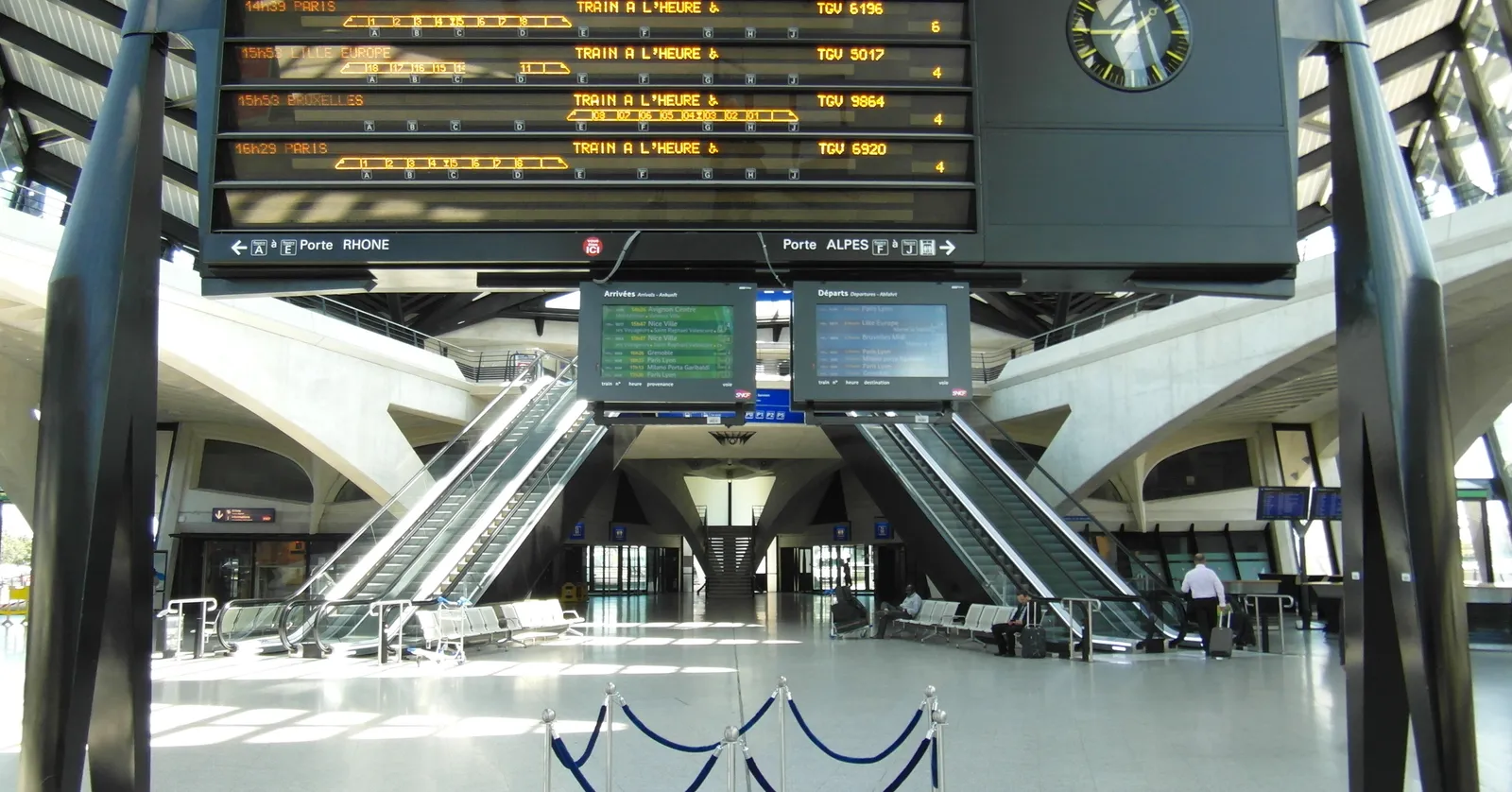
The best thing at Lyon-Saint Exupéry Airport is not in a terminal: it is the railway station attached to it, a bird-shaped hall of concrete and steel by Santiago Calatrava, free to walk into and a covered few minutes from Terminal 1.
Calatrava’s concrete bird beside the terminal
The station opened on 3 July 1994, when the airport was still called Satolas, and it was built as a piece of civic architecture rather than a shed with platforms: 5,600 square metres, 120 metres long and 100 wide, reinforced concrete under a glass and steel roof, with two swept wings rising off a central spine so that the whole thing reads as a bird at the moment of take-off.
Inside, the concourse is a single ribbed vault over the escalators down to the platforms, and there is no ticket barrier between it and the walkway from the terminal, so looking at it costs nothing and takes ten minutes.
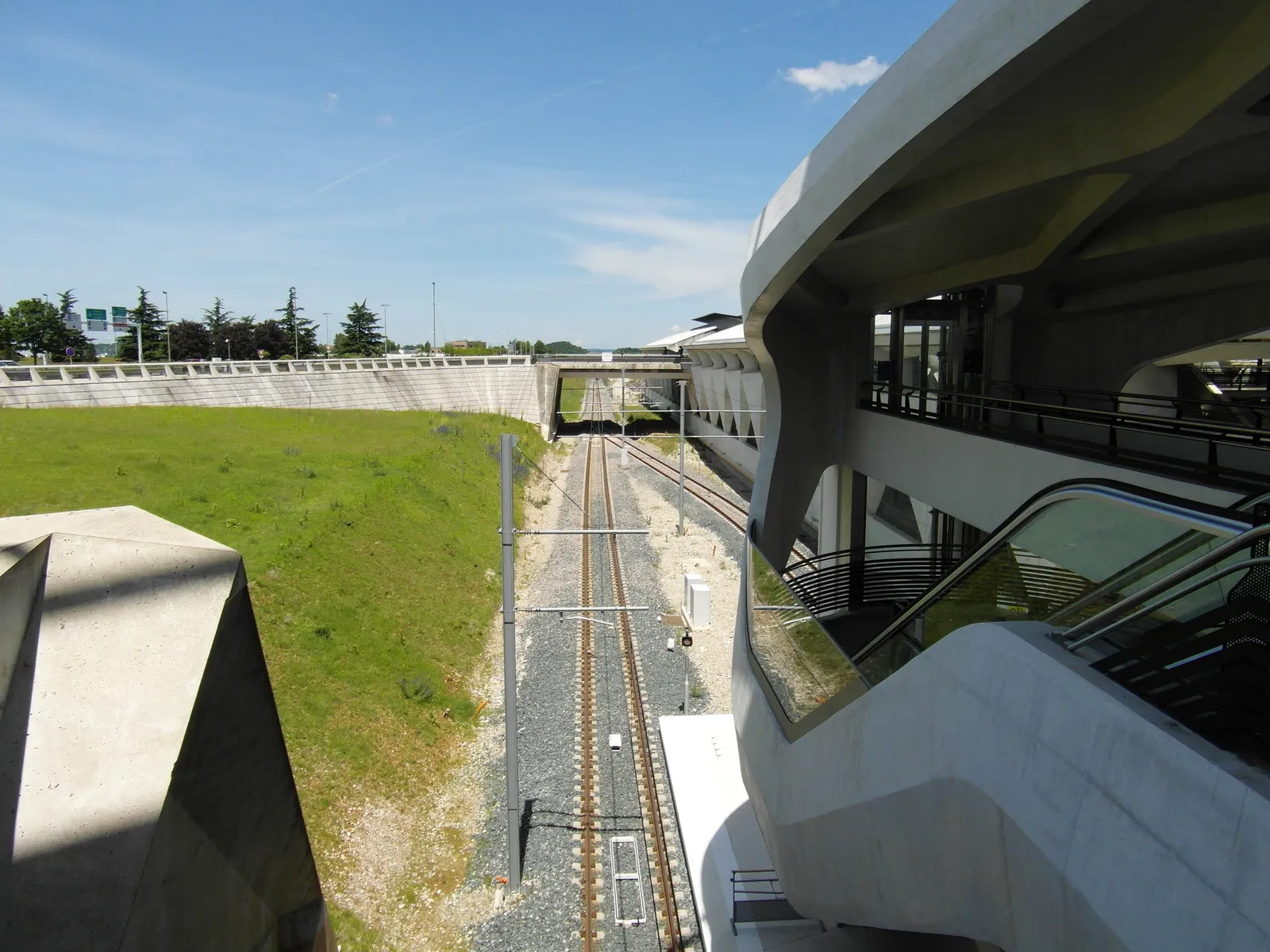
Outside, the more interesting half is what happens to the tracks. The two central lines have no platforms at all and are enclosed in a concrete tube through the middle of the building, which lets high-speed trains cross the site at full line speed while the stopping services use the 500-metre platforms on either side. Stand on one of those and a train will go past you at 300 kilometres an hour without slowing down, which is not a thing most airport buildings can offer.
Terminal 1’s black steel hall, opened in 2018
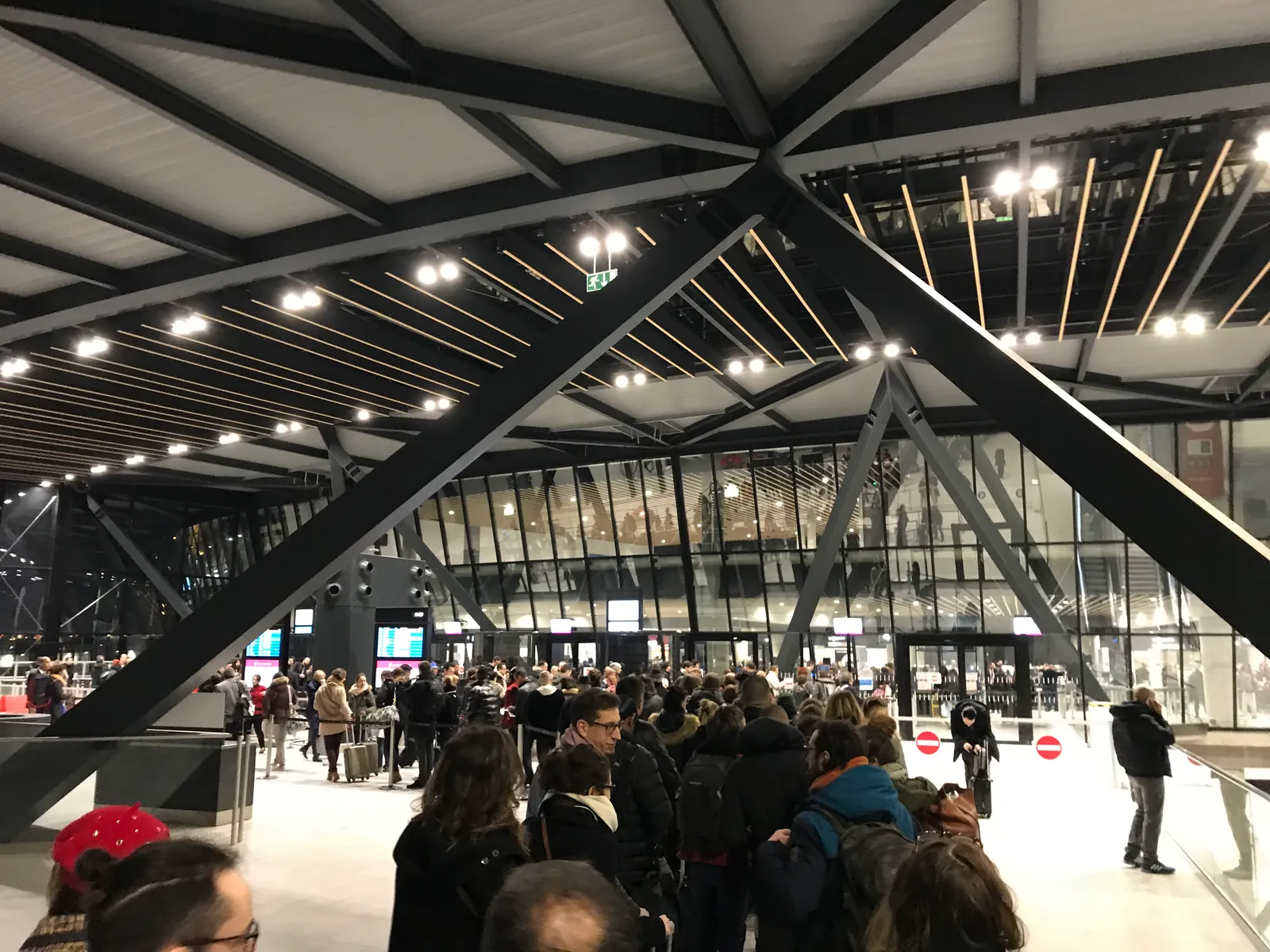
Everything at this airport now runs through Terminal 1. The older half is a low curved brick building; the half that opened in June 2018 is Rogers Stirk Harbour and Partners’ circular extension, with heavy black bracing crossing overhead under a slatted timber ceiling and a tunnel out to a satellite pier.
Terminal 2 has been shut to the public since 1 April 2026 for a 30-million-euro rebuild, with no reopening date given, and the airlines that used it moved into Terminal 1 the same day. Until it reopens, the shops, restaurants and quiet corners are all in Terminal 1 and the central landside building between the two, which is also where the prayer room and the pharmacy are. Older signage and older advice about which terminal to head for is worth ignoring in the meantime.
Thirty minutes to Part-Dieu on the airport’s own tram
Lyon’s metro does not reach the airport and there is no suburban rail link either. Rhônexpress is the connection: a tram running from its own platform under the terminal deck to Part-Dieu station in about 30 minutes, every 15 minutes through the day, every 30 before 6am and after 9pm, between 4.25am and midnight.
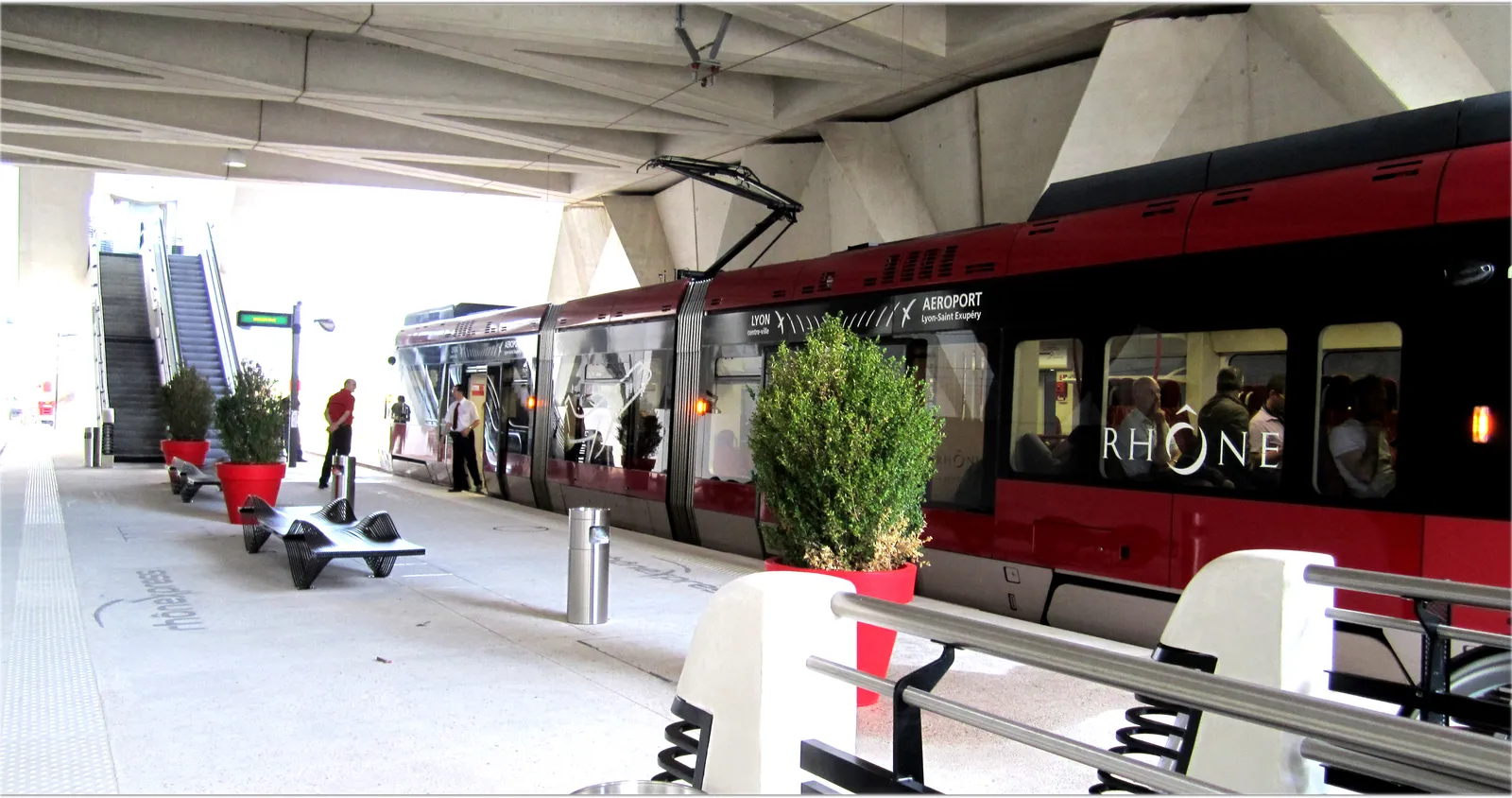
It is a separate operator, so a city ticket does not work on it: 16 euros online, 17.10 from the machine on the platform, free under 12, 10.50 between 12 and 25. The cheap alternative is the city bus network, which runs to the Terminal 1 bus station from Vaulx-en-Velin La Soie between 5.35am and midnight and from Meyzieu ZI between 5.45am and 8.45pm, at 2.10 euros, though both need a tram or metro leg at the far end and neither is faster.
If the window is long enough to justify the trip and you would rather not assemble a route yourself, a private half-day tour covers the basilica, the Roman theatres and the market hall in one loop rather than four separate legs.
The left-luggage desk in the Terminal 1 check-in area is the airport’s own, open 5am to 7pm at 10 euros for three hours, and it takes bags only from people holding a boarding pass for a Lyon departure inside 24 hours, which rules out anyone arriving here to fly onward from elsewhere.
Four hours is where going into Lyon starts to pay
Thirty minutes each way, plus a wait of up to fifteen at each end, plus the walk between the tram platform and the gate, is an hour and a half of a connection gone before you have looked at anything. On a three-hour window that leaves nothing, and the station next door is the better use of the time.
Past four hours the arithmetic flips, because central Lyon is compact enough that a single tram ride plus one metro change puts you at the Renaissance quarter with two hours to spend in it. Part-Dieu, where the tram terminates, has a covered food market five minutes from its platforms if you would rather not cross the city at all.
Work the return leg off the tram’s frequency rather than its journey time. Missing a departure at Part-Dieu costs fifteen minutes at midday and thirty after nine in the evening, and that gap, not the ride, is what turns a comfortable return into a tight one.
Frequently asked questions
Can you leave a bag at Lyon-Saint Exupéry Airport?
Landside in Terminal 1, and only if you are flying out of here. The airport's own left-luggage desk sits in the Terminal 1 check-in area and runs 5am to 7pm daily, at 10 euros for three hours or 15 for a day, but it accepts bags only from passengers holding a boarding pass for a Lyon departure within 24 hours. If you are arriving here and flying out of somewhere else, or your flight is more than a day away, that desk will turn you down and you need a storage point in the city instead.
Which terminal do flights use at LYS?
Terminal 1, all of them. Terminal 2 closed to the public on 1 April 2026 for a 30-million-euro rebuild with no reopening date announced, and the airlines that used it moved across on the same day. Until it comes back, every check-in desk, gate, shop and service is in Terminal 1 and the central building between the two, so signs pointing to T2 in older guidance can be ignored.
Is it worth leaving the airport on a three-hour connection?
No. The tram is 30 minutes each way and runs every 15 minutes, so the round trip alone eats an hour and a quarter once you add the platform waits, and that is before security on the way back. Four hours is roughly the point where a real look at the city starts to make sense; below it, the railway station next door is the thing worth walking to. With five hours or more, the route through the Renaissance quarter and up Fourvière is the one to take.
Are there trains from the airport to anywhere other than Lyon?
Yes, and that is the point of the station. High-speed services on the Rhône-Alpes line call here on their way between Paris and Marseille, and regional trains run east towards the Alps, which is why the coach bays outside fill with ski traffic in winter. It means a connection at this airport can continue by rail without going into Lyon at all, which no other transfer here allows.