Place Bellecour Layover: Lyon's Hôtel-Dieu
Part of the full Lyon Layover: Vieux Lyon, Fourvière From LYS
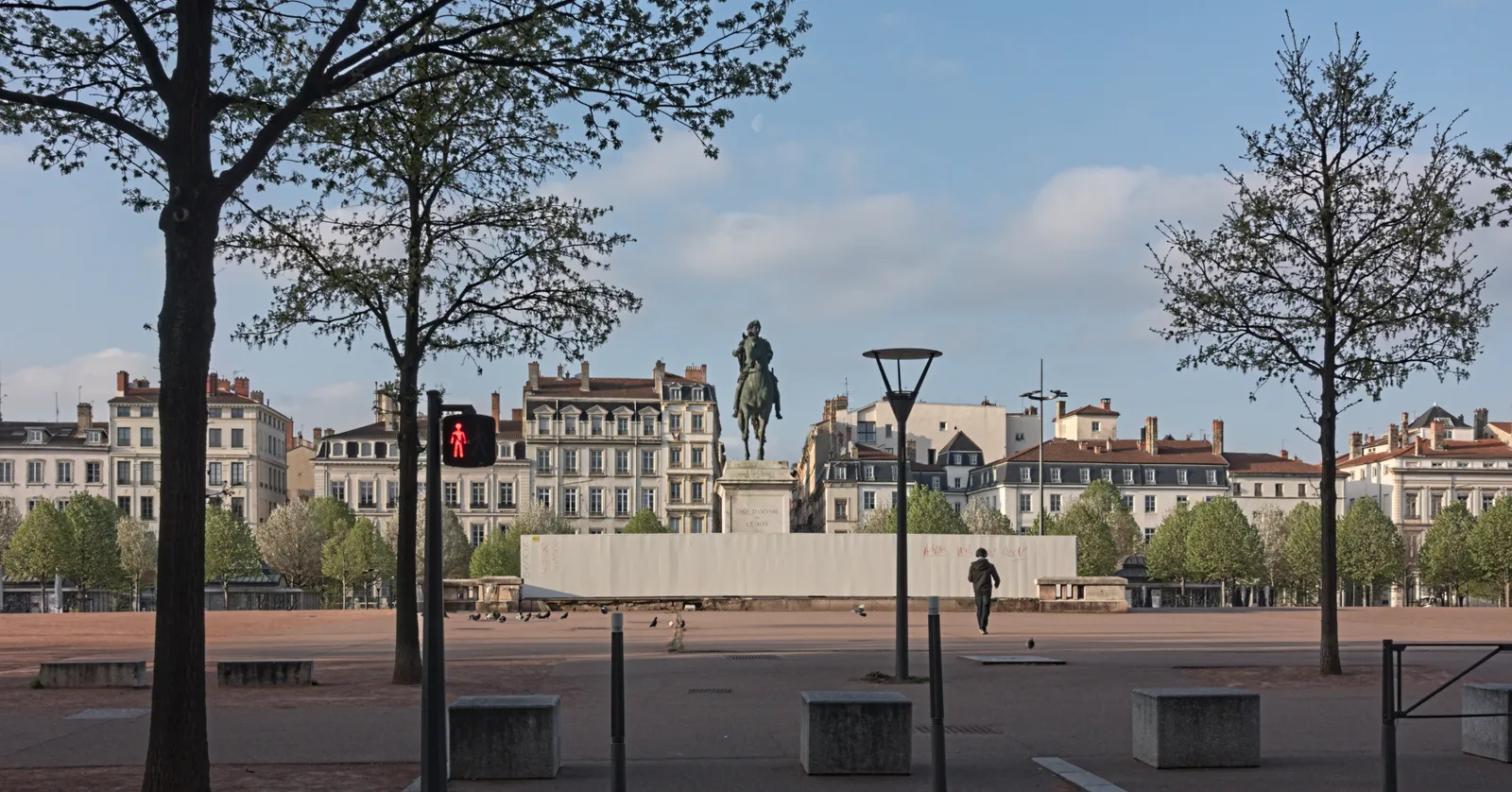
Place Bellecour in Lyon is a bare rectangle of gravel 312 metres long with Louis XIV on a horse in the middle of it, and five minutes east the Grand Hôtel-Dieu’s seven courtyards are open to walk through for nothing.
Louis XIV on horseback in the middle of Place Bellecour
The statue is the third one to stand here: the first was melted down in the Revolution, and François-Frédéric Lemot’s replacement went up in 1825 on the original plinth, which carries two reclining figures by the Coustou brothers standing for the Rhône and the Saône. The square around it is deliberately empty, 312 metres by 200 with nothing planted on it, which is why the whole of Fourvière hill and the basilica on top are visible from the middle of it.
It is also where the open-top sightseeing bus starts, at number 35 on the square, if you would rather cover ground than walk it: a 24-hour ticket takes in the Roman theatres, the basilica and the Confluence on one loop, which is a reasonable trade when the alternative is four separate legs on the metro.
The trade-off for that emptiness is that there is no shelter on it. The trees are all at the edges, so crossing the square in July, or in rain, is done fully exposed with whatever you are carrying.
The Grand Hôtel-Dieu’s courtyards under Soufflot’s dome
Five minutes east of the square, along the Rhône, the Grand Hôtel-Dieu runs for a full city block down the quay. It was Lyon’s hospital for eight centuries, and Jacques-Germain Soufflot designed the dome over the middle of it in 1755, thirty years before he did the Panthéon in Paris. It stands 32 metres and it is the thing that identifies the building from the far bank.
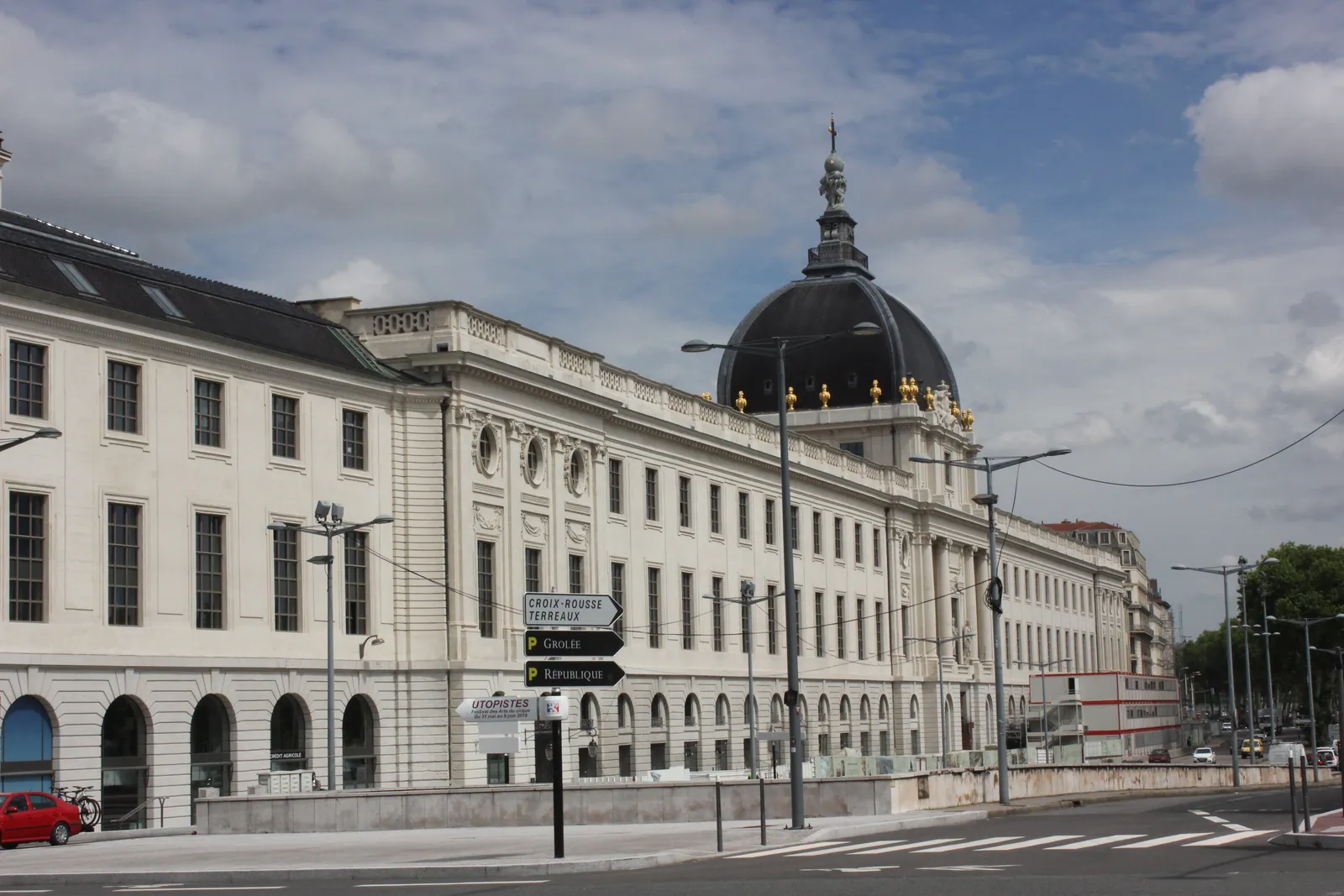
The hospital moved out and the building sat empty until a four-year conversion, the largest private restoration in Europe at the time, reopened it in 2018 as 42,000 square metres of shops, restaurants and a hotel.
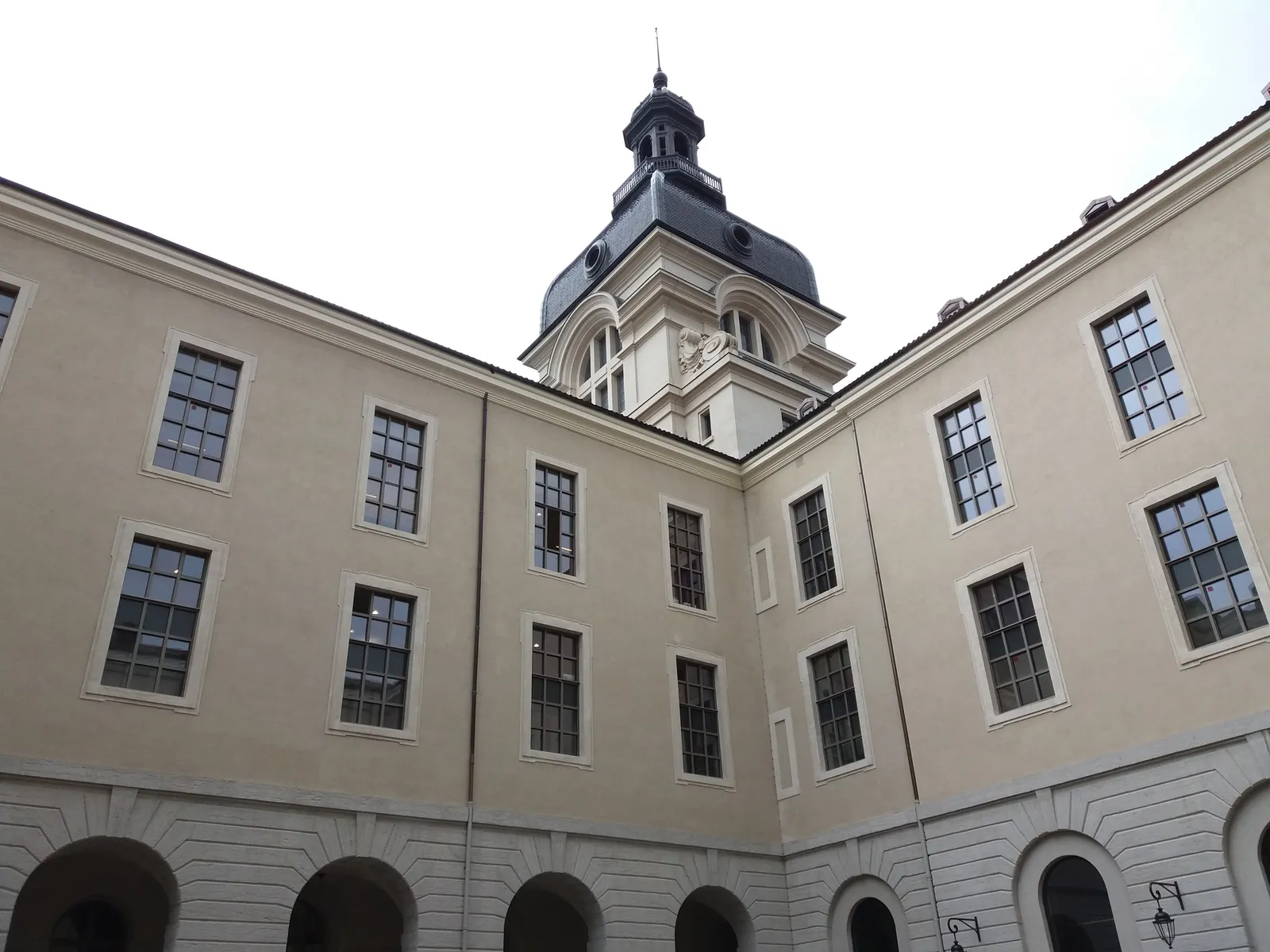
What matters for a few free hours is that the conversion kept the plan intact: 21 wings around seven courtyards, linked by vaulted passages, and you can walk the whole sequence without buying anything. It is roofed in enough places to be the obvious wet-weather move from Bellecour, and the courtyards are quiet in a way the square outside never is.
The Bartholdi fountain on Place des Terreaux
Place des Terreaux sits at the northern end of the peninsula, about twenty minutes’ walk up from Bellecour or a couple of metro stops, with the town hall filling one side of it and the fine arts museum another. The fountain in the corner is a bronze chariot dragged by four horses coming out of the water, and its history is not local: Frédéric-Auguste Bartholdi designed it at 23 for a competition in Bordeaux, Bordeaux decided it was too expensive, and Lyon bought it and unveiled it at the 1889 world’s fair.
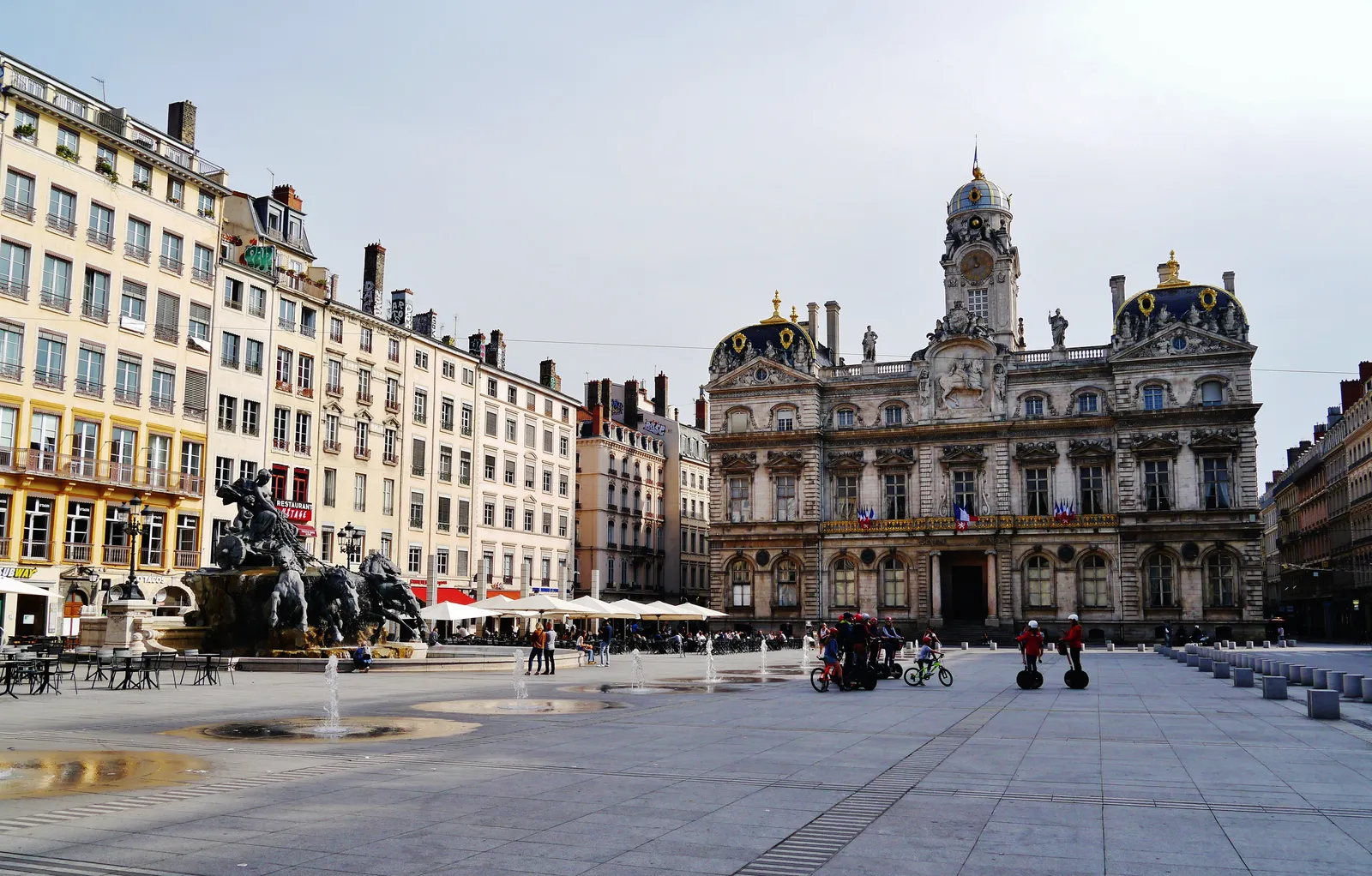
Bartholdi is better known for the Statue of Liberty, finished three years earlier. The fountain was moved in the 1990s when a car park went in underneath the square, which is why it now faces the museum rather than the town hall it was installed in front of. The rest of the square is a grid of low ground fountains that run flush with the paving, so children treat it as a splash pad on a hot day.
The Musée des Beaux-Arts inside a 17th-century abbey
The long stone building on the southern side of Place des Terreaux is the Palais Saint-Pierre, a Benedictine abbey until the Revolution and a museum since 1801.
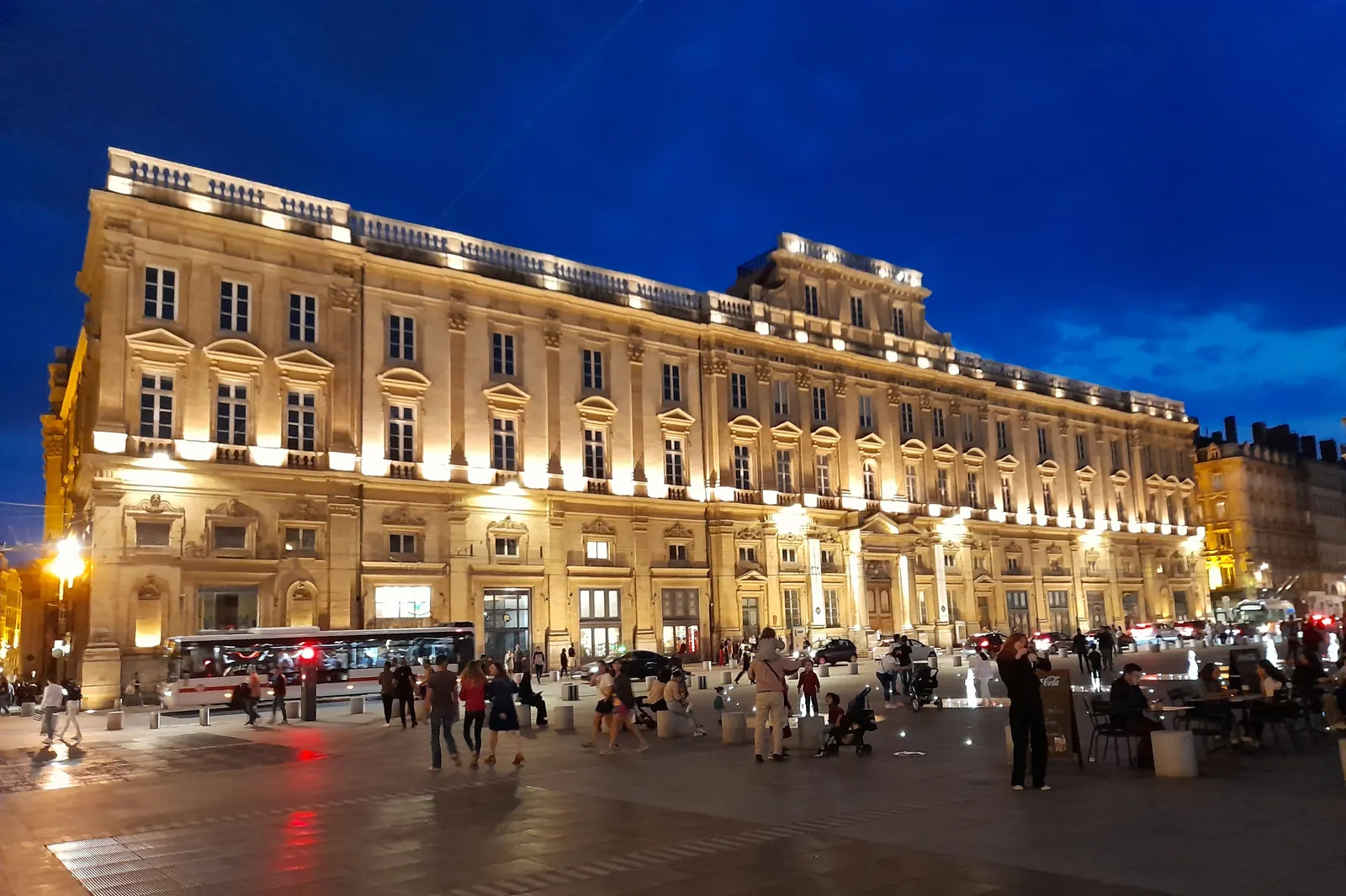
Inside is one of the largest art collections in France outside Paris, running from Egyptian antiquities and a coin cabinet up through Renaissance painting to Monet, Degas and Picasso. Admission is 8 euros for the permanent collections and 12 if a temporary show is on, half that reduced, and it opens 10am to 6pm, 10.30am on Fridays, closed Tuesdays and public holidays. Two hours is the honest figure for it, so on a short window it is a choice rather than an addition.
Two metro lines meet under Place Bellecour
The station beneath the square is where lines A and D cross, which puts most of central Lyon within two or three stops of the statue and makes this the easiest square in the city to leave from in any direction. It also means the platforms here fill up faster than anywhere else on the network at rush hour.
The airport tram, Rhônexpress, runs only from Part-Dieu, so getting out to the airport from here is two legs: the metro east across the Rhône, then the 30-minute run to Lyon-Saint Exupéry Airport at 16 euros online or 17.10 from the machine, departing every 15 minutes through the day and every 30 minutes before 6am and after 9pm. Allow two hours from here to your gate rather than the ninety minutes Part-Dieu itself would need.
Everything on this walk sits on flat ground between two rivers, with a roof over a decent share of it, and the metro entrance you leave from is in the middle of the square you started on.
Frequently asked questions
Is there any shade on Place Bellecour?
Almost none in the middle. The square is 312 metres by 200 of open gravel with the plane trees confined to strips along the northern and southern edges, so on a hot afternoon the walk across it is fully exposed and the statue's plinth is the only thing casting a shadow. The shade is all just off it: the tree line on the north side, Place Antonin Poncet to the east, and the Hôtel-Dieu's courtyards and covered passages five minutes further on.
Does this walk cover the old town as well?
No, and trying to fit both into three hours is how people end up seeing neither properly. Everything here is on the peninsula between the two rivers, on flat ground, with no ticket needed for any of it. The Renaissance quarter is across the Saône and the basilica is on the hill above that, which is a different afternoon and the one the main Lyon route is built around. Two metro stops separate them if you decide to swap.
Is the Musée des Beaux-Arts worth it on a short layover?
Only if you want one building rather than several. Admission is 8 euros for the permanent collections and 12 with a temporary exhibition, it opens 10am to 6pm and from 10.30am on Fridays, and it closes on Tuesdays and public holidays. The collection runs from Egyptian antiquities to Impressionists across two upper floors and an honest visit is two hours, which on a four-hour window is most of your time on the ground.
What is open around Bellecour on a Sunday?
The squares and the streets, and less of the retail than you would expect. The Grand Hôtel-Dieu's courtyards and passages stay open and most of its restaurants trade, the town hall square and the fountains are public at any hour, and the fine arts museum keeps its normal Sunday hours. The shops along rue de la République largely do not, so Sunday is the day to plan around buildings and squares rather than shopping.