Lyon Part-Dieu Layover: The Brotteaux Quarter
Part of the full Lyon Layover: Vieux Lyon, Fourvière From LYS
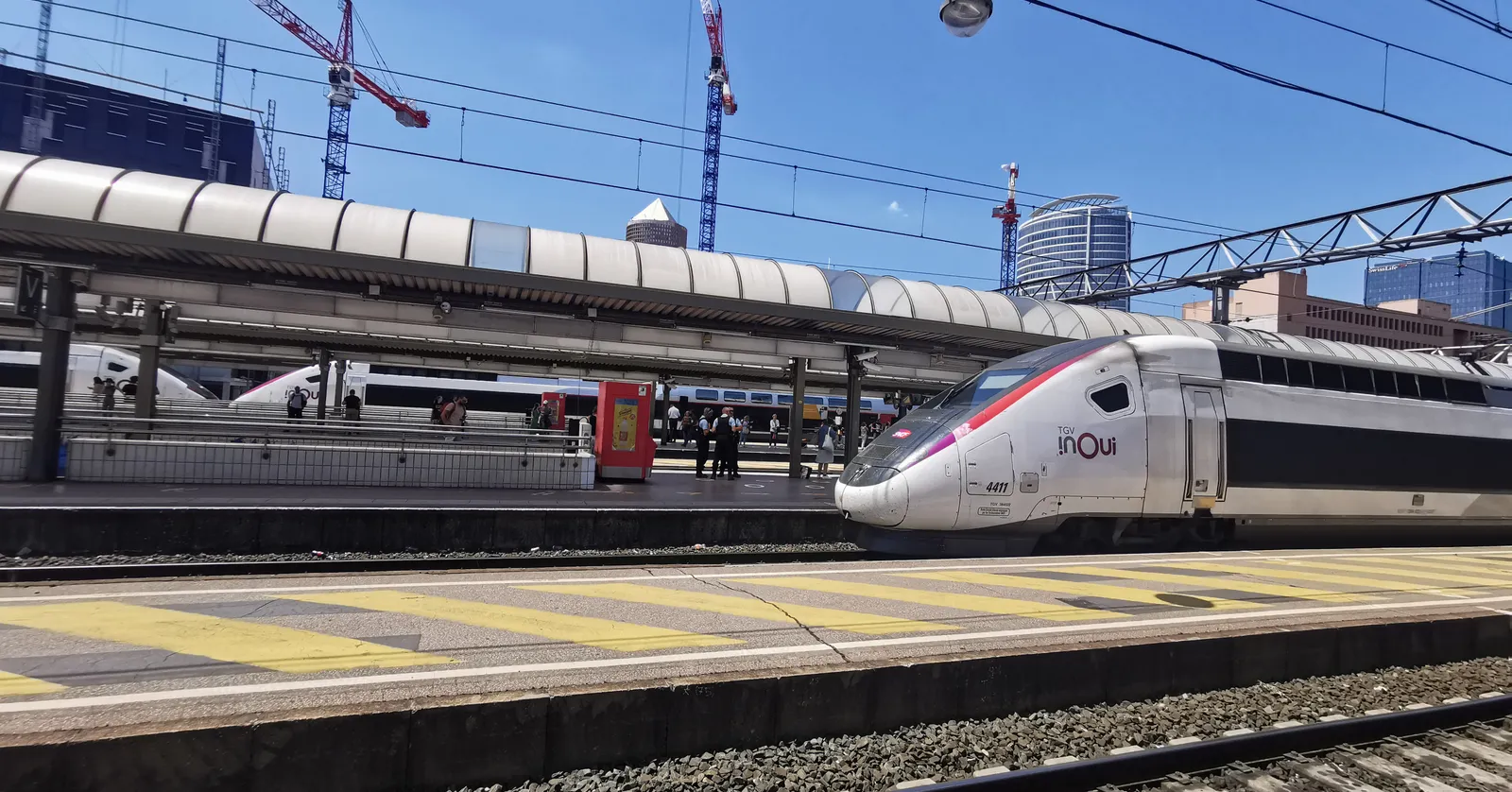
Lyon Part-Dieu station puts a covered food market five minutes away on foot and the Art Nouveau station it replaced in 1983 about fifteen, with the barge-lined left bank of the Rhône a quarter of an hour west.
Place Charles-Béraudier’s steel canopy over the station entrance
Part-Dieu handled 42.4 million passengers in 2024, sixth in France and first outside Paris, on a footprint designed in the 1970s for a fraction of that. The rebuild that fixed it ran for close to a decade and finished in stages: the Béraudier gallery opened in June 2024, the lower half of the square above it in April 2025, the upper half that September. What you come out into now is a stainless steel disc 38 metres across, held over the western entrance on slender columns, with the tram turning circle underneath it.
The city pass sold by the tourist office is worth pricing up before you go anywhere from here, since it bundles unlimited travel on the transit network with entry to more than twenty museums and a river cruise, in versions from one to four days; buying it before you arrive saves finding the counter with a departure board behind you.
The concourse itself is the reason to arrive unencumbered: everything, the trains, the airport tram, the metro, the buses and the shopping centre next door, funnels through the same middle level, and it tightens sharply around the evening departure wave.
Le Crayon, the pencil-topped tower over Part-Dieu
The brown tower with the sharpened point on top is the Tour Part-Dieu, finished in 1977, 164.9 metres over 42 floors, and known to everyone in the city as Le Crayon, the pencil. It was the tallest thing in Lyon for decades and is still the shape that tells you which part of the city you are looking at from the hills.
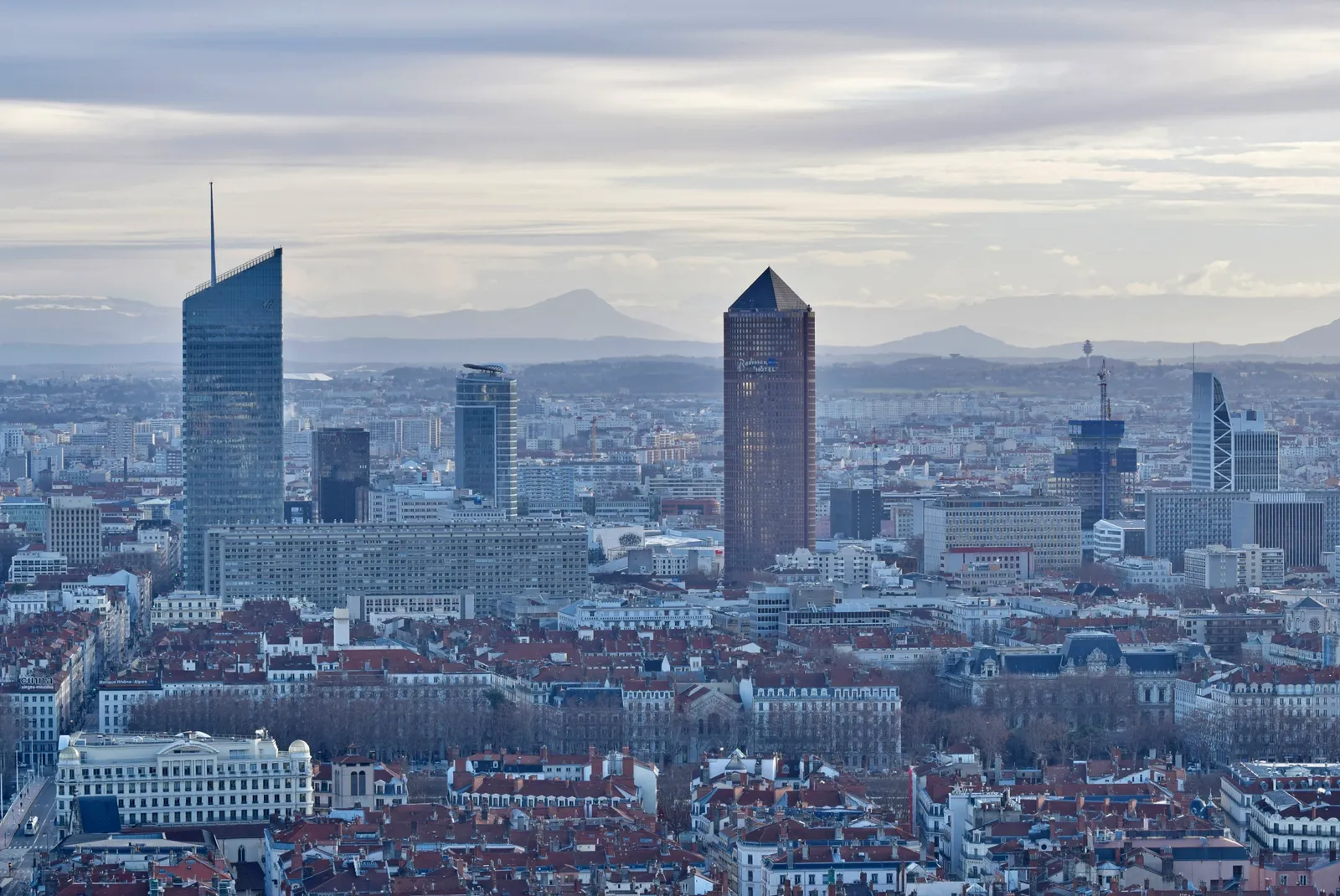
There is no observation deck in it. The top floors are a hotel, and its bar and restaurant on the 32nd are the only way the public gets up there, which means buying something. Glass towers have gone up around it since, so the skyline it sits in now is a genuine cluster rather than one oddity in a field of rooftops.
Counter seats and oyster stalls at Les Halles de Lyon Paul Bocuse
Five minutes west of the station at 102 cours Lafayette, Les Halles de Lyon Paul Bocuse has traded since 1971 in what the city actually eats: cheeses, charcuterie, quenelles, seafood and the pink praline tarts that show up in every window here.
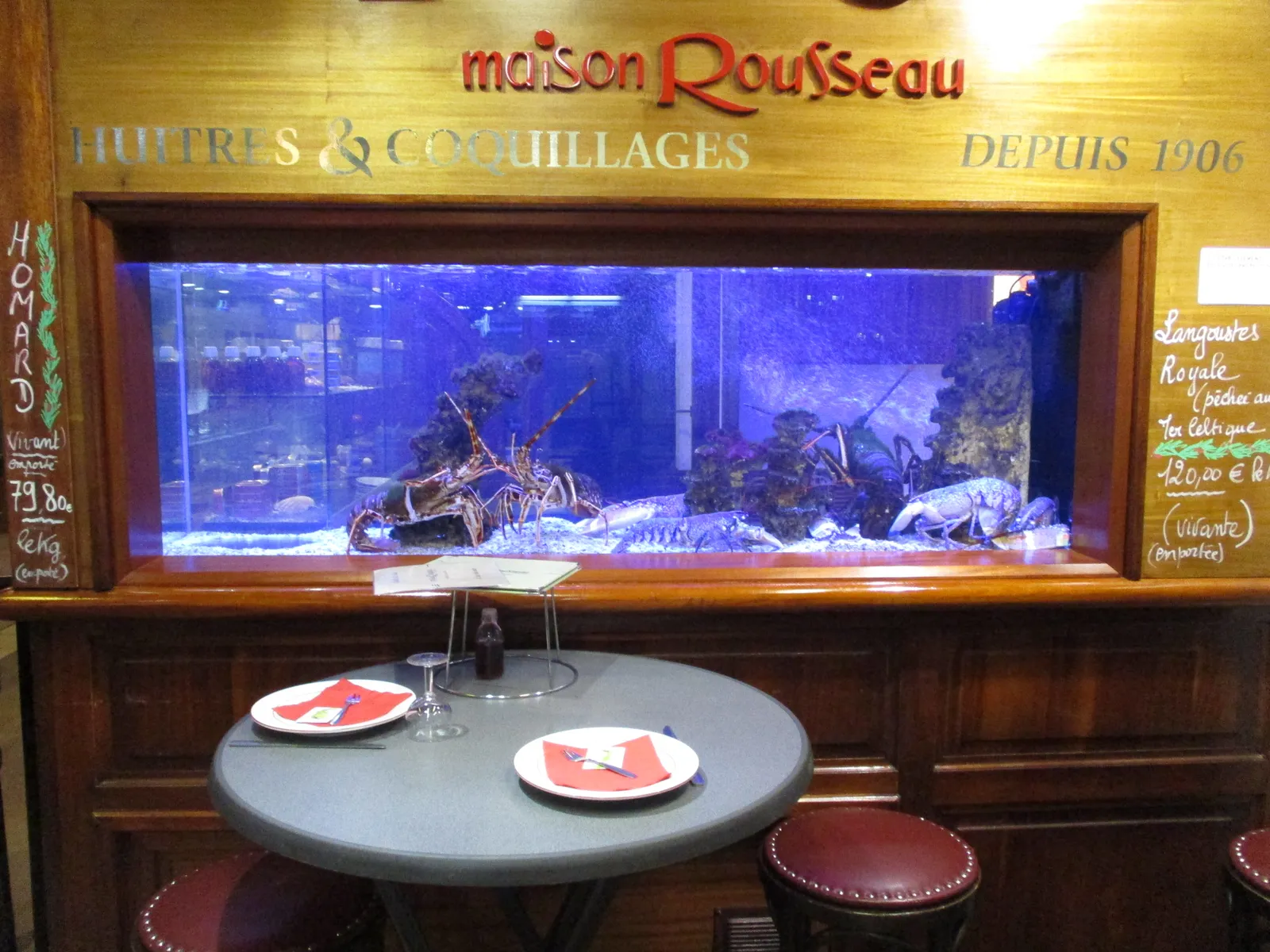
Several stalls keep stools at the counter, which is what makes this a meal rather than shopping. The shellfish sellers are the clearest example: a tank of live lobsters behind the counter, a couple of small tables in front of it, oysters opened while you wait. It opens 7am to 7pm Tuesday to Saturday and 7am to 1pm on Sunday, and on Monday almost all of it is shut.
Les Brotteaux, the Art Nouveau station Part-Dieu replaced
Fifteen minutes north of cours Lafayette, at Place Jules Ferry, stands the station this city used before Part-Dieu existed. Paul d’Arbaut and Victor-Louis Rascol built it between 1904 and 1908, and it ran trains until 1983, when Part-Dieu opened and took the traffic.
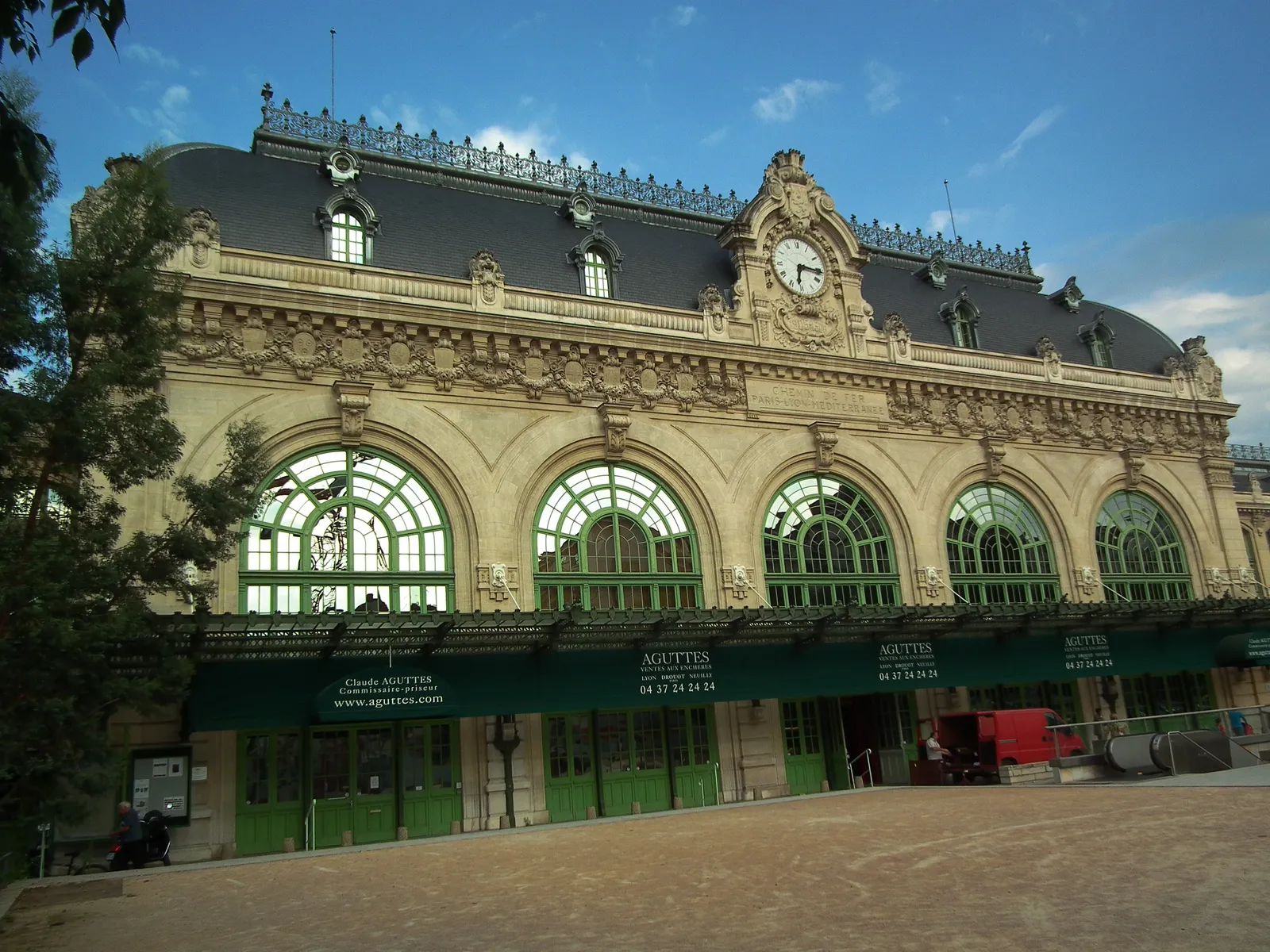
It survived as a listed monument rather than a ruin: five great arched windows under a carved stone cornice, a clock in the gable, mosaics inside. The concourse where passengers once waited is an auction house now, and a brasserie carrying Paul Bocuse’s name occupies part of the building, so you can go in and look without an appointment. The quarter around it, Les Brotteaux, is the 19th-century grid that grew up to serve the station, and it is a quieter set of streets than anything on the other side of the tracks.
Barges moored along the Rhône’s left bank
The left bank of the Rhône, roughly a quarter of an hour west of the station on foot, was reclaimed from car parking and reopened in 2007 as five kilometres of car-free quay running from Pont Raymond Poincaré down to the park at Gerland.
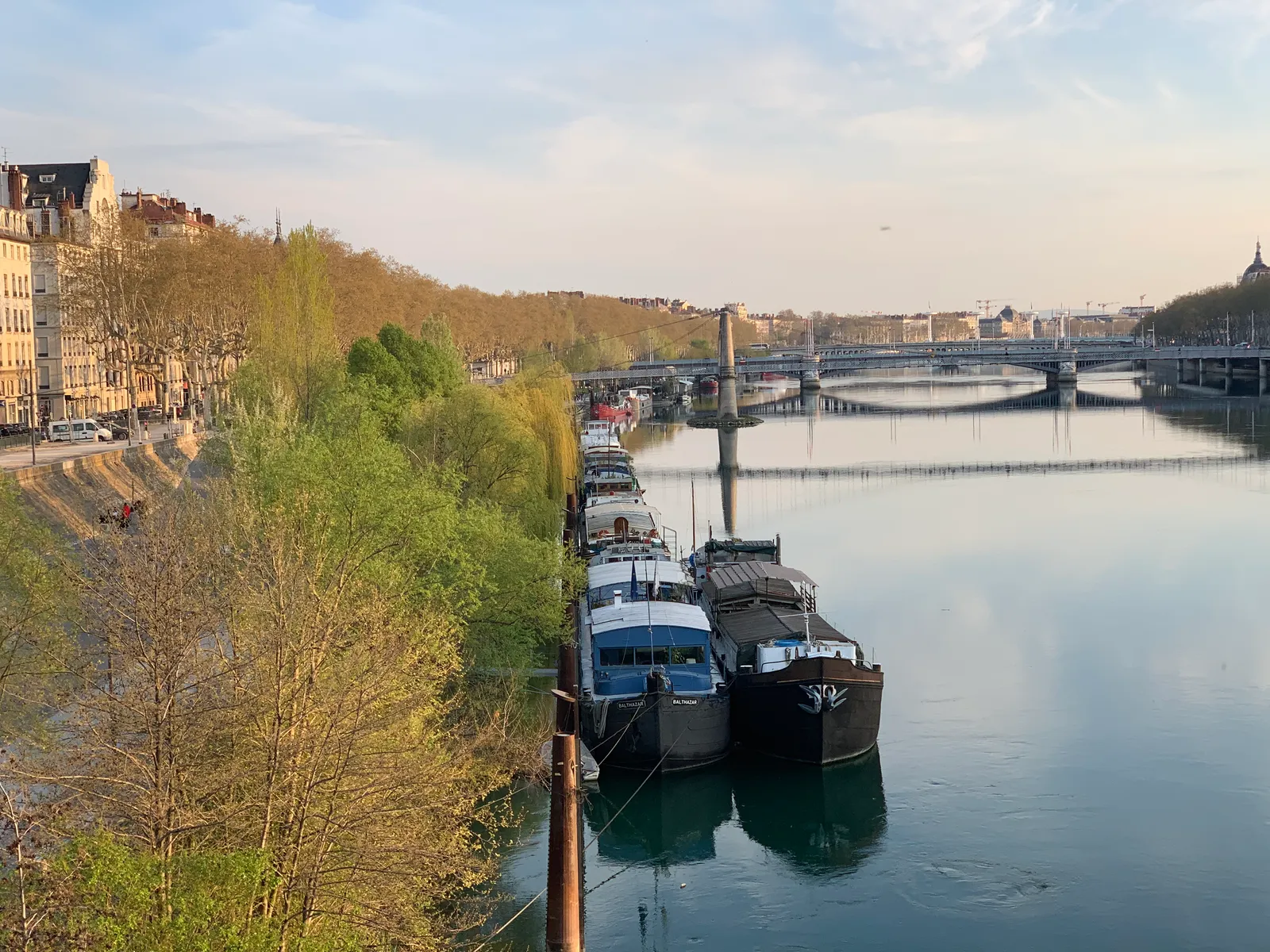
What makes it worth the walk rather than just a green line on a map is the barges. Old working boats are moored bow to stern along the bank as bars and restaurants, and the stretch opposite the Presqu’île fills up on a warm evening. Above them the quay is laid out in a run of separate gardens and open spaces, with room for pétanque, skating and football, and the whole thing is flat and free.
The airport tram starts here, not in the city centre
Rhônexpress runs from its own platform at Part-Dieu out to Lyon-Saint Exupéry Airport in about 30 minutes, every 15 minutes through the day and every 30 minutes before 6am and after 9pm, between 4.25am and midnight. A single is 16 euros online and 17.10 from the machine, and it is a separate operator from the city network, so a metro ticket will not work on it and its ticket will not work on the metro. Under-12s go free.
Because it starts here, the buffer you need from this quarter is smaller than from anywhere else in Lyon. From the market or the Brotteaux hall, allow an hour and a half to the gate: the walk back, collecting the bag, the wait for the next tram, the ride and check-in. The cheap alternative, if the flight is early enough in the evening, is the city bus from Vaulx-en-Velin La Soie or Meyzieu ZI at 2.10 euros, but both need a metro or tram leg first and neither saves any time.
Part-Dieu is also the TGV station, so this is the same platform level people use for Paris, about two hours north. Whatever you leave near the station is a five-minute walk from the tram that takes you out, which is the whole argument for spending a short window on this side of the river rather than crossing it.
Frequently asked questions
How long does it take to reach Vieux Lyon from Part-Dieu?
About 20 minutes on two metro lines with one change, plus the walk down to the platform at each end. That is the trip to make if you have five hours or more and want the Renaissance quarter and the hill above it, which is what the main Lyon route is built around. Under about four hours, the walk described here keeps you within fifteen minutes of the platforms the whole time, which is the difference between watching the clock and not.
Is Lyon Part-Dieu station step-free?
Yes, in both directions. The Place Charles-Béraudier entrance on the western side is level with the street, the Rue de la Villette entrance on the eastern side is too, and lifts run from the central concourse to every platform alongside the escalators and stairs. Accessible toilets are in the station, and the national rail operator runs a booked assistance service if you want someone to meet you at the train.
Can you go up Le Crayon for the view?
Only as a customer. The tower has no observation deck: the hotel occupying its upper floors runs a bar and restaurant on the 32nd, and that is the only public way up. If you would rather not buy a drink for the privilege, the free view over the same skyline is from the Fourvière esplanade on the other side of the city, which is a 40-minute round trip from here before you have looked at anything.
What is open near Part-Dieu on a Monday?
Not the market: Les Halles de Lyon Paul Bocuse mostly shuts on Mondays, with only a few seafood counters trading. The Brotteaux station hall, the shopping centre next to the station and the Rhône quays are all unaffected, and the barge bars along the left bank keep normal hours. If the market is the reason you came out of the station, come Tuesday to Saturday, 7am to 7pm, or Sunday morning until 1pm.