Paris Gare du Nord Layover: Montmartre
Part of the full Paris Layover Guide: Notre-Dame From CDG
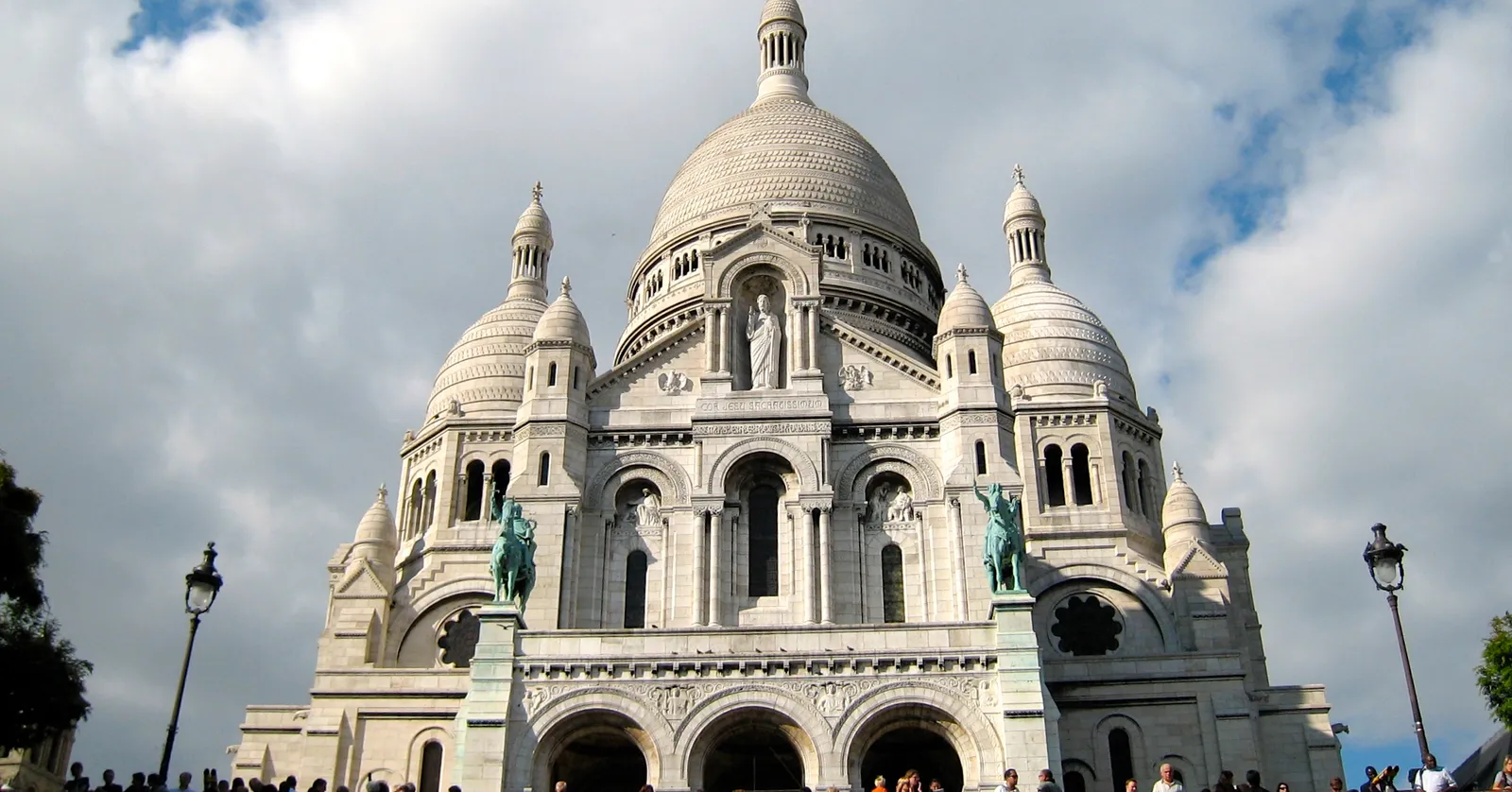
Paris Gare du Nord sits fifteen minutes’ walk from the foot of Montmartre, and the Sacré-Cœur basilica at the top of the hill is free to walk into and open until half past ten at night, with the airport train running from beneath the same station.
Every guide to central Paris points south from here, towards the river. This one goes the other way, north and uphill, into the one part of the city that still looks like a village that got surrounded.
The 23 cities carved along Gare du Nord’s roofline
Before you leave, walk out to the forecourt and turn around. Jacques Ignace Hittorff finished the front in 1864 and put twenty-three standing figures along the top of it, one for each city the railway company served. Paris is the tall one at the centre. The eight flanking her are the international destinations, London, Brussels, Amsterdam, Cologne, Frankfurt, Berlin, Vienna and Warsaw, and the fourteen lower down are French: Lille, Rouen, Amiens, Calais, Dunkirk and the rest.
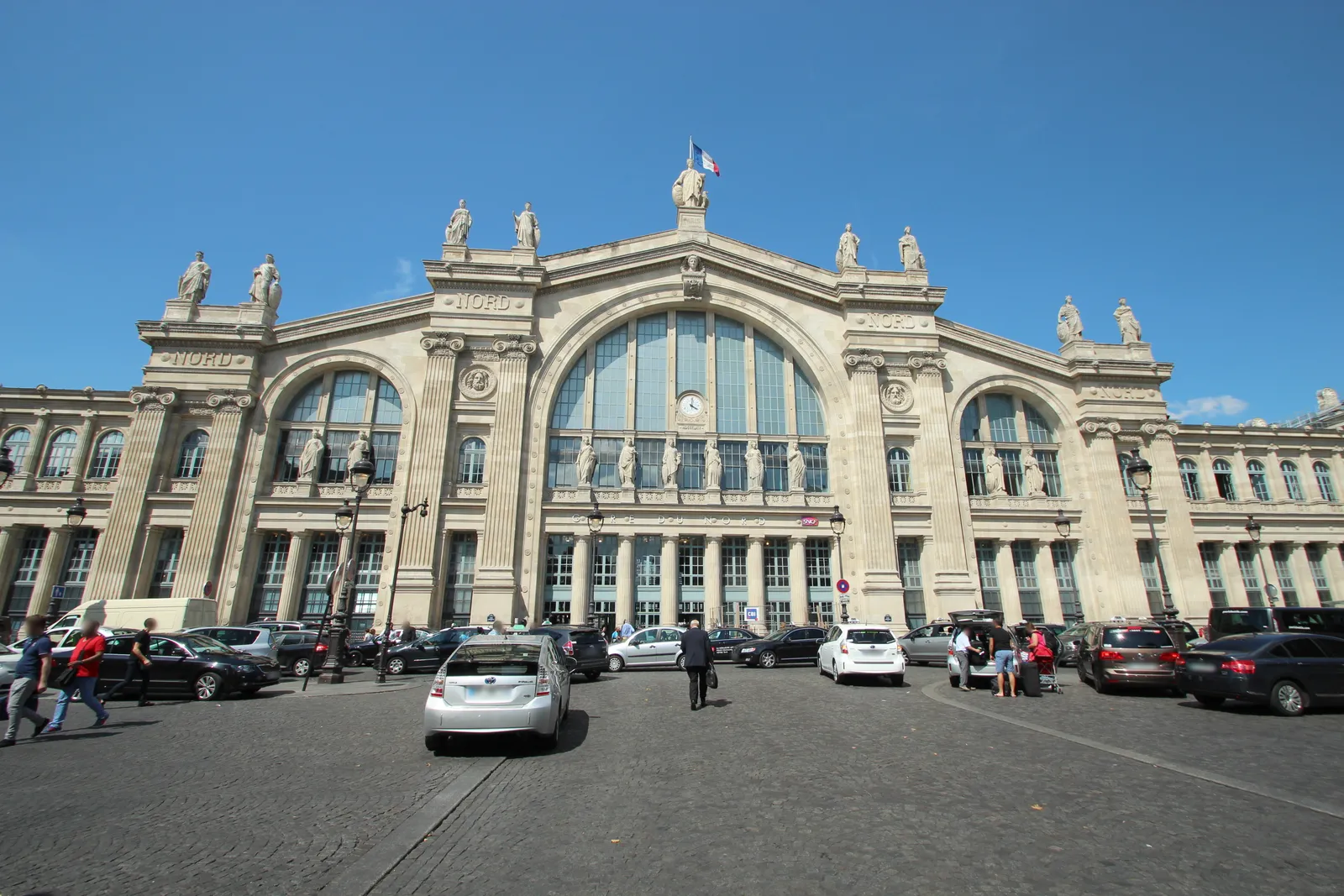
The station underneath them now handles more passengers than any other in Europe, around 257 million a year, and almost none of them look up.
Sacré-Cœur stays open until half past ten at night
West along the rue de Dunkerque to Anvers is flat and takes about a quarter of an hour. Then the hill starts, and you have a choice: the staircase up through Square Louise Michel, or the funicular running beside it, which costs the same 2.55 euros as any metro ride.
The basilica at the top opens at half past six in the morning and does not shut until half past ten at night, every single day of the year, and there is no charge to go in. That combination is genuinely useful on a flight day, because almost nothing else in Paris of this size is still open at nine in the evening. The dome above it is a separate ticket bought at a desk by the entrance, no online booking, and it stays open until half past nine with the last climb at nine, though it is almost 300 steps with no lift. If you would rather have the building explained while you are in it, there are short guided visits that cover the interior in about an hour.
Whichever way you go up, the last stretch is stairs, so this is a hill to arrive at with your hands free rather than a suitcase behind you.
Painters and café tables on the Place du Tertre
Two minutes behind the basilica the crowd thins slightly and you come out on a small cobbled square with trees down the middle. Painters have worked the Place du Tertre since the artists’ colony years, and the modern version runs on a city licence: 140 pitches of one square metre each, every one of them shared by two artists working alternate shifts, with a jury deciding who gets one.
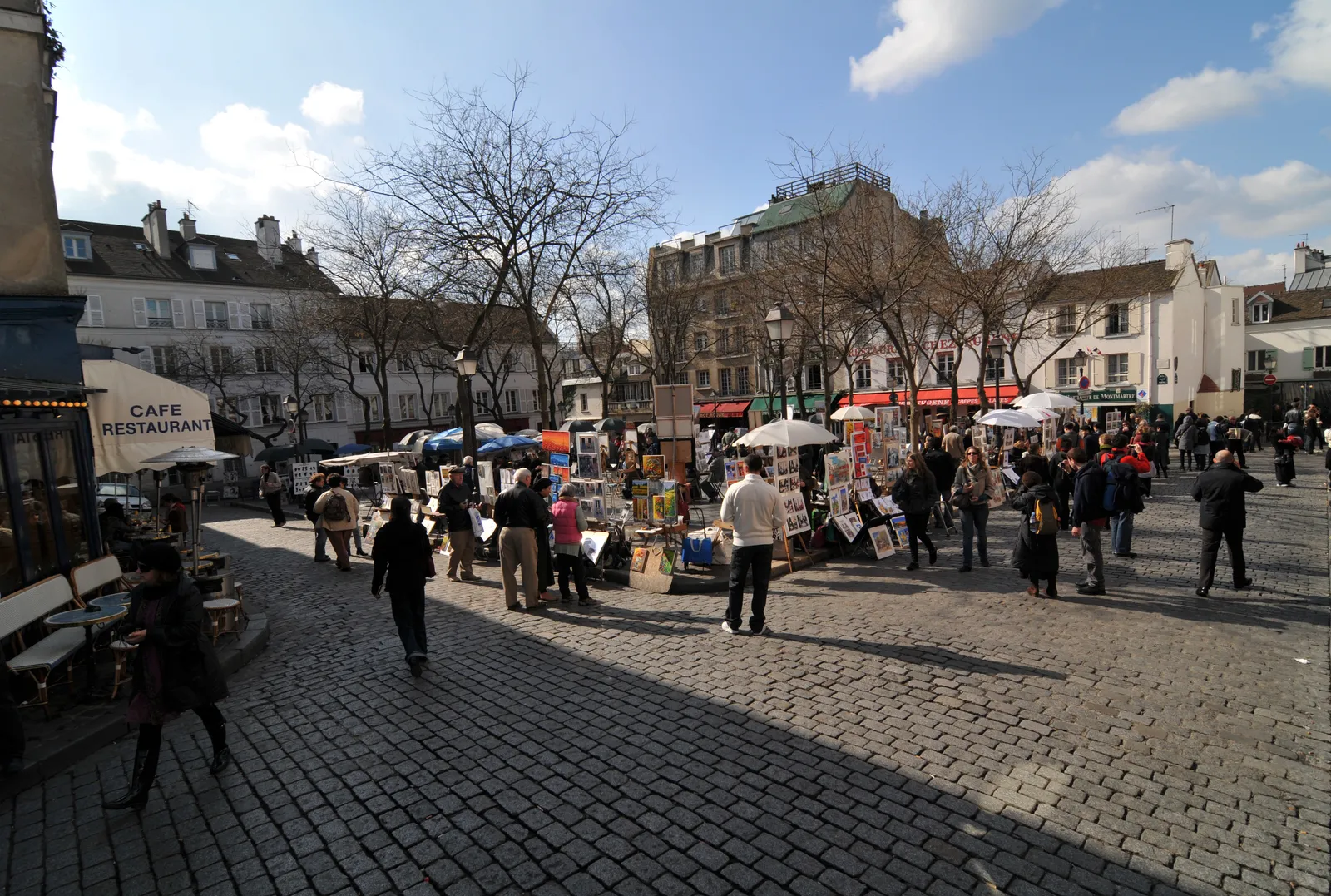
It is the most commercial thing on this hill and worth ten minutes rather than an hour. Walk one street off it in any direction, down the rue Norvins or the rue Saint-Rustique, and the noise drops away almost immediately.
Paris’s only working vineyard, on the rue des Saules
Five minutes north of the Place du Tertre, at the corner where the rue des Saules drops steeply past the rue Saint-Vincent, there is a vineyard. Not a decorative one: 1,600 square metres of Gamay and Pinot Noir on the north slope of the hill, planted by the city in 1933 to stop developers building on the plot, and harvested every year since.
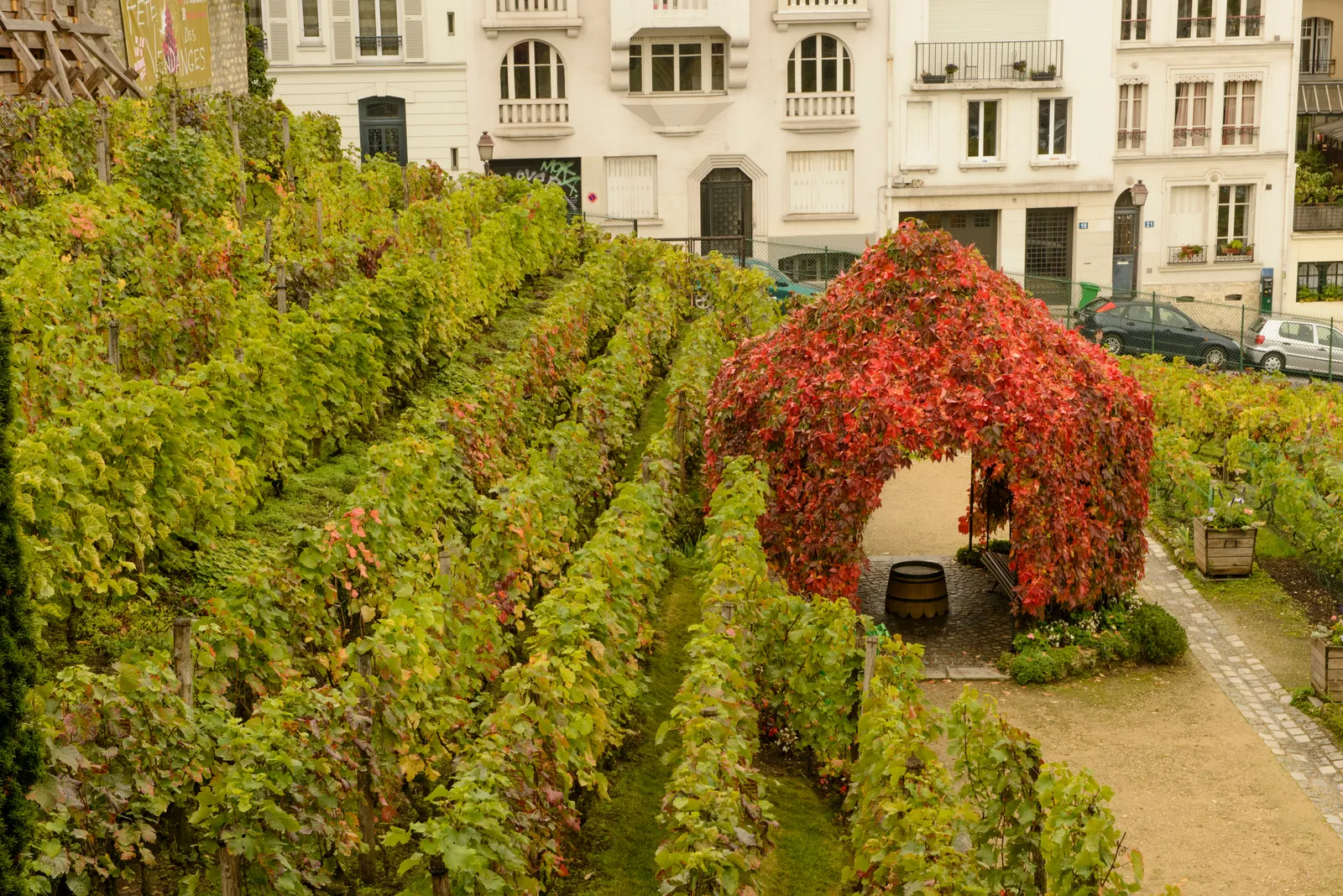
The Clos Montmartre is fenced and shut to visitors, so this is a look-over-the-railings stop rather than a walk-in one. The corner outside the Lapin Agile cabaret gives you the full length of the rows, and the Renoir gardens behind the museum at 12 rue Cortot look down onto them from above. The harvest gets its own street festival on the second weekend of October, which is the one time of year the gates open to anybody.
If the hill turns out to be more climbing than you wanted, the flat alternative is the river: the main Paris layover guide covers Île de la Cité and the Louvre courtyard, all of it at ground level and reached from the same train line you came in on.
The airport train runs from beneath Gare du Nord itself
The convenient part of starting here is that you never have to move stations. The RER B platforms sit three levels below the main concourse, and the same line that brought you in from the airport takes you back out, roughly 30 minutes to the terminals, trains every 10 to 15 minutes, on the flat 14-euro airport ticket.
Come back down the hill in time to collect the bag before you go under, though. The escalators at Gare du Nord are busy at commuter hour, and the walk from the storage point to the platform is the part nobody budgets for.
Frequently asked questions
Is the walk from Gare du Nord to Sacré-Cœur uphill the whole way?
No, only the last part of it. The fifteen minutes west along the rue de Dunkerque to Anvers is flat, and the climb is the final stretch from there: either the staircase up through Square Louise Michel or the funicular running alongside it, which takes a standard metro ticket at 2.55 euros and has accepted contactless card payment since July 2026. If you want the view without the climb at all, the funicular does the whole ascent in about a minute and a half.
Can I go up Sacré-Cœur late in the evening?
The basilica itself, yes: it is open 6:30am to 10:30pm every day of the year, with no admission charge, useful if a late departure has eaten the afternoon. The dome runs 10:30am to 9:30pm with the last climb at 9pm, and closes over the middle of the day while the ticket desk takes lunch. It is almost 300 steps with no lift, and tickets are sold on the spot rather than online. Expect a ten to fifteen minute wait to get into the basilica between 10:30am and 5pm, when it is busiest.
Does Montmartre work with young children?
Better than its reputation suggests, as long as you take the funicular. It counts as one metro ride, so a pushchair skips the staircase entirely, and the grass terraces below the basilica are where most families end up sitting rather than in the crowd on the parvis. The dome is the part to skip: almost 300 steps, no lift, and no room to leave anything at the bottom. The lanes above the Place du Tertre are cobbled and steep in both directions, so a carrier beats wheels once you are off the main square.
How long does Gare du Nord to Charles de Gaulle take?
About 30 minutes on the RER B, which runs from the station's own underground platforms three levels down rather than from a separate station. Trains go every 10 to 15 minutes, the last one leaves a little after midnight, and the fare is the flat 14-euro Paris Region to Airports ticket loaded onto a Navigo Easy card or a phone. Allow extra if you are flying from Terminal 1 or 3, where the free shuttle between terminals adds another ten minutes at the far end.