Hanoi Layover: The Old Quarter From HAN
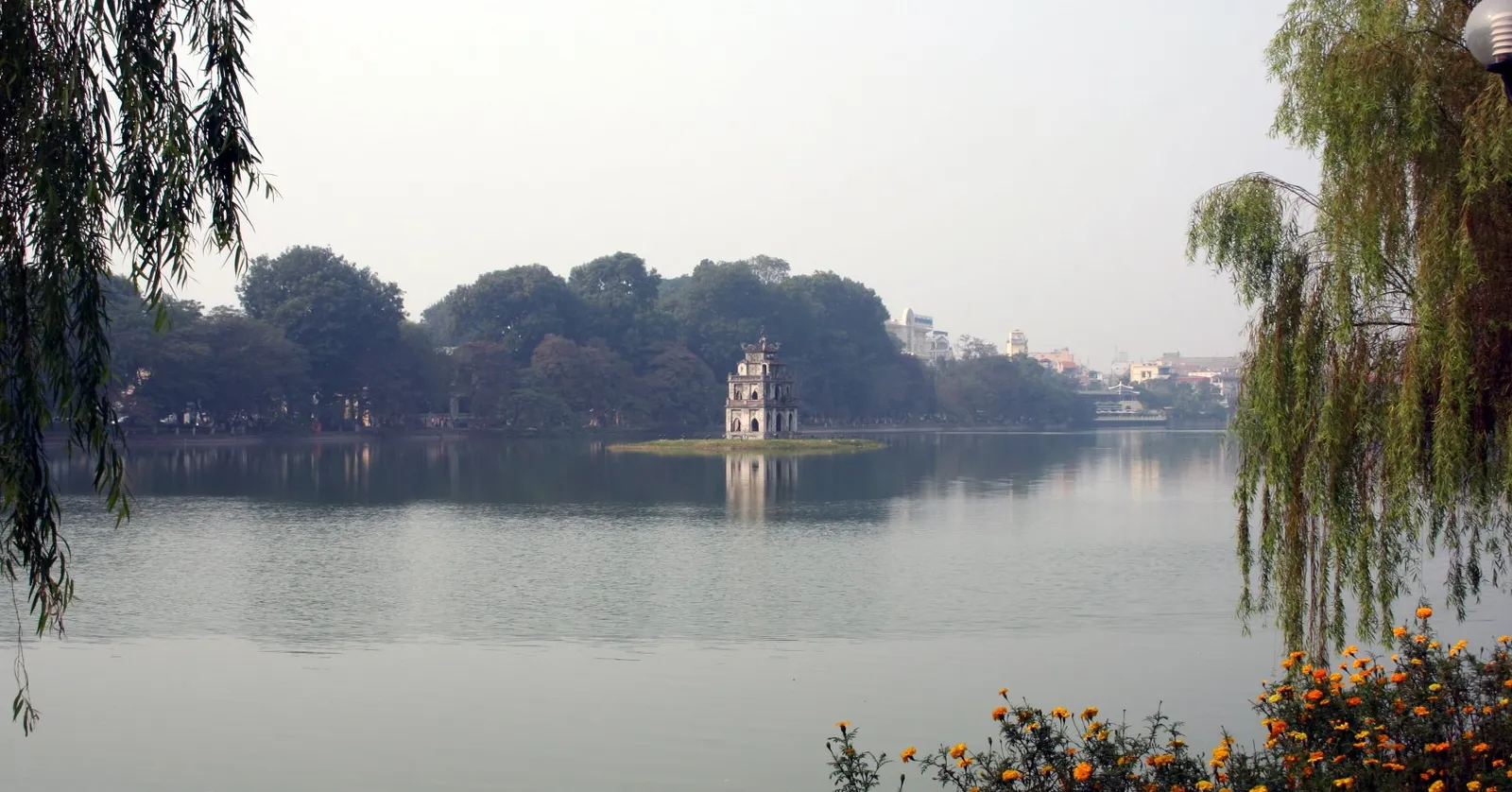
Hanoi keeps its Old Quarter, Hoan Kiem Lake, a temple that housed Vietnam’s first university and a French colonial prison within a couple of kilometres of each other, close enough to walk the whole set in an afternoon.
The Thang Long theatre floods its stage for water puppets
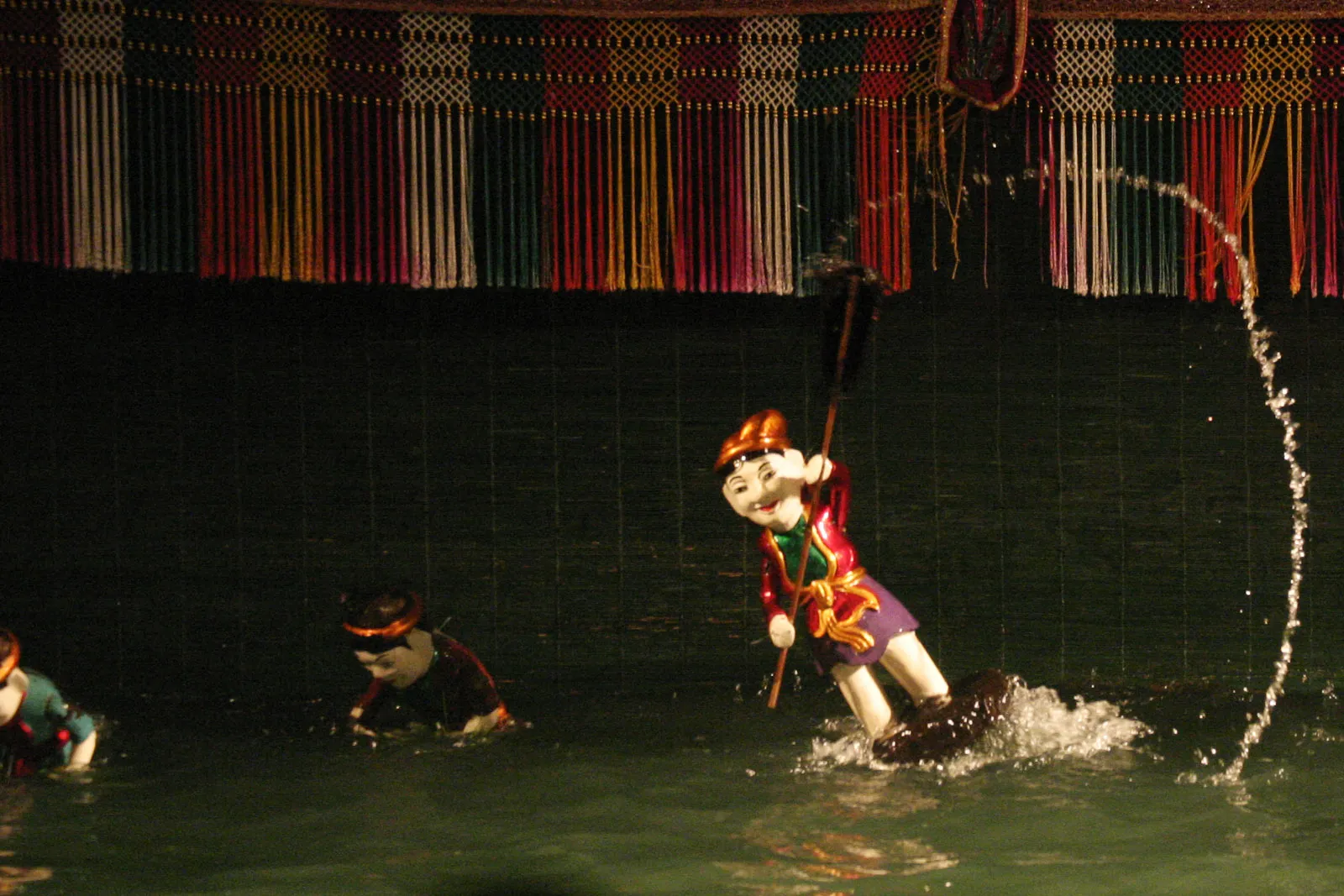
Puppeteers stand waist-deep behind a bamboo screen at 57B Dinh Tien Hoang, on the east shore of Hoan Kiem Lake, working lacquered wooden figures along poles hidden under the surface of a flooded stage. A performance runs 50 minutes and covers 18 scenes: rice planting, fishing, buffalo fights, a dragon dance, and the legend of the sword returned to the lake the theatre stands beside. Nine musicians play at the side of the pool throughout, and nobody speaks a word of dialogue.
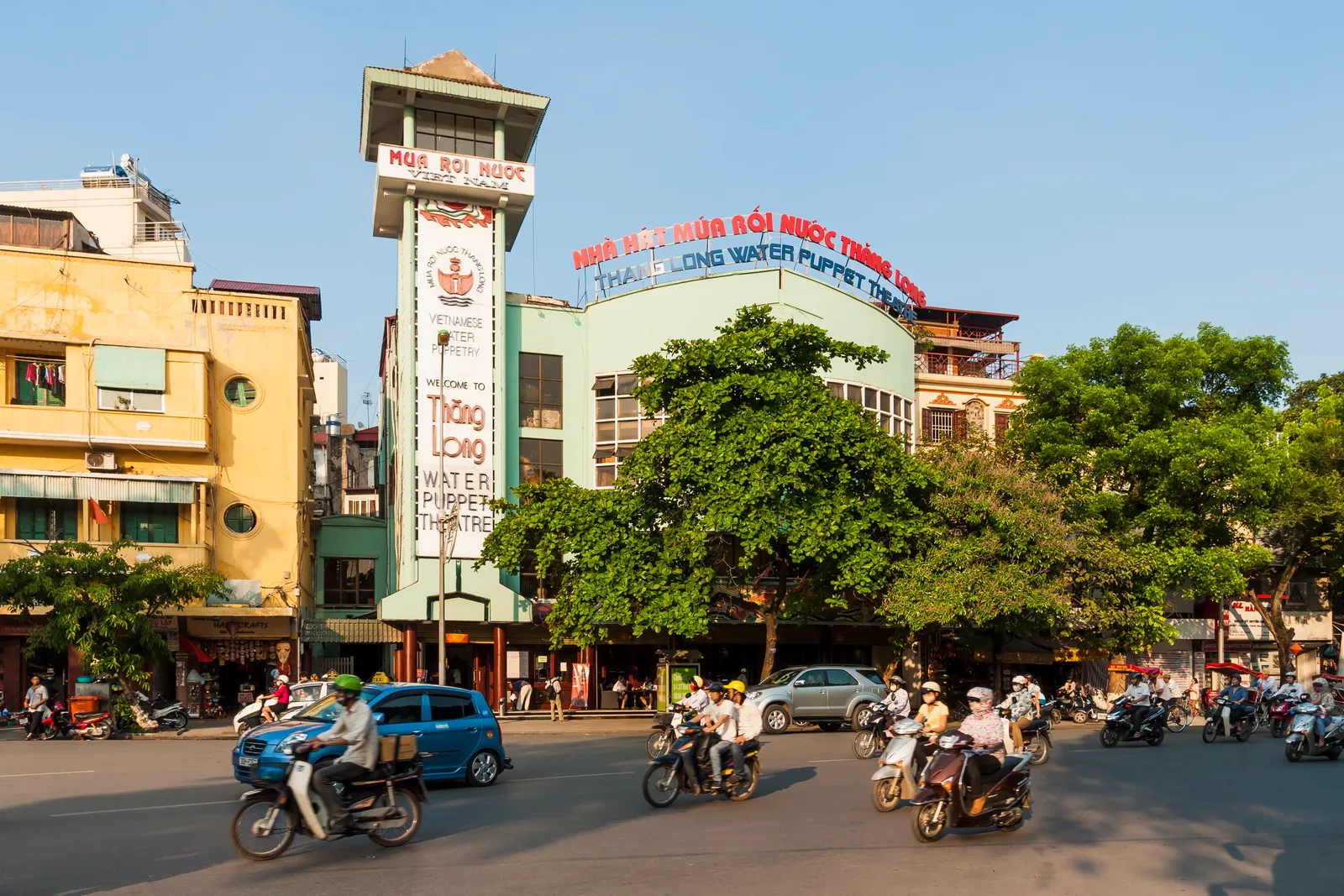
Shows run from mid-afternoon through to eight in the evening, which is what makes this a stop that survives a late departure when the museums have already locked up. Tickets go by seat band, from 100,000 dong at the back to 200,000 at the front, and the good bands on a busy evening go before the door opens, so it is worth having a seat booked before you arrive rather than taking whatever is left at the window.
The turtle-backed stelae at the Temple of Literature
Eighty-two stone slabs stand on the backs of carved stone turtles in the third courtyard of the Temple of Literature, on Quoc Tu Giam street about two kilometres west of Hoan Kiem Lake. Between them they carry the names and birthplaces of 1,307 men who passed the triennial royal examinations between 1442 and 1779, one slab per examination, and UNESCO put the set on its Memory of the World register in 2011. Emperor Ly Thanh Tong founded the temple in 1070; the imperial academy that made it a university followed a few years later and ran for seven centuries.
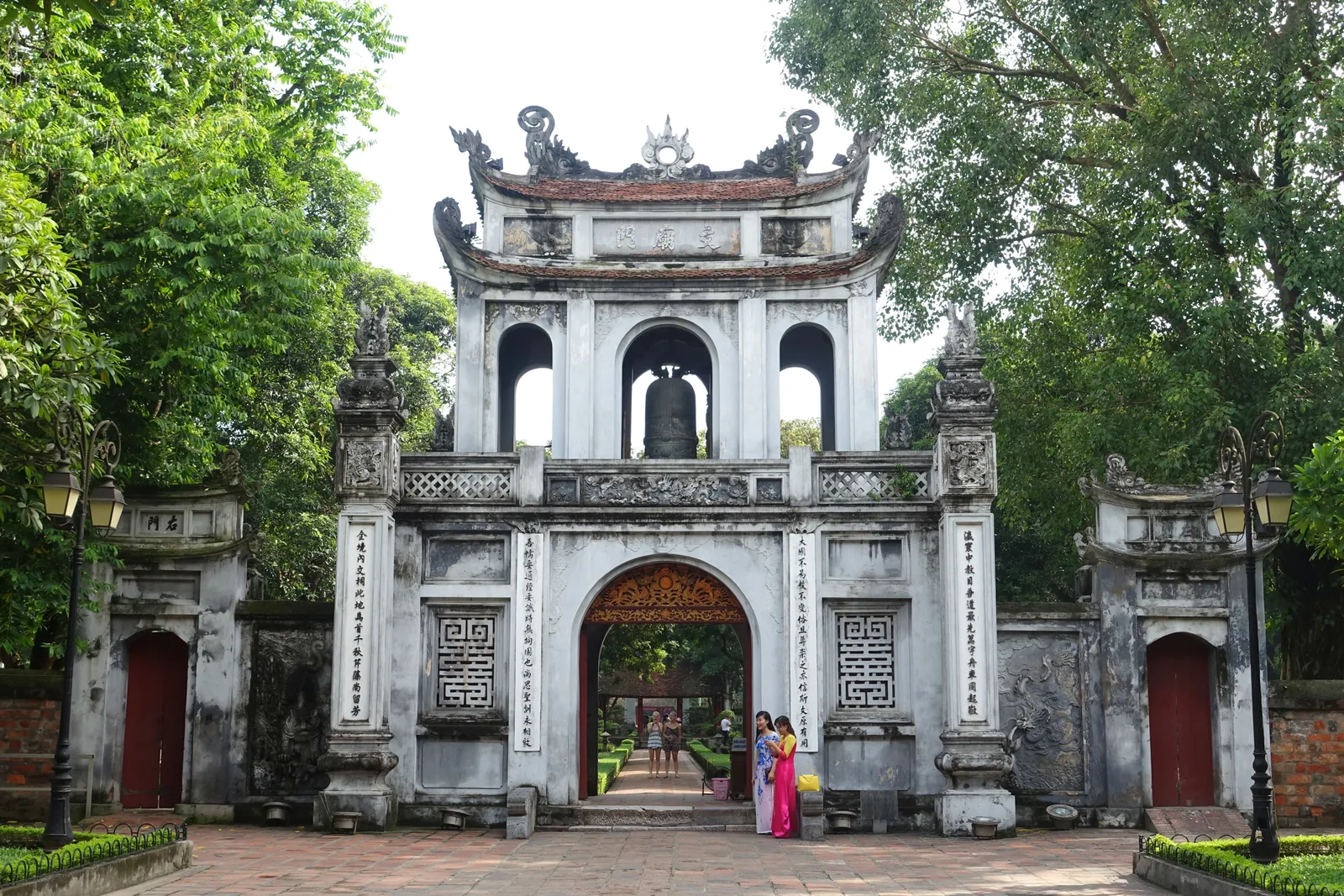
Five walled courtyards run back one behind the next, getting quieter as you go. The pavilion in the middle of it, the Khue Van Cac, was put up in 1805 and has since become the city’s own emblem; it is the building printed on the 100,000 dong note, which most visitors are carrying without having noticed. Adults pay 70,000 dong, students with a card 35,000, under-15s nothing, and it opens at eight, or half past seven between 15 April and 15 October. Entry can be bought in advance, which saves the queue at the gate on a weekend.
Hoa Lo Prison still has the French guillotine
The French colonial administration put up Hoa Lo in 1896 on the street of the same name, a few minutes’ walk southwest of Hoan Kiem Lake, and called it Maison Centrale. That name is still arched in black lettering over the gate, which is most of what survives: the rest of the complex was demolished in the 1990s and a tower block built on it, leaving the gatehouse and one wing as the museum.
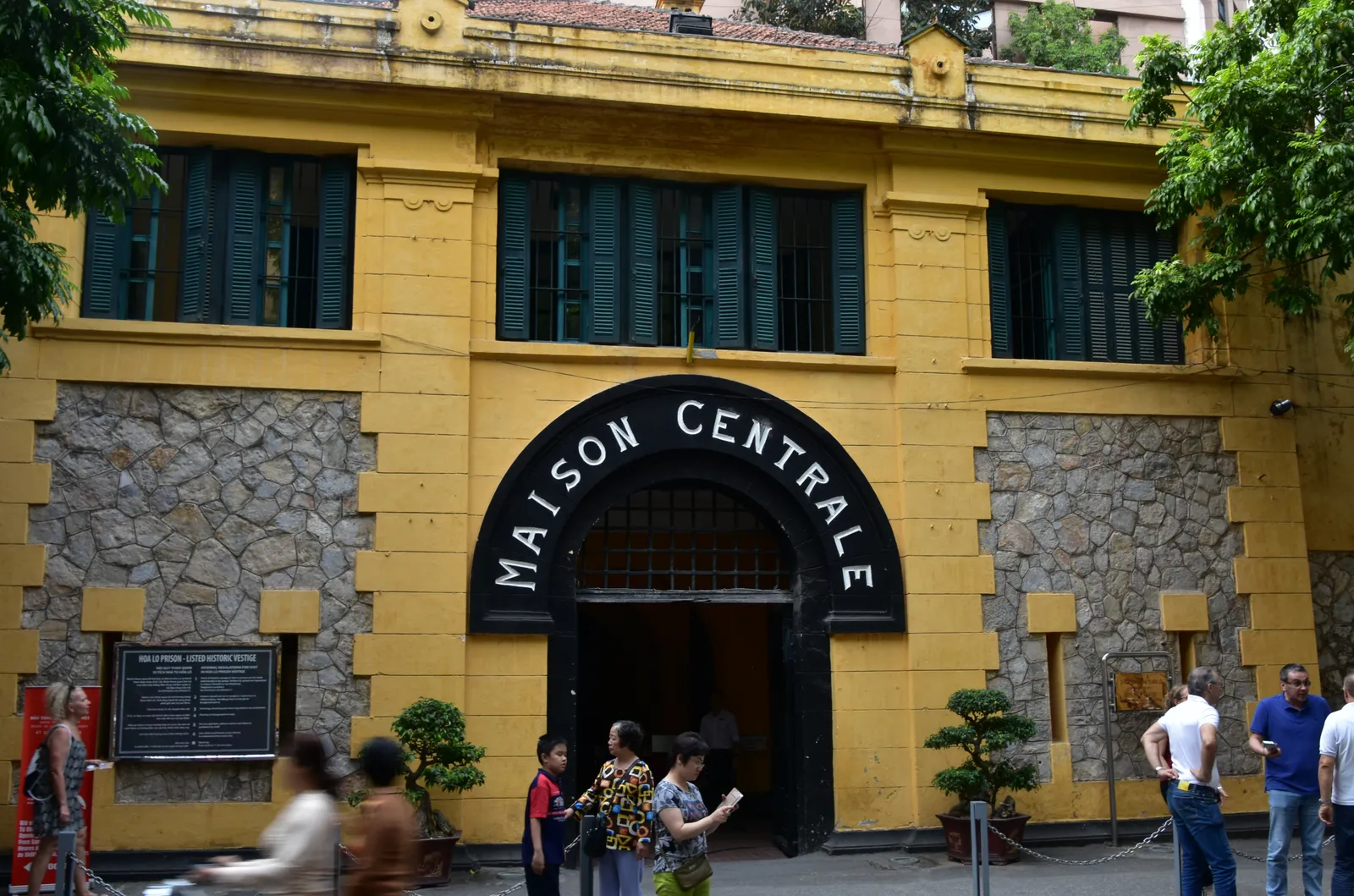
Inside are the guillotine the French used, the underground cells with their leg-iron bars, a reconstruction of the sewer that 100 prisoners escaped through in 1945, and the almond tree in the yard that inmates wrote about for years afterwards. The later rooms cover the American pilots held here from 1964, who gave the place the name Hanoi Hilton; John McCain was one of them, and so was Douglas Peterson, who came back three decades later as the first United States ambassador to Vietnam. Entry is 50,000 dong, daily from eight to five. On Friday and Saturday evenings the museum also runs a guided evening tour of the cells, at 399,000 dong and up, capped at a small group and sold out well in advance.
Ngoc Son Temple sits on an island in Hoan Kiem Lake
A red wooden footbridge called The Huc runs from Dinh Tien Hoang street out to the islet at the north end of Hoan Kiem Lake. Ngoc Son Temple has stood on that islet since the early 19th century, honouring the general Tran Hung Dao alongside the patron of scholars and the patron of physicians, and a stone brush tower and ink slab sit at the land end of the bridge as a set piece about writing. In a glass case inside is a preserved Hoan Kiem lake turtle, one of the giant softshells the lake is named for.
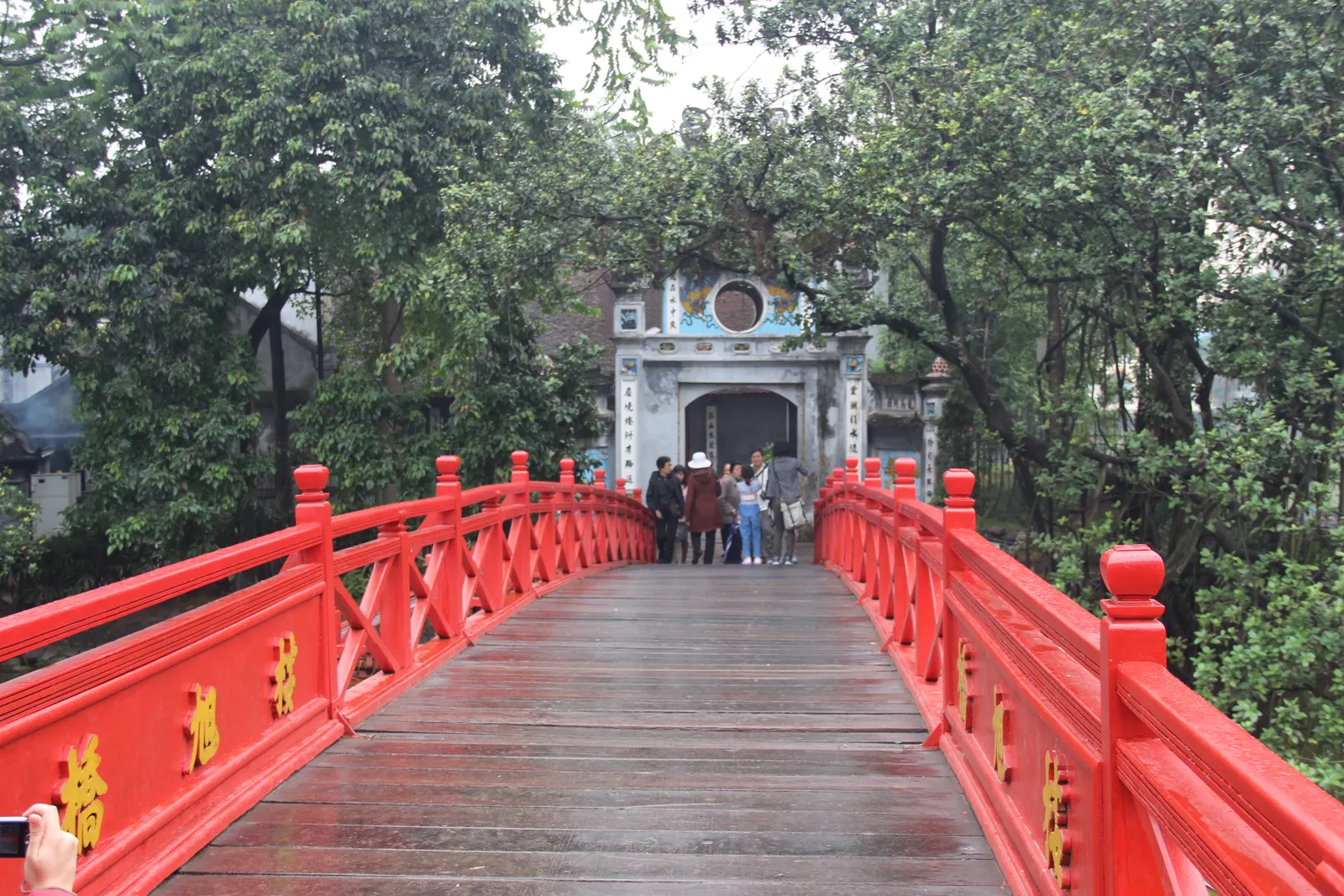
Entry to the temple is 50,000 dong, free under 16, and cash only. The path around the lake outside it costs nothing and runs a little under two kilometres, shaded most of the way, past the Turtle Tower standing on its own islet in the southern half of the water, which is looked at rather than visited. From seven on Friday evening until midnight on Sunday the roads ringing the lake close to traffic altogether and fill with buskers, families and food stalls, which turns an ordinary walk into the busiest thing happening in the city.
The Old Quarter’s streets are still named after what they sold
Hang Bac means silver, Hang Ma means votive paper, Hang Ga means chicken. The grid of streets north of Hoan Kiem Lake was settled by guilds who each took a street and gave it the name of their trade, and a fair number still sell roughly the right thing: paper offerings and decorations bank up along Hang Ma before every festival, and silver and gold shops still line Hang Bac.
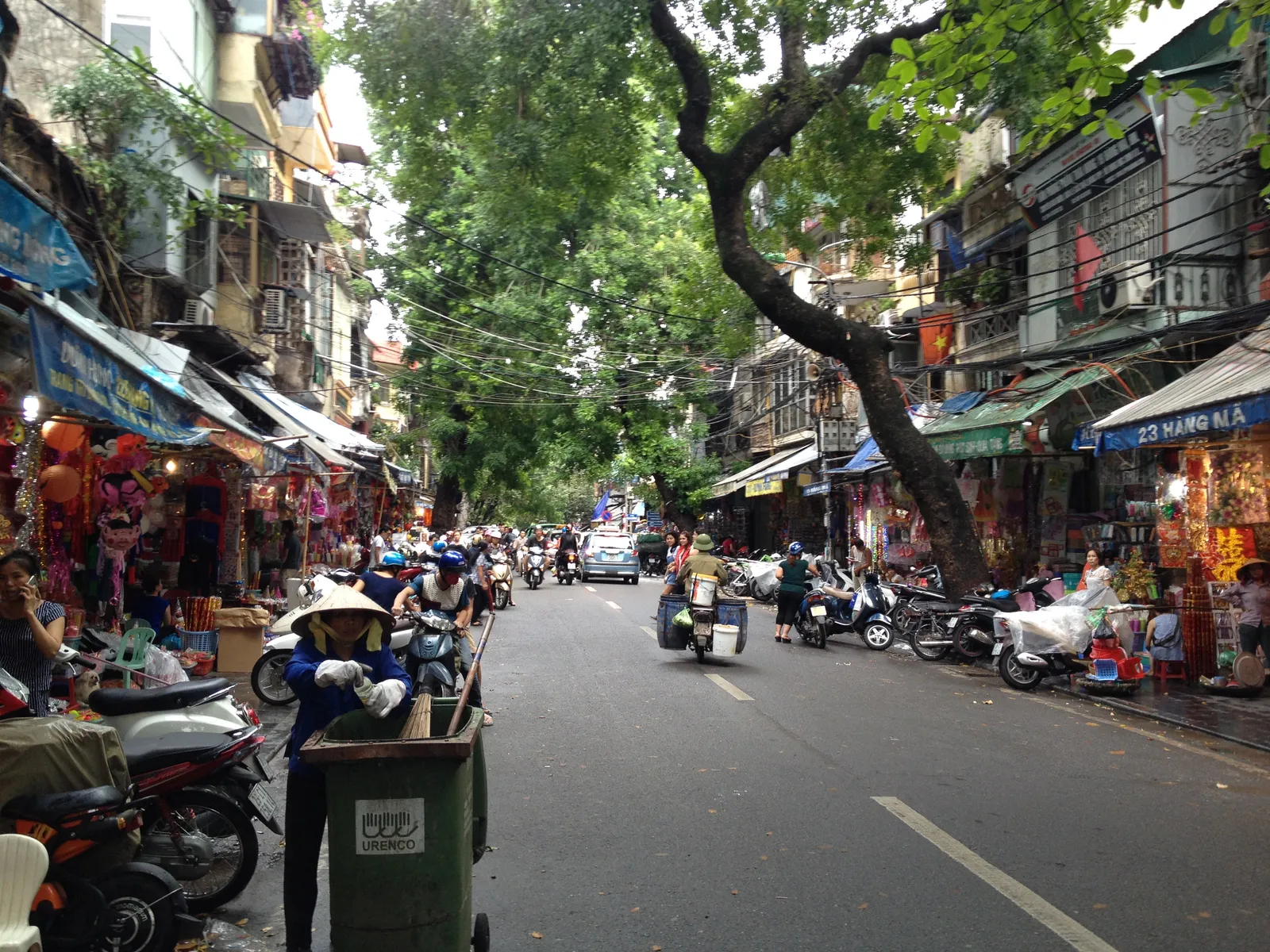
Dong Xuan Market anchors the top of the grid. The French built it in 1889 to replace two older markets, fire gutted it in 1994, and the three-storey building that went up between 1995 and 1997 is what trades there now: wholesale clothing and household goods in the early hours, retail later, and a night market that runs down Hang Dao from the market to the lake on Friday, Saturday and Sunday evenings from six until half eleven. At 42-44 Hang Bac, in among the jewellers, a set of gates opens into Dinh Kim Ngan, a communal house built by silversmiths from the village of Trau Khe who moved here after 1461, when Emperor Le Thanh Tong let his minister Luu Xuan Tin set up a royal mint on this street. It is still an active place of worship and generally open to look into during the day, and most people walk past the gates without registering that anything is behind them.
Three minutes west, St Joseph’s Cathedral has stood since 1886, built by the colonial administration on the site of a demolished pagoda and modelled closely enough on Notre-Dame de Paris that the two bell towers are the giveaway. It costs nothing, though the interior is only reliably open around mass times. What the whole quarter does not have is usable pavement: the kerbs are taken up by parked motorbikes and stalls, so walking here means walking in the road.
Long Bien Bridge has carried trains since 1902
Daydé & Pillé built Long Bien across the Red River between 1899 and 1902, 2,290 metres of riveted steel on twenty piers, and it was one of the longest bridges in Asia when it opened. American aircraft took the centre span out in August 1967 and hit it repeatedly again in 1972, and the repairs were never matched to the original: the spans alternate between the French cantilevers and squarer patched sections, which is the clearest thing about the bridge when you are standing on it.
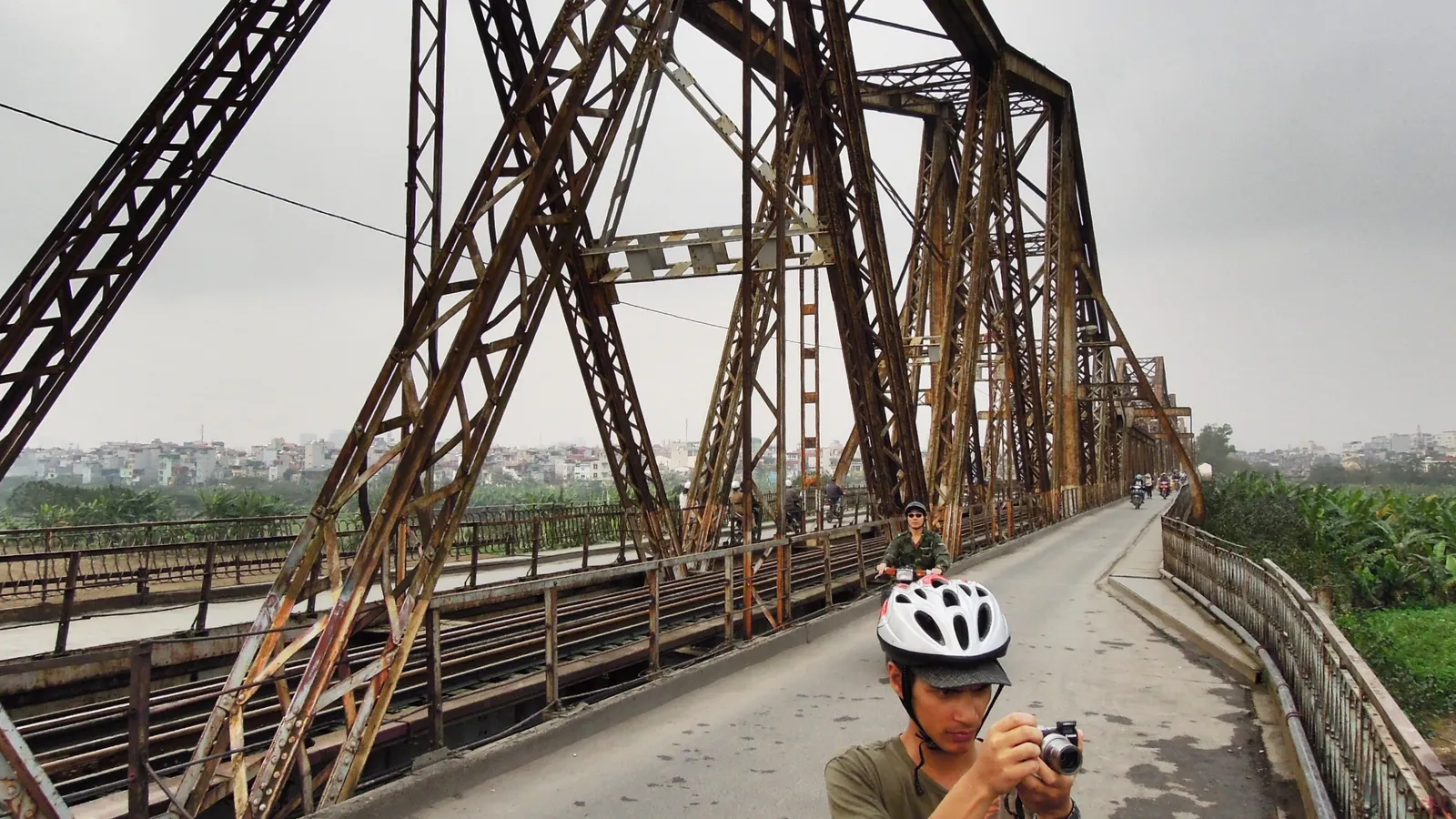
Cars were taken off it long ago and sent to the newer bridges up and down the river. What is left is a single rail track down the middle, a lane each side for motorbikes and bicycles, and a raised footway on the outside, so crossing on foot is a slow twenty-odd minutes above the water and the banana fields on the sandbank in the middle of the river. This is where an extra hour goes if you have more than four before your flight. The dyke road on the approach carries the Hanoi Ceramic Mosaic Mural, 3,850 metres of tiled panels that Guinness recognised in 2010 as the longest ceramic mosaic in the world, and it costs nothing to walk along.
No airport train, just a bus that takes about an hour
Bus 86 is the express service, 45,000 dong flat, contactless card accepted, running from Hanoi Railway Station out to both terminals at Noi Bai International Airport. It picks up at the Central Post Office opposite Hoan Kiem Lake and on Hang Tre at the Old Quarter’s eastern edge, so most of this itinerary is within a few minutes of a stop. The ride is 50 to 55 minutes in ordinary traffic. Scheduled departures are about 45 minutes apart, from 05:15 to 21:00 leaving the city and 06:40 to 22:15 leaving the airport, so the wait at the stop can easily run longer than the journey itself.
Two hours from the lake to the terminal door is the honest budget, then whatever your airline wants on top. The alternatives are a taxi or a ride-hailing car, 35 to 60 minutes over roughly 30 kilometres for something between 250,000 and 400,000 dong, or local buses 7, 17, 90 and 109 at about 10,000 dong, which stop constantly and terminate at outlying bus stations rather than in the centre. Metro lines 2A and 3 exist and are useful inside the city, but neither goes anywhere near the airport; the line that will only broke ground in June 2026. If the next leg routes through Thailand, the Bangkok layover guide covers a river-and-temple loop built around a similar gap.
None of that is a trip to make with a suitcase attached to you. The bus has no hold underneath, the Old Quarter has no pavement to wheel anything along, and the temple islet is reached by a narrow wooden bridge with people coming the other way.
Frequently asked questions
What should I do during a layover in Hanoi?
Four things sit within a couple of kilometres of each other in central Hanoi: the grid of trade streets that makes up the Old Quarter, Ngoc Son Temple on its island in Hoan Kiem Lake, the Temple of Literature two kilometres west, and Hoa Lo Prison, which the French built as Maison Centrale in 1896. Four hours covers the lake, the Old Quarter and one of the two paid interiors; six adds the other, plus a water puppet show at the theatre on the lake's east shore. Anything with a seat attached to it is worth booking ahead, since the puppet theatre's better seat bands and the prison's Friday and Saturday evening tour both sell through in advance. The lake path, the streets and the market floor all cost nothing, so a tight visit can drop the ticketed stops without losing the shape of the day.
How do you cross the road in Hanoi?
Slowly, steadily, and without stopping. Hanoi has about 6.9 million registered motorbikes, and riders steer around a pedestrian who holds a constant speed and a straight line; they cannot read someone who stops dead in the middle or breaks into a run. Step off the kerb when there is no car or bus immediately on you, keep walking at the same pace, and let the two-wheelers flow past in front and behind. Crossings and traffic lights exist on the wider boulevards and are worth using, but inside the Old Quarter the grid is narrow enough that most junctions have neither.
Is the Ho Chi Minh Mausoleum open to visitors?
Not on Mondays or Fridays, and only in the mornings, usually 8am to 11am, on the days it does open. It also shuts for a long annual maintenance period whose dates move from year to year: in 2026 that runs from 4 September to 2 November, with visits resuming on 3 November, and in other years it has fallen over the summer instead. Ba Dinh Square outside, the Presidential Palace grounds and the One Pillar Pagoda beside them stay open regardless, so the walk out there is not wasted when the mausoleum itself is shut. Check the current dates before building a layover around going inside.
Is the express bus or a taxi better from Noi Bai airport?
The bus if you have the time, a car if you do not. Bus 86 is the express service between Noi Bai International Airport and Hanoi Railway Station, costs 45,000 dong, takes 50 to 55 minutes and stops at the Central Post Office opposite Hoan Kiem Lake and at Hang Tre in the Old Quarter on the way. Scheduled departures are about 45 minutes apart, so the wait at the stop can be longer than the ride. A taxi or a ride-hailing car covers the same 30 or so kilometres in 35 to 60 minutes depending on traffic, for roughly 250,000 to 400,000 dong. Local buses 7, 17, 90 and 109 cost about 10,000 dong but stop constantly and end at outlying bus stations rather than the centre.
Does a Hanoi layover work in summer heat?
It works, but the shape of the day changes. June to August regularly runs above 32C with humidity near 80 percent and heavy afternoon thunderstorms, and August is both the wettest month and the one that has touched 39C. The lake path is the coolest outdoor stretch in the centre, shaded by willows and old banyans most of the way round, and the Temple of Literature's courtyards are planted heavily enough to stay bearable. Hoa Lo Prison and the puppet theatre are the two indoor, air-conditioned stops, which makes them the natural middle of a summer afternoon rather than the start of it. November to February is the opposite problem, cool and often overcast at around 20C, but dry enough to walk all day.