Hanoi Railway Station Layover: Fine Arts
Part of the full Hanoi Layover: The Old Quarter From HAN
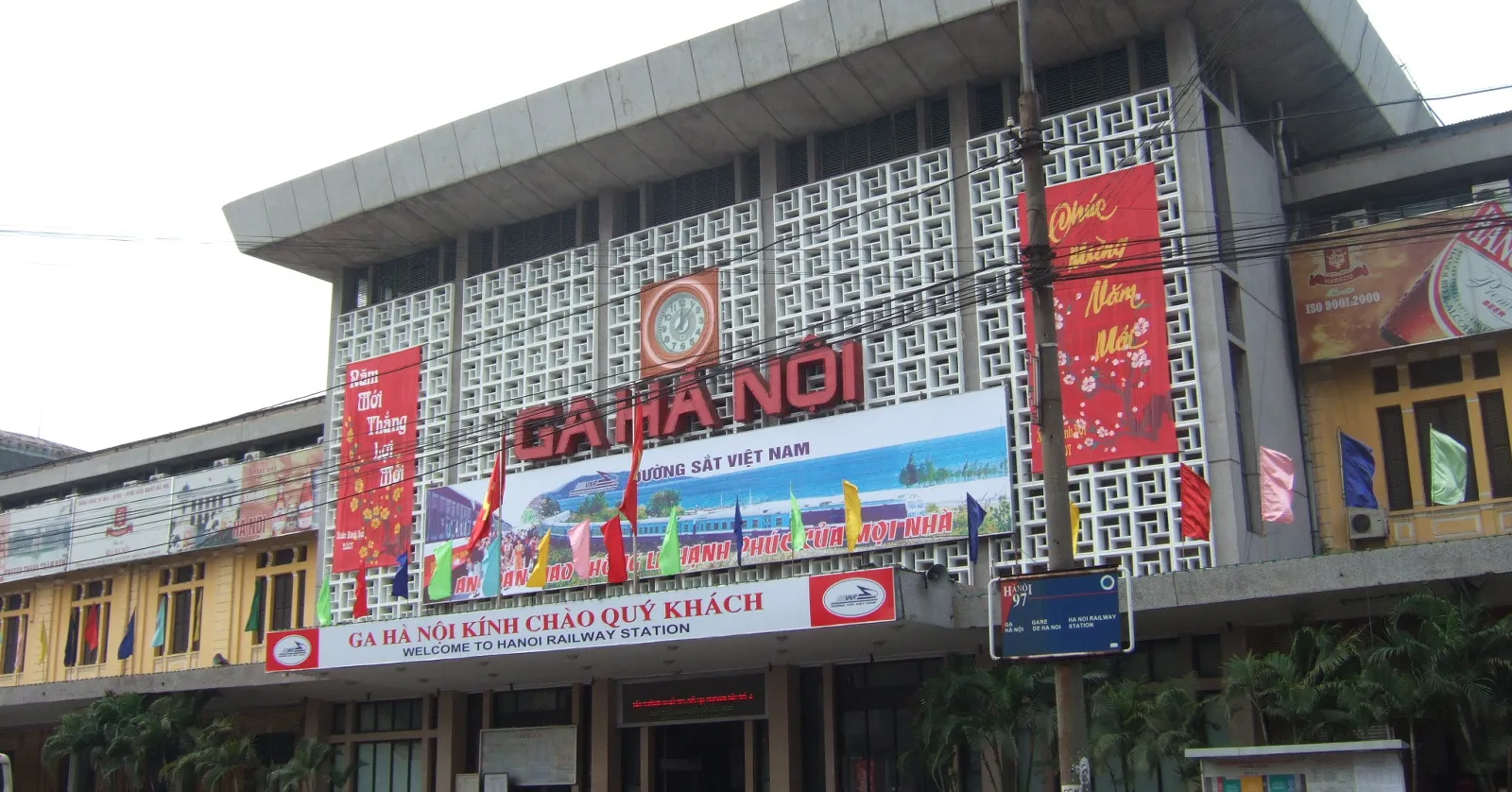
Hanoi Railway Station, the city’s main terminus on Le Duan street, has an art museum in a colonial boarding school and 50 hectares of unfenced park within about a kilometre of its forecourt, neither of them on the usual Old Quarter circuit.
Hanoi Railway Station lost its middle to a bomb in 1972
Henri Vildieu designed the original building, which opened in 1902 under the name Ga Hang Co and ran the length of the frontage in French colonial style. American bombing took out the central hall in December 1972 and left the two side wings standing, and when the station was rebuilt in 1976 the replacement went up as a slab of modernist concrete between them. The result is legible from the pavement on Le Duan: pale yellow shuttered wings at either end, grey concrete and a clock in the middle.
Five lines still terminate here, running south to Saigon on the Reunification Express and north and east to Lao Cai, Hai Phong, Dong Dang and Quan Trieu. If you would rather ride than walk with the time you have, an open-top sightseeing bus sells passes by the hour and works a loop of the city’s landmarks, booked ahead by the four hours or the day, picking up at Hoan Kiem Lake on weekdays and outside the Opera House at weekends, both about fifteen minutes’ walk northeast of here.
Trains north leave from the other side of the tracks
Two entrances serve this station and they are not interchangeable. Gate A at 120 Le Duan handles southbound departures, including the Reunification Express; Gate B, on Tran Quy Cap street on the far side of the tracks, handles the northern and eastern services to Lao Cai and Hai Phong. There is no way through between them, so an early-morning arrival off the Lao Cai sleeper lands on the Tran Quy Cap side and has a walk around the block with whatever they are carrying before reaching the main hall.
The Fine Arts Museum fills a boarding school for French officials’ daughters
Vietnamese art from prehistory to the present hangs in a building at 66 Nguyen Thai Hoc that was never meant for it: the French built it as a boarding school for the daughters of colonial officials, and the Ministry of Culture converted it into the national art museum in 1962. Someone put a tiled Vietnamese roof on top of the colonial facade during the conversion, which is the first thing you notice from the lawn.
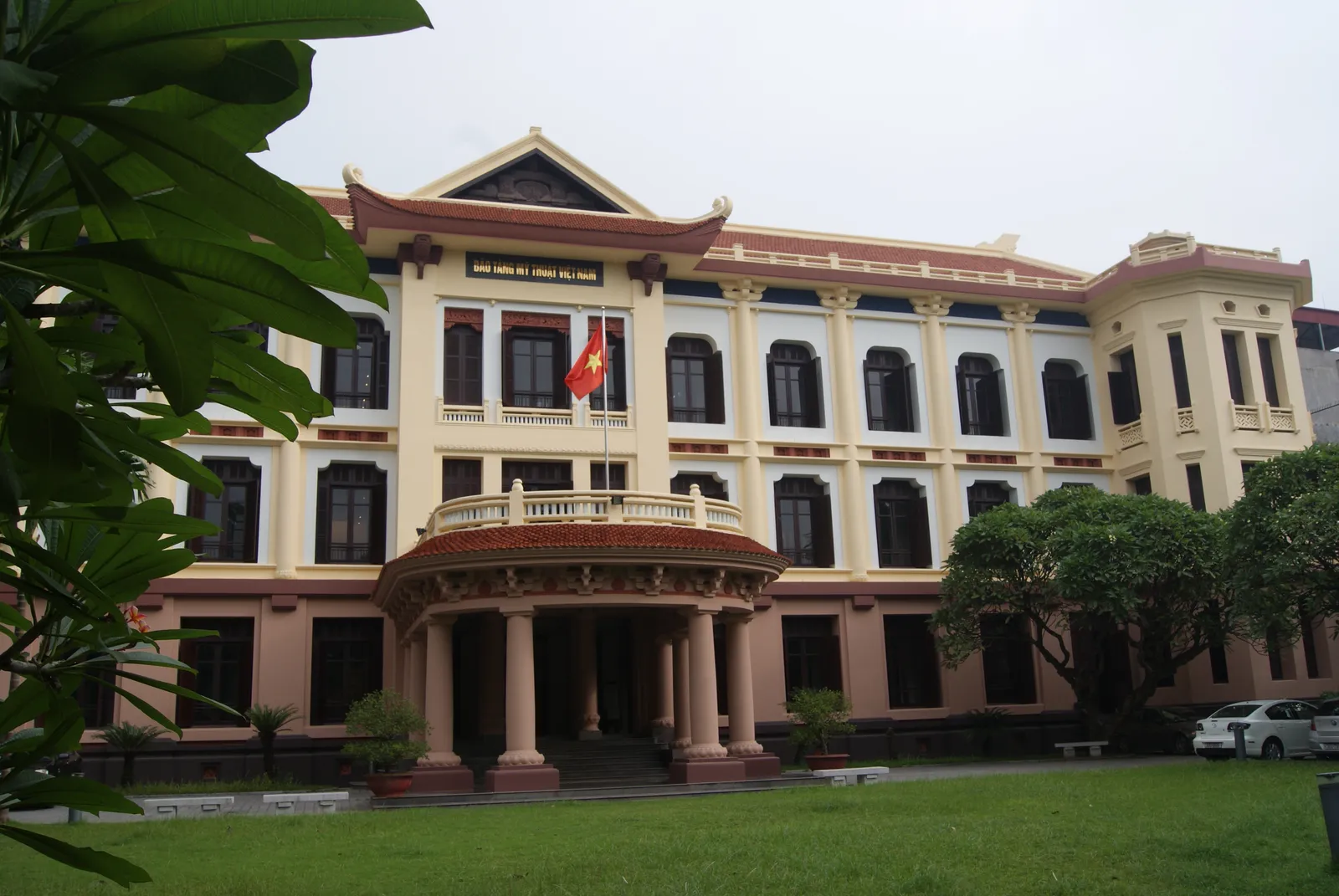
The collection runs to more than 20,000 items, with something like 2,000 on permanent display: Dong Son bronzes, Buddhist statuary, village woodcarving, then lacquer and silk painting from the twentieth century, which is the part most people come out talking about. Adults pay 40,000 dong, students 20,000, six-to-16s 10,000 and under-sixes nothing. It opens half past eight to five and closes on Mondays and over the Lunar New Year holiday.
Thong Nhat Park took its fences down at the end of 2022
More than 50 hectares of grass, trees and water sit around Bay Mau Lake south of the station, and until the end of 2022 you paid to get in through a gate in 1,700 metres of fencing. The city took the fencing out and dropped the fee, so the whole thing now works as an open piece of the street grid rather than an enclosure. It was finished in 1961, and for part of the 1980s it was called Lenin Park.
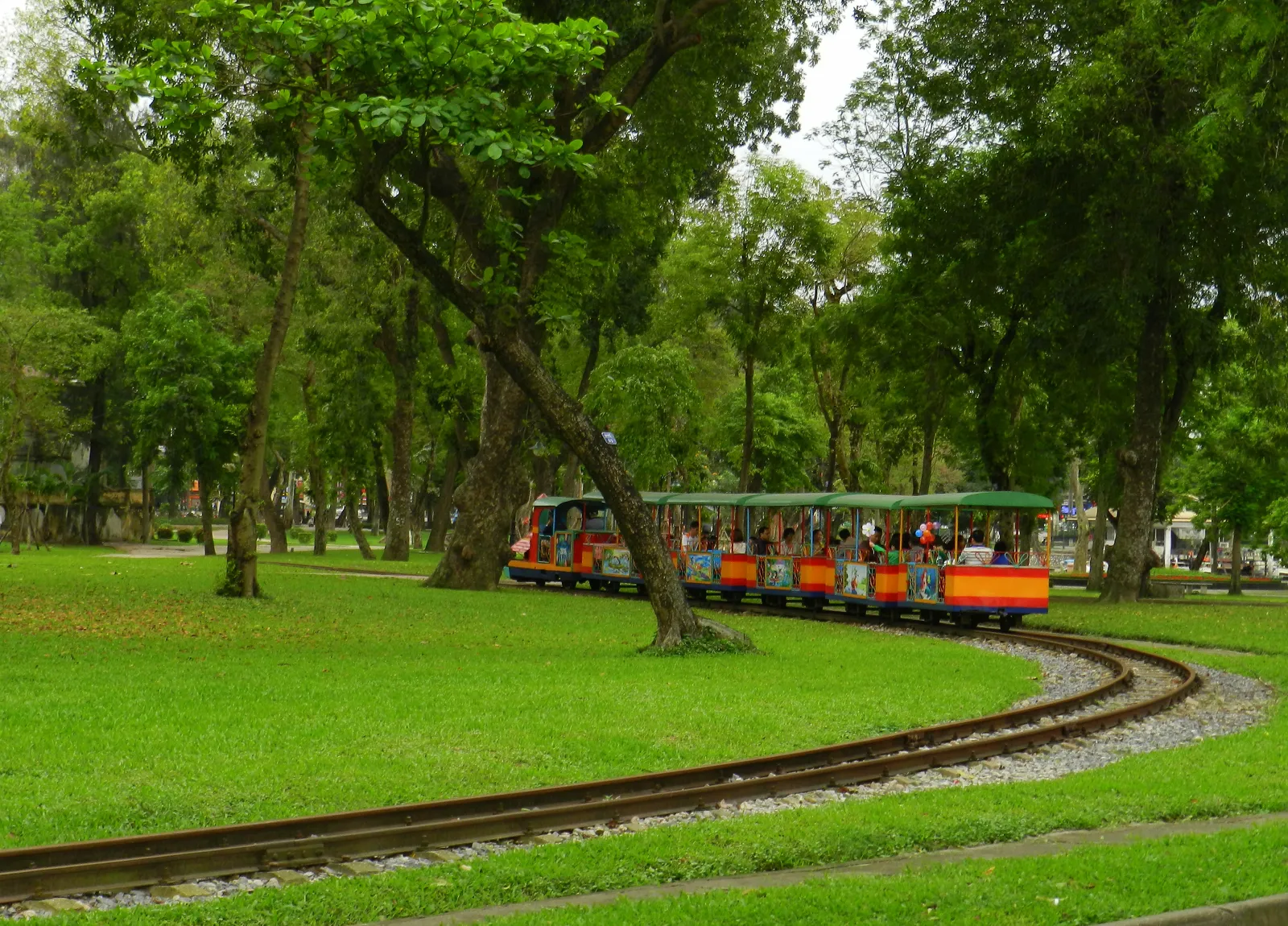
A miniature train works a loop of narrow track through the trees, which is the main reason to bring children here rather than to a temple. On the way between the park and the station, Quan Su Pagoda on Quan Su street is worth the two minutes it takes: it is the headquarters of the Vietnam Buddhist Sangha, so it is a working administrative centre as much as a place of worship, and it tends to have more people practising in it than photographing it. For the tighter, more famous version of a Hanoi afternoon, lakes and trade streets and the colonial prison, the main Hanoi guide covers that ground instead, and it needs more like six hours once the road out to the airport is counted.
The airport bus starts from this forecourt
Bus 86 begins its run here rather than passing through, which is the practical advantage of leaving from the station rather than from anywhere else in the centre: at the terminus you get a seat. The fare out to both terminals at Noi Bai International Airport is 45,000 dong flat, contactless card accepted, and the ride takes 50 to 55 minutes in ordinary traffic. Departures run from 05:15 to 21:00 at roughly 45-minute intervals, so the gap between buses is worth checking against your own clock before you commit to the second museum.
Two hours from the forecourt to the terminal door covers the ride and a realistic wait, with check-in on top of that. After the last bus, or through the evening rush, a taxi or ride-hailing car does the same 30 kilometres in 35 to 60 minutes for roughly 250,000 to 400,000 dong.
That walk around the block is the whole argument for doing it once, empty-handed, rather than twice with a suitcase. The museum lawn, the park path and the bus seat back out all improve in the same way, which is by not having the bag along for any of them.
Frequently asked questions
What should I do during a layover near Hanoi Railway Station in Hanoi?
Two things sit about a kilometre out from the forecourt in opposite directions: the Vietnam National Museum of Fine Arts, in a colonial building on Nguyen Thai Hoc that was a boarding school before it held art, and Thong Nhat Park, 50 hectares of grass and lake that has been free to walk into since its fences came down. Three hours covers one of them properly with the walk each way; five covers both, with Quan Su Pagoda on Quan Su street in between. The museum is the stop with a clock on it, closing at five and shut on Mondays, while the park has no gate to close. Nothing here needs booking.
Does the Hanoi metro reach the railway station?
Not yet. Line 3 is being built to terminate at the station, but the four-kilometre tunnelled section that would bring it there, with underground stops at Kim Ma, Cat Linh and Van Mieu on the way, was still under construction as of mid-2026 and is scheduled to open in 2027. The elevated half of that line, from Nhon in as far as Cau Giay, has been running since August 2024. The nearest metro station to the railway station today is Cat Linh on Line 2A, a little over a kilometre northwest.
Is Thong Nhat Park free to walk into?
Yes, and it has been since the entrance fees and the 1,700 metres of fencing around it were both removed at the end of 2022. The park runs to more than 50 hectares around Bay Mau Lake, which was laid out and finished by the city in 1961 and carried the name Lenin Park for a stretch of the 1980s. There is no closing gate, so an early-morning arrival off a sleeper can walk straight in at a point when the museums are still hours from opening.
Does a Hanoi Railway Station layover work with kids?
Better than most stops in the centre, because the park does the heavy lifting. Thong Nhat Park is free, flat and big enough to run around in, with a miniature train on its own loop of track through the trees, and the lake in the middle of it gives the walk a shape. The Fine Arts Museum charges 10,000 dong for children between six and 16 and nothing at all under six, so a short look round costs almost nothing if it does not hold their attention. Neither has a queue worth worrying about on a weekday.
Is the Fine Arts Museum worth it with only an hour?
Yes, if you pick a floor rather than trying to do all of it. The collection runs to more than 20,000 items with something like 2,000 on permanent display, so an hour spent on everything is an hour spent walking past things. The twentieth-century lacquer and silk paintings are the part most visitors come out talking about, and the Dong Son bronze drums are the other short, memorable stop. At 40,000 dong for an adult, a deliberately partial visit is not an expensive mistake.