Hanoi Cat Linh Metro Layover: Lang Pagoda
Part of the full Hanoi Layover: The Old Quarter From HAN

Cat Linh in Hanoi is the city end of Vietnam’s first metro line, which reaches a 12th-century pagoda with 198 statues in it three stops out and an 18th-century battlefield one stop out, for under 20,000 dong a ride.
Vietnam’s first metro line opened here in November 2021
Bright green four-carriage trains lettered Cat Linh to Ha Dong run 13 kilometres southwest from this station through 12 stops, and until November 2021 nothing like them existed anywhere in the country. The line was built by a Chinese state contractor over a long and much-argued-over construction period, runs entirely on elevated track at around 35 kilometres an hour, and has settled into being an ordinary commuter service: 13.68 million journeys in 2025.
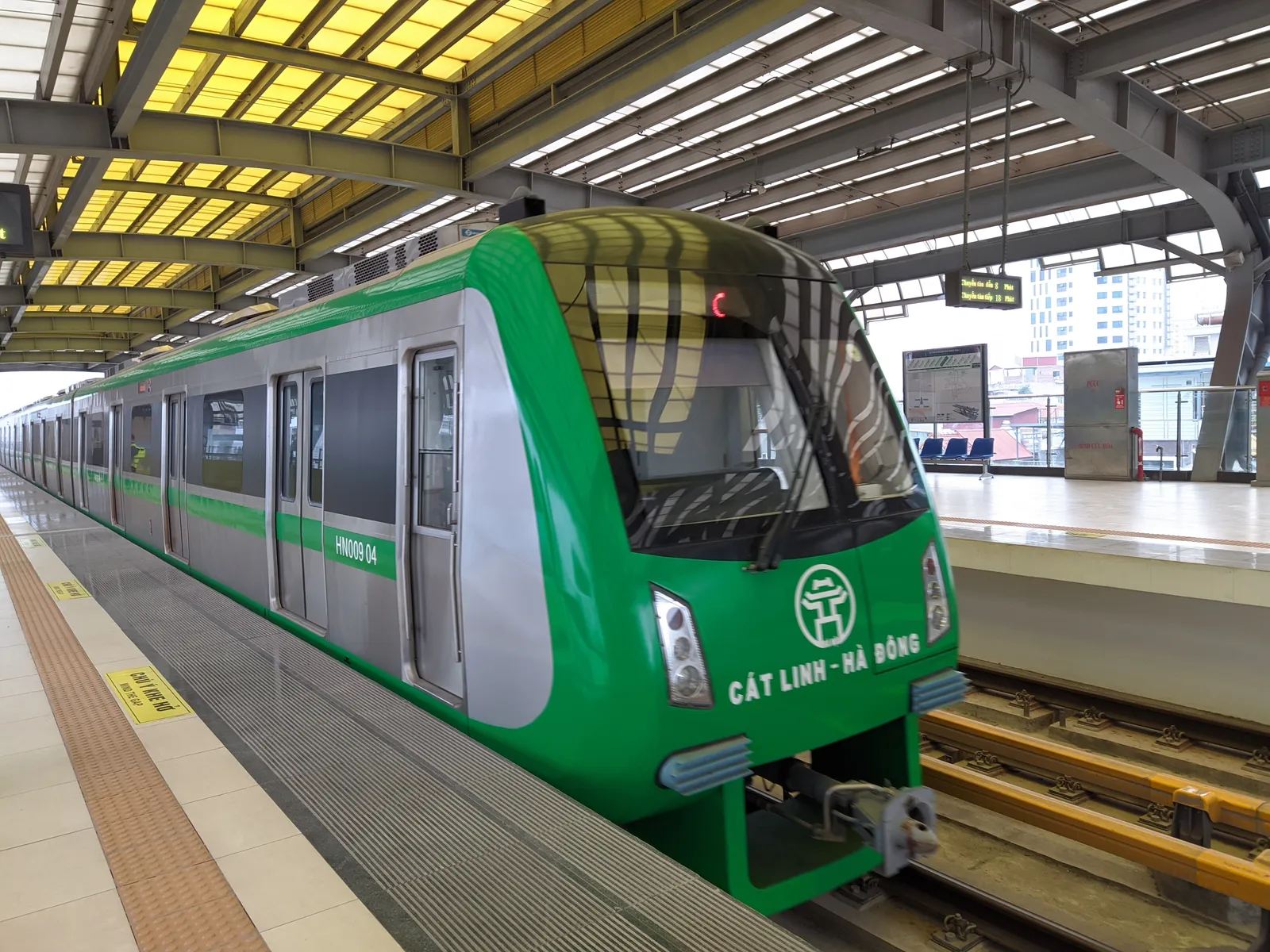
Fares run from around 9,000 to 19,000 dong a journey depending on distance, with an unlimited day pass at 40,000, and trains come about every ten minutes. One stop out at Thai Ha, off Tay Son street, is Dong Da Mound, a little over 6,000 square metres of ground where Quang Trung’s Tay Son army broke the Qing occupation of Thang Long on the fifth day of Tet in 1789; it is a public park now and free to walk into. About a kilometre east of Cat Linh on foot is the Temple of Literature, the 1070 university site, where buying the 70,000-dong ticket in advance saves the gate queue on a weekend.
Lang Pagoda keeps 198 statues behind an octagonal pavilion
Chua Lang street in Dong Da district, a few minutes from Lang station, runs up to a walled compound of about a hundred bays under old trees, with a two-tier octagonal pavilion standing on its own in the brick courtyard. The pagoda was founded in the 12th century under Ly Anh Tong and honours both Ly Than Tong, the emperor before him, and Tu Dao Hanh, the monk who is credited with starting Vietnamese water puppetry.
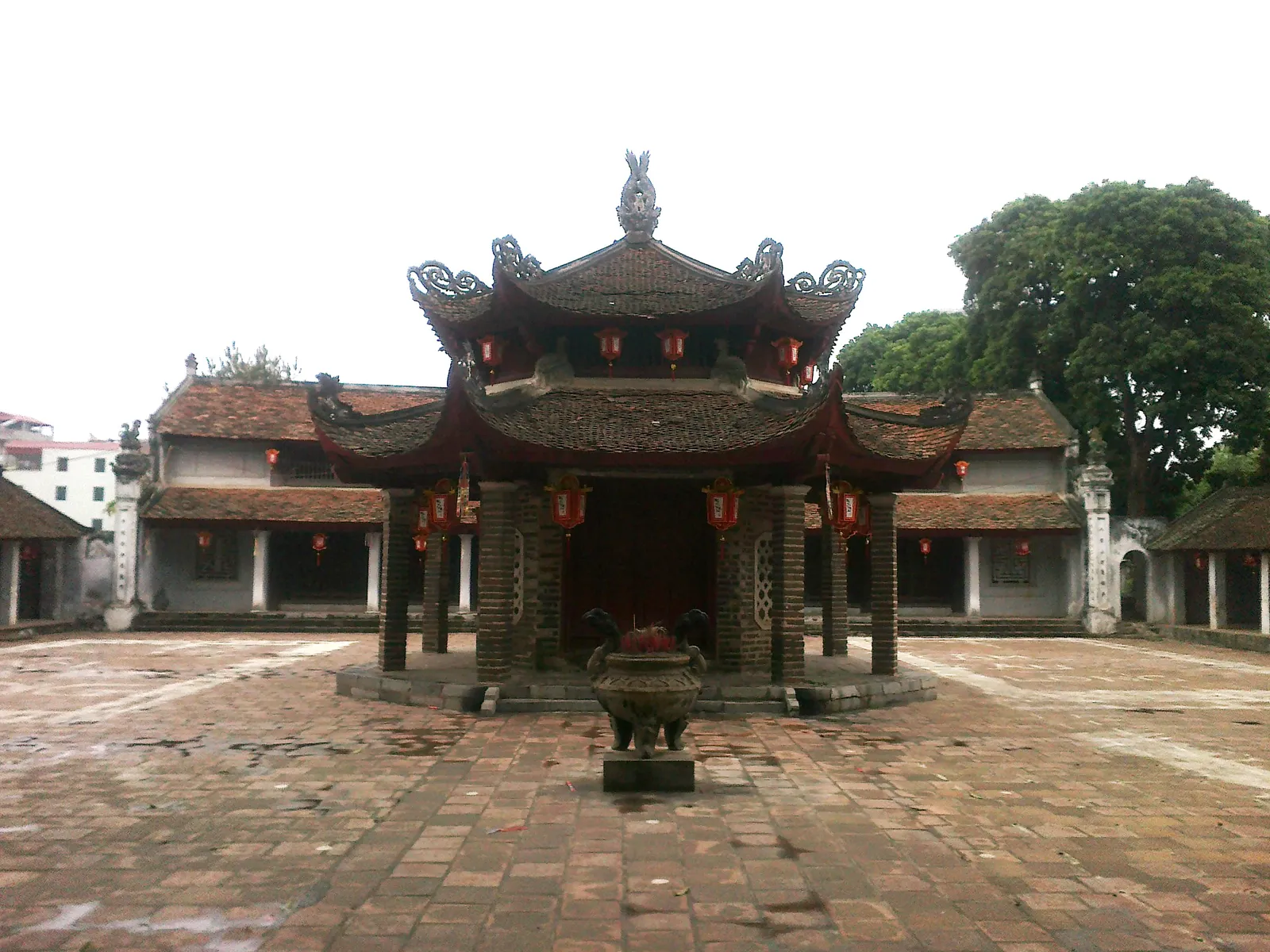
Inside are 198 worship statues, and the place was listed as a national historical and cultural relic in 1962. Its festival falls on the seventh day of the third lunar month; every other week of the year it is a garden with very few people in it, which is the opposite of what the lakes and trade streets in the middle of town are doing at the same hour. That version of the city, the compact walk between Hoan Kiem and the Old Quarter, is in the main Hanoi guide instead.
Four carriages, ten minutes apart, at half past five
Tens of thousands of people a day use this line, and they use it at the same two hours everybody else does. Trains are four carriages long with a ten-minute gap between them, so a full one at the evening peak means waiting on the platform for the next, which will also be full, with whatever you are carrying standing in front of you rather than beside you.
Ride it mid-morning or early afternoon instead and the same journey is half-empty. That is also when Lang Pagoda’s courtyard is at its quietest, so the two things line up.
No metro line reaches the airport, and none will soon
The metro is no help at the end of this trip. The Cat Linh line runs southwest and the other one in service, the elevated stretch from Nhon to Cau Giay, runs west; the line intended to reach Noi Bai International Airport only broke ground in June 2026. The express bus, service 86, leaves from Hanoi Railway Station about a kilometre and a half east of Cat Linh, costs 45,000 dong, takes 50 to 55 minutes and runs until 21:00 out of the city, with roughly 45 minutes between departures.
A taxi or a ride-hailing car straight from Cat Linh covers the 30 or so kilometres in 35 to 60 minutes for around 250,000 to 400,000 dong. Whichever you pick, count on two hours from this station to the terminal door before check-in, and treat the walk east to the railway station as the part to do with nothing in your hands.
Frequently asked questions
What should I do during a layover near Cat Linh Metro Station in Hanoi?
Use the line rather than leaving it. Cat Linh is the city end of the Cat Linh to Ha Dong metro, which opened in 2021 as Vietnam's first, and three stops down at Lang there is a 12th-century pagoda with 198 statues in it and an octagonal pavilion in the courtyard. The Temple of Literature is about a kilometre east of Cat Linh on foot, and Dong Da Mound, the 1789 battlefield, is beside Thai Ha station one stop out. Three hours covers two of those three comfortably. Only the Temple of Literature charges anything.
How much is the Hanoi metro and how often does it run?
Single journeys on the Cat Linh to Ha Dong line run from around 9,000 to 19,000 dong depending on how far you go, and a day pass covering unlimited rides is 40,000, which pays for itself on the third trip. Trains come at about ten-minute intervals, made up of four carriages each, and the line runs 13 kilometres through 12 stations end to end at around 35 kilometres an hour. Paying at the machine is straightforward; the ticket is a token you tap in and drop on the way out.
Does the Hanoi metro go to Noi Bai airport?
No, and nothing under construction will change that soon. The Cat Linh to Ha Dong line runs southwest from the centre, and the other line in service, the elevated stretch between Nhon and Cau Giay, runs west. The line planned to reach Noi Bai International Airport only broke ground in June 2026. Getting to the airport from anywhere on this side of the city means bus 86 from Hanoi Railway Station, about a kilometre and a half east of Cat Linh, or a taxi.
How crowded does the Cat Linh line get?
Busiest at the commuter peaks, which is when the line does most of its work: it carried 13.68 million journeys in 2025, and on a normal day that lands as tens of thousands of people through the same 12 stations. Trains are four carriages long with a ten-minute gap between them, so a missed one at half past five in the evening means standing on the platform while the next one fills up too. Mid-morning and early afternoon, the same ride is half-empty and the stations are quiet.
Is Lang Pagoda worth the trip from Cat Linh?
If you want somewhere old and quiet rather than somewhere famous, yes. It was founded in the 12th century under Ly Anh Tong, holds 198 worship statues across roughly a hundred bays of building, and was listed as a national relic in 1962. It honours Tu Dao Hanh, the monk credited with founding Vietnamese water puppetry, which is a useful thing to know before watching a show elsewhere in the city. It sits on Chua Lang street a few minutes from Lang station, in a garden of old trees, and there is no entrance fee.