Ba Dinh Square Layover: Hanoi's Citadel
Part of the full Hanoi Layover: The Old Quarter From HAN
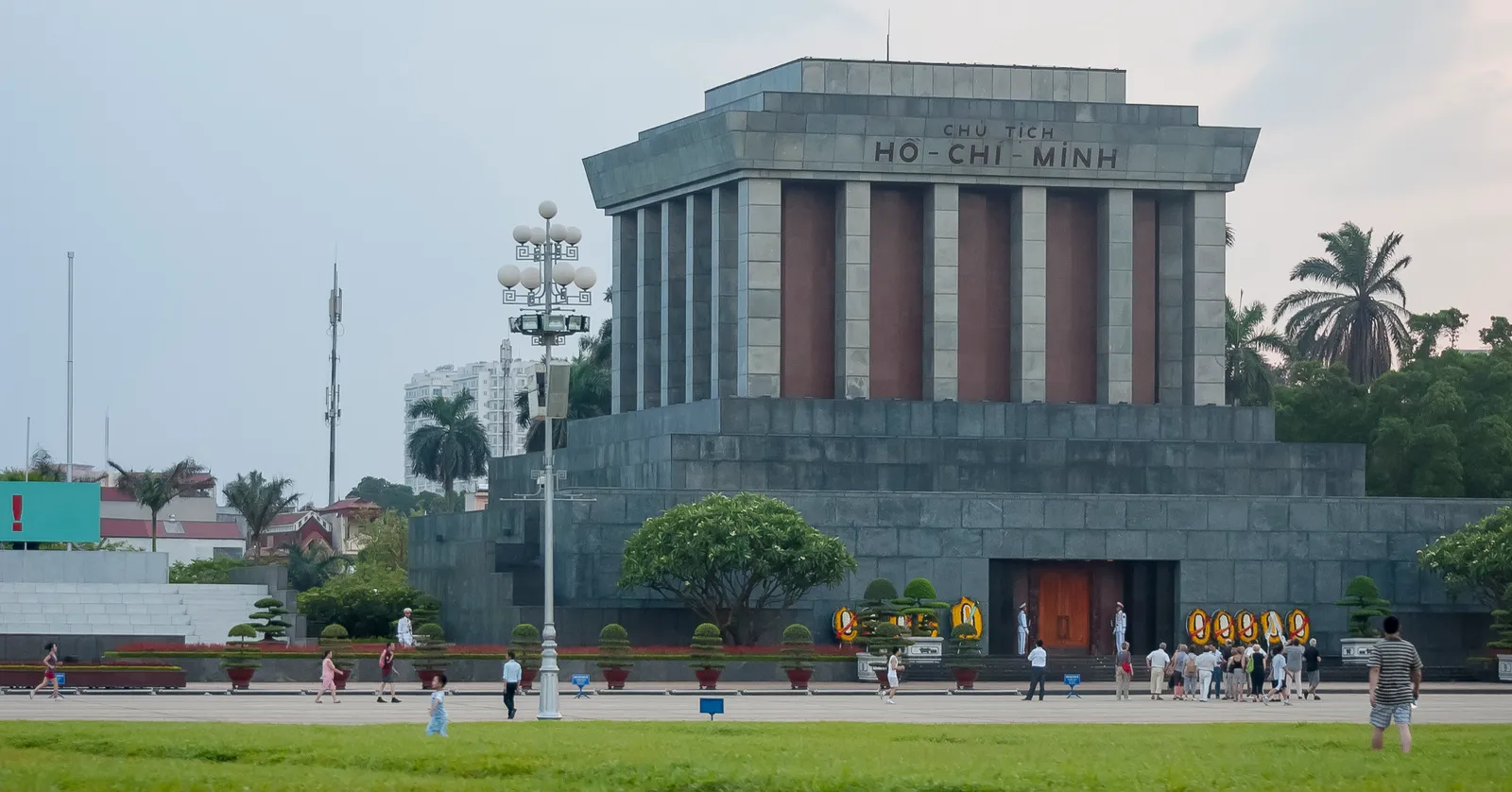
Ba Dinh Square in Hanoi, the open ground where independence was declared in 1945, has a UNESCO-listed imperial citadel, an 1812 flag tower, a yellow colonial palace and a pagoda on a single stone pillar all inside a fifteen-minute walk of it.
Thirteen centuries of power on one site at the Imperial Citadel
Doan Mon, the southern gate at 19 Hoang Dieu, is the piece of the Imperial Citadel of Thang Long most people photograph: three arches at ground level, a tiled pavilion on top, a lawn in front of it wide enough to see the whole thing at once. The ground behind it has been the seat of regional power almost continuously for something close to 13 centuries, from a seventh-century Chinese fort through the Ly dynasty’s citadel of 1010 to the Nguyen, and UNESCO listed it in 2010.
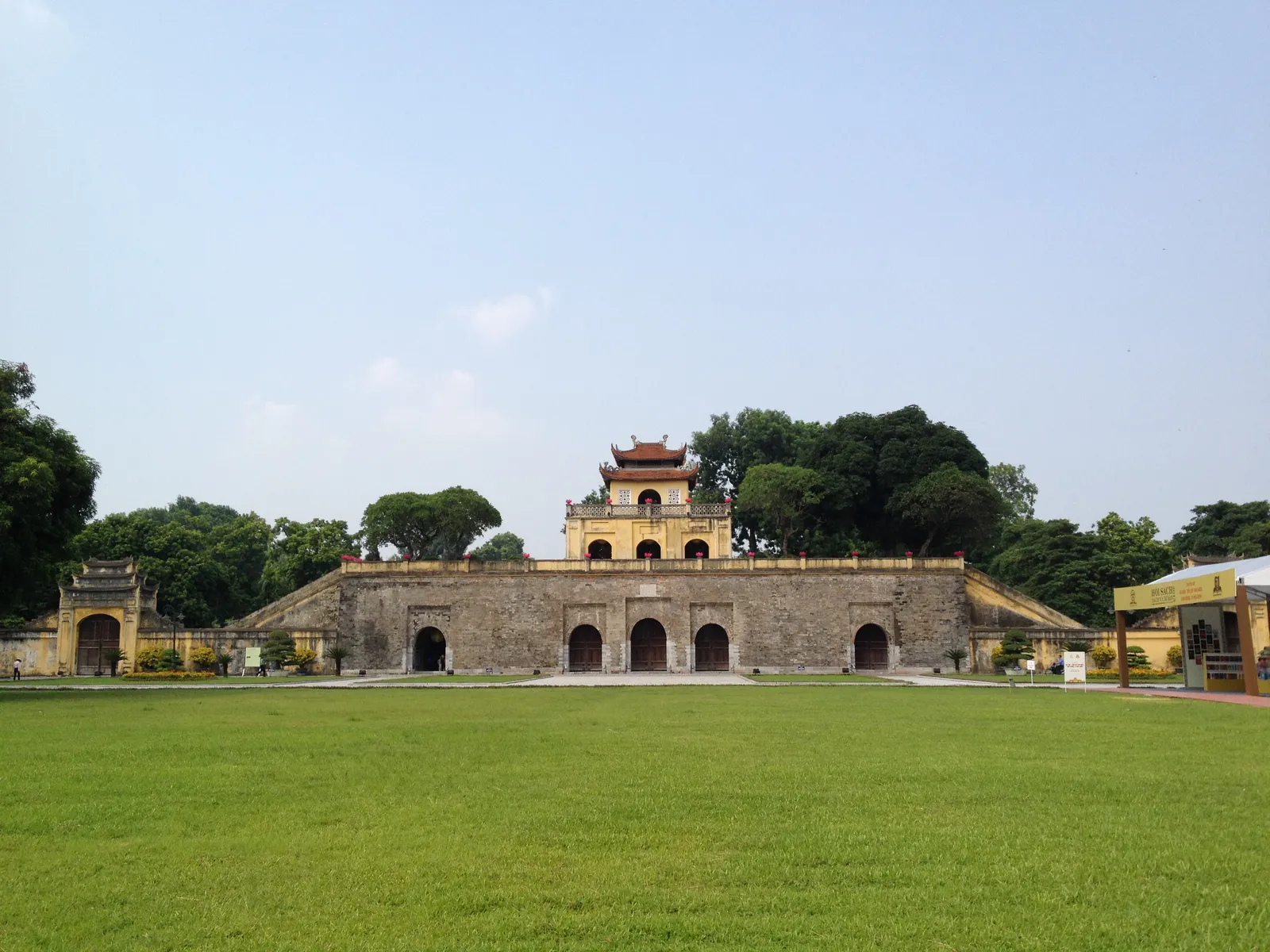
The other half of the site is not old at all. House D67 and the bunker under it were built in 1967 as the command post of the Vietnamese army, and the meeting room, the map boards and the reinforced doors are still in place. The archaeological dig across the road at 18 Hoang Dieu has turned up material going back around 1,300 years, layered one dynasty on top of the next. Adults pay 100,000 dong, under-16s nothing, and it opens Tuesday to Sunday from eight to five, with entry available to book in advance if you would rather not queue at the gate on a weekend.
The 1812 Flag Tower the French never pulled down
Gia Long put up a brick tower at the southern edge of the citadel in 1812, three tiered platforms carrying an octagonal column and a small observation turret, 33.4 metres from the bottom to the top. When the French administration demolished most of the Hanoi citadel between 1894 and 1897, this survived, because they had a use for it as a military post. It is one of the few Nguyen-era structures here that was never rebuilt from rubble.
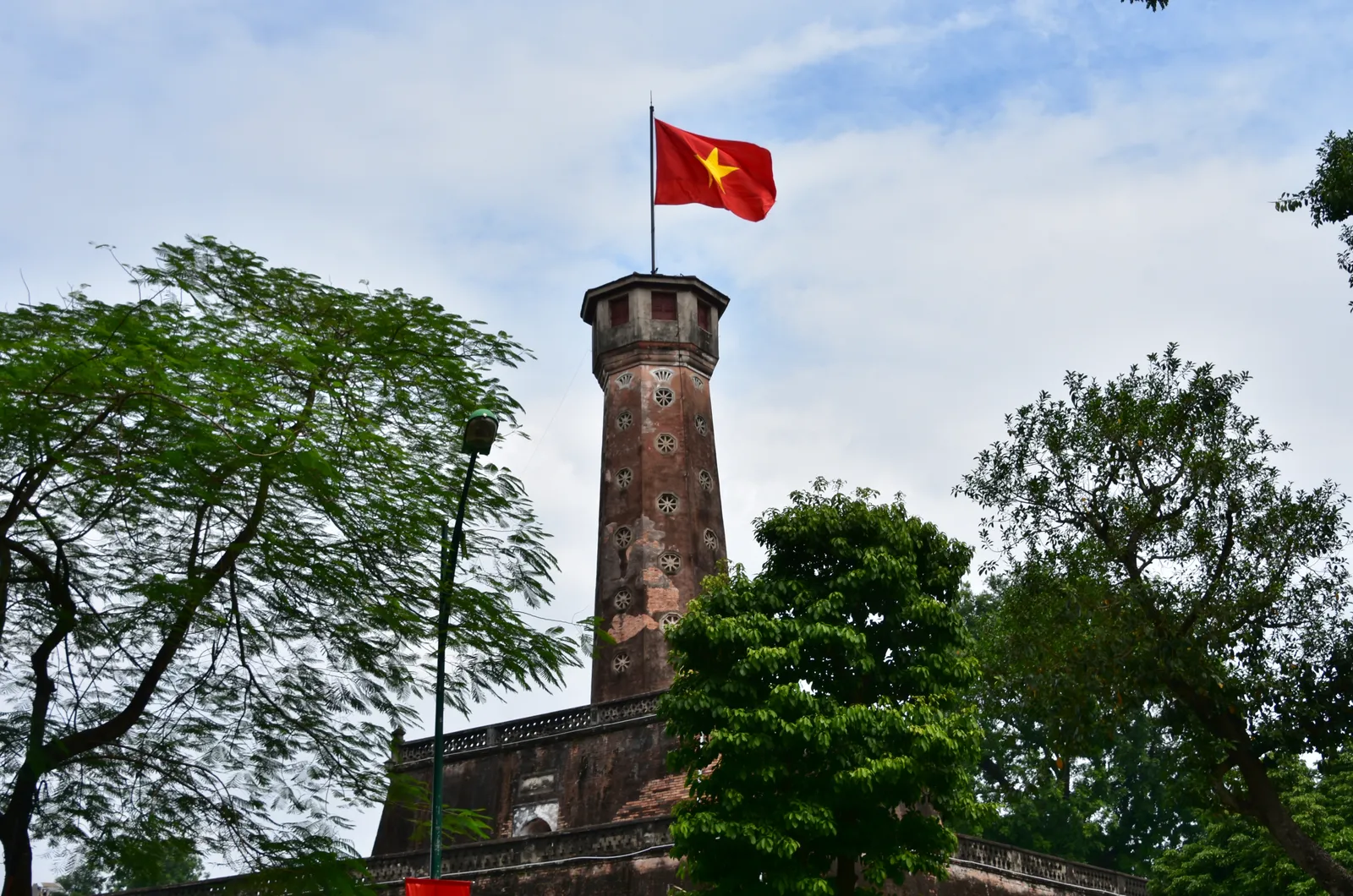
The flag on top is the reason the tower is on postcards, and it is visible from Dien Bien Phu street without paying to go anywhere near it. This quarter is a slower, more spread-out afternoon than the tight walk between lakes and trade streets in the middle of the city, which the main Hanoi guide covers instead.
Ho Chi Minh would not live in the Presidential Palace
Auguste Henri Vildieu designed the mustard-yellow mansion on the north side of the mausoleum grounds for the Governor-General of Indochina, finished in 1906, and it is exactly as grand as that job description suggests: a symmetrical Beaux-Arts block, a red-tiled roof, a fountain on the drive. Ho Chi Minh declined to move in when it became his to use.
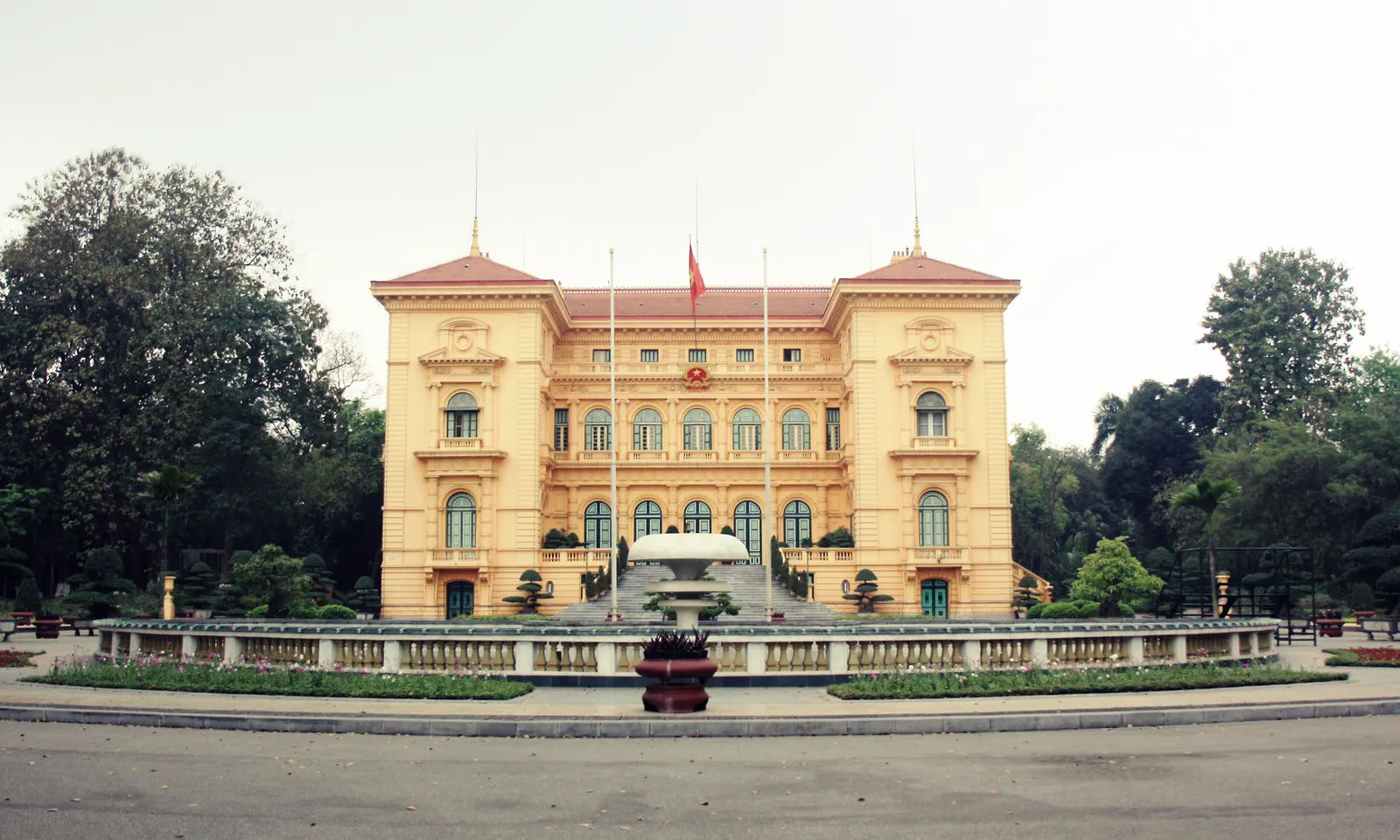
What he did instead is in the garden behind it, and it is the better half of the visit: a two-room wooden house on stilts, 10.5 metres long, built in the style of the northern ethnic minorities and occupied from March 1958, with a study downstairs, a bedroom and a work loft above, and a carp pond in front. One 40,000-dong ticket covers the grounds, the house and the pond. Opening runs 7.30 to 11 in the morning and 1.30 to 4 in the afternoon, with Monday afternoons closed.
One Pillar Pagoda was dynamited in 1954 and rebuilt the next year
A single stone column, 1.25 metres across and four metres high, holds up a small wooden shrine shaped to sit on the water like an open lotus. Ly Thai Tong founded it in 1049 after a dream in which the bodhisattva Avalokitesvara handed him a son on a lotus flower, which is the story the shape is telling. A Vietnamese lieutenant in the French army blew it up in 1954; the Ministry of Culture rebuilt it the following year in Nguyen-dynasty style, and that is what stands there now.
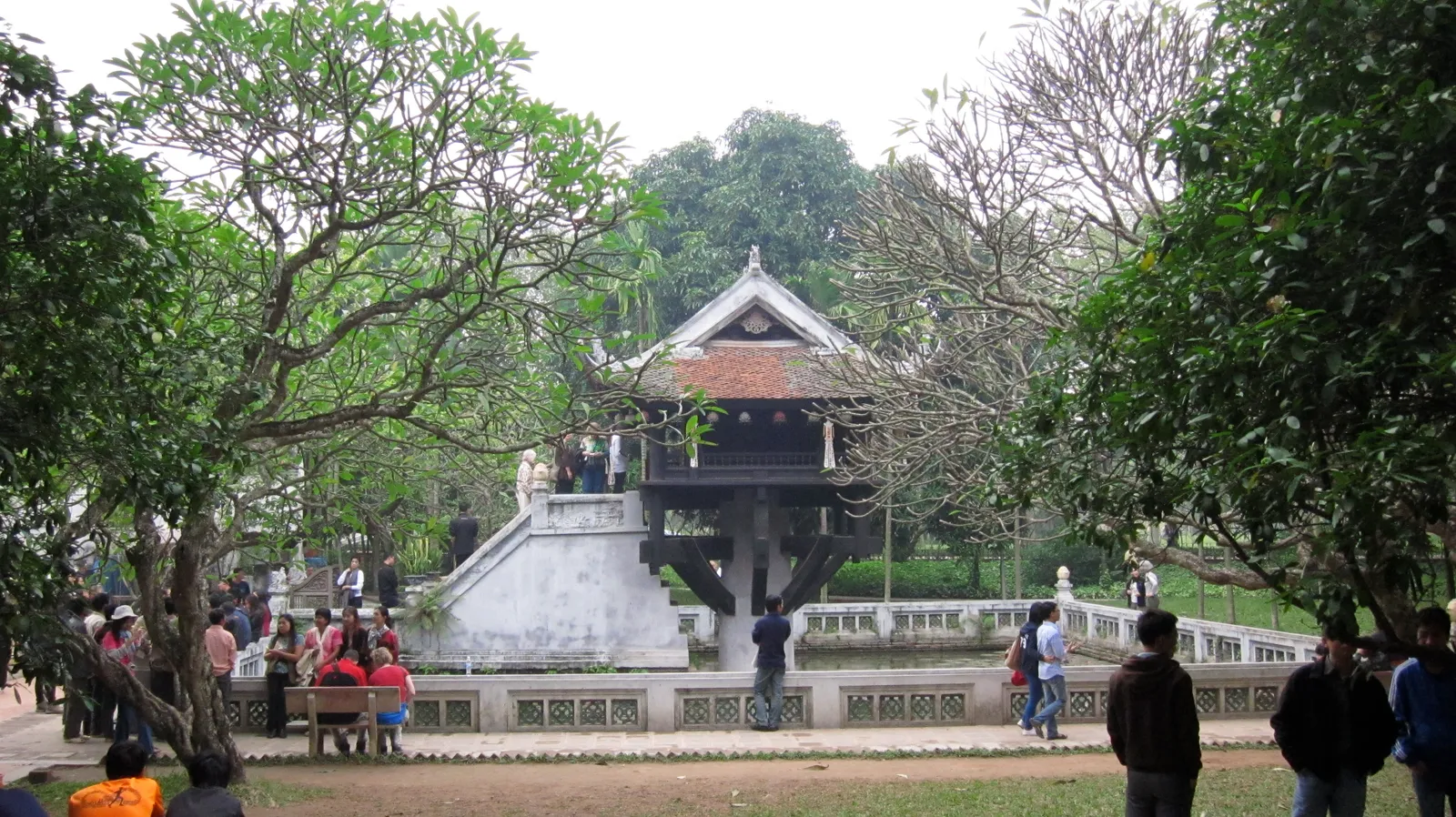
It is small, it takes five minutes, and it sits between the mausoleum and the Ho Chi Minh Museum, so it gets caught up in whatever crowd has just come off the queue next door. Early in the morning it is nearly empty.
Nothing larger than a wallet gets past the mausoleum gate
Bags, cameras and anything bulky are checked at a deposit counter before the queue for the mausoleum on the west side of Ba Dinh Square, phones have to be off, and photography inside the chamber is refused outright. The line then moves in single file at a set pace, with guards keeping it going, so there is no stopping to put anything down.
The square outside has none of those rules and none of the queue. It is the ground where Ho Chi Minh read the Declaration of Independence on 2 September 1945, and on an ordinary day it is mown grass and wide roads with a ceremony at each end of it: the flag goes up at six in the morning, half past six in the cold season, and comes down at nine at night, carried by a 37-strong guard from Unit 275 in white uniforms, 34 of them standing for the first 34 soldiers of the army’s founding brigade. Most visitors miss both, because they come for the mausoleum in the morning and are gone by midday.
No airport bus leaves from Ba Dinh, so plan for a car
The express service out to Noi Bai International Airport, bus 86, does not come anywhere near this quarter: it starts at Hanoi Railway Station and picks up near Hoan Kiem Lake, both 20 to 30 minutes’ walk east of the square. If you make that walk, the fare is 45,000 dong and the ride is 50 to 55 minutes, with departures roughly 45 minutes apart between 05:15 and 21:00.
Most people going straight from Ba Dinh take a taxi or a ride-hailing car instead: 35 to 60 minutes over about 30 kilometres, for roughly 250,000 to 400,000 dong, which saves the transfer and matters more through the evening peak, when the roads east out of this quarter are the slow part rather than the expressway.
Frequently asked questions
What should I do during a layover near Ba Dinh Square in Hanoi?
Work the quarter rather than the square. The Imperial Citadel of Thang Long on Hoang Dieu street is the substantial stop, 100,000 dong and open Tuesday to Sunday; the Flag Tower of 1812 stands at the southern end of the same site; the Presidential Palace and the stilt house behind it share one 40,000-dong ticket; and the One Pillar Pagoda sits a couple of minutes from the mausoleum. Four hours covers the citadel and two of the smaller stops on foot. The citadel is the one worth buying a ticket for in advance on a weekend, and the only stop that really needs an hour rather than twenty minutes.
What can you take into the Ho Chi Minh Mausoleum?
Very little. Bags, cameras and larger items go to a deposit counter before the queue, phones must be off, and photography inside the chamber is not allowed at all. Shoulders and knees have to be covered, hats come off at the door, and the line moves in single file at a fixed pace with no stopping to look. Entry itself is free. The queue forms outside well before the doors open, so the practical version of this stop is arriving early and carrying nothing you will have to check in.
When is the Ho Chi Minh Mausoleum closed?
Every Monday and Friday, and every afternoon: it opens mornings only, usually 8am to 11am. There is also a long annual maintenance closure whose dates shift from year to year, running 4 September to 2 November in 2026 with visits resuming on 3 November, and falling over the summer in some other years. Ba Dinh Square, the Presidential Palace grounds, the stilt house and the One Pillar Pagoda all stay open through those closures, which is why this quarter still works as an itinerary when the mausoleum itself does not.
Is Ba Dinh Square worth it on a budget?
The square itself, the mausoleum queue and the exterior of the Presidential Palace cost nothing, which covers a good half of what people come out here for. The paid stops are modest: 100,000 dong for the citadel, 40,000 for the palace grounds and the stilt house on one ticket, with under-16s free at the citadel. Skipping both still leaves the Flag Tower from the pavement, the square, the mausoleum and the pagoda, which is a full couple of hours without spending anything beyond the fare out here.
How long does the Imperial Citadel of Thang Long take to see?
An hour is the honest minimum, and two is better. Doan Mon and the lawn in front of it take ten minutes; House D67 and the command bunker under it take another twenty if you read the boards; and the archaeological dig at 18 Hoang Dieu across the road, with material going back around 1,300 years, will absorb whatever is left. It opens Tuesday to Sunday, eight to five, so a Monday visit to this quarter has to be built around the Flag Tower, the palace grounds and the pagoda instead.