West Lake Layover: Hanoi's Oldest Pagoda
Part of the full Hanoi Layover: The Old Quarter From HAN
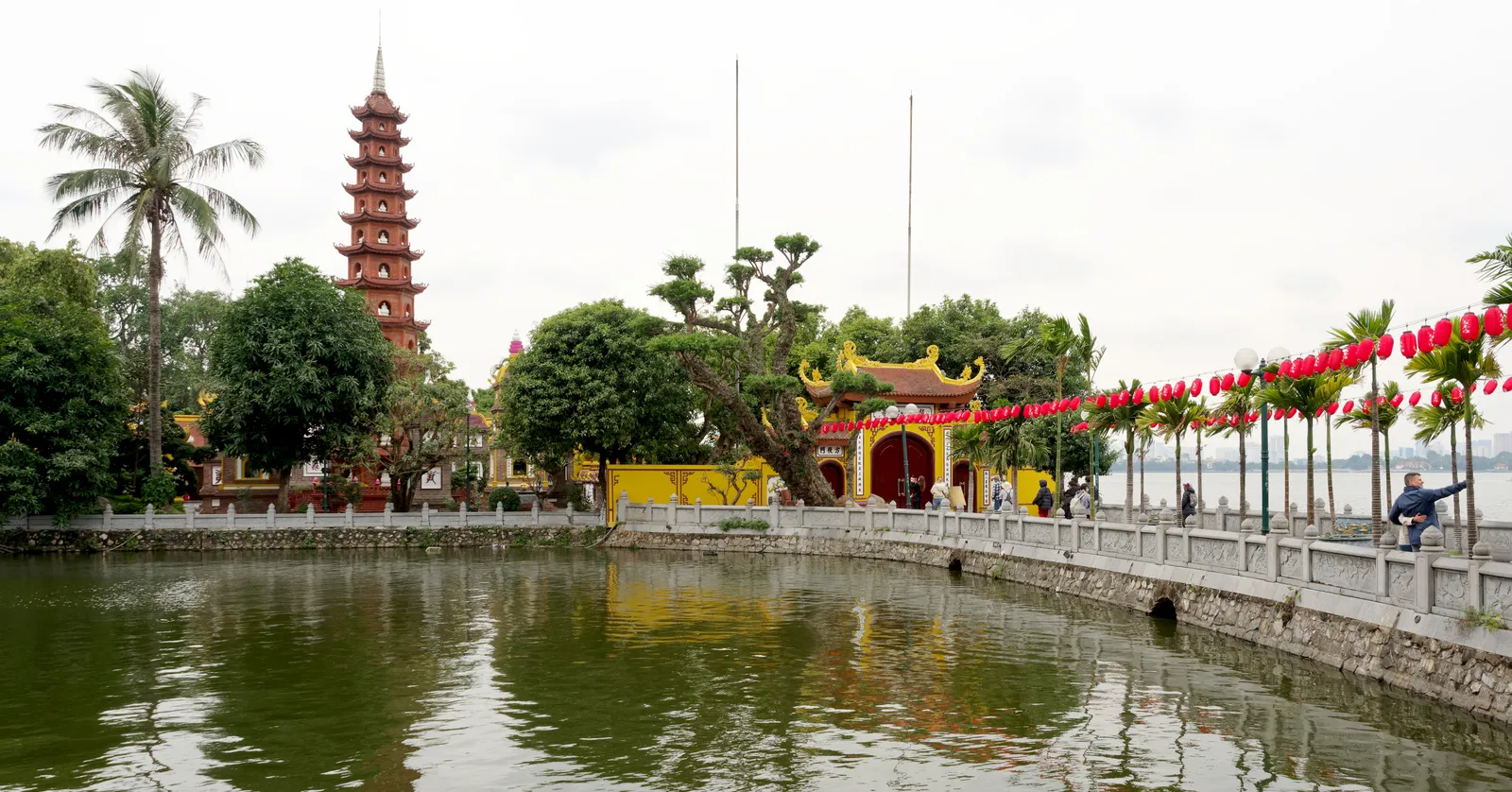
West Lake, the big water at the north end of Hanoi, has the city’s oldest pagoda on an islet at its southeastern corner, a Taoist temple with a four-tonne bronze five minutes away, and a kilometre of causeway between the two that costs nothing to walk.
Tran Quoc Pagoda moved onto a West Lake islet in 1615
Buddhism has had a site here for roughly 1,500 years. The pagoda was founded in the sixth century under Ly Nam De, on the bank of the Red River, under the name Khai Quoc, meaning national founding; when the river started taking the bank away, the whole thing was moved in 1615 onto Kim Ngu islet, the Golden Fish, and joined to the shore by a causeway. It is the oldest Buddhist foundation in the city and there is no charge to walk in.
The tall red stupa that everyone photographs is much newer than the pagoda under it: built in 1998, 15 metres high, eleven tiers with six arched windows apiece, and a gemstone statue of Amitabha in every window, 66 of them, under a nine-tiered lotus at the top. An open-top sightseeing bus that works a loop of the city stops here, and passes are sold by the hour, which is one way to reach this corner without negotiating a fare.
Ngu Xa foundrymen cast the Tran Vu bronze in 1677
A whitewashed triple gateway at the southern end of Thanh Nien road, where it meets Quan Thanh street, opens into one of the four temples that traditionally guarded the four approaches to the old capital. This one is Taoist, dedicated to Tran Vu, the deity of the north.
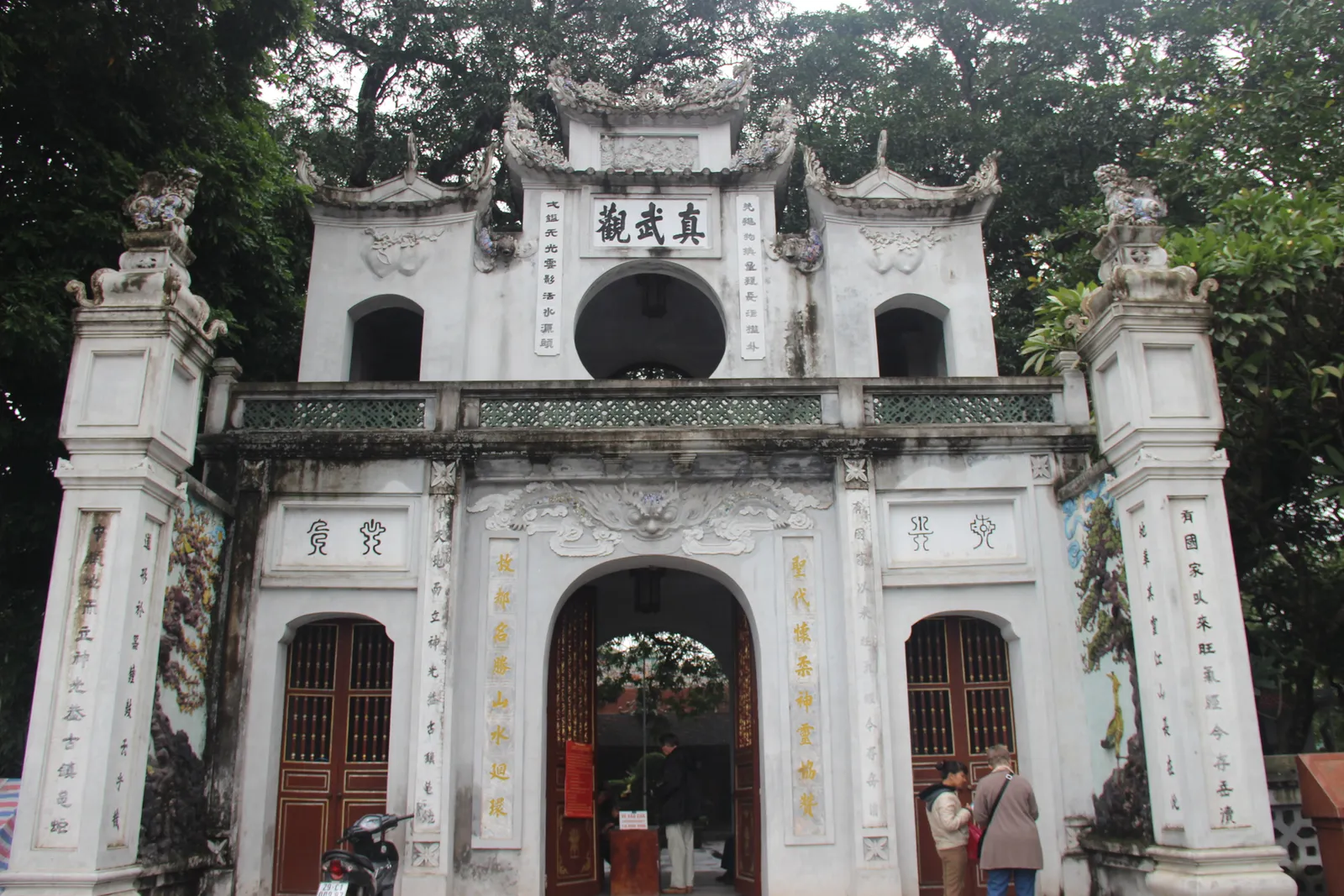
The figure inside is the reason to pay the 10,000 dong: a black bronze Tran Vu close to four metres tall and weighing close to four tonnes, cast in 1677 under Le Hy Tong by foundrymen from Ngu Xa, the bronze-casting village on the far side of Truc Bach Lake, which is a few hundred metres from where the statue ended up. Children under ten go in free.
The shoreline road has no short way back
Seventeen kilometres of road run around West Lake, and there is no crossing over the middle, so a walk that starts along the northern shore commits you to the whole distance or a taxi to get out of it. The stretch worth being on is the kilometre of causeway between the two lakes, which has both the pagoda and the temple on it, and taking that at a walk with nothing in your hands is a different afternoon from taking it with a wheeled bag on a hot day.
Truc Bach Lake is the smaller water on the other side of the road
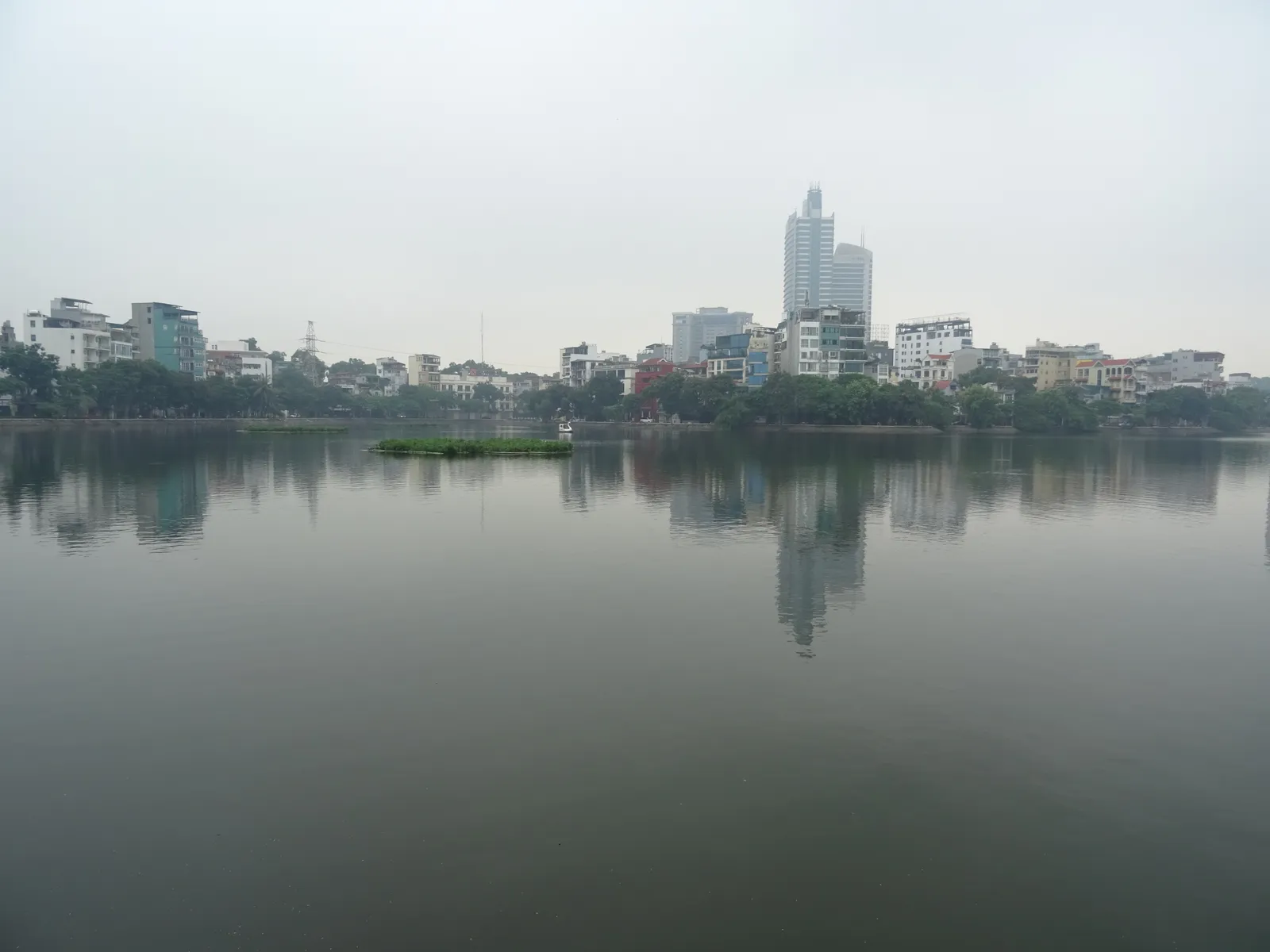
Thanh Nien road runs along a bank that splits one body of water into two, with West Lake on the western side and Truc Bach, much smaller and ringed with houses, on the eastern. It is the quieter of the two shores, low-rise for most of the way round, with pavement cafes on the north side and a single office tower breaking the skyline.
On the Thanh Nien side there is a stone relief about three metres high that most people walk straight past. It was put up in the 1980s to mark the capture of an American pilot: John McCain’s aircraft was hit over Hanoi on the night of 26 October 1967, he came down by parachute into this lake with broken arms and a broken leg, and he was pulled out of the water and taken to the prison in the middle of town. He asked for the monument to be cleaned in 2015 and the inscription to be corrected, and it was. The prison itself, along with the lakes and trade streets at the centre of the city, is covered in the main Hanoi guide rather than here.
No airport bus comes out to this shore
Bus 86, the express service to Noi Bai International Airport, works the line between Hanoi Railway Station and the terminals and does not come near West Lake; its closest stop is at the Central Post Office by Hoan Kiem Lake, around 25 minutes’ walk southeast of the causeway. If you make that walk, the fare is 45,000 dong for a 50 to 55 minute ride, with the last departure from the city at 21:00.
From the lake itself, a taxi or a ride-hailing car is the sensible option: 35 to 60 minutes over roughly 30 kilometres for around 250,000 to 400,000 dong. Starting from the north end of the city is the one real advantage of this itinerary on a tight schedule, since the road to the airport runs that way and there is no need to cross the centre first.
Frequently asked questions
What should I do during a layover near West Lake in Hanoi?
Stay on the Thanh Nien causeway rather than trying to see the lake. Tran Quoc Pagoda sits on an islet at the causeway's western edge, free to walk into and the oldest Buddhist site in Hanoi; Quan Thanh Temple is five minutes south at the junction with Quan Thanh street, 10,000 dong, with a four-tonne bronze cast in 1677 inside; and Truc Bach Lake runs along the other side of the same road. Three hours covers all three on foot with room to sit by the water. None of it needs booking, and only the temple charges anything.
Is there anything free to do around West Lake?
Almost all of it. Tran Quoc Pagoda takes no entry fee, the Thanh Nien causeway between the two lakes is a public road with pavements on both sides, the McCain monument on the Truc Bach shore is on the street, and the lotus beds along the northern shore in June and July are looked at rather than entered. Quan Thanh Temple is the only ticket on this itinerary, at 10,000 dong, free for under-tens. That makes the whole afternoon cost about the same as a bottle of water plus the fare out here.
How big is West Lake and can you walk around it?
Not in a layover. The lake covers around 500 hectares and the road around its shoreline runs about 17 kilometres, which is a three to four hour walk with nothing to see for long stretches of it and no shortcut back across the middle. The part worth walking is the Thanh Nien causeway, the kilometre-long strip of road that separates West Lake from Truc Bach Lake, which has the pagoda at one end and the temple at the other.
What is the monument on the shore of Truc Bach Lake?
A stone relief about three metres high on Thanh Nien street, put up in the 1980s to mark the capture of an American pilot. John McCain's Skyhawk was shot down over Hanoi on the night of 26 October 1967 and he came down by parachute into this lake, injured, and was pulled out and taken prisoner. The monument was cleaned at his own request in 2015 and the inscription corrected, which is how it now reads. Most people walk past it without noticing.
Is Tran Quoc really the oldest pagoda in Hanoi?
Yes, as a foundation rather than as a set of buildings. It was founded in the sixth century under Ly Nam De, which puts the institution at more than 1,500 years old, but it started on the bank of the Red River under the name Khai Quoc and was only moved onto its islet in 1615 when the river began eating the bank away. The stupa everybody photographs is newer still, built in 1998. So the site is four centuries old, the foundation is fifteen, and the tall red tower is younger than most of the people looking at it.