Hanoi Opera House Layover: Trang Tien
Part of the full Hanoi Layover: The Old Quarter From HAN
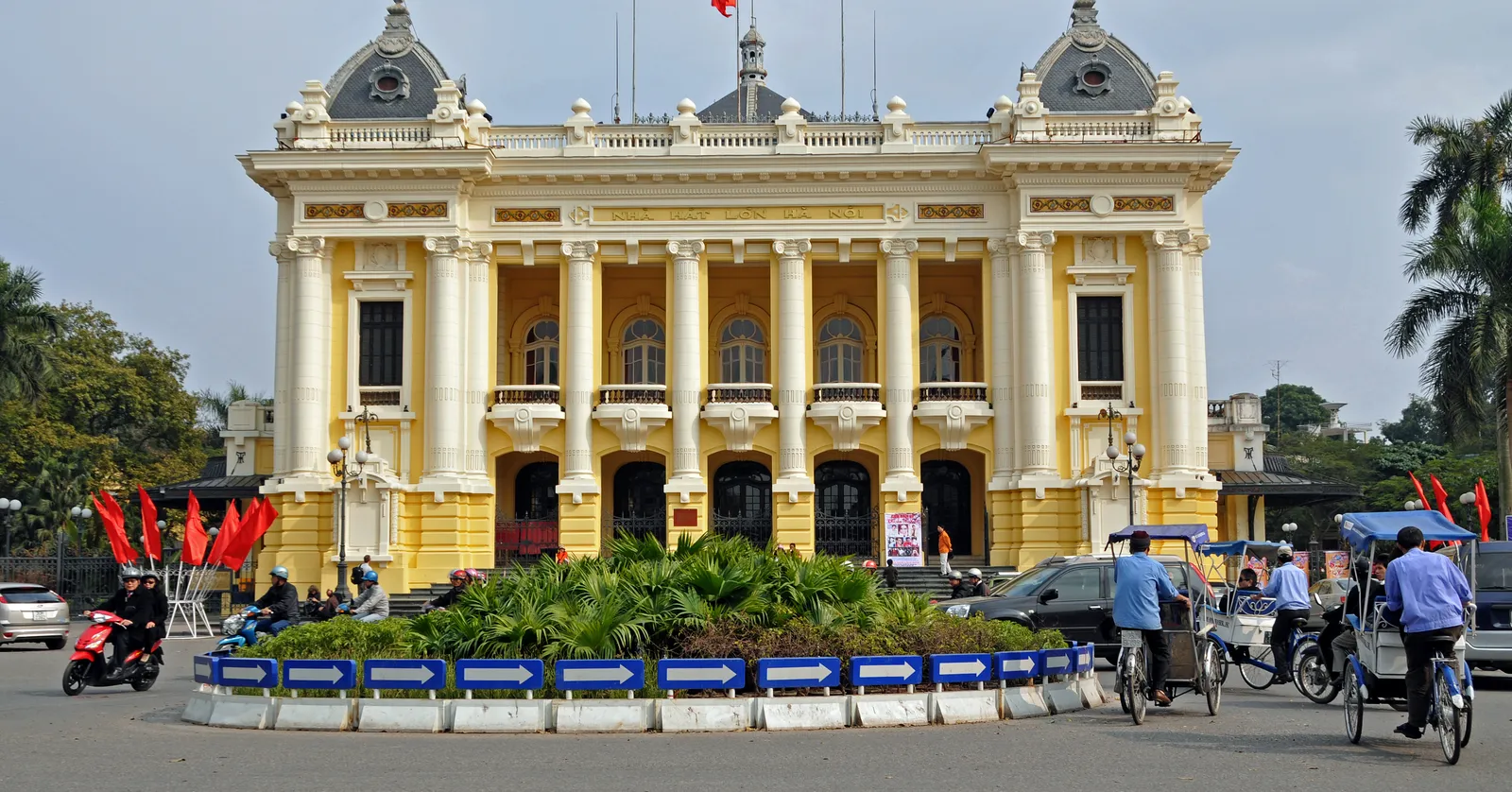
The Hanoi Opera House stands at the head of Trang Tien street, five blocks of colonial shopfronts running down to Hoan Kiem Lake with a 1932 museum at one end, an ice cream counter trading since 1958 in the middle, and a hotel colonnade from 1901 two streets off it.
Hebrard’s ochre museum was built for a French research institute
The Vietnam National Museum of History sits 200 metres east of the Opera House roundabout, in a building the Ecole francaise d’Extreme-Orient put up between 1926 and 1932 as the Louis Finot Museum, named for the institute’s first director. Ernest Hebrard designed it, and it is the clearest example in Hanoi of what he was trying to do: French structural engineering underneath, ochre walls, deep shaded verandas, latticed balustrades and a tiled octagonal tower with a Vietnamese roof on it.
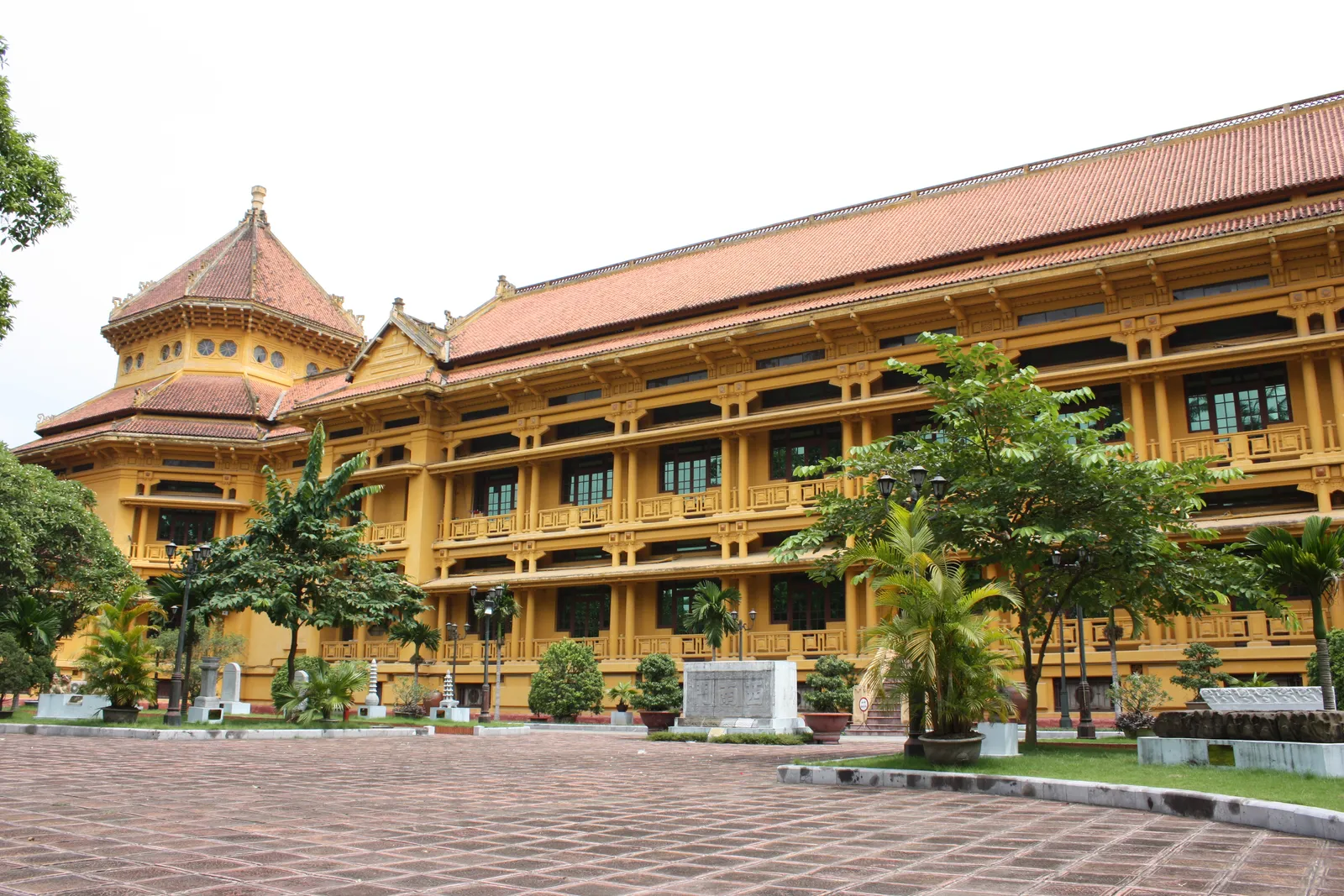
The Vietnamese government took the building over in 1958 and turned it into a national history museum, and in 2011 it absorbed the Museum of the Vietnamese Revolution across the road. Dong Son bronze drums, Cham sculpture, Nguyen-dynasty regalia and the flag flown in 1945 are the things people stop at. Adults pay 40,000 dong, university students 20,000, school students 10,000 and under-sixes nothing. It opens eight to twelve and half past one to five, and closes on the first Monday of each month.
August Revolution Square and the Opera House’s yellow facade
Broyer, Harlay and Lagisquet spent ten years on the building at 1 Trang Tien, finishing it in 1911 with a columned upper loggia, twin domed pavilions at the ends and a 900-seat auditorium modelled on the Palais Garnier in Paris. The square in front of it, August Revolution Square, is named for the crowd that gathered here in August 1945 as the Viet Minh took the city.
The interior is off limits for now: the building shut to visitors at the end of December 2025 for a refurbishment of its stage, seating and services that is expected to take about two years, putting a reopening somewhere around 2028. Until then this is a facade to look at from the square, which costs nothing and works as well at night, when the whole frontage is lit, as it does at noon.
Trang Tien has sold ice cream at number 35 since 1958
Five blocks of colonnaded shopfronts run from the Opera House roundabout west to Hoan Kiem Lake, and the counter at number 35 has been on that stretch since 1958, when it opened as a state food service to put ice cream within reach of ordinary Hanoians rather than only the guests of the grand hotels. It still works the way it did: pay at the window, take the stick, eat it standing on the pavement with everybody else. The queue on a hot evening is part of the fixture.
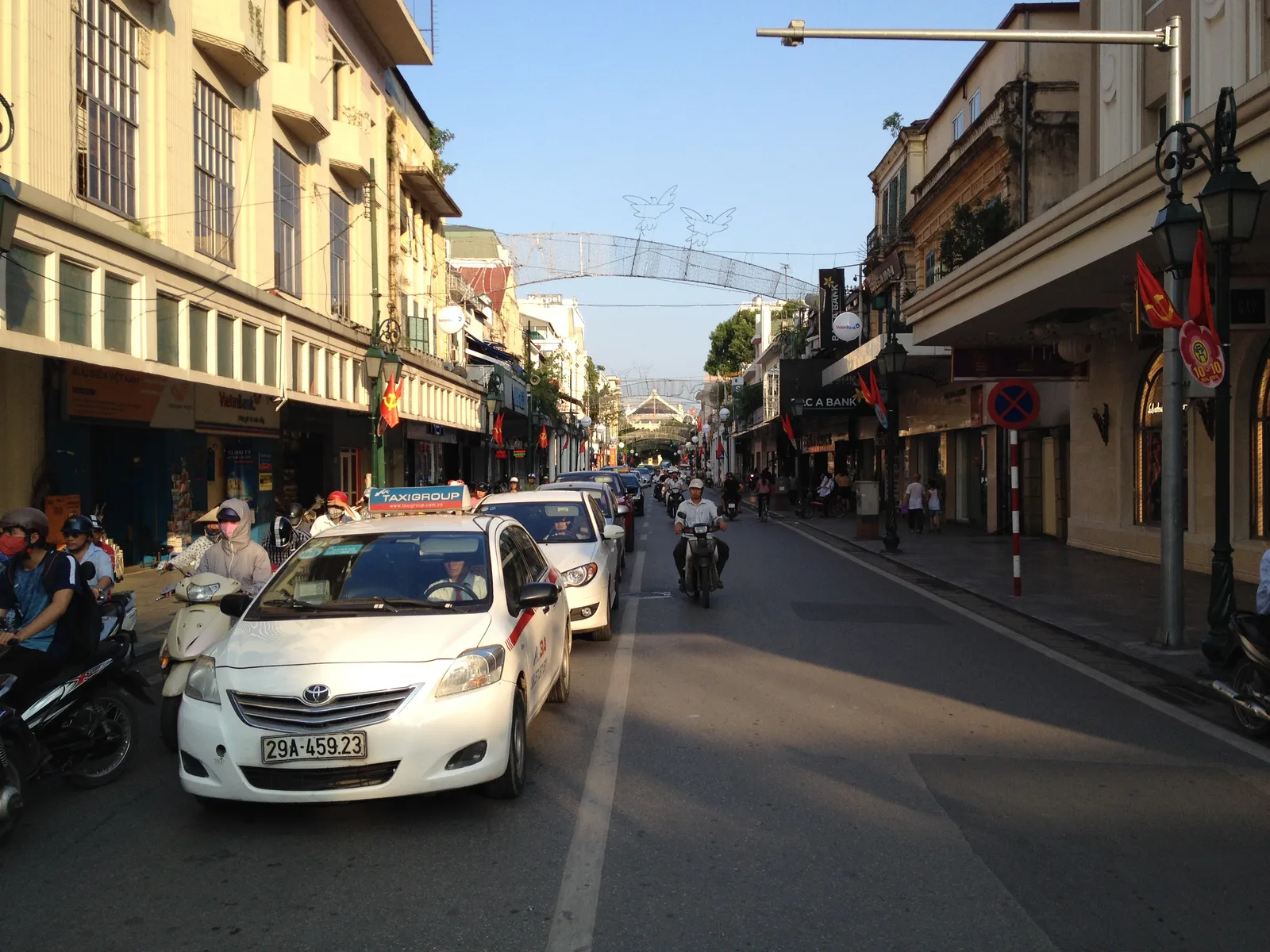
The rest of the street is bookshops, a department store at the lake end and restaurants that stay open long after the museums have locked their doors, which is what makes this a better quarter than the Old Quarter for a layover that only starts once the afternoon has gone. If you want the eating organised for you, a guided evening food walk runs about three and a half hours through the backstreets north of here, which is worth checking against your departure time before you book. For the daytime version of a Hanoi afternoon, temples and trade streets and a prison museum, the main Hanoi guide covers that instead.
The Metropole kept a bomb shelter under its garden
A white colonnade and a green striped awning on Ngo Quyen street, two blocks north of Trang Tien, front a hotel that opened in 1901 and has been taking guests through every version of this city since. Underneath the garden is a concrete air-raid shelter, sealed at the end of the war and forgotten until a bar renovation in 2011 turned it up again.
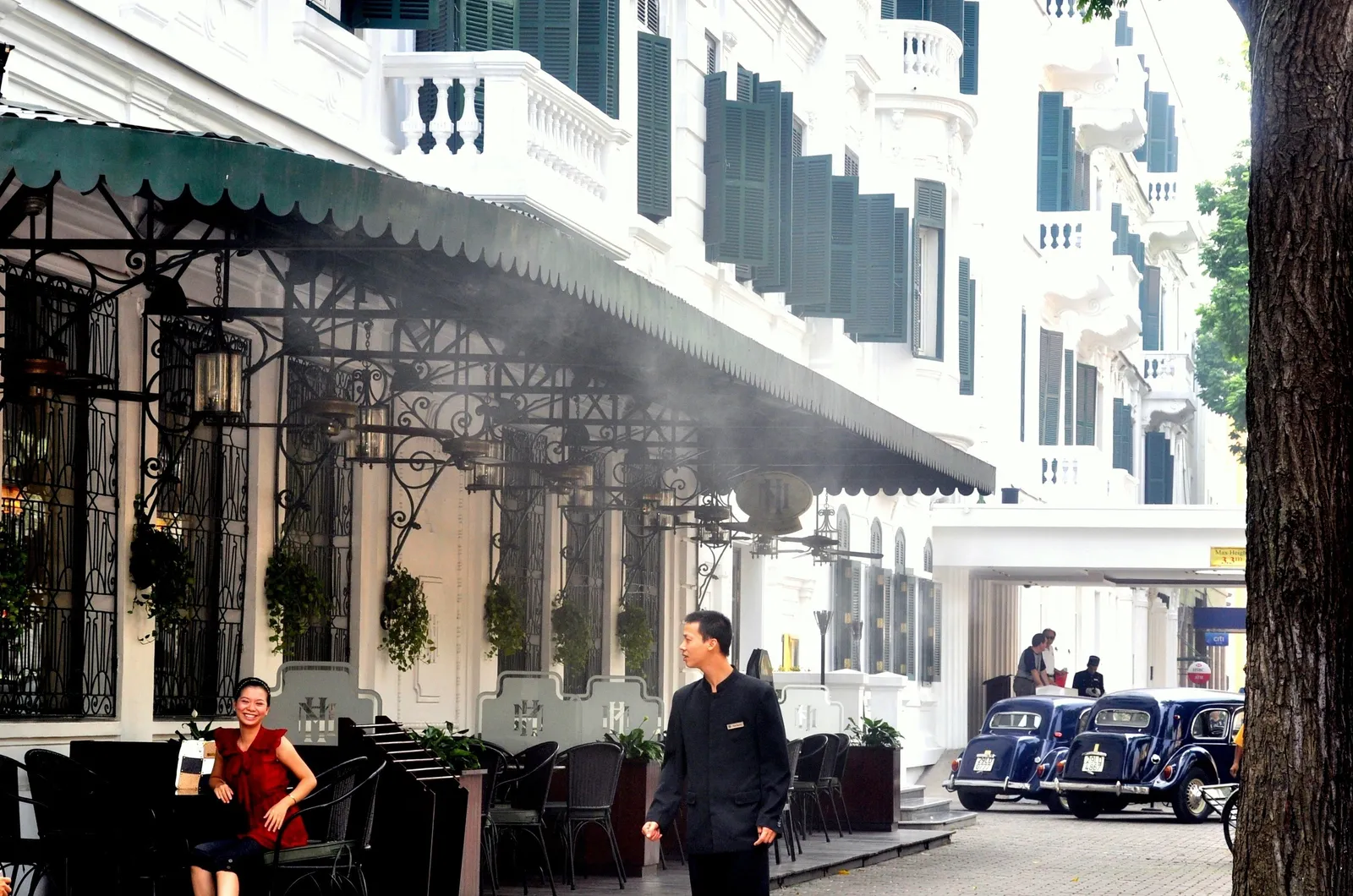
Joan Baez sheltered down there during the December 1972 raids and wrote a song about it afterwards, and Jane Fonda used it too. The hotel now runs a guided descent at five and six in the afternoon, but it is open to its own guests rather than to the street, so for anyone on a layover this is a building to look at rather than go into.
This quarter fills up with people who have already checked out
Evening layovers here run into a specific problem: everyone eating on Trang Tien at eight o’clock with a suitcase beside them checked out of a hotel that morning, and restaurant tables on this street are set close enough that a cabin bag goes in the walkway rather than under the chair.
The last airport bus leaves the city at nine
Bus 86 stops at the Central Post Office on Dinh Tien Hoang, by the northeast corner of Hoan Kiem Lake and about ten minutes’ walk west of the Opera House, then runs out to both terminals at Noi Bai International Airport for 45,000 dong. The ride is 50 to 55 minutes, departures are roughly 45 minutes apart, and the last one out of the city goes at 21:00, which is the detail that decides whether a long dinner is a good idea.
After that, or through the worst of the evening traffic, it is a taxi or a ride-hailing car: 35 to 60 minutes over about 30 kilometres for roughly 250,000 to 400,000 dong. Either way, budget two hours from the Opera House to the terminal door before whatever your airline wants for check-in, and do the last of the walking without the bag.
Frequently asked questions
What should I do during a layover near the Hanoi Opera House in Hanoi?
Walk Trang Tien, the five blocks that run from the Opera House roundabout down to Hoan Kiem Lake. The Vietnam National Museum of History is 200 metres east of the Opera House in Ernest Hebrard's 1932 building, 40,000 dong and closed over lunch; the ice cream counter at number 35 has been trading since 1958; the Metropole hotel's white colonnade is two streets north. Three hours covers the museum and the street; five leaves time to reach the lake and eat. Nothing here needs booking, and the museum is the only stop with a closing time that matters.
Can you go inside the Hanoi Opera House?
Not at the moment. The building closed to visitors at the end of December 2025 for a full refurbishment of its stage, seating and services, expected to run about two years, with a reopening somewhere around 2028. Before that, guided interior tours ran at 120,000 dong a head and evening performances filled a 900-seat auditorium modelled on the Palais Garnier. The exterior and August Revolution Square in front of it stay open and unfenced throughout, which is where the photographs are taken from anyway.
What is open around Trang Tien in the evening?
The street itself, which is the point of coming here after dark rather than at midday. The museums shut at five, but the ice cream counter, the bookshops at the lake end of Trang Tien and the restaurants along it run well into the evening, and the whole strip is lit. From seven on Friday night to midnight on Sunday the roads around Hoan Kiem Lake at the end of the street close to traffic entirely, which turns the walk down Trang Tien into the approach to a street party rather than a stroll past shopfronts.
Can you visit the Metropole's wartime bomb shelter?
Only if you are staying there. The shelter under the hotel garden was sealed after the war and found again during a bar renovation in 2011, and the hotel now runs a guided descent into it twice a day, at five and six in the afternoon, but the tour is open to hotel guests rather than to the public. From the pavement you get the 1901 colonnade, the green awnings and the vintage car parked outside, which is free and takes two minutes.
Does the Vietnam National Museum of History close over lunch?
Yes, for an hour and a half. It runs eight to twelve in the morning and half past one to five in the afternoon, which catches people who walk over from the Opera House at midday expecting to go straight in. It also shuts on the first Monday of each month rather than every Monday, which is an easy closure to plan around wrongly. Adults pay 40,000 dong, university students 20,000, school students 10,000 and under-sixes nothing, so arriving at half past one and taking the afternoon half is no worse value than arriving early.