Bangkok Layover Guide: The Grand Palace, BKK
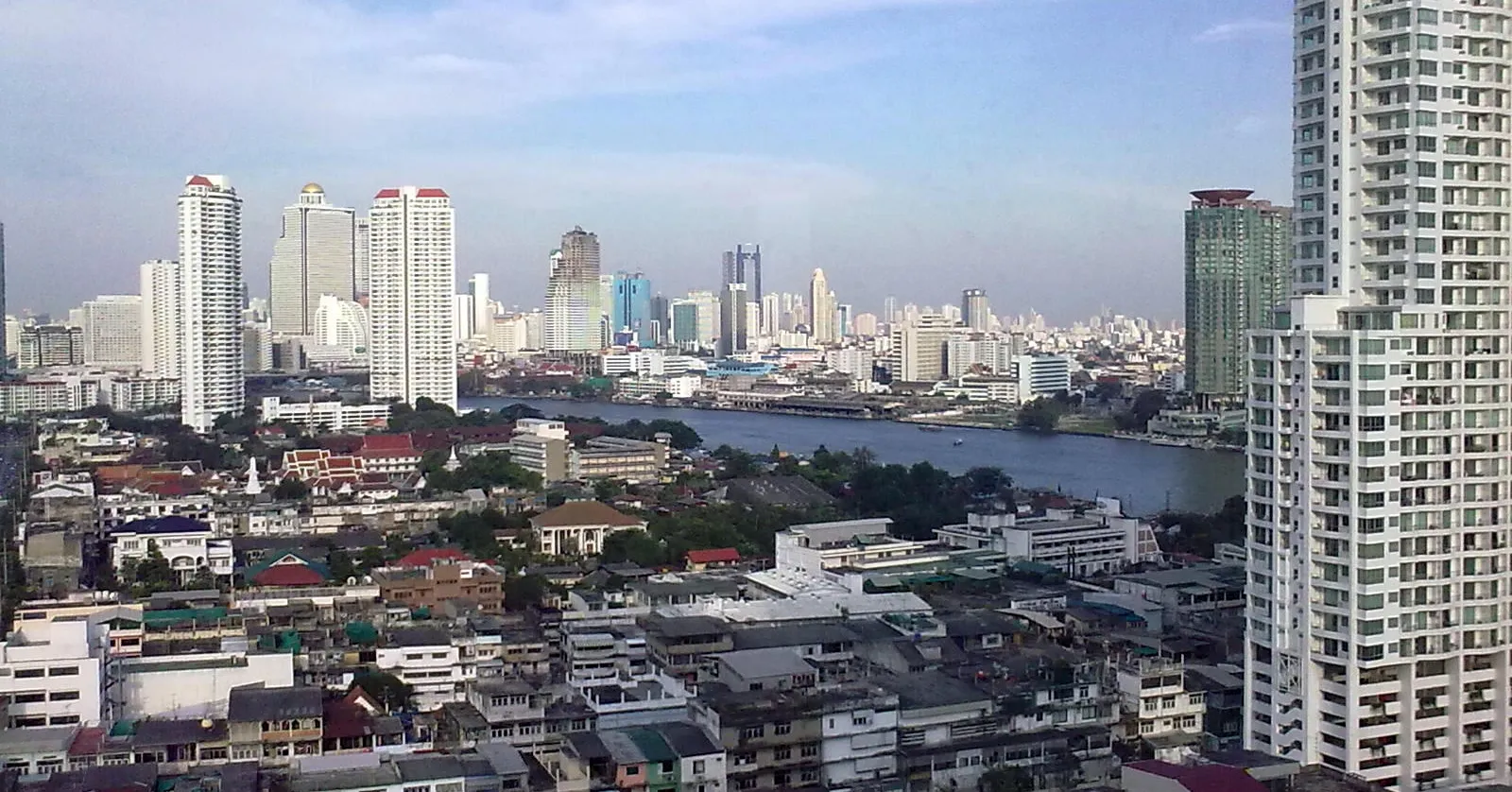
Bangkok’s old royal quarter puts the Grand Palace, Wat Pho and Wat Arun within fifteen minutes of Sanam Chai, the only metro station inside it, and a three-minute ferry across the Chao Phraya covers the last of the three.
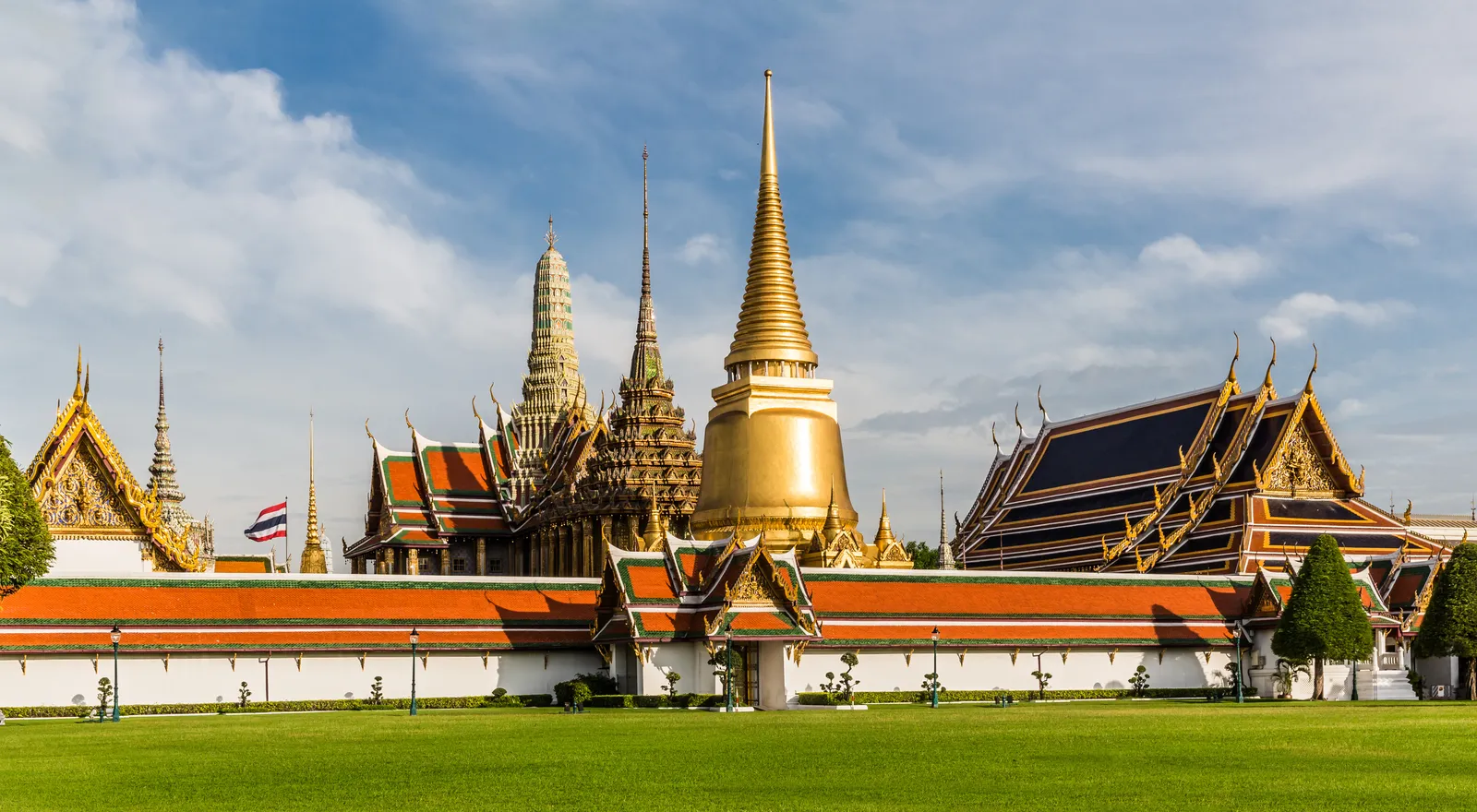
The Emerald Buddha behind the Grand Palace walls
Ticket sales at the Grand Palace stop at 15:30, hours earlier than Bangkok’s temples shut. The 500 baht it costs covers the whole walled compound that Rama I started building in 1782, though what people queue for is Wat Phra Kaew, the royal chapel in the northeast corner. The Emerald Buddha inside it is 66 centimetres of green jasper on a tall gilded pedestal, wearing one of three sets of gold robes that the king climbs up and changes himself three times a year, at the turn of the hot, rainy and cool seasons in March, August and November. Kings stopped living here generations ago and the compound works as a museum now, with state ceremonies still held in it. Shoulders and knees have to be covered to get through the gate, shorts included, and the stalls outside rent wraps to anyone who arrives without them. Tickets are also sold in advance as skip-the-line entry through a tours and activities platform, which takes the gate queue out of a tight afternoon.
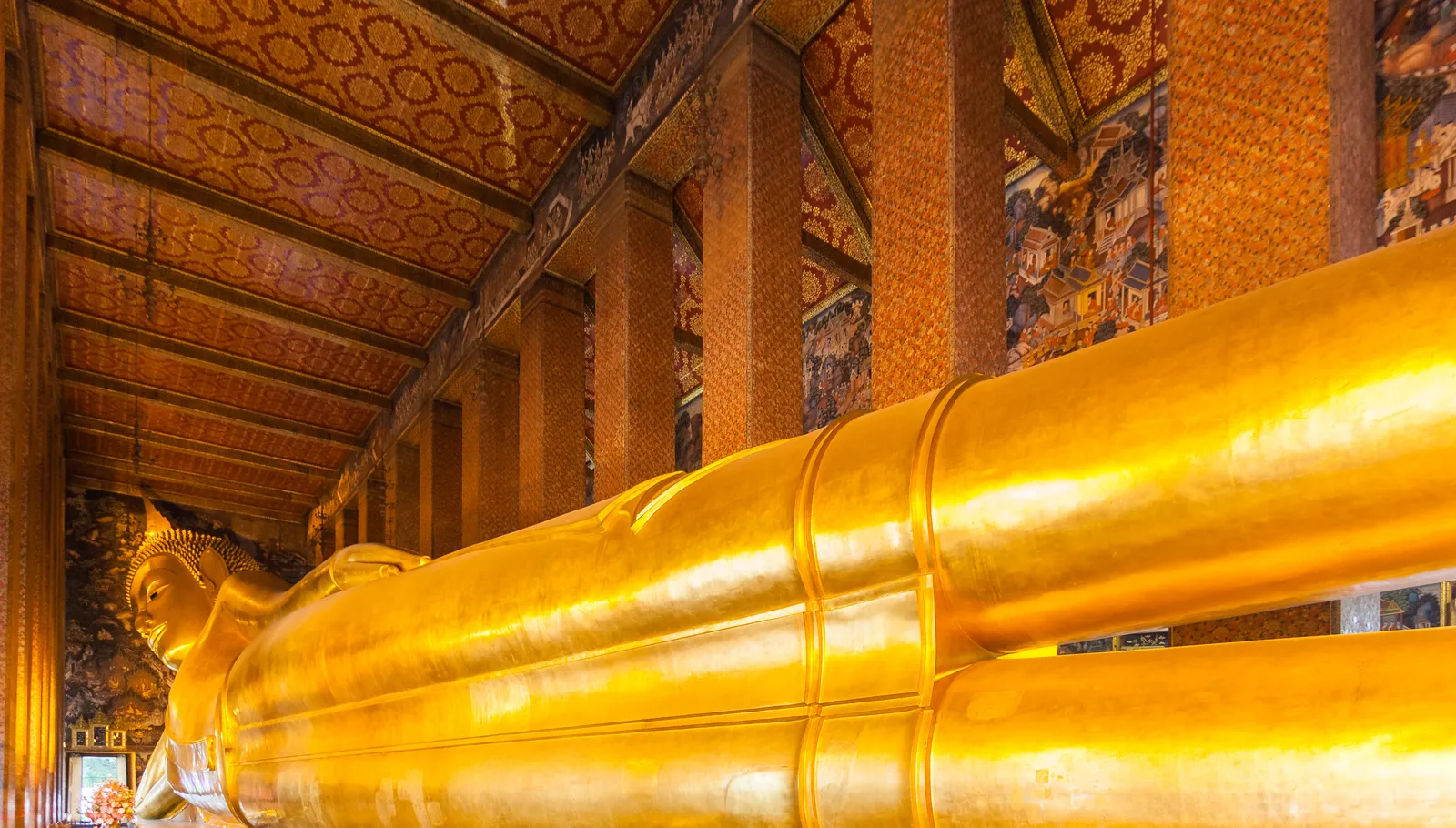
The 46-metre reclining Buddha at Wat Pho
Wat Pho takes up the block south of the palace walls, charges 300 baht, and keeps its grounds open until 18:30. The reclining Buddha built there in 1832 runs 46 metres from head to feet and stands 15 metres high, gold-plated and set so close to the walls of its hall that there is nowhere to stand and see the whole of it at once. The soles of its feet are what the far end of the hall is for: nearly five metres of black mother-of-pearl inlay, cut into 108 panels showing the auspicious marks of the Buddha. A corridor alongside holds 108 bronze bowls to match, and twenty baht buys a tin of coins to drop one into each. The temple has also run a school of traditional medicine and massage on the grounds since 1955, and it still treats people who walk in off the street. A guided walk from a tours and activities platform covers this temple and Wat Arun together if you would rather have the iconography explained than read the plaques.
Wat Arun’s porcelain tower on the Thonburi bank
Published heights for the central tower at Wat Arun run anywhere from 67 to 86 metres, depending on which survey you read. The surface is not in dispute. It is faced all the way up in broken Chinese porcelain, ballast off the trading ships that came into Bangkok in the nineteenth century, pressed into the stucco as flowers and rosettes so that the whole thing glitters unevenly instead of catching the light in one sheet. Entry is 200 baht. The ferry over from Tha Tien pier costs a few baht, leaves every five to ten minutes until around ten at night, and takes under three minutes.
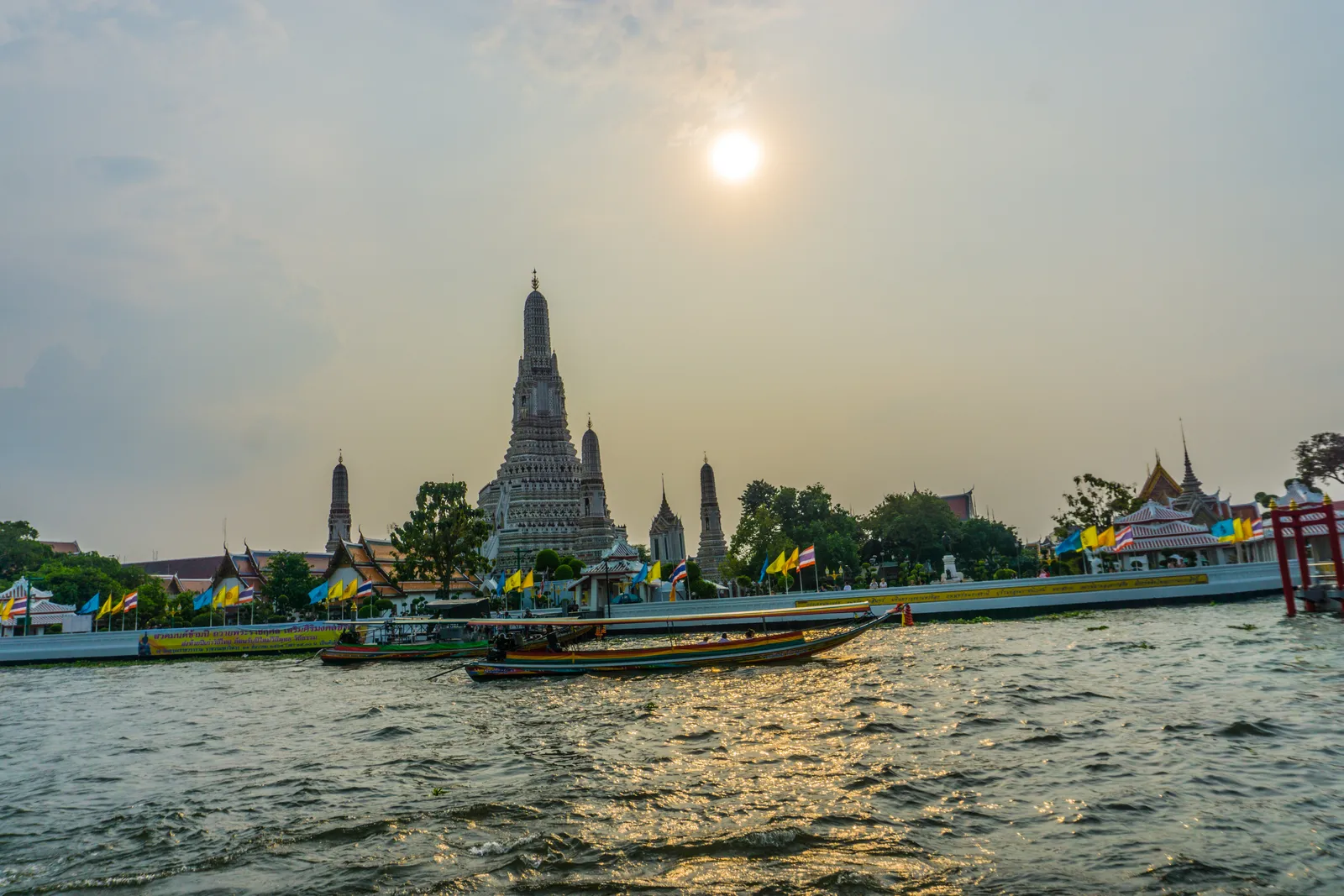
That ferry is a low boat boarded down a ramp onto a floating pontoon, and the stairs onto the tower’s terraces are steep enough that a suitcase is a two-handed job.
Sanam Chai, a metro station built as a royal audience hall
White columns with gilded capitals, a red and gold coffered ceiling, chandeliers over a black and white tiled floor: the station opened in 2019 to a design by Pinyo Suwankiri, a Thai national artist, and copies the look of a throne hall from the decades just after Bangkok became the capital in 1782. It is the only metro stop inside the old quarter’s conservation zone, which is why it got the treatment. Exit 1 was deliberately built without a roof so it would not block the sightline to Museum Siam across the road.
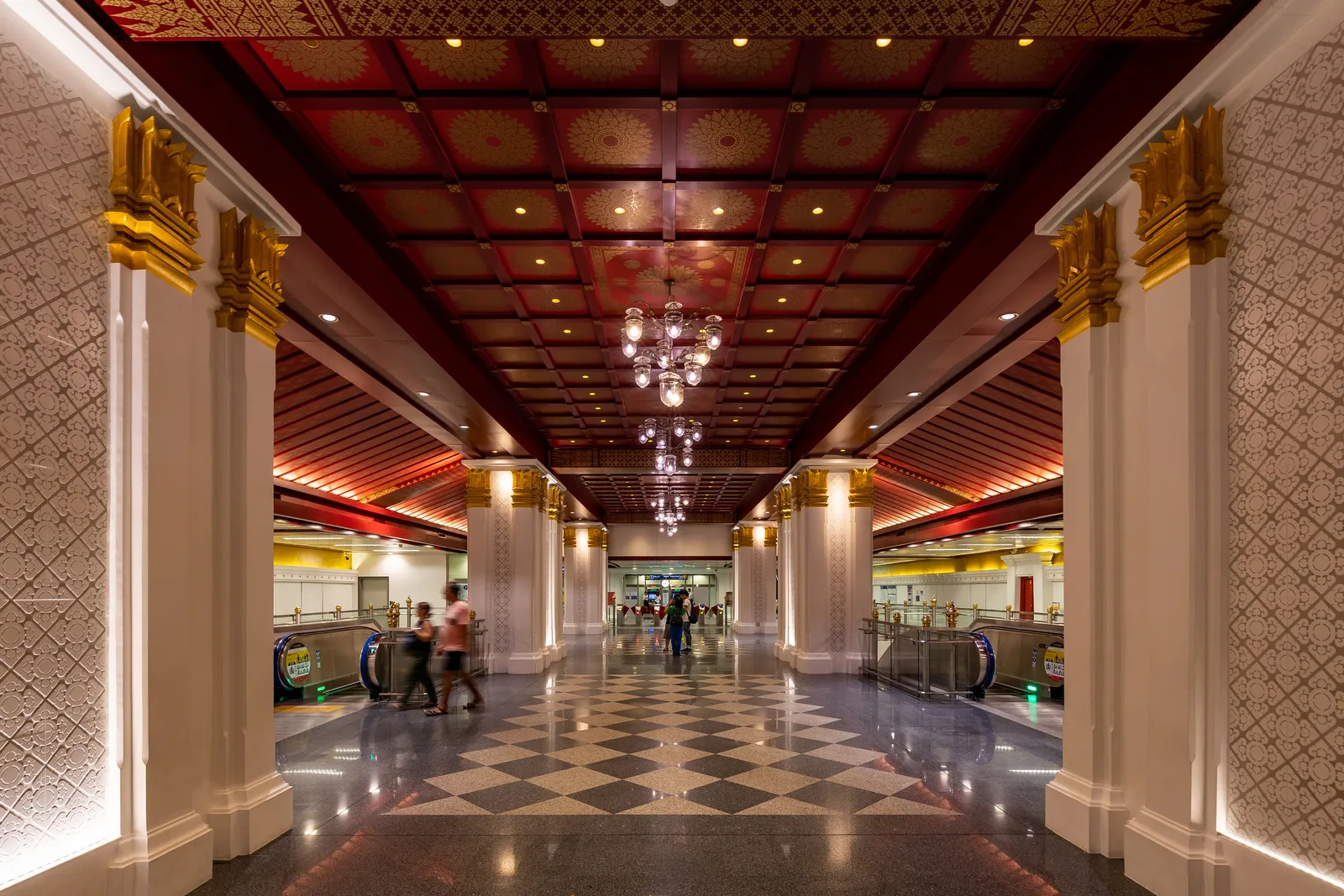
Digging the station turned up a good deal of the neighbourhood that used to be here, and a free exhibition by that same exit puts some of it on display: terracotta figurines, bowls, plates and roof tiles from the eighteenth and nineteenth centuries, and coins struck in the reigns of King Mongkut and King Chulalongkorn. It takes ten minutes and it is air-conditioned.
Pak Khlong Talat, the flower market that never shuts
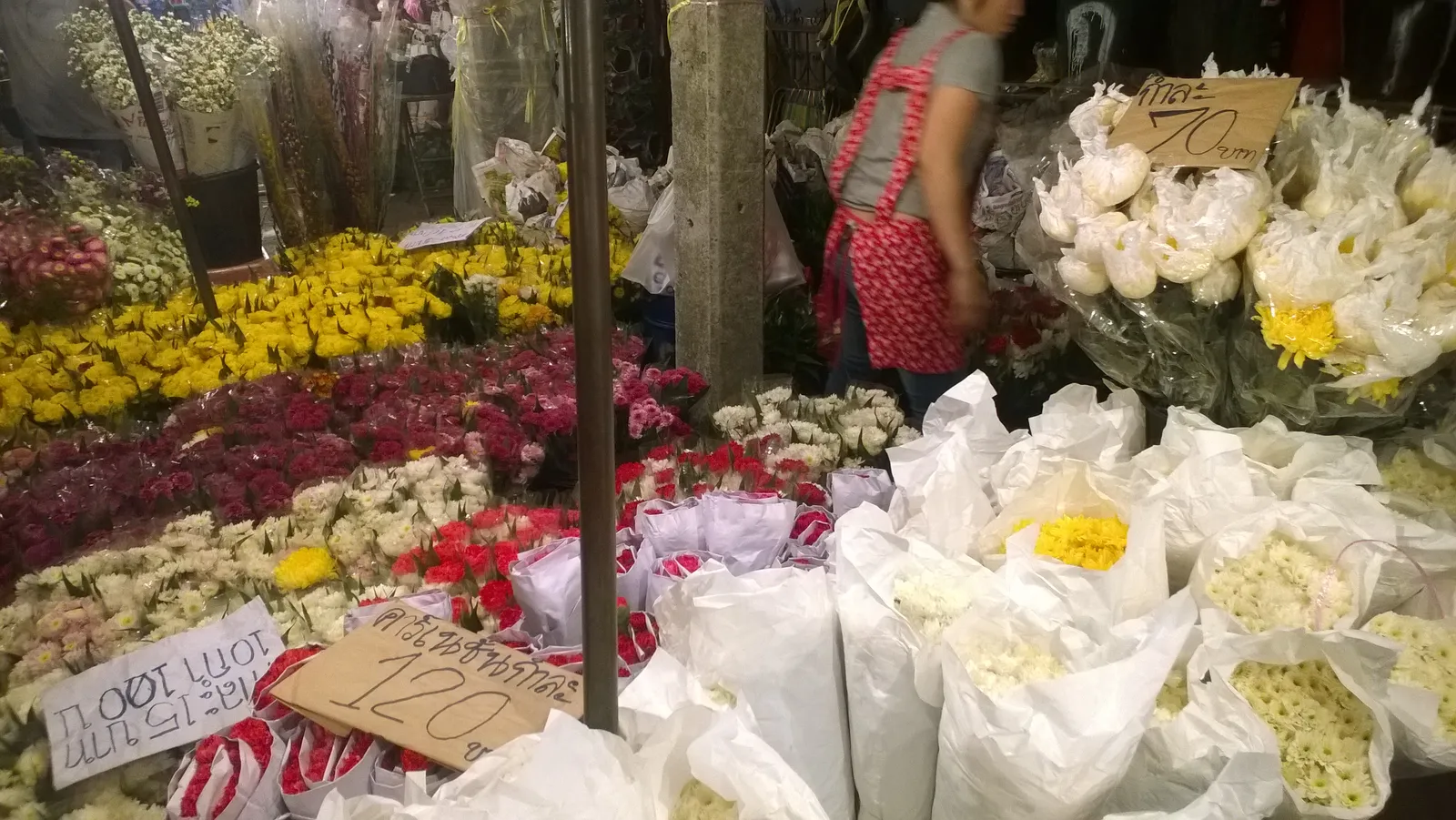
Thailand’s largest wholesale flower market sits on the riverbank downstream of Wat Pho, and its heavy work happens between two and six in the morning, when trucks come in from the growing provinces and the aisles fill with sacks. By five the stalls are stocked and the banks of marigolds, roses and bagged jasmine buds are what there is to look at. Nothing about it costs anything, most of it sits under awnings, and it is the one stop in the old quarter that does not care what time your flight is.
The water monitors in Lumphini Park
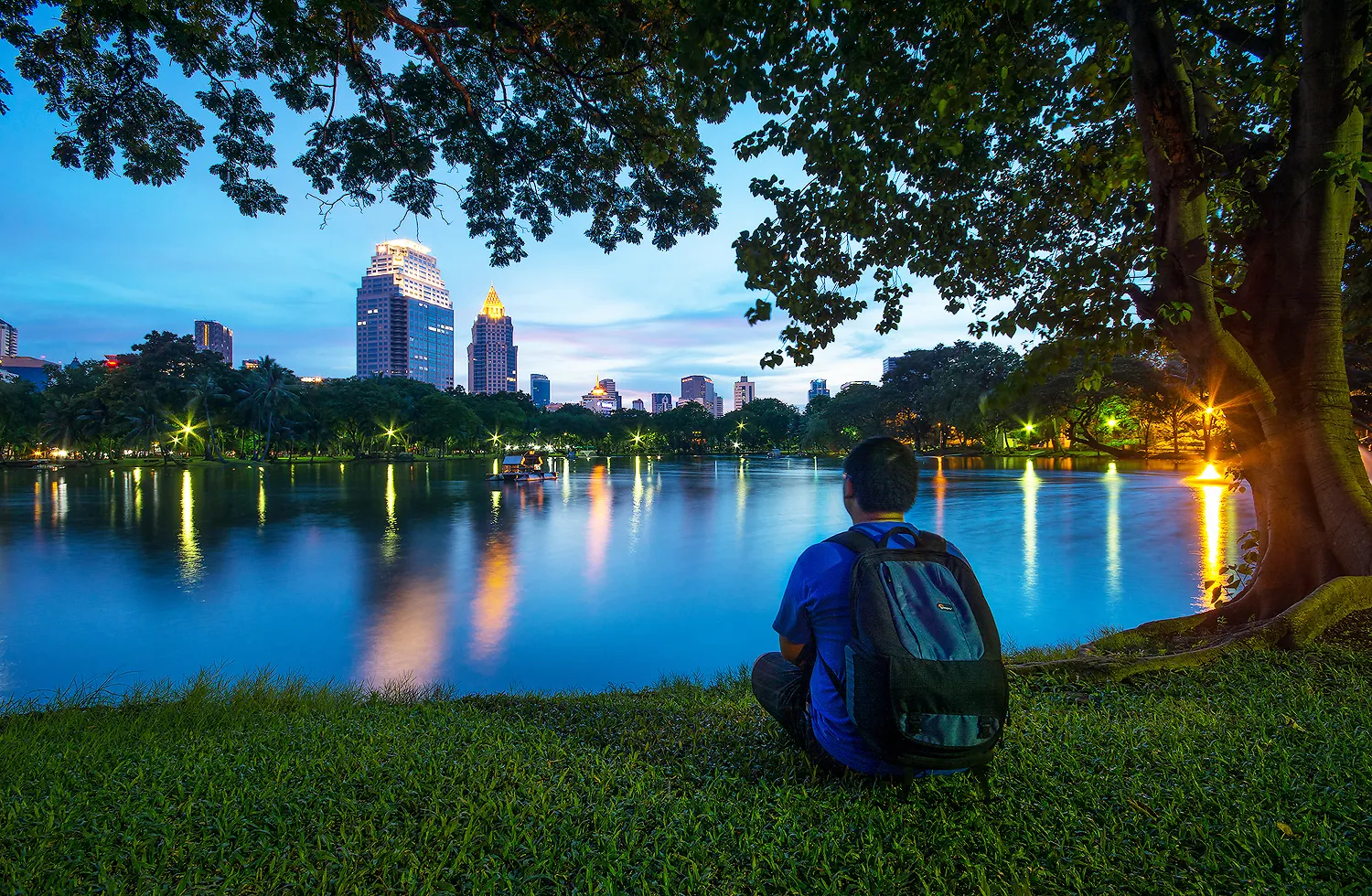
Around 400 Asian water monitors live in Lumphini Park, and on a warm afternoon a fair number of them are out of the lake and lying on the grass, some of them well over a metre long. The park covers 57.6 hectares between Rama IV Road and Wireless Road, with two metro stations on its edge, and it is free and open from 04:30 to 21:00, which makes it the reliable stop for a gap that starts before the temples open or runs on after they shut. There are 2.5 kilometres of jogging paths, swan-shaped paddle boats at 40 baht per half hour, a clock tower from 1925 and Bangkok’s first public library.
The airport train stops running at midnight
The Airport Rail Link’s City Line covers Suvarnabhumi Airport to Phaya Thai in about 26 minutes, eight stations for 45 baht, with departures every ten to fifteen minutes between 05:30 and midnight. From the old royal quarter the shorter version is to take the metro to Phetchaburi, cross the 166-metre covered skywalk into Makkasan station and pick the train up there instead: 35 baht, and a little over twenty minutes to the airport. Reckon on an hour door to door from Wat Pho, longer in the evening rush, before anything your airline wants for check-in. On a five to seven hour gap between flights that leaves about three hours on the ground here, and collecting a stored bag is worth building into that hour rather than tacking onto the end of it.
Frequently asked questions
What should I do during a layover in Bangkok?
The Grand Palace, Wat Pho and Wat Arun stand within about fifteen minutes of each other in Bangkok's old royal quarter, and the three of them fill an afternoon without any rushing. Wat Phra Kaew, inside the palace walls, holds the Emerald Buddha; Wat Pho holds the 46-metre reclining Buddha and the mother-of-pearl panels on the soles of its feet; Wat Arun is a short ferry ride across the river. The palace is the one stop with a hard deadline, since ticket sales close at 15:30, so lead with it if you are in the city by early afternoon and drop it without much loss if you are not. Pak Khlong Talat flower market and Lumphini Park are both free and both stay open far later.
What is there to do in Bangkok's old city when it rains?
From May to October the rain usually arrives as one heavy afternoon burst rather than a full grey day, and the old royal quarter has enough cover to sit one out. The reclining Buddha at Wat Pho is under a roof, most of the flower market at Pak Khlong Talat trades under awnings, and the free exhibition of excavated objects at Sanam Chai metro station is underground and air-conditioned. The Grand Palace is the open-sky stop, so it is the one to move rather than the others.
Is there a dress code for Bangkok's temples?
The Grand Palace enforces one at the gate: shoulders covered, knees covered, no shorts of any length, no sleeveless or see-through tops, no ripped jeans, and proper shoes rather than backless flip-flops. Anyone who turns up in the wrong thing can rent or buy a wrap there, which costs time as well as baht. Wat Pho and Wat Arun ask for the same coverage.
How late can I leave central Bangkok to get back to Suvarnabhumi Airport?
The Airport Rail Link runs to Suvarnabhumi Airport (BKK) from 05:30 until midnight, and the practical cut-off sits well before the last train. From Sanam Chai station the return is a metro ride to Phetchaburi, a 166-metre covered skywalk to Makkasan station and a little over twenty minutes on the train, so about an hour in total. Leaving the old quarter three hours before departure covers that plus check-in and security. After midnight the train is finished and a taxi is the only option left, and in Bangkok traffic that is not a fixed number.