Phuket in One Day: Old Phuket Town
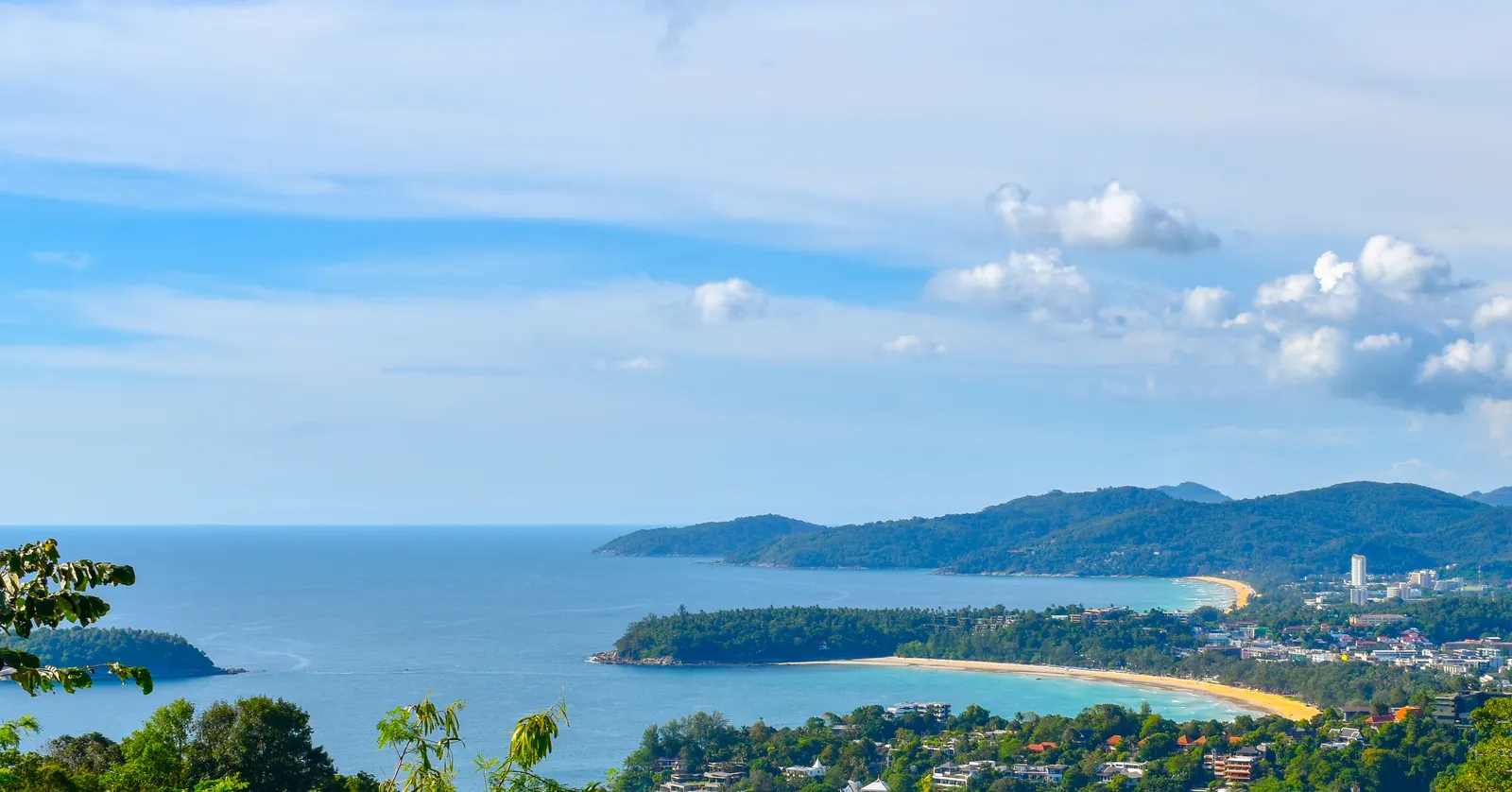
Thalang Road’s shophouse arcades and the 1934 Chinese school that is now the Phuket Thaihua Museum sit within about a square kilometre of Phuket Town, ten minutes on foot from the main bus terminal on Phang Nga Road, and Khao Rang’s free lookout stands a kilometre and a half north of them.
Thalang Road’s shophouse arcades
The two-storey shophouses lining both sides of Thalang Road went up when Phuket was the richest tin-mining district in southern Thailand, built to a pattern Hokkien and Malay traders brought up from Melaka: narrow frontages, deep plots, recessed doorways, and a covered porch at the front of each one that joins its neighbours into a continuous arcade running the length of the block. The style gets called Sino-Portuguese because Melaka’s own architecture had absorbed Portuguese, Dutch and Anglo-Indian habits before it ever reached the Andaman coast. The municipality buried the overhead cables along this stretch, and the facades have been repainted and patched rather than replaced, so the roofline runs unbroken from one end to the other.
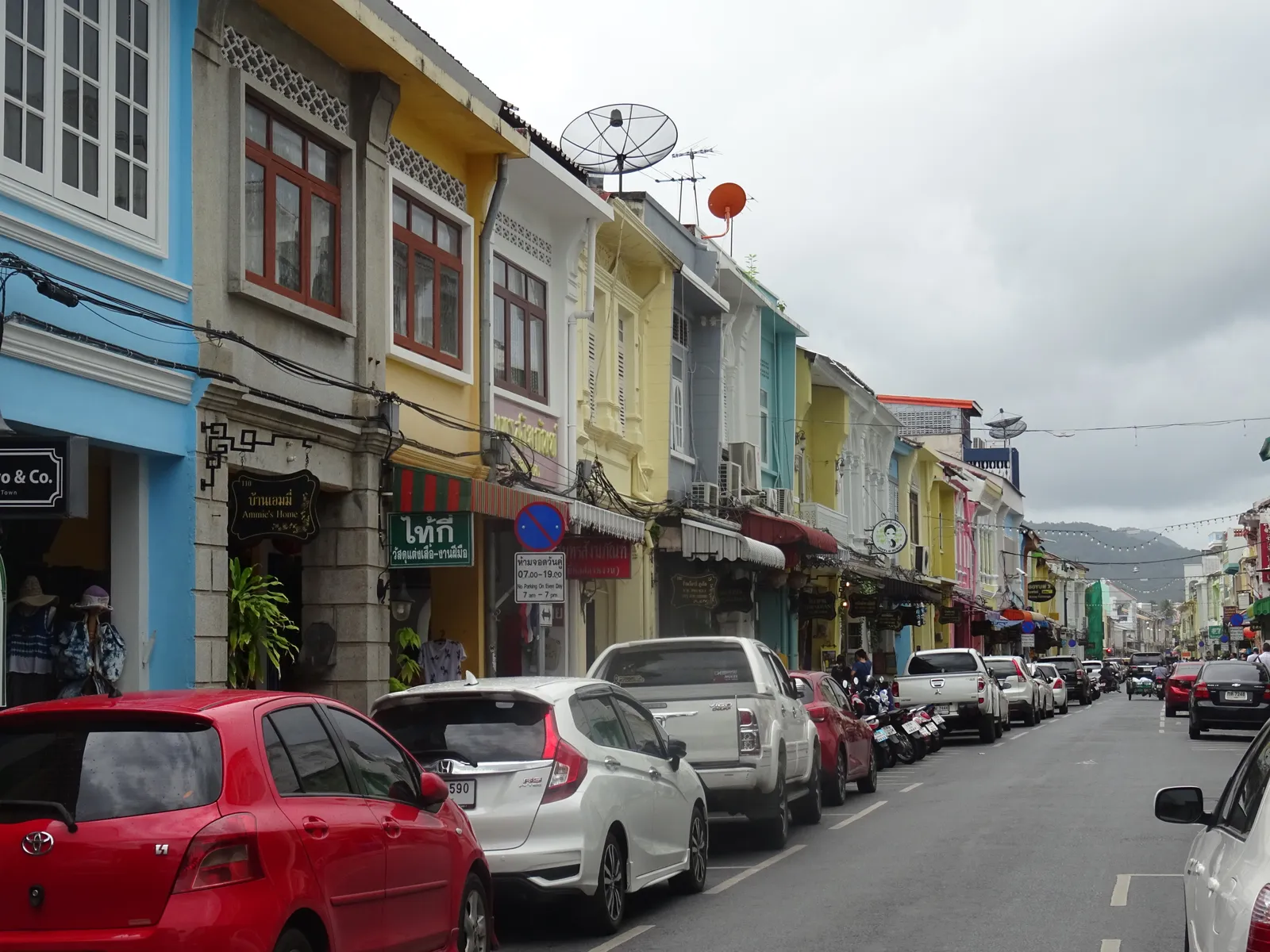
On Sundays the street closes to cars from about three in the afternoon, and by four it is Lard Yai, a market of food stalls and stands running the whole length of the road until ten at night. It gets properly crowded after seven. Any other day the ground floors are cafes, tailors, print shops and pharmacies, several of them still doing the same trade the building was put up for, and a two-hour guided eating walk through a tours and activities platform is the efficient way to work out which of them is worth stopping at.
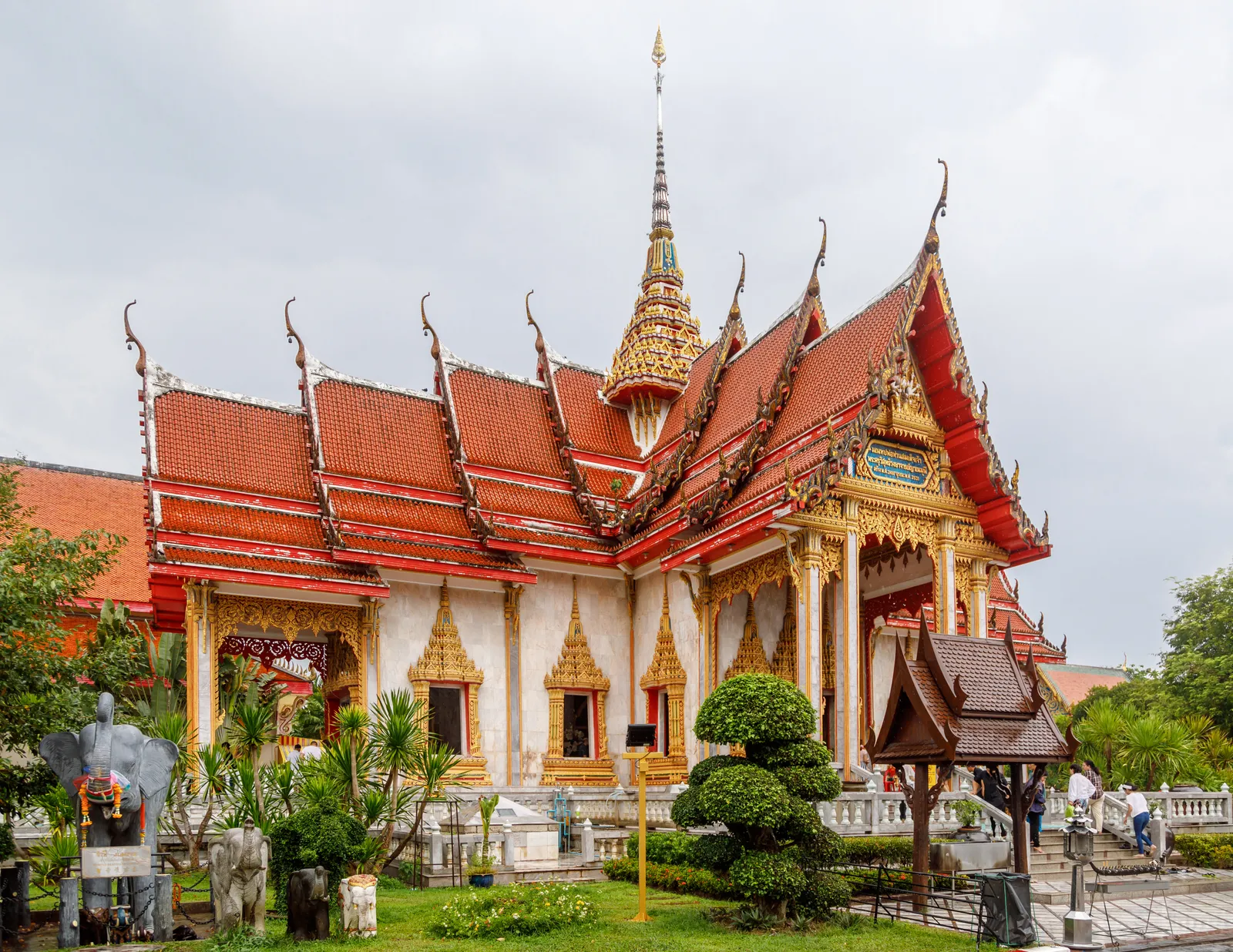
Wat Chalong, the largest of Phuket’s 29 temples
Wat Chaiyathararam is the formal name, and the compound stands about eight kilometres south of Phuket Town on the road down to Chalong Bay, dedicated to Luang Pho Chaem and Luang Pho Chuang, two monks who set bones and treated wounds through the 1876 rebellion in the tin mines and are still honoured with statues in the main hall. The 60-metre pagoda behind it was built to hold a fragment of the Buddha’s bone, and its upper floors are open to walk up. Entry costs nothing, shoulders and knees have to be covered, and shoes come off at the door of each building. A half-day guided run from a tours and activities platform links this temple, the Buddha on the ridge above it and a west-coast viewpoint, which is the only way to see all three without hiring a car yourself.
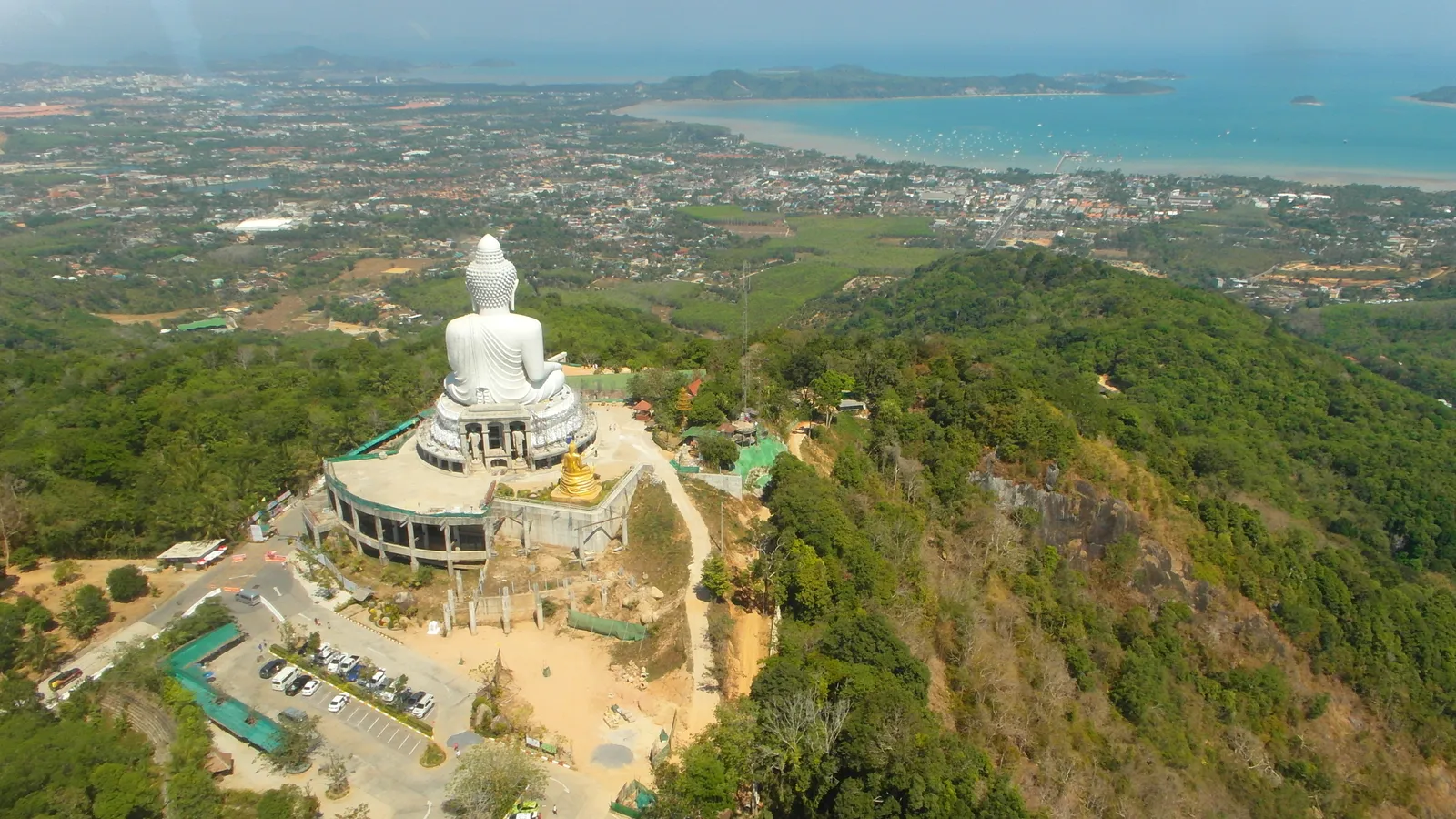
The Big Buddha on Nakkerd Hill
Nakkerd Hill stands between Chalong and Kata on the south of the island, and the seated figure on top of it, Phra Phutta Ming Mongkol Eknakiri, is 45 metres tall and a little over 25 metres across the knees: a concrete core skinned in Burmese white marble. Work began in 2004 and the statue has been paid for by donations the whole time, mostly in the form of marble tiles bought at 300 or 1,000 baht and signed by whoever bought them. It closed on 23 August 2024 after a landslide on the slopes below and stayed shut for well over a year, reopening on 3 March 2026 for Makha Bucha Day; the statue, the staircase and the terraces have been open since. Entry is free, the gate runs 09:00 to 18:00 with last admission at 17:30, and free sarongs are handed out to anyone turning up in shorts.
Soi Romanee, once the old town’s red-light lane
Soi Romanee is 125 metres long and connects Thalang Road with Dibuk Road one block north. When the mines were running it held the brothels, gambling houses and opium dens that the labour force spent its wages in, and the name is an old Thai word for pretty that the street’s reputation gave a second meaning to. The business moved elsewhere once the tin went, the shophouses emptied and most of them fell in. What stands now is a rebuild: pink, yellow and green frontages, red lanterns strung under the eaves, and guesthouses, coffee shops and souvenir stalls behind the doors.
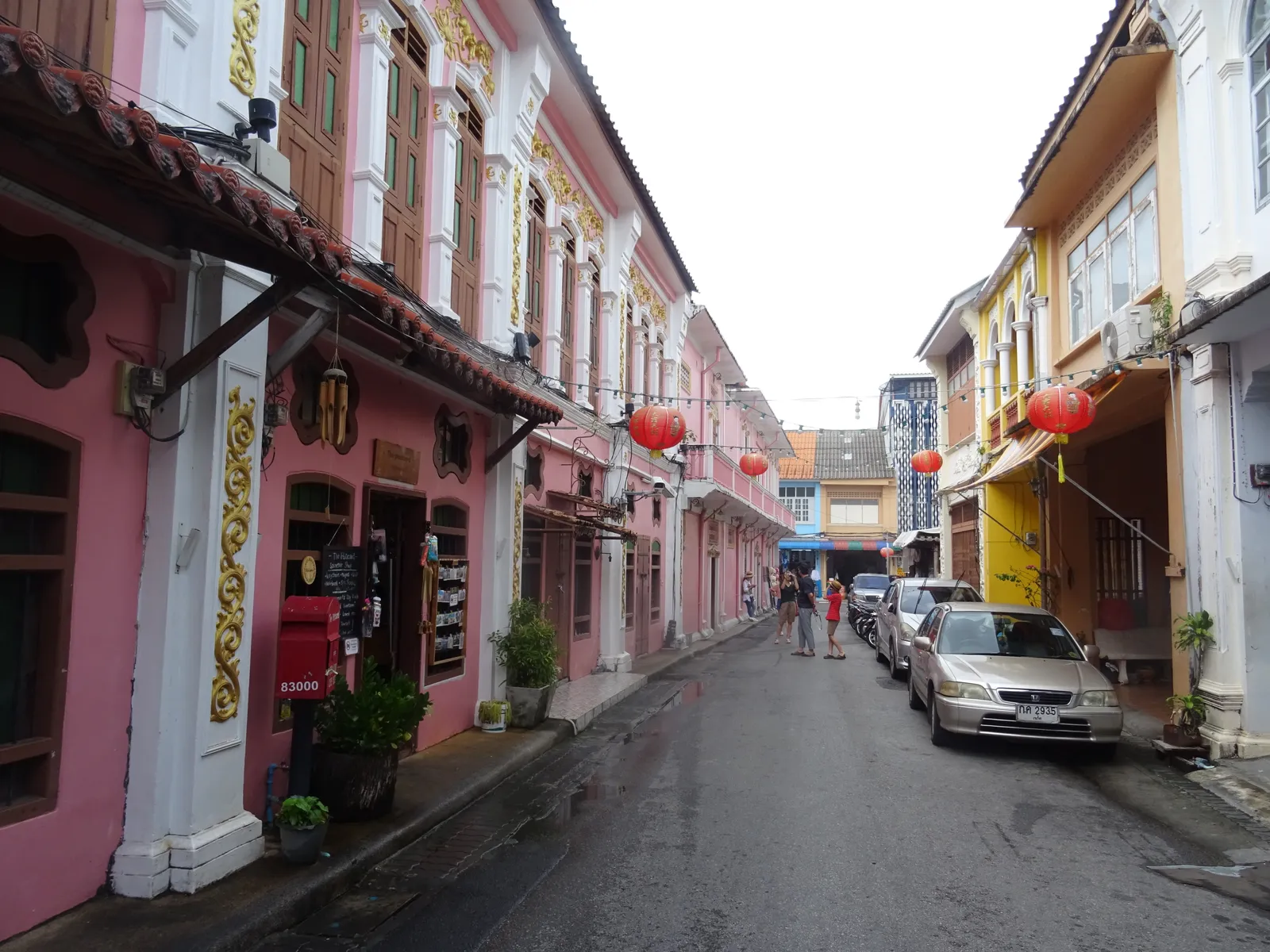
The arcades along these streets step up and down at every shopfront and carry a row of parked motorbikes, so a wheeled suitcase spends more of the walk lifted than rolled.
Phuket Thaihua Museum, the island’s first Chinese school
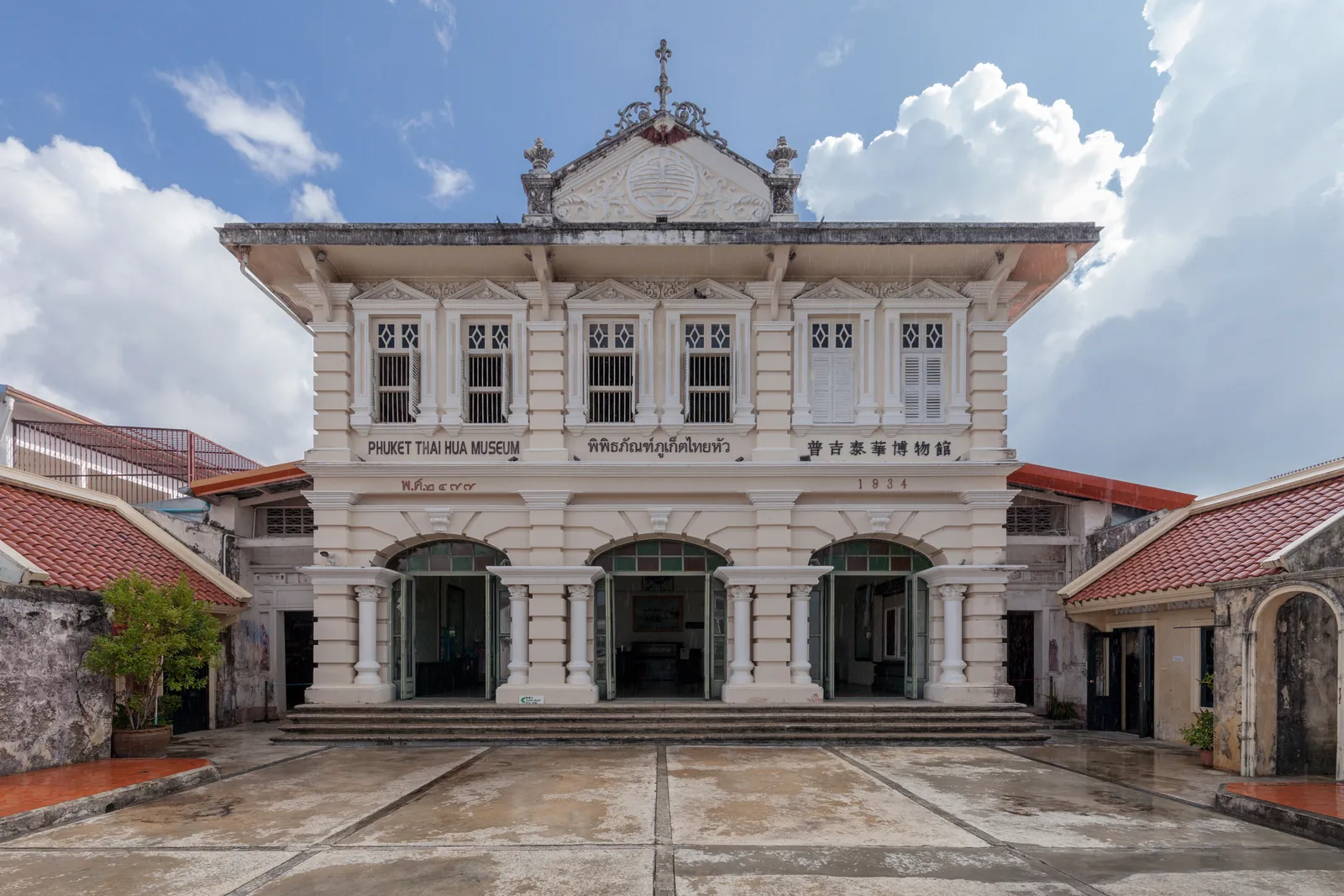
The white mansion on Krabi Road with the arched colonnade across its front opened in 1934 as Phuket Thai Hua School, built by the Hokkien community as the first place on the island to teach in Chinese. It works as a museum now, and the subject is the thing the rest of the old town is evidence of: who came from Fujian in the nineteenth century to work the tin, what they did once the mining money arrived, and how the food, the clothes and the wedding customs changed on the way. The exhibits are captioned in Thai and English throughout. Foreign visitors pay 200 baht, with another 200 if you want to photograph the interior, and it runs 09:00 to 17:00 every day except Monday.
Khao Rang, the 140-metre hill over Phuket Town
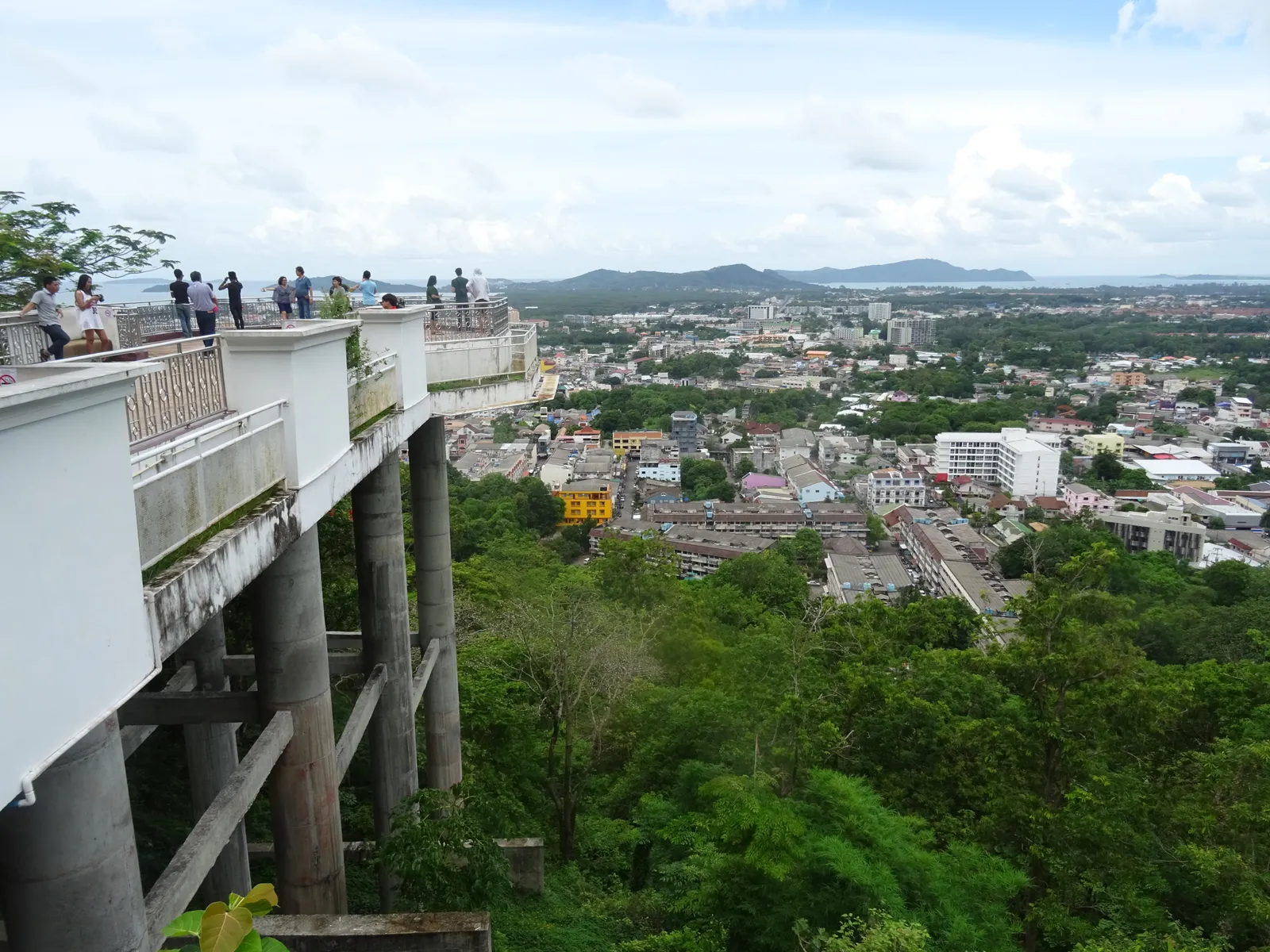
Khao Rang rises out of the north side of Phuket Town, and the concrete terrace built out on stilts near the top looks down over the whole grid of low rooftops to the hills and the bay behind. It costs nothing and there is no gate, so it works at any hour, including well after the museums have shut. The road up is paved the entire way and runs about a kilometre and a half from the edge of the old town, which is a steep and sweaty half hour on foot in the middle of the day and about five minutes in a taxi. On a seven-hour gap between flights the old town’s streets are roughly all that fits; nine hours is what makes the hill worth adding.
The last airport bus leaves in the early evening
Route 8411, the orange airport bus, connects Bus Terminal 1 on Phang Nga Road with Phuket International Airport (HKT) for 100 baht and takes an hour and a quarter to an hour and a half, running roughly once an hour. At the airport end it uses the public transport parking area past Exit 3 rather than a stop outside the terminal doors. The timetables published for it disagree on the last run out of town, somewhere between 19:00 and 20:00, which is earlier than a good share of the evening departures from HKT, so check it the morning you travel rather than assume. A metered taxi does the same trip in about an hour and runs 600 to 700 baht plus a 100-baht airport surcharge, and the fixed-price counter inside the terminal charges 800 flat. Plenty of departures from here are a domestic hop up to Bangkok before anything long-haul, which is worth knowing when you are working out how much of a buffer you actually need.
Three and a half hours before an international departure covers the bus, check-in and security with something in hand; three is enough for a domestic one. Collecting a stored bag on the way to the terminal belongs inside that figure rather than on top of it.
Frequently asked questions
What should I do during a layover in Phuket?
Phuket Town's old quarter is the part of the island that works on foot: Thalang Road's restored shophouse arcades, the lane of pink and yellow houses at Soi Romanee off it, and the Phuket Thaihua Museum on Krabi Road, which costs 200 baht for foreign visitors and shuts on Mondays. Khao Rang, the hill a kilometre and a half north, is free, open at any hour and looks straight down over the town. Wat Chalong and the marble Buddha on Nakkerd Hill are the island's two biggest draws, but both sit well south of the town with no scheduled bus to either, so they only fit if you have a car or a tour booked. On a Sunday, Thalang Road closes to traffic from about four in the afternoon and fills with food stalls until ten.
How do I get from Phuket airport into Phuket Town, and back again?
The orange airport bus, route 8411, runs between Phuket International Airport (HKT) and Bus Terminal 1 on Phang Nga Road for 100 baht, roughly hourly, and takes an hour and a quarter to an hour and a half depending on traffic. At the airport it leaves from the public transport parking area past Exit 3; at the town end the terminal is a ten-minute walk from Thalang Road. Published timetables disagree on the last departure from town, somewhere between 19:00 and 20:00, so confirm it on the day if your flight is a late one. A metered taxi covers the same ground in about an hour for 600 to 700 baht plus a 100-baht airport surcharge, and the fixed-price counter inside the terminal charges 800.
Is Phuket's old town worth seeing after dark?
The shophouse facades along Thalang Road and Soi Romanee are lit after sunset and the restaurants and bars behind them run late, which makes the old town a better evening stop than a beach you can barely see. Khao Rang costs nothing and never closes, so the view down over the lit town is available whenever you get there. The catch is the ride back: the airport bus finishes in the early evening, so anything later is a taxi at full fare.
Can I reach the Big Buddha and Wat Chalong without a car?
Not on a scheduled bus. Neither sits on the airport bus route into Phuket Town or on the west-coast service down to Rawai, and the road up Nakkerd Hill has no public service at all. From Phuket Town it is a taxi in both directions, about eight kilometres south to Wat Chalong and a winding climb beyond that to the Buddha, or a booked half-day tour that takes in the pair. Entry to each is free, and both ask for covered shoulders and knees.