Chalong Pier Layover, Phuket: Promthep Cape
Part of the full Phuket in One Day: Old Phuket Town
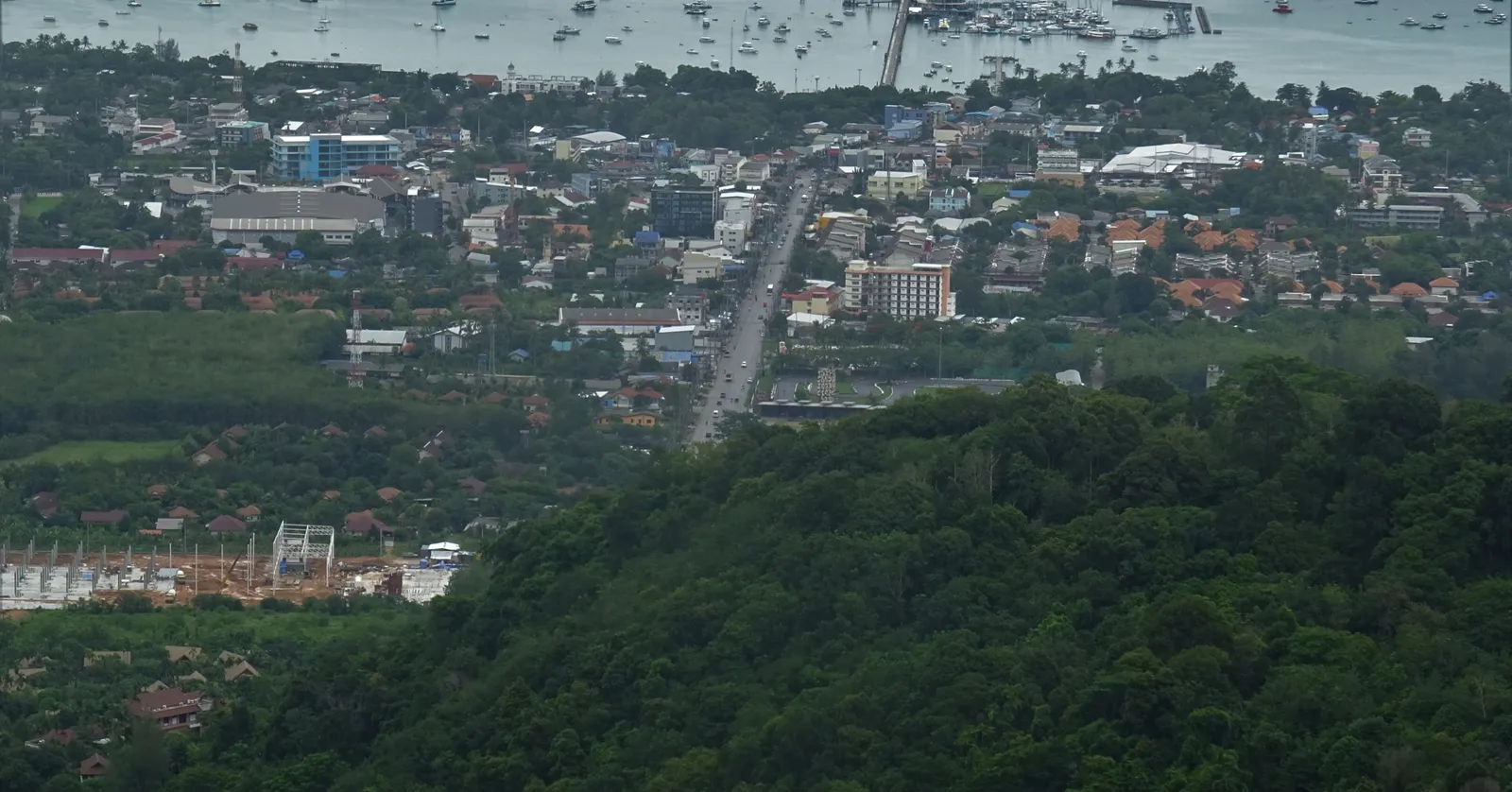
Chalong Pier on Phuket’s southern bay is where the island’s day boats leave from, Rawai Beach five kilometres southwest keeps its long-tail fleet on the sand beside a row of seafood stalls, and Promthep Cape past it is the southern tip of the island.
Chalong Pier and the boats that leave from it
The anchorage in front of the jetty holds a few hundred moored boats on any given day, and at eight in the morning the pontoons are working at full tilt, loading speedboats for Coral Island, Racha, Maiton and the longer runs out to Phi Phi. The half-day run over to Banana Beach on Koh Hey, booked through a tours and activities platform, leaves Chalong Bay at 08:30, 10:00, 12:00 and 14:00 and is the version of this that fits inside a free afternoon rather than a free day.
The longer option, a full day across to Racha and Coral islands, is the better snorkelling but needs the whole day and gets you back to the pier in the late afternoon with nothing left over. Once a boat has left, its return time is fixed, and that return time, not your departure, is what sets the shape of the day. Everything you bring goes out on the water with you, dry bag or not.
No bus leaves Chalong for the airport
The flat-fare coastal service, 100 baht whatever distance you ride, starts its northbound run at Rawai rather than at Chalong, and from that end of the route it takes well over two hours to reach Phuket International Airport (HKT), with published last departures that contradict each other. Treat it as a daytime option and check the operator’s live tracking before trusting it. A car covers the 40-odd kilometres north in about an hour for somewhere around 1,000 baht, which on a flight day is usually the sensible purchase. That road passes Wat Chalong two kilometres from the pier, the largest of the island’s 29 temples and one of the stops on the Phuket town guide, so a driver will usually wait twenty minutes if you ask.
Rawai Beach’s long-tail fleet and seafood row
Rawai is a working beach rather than a swimming one. The sand slopes so gently that the water is ankle-deep a long way out, the bay is a mooring for the long-tail boats that run people across to Koh Bon and Coral Island, and the boats themselves, painted and garlanded at the bow, are half of what there is to look at. The other half is the row behind the sand: stalls sell prawns, crab, squid and whole fish by the kilo, and the restaurants immediately behind them cook whatever you have just bought for a set fee per dish. Paying by weight and then by dish is a different transaction from ordering off a beach-road menu, and it is worth knowing which half of the bill is which before you point at anything.
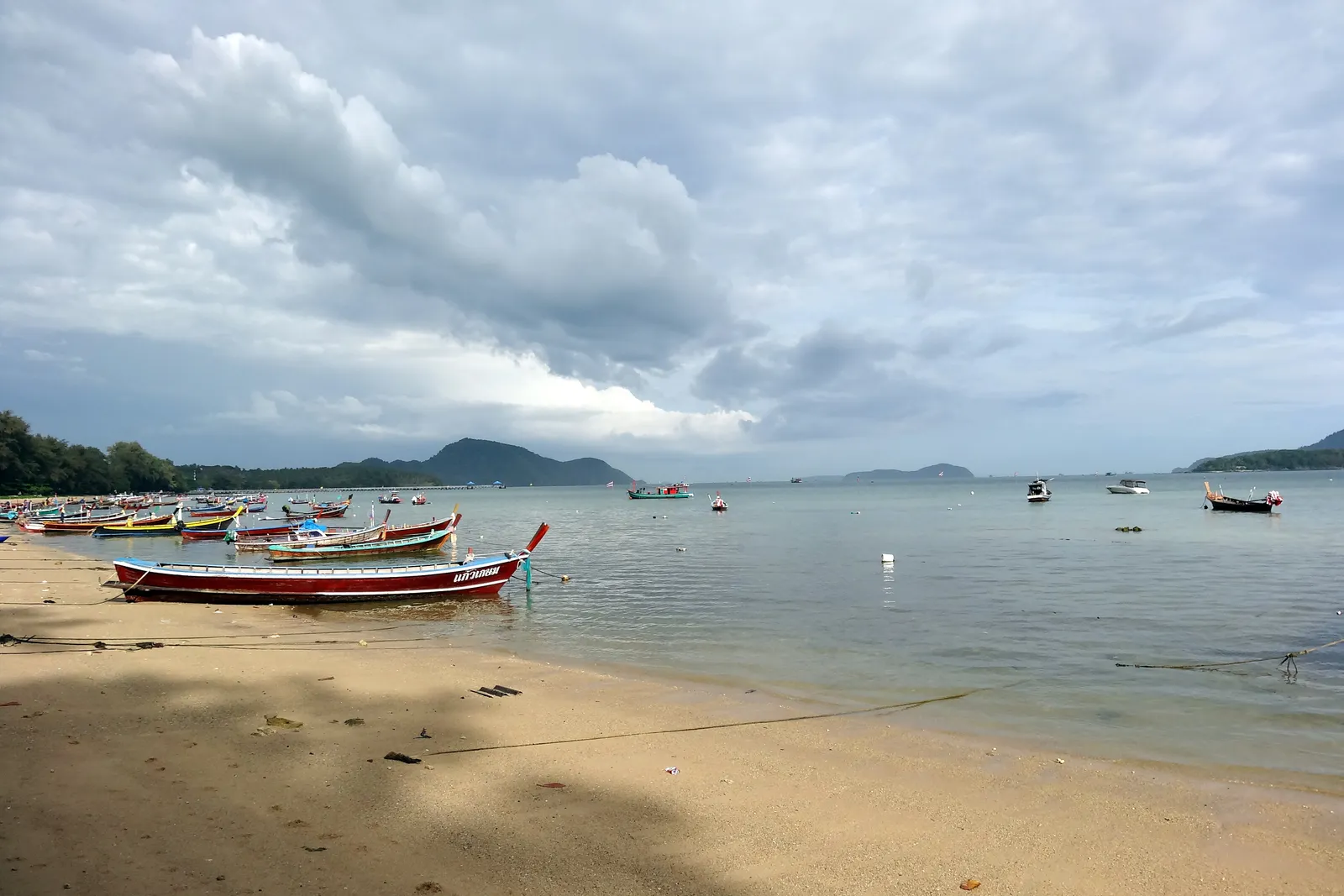
Promthep Cape, the southern tip of Phuket
The headland at the island’s southern end is a slope of grass and bare rock dropping into the Andaman Sea, with a paved terrace across the top of it, and it costs nothing at any hour. The Kanchanaphisek Lighthouse at the northern end of the cape was put up in 1996 by the Royal Thai Navy and residents of the island to mark the fiftieth year of King Bhumibol’s reign; inside it there is a free room of old ship lanterns and navigation instruments, a board giving that day’s sunrise and sunset times, and stairs up to the gallery. Beside the main terrace is a shrine crowded with elephant figures left by Thai families over the years.
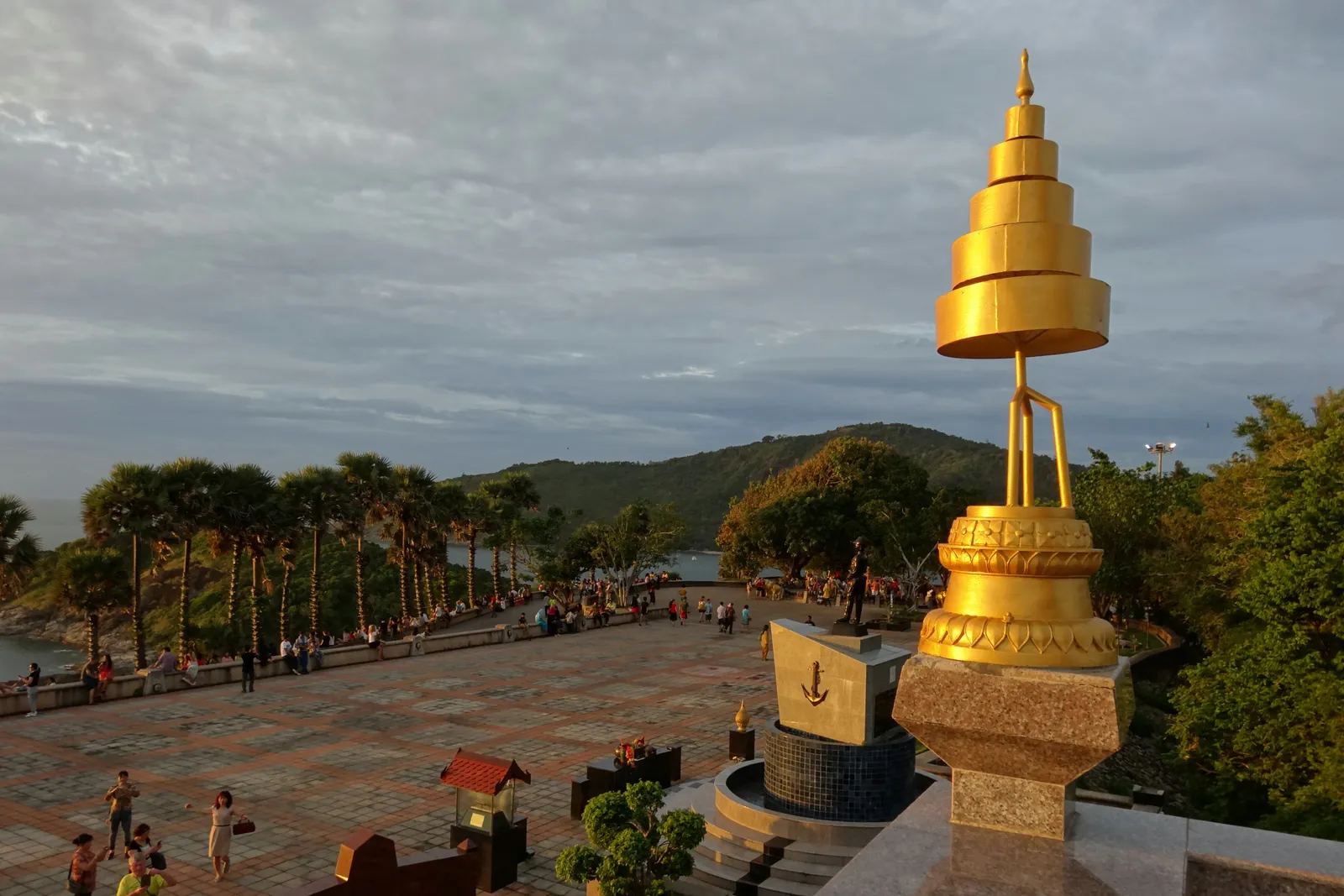
Between May and September the sun goes down almost directly over the water from here, which is why the coaches start arriving about an hour before it does. Turning up early enough to get a place on the rail, then leaving before the car park empties all at once, is the difference between a good half hour and a bad one.
A pontoon, a boat deck and a rocky headland are three surfaces in a row that a suitcase handles badly, which is the argument for leaving it behind before the first of them rather than after.
Frequently asked questions
What should I do during a layover near Chalong Pier in Phuket?
Chalong is the island's boat harbour, so the first question is whether your gap is long enough to get on the water: the half-day runs out to Coral Island leave through the morning and early afternoon and want four hours of your day. If it is not, the land version works better. Rawai Beach, five kilometres southwest, is where the long-tail boats are pulled up on the sand and where the seafood stalls sell by weight to be cooked next door. Promthep Cape beyond it is the southern tip of the island, free at any hour, with a 1996 lighthouse holding a small free museum. Six hours is a comfortable minimum with the drive north to the terminal at the end of it.
Can a boat trip from Chalong Pier fit inside a layover?
A half-day one, on a long gap, yes. The shorter Coral Island runs leave Chalong Bay at intervals through the day, the first around 08:30 and later departures at 10:00, 12:00 and 14:00, and they put you back at the pier roughly four hours later. Full-day two-island trips do not fit anything short of a whole free day. The other thing to weigh is that a boat is the one part of this itinerary you cannot shorten once you are on it, so the safer version of a tight gap is Rawai and the cape by road.
When does Promthep Cape get crowded?
In the last hour before sunset, when the coaches arrive, and the car park empties again all at once about fifteen minutes after the sun has gone. Between May and September the sun drops almost directly over the water from this headland, which is the busiest stretch of the year for it. Earlier in the afternoon there is usually space on the rail and the lighthouse museum at the northern end of the cape is quiet, and the cape has no gate and no closing time, so a visit after dark is also possible if less rewarding.
How do I get from Chalong back to Phuket airport?
There is no direct bus from Chalong itself. The flat-fare coastal service that runs up the west coast to Phuket International Airport (HKT) starts at Rawai, five kilometres southwest, and costs 100 baht however far you ride, though it takes well over two hours from that end of the route and its published last departures do not agree with each other. The practical option from Chalong is a car, roughly an hour and around 1,000 baht for the 40-odd kilometres north. An open-sided songthaew also runs into Phuket Town for a few tens of baht if the old town is where you would rather spend the time.